
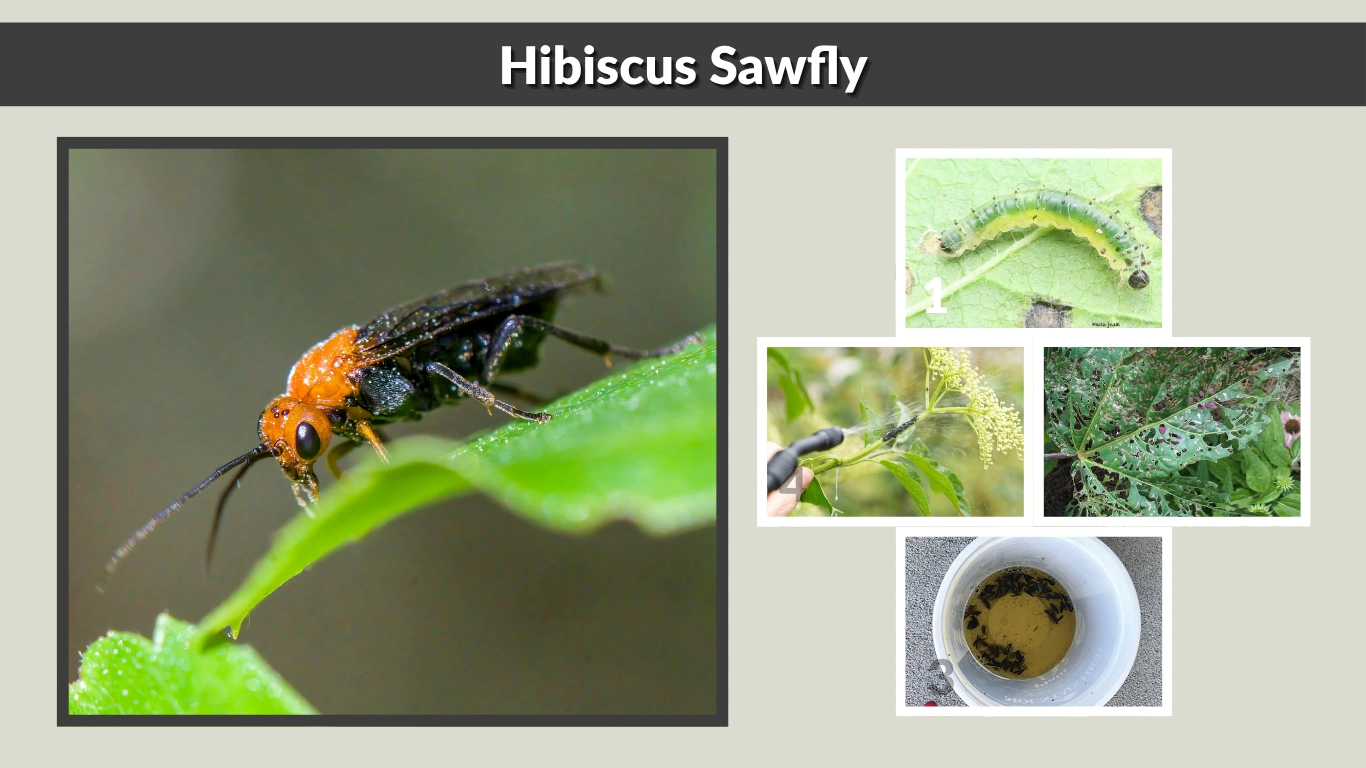
The hibiscus sawfly (Atomacera decepta), sometimes called the mallow sawfly, is a leaf-chewing pest that targets hibiscus and related plants. These small larvae resemble caterpillars and can rapidly skeletonize leaves, leaving your hibiscus plants ragged and weak. Understanding their identification, life cycle, and effective control strategies helps protect your hibiscus from severe defoliation.
What Is the Hibiscus Sawfly?
- Belongs to the wasp family Tenthredinidae (order Hymenoptera)
- Commonly infests hardy, rose mallow, and tropical hibiscus varieties
- Most active during late spring through midsummer
- Also known as the mallow sawfly in some regions
- Feeds exclusively on the leaves of hibiscus, avoiding flowers and stems
Geographic Range
- Widely distributed across North America, especially the southern U.S.
- Increasingly reported in Australia, the UK, and tropical climates
- Prefers sunny gardens and ornamental landscapes with dense hibiscus growth
Identification
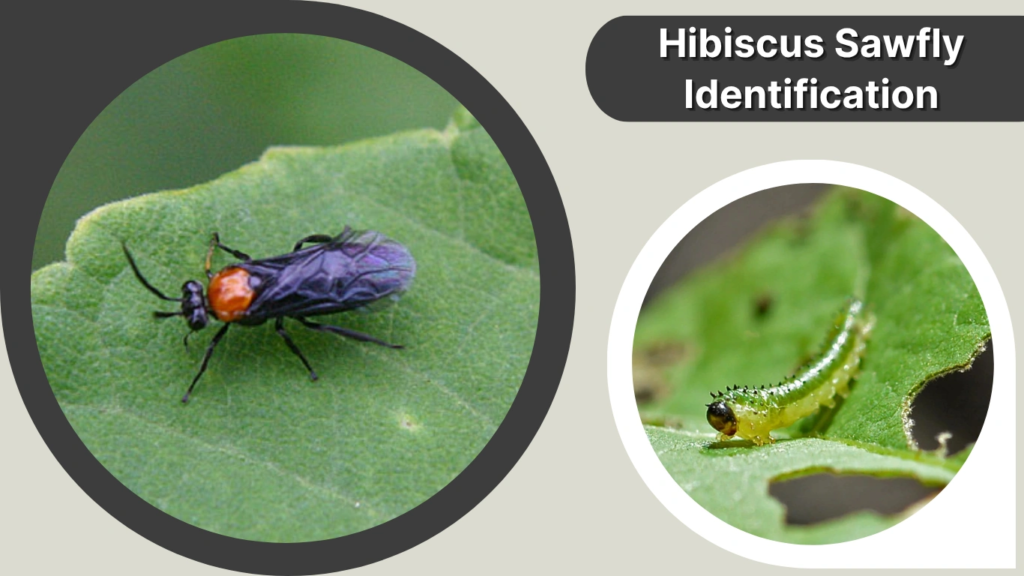
Hibiscus Sawfly Eggs
- Small, oval, translucent eggs laid along the leaf edges or undersides
- Females use a saw-like ovipositor to insert eggs into tissue
- Egg marks appear as tiny pale or blister-like spots
- Eggs hatch within 5–10 days, releasing small larvae
Hibiscus Sawfly Larvae
- Color: Pale green or yellowish-green with black heads
- Length: Up to 1 cm (⅜ inch) when mature
- Behavior: Feed in groups on the undersides of leaves, skeletonizing the surface
- Later instars may chew through entire leaves, leaving only veins
Hibiscus Sawfly Caterpillar vs True Caterpillar
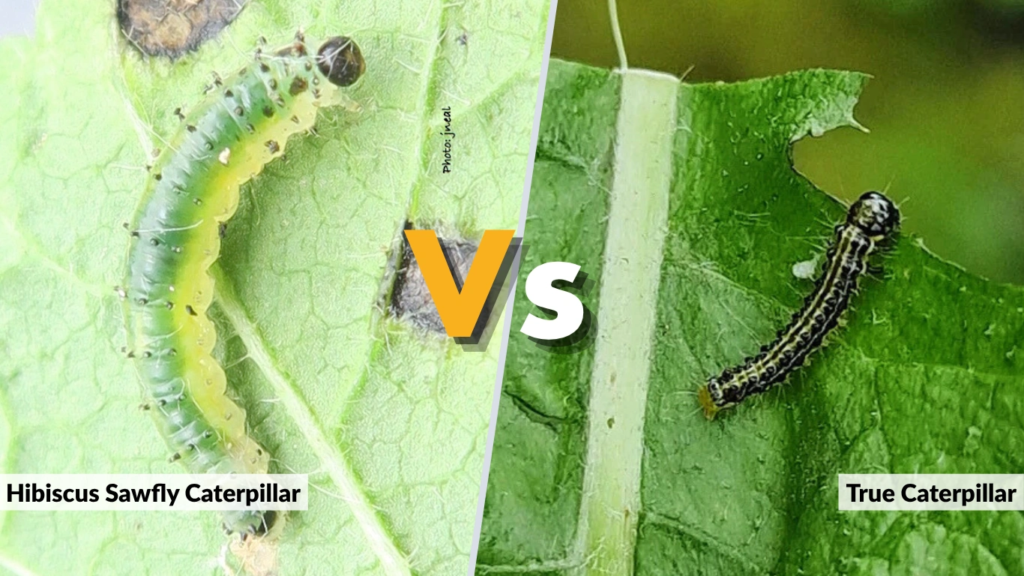
| Feature | Hibiscus Sawfly Larva | Butterfly/Moth Caterpillar |
| Legs | 6 pairs of prolegs | ≤ 5 pairs of prolegs |
| Movement | Smooth, no arching | “Inchworm” looping |
| Bt (Bacillus thuringiensis) Effect | Ineffective | Effective |
| Family | Wasp (Symphyta) | Moth/Butterfly (Lepidoptera) |
Hibiscus Sawfly Adult
- Small, black-bodied insect with transparent wings and yellowish markings
- Often mistaken for a fly or wasp
- Adults live only a few days, focusing on mating and egg-laying
- Harmless to humans — they do not sting or bite
Hibiscus Sawfly Life Cycle
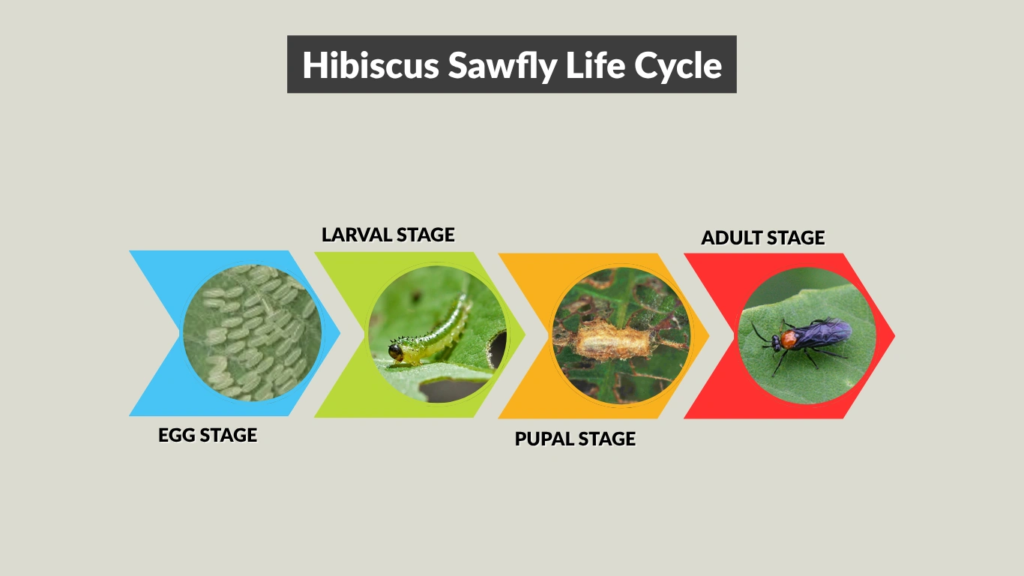
Stages of Development
- Egg Stage: Deposited on new hibiscus leaves in late spring
- Larval Stage: Larvae feed voraciously for 2–3 weeks, molting several times
- Pupal Stage: Mature larvae drop to the soil or leaf litter to form cocoons
- Adult Stage: Adults emerge the following season to repeat the cycle
Seasonal Activity
- One to two generations per year depending on climate
- Most noticeable feeding damage from May through August
- Overwinters in the soil or mulch around the plant base
Hibiscus Sawfly Damage
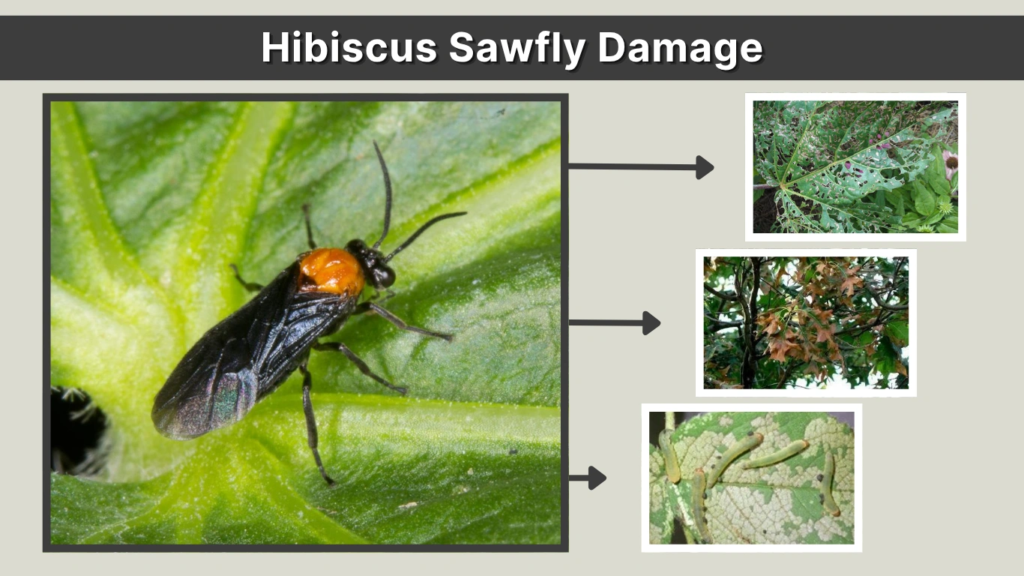
Symptoms and Signs
- Skeletonized leaves with transparent patches or only leaf veins remaining
- Brown or scorched-looking foliage from feeding damage
- Presence of small green larvae under leaves
- Premature leaf drop and poor flowering due to reduced vigor
Commonly Affected Varieties
- Hardy hibiscus (Hibiscus moscheutos)
- Rose mallow hibiscus
- Tropical hibiscus (Hibiscus rosa-sinensis)
- Shrubby mallow species
Severity of Damage
Mild infestations mainly cause cosmetic issues, but heavy ones can defoliate entire plants within weeks. Repeated attacks weaken the plant, stunt growth, and reduce blooms.
How to Get Rid of Hibiscus Sawfly
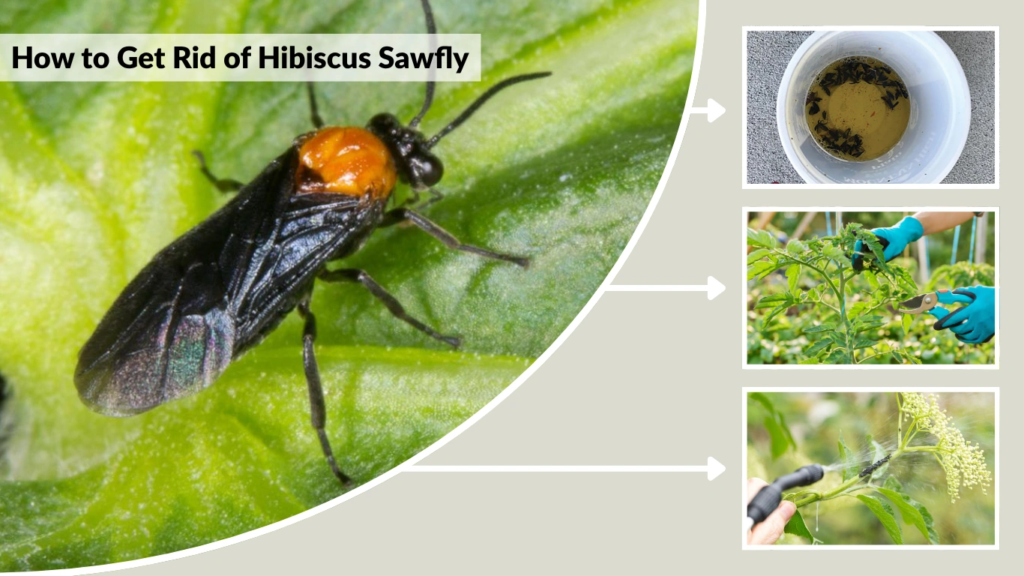
Manual and Physical Control
- Handpick larvae and drop them into soapy water.
- Prune heavily infested leaves and discard — do not compost.
- Use a strong water spray to dislodge larvae.
- Rake fallen leaves to remove overwintering cocoons.
Natural and Organic Control
- Neem oil: Disrupts larvae feeding and reproduction; apply weekly during outbreaks.
- Insecticidal soap: Effective against young larvae; coat both leaf surfaces.
- Diatomaceous earth: Sprinkle on foliage to deter feeding.
- Encourage predators (ladybugs, lacewings, birds) for long-term balance.
Chemical and Insecticide Treatments
When natural methods are insufficient, chemical control becomes necessary—especially during severe infestations. Use insecticides labeled for sawfly larvae, not for caterpillars, as these pests do not respond to Bt (Bacillus thuringiensis). Look for products containing spinosad, carbaryl (Sevin), permethrin, or pyrethrin.
Apply sprays early in the morning or evening when larvae are small and actively feeding. Focus on coating the undersides of leaves where they cluster. Avoid using broad-spectrum insecticides excessively, as these can harm pollinators and beneficial insects.
Systemic insecticides may be applied for severe infestations, particularly on larger hibiscus shrubs. These products move through the plant’s tissues, killing larvae as they feed. However, they should be used sparingly and according to label directions.
Prevention and Long-Term Management
Monitoring and Garden Care
Early detection is the best prevention. Inspect hibiscus leaves weekly, especially in late spring and early summer when adults begin laying eggs. Remove affected leaves promptly to prevent larval hatching.
Keep the area beneath hibiscus plants clean by raking fallen leaves and debris. Many sawfly species overwinter in soil as pupae, so turning or replacing soil in late fall can reduce the next year’s population.
Water and fertilize properly—healthy hibiscus plants resist pest attacks more effectively. Avoid over-fertilization, as soft new growth attracts sawflies.
Organic Prevention and Companion Planting
Maintain an eco-friendly balance in your garden to naturally deter sawflies. Introduce or encourage beneficial insects such as ladybugs, lacewings, and parasitic wasps, which prey on sawfly larvae and eggs.
Plant nectar-rich flowers nearby—like dill, fennel, and marigold—to attract these natural predators. Regularly spraying neem oil as a preventive measure during active months can also discourage adult sawflies from laying eggs.
For long-term control, rotate hibiscus with other plant varieties and avoid planting new hibiscus in areas previously infested.
Regional Notes
- Southern U.S. and Tropical Regions: Multiple generations of hibiscus sawflies can occur from spring through fall. Regular monitoring is crucial.
- Temperate and Northern Areas: Usually one main generation occurs; infestations peak in June or July. Clean garden beds in autumn to destroy overwintering pupae.
- Australia and UK Gardens: Similar symptoms and control methods apply. Neem oil and manual removal are highly effective for smaller infestations.
FAQs
What kills hibiscus sawfly larvae effectively?
Insecticides containing spinosad, carbaryl, or pyrethrin are highly effective against hibiscus sawfly larvae. Apply when larvae are young and feeding actively, coating both leaf surfaces for complete coverage.
Does neem oil kill hibiscus sawflies?
Yes. Neem oil works by interrupting feeding and growth. Spray on infested leaves every 7–10 days during outbreaks. It’s safe for beneficial insects when applied in the evening and is an excellent organic control method.
How do you get rid of hibiscus sawfly naturally?
Handpick larvae, prune affected leaves, and use neem oil or insecticidal soap. Diatomaceous earth also works as a natural barrier. Encourage beneficial predators like birds and ladybugs for ongoing control.
What does hibiscus sawfly damage look like?
Hibiscus sawfly damage appears as skeletonized or lace-like leaves. In early stages, leaves show transparent patches where larvae have eaten surface tissue. In severe cases, leaves are entirely consumed, leaving only the veins.
Are hibiscus sawflies dangerous to humans or pets?
No, hibiscus sawflies are not dangerous. They neither sting nor bite and are harmless to people and animals. Their threat lies solely in their feeding activity, which can severely weaken hibiscus plants if left untreated.
