
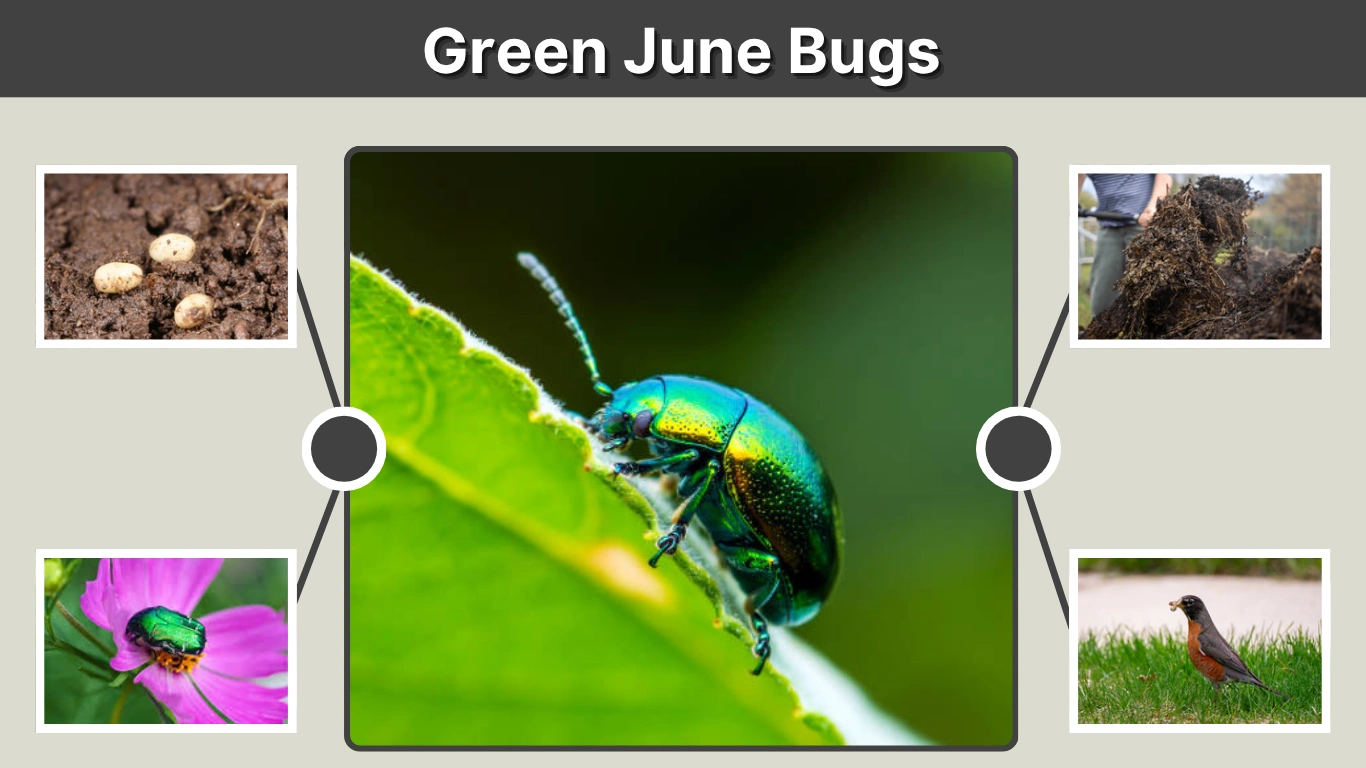
Every summer, shiny green beetles buzz across lawns and gardens, startling many with their size and sound. These are green June bugs (Cotinis nitida), also known as green June beetles. Though they may appear intimidating, they are mostly harmless and even beneficial in small numbers. Native to the United States, especially the Southeast and parts of California, green June bugs are part of nature’s cleanup crew, feeding on decaying fruit and organic matter.
Understanding their habits, diet, and life cycle can help homeowners appreciate their role — and manage them effectively if they become too abundant.
Identification of Green June Bugs
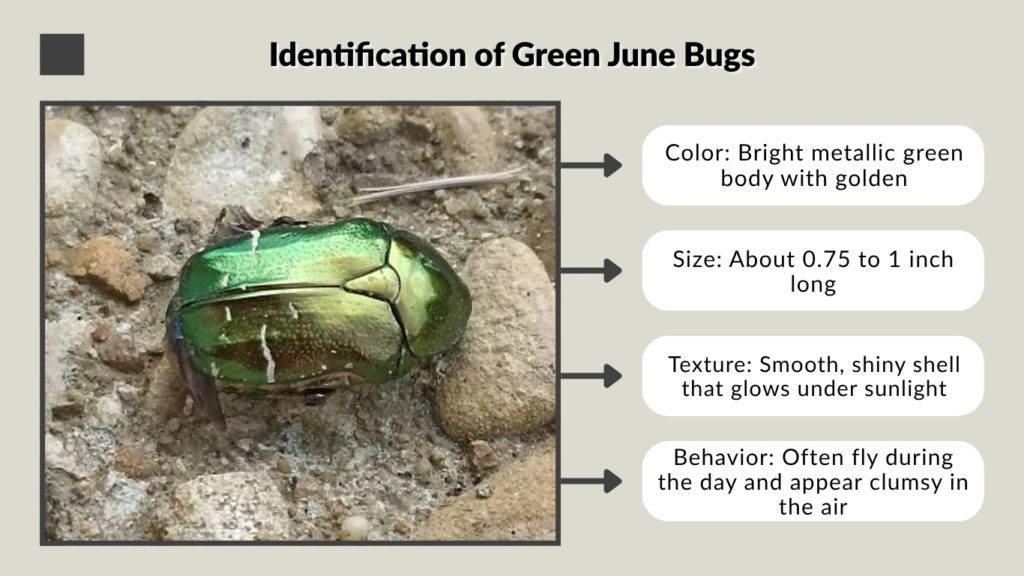
Recognizing a green June bug is easy once you know what to look for:
- Color: Bright metallic green body with golden or bronze wing covers
- Size: About 0.75 to 1 inch long, larger than most common beetles
- Texture: Smooth, shiny shell that glows under sunlight
- Flight Sound: A loud, buzzing noise similar to a small drone
- Behavior: Often fly during the day and appear clumsy in the air
These beetles are often mistaken for Japanese beetles, but they differ in size and feeding habits. Green June bugs rarely damage leaves, preferring soft fruits and decaying matter.
Green June Bug vs. Japanese Beetle
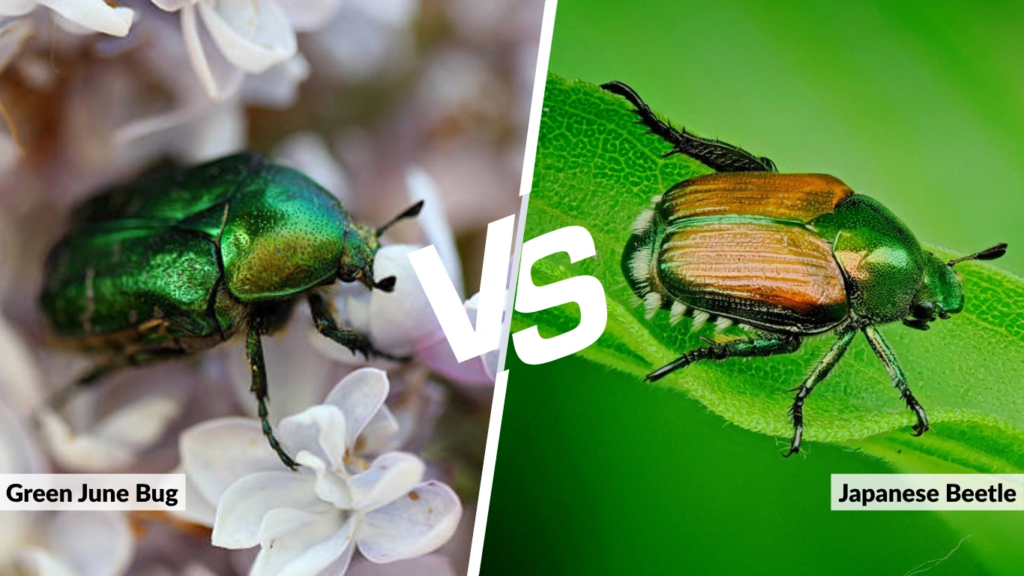
Although both species share a metallic sheen, several key differences separate them:
- Japanese beetles are smaller, roughly half an inch long.
- Green June bugs have thicker bodies and fly higher during the day.
- Japanese beetles feed on leaves and flowers, while green June bugs prefer overripe fruit.
- Green June bugs are native to the U.S., while Japanese beetles are invasive.
In short, if you see a large, shimmering beetle hovering clumsily over a peach tree, it’s likely a green June bug — not its destructive cousin.
Life Cycle of the Green June Bug
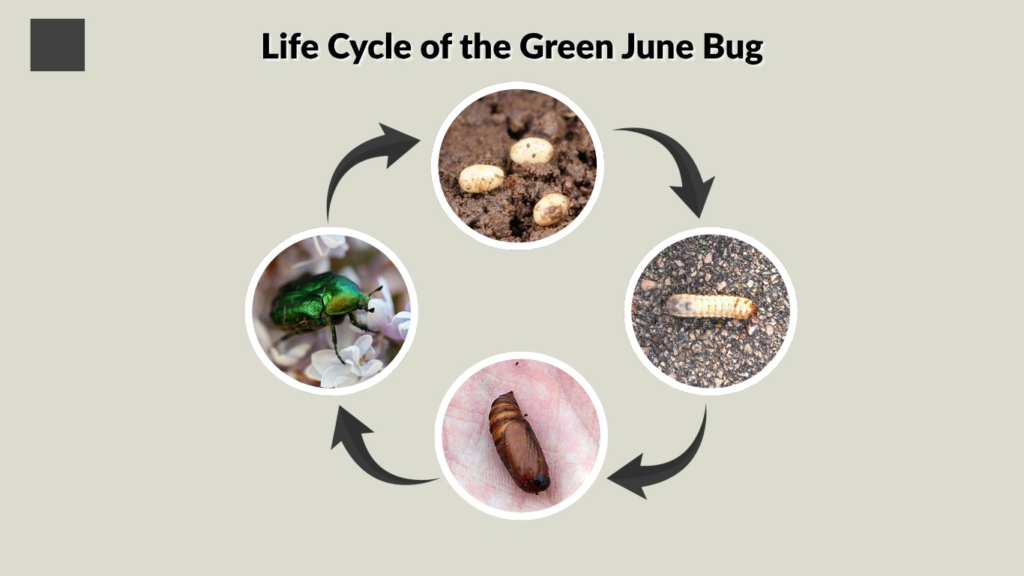
Like many beetles, the green June bug undergoes complete metamorphosis, consisting of four stages:
- Egg: Females lay eggs in moist soil, compost, or decaying vegetation during midsummer.
- Larva (Grub): The eggs hatch into white, C-shaped grubs that feed on decomposing organic matter and grass roots.
- Pupa: After several months underground, larvae form a hard shell and transition into pupae during spring.
- Adult: The fully grown beetles emerge from the soil around late May to early July, living for about 6–8 weeks.
During the larval stage, they play a significant role in soil aeration but may cause lawn damage if populations are dense.
Where Green June Bugs Are Found
Green June bugs thrive in warm, humid environments and are most active in the early mornings and late afternoons. They are common in:
- California and Arizona: Favor fruit orchards and compost-rich soil
- Texas and Alabama: Often swarm around peach trees and decaying fruit piles
- Southeastern U.S.: Appear in large numbers during humid summer months
Their range extends from the Mid-Atlantic to the southern Midwest, with occasional sightings as far west as California’s Central Valley.
Behavior and Flying Patterns

Clumsy but Harmless Fliers
Green June bugs are strong but awkward fliers. They often bump into walls, cars, and even people while buzzing loudly through the air. This clumsiness has led some to believe they’re blind — a myth. In reality, their vision is limited, but not nonexistent.
They are daytime flyers, often active under the morning sun. At night, however, they can still be attracted to porch or street lights, creating the impression of a swarm.
Despite their size, they do not bite, sting, or carry disease, making them harmless to humans and pets.
What Green June Bugs Eat
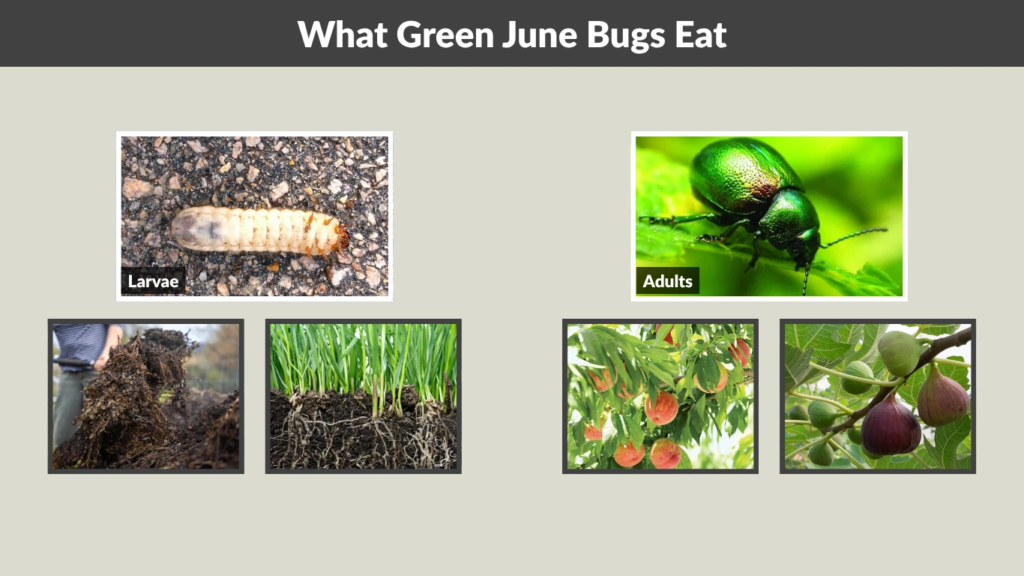
A green June bug’s diet depends on its life stage:
- Larvae: Feed primarily on decomposing organic matter, compost, and grass roots beneath the soil.
- Adults: Enjoy sweet, fermenting fruits such as peaches, figs, grapes, apples, and pears.
Their feeding habits make them both beneficial decomposers and occasional nuisances. While adults clean up rotting fruit, too many can damage ripe produce.
In gardens, they also play a small role in pollination when moving from one fruit source to another.
Green June Bug vs. Brown June Bug
While they share the “June bug” name, these insects are quite different. Brown June bugs, from the Phyllophaga genus, are nocturnal and dull brown, whereas green June bugs are iridescent, active during the day, and generally less harmful.
Some brown June bugs can damage crops and turf significantly, while green June bugs focus more on soft fruits and decaying material. Occasionally, people mistake older green June bugs for brown ones, as their color can fade with age.
Are Green June Bugs Harmful?

Despite their intimidating size and noisy flight, green June bugs are not dangerous to humans or animals. They don’t bite or sting, and they’re not poisonous.
However, their larvae can harm lawns by feeding on grassroots. When infestations are heavy, homeowners may notice patches of wilted or yellowing grass — a sign of grub damage.
Adult beetles can also cause problems for fruit growers, especially when attracted to ripe or rotting fruit on trees and the ground.
In small numbers, though, they’re simply part of the natural ecosystem and rarely require intervention.
Benefits of Green June Bugs
Even though they can be pests in large groups, green June bugs have important ecological roles:
- Soil Aeration: Their larvae tunnel through soil, helping oxygen reach roots.
- Decomposition: They consume decaying matter, reducing waste buildup.
- Pollination Support: While not primary pollinators, adults can aid fruit pollination.
So before eliminating them entirely, it’s worth recognizing their contribution to soil health and nutrient recycling.
How to Get Rid of Green June Bugs
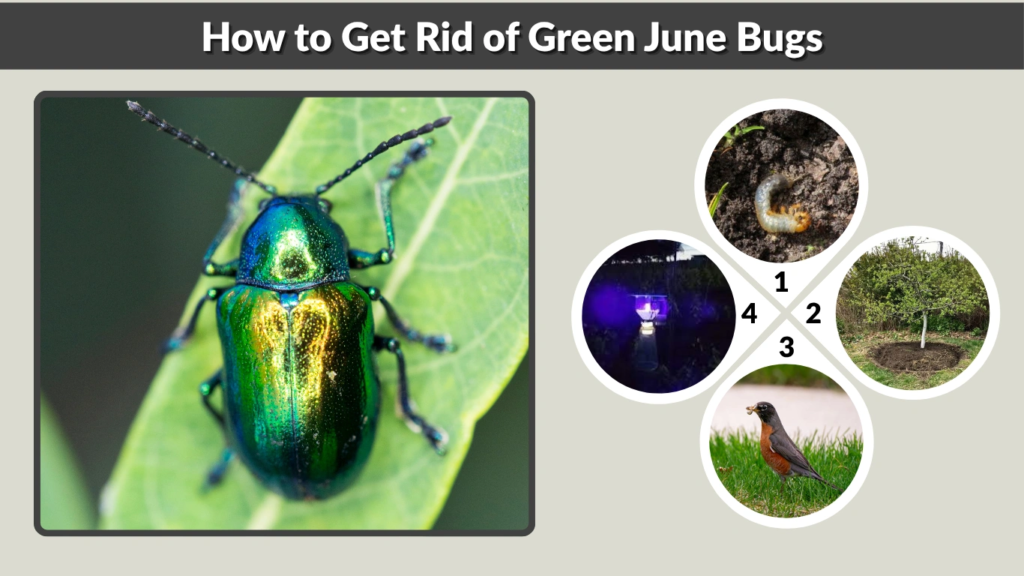
Natural Control Methods
The best approach to green June bug management is preventive and natural:
- Introduce beneficial nematodes to target larvae underground.
- Keep fruit trees and compost piles clean and covered.
- Encourage birds such as robins and starlings that feed on grubs.
Chemical or Mechanical Solutions
For larger infestations, use lawn insecticides labeled for grub control.
You can also:
- Install light traps to capture adults at night.
- Aerate and dry out moist soil to discourage egg-laying.
Natural balance is key — a few beetles are harmless, but consistent infestations should be treated early in the season.
Green June Bug Symbolism and Meaning
Throughout history, many cultures have seen beetles — especially iridescent ones — as symbols of rebirth, transformation, and spiritual growth. The green June bug’s sudden appearance in early summer often represents renewal and prosperity.
- Transformation: Emerging from the soil after months underground mirrors personal growth after challenges.
- Abundance: Their attraction to ripe fruits connects them with harvest and fertility.
- Spiritual Reminder: Seeing a green June bug may symbolize grounding and reconnecting with nature’s cycles.
In essence, encountering one can serve as a reminder of life’s resilience and ongoing change.
Interesting Facts About Green June Bugs
These beetles have many unique features that make them fascinating creatures rather than pests:
- They can fly up to 10 miles per hour, producing a sound similar to a miniature drone.
- Green June bugs are often attracted to light, especially in the evening.
- Despite their name, they appear not just in June but throughout mid-summer.
- Their color comes from structural iridescence, not pigment — light refracts on their shell.
- In folklore, their green glow represents luck and healing energy.
Their metallic appearance and gentle behavior make them one of the more eye-catching beetles in North America.
Regional Notes on Green June Bugs
Green June bugs thrive in many U.S. regions, though their behavior varies slightly with local climates:
- California: Found mainly in orchards and gardens with rich organic soil. The state’s warm climate supports multiple breeding cycles.
- Texas: Commonly swarm around peach trees and decaying fruits in summer.
- Southeast U.S. (Georgia, Alabama, Florida): Populations peak in humid conditions and are most noticeable around compost piles and fruit trees.
- Midwest: Less frequent but appear during hot, dry years when soil moisture is high.
Their adaptability helps them thrive across diverse environments — from suburban lawns to rural farms.
Common Misconceptions
“Green June Bugs Bite” – False
They lack strong mouthparts capable of biting humans. Their mouths are designed for sipping fruit juices, not piercing skin.
“They’re Invasive” – False
Unlike Japanese beetles, green June bugs are native to the United States and have lived here for centuries.
“They’re Blind” – False
Their vision isn’t great, but they’re not blind. Their clumsy flight stems from their large, heavy bodies and broad wings.
“They Only Appear in June” – Misleading
They emerge in early summer, but adults can remain active through August depending on weather conditions.
By separating myth from fact, you can better understand these unique insects and handle them appropriately.
FAQs
1. Do Green June Bugs Bite?
No. Green June bugs don’t have biting mouthparts and cannot sting or harm humans. Their buzzing flight may cause alarm, but they’re entirely safe to be around.
2. How Long Do Green June Bugs Live?
Adults live about 6–8 weeks, emerging in early summer. However, their full life cycle lasts nearly a year, most of it underground as larvae feeding on organic matter.
3. Are Green June Bugs Dangerous to Gardens?
Not typically. They prefer decaying fruit and organic waste. In large numbers, larvae may cause minor turf damage, but adults seldom harm healthy plants.
4. Why Are Some June Bugs Green and Others Brown?
The color difference comes from species variation and aging. Green June bugs belong to Cotinis nitida, while brown ones are Phyllophaga species, active mainly at night.
5. What Attracts Green June Bugs to My Yard?
They’re drawn to ripe fruit, moist soil, compost piles, and outdoor lighting. Cleaning up these attractants helps reduce their numbers naturally.
