
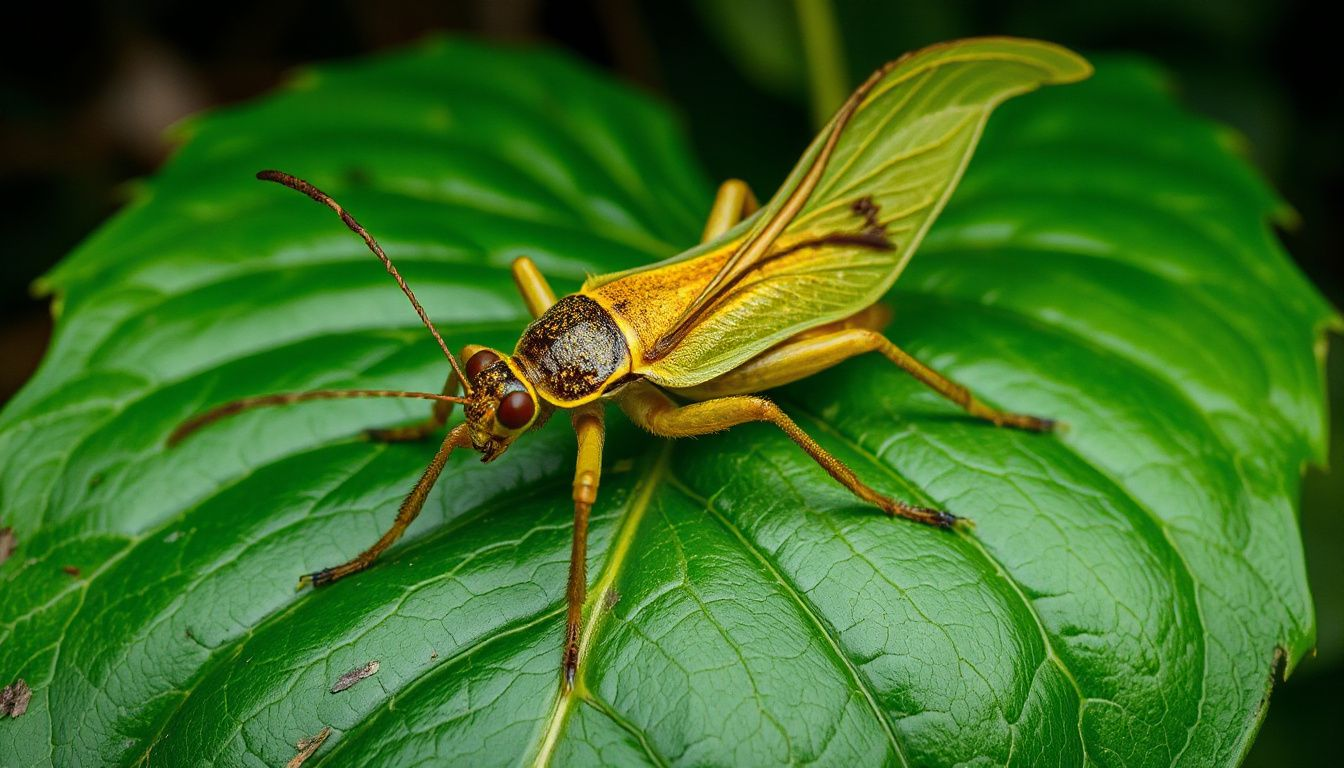
Giant Leaf Insect: Size, Color, Habitat, Diet, Lifecycle, and Lifespan sounds like a checklist, but it’s really the fastest way to understand one of nature’s best illusions. At first glance, many people swear they’re looking at a living leaf, not an insect.
Look closer and the details get even more interesting: leaf-like veins, gentle swaying that mimics a breeze, and camouflage that changes with age and environment. They’re popular in classrooms and among beginner keepers because they’re calm, quiet, and surprisingly easy to observe.
Naturalists and entomologists have documented their behavior and growth patterns for decades, and reputable insect-breeding guides back up what keepers see at home. A practical example: someone setting up a simple mesh enclosure with fresh bramble or eucalyptus can watch a nymph molt, “leaf up” in color, and start feeding within hours.
Next, they’ll get clear answers on the essentials, including:
- How big giant leaf insects can get and why females and males differ
- What colors they show, from bright green to brown “dead leaf” tones
- Where they live, what they eat, and how their lifecycle and lifespan play out
If they want a quick, reliable overview before handling or keeping one, they should start here and follow along step by step.
What the Giant Leaf Insect Is and How It’s Classified
Now that the basics are on the table, it helps to pin down what a giant leaf insect actually is. It’s a large, leaf-mimicking walking stick relative in the order Phasmatodea, a group built around camouflage and slow, deliberate movement.
In classification terms, it sits among the “leaf insects,” typically placed in the family Phylliidae. Many species in this line are native to tropical forests in Southeast Asia and nearby regions, where broadleaf plants give them perfect cover.
Key identifiers used by entomologists and keepers include:
- Leaf-like body margins that mimic veins and torn edges
- Flattened shape designed for hiding on foliage
- Slow sway behavior that imitates leaves in a breeze
Practical example: a keeper comparing a “stick insect” to a leaf insect will notice the leaf insect’s wider, flatter abdomen and scalloped edges—traits that quickly narrow the ID toward Phylliidae.
Size and Body Shape: How Big It Gets and Why It Looks Like a Leaf
Look closely and the giant leaf insect’s proportions explain its name. Adults commonly reach about 8–12 cm in body length, with females usually larger and broader than males.
Its body isn’t just “flat.” The abdomen spreads outward like a leaf blade, while the legs often carry thin, expanded lobes that imitate leaf margins. Even small details matter: vein-like patterns and irregular edges can resemble insect-chewed foliage.
That leaf illusion serves two jobs at once:

- Predator avoidance by blending into broadleaf plants
- Stillness camouflage when it rests along a midrib or stem
- Motion camouflage through gentle rocking that mimics wind
Practical example: in a planted enclosure, a well-camouflaged adult can sit on a bramble or guava leaf and be missed at arm’s length until it shifts position or the light catches its body edges.
Color and Camouflage: Patterns, Variation, and Seasonal Shifts
Now that its leaf-like build is clear, the next detail is how the giant leaf insect “paints” the illusion. Most individuals sit in the green-to-brown range, with vein-like lines and mottled patches that mimic real leaf tissue. Ragged-looking edges and darker “bite marks” can make it look like a chewed leaf, not a living animal.
Color varies by species, age, and environment. In captivity, humidity, diet quality, and background color can influence how strongly greens or browns show after a molt. Some individuals darken as they mature, while others hold bright green when kept in lush, well-lit enclosures.
- Veining: thin lines that resemble leaf veins
- Speckling: mottled spots like leaf fungus or debris
- Edge mimicry: uneven margins that copy torn leaves
Practical example: a keeper who swaps from pale artificial foliage to darker live plants often notices the insect appearing “duller” after the next molt, matching the new visual backdrop.
Natural Habitat and Range: Where It Lives and What It Needs
Look at where it thrives in nature, and its care requirements make more sense. Giant leaf insects are native to tropical and subtropical forests in parts of Southeast Asia and nearby regions, where dense vegetation and steady moisture support both camouflage and feeding.
They typically occupy shrubs and lower tree branches, staying still during the day and moving more at night. Successful habitat conditions center on stable warmth, moderate-to-high humidity, and abundant broad leaves for shelter and food.
- Cover: layered foliage for hiding and resting
- Microclimate: warm air with humid pockets under leaves
- Airflow: enough ventilation to reduce mold risk
Practical example: in a planted terrarium, keeping a gentle airflow while misting lightly helps replicate a forest understory—humid, but not stagnant—so the insect can perch, feed, and molt safely.
Diet and Feeding Behavior: What It Eats and How It Feeds
Now that its living conditions are clear, the next question is simple: what keeps a giant leaf insect going? They’re folivores, built to eat tender leaves and stay hidden while doing it. Feeding is usually slow, quiet, and timed for low-light hours.
They use strong mandibles to shave and clip leaf edges, often leaving scalloped bite marks that blend into natural leaf damage. Their gut is tuned for fibrous plant material, so they’ll pace intake rather than binge. Hydration mostly comes from fresh foliage, though they may sip dew or droplets.
- Common captive foods: bramble/blackberry, rose, guava (where legal and pesticide-free)
- Feeding pattern: mostly nocturnal, longer feeding bouts after lights-out
- Behavioral tell: minimal movement while chewing to avoid detection
Practical example: a keeper may offer pesticide-free bramble cuttings in water; if the insect targets only new growth, that’s normal preference, not “picky eating.”
Lifecycle Stages: Egg, Nymph, and Adult Development
Look at their lifecycle and it reads like a camouflage upgrade plan. Giant leaf insects develop through incomplete metamorphosis: egg to nymph to adult, with multiple molts in between. Temperature, humidity, and food quality strongly influence timing.
Eggs are dropped or flicked to the ground and may resemble seeds, reducing predation. Incubation can take months, especially in cooler conditions. Hatch success improves when eggs are kept stable and not allowed to dry out.

Nymphs emerge small and often less “leafy,” then gain lobes and broader bodies with each molt. They’re most vulnerable during and right after molting, when the new cuticle is soft. Adults reach full leaf mimicry and begin reproduction; females typically live longer than males.
- Stages: egg → nymph (several instars) → adult
- Key milestones: first feeding within 24–48 hours, repeated molts, sexual maturity after final molt
- Practical care note: avoid handling during pre-molt “stillness” to prevent failed molts
Lifespan and Survival: Typical Longevity and Key Threats
With its development stages mapped out, the next practical question is how long a giant leaf insect actually makes it in the real world. In captivity, many live about 8–14 months from hatching to natural death, depending on temperature, humidity, and steady access to fresh leaves. Wild longevity is often shorter because losses stack up early, especially in the nymph stage.
Survival hinges on stable microclimates and staying hidden, but several pressures cut lives short. Common threats include:
- Predation by birds, reptiles, and predatory insects
- Dehydration during dry spells or heat spikes
- Mold and bacterial issues in overly damp, poorly ventilated areas
- Handling injury, especially to legs and antennae
Practical example: keepers who mist lightly and improve airflow often see adults reach full lifespan, while stagnant, wet enclosures can trigger lethal fungal problems within weeks.
Behavior and Defenses: Movement, Mimicry, and Predator Avoidance
Now, look at how it stays alive day to day: the giant leaf insect relies on behavior as much as appearance. It typically moves slowly, often at night, and uses a characteristic “leaf sway” to match wind-driven foliage. When disturbed, it may freeze instantly, betting that stillness sells the illusion.
Its defenses are layered, not aggressive, and they work best when combined. Key tactics include:
- Startle stillness (sudden stop-and-hold posture)
- Controlled rocking to mimic a leaf on a stem
- Dropping behavior to fall into undergrowth when threatened
- Selective feeding times to avoid peak predator activity
Practical example: a handler opening an enclosure too quickly may trigger a drop response; placing a hand beneath the branch prevents falls and reduces stress-related injury.
Care and Conservation Notes: Captive Considerations and Ethical Sourcing
With husbandry basics established, the next practical question is how to keep a Giant Leaf Insect: Size, Color, Habitat, Diet, Lifecycle, and Lifespan responsibly in captivity. Good care starts before purchase, because sourcing choices directly affect wild populations and long-term keeper success.
Captive setups should prioritize stability and low stress, not constant handling. Keepers typically do best when they focus on:
- Captive-bred stock from documented lines, not wild-caught imports
- Quarantine for new arrivals to reduce mite, mold, and pathogen spread
- Gentle observation over frequent transfers, which can damage delicate legs
Practical example: a keeper asks a seller for hatch dates, parent photos, and locality paperwork; when none are provided, they choose a reputable breeder instead. That single decision supports ethical trade and usually yields hardier insects.
Conservation-minded keepers avoid releasing unwanted insects, share surplus through vetted networks, and report suspected illegal collection.
The Bottom Line
Now that the essentials are in place, the Giant Leaf Insect: Size, Color, Habitat, Diet, Lifecycle, and Lifespan stands out as a masterclass in camouflage and specialization. Its leaf-like body shape, variable greens and browns, and slow, swaying movement work together to make it easy to miss and hard to forget.
For readers trying to identify one in the wild or evaluate a photo, a quick checklist keeps things practical:
- Leaf mimicry: flattened body, “vein” patterning, and ragged edges
- Context clues: matching local foliage and low-visibility resting spots
- Consistency: features that align across multiple angles, not one snapshot
Example: when someone spots a “moving leaf” on a garden shrub at dusk, a short video from the side often reveals the telltale leg placement and gentle rocking motion. Next step: pick one goal—observe, photograph, or responsibly keep—and use these cues to guide what they do next.
Related read: 23 Types of Katydid: Identification with Pictures
