

The giant black bumble bee is one of the most striking and powerful insects in the pollinator world. With its robust body, loud buzzing sound, and metallic wings, this bee stands out easily among garden visitors. It plays an essential role in pollination and helps maintain balance in ecosystems. Despite its intimidating appearance, the giant black bumble bee is gentle and only stings when threatened.
Size and Physical Structure

The giant black bumble bee is noticeably larger than most other bee species. Adult females typically measure between 20 and 30 millimeters in length, while males are slightly smaller and slimmer. Their bodies are sturdy and rounded, covered in short, dense hair that gives them a fuzzy texture. The wings often shimmer with a purple or blue metallic sheen, which becomes visible in sunlight.
Their legs are strong and adapted for carrying pollen, while their heads feature powerful mandibles for chewing through wood or flower parts. Males can be identified by their longer antennae and thinner abdomens. These physical adaptations allow them to thrive in different environments and efficiently perform their role as pollinators.
Color and Appearance
The most defining characteristic of the giant black bumble bee is its deep black coloration. Unlike the familiar yellow-and-black striped honeybees, this species has a completely black thorax and abdomen. The thick layer of fine hair covering its body gives it a velvety look. In certain light conditions, the wings display iridescent hues, adding a subtle beauty to their otherwise dark form.
Their black color isn’t just for appearance—it also helps absorb sunlight, allowing these bees to stay warm during early mornings or cooler climates. This unique feature makes them active pollinators even when temperatures drop, giving them an ecological advantage over other species.
Habitat and Distribution
Common Locations
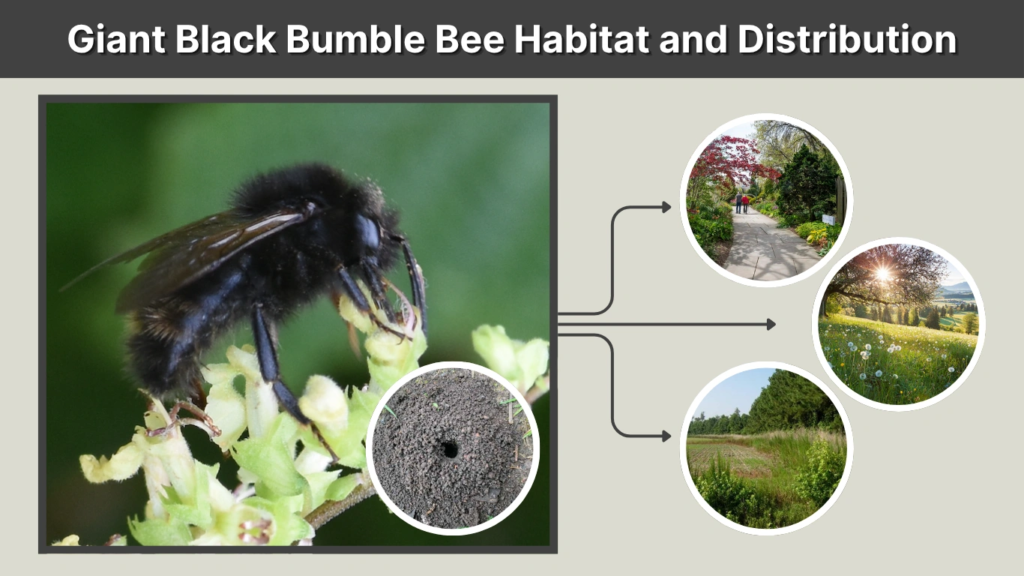
Giant black bumble bees are found in a wide range of habitats. They thrive in tropical, subtropical, and temperate regions across Asia, Africa, and the Americas. You can often spot them in gardens, meadows, forest edges, and farmlands, where flowering plants are abundant.
Nesting Habits
These bees prefer nesting in abandoned burrows, tree hollows, and cracks in wooden structures. Some species dig directly into soil banks or decaying wood. Unlike honeybees, they do not live in large colonies. Most are solitary or semi-social, with females building and maintaining their own nests.
Their nesting sites are typically located near flowering areas, ensuring easy access to nectar and pollen. The female carefully constructs wax-like chambers to store food and lay eggs, keeping the environment warm and protected for developing larvae.
Behaviors and Activities
The giant black bumble bee is known for its powerful and constant buzzing, a sound produced by rapid wing vibrations. This behavior plays a key role in buzz pollination, where the bee shakes loose pollen from deep within flowers. Crops like tomatoes and peppers benefit greatly from this method.
They are active during daylight hours, especially in the morning and late afternoon. Their flight patterns are steady but quick, and they can cover long distances while foraging. Despite their size, they are agile and efficient in collecting nectar.
Although these bees appear fierce, they are generally non-aggressive. They prefer to avoid conflict and only sting when provoked or handled roughly. Their calm nature makes them excellent garden visitors and valuable allies to farmers.
Identification Guide

Key Identification Points
Recognizing a giant black bumble bee is quite simple once you know what to look for. Here are the main traits:
- Large and bulky body – noticeably bigger than most other bee species.
- Jet-black coloration – both thorax and abdomen are entirely black, lacking bright stripes.
- Metallic or iridescent wings – shades of blue or purple under sunlight.
- Distinct buzzing sound – deeper and louder than that of honeybees.
- Hairy legs – designed for efficient pollen collection during foraging.
These features make the giant black bumble bee unmistakable, even from a distance.
Diet and Role in Pollination
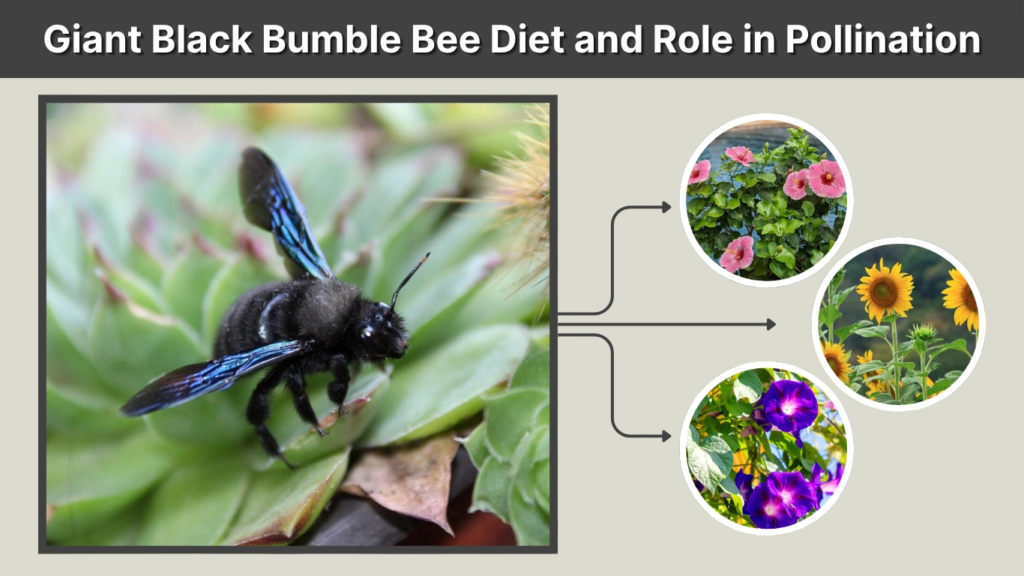
The giant black bumble bee feeds mainly on nectar and pollen from flowering plants. Its long tongue allows it to reach deep within tubular blossoms. These bees prefer brightly colored flowers such as hibiscus, sunflowers, and morning glories.
Their buzzing technique, known as sonication, helps shake pollen free from flowers that other insects struggle to pollinate. This makes them vital contributors to crop pollination, benefiting plants like tomatoes, peppers, and eggplants. In natural ecosystems, they also help maintain biodiversity by spreading pollen between wildflower species.
Reproduction and Lifecycle
The lifecycle of the giant black bumble bee begins when the female lays eggs in a small, protected cavity. She lines the nest with wax-like material and stores pollen to feed the larvae. Once the eggs hatch, the larvae consume this pollen until they develop into pupae.
The pupal stage lasts for several weeks, depending on temperature and food supply. When conditions are ideal, adults emerge during the warmer months. In tropical regions, reproduction can occur year-round, while in cooler climates, bees may enter a brief dormant phase during winter.
Males’ primary role is mating; afterward, they die shortly after reproduction. Females continue nesting and nurturing the next generation, ensuring the population’s stability.
Interaction with Humans
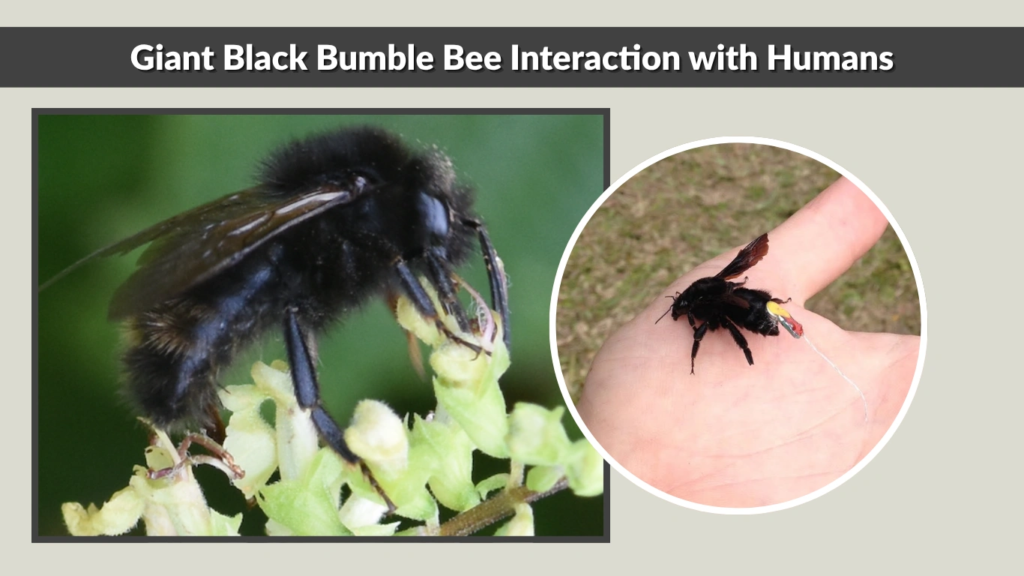
Despite their intimidating size, giant black bumble bees are harmless and gentle. They rarely sting unless threatened or handled aggressively. Their presence in gardens is actually beneficial, as they pollinate crops and ornamental plants alike.
Some people mistakenly view them as pests when they bore into wood, but in most cases, this behavior causes minimal structural harm. Encouraging their presence through bee-friendly gardens with flowering plants can significantly boost pollination and plant growth.
Conservation and Threats
These bees face several threats, primarily from habitat loss, pesticide use, and climate change. Deforestation and urbanization reduce nesting spaces and food sources. Pesticides disrupt their foraging behavior and can lead to population decline.
Conservation efforts focus on promoting organic farming, native plant growth, and habitat restoration. Educating people about their ecological importance is essential to protect these natural pollinators. Even small actions—like planting native flowers—can create safe spaces for them to thrive.
