

German wasps (Vespula germanica) are one of the most recognizable and widespread wasp species in the world. Known for their bold black and yellow bodies, ground nesting habits, and painful sting, these wasps can become a serious nuisance—especially during late summer. Whether you’ve spotted one near your garden or found a nest in your shed, understanding their behavior, lifecycle, and potential danger is important.
In this guide, you’ll learn everything about German wasps, including how to identify them, what their nests look like, if they’re aggressive, and what to do if you find one.
What Is a German Wasp?

Scientific Name and Classification
German wasps belong to the species Vespula germanica and are part of the Vespidae family. They are closely related to other social wasps like the common wasp (Vespula vulgaris) but differ slightly in appearance and nesting habits.
Global Distribution
Although originally native to Europe and temperate parts of Asia, German wasps are now widespread in:
- North America
- Australia
- New Zealand
- Parts of South America
Their success as an invasive species comes from their adaptability to different climates and their ability to find shelter in urban environments.
Differences from Other Wasps
German wasps are often mistaken for common wasps due to similar coloring. However, a key difference is the presence of three distinct black dots on the face of the German wasp. These dots are typically absent in common wasps.
Why They Matter
German wasps can benefit ecosystems by controlling pest insects. However, their aggressive behavior, ground-nesting habits, and painful stings make them a serious nuisance—especially when they build nests near human activity. Understanding what they are helps in dealing with them safely and effectively.
What Does a German Wasp Look Like?

German wasps have a bold and easily recognizable appearance. Their black and yellow coloration is a natural warning sign to predators and a common characteristic of many wasps and bees.
Key Identification Features:
- Body Color: Bright yellow with black bands across the abdomen
- Facial Markings: Three small black dots on the front of the face (a reliable way to tell them apart from common wasps)
- Antennae: Black
- Wings: Transparent and slightly tinted, folding lengthwise when at rest
- Legs: Yellow
- Body Shape: Slim and wasp-waisted, with a narrow connection between the thorax and abdomen
German Wasp Size
- Worker Wasps: Typically measure between 12–15 mm in length
- Queens: Larger, reaching up to 20 mm
- Males: Slightly smaller than queens, often similar in size to workers but with longer antennae
Male vs Female Appearance
- Females (workers and queens) have stingers and are responsible for defense and foraging
- Males do not sting and are produced only later in the season for mating purposes
Similar Species Comparison
German wasps can be confused with:
- Common wasps (Vespula vulgaris) – no black facial dots
- Paper wasps (Polistes spp.) – thinner bodies and longer legs
- Hornets (Vespa spp.) – usually larger, with reddish markings and a louder buzz
Recognizing a German wasp by its facial markings and size can help you safely identify their presence before dealing with nests or infestations.
Where Do German Wasps Live?

German Wasp Habitat
German wasps are highly adaptable and can thrive in a wide range of environments. Their natural habitats include:
- Forest edges and meadows
- Urban parks and gardens
- Roof voids, wall cavities, sheds, and garages
- Underground spaces like burrows and soil cavities
They are commonly seen near human activity because food waste and sugary drinks attract them—especially in late summer and early fall.
Urban vs Rural Nesting
In rural areas, they may choose tree hollows or underground spaces. In urban settings, they often nest in roof spaces, behind wall cladding, or even inside compost bins. Their ability to choose hidden or hard-to-reach nesting sites can make detection difficult until a colony is fully established.
German Wasp Nest Behavior
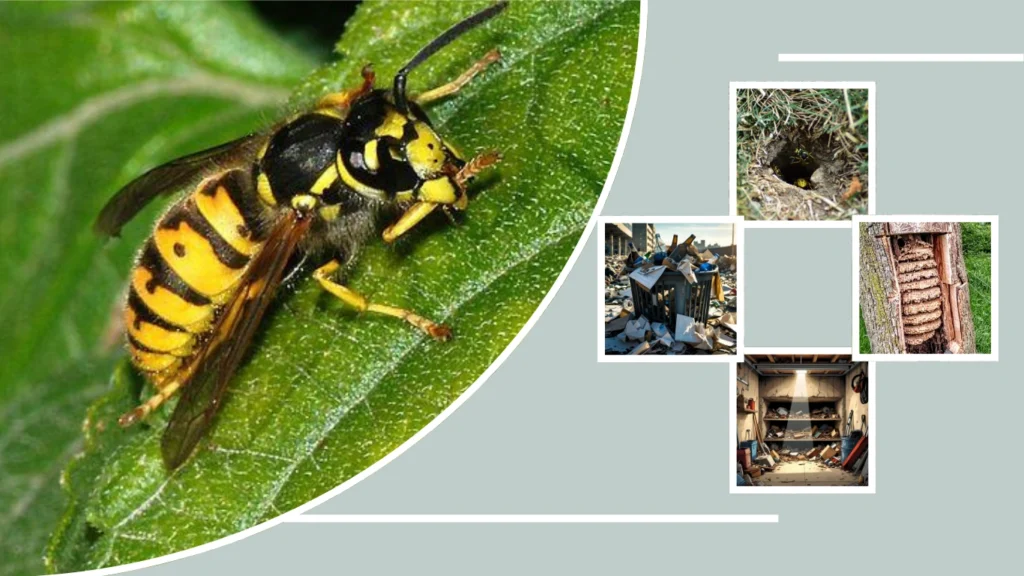
How and Where They Build Nests
German wasps create their nests by chewing wood fibers and mixing them with saliva to form a paper-like substance. This is used to construct multi-layered combs protected by a thin outer shell.
Common nest locations include:
- Underground burrows (often abandoned animal holes)
- Wall cavities and attics
- Tree stumps or hollow trees
- Sheds and garages
- Inside compost heaps or trash bins
German Wasp Nest in Ground
One of the most concerning behaviors of German wasps is their tendency to build nests in the ground. These nests are especially dangerous because they are hard to spot and are often disturbed accidentally by people walking or gardening nearby.
When disturbed, ground nests can trigger aggressive defensive behavior, with multiple wasps attacking at once. Pets and children are particularly vulnerable to stings in such cases.
Nest Size and Growth
- Nests begin small in spring and grow rapidly during the summer.
- At peak season, a single nest may house 1,000 to 5,000 wasps.
- As the colony matures in late summer, it produces new queens and males, signaling the end of the nest’s cycle.
Understanding their nesting behavior helps you know when to look out for wasp activity and how to approach removal safely.
German Wasp Queen

The queen is the most important member of a German wasp colony. She is the only wasp in the early stages of the nest to survive winter and start a new colony each spring. After emerging from hibernation, the queen searches for a suitable nesting site and begins building the first layers of the nest on her own.
She lays the first batch of eggs and feeds the larvae until the first generation of worker wasps hatch. Once workers take over nest-building and foraging, the queen focuses solely on egg-laying for the rest of the season.
Physical Appearance
- Size: Up to 20 mm, larger than workers
- Color: Similar yellow and black pattern, but more robust in shape
- Distinct Feature: Can be hard to distinguish from workers once the colony is active unless observed alone early in spring
Queen’s Lifecycle
- Hibernates in protected locations like logs, sheds, attics
- Wakes up in early spring to start a new nest
- Lays thousands of eggs during the colony’s peak
- Dies by the end of the season or is replaced by a newly mated queen
German Wasp Life Cycle

Seasonal Stages
German wasps follow a well-defined annual life cycle:
Spring
- Queen Emerges: From hibernation and begins building a new nest
- Lays Eggs: First generation of workers is produced
- Solo Stage: The queen does everything until workers emerge
Summer
- Colony Expands: Workers take over foraging and nest expansion
- Food Gathering: Workers hunt insects and scavenge sugary items
- Population Peaks: Thousands of workers may be active
Autumn
- Reproductive Phase: Queen produces males and new queens
- Mating: Takes place outside the nest
- Colony Decline: Workers and old queen die off
Winter
- New Queens Hibernate: In hidden, insulated places
- Nest Abandonment: Old nests are never reused
This life cycle explains why German wasps are rarely seen in winter and become most aggressive in late summer and early fall when food becomes scarce.
Are German Wasps Aggressive?
Behavior Toward Humans and Animals
German wasps are more aggressive than many other wasp species, especially when defending their nest. While they typically ignore humans unless provoked, they can become hostile if:
- Their nest is accidentally disturbed
- They feel threatened
- Food sources are limited (late summer)
- You swat at them or block their flight path
Unlike honeybees, German wasps can sting multiple times, making them more dangerous during an attack. Pets and small children are particularly vulnerable, especially near hidden ground nests.
Defensive Behavior
German wasps release alarm pheromones when one member is attacked, which can trigger a swarm. This is why multiple wasps often sting during a nest disturbance.
Signs of Aggression
- Hovering closely around food or drink
- Chasing people away from their nest
- Quick darting or zig-zag flight patterns
- Repeated buzzing or flying around the same spot
While individual wasps away from the nest are usually not dangerous, the risk increases significantly near active colonies.
German Wasp Sting
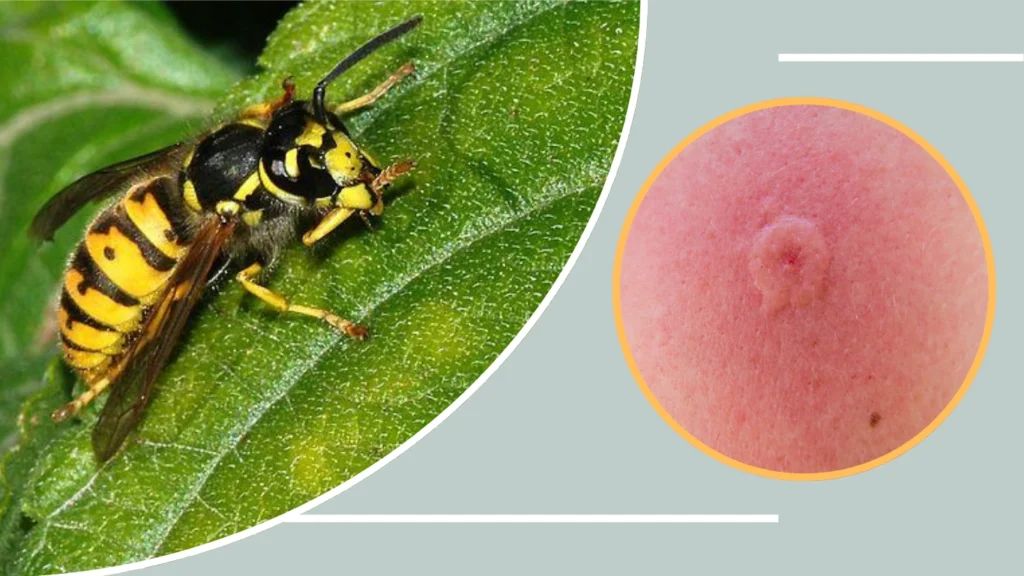
What Does a German Wasp Sting Feel Like?
A German wasp sting is sharp, burning, and painful. The pain may last for a few minutes to several hours depending on individual sensitivity.
Unlike bees, which sting only once, German wasps can sting multiple times and do not lose their stinger.
Sting Symptoms
- Immediate pain and redness
- Swelling around the sting site
- Itching or burning sensation
- Raised bump or welt
- In some cases, pus or blistering if scratched
Allergic Reactions
Some people may experience more severe symptoms:
- Difficulty breathing
- Swelling of the face or throat
- Dizziness or fainting
- Rapid heartbeat
- Nausea or vomiting
This can indicate anaphylaxis, a life-threatening emergency. Immediate medical attention is required.
Treatment Tips
- Clean the area with soap and water
- Apply a cold compress to reduce swelling
- Take antihistamines for itching or swelling
- Use pain relief cream or oral medication
- Seek emergency help if symptoms worsen
Understanding their sting behavior is critical for safety—especially when working in gardens, forests, or near outdoor bins where wasps are frequently active.
German Wasp Facts
Here are some useful facts about German wasps that help summarize their behavior, risk, and role in the ecosystem:
- Scientific Name: Vespula germanica
- Colony Size: Can grow up to 5,000 wasps in peak season
- Nesting Habit: Often underground, in roofs, or inside walls
- Appearance: Black and yellow with three distinct dots on the face
- Aggression: Can sting multiple times and are very territorial
- Lifecycle: Annual cycle — starts in spring and ends in winter
- Diet: Includes insects, meat, sugary drinks, fruit, and food scraps
- Global Spread: Native to Europe, now found in North America, Australia, New Zealand, and more
- Environmental Role: Helps control insect populations but becomes a nuisance around humans
- Nest Use: Old nests are never reused — queens start new ones each year
How to Deal with a German Wasp Nest
If you find a German wasp nest on your property, do not attempt to remove it yourself—especially if it’s active or located underground. German wasps defend their nest aggressively, and disturbing it may result in multiple stings.
What You Should Do:
- Stay Calm and do not swat at flying wasps
- Keep Pets and Children Away from the nest
- Observe the Nest From a Distance to confirm activity
- Contact Professional Pest Control — especially if the nest is large or near high-traffic areas
Best Time to Remove
The safest time for removal is late evening or early morning, when wasps are less active. Pest control professionals often use protective gear and approved insecticides to eliminate the colony safely.
FAQs About German Wasps
What is the difference between a German wasp and a common wasp?
German wasps have three black dots on their face, while common wasps do not. Both species are similar in size and color but may have different nesting preferences.
Can a German wasp sting more than once?
Yes. Unlike bees, German wasps can sting multiple times because they do not lose their stinger after attacking.
What happens if a dog disturbs a ground nest?
The wasps will likely attack in large numbers, causing painful stings. Dogs may suffer severe allergic reactions. Immediate veterinary care may be required.
Do German wasps return to the same nest every year?
No. Each new queen builds a fresh nest every spring. Old nests are abandoned and never reused.
What should I do if I find a nest in my garden?
Stay away and do not disturb it. Contact a professional pest removal service, especially if the nest is underground or hard to reach.
How long does a German wasp live?
- Workers: 2–4 weeks
- Queens: Up to 1 year (including hibernation)
Can German wasps damage wood or walls?
Indirectly, yes. While building nests, they chew wood fibers from fences, sheds, or other wooden structures, which may cause minor surface damage.
