
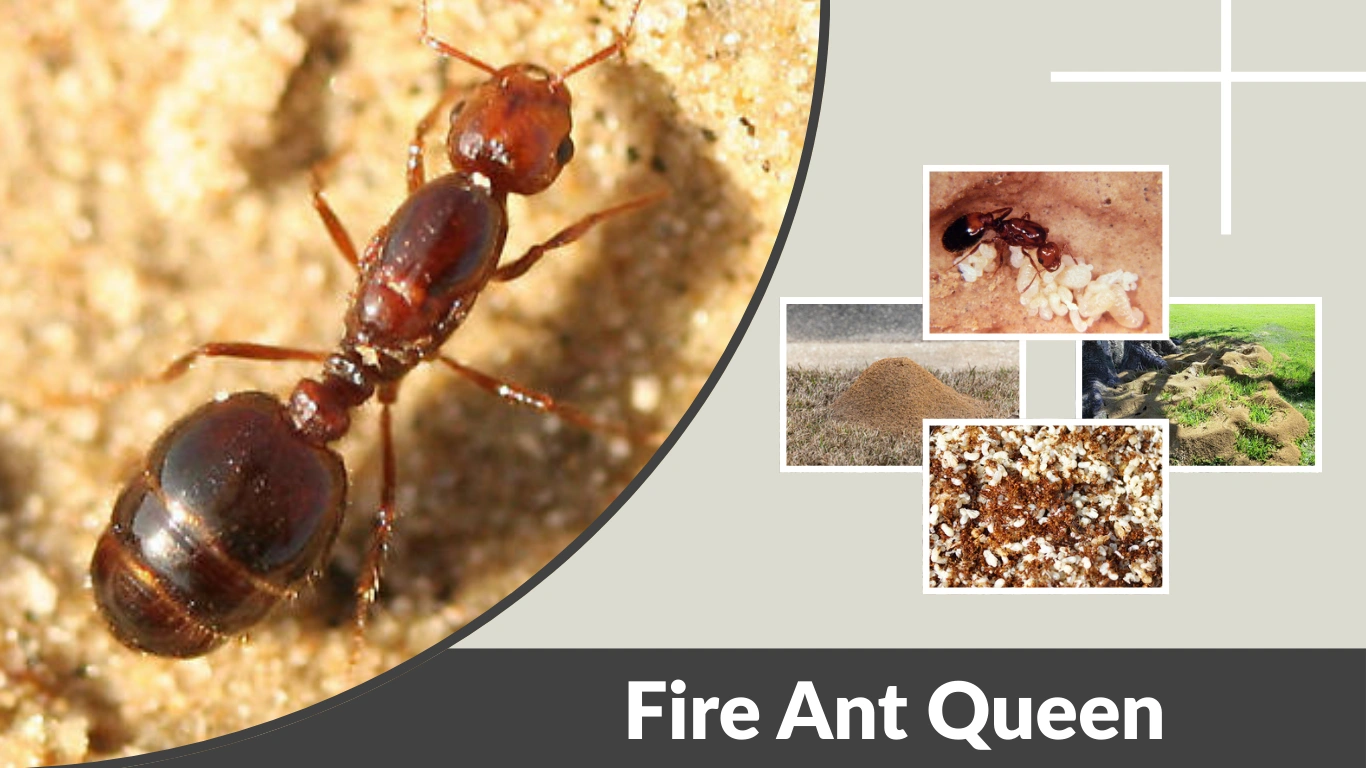
The fire ant queen is the most important member of any fire ant colony. She is responsible for reproduction, colony growth, and long-term survival. Unlike worker ants that forage and defend the nest, the queen spends most of her life hidden underground, laying eggs. Understanding her identification, habitat, behavior, and activity patterns is essential for anyone studying fire ants or dealing with infestations, as eliminating workers alone does not stop a colony from thriving.
What Is a Fire Ant Queen?
A fire ant queen is the reproductive female of the colony. Her primary role is to lay eggs that develop into workers, soldiers, and future reproductive ants. A single healthy queen can produce thousands of eggs, allowing a colony to grow rapidly. Without a queen, a fire ant colony cannot survive long-term, making her the true foundation of the nest.
Queens differ greatly from workers in size, appearance, and function. While workers handle daily tasks such as foraging and defense, the queen remains inside the nest, supported and protected by workers at all times.
Fire Ant Queen Identification
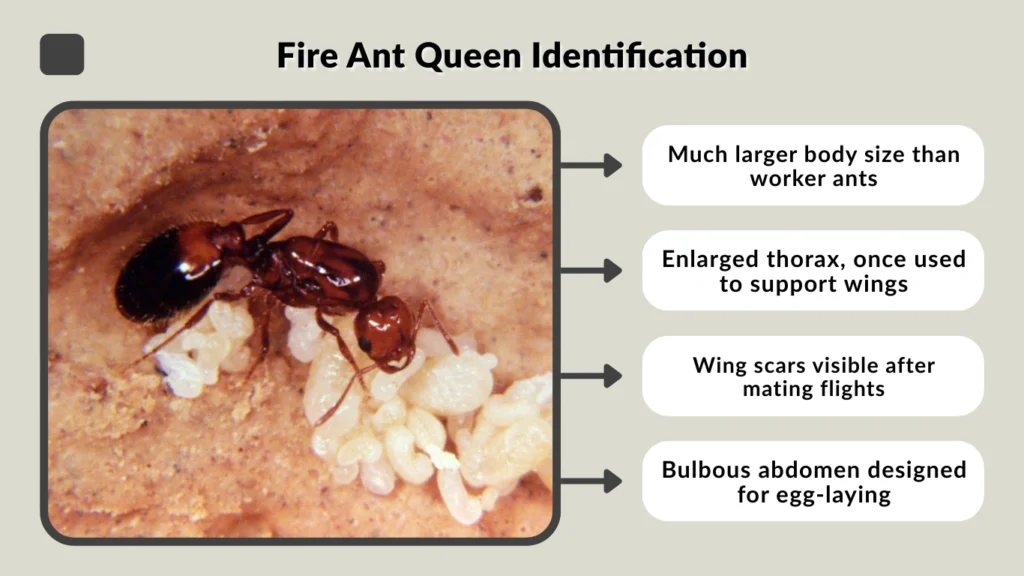
Identifying a fire ant queen is easier once you know what to look for. Key identification features include:
- Much larger body size than worker ants
- Enlarged thorax, once used to support wings
- Wing scars visible after mating flights
- Bulbous abdomen designed for egg-laying
- Reddish-brown to dark brown coloration
- Smoother body surface compared to workers
Virgin queens may still have wings, while mated queens shed them shortly after reproduction. This wing loss is a strong indicator that a queen has begun establishing a colony.
Size and Physical Characteristics
Fire ant queens typically measure between 8–14 millimeters, making them two to three times larger than workers. Their thorax is especially thick, reflecting the powerful muscles that once supported flight. The abdomen is large and flexible, allowing continuous egg production.
Queens also possess antennae for chemical communication and strong mandibles, though they rarely use them once settled. Compared to workers, queens are heavier and less mobile, relying on workers for protection and feeding.
Species of Fire Ant Queens
Several fire ant species have queens, but the most well-known include:
- Red Imported Fire Ant (Solenopsis invicta) – the most aggressive and invasive
- Black Imported Fire Ant (Solenopsis richteri) – less common but similar in behavior
- Native fire ant species – smaller colonies with less aggressive queens
While physical differences between species are subtle, colony size, aggression level, and habitat preference often vary significantly.
Habitat and Nesting Preferences
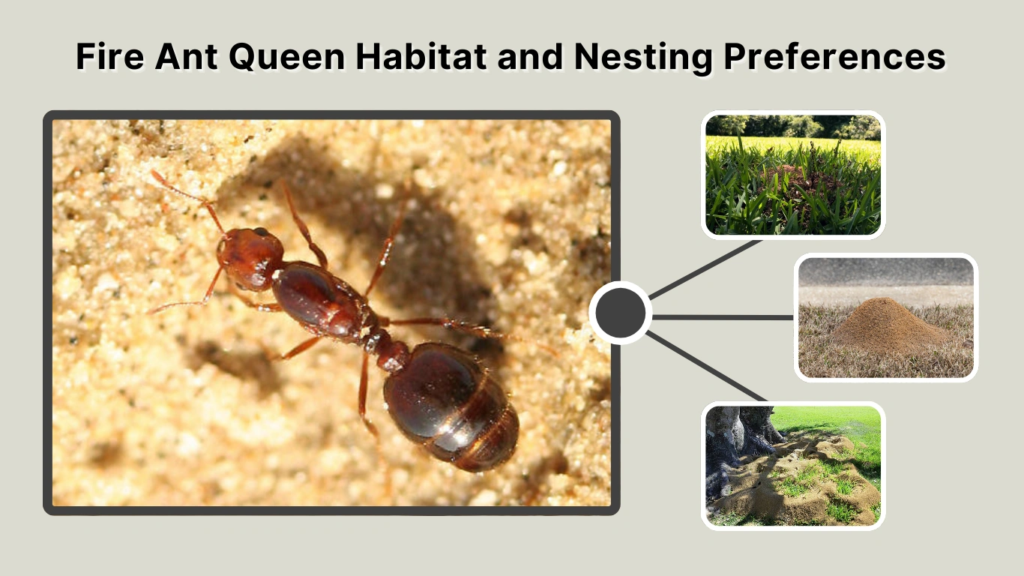
Fire ant queens thrive in warm climates with loose, well-drained soil. They are commonly found in:
- Lawns and gardens
- Agricultural fields
- Roadsides and open land
- Urban areas with disturbed soil
Queens prefer areas that allow easy nest expansion and moisture retention. After mating, a queen selects a nesting site where she can safely begin laying eggs. Once established, she rarely leaves the nest again.
Colony Structure and Role of the Queen
The queen controls the colony entirely through pheromones. These chemical signals regulate worker behavior, reproduction, and colony organization. Some colonies contain one queen (monogyne), while others support multiple queens (polygyne), which allows faster colony expansion.
In polygyne colonies, queens coexist and share reproduction duties, making infestations more difficult to eliminate.
Fire Ant Queen Behavior
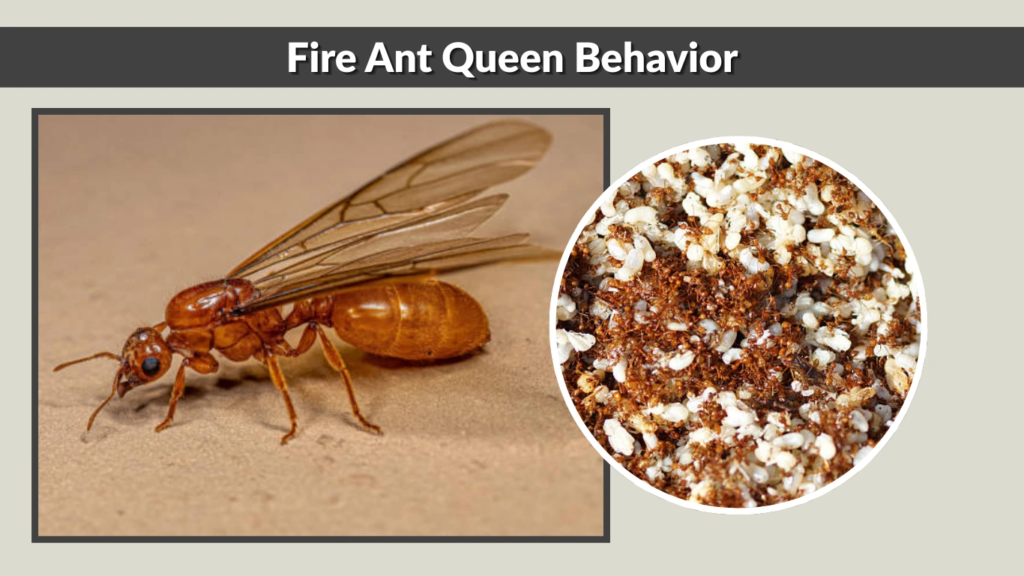
Fire ant queen behavior is centered around reproduction. Once settled, she lays eggs continuously, sometimes producing thousands per day at peak periods. She does not forage or defend the nest; instead, workers feed and protect her.
Queens are generally non-aggressive and rely on chemical signals rather than physical defense. Their dominance comes from pheromone production, which suppresses worker reproduction and maintains order within the colony.
Activity Patterns of Fire Ant Queens
Fire ant queens are active year-round in warm climates. Their egg-laying activity increases during spring and summer when food is abundant. In colder seasons, activity slows but rarely stops completely in established colonies.
The queen’s activity level is closely tied to worker efficiency. As workers gather more food, the queen increases egg production, allowing rapid colony growth.
Mating Flight and Reproduction
Fire ant queen reproduction begins with a mating flight, usually occurring during warm, humid conditions after rainfall. These flights typically take place in spring or early summer. Winged queens and males, known as alates, leave their nests simultaneously to mate in midair.
After mating, males die shortly afterward, while queens descend to the ground to begin a new colony. The queen sheds her wings, leaving visible scars on her thorax. This marks the transition from a mobile reproductive ant to a permanent nest-bound queen. She stores sperm from the mating flight and can use it to fertilize eggs for the rest of her life.
Life Cycle of a Fire Ant Queen
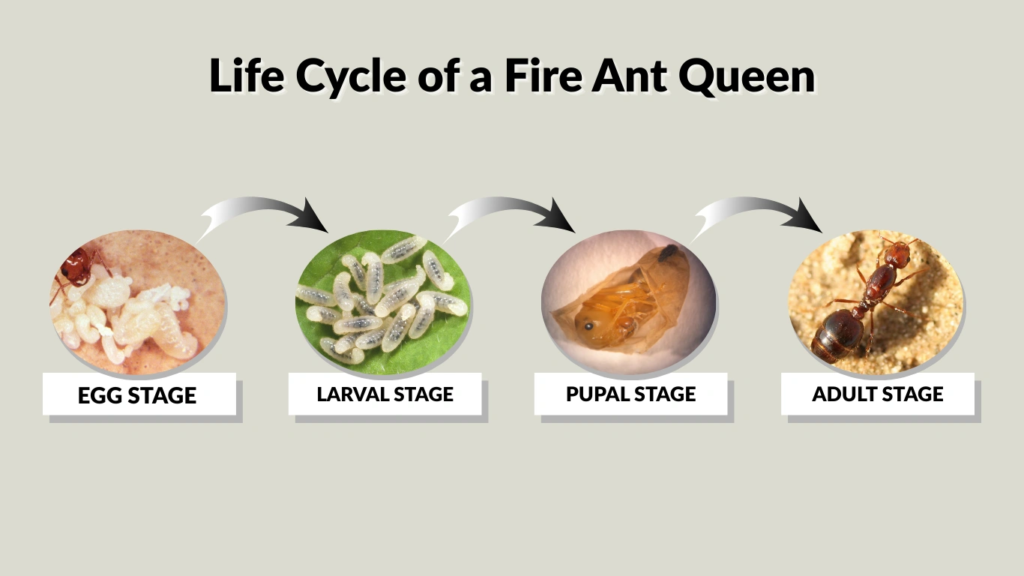
The life cycle of a fire ant queen follows several distinct stages:
- Egg – Laid by the queen and hatches within a few days
- Larva – Fed and cared for by the queen initially, later by workers
- Pupa – Development stage before adulthood
- Adult – Emerges as a worker, soldier, or reproductive ant
In newly founded colonies, the queen produces only worker ants at first. These first workers take over foraging and nest maintenance, allowing the queen to focus entirely on egg production.
Lifespan of a Fire Ant Queen
Fire ant queens are among the longest-living insects. A healthy queen can live 7 to 10 years, and in some cases even longer under ideal conditions. This long lifespan allows colonies to persist and expand for many years.
In contrast, worker ants usually live only a few weeks to months. The queen’s longevity is supported by constant care from workers, stable nest conditions, and a protected underground environment.
How a New Colony Is Founded
After mating, a fire ant queen begins independent colony founding. She burrows into the soil and seals herself inside a small chamber. During this time, she does not eat. Instead, she survives by metabolizing stored body fat and breaking down wing muscles.
The queen lays her first eggs within days. Once the first generation of workers matures, they begin foraging and expanding the nest. At this point, the colony enters rapid growth mode, sometimes reaching thousands of ants within months.
Fire Ant Queen vs Worker Ants
Fire ant queens differ dramatically from workers in both form and function:
- Queens are significantly larger and heavier
- Only queens can reproduce
- Queens live many years; workers live months
- Workers defend, forage, and maintain the nest
- Queens remain deep underground
This division of labor allows fire ant colonies to operate efficiently and dominate their environment.
Ecological Impact of Fire Ant Queens
Fire ant queens play a major role in the spread of invasive fire ant populations. Each successful queen can establish a new colony, contributing to rapid territorial expansion. These colonies often displace native ants and insects, disrupt soil ecosystems, and reduce biodiversity.
In agricultural areas, fire ants can damage crops, harm livestock, and interfere with farming equipment, largely due to the long-term presence of a reproducing queen.
Fire Ant Queens and Human Concerns
Fire ant queens are a major challenge in pest control. Killing visible workers does not eliminate the colony if the queen remains alive. This is why infestations often return after surface treatments.
Effective control strategies target the queen indirectly, often using bait systems carried back to the nest by workers. Understanding queen behavior is key to long-term fire ant management.
Interesting Facts About Fire Ant Queens
- A single queen can produce millions of ants in her lifetime
- Queens rarely leave the nest after founding
- Some colonies contain multiple queens
- Queens control the colony using chemical signals
- One mating flight can start hundreds of new colonies
FAQs
How many eggs can a fire ant queen lay per day?
A mature fire ant queen can lay hundreds to thousands of eggs per day under ideal conditions. Egg production increases during warm months when food is abundant and worker ants can support rapid colony growth.
Can a fire ant colony survive without a queen?
No, a fire ant colony cannot survive long-term without a queen. While workers may live for a short time, the colony will eventually collapse without new ants being produced.
Do fire ant queens sting?
Fire ant queens can sting, but they rarely do. They remain deep inside the nest and rely on worker ants for defense, making human encounters extremely uncommon.
How long does it take for a fire ant queen to start a colony?
After mating, a queen can establish a new colony within a few weeks. The first worker ants usually appear within 30–45 days, depending on temperature and conditions.
Are fire ant queens dangerous to humans?
Fire ant queens are not directly dangerous. However, their ability to create large, aggressive colonies poses a risk through worker stings and environmental damage.
