
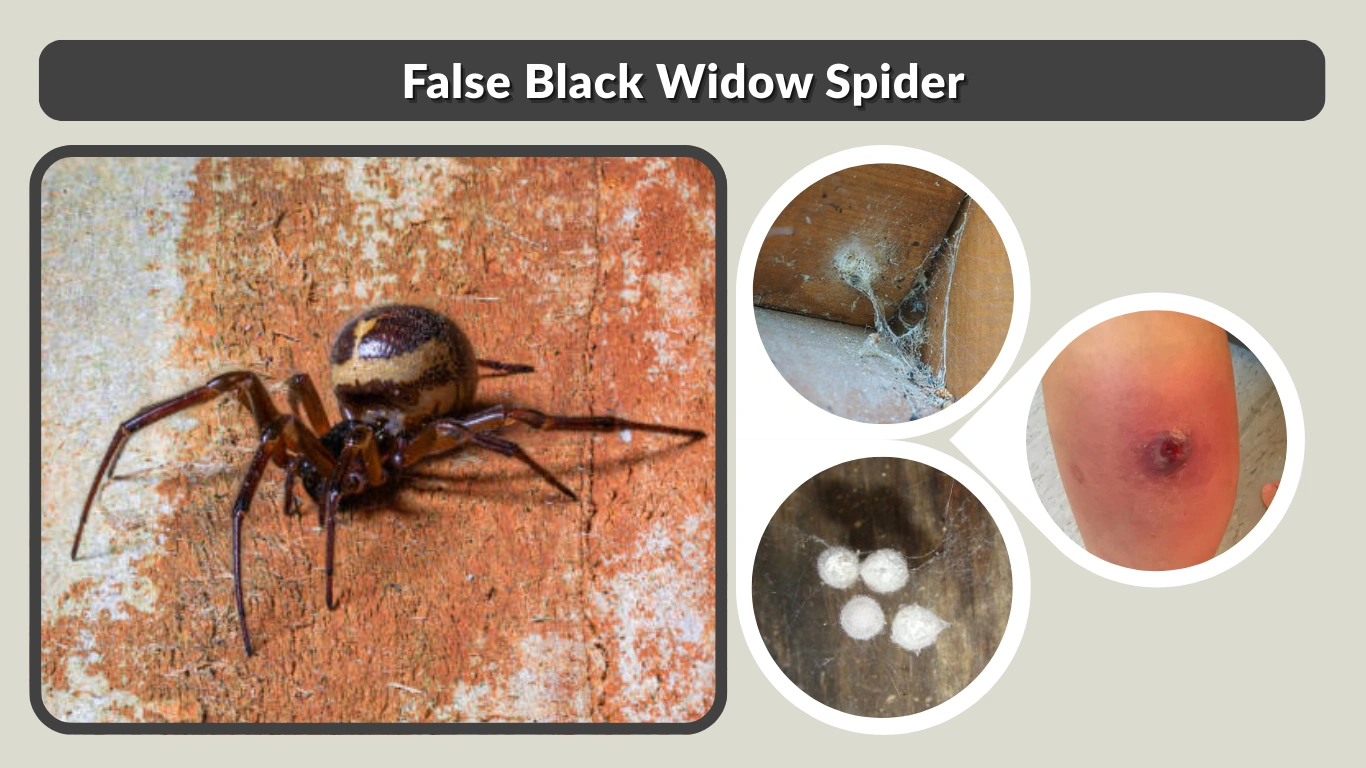
The false black widow spider is often mistaken for the true black widow due to its dark color and similar body shape. In recent years, it has gained attention in the UK, the United States, and other regions because of increased sightings near homes. While its name sounds alarming, the false black widow spider is generally less dangerous than the true black widow. Understanding how to identify this spider, where it lives, and how it behaves helps reduce unnecessary fear and confusion.
What Is a False Black Widow Spider
A false black widow spider is a spider from the Steatoda genus. It is closely related to true black widows (Latrodectus), which is why it shares a similar appearance. The word “false” is used because it resembles a black widow but lacks the same level of venom potency.
Several species fall under the false black widow category, with the noble false black widow being the most well-known. These spiders are not aggressive and usually bite only when threatened or handled.
False Black Widow Spider Identification
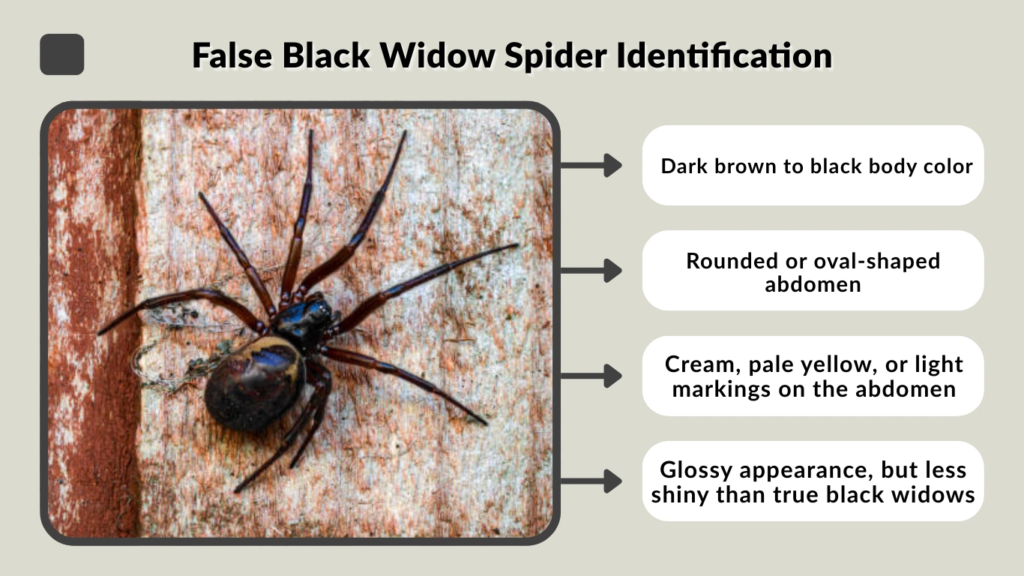
- Dark brown to black body color
- Rounded or oval-shaped abdomen
- Cream, pale yellow, or light markings on the abdomen
- Glossy appearance, but less shiny than true black widows
- No red hourglass marking on the underside
- Long, slender legs
- Often confused with juvenile black widow spiders
What Does a False Black Widow Spider Look Like
False black widow spiders usually appear dark brown or black, sometimes with purplish or gray tones depending on lighting. The abdomen is smooth and bulbous, often marked with faint cream or beige patterns. These markings may fade as the spider matures, making adults appear darker and more uniform in color.
Unlike true black widows, false black widows do not have a bright red hourglass marking. Their overall appearance is less glossy, and their coloration is more muted, which can make identification difficult without close inspection.
Size of a False Black Widow Spider
False black widow spiders are medium-sized spiders. Adult females are larger than males, with body lengths typically ranging from 8 to 14 millimeters. Including the legs, they can appear noticeably larger.
Compared to true black widows, false black widows are slightly smaller but still larger than many common house spiders. Their rounded abdomen often makes them appear bigger than they actually are.
Male vs Female False Black Widow Spider
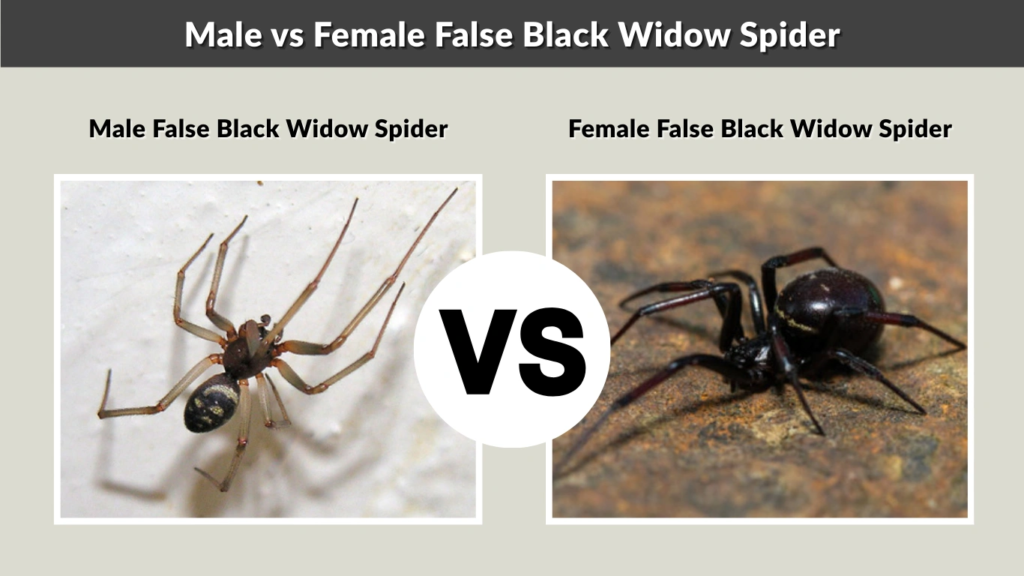
Female false black widow spiders are larger, darker, and more commonly encountered. They are more likely to bite if disturbed because they tend to stay near their webs.
Male false black widows are smaller and lighter in color, sometimes appearing brown or gray. Males roam more often in search of mates and rarely bite humans. Most reported bites involve adult females.
Juvenile False Black Widow Spider
Juvenile false black widow spiders look quite different from adults. They often have clearer markings and lighter body colors, which can lead to misidentification. Juveniles may be mistaken for young black widows or harmless house spiders.
As they mature, their markings fade and their bodies darken, making adult identification more challenging.
Noble False Black Widow Spider
The noble false black widow spider (Steatoda nobilis) is the most well-known false black widow species. It is especially common in the UK and Ireland and has spread to other regions over time.
This species thrives near human homes and is frequently found indoors. Media coverage has contributed to its reputation, even though serious medical reactions are rare.
False Black Widow Spider Habitat
Where False Black Widow Spiders Live
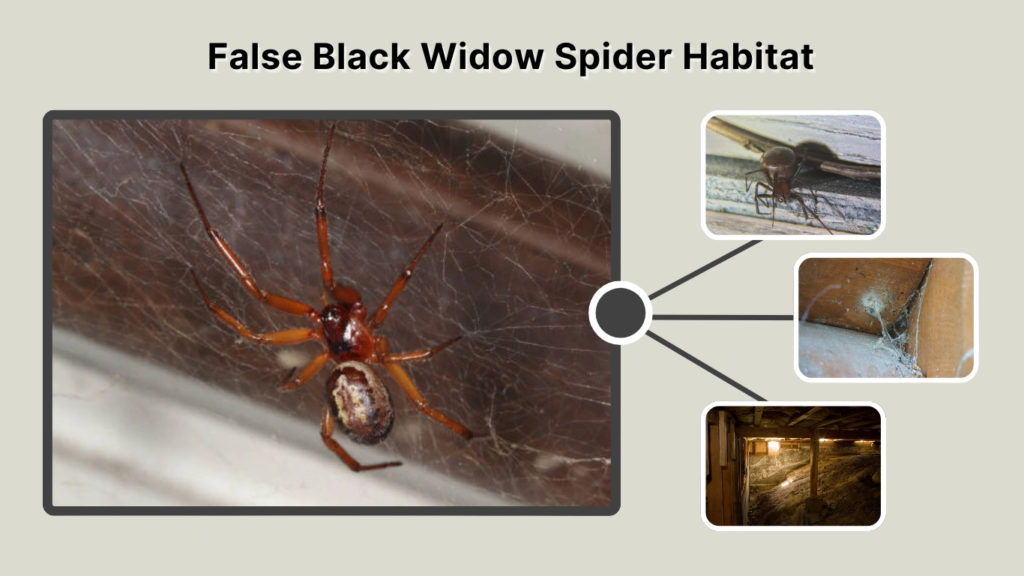
False black widow spiders prefer sheltered areas and are often found close to human structures. Common locations include:
- Inside homes and garages
- Sheds and outbuildings
- Window frames and wall corners
- Outdoor furniture and storage areas
They adapt well to urban environments and often remain unnoticed.
False Black Widow Spider Web
False black widow spider webs are irregular and messy, similar to cobwebs. The silk is strong and sticky, designed to trap insects rather than display symmetry. These spiders usually stay hidden near their webs rather than sitting openly in the center.
False Black Widow Spider Range and Locations
False black widow spiders have a wide and expanding range. They are commonly reported in the UK and Ireland and are increasingly found in parts of the United States, including California, Oregon, Texas, Washington, and Ohio.
They are also present in Canada, British Columbia, Australia, and New Zealand. Their ability to live alongside humans has helped them spread across multiple regions.
False Black Widow Spider Eggs and Egg Sac
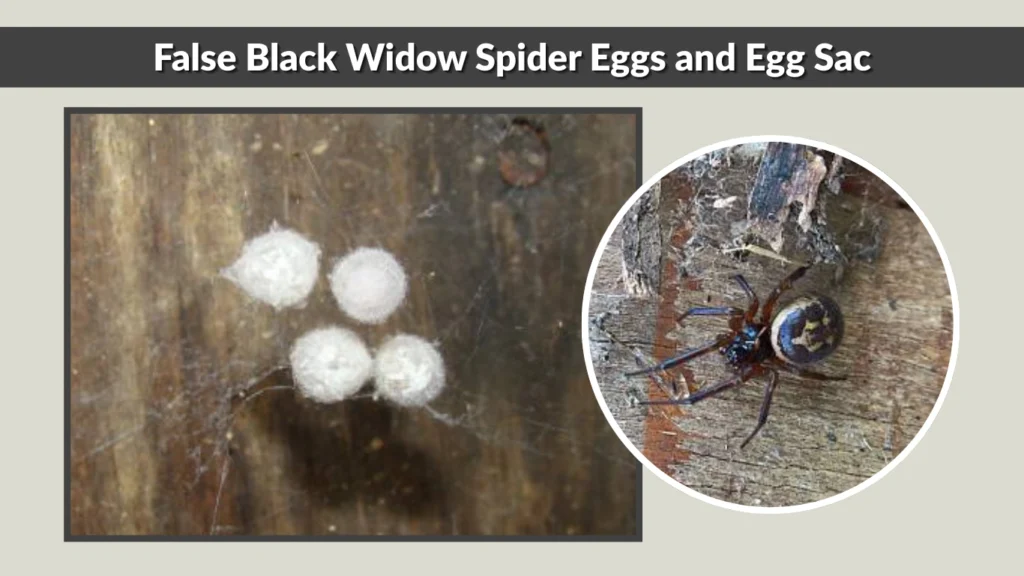
False black widow spiders produce egg sacs that are small, round, and pale in color. Each egg sac may contain dozens of eggs and is usually hidden within the web or attached to sheltered surfaces such as walls, furniture, or storage items.
Female false black widows guard their egg sacs until the spiderlings hatch. The young spiders disperse soon after hatching, which helps explain how these spiders spread so effectively in urban environments.
False Black Widow Spider Bite Overview
False black widow spider bites are uncommon and usually occur only when the spider feels threatened. Most bites happen when a spider is accidentally trapped against the skin, such as during cleaning, gardening, or handling stored items.
These spiders are not aggressive and prefer to retreat rather than bite. Many encounters end without any bite at all.
What Does a False Black Widow Spider Bite Look Like
A false black widow spider bite usually appears as a small red mark or mild swelling. The bite area may feel tender or warm, but severe skin damage is rare.
In most cases, the bite looks similar to a minor insect bite. There is typically no blistering, ulceration, or tissue damage, which helps distinguish it from more serious spider bites.
False Black Widow Spider Bite Symptoms
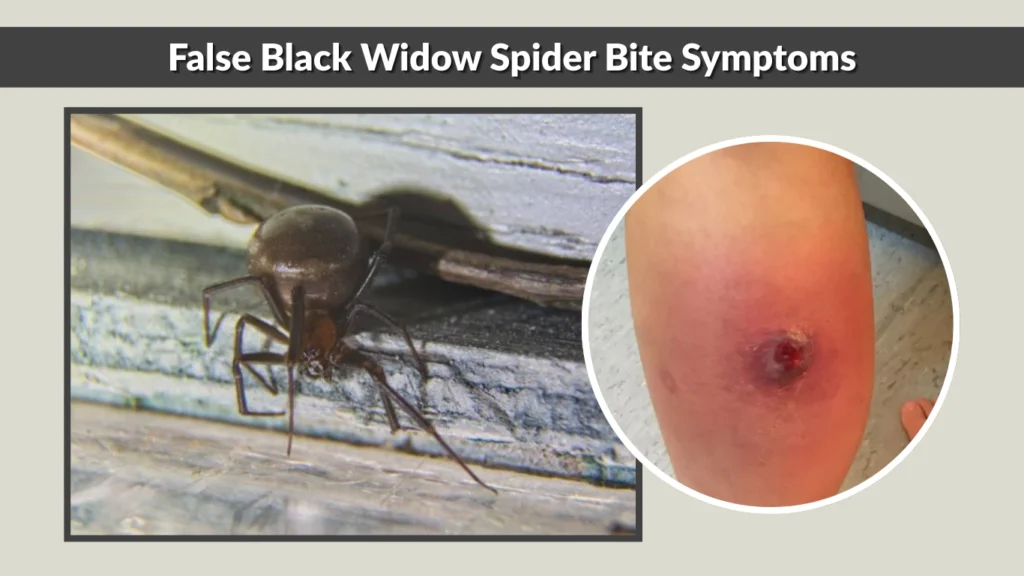
- Local pain or burning sensation
- Mild swelling or redness
- Itching or irritation
- Headache in some cases
- Nausea or fatigue in rare cases
Symptoms usually remain localized and improve within a few hours to a few days.
False Black Widow Spider Bite Pictures
Pictures of false black widow spider bites often show minimal skin changes. Because reactions vary from person to person, bite images can look very different. This makes it difficult to rely on photos alone to identify a bite.
In many cases, there may be little to no visible sign after a few days.
Is a False Black Widow Spider Poisonous
False black widow spiders are venomous, but their venom is much weaker than that of true black widows. The venom is designed to subdue small insect prey rather than cause serious harm to humans.
Most bites result in mild symptoms that do not require medical treatment.
Is a False Black Widow Spider Dangerous
For most people, false black widow spider bites are not dangerous. Healthy adults usually experience mild, temporary symptoms. Children, elderly individuals, and those with allergies may experience stronger reactions and should be monitored more closely.
Serious complications are extremely rare.
False Black Widow Spider vs Black Widow
False black widow spiders are often compared to true black widows because of their similar appearance. However, important differences exist between the two.
False black widows lack the red hourglass marking and have weaker venom. Black widows are larger, shinier, and capable of causing more intense symptoms. Medical risk from a black widow bite is significantly higher than from a false black widow bite.
Black Widow vs False Widow Spider: Key Differences
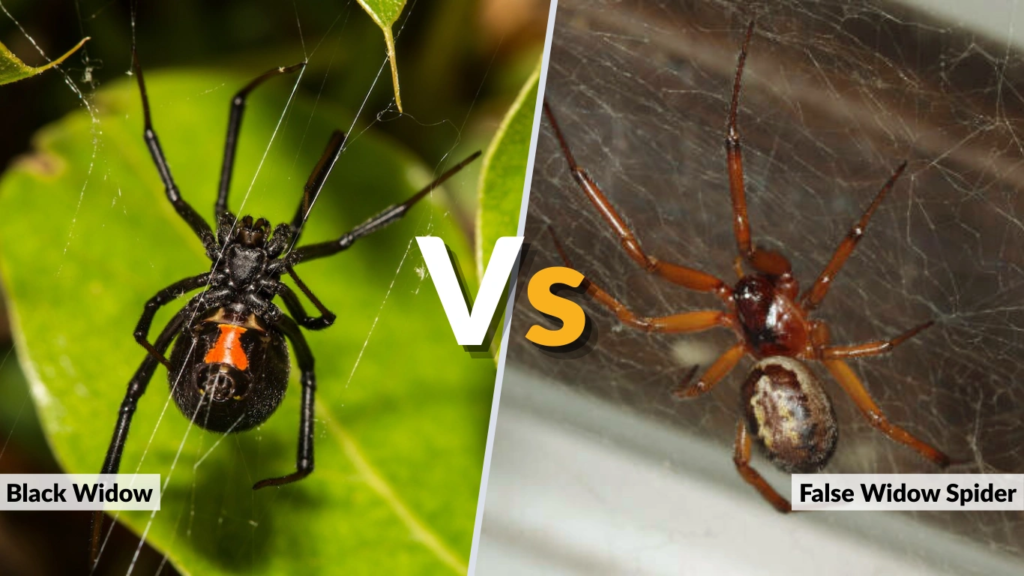
The main difference lies in venom strength and bite severity. Black widow bites can cause intense muscle cramps and systemic symptoms, while false black widow bites usually cause localized pain.
In terms of behavior, both spiders are shy and non-aggressive, but black widows are more medically significant.
False Black Widow Spider Facts
- False black widows are nocturnal and rarely seen during the day
- They have poor eyesight and rely on vibration
- They thrive in human environments
- Media reports often exaggerate their danger
How to Identify a False Black Widow Spider
Accurate identification requires looking at multiple features. The absence of a red hourglass marking is a key clue. Body color, abdomen shape, and web structure also help differentiate false black widows from true black widows.
When unsure, avoiding contact is the safest approach.
What to Do If Bitten by a False Black Widow Spider
If bitten, clean the bite area with soap and water. Applying a cold compress can help reduce pain and swelling. Over-the-counter pain relievers may help manage discomfort.
Medical attention is recommended if symptoms worsen, spread, or if the person bitten is a child, elderly, or has a history of allergic reactions.
FAQs
Is a false black widow spider dangerous to humans
False black widow spiders are generally not dangerous. Most bites cause mild, short-lived symptoms.
What is the difference between a black widow and false widow
Black widows have stronger venom and a red hourglass marking. False widows lack this marking and have weaker venom.
Does a false black widow spider bite hurt
The bite may cause mild pain or burning, but severe pain is uncommon.
Are false black widow spiders common indoors
Yes, they often live inside homes, garages, and sheds.
Where are false black widow spiders found
They are found in the UK, US, Canada, Australia, and other regions.
