

The dogwood sawfly (Macremphytus tarsatus) is a leaf-feeding insect that primarily targets dogwood shrubs and trees. Though commonly mistaken for caterpillars, these larvae are actually part of the wasp family. They can cause significant defoliation, leaving ornamental dogwoods weak and unsightly. Found across North America, especially in regions like Maine and New York, the dogwood sawfly can be controlled effectively with timely identification and preventive care.
What Is the Dogwood Sawfly?
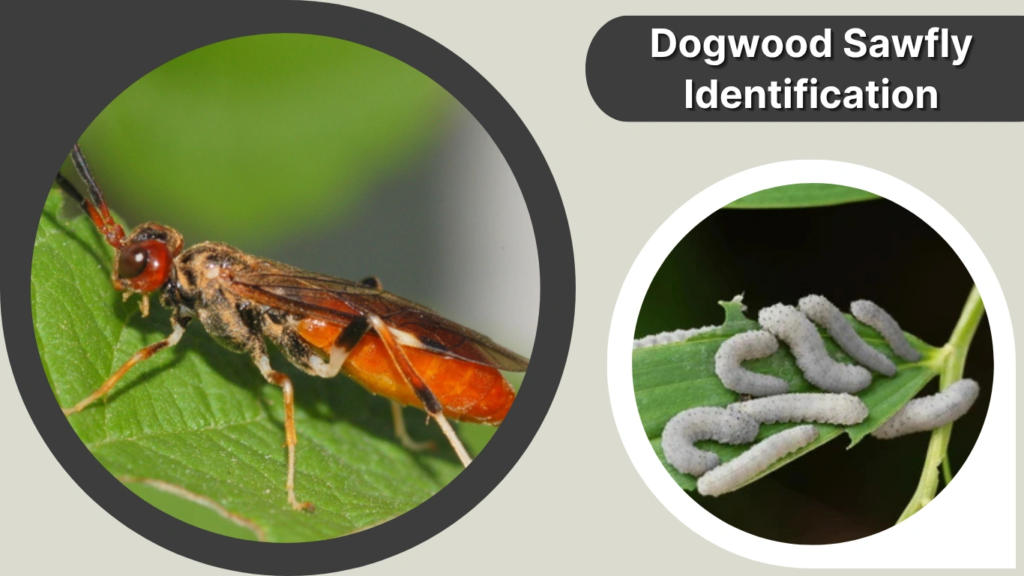
The dogwood sawfly is a small, non-stinging insect belonging to the order Hymenoptera, suborder Symphyta. Adult sawflies resemble tiny black-and-white wasps and are often overlooked. However, their larvae—the feeding stage—are what cause visible plant damage.
These pests mainly feed on red-twig, gray, and silky dogwoods, though other varieties may also be affected. While mild infestations result in aesthetic leaf damage, repeated defoliation over multiple years can weaken shrubs, reduce flowering, and even cause branch dieback.
Dogwood Sawfly Family and Range
The species is native to North America, ranging from the northeastern United States through the Midwest and into parts of Canada. They thrive in gardens, forests, and suburban landscapes where dogwoods are planted. The dogwood sawfly is active during late spring through early fall, with larvae most visible in June and July.
Identification
Dogwood Sawfly Eggs
Female sawflies use a saw-like ovipositor to insert eggs into dogwood leaf edges or undersides. These eggs are tiny, oval, and translucent, making them difficult to spot with the naked eye. The insertion points often appear as small, blister-like bumps or pale spots on leaves.
Eggs hatch within one to two weeks, releasing small white larvae that begin feeding immediately on soft leaf tissue.
Dogwood Sawfly Larvae
Dogwood sawfly larvae undergo several stages (instars) as they mature.
- Early Instars: Covered in a white, waxy coating that gives them a chalky appearance.
- Later Instars: Shed the wax and become yellow with black spots along their sides.
- Size: Mature larvae reach up to 2.5 cm (1 inch) in length.
They typically feed in clusters, devouring large portions of leaf tissue and leaving skeletonized remains.
Dogwood Sawfly Caterpillar vs True Caterpillar
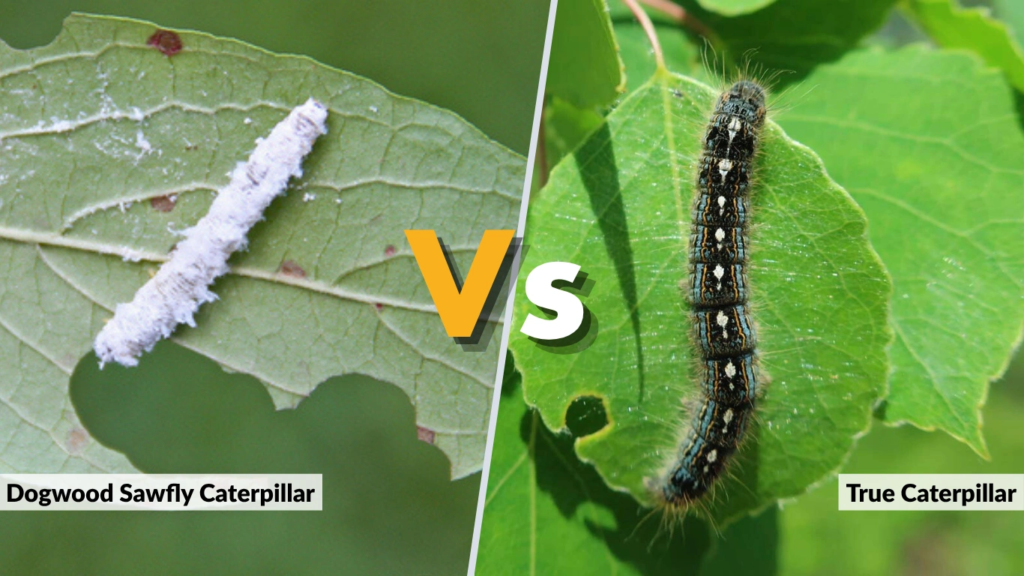
It’s easy to confuse sawfly larvae with caterpillars, but there are distinct differences:
| Feature | Dogwood Sawfly Larva | Butterfly/Moth Caterpillar |
| Prolegs | 6 pairs | 5 pairs or fewer |
| Movement | Smooth, gliding motion | Inchworm-like looping |
| Family | Wasp (Symphyta) | Moth/Butterfly (Lepidoptera) |
| Feeding Pattern | Skeletonizes leaves | Chews large holes |
| Bt Sensitivity | Not affected | Controlled by Bt insecticides |
Accurate identification is crucial, as biological treatments like Bacillus thuringiensis (Bt) work on caterpillars but not on sawfly larvae.
Dogwood Sawfly Adult
Adult dogwood sawflies are small (around 1 cm), with black-and-white striped bodies and smoky wings. They look like wasps but do not sting. Adults emerge from the soil or decaying wood in late spring, mate, and lay eggs on the undersides of dogwood leaves. Their active season is short, typically from May to July, after which they die off, leaving their offspring to continue the cycle.
Dogwood Sawfly Life Cycle
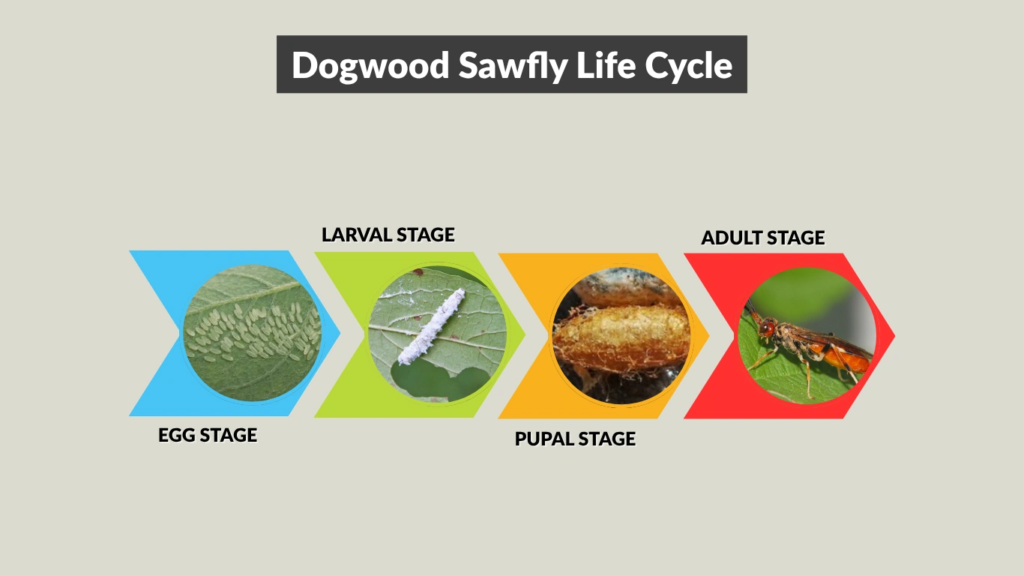
Stages of Development
- Egg Stage: Eggs are laid singly or in small clusters on leaf undersides in late spring.
- Larval Stage: Newly hatched larvae feed in colonies, skeletonizing leaves. They go through multiple instars over 3–4 weeks.
- Pupal Stage: Fully grown larvae drop to the ground, burrowing into soil or decaying wood to pupate through winter.
- Adult Stage: Adults emerge the following spring to mate and restart the life cycle.
This annual cycle means there is usually one generation per year, though in warmer regions, a partial second generation may occur.
Seasonal Activity
The dogwood sawfly’s activity varies slightly by region.
- Northern States (e.g., Maine, New York): Larvae appear from June to August.
- Midwest and South: Activity may start earlier and last longer due to milder winters.
- Larval feeding period: Typically lasts 3–5 weeks, during which most visible damage occurs.
Monitoring during these months helps gardeners control infestations before defoliation becomes severe.
Dogwood Sawfly Damage

Signs and Symptoms
The most obvious sign of a dogwood sawfly infestation is chewed or skeletonized leaves. Early larvae feed on the soft tissue between leaf veins, leaving behind a thin, transparent film. As larvae mature, they consume entire leaves, leaving only the veins.
Other visible signs include:
- White, wax-covered larvae on the undersides of leaves
- Scattered frass (insect droppings) beneath the plant
- Bare twigs on upper or outer branches
- Premature leaf drop and reduced plant vigor
Affected Dogwood Varieties
Dogwood sawflies prefer certain species, such as:
- Red Twig Dogwood (Cornus sericea)
- Gray Dogwood (Cornus racemosa)
- Silky Dogwood (Cornus amomum)
- Occasionally Flowering Dogwood (Cornus florida)
Infestations on red twig dogwoods are particularly noticeable due to the plant’s striking stem contrast against damaged foliage.
Severity of Damage
Light infestations are mostly aesthetic, but severe outbreaks can strip entire shrubs of leaves. When defoliation occurs repeatedly over several years, plants become weak, more prone to disease, and less able to withstand winter stress.
How to Get Rid of Dogwood Sawfly
Manual and Physical Control
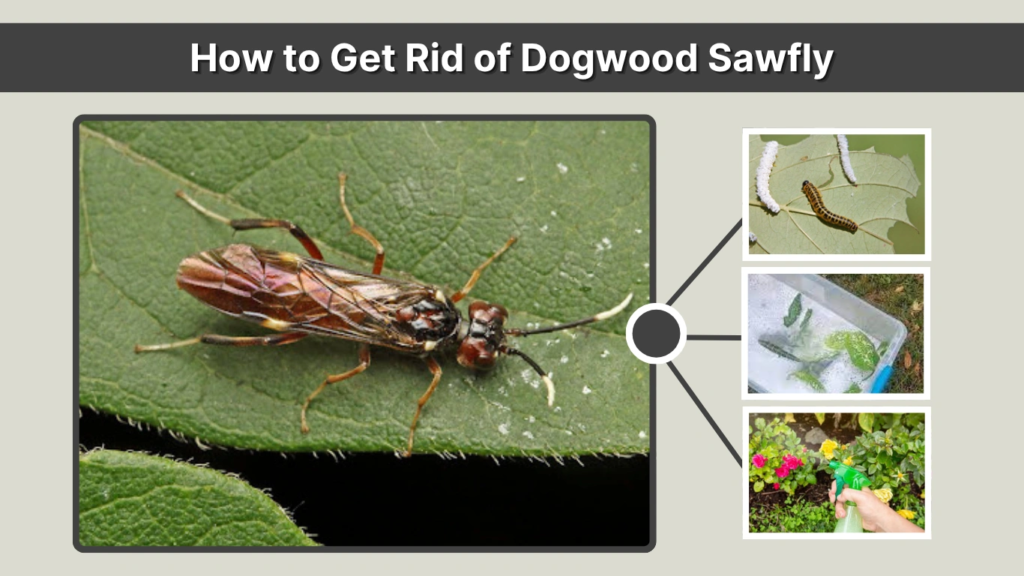
The easiest and most natural way to manage dogwood sawflies is manual removal. Inspect your dogwood plants regularly during early summer when larvae are active. If you spot them, simply handpick the larvae and drop them into a container of soapy water to kill them. For larger shrubs or hard-to-reach branches, a strong blast of water from a garden hose can dislodge larvae effectively.
Pruning is another helpful step—cut off heavily infested branches and dispose of them in sealed bags. Never compost infested material since larvae can survive and re-emerge the following spring.
Raking and clearing fallen leaves and plant debris beneath the shrubs will remove overwintering pupae and reduce next year’s infestation.
Natural and Organic Control
Neem oil is a highly effective organic remedy for controlling dogwood sawfly larvae. It disrupts their feeding and growth cycle, eventually starving them. Spray both sides of leaves thoroughly in the early morning or evening to prevent leaf burn. Repeat the application every 7–10 days until all larvae are gone.
Insecticidal soap is another safe solution that suffocates larvae upon contact. Apply when you first notice damage and reapply after rainfall. For best results, coat the undersides of leaves where larvae feed.
Diatomaceous earth (DE) can also be sprinkled over leaves and soil. Its fine powder dehydrates soft-bodied larvae and prevents them from climbing back onto the foliage.
Encouraging natural predators such as birds, predatory beetles, and parasitic wasps can provide long-term population control. Avoid broad-spectrum insecticides that could harm these beneficial species.
Chemical and Insecticide Treatments
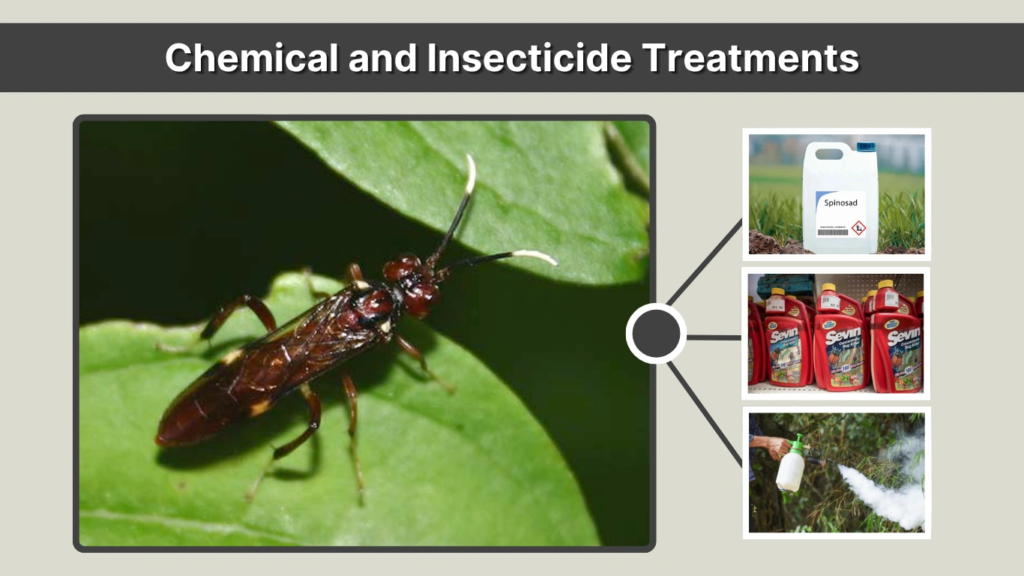
If natural treatments fail or infestations are extensive, chemical insecticides can be effective. Look for products labeled specifically for sawfly larvae—not caterpillars. Suitable active ingredients include:
- Spinosad
- Carbaryl (Sevin)
- Pyrethrin or permethrin-based sprays
Apply insecticides when larvae are small and actively feeding, focusing on leaf undersides and branch tips. Avoid spraying during the heat of the day or when pollinators are active.
For large or mature shrubs, systemic insecticides can be used. These are absorbed through the plant’s roots and kill larvae as they feed. However, use these cautiously and only when necessary, as they can affect beneficial insects.
Prevention and Long-Term Management
Monitoring and Maintenance
Consistent monitoring is key to preventing future infestations. Begin checking your dogwood leaves weekly in late May and early June for the first signs of eggs or larvae. Remove or treat any found immediately to prevent population growth.
In fall, clean up the area beneath the shrubs to eliminate overwintering pupae. Lightly till the soil around the base to expose cocoons to predators and cold weather.
Cultural Practices
Healthy dogwoods are naturally more resistant to pests. Keep your plants well-watered during dry spells and avoid over-fertilizing, which promotes soft new growth that attracts sawflies. Use balanced fertilizers and mulch lightly to retain soil moisture while discouraging larvae from burrowing.
Planting a variety of native shrubs nearby encourages ecological balance, helping maintain natural predator populations. Companion planting with herbs like dill, yarrow, and marigold can attract beneficial insects that prey on sawfly eggs and larvae.
Regional Considerations
Dogwood Sawfly in the Northeast and Midwest
In regions like Maine, New York, and Pennsylvania, dogwood sawflies typically have one generation per year. The larvae appear between June and August, depending on temperature. Regular monitoring during this window helps prevent severe defoliation.
Southern and Western Regions
In warmer states, such as those in the southern U.S., larvae may appear earlier, and a partial second generation can occur. Extended warm seasons require longer monitoring and possibly more frequent neem oil or soap treatments.
Dogwood Sawfly in Canada
In Canada, the sawfly is widespread in provinces like Ontario and Quebec. Because of shorter summers, infestations are usually limited to one strong generation per year. Gardeners can effectively manage the problem through manual control and winter soil cleanup.
FAQs
What is the scientific name of the dogwood sawfly?
The scientific name of the dogwood sawfly is Macremphytus tarsatus. It belongs to the wasp family Tenthredinidae and is native to North America, where it commonly infests various species of dogwood plants.
What do dogwood sawfly larvae look like?
Dogwood sawfly larvae start off white and waxy, later turning yellow with black spots as they mature. They grow up to one inch long and are often seen feeding in groups on the undersides of dogwood leaves.
Are dogwood sawflies dangerous or poisonous?
No, dogwood sawflies are not dangerous to humans or pets. They do not sting, bite, or produce toxins. Their only threat is to plants, as they can defoliate dogwood shrubs and weaken them over time if not controlled.
How do you get rid of dogwood sawfly larvae naturally?
The best natural methods include spraying neem oil or insecticidal soap, handpicking larvae, and encouraging birds and beneficial insects. Dusting plants with diatomaceous earth and pruning infested leaves are also effective.
What insecticide kills dogwood sawfly larvae effectively?
Insecticides containing spinosad, carbaryl (Sevin), or pyrethrins are effective against dogwood sawfly larvae. Always apply them early in the infestation when larvae are small and actively feeding for best results.
