

Bumblebees are gentle, fuzzy pollinators, yet people frequently wonder whether they sting, whether they die after stinging, and how dangerous a sting might be. Many species—such as buff-tailed, red-tailed, tree, garden, and large bumblebees—are commonly seen around gardens, which leads to even more curiosity. This guide answers every question about bumblebee stings, stingers, pain, frequency, and behavior so you know exactly when bumblebees might sting and when they won’t.
Can Bumblebees Sting?
Yes—female bumblebees can sting, which includes workers and queens. Their sting is a purely defensive action, used primarily to protect the nest or themselves when threatened. However, bumblebees are naturally docile and rarely sting unless provoked.
Male bumblebees, however, cannot sting at all. They do not possess a stinger, so they pose no risk of stinging humans, pets, or other animals.
Do Bumblebees Die When They Sting?
One of the most common questions is whether bumblebees die after stinging—but the answer is no. Bumblebees do not die when they sting because their stinger is smooth, not barbed. This allows them to sting multiple times without injuring themselves.
This makes them very different from honeybees, which have barbed stingers that get stuck in skin. When a honeybee stings, the stinger tears from its body, causing fatal injury. Bumblebees do not share this trait.
Bumblebee Stinger: Anatomy & How It Works

A bumblebee’s stinger is a sleek, smooth structure connected to a venom sac. Because it doesn’t have barbs, it does not get lodged in the skin. This design allows the bee to withdraw the stinger easily and, if necessary, sting again. Only females have stingers—the structure is actually a modified ovipositor, which is why males lack one entirely.
The stinger’s main purpose is defense, not aggression. Bumblebees use it only when they feel cornered or their nest is disturbed. Even then, many individuals prefer to warn first by lifting a leg or buzzing loudly before resorting to stinging.
Do Bumblebees Sting or Bite?
People often wonder whether bumblebees sting, bite, or both. The clear answer is:
- Bumblebees sting—this is how they defend themselves.
- They rarely bite and only use their mandibles when trapped or handled roughly.
A bumblebee “bite” is typically harmless and doesn’t deliver venom. The sting, however, does involve venom and causes pain, swelling, or redness.
When and Why Do Bumblebees Sting?

Bumblebees do not sting randomly or out of aggression. Instead, they sting for clear defensive reasons. Common triggers include:
- Disturbing or approaching their nest too closely
- Grabbing or squeezing a bee accidentally
- Trapping a bee inside clothing or hair
- Sudden vibrations or jerky movements
- Attempting to handle the queen
- Pets digging near an underground nest
One persistent myth is that bumblebees “sting for no reason.” In truth, they are among the least aggressive bees. If a bumblebee seems to sting unexpectedly, it is usually because it felt threatened or trapped.
How Often & How Many Times Can Bumblebees Sting?
Because their stinger does not detach, bumblebees can sting multiple times. There is no fixed limit. However, their behavior remains defensive rather than aggressive, so they typically sting only as much as needed to escape a threat.
A single bumblebee could sting repeatedly if continuously provoked, but such events are rare because they often choose to flee instead of fight.
How Painful Is a Bumblebee Sting?
A bumblebee sting can range from mildly uncomfortable to moderately painful, depending on the person. The initial sensation is usually a sharp, burning pain followed by localized swelling, warmth, and redness. Most symptoms fade within a few hours, though lingering itchiness or tenderness may last a day or two.
For most people, a bumblebee sting is less painful than a honeybee or wasp sting. However, individuals who are allergic to bee venom may experience more severe reactions and should seek medical help immediately.
Do Bumblebees Leave a Stinger Behind?
Unlike honeybees, bumblebees do not leave their stinger in the skin. Because their stinger is smooth, it withdraws cleanly without tearing off. This is why bumblebees survive after stinging and can sting again if necessary.
If a sting occurs and no stinger is visible in the skin, that is entirely normal—you will not need to scrape or remove anything.
Species-Specific Sting Behavior
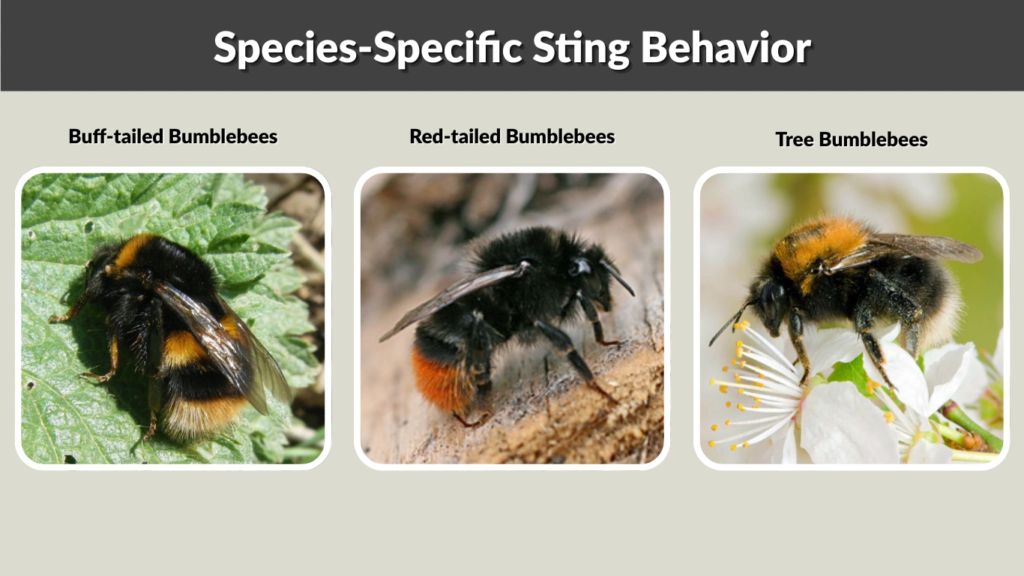
Different species of bumblebees behave similarly regarding stinging, but a few species raise more questions:
Buff-tailed Bumblebees
Females can sting but are calm and rarely do so unless their nest is disturbed.
Red-tailed Bumblebees
Recognizable by their bright red tail, these bees can sting but remain non-aggressive.
Tree Bumblebees
Tree bumblebees are slightly more defensive around their nest, especially if it is high in a bird box, but they still avoid stinging unless provoked.
Black, Large, or Fuzzy Bumblebees
Many people ask whether “big black” or “fat fuzzy” bumblebees sting. These are typically queens or large workers, and like all female bumblebees, they can sting but seldom choose to.
Do Queen Bumblebees Sting?
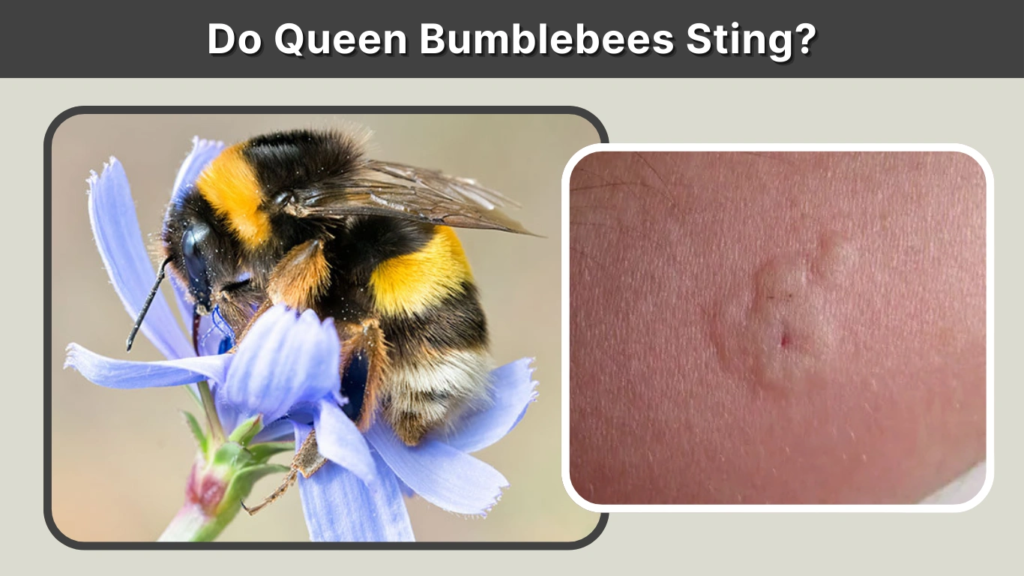
Yes—queen bumblebees can sting, and their sting is often more powerful due to a slightly larger venom reservoir. However, queens prefer to flee rather than fight. They spend most of their time laying eggs or establishing nests, not defending them, so encounters are limited.
Can Bumblebees Sting Humans and Pets?
Humans
Bumblebees can sting humans, but only when defensive. Calm behavior around flowers or gardens greatly reduces the risk.
Dogs and Pets
Dogs may be stung if they dig near nests or attempt to catch bees. A sting on the face or paw is common but usually not dangerous unless the pet shows signs of an allergic reaction.
How to Tell a Male From a Female Bumblebee
Because only females sting, identifying the difference can be useful:
- Males have no stinger
- Males have longer, more curved antennae
- Males often have fluffier or lighter-colored facial hair
- Females collect pollen and have pollen baskets on their hind legs
If you see a very large bumblebee early in the season, it is likely a queen—meaning she can sting but rarely wants to.
How to Avoid Getting Stung
You can greatly reduce your chance of being stung by following simple precautions:
- Move slowly around flowering plants
- Avoid blocking the entrance to a nest
- Do not swat or grab bees
- Wear shoes in grassy areas
- Keep pets away from potential nesting sites
- Shake out clothing or towels left outside
Bumblebees generally ignore humans unless directly provoked.
What to Do If You Are Stung

If a bumblebee stings you, take the following steps:
- Wash the area with soap and water.
- Apply a cold compress to reduce swelling and pain.
- Use antihistamines or hydrocortisone cream if itching occurs.
- Avoid scratching the area.
- Seek medical attention if there is difficulty breathing, dizziness, swelling of the face or lips, or other signs of an allergic reaction.
Most stings resolve without treatment within hours.
Bumblebees vs. Honeybees: Sting Comparison
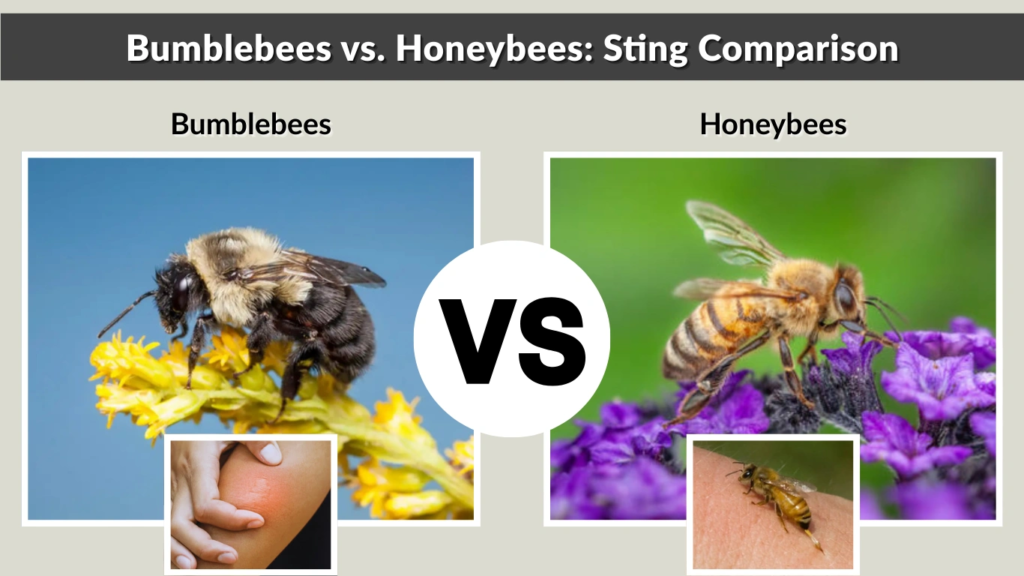
| Feature | Bumblebee | Honeybee |
| Can sting? | Yes (females) | Yes (females) |
| Die after stinging? | No | Yes |
| Can sting multiple times? | Yes | No |
| Aggression level | Low | Moderate when defending hive |
| Stinger type | Smooth | Barbed |
FAQs
Do bumblebees lose their stinger when they sting?
No. Bumblebees have smooth stingers that do not detach, allowing them to sting multiple times without harming themselves. This is why they survive after stinging, unlike honeybees whose barbed stingers get stuck in the skin.
Why don’t bumblebees sting often?
Bumblebees have a calm, non-aggressive temperament. They prefer to flee, buzz loudly, or lift their leg in warning before stinging. Their goal is survival, not confrontation, so they only sting when they feel threatened or when their nest is disturbed.
Can bumblebees sting more than once?
Yes. Because their stinger does not tear away, bumblebees can deliver multiple stings if necessary. However, they typically sting only as much as needed to escape danger, making repeated stings very uncommon unless they are handled roughly.
Do bumblebees sting harder than honeybees?
Most people find bumblebee stings less painful than honeybee stings. Honeybee venom and barbed stingers tend to create stronger reactions. Bumblebee venom causes pain, but symptoms are usually milder and fade quickly unless an allergy is present.
What attracts bumblebees to people?
Bright colors, floral scents, and sweet fragrances may temporarily draw bumblebees closer because they mimic flowers. However, they are not seeking humans and will usually fly away once they realize there is no nectar or pollen to collect.
