
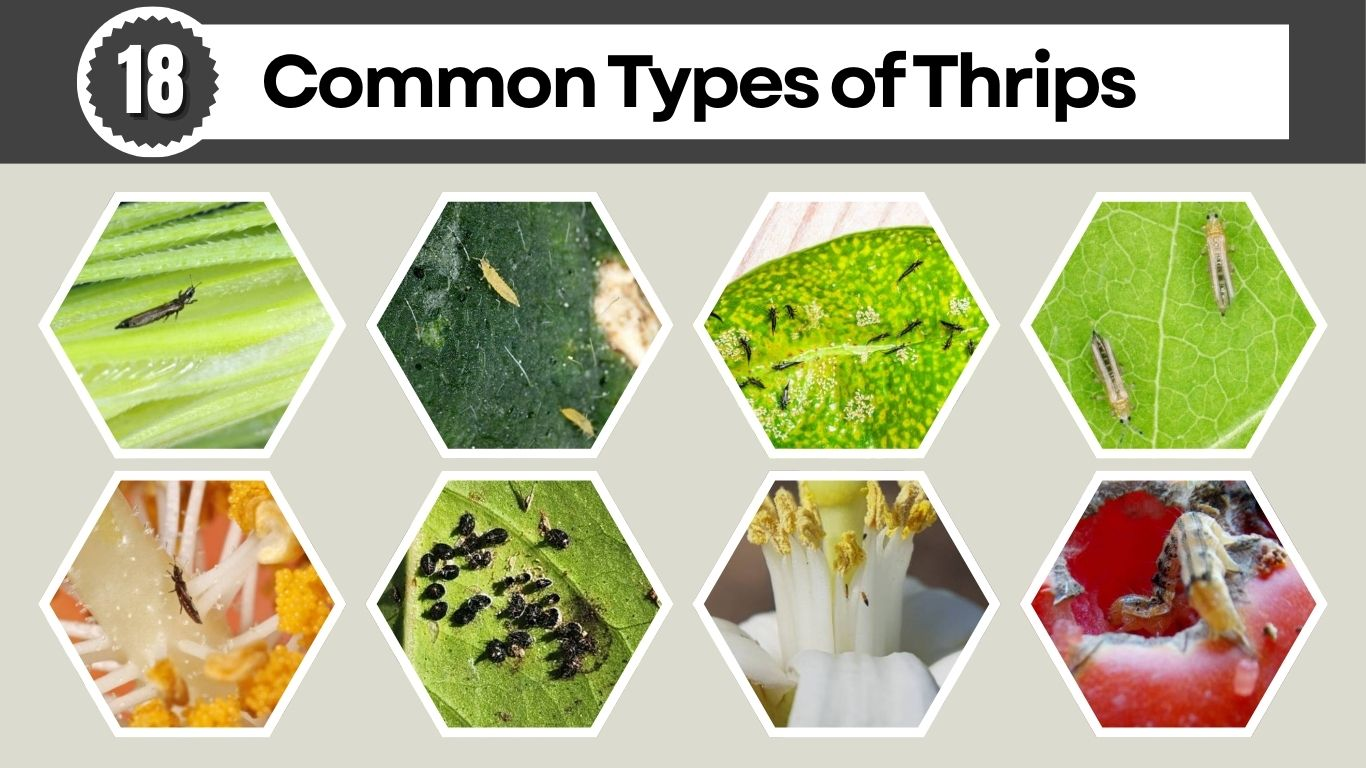
Thrips are tiny, slender insects that play a major role in both natural ecosystems and agriculture. While some species help pollinate plants, many types of thrips are serious crop pests, feeding on leaves, flowers, and fruits and spreading harmful plant viruses. With more than 6,000 known species worldwide, thrips can be found in gardens, greenhouses, farms, and forests. This guide explores 20 common types of thrips, focusing on clear identification features, typical habitats, feeding behavior, and lifecycle patterns to help you better understand these small but impactful insects.
1. Western Flower Thrips (Frankliniella occidentalis)
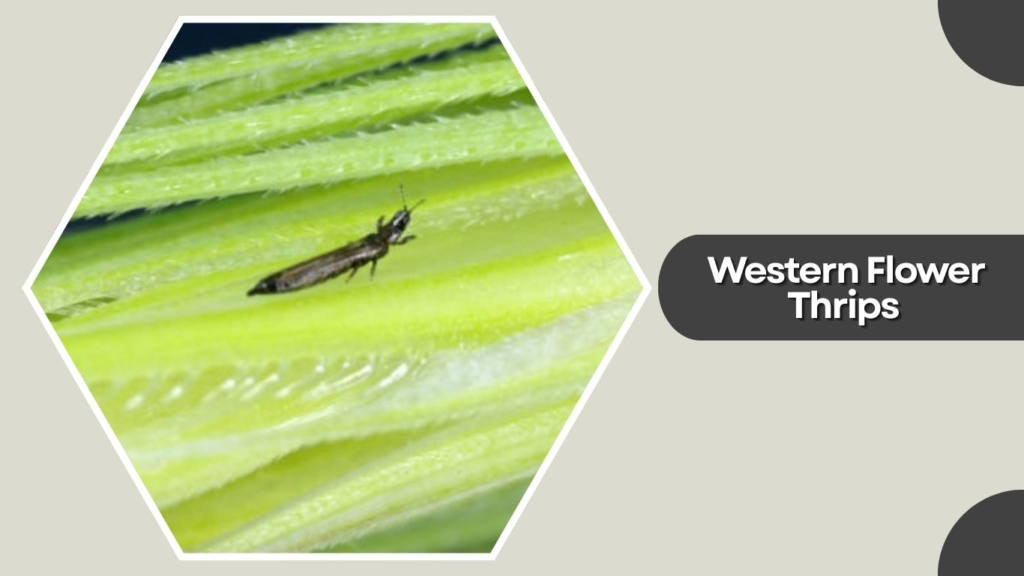
The Western flower thrips is one of the most widespread and economically important thrips species in the world. It is a tiny, slender insect best known as a serious agricultural pest, attacking vegetables, fruits, and ornamental plants. This species is also a major vector of plant viruses, especially Tomato spotted wilt virus, making it a significant concern in greenhouses and open-field farming systems.
Identification
- Very small insect, about 1–1.5 mm long
- Body color ranges from pale yellow to light brown
- Narrow, elongated body with fringed wings
- Large red or dark compound eyes
- Active, fast-moving, often found inside flowers and young leaves
Habitat
Western flower thrips thrive in warm, dry environments and are especially common in greenhouses, plant nurseries, and crop fields. They are frequently found on flowering plants, vegetables, fruits, and ornamentals. This species can survive in a wide range of climates, which is one reason it has spread globally through plant trade and greenhouse production.
Diet
This thrips species feeds by piercing plant cells and sucking out their contents. It prefers soft plant tissues such as flower petals, pollen, young leaves, buds, and developing fruits. Feeding damage often appears as silvery streaks, distorted growth, or brown scars. In addition to direct damage, Western flower thrips can transmit destructive plant viruses.
Lifecycle
The lifecycle includes egg, larva, prepupa, pupa, and adult stages. Females lay eggs inside plant tissue. Larvae feed actively on plants, while the prepupal and pupal stages usually occur in soil or leaf litter. Under warm conditions, the entire lifecycle can be completed in about two weeks, allowing populations to increase very rapidly.
2. Onion Thrips (Thrips tabaci)
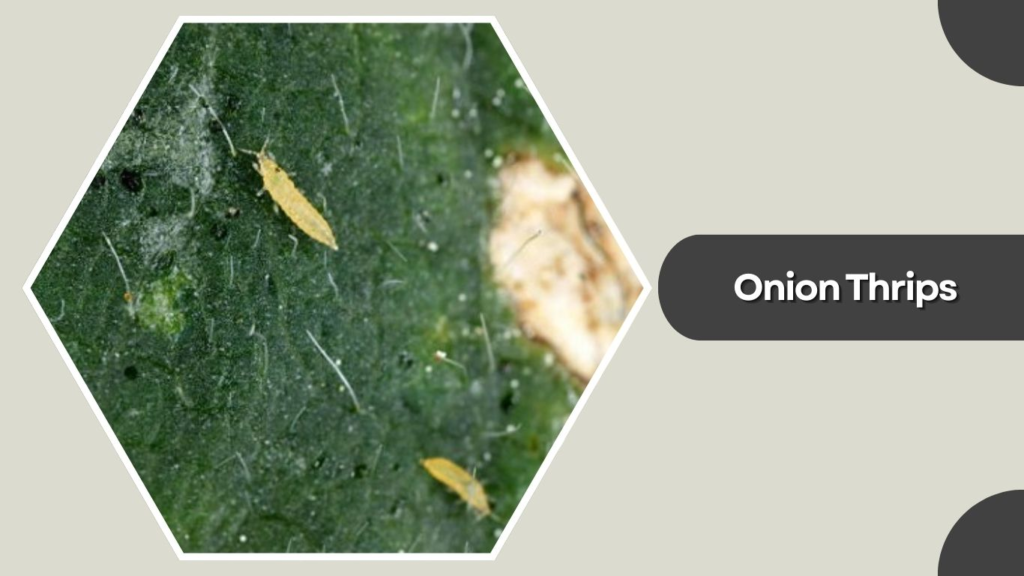
The onion thrips is a small but highly destructive species that mainly attacks onions, garlic, leeks, and many other vegetable crops. It is one of the most common thrips worldwide and is well known for reducing crop yield and spreading plant viruses. Heavy infestations can cause leaves to turn silvery, curl, and dry out, leading to stunted plant growth.
Identification
- Tiny, slender insect about 1–1.3 mm long
- Body usually pale yellow to light brown
- Narrow wings with long fringe hairs
- Dark eyes clearly visible on the head
- Often found hidden between leaf sheaths and tight plant folds
Habitat
Onion thrips are found in agricultural fields, gardens, and greenhouses, especially where onions and related crops are grown. They prefer warm, dry conditions and often shelter in protected plant parts. Because they are easily carried by wind and plant movement, they spread quickly across farms and regions.
Diet
This species feeds by puncturing leaf surfaces and sucking out plant juices. It mainly targets onions, garlic, cabbage, cotton, and many ornamental plants. Feeding causes white or silvery blotches, leaf curling, and tip burn. Severe infestations weaken plants and make them more vulnerable to diseases.
Lifecycle
Females insert eggs directly into plant tissue. The larvae feed on leaves before dropping to the soil or plant base to pupate. The full lifecycle can be completed in about 15–30 days, depending on temperature. Multiple generations occur each year, especially in warm climates.
3. Chili Thrips (Scirtothrips dorsalis)
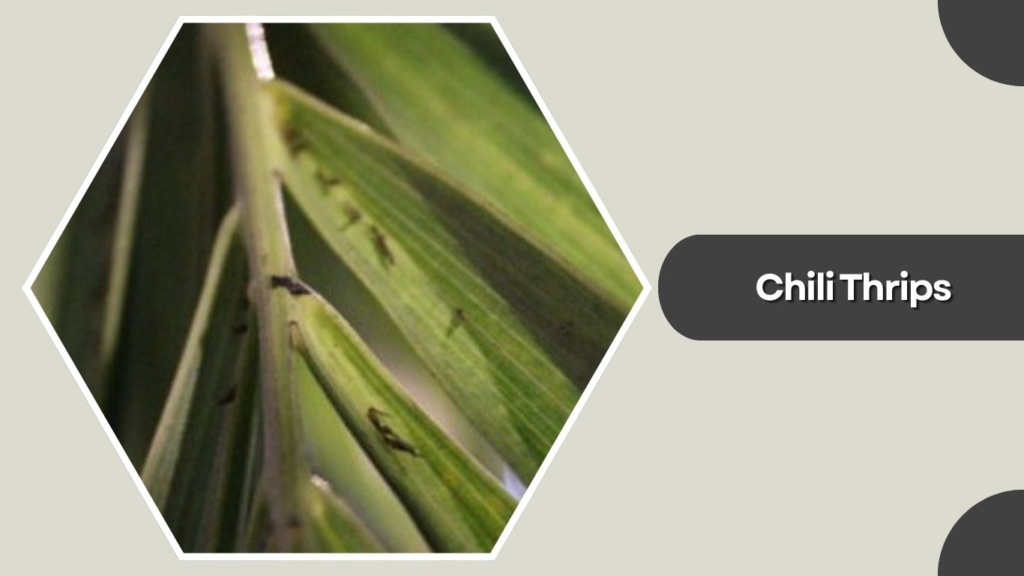
Chili thrips is a highly invasive species known for causing serious damage to peppers, strawberries, mangoes, roses, and many ornamental plants. It is especially dangerous because it attacks new growth, buds, and young leaves, leading to leaf drop, deformed fruits, and reduced flowering.
Identification
- Extremely small, usually under 1 mm long
- Pale yellow to light green body
- Darker bands or shading on the abdomen
- Narrow fringed wings held flat over the back
- Often concentrated on tender shoots and young leaves
Habitat
Chili thrips thrive in warm tropical and subtropical regions but are also common in greenhouses worldwide. They are usually found on new leaves, buds, flowers, and developing fruits. This species spreads easily through infested nursery plants and international plant trade.
Diet
They feed on plant sap from young tissues, injecting toxins that distort plant growth. Preferred hosts include chili, pepper, citrus, mango, strawberry, cotton, and roses. Damage appears as curled leaves, rough scarring, bronzing, and premature leaf fall.
Lifecycle
Eggs are laid inside soft plant tissue. Larvae feed on leaves and buds before moving to sheltered areas to pupate. In warm conditions, the entire lifecycle may take only two to three weeks, allowing populations to build rapidly and cause sudden, severe infestations.
4. Greenhouse Thrips (Heliothrips haemorrhoidalis)
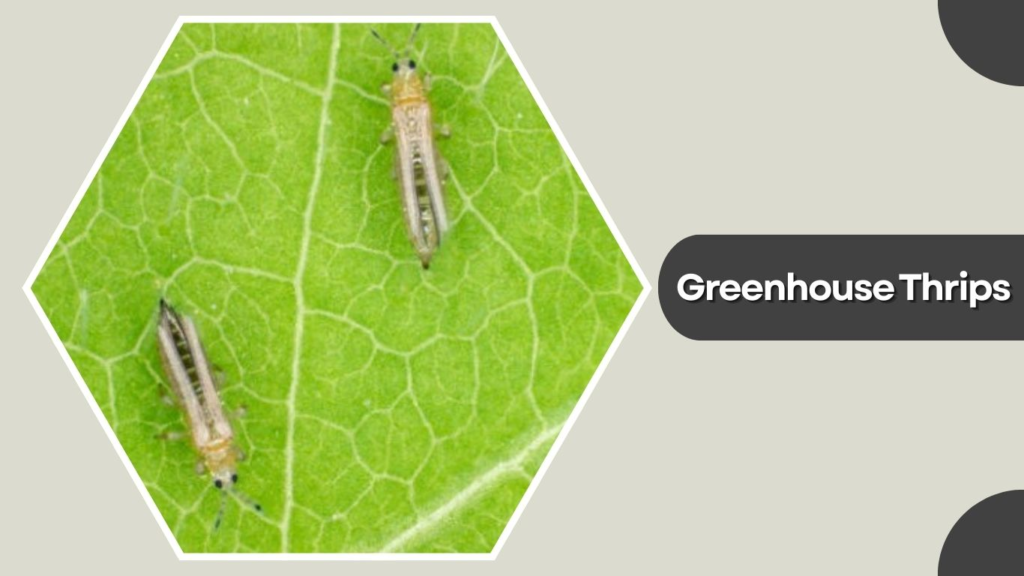
The greenhouse thrips is a common pest of indoor plants, tropical ornamentals, and fruit crops. It is especially known for damaging houseplants and greenhouse-grown species by causing silvery patches, black specks of waste, and surface scarring on leaves and fruits. This thrips prefers stable, warm environments and often builds persistent indoor populations.
Identification
- Slightly larger than many thrips, about 1.3–1.8 mm long
- Dark brown to black body
- Pale yellow legs and lighter wing bases
- Narrow wings with fine fringes
- Shiny, slow-moving appearance compared to other thrips
Habitat
Greenhouse thrips are most often found in greenhouses, indoor plant collections, and tropical outdoor environments. They live on the undersides of leaves, along leaf veins, and on fruits. This species prefers warm, humid conditions and is less tolerant of cold compared to many field thrips.
Diet
They feed by rasping the leaf surface and sucking out plant juices. Common host plants include citrus, avocado, croton, orchids, ficus, and many ornamental shrubs. Feeding leads to silvery scars, yellow spotting, leaf drop, and blemished fruits that lose commercial value.
Lifecycle
Females reproduce without mating in many populations. Eggs are laid inside leaf tissue. Larvae feed openly on leaves, then pupate on the plant or in nearby sheltered areas. Development is slower than some other thrips, often taking three to four weeks from egg to adult.
5. Flower Thrips (Frankliniella tritici)
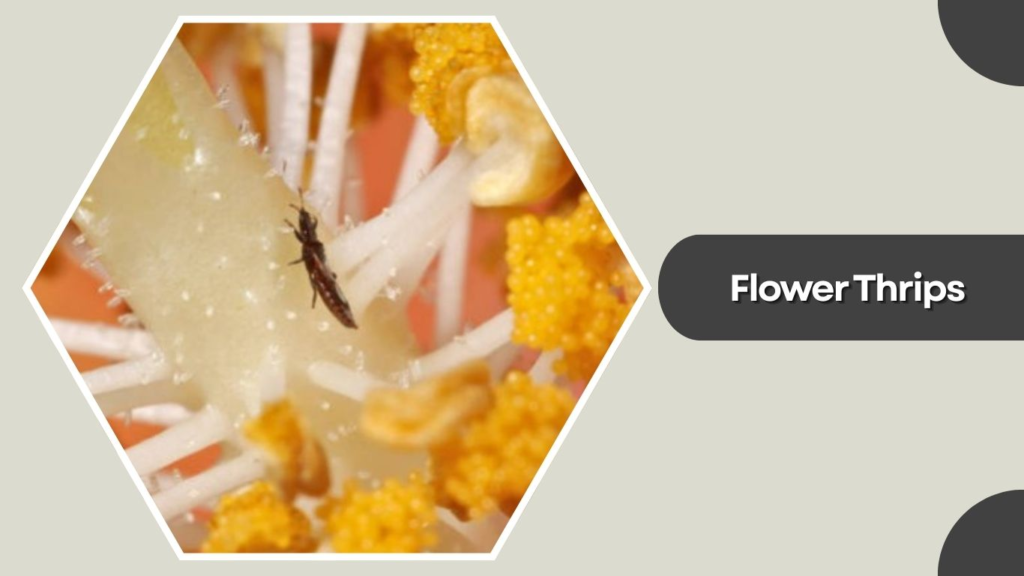
Flower thrips is a widespread species commonly found in flowers, grasses, and agricultural crops. It is a frequent visitor to blossoms, where it feeds on pollen and soft floral tissues. Although less destructive than some species, large populations can still cause noticeable scarring and can contribute to virus transmission.
Identification
- Small, slender body about 1–1.2 mm long
- Yellow to light brown coloration
- Narrow fringed wings
- Prominent dark eyes
- Often seen crawling inside open flowers
Habitat
This species is widely distributed across fields, meadows, gardens, and crop systems. It is strongly associated with flowering plants and grasses. Flower thrips populations rise quickly during warm seasons when many plants are in bloom.
Diet
Flower thrips feed on pollen, flower parts, and tender plant tissues. They are commonly found on cotton, strawberries, vegetables, and wildflowers. Feeding damage includes distorted petals, brown streaks, and reduced flower quality.
Lifecycle
Eggs are laid within flower or leaf tissue. Larvae feed in flowers before dropping to the soil or plant base to pupate. The lifecycle is usually completed within two to three weeks in warm weather, allowing several generations each growing season.
6. Melon Thrips (Thrips palmi)
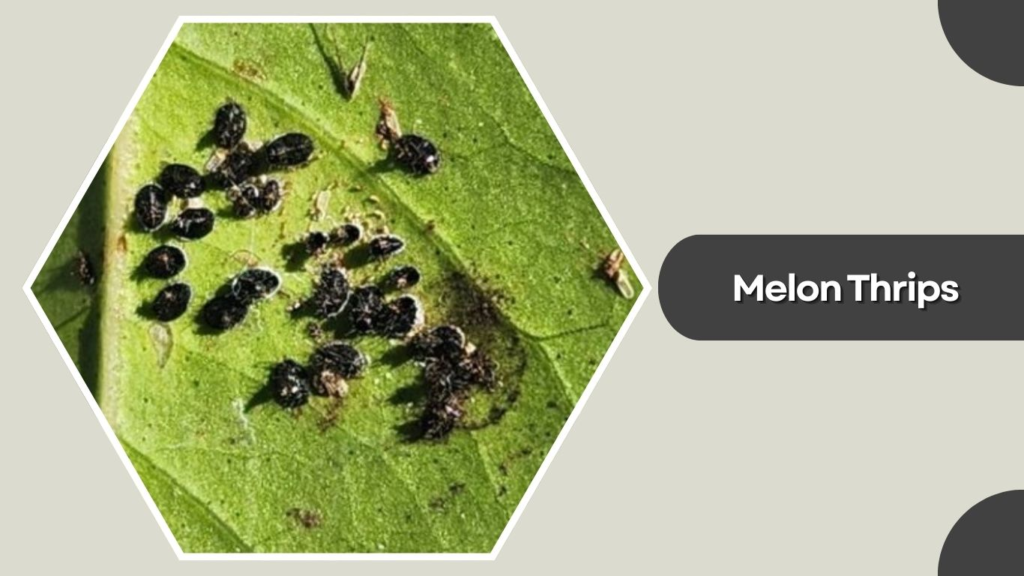
Melon thrips is a highly destructive agricultural pest that attacks a wide range of vegetables and ornamental plants. It is especially damaging to cucurbits, peppers, eggplants, and beans. This species is notorious for rapid population growth and for transmitting several serious plant viruses that reduce crop quality and yield.
Identification
- Very small, usually about 1 mm long
- Pale yellow to straw-colored body
- Slender shape with narrow fringed wings
- Dark eyes clearly visible
- Often concentrated on young leaves and flowers
Habitat
Melon thrips are common in tropical and subtropical regions and are frequently found in greenhouses worldwide. They live on the undersides of leaves, inside flowers, and around growing tips. Warm temperatures strongly favor their survival and reproduction.
Diet
They feed by piercing plant cells and sucking out their contents. Host plants include melon, cucumber, squash, pepper, eggplant, cotton, and many ornamentals. Feeding results in silvery streaks, leaf curling, stunted growth, and scarring on fruits.
Lifecycle
Eggs are laid inside soft plant tissue. The larval stages feed actively before entering non-feeding prepupal and pupal stages, often in soil or leaf litter. The full lifecycle can be completed in about two weeks under warm conditions.
7. Citrus Thrips (Scirtothrips citri)
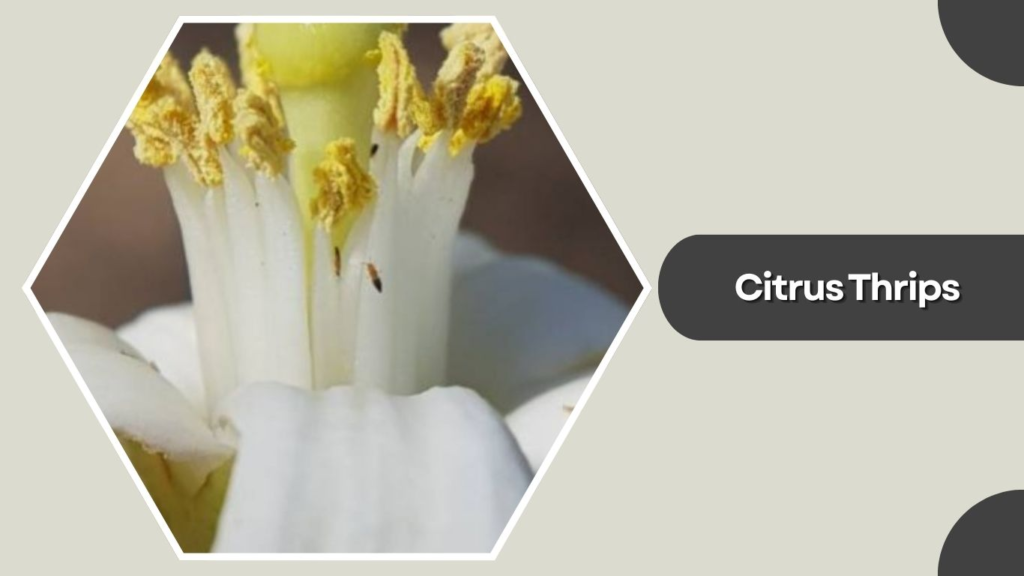
Citrus thrips is a major pest of citrus orchards, particularly in warm regions. It is best known for damaging young fruits and tender leaves, causing scarring that reduces fruit quality and market value. Although small, large populations can have a serious economic impact on citrus production.
Identification
- Tiny insect, about 0.8–1 mm long
- Pale yellow to orange body
- Narrow wings with fine fringes
- Slightly darker shading along the abdomen
- Often found on new citrus growth
Habitat
This species is mainly associated with citrus groves, orchards, and warm outdoor environments. It prefers tender new leaves, buds, and young fruit. Citrus thrips populations peak during spring and early summer when new growth is abundant.
Diet
They feed on plant sap from young tissues. Primary hosts include oranges, lemons, limes, and grapefruit, though they may also infest blueberries and ornamentals. Feeding causes leaf distortion and rough, ring-shaped scars on developing fruits.
Lifecycle
Females insert eggs into plant tissue. Larvae feed on leaves and fruits, then drop to the soil to pupate. Depending on temperature, a generation may take two to four weeks, allowing multiple overlapping generations each year.
8. Tomato Thrips (Frankliniella schultzei)
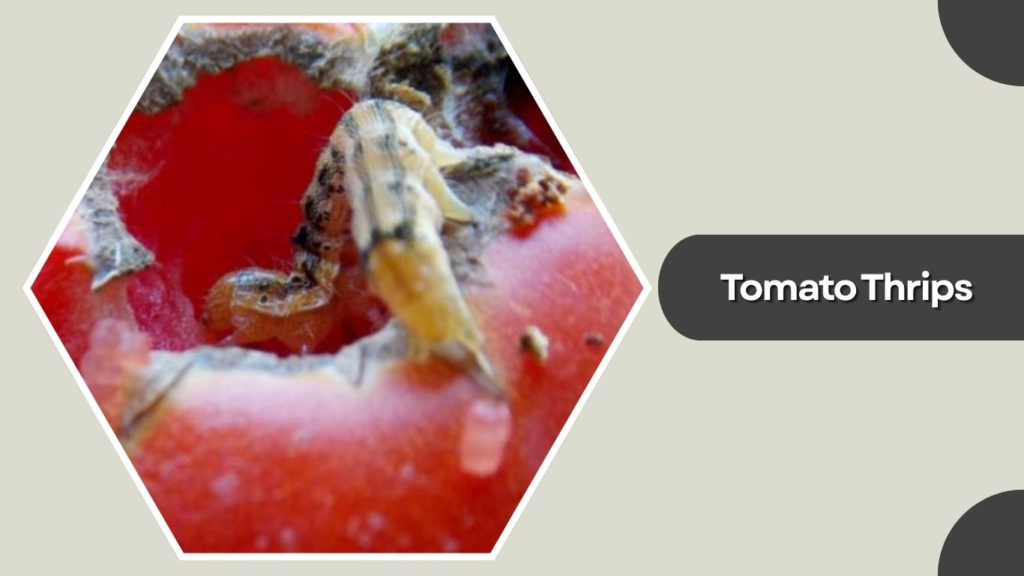
The tomato thrips is a widespread species known for damaging tomatoes, peppers, cotton, and many ornamental plants. It is especially important because it can transmit serious plant viruses, including Tomato spotted wilt virus. This thrips feeds aggressively on flowers and young plant parts, often causing flower drop and poor fruit development.
Identification
- Small, slender insect about 1–1.3 mm long
- Body color varies from pale yellow to dark brown
- Narrow wings with long fringe hairs
- Distinct dark eyes
- Commonly found in flowers and on young leaves
Habitat
Tomato thrips occur in tropical, subtropical, and warm temperate regions. They are found in crop fields, gardens, and greenhouses. This species prefers flowers, buds, and soft leaf tissue, where feeding damage is most severe.
Diet
They feed by piercing plant cells and sucking out the contents. Major host plants include tomato, pepper, cotton, peanut, sunflower, and many ornamentals. Feeding damage appears as silvery patches, distorted flowers, and scarred fruits.
Lifecycle
Eggs are laid inside plant tissue. Larvae feed on plants, then drop to sheltered areas to pupate. The full lifecycle can be completed in about two to three weeks under warm conditions, enabling rapid population buildup.
9. Tobacco Thrips (Frankliniella fusca)
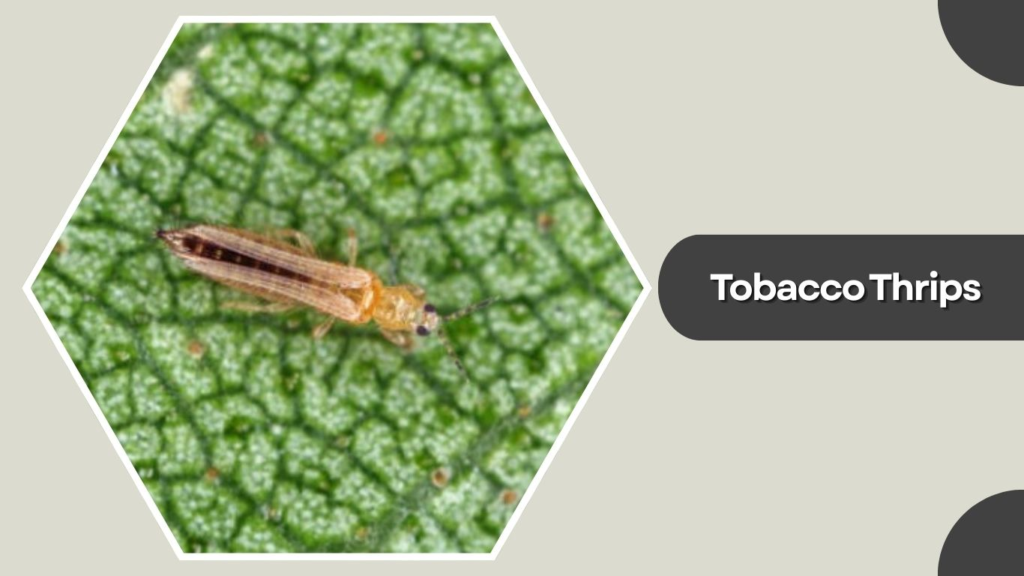
Tobacco thrips is a serious pest of field crops, especially peanuts, cotton, soybeans, and tobacco. It is one of the main vectors of Tomato spotted wilt virus in many agricultural regions. Even small populations can cause significant plant stress and disease spread.
Identification
- Very small, about 1 mm long
- Dark brown to black body
- Narrow fringed wings
- Dark compound eyes
- Usually found on seedlings and young plants
Habitat
This species is common in open agricultural fields, grasslands, and weedy areas. It often overwinters in plant debris and soil, then moves onto crops in warm seasons. Tobacco thrips prefer young, tender plants.
Diet
They feed on plant sap from leaves, stems, and buds. Common hosts include tobacco, peanut, cotton, soybean, and various weeds. Feeding damage causes leaf distortion, silvering, and slowed plant growth.
Lifecycle
Females lay eggs inside plant tissue. Larvae feed actively before pupating in the soil. Several generations occur each year, with lifecycle duration ranging from two to four weeks depending on environmental conditions.
10. Banana Thrips (Chaetanaphothrips signipennis)
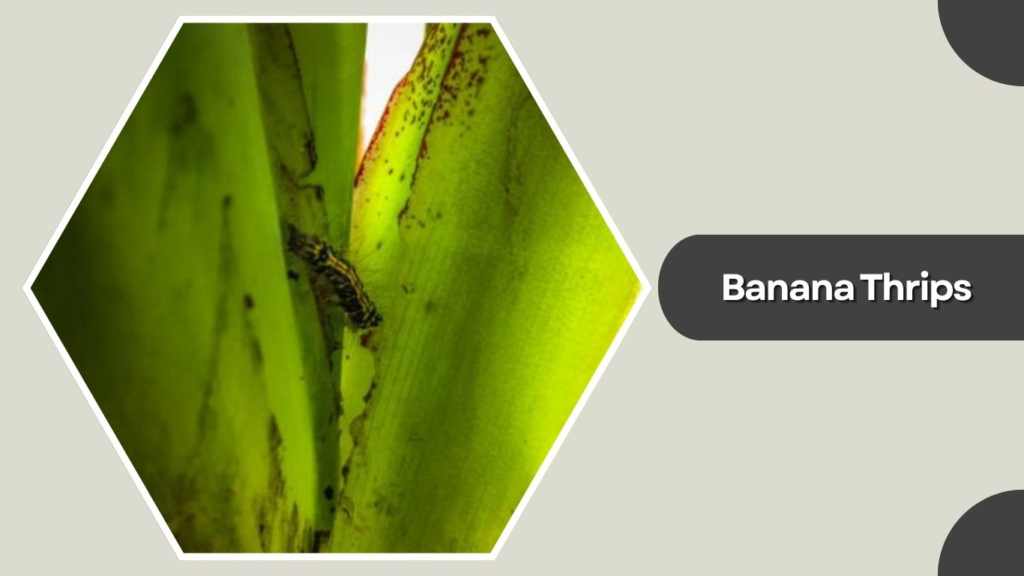
Banana thrips is an important pest of bananas and other tropical fruits. It is best known for causing surface blemishes and rust-colored scarring on banana skins, which lowers market value even when the fruit remains edible. This species often hides beneath leaf sheaths and within flower bracts.
Identification
- Very small, about 1 mm long
- Pale yellow to light brown body
- Slender shape with narrow fringed wings
- Dark eyes visible under magnification
- Often found on young fruits and inner leaf surfaces
Habitat
Banana thrips are common in tropical and subtropical regions, especially in banana plantations and humid orchards. They live under leaf sheaths, inside flowers, and on developing fruits where they are protected from direct sunlight and rain.
Diet
They feed by rasping the surface of fruits and young leaves and sucking plant juices. Bananas are the main host, but they may also attack citrus, avocado, and ornamental tropical plants. Feeding causes brown scarring, rough patches, and cosmetic damage.
Lifecycle
Eggs are laid in soft plant tissue. Larvae feed on fruit surfaces before dropping to sheltered areas to pupate. Development is rapid in warm climates, allowing several overlapping generations throughout the year.
11. Pear Thrips (Taeniothrips inconsequens)
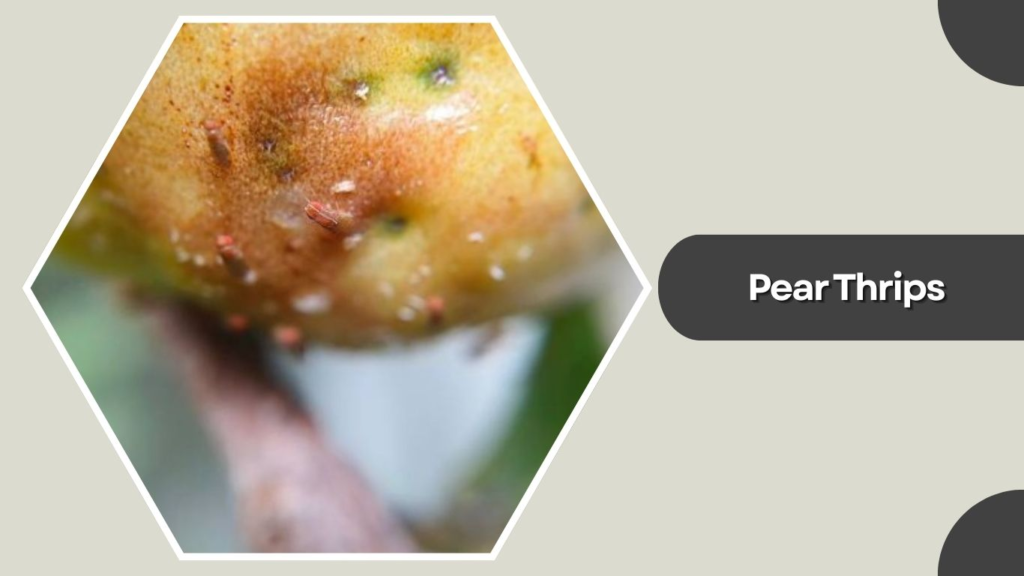
Pear thrips is a destructive species known for damaging fruit trees, forest trees, and ornamental plants. It attacks buds, leaves, and flowers early in the growing season, often before growers realize an infestation is present. Severe outbreaks can lead to poor fruit set and weakened trees.
Identification
- Slender, dark brown to black body
- About 1.3–1.5 mm long
- Narrow wings with long fringes
- Elongated head shape
- Commonly active in early spring
Habitat
This species occurs in orchards, woodlands, and landscaped areas. It overwinters in soil and leaf litter, emerging in spring to attack swelling buds and young leaves of pear, apple, maple, and other trees.
Diet
Pear thrips feed on sap from buds, flowers, and young leaves. Hosts include pear, apple, cherry, maple, ash, and various shrubs. Feeding causes distorted leaves, flower damage, and reduced fruit development.
Lifecycle
Eggs are laid inside leaf or bud tissue. Larvae feed on foliage before dropping to the soil to pupate. Typically, there is one main generation per year, with adults emerging again the following spring.
12. Gladiolus Thrips (Thrips simplex)
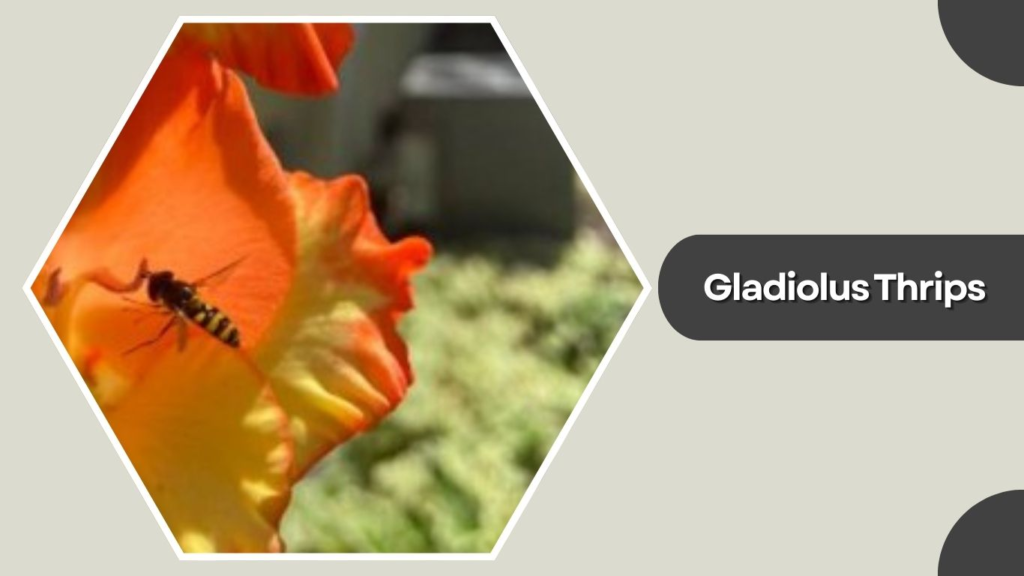
Gladiolus thrips is a well-known pest of gladiolus flowers and other ornamental bulbs. It attacks leaves, flower spikes, and corms, causing silvery streaks, distorted blooms, and poor-quality flowers. This species can continue to damage stored corms after harvest, making it a problem both in the field and in storage.
Identification
- Small, slender insect about 1–1.5 mm long
- Dark brown body with lighter legs
- Narrow fringed wings
- Elongated shape with pointed abdomen
- Often found inside flower sheaths and on leaves
Habitat
Gladiolus thrips are commonly found in gardens, flower farms, greenhouses, and bulb storage facilities. They hide in tight spaces such as leaf folds, flower buds, and between stored corm scales.
Diet
They feed on gladiolus leaves, flower petals, and corm tissue. Feeding causes silvery spotting, brown scars, and weakened plants. Stored corms may become shriveled and spotted due to continued feeding.
Lifecycle
Eggs are laid inside leaf or flower tissue. Larvae feed on plants before pupating in soil or within plant debris. Several generations can occur in a year, especially in warm greenhouse environments.
13. Rose Thrips (Thrips fuscipennis)
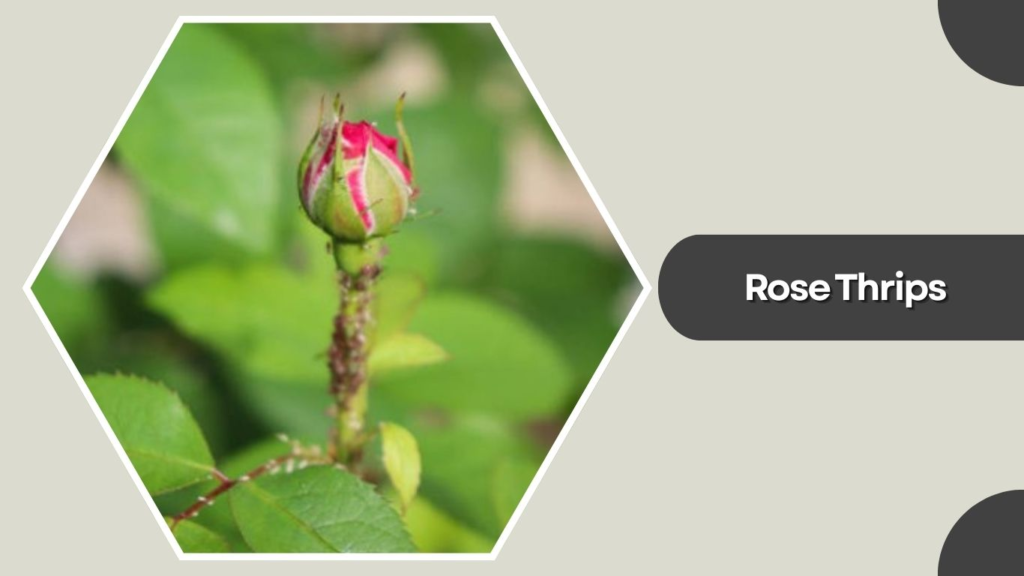
Rose thrips is a common pest of roses and many ornamental flowering plants. It feeds mainly inside buds and blossoms, leading to distorted petals, browning, and reduced flower quality. Infestations are especially noticeable in greenhouses and rose gardens.
Identification
- Slender insect about 1–1.4 mm long
- Dark brown to black body
- Narrow wings with long fringes
- Prominent dark eyes
- Commonly found inside rose buds and blooms
Habitat
This species occurs in gardens, greenhouses, and ornamental plantings. It prefers flowering plants and is often hidden deep inside buds and petals, making detection difficult until damage becomes visible.
Diet
Rose thrips feed on flower tissues and pollen. Hosts include roses, carnations, chrysanthemums, and many ornamentals. Feeding causes streaked petals, brown edges, and failure of buds to open properly.
Lifecycle
Eggs are laid in soft plant tissue. Larvae feed inside flowers before dropping to soil or sheltered areas to pupate. Under warm conditions, the lifecycle may be completed in about two to three weeks.
14. Cotton Thrips (Thrips florum)
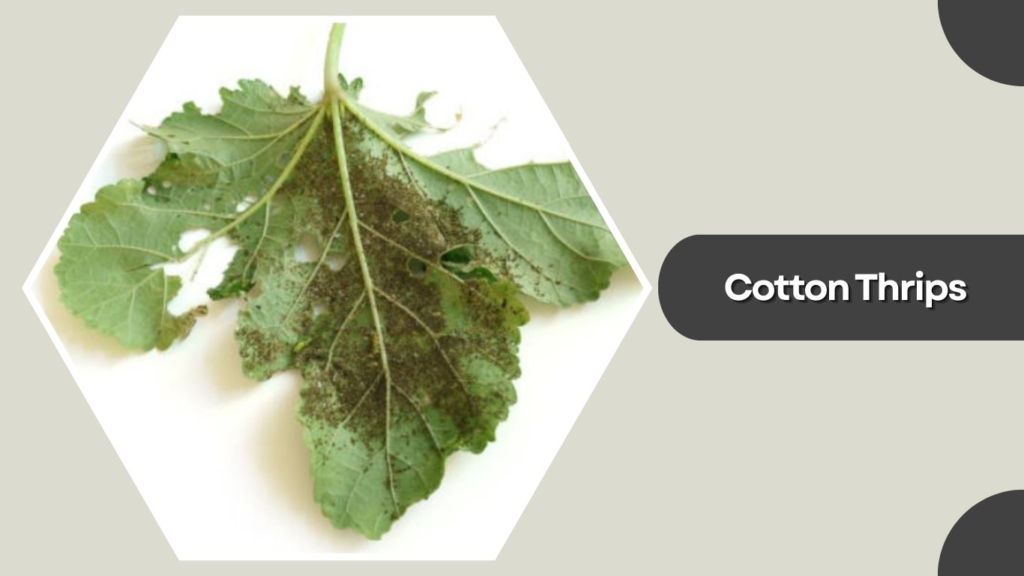
Cotton thrips is a pest species that affects cotton crops and a variety of flowering plants. It mainly attacks young leaves and buds, where feeding can slow growth and reduce plant vigor. Although often less destructive than some major thrips species, large populations can still cause visible leaf damage and stress to crops.
Identification
- Very small, about 1 mm long
- Pale yellow to light brown body
- Slender shape with narrow fringed wings
- Dark eyes noticeable on the head
- Usually found on tender cotton shoots and leaves
Habitat
Cotton thrips are found in agricultural fields, gardens, and weedy areas, especially where cotton and flowering plants are grown. They prefer warm climates and are most active during the growing season.
Diet
They feed by piercing plant cells and sucking out the contents. Primary hosts include cotton, hibiscus, and various ornamental plants. Feeding damage appears as silvery patches, leaf curling, and slowed plant development.
Lifecycle
Eggs are laid in plant tissue. Larvae feed on leaves and buds before dropping to soil or sheltered spots to pupate. Multiple generations can occur each year, particularly in warm regions.
15. Soybean Thrips (Neohydatothrips variabilis)
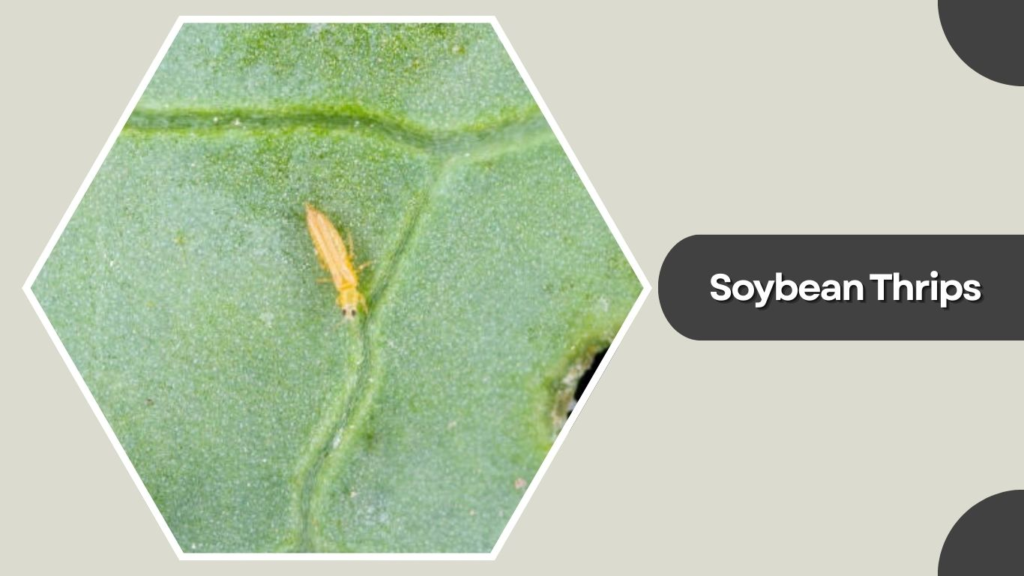
Soybean thrips is an agricultural pest that mainly attacks soybean plants and other legumes. It feeds on young leaves and developing plant tissue, causing silvering and distortion. While usually a minor pest, heavy infestations can reduce photosynthesis and plant strength.
Identification
- Small, about 1–1.2 mm long
- Yellowish to light brown body
- Slender form with narrow fringed wings
- Dark eyes
- Often found on the undersides of soybean leaves
Habitat
This species is common in soybean fields, legume crops, and nearby vegetation. It thrives in warm agricultural regions and often builds up populations during mid to late growing seasons.
Diet
Soybean thrips feed on leaf tissue and plant sap. Hosts include soybean, peanut, clover, and other legumes. Feeding damage produces pale streaks, silvery patches, and leaf curling.
Lifecycle
Females lay eggs in leaf tissue. Larvae feed on plants, then pupate in soil or plant litter. Several generations occur each year, with development speed depending on temperature.
16. Cotton Thrips (Thrips florum)
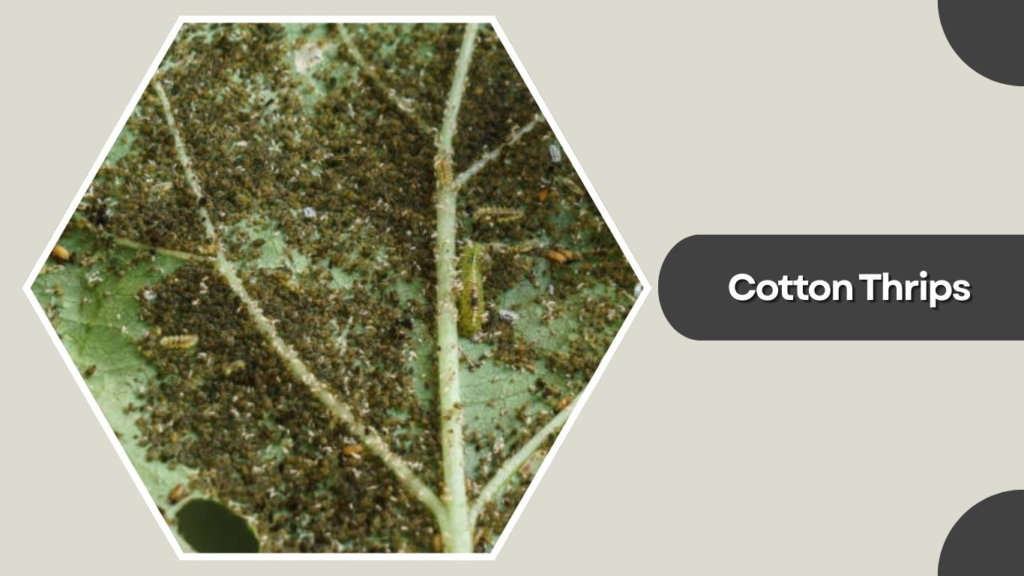
Cotton thrips is a pest species that affects cotton crops and a variety of flowering plants. It mainly attacks young leaves and buds, where feeding can slow growth and reduce plant vigor. Although often less destructive than some major thrips species, large populations can still cause visible leaf damage and stress to crops.
Identification
- Very small, about 1 mm long
- Pale yellow to light brown body
- Slender shape with narrow fringed wings
- Dark eyes noticeable on the head
- Usually found on tender cotton shoots and leaves
Habitat
Cotton thrips are found in agricultural fields, gardens, and weedy areas, especially where cotton and flowering plants are grown. They prefer warm climates and are most active during the growing season.
Diet
They feed by piercing plant cells and sucking out the contents. Primary hosts include cotton, hibiscus, and various ornamental plants. Feeding damage appears as silvery patches, leaf curling, and slowed plant development.
Lifecycle
Eggs are laid in plant tissue. Larvae feed on leaves and buds before dropping to soil or sheltered spots to pupate. Multiple generations can occur each year, particularly in warm regions.
17. Soybean Thrips (Neohydatothrips variabilis)
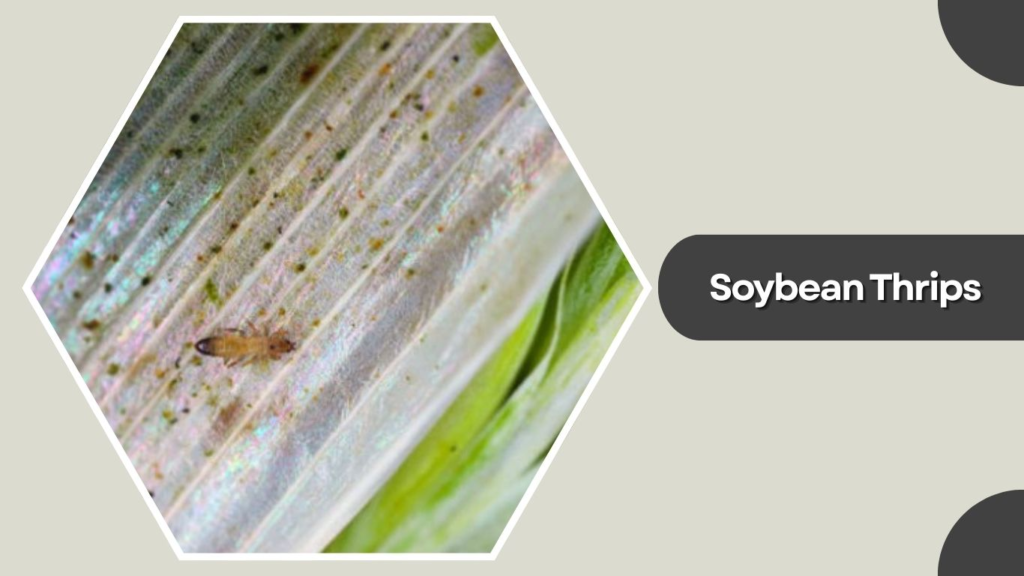
Soybean thrips is an agricultural pest that mainly attacks soybean plants and other legumes. It feeds on young leaves and developing plant tissue, causing silvering and distortion. While usually a minor pest, heavy infestations can reduce photosynthesis and plant strength.
Identification
- Small, about 1–1.2 mm long
- Yellowish to light brown body
- Slender form with narrow fringed wings
- Dark eyes
- Often found on the undersides of soybean leaves
Habitat
This species is common in soybean fields, legume crops, and nearby vegetation. It thrives in warm agricultural regions and often builds up populations during mid to late growing seasons.
Diet
Soybean thrips feed on leaf tissue and plant sap. Hosts include soybean, peanut, clover, and other legumes. Feeding damage produces pale streaks, silvery patches, and leaf curling.
Lifecycle
Females lay eggs in leaf tissue. Larvae feed on plants, then pupate in soil or plant litter. Several generations occur each year, with development speed depending on temperature.
18. Palm Thrips (Parthenothrips dracaenae)
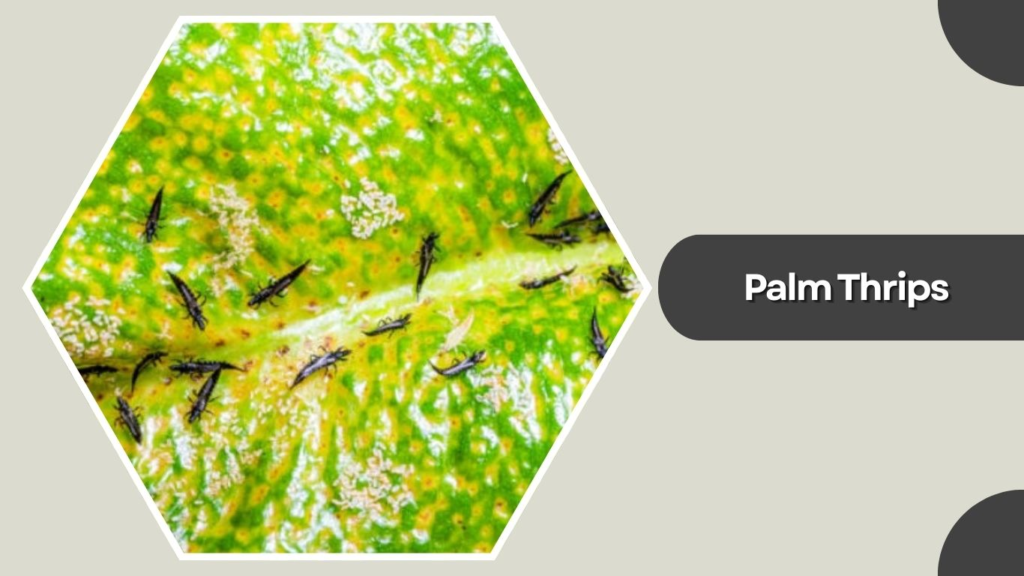
Palm thrips is a common pest of indoor plants, palms, and ornamental foliage plants. It is frequently found in homes, offices, and greenhouses, where it feeds on leaves and causes pale spotting, silvery patches, and gradual yellowing. This species reproduces easily indoors and can maintain long-lasting populations.
Identification
- Very small, about 1–1.3 mm long
- Pale yellow to light brown body
- Slender shape with narrow fringed wings
- Dark compound eyes
- Often found on the undersides of leaves
Habitat
Palm thrips mainly live on indoor plants, greenhouse ornamentals, and tropical foliage. Common host plants include palms, dracaena, ficus, orchids, and ivy. They prefer warm, stable environments and are rarely seen outdoors in cooler regions.
Diet
They feed by scraping the leaf surface and sucking out plant juices. This causes fine speckling, silvery discoloration, and weakened leaves. Long-term infestations can lead to leaf drop and reduced plant appearance.
Lifecycle
Eggs are laid on leaf surfaces. Larvae feed on leaves before entering non-feeding pupal stages in hidden areas of the plant. The lifecycle may be completed in two to three weeks indoors, allowing continuous generations throughout the year.
