
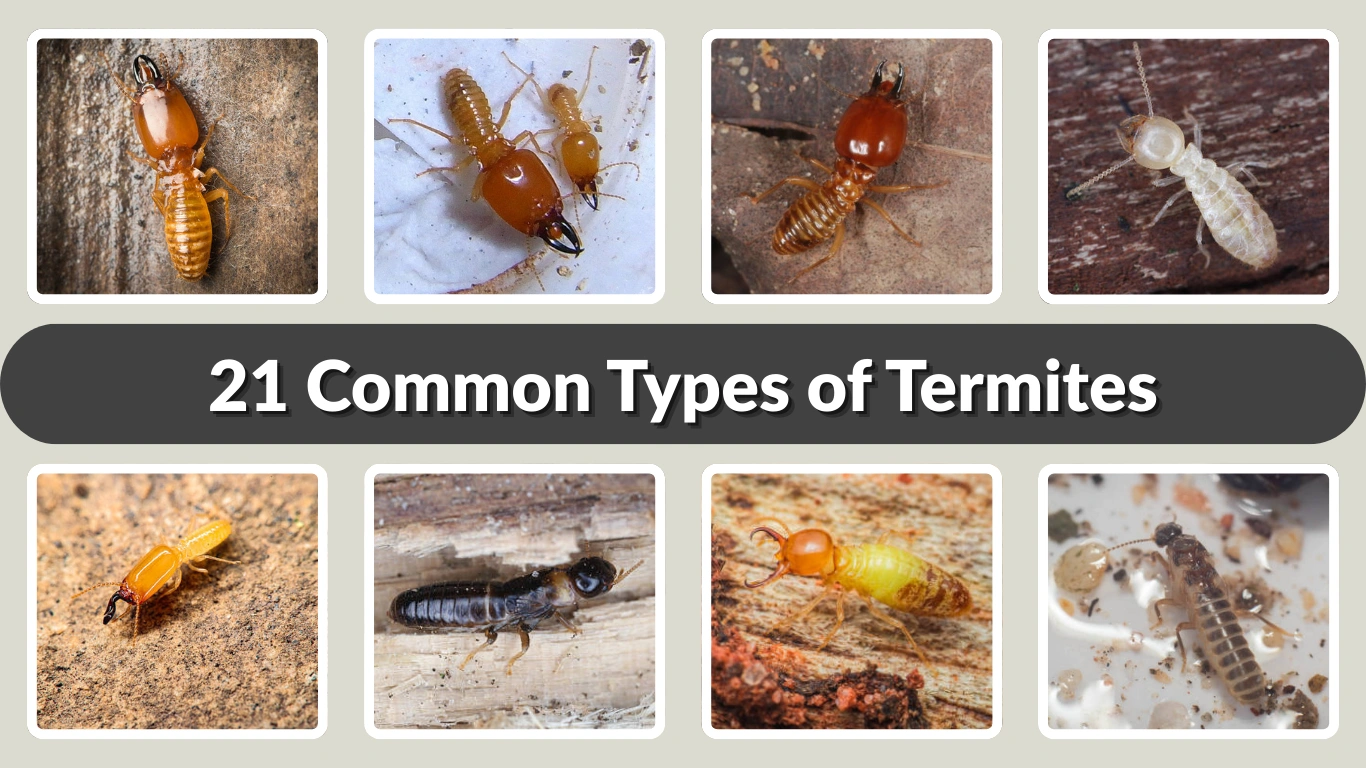
Termites are highly organized social insects known for their ability to break down wood and other cellulose materials. Found on every continent except Antarctica, they play an important ecological role but can also cause serious structural damage to homes and buildings. From soil-dwelling subterranean termites to drywood, dampwood, and mound-building species, termites vary greatly in size, behavior, and habitat. This guide covers 21 common types of termites, helping readers understand their differences, environments, and general characteristics.
1. Subterranean Termite

Subterranean termites are the most common and destructive type of termite worldwide. They live underground in large colonies and rely on moisture from the soil, which allows them to cause serious structural damage to homes and buildings.
Identification
- Soft-bodied, pale white to light brown insects
- Straight, bead-like antennae
- Workers are wingless; swarmers have two equal-length wings
- Narrow waist with uniform body shape
Size and Appearance
Adult worker termites are usually small, measuring about 4–6 mm long. Reproductive swarmers are larger and darker, often brown or black, with long translucent wings that are shed after mating.
Habitat and Range
Subterranean termites are found on every continent except Antarctica. They build nests in soil and create mud tubes to travel between the ground and food sources such as wood, foundations, and structural timbers.
Behavior and Diet
These termites feed primarily on cellulose found in wood, paper, and plant material. They work continuously, day and night, and depend on moisture to survive, which is why they are commonly found in damp or soil-contact areas.
2. Drywood Termite

Drywood termites are a common structural pest that lives entirely inside dry, sound wood. Unlike subterranean termites, they do not need contact with soil, allowing them to infest furniture, doors, and roof timbers.
Identification
- Light brown to cream-colored body
- Winged swarmers have smoky or clear wings
- Straight antennae with thick body shape
- Fecal pellets often found near infestation sites
Size and Appearance
Adult drywood termites usually measure 7–10 mm in length. Swarmers are darker and larger than workers, while soldiers have noticeably large heads with strong mandibles.
Habitat and Range
Drywood termites are commonly found in coastal and warm regions. They infest dry wood structures such as furniture, beams, and wooden fixtures without needing moisture from the soil.
Behavior and Diet
These termites feed on dry cellulose materials and form smaller colonies compared to subterranean termites. They produce hard, sand-like droppings as they tunnel through wood.
3. Dampwood Termite

Dampwood termites prefer moist and decaying wood and are usually found in areas with high humidity or water damage. They are less likely to infest well-maintained homes.
Identification
- Large body with soft texture
- Light brown to yellowish coloration
- Soldiers have oversized heads and strong jaws
- Straight antennae and broad waist
Size and Appearance
Dampwood termites are among the largest termites, often reaching 10–14 mm in length. Their bodies appear thicker and more robust than other termite types.
Habitat and Range
These termites inhabit damp wood in forests, fallen logs, and water-damaged structures. They are common in coastal, humid, or rainy regions.
Behavior and Diet
Dampwood termites feed on moist, decaying wood and rely heavily on high moisture levels. Colonies grow slowly and usually remain hidden unless wood damage becomes severe.
4. Formosan Subterranean Termite
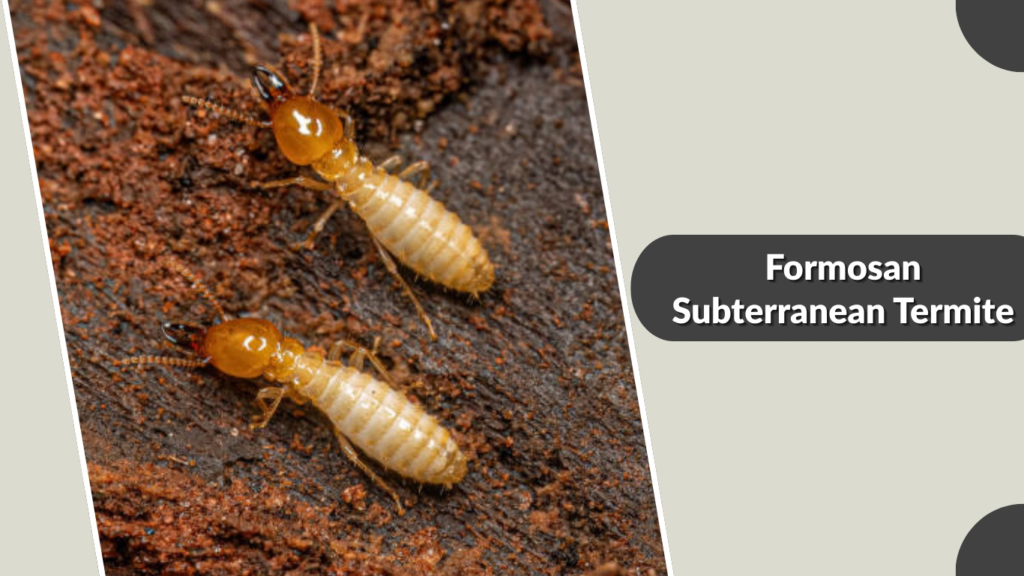
The Formosan subterranean termite is one of the most aggressive and destructive termite species in the world. It forms massive colonies and can cause severe structural damage in a short period of time.
Identification
- Pale yellow to light brown body
- Straight, bead-like antennae
- Soldiers have oval heads with curved mandibles
- Swarmers are yellowish-brown with hairy wings
Size and Appearance
Workers measure about 4–6 mm long, while swarmers are larger, reaching up to 15 mm including wings. Their large colony size makes infestations especially dangerous.
Habitat and Range
Originally from East Asia, this species is now found in many tropical and subtropical regions. It nests underground and builds extensive mud tube networks to reach wood sources.
Behavior and Diet
Formosan termites feed on all types of cellulose, including structural wood, paper, and plant matter. They remain active year-round and require constant moisture to survive.
5. Eastern Subterranean Termite
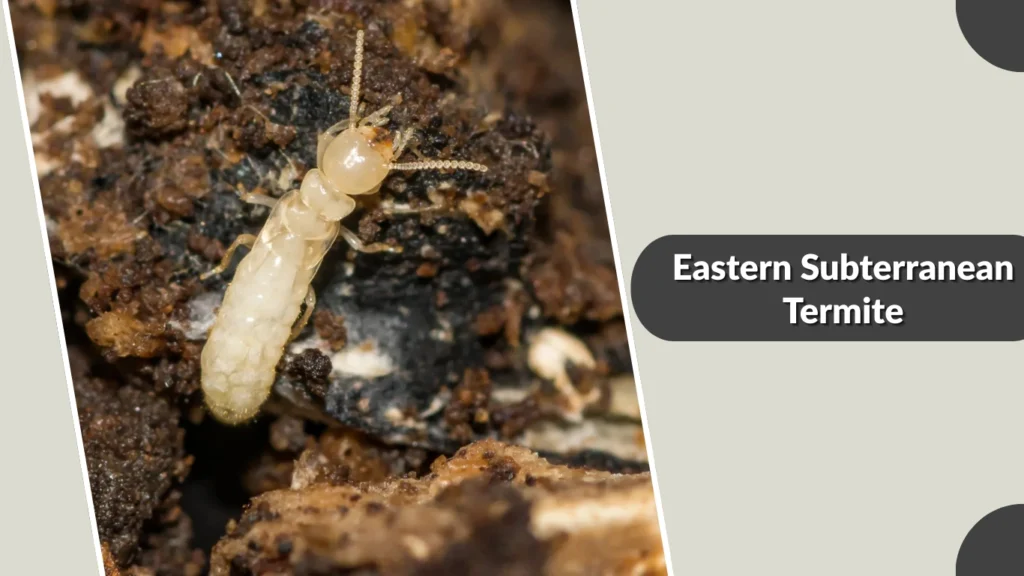
The eastern subterranean termite is one of the most widespread termite species in North America and a major cause of structural damage to buildings.
Identification
- Cream-colored to light brown body
- Straight antennae and uniform waist
- Soldiers have rectangular heads with strong jaws
- Swarmers are dark brown to black
Size and Appearance
Workers are small, about 4–6 mm long, while swarmers are larger with long, equal-sized wings. Their appearance is typical of subterranean termites.
Habitat and Range
This species is commonly found in eastern regions of North America. It lives in soil and builds mud tubes to access wooden structures above ground.
Behavior and Diet
Eastern subterranean termites feed on cellulose-based materials such as wood and paper. Colonies are large and active, often causing damage before detection.
6. Western Subterranean Termite
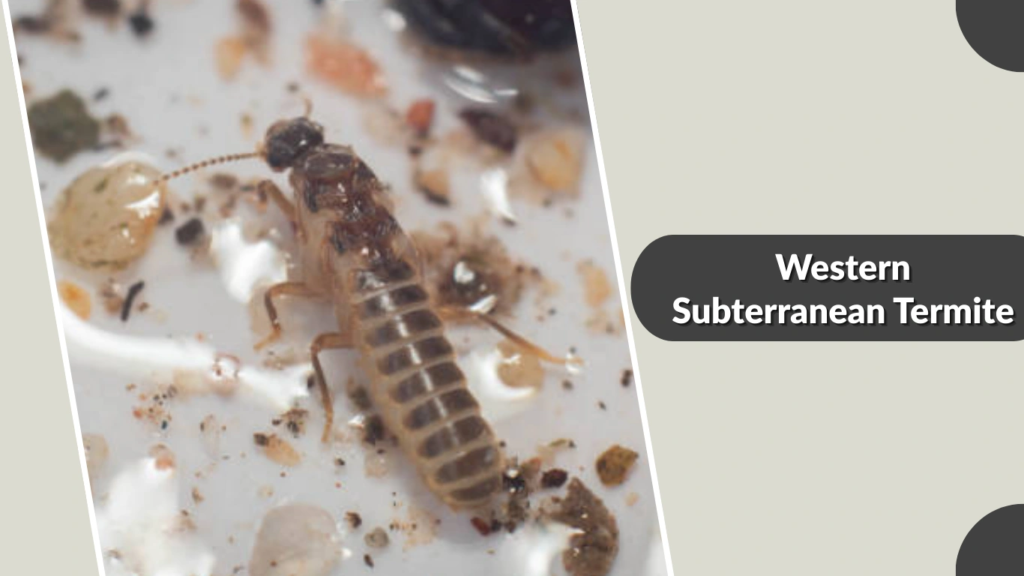
The western subterranean termite is a major structural pest in the western regions of North America. It is highly adaptable and capable of causing extensive damage to homes and buildings.
Identification
- Pale cream to light brown body
- Straight, bead-like antennae
- Soldiers have elongated heads with large mandibles
- Swarmers are dark brown with translucent wings
Size and Appearance
Workers typically measure 4–6 mm in length. Winged swarmers are noticeably larger and are often seen during seasonal swarming events, especially after rain.
Habitat and Range
This species is found throughout western North America. It nests in soil and builds mud tubes to reach wooden structures, particularly in areas with moderate moisture.
Behavior and Diet
Western subterranean termites feed on cellulose materials such as wood, cardboard, and paper. They remain hidden underground and work continuously, making infestations difficult to detect early.
7. Conehead Termite

The conehead termite is an aggressive species named for the cone-shaped head of its soldiers. It is invasive in some regions and known for rapid colony expansion.
Identification
- Soldiers have a distinct cone-shaped head
- Reddish-brown to dark brown coloration
- Straight antennae with elongated body
- Swarmers have long wings and dark bodies
Size and Appearance
Workers are small, but soldiers are easily recognized by their pointed head shape. Swarmers are larger and appear during warm, humid conditions.
Habitat and Range
Native to the Caribbean and Central America, conehead termites have spread to parts of the southern United States. They build nests in trees, walls, and ground structures.
Behavior and Diet
Conehead termites feed on wood, plants, and cellulose-based materials. They are active day and night and can cause damage both above and below ground.
8. Desert Termite
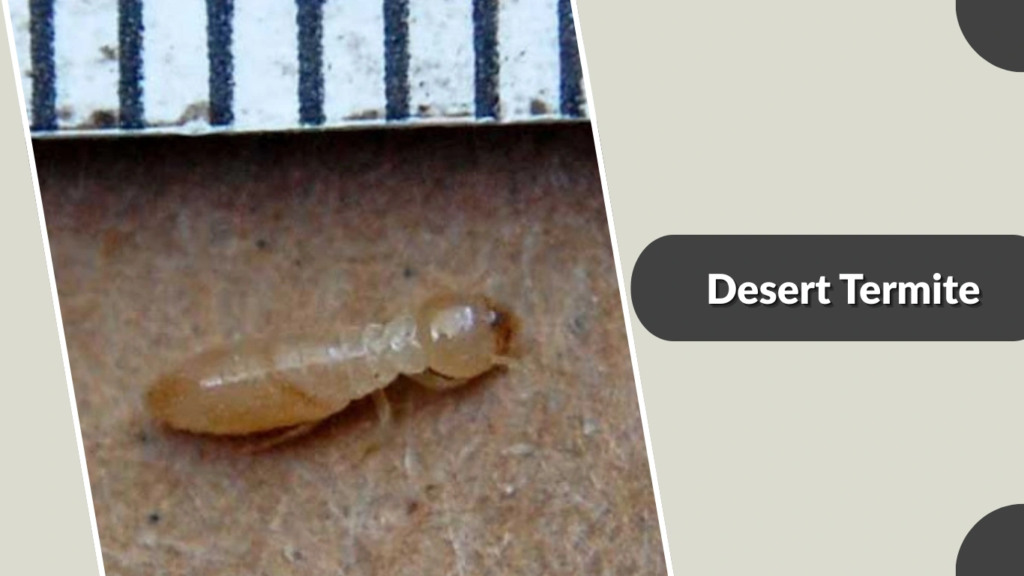
Desert termites are specially adapted to survive in dry, arid environments where moisture is limited. They play an important role in breaking down dead plant material in desert ecosystems.
Identification
- Light brown to yellowish body
- Straight antennae with small head
- Slender body adapted for dry conditions
- Soldiers have narrow heads with mandibles
Size and Appearance
These termites are generally small to medium-sized, measuring around 5–8 mm in length. Their bodies are lighter in color, helping them blend into sandy environments.
Habitat and Range
Desert termites are found in arid and semi-arid regions, including deserts and dry grasslands. They nest underground and forage for dry wood and plant debris.
Behavior and Diet
They feed on dry plant material, dead wood, and grasses. Desert termites are mostly active during cooler parts of the day to reduce moisture loss.
9. Giant Northern Termite
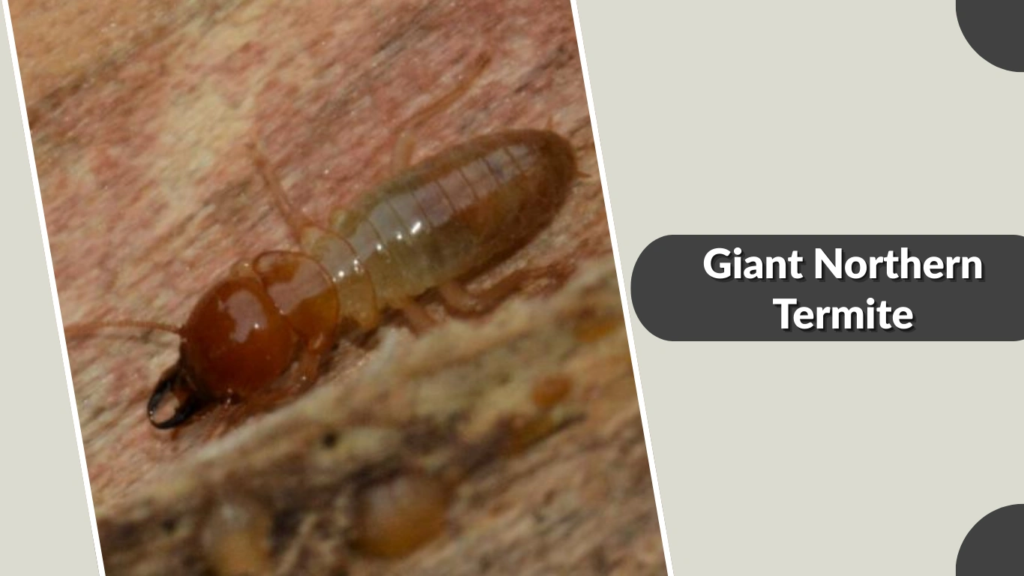
The giant northern termite is one of the largest termite species and is well known for building massive mound structures. It is native to northern Australia.
Identification
- Large body size compared to other termites
- Pale to dark brown coloration
- Soldiers have oversized heads and strong jaws
- Thick, robust body structure
Size and Appearance
Workers can reach up to 10 mm, while soldiers are even larger. The species is notable for its size and the impressive mounds it constructs.
Habitat and Range
This termite is found in northern Australia, especially in tropical savannas. It builds tall, hard mounds that can last for decades.
Behavior and Diet
Giant northern termites feed on grass, wood, and plant material. They are highly organized and maintain complex mound systems to regulate temperature and humidity.
10. Arboreal Termite
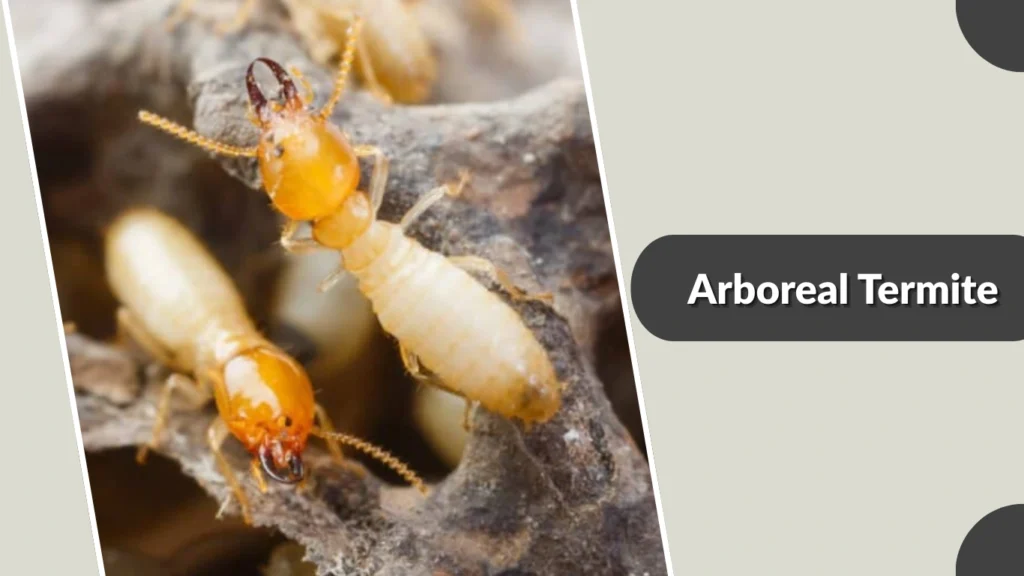
Arboreal termites are known for building their nests above ground, usually in trees. These termites are common in tropical and subtropical regions and are less dependent on soil contact.
Identification
- Light brown to dark brown body
- Straight antennae and soft body
- Nests visible on trees or wooden structures
- Soldiers have strong mandibles
Size and Appearance
Arboreal termites are small to medium-sized, typically measuring 4–8 mm. Swarmers are darker and winged, appearing seasonally for reproduction.
Habitat and Range
These termites are found in tropical forests, savannas, and urban areas with trees. They construct carton-like nests on branches, trunks, or buildings.
Behavior and Diet
They feed on wood and plant material found in trees and structures. Arboreal termites remain active year-round in warm climates.
11. Nasutitermes Termite

Nasutitermes termites are recognized by their unique soldier caste, which has a pointed snout used for chemical defense. They are common in tropical regions.
Identification
- Soldiers have long, pointed snouts
- Soft-bodied workers with pale coloration
- Straight antennae and narrow waist
- Carton nests often visible above ground
Size and Appearance
Workers are small, usually 4–6 mm long. Soldiers are similar in size but stand out due to their distinctive snout rather than large jaws.
Habitat and Range
This genus is widespread in tropical and subtropical regions worldwide. Colonies build nests in trees, on the ground, or attached to structures.
Behavior and Diet
Nasutitermes termites feed on wood and plant fibers. Soldiers defend the colony by spraying sticky chemicals from their snouts to deter predators.
12. Reticulitermes Termite
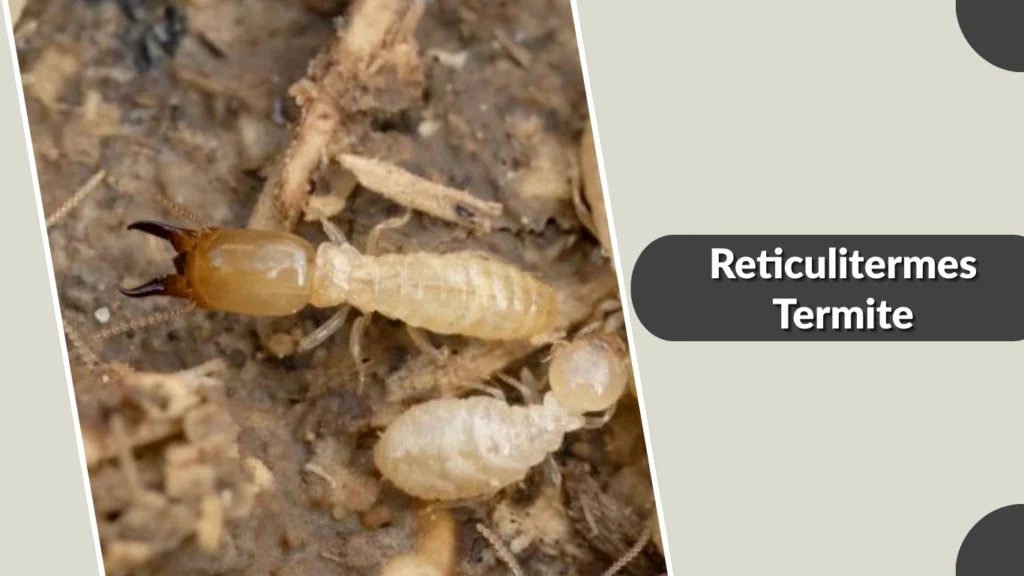
Reticulitermes termites are among the most destructive subterranean termites, especially in temperate regions. They are a major cause of structural damage to wooden buildings.
Identification
- Pale cream to light brown body
- Straight, bead-like antennae
- Soldiers have rectangular heads with strong mandibles
- Swarmers are dark brown to black
Size and Appearance
Workers are small, usually 4–6 mm long. Swarmers are larger with long, equal-sized wings that are shed after mating.
Habitat and Range
This genus is widely distributed across North America, Europe, and parts of Asia. Colonies nest underground and create mud tubes to access wood.
Behavior and Diet
Reticulitermes termites feed on cellulose from wood, paper, and plant debris. They remain hidden and can cause serious damage before being noticed.
13. Coptotermes Termite

Coptotermes termites are highly destructive subterranean termites known for forming extremely large colonies. They are considered one of the most damaging termite groups worldwide.
Identification
- Pale to light brown body
- Soldiers have rounded heads with strong mandibles
- Straight antennae and thick waist
- Swarmers are brown with long wings
Size and Appearance
Workers measure about 4–6 mm in length. Soldiers are slightly larger, while swarmers appear significantly bigger during mating seasons.
Habitat and Range
Coptotermes termites are found in tropical and subtropical regions around the world. They nest underground or inside moist wood and structures.
Behavior and Diet
These termites feed aggressively on wood and cellulose materials. Their large colonies and constant feeding make them especially dangerous to buildings and trees.
14. Kalotermes Termite
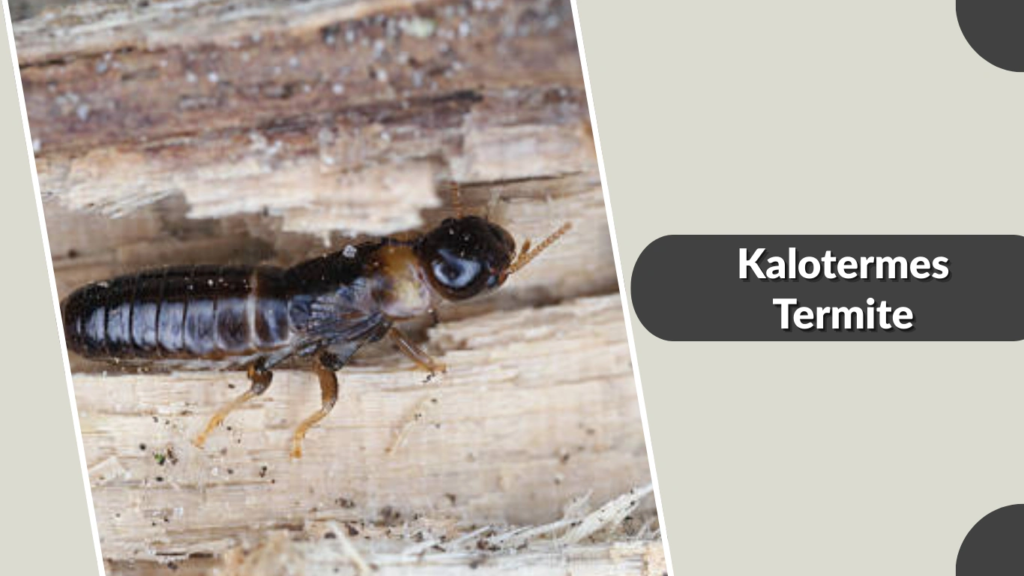
Kalotermes termites are drywood termites that live entirely within wooden structures. They are less dependent on moisture and soil compared to subterranean species.
Identification
- Light brown to yellowish body
- Straight antennae and soft body
- Soldiers have large heads with strong mandibles
- Swarmers have clear to smoky wings
Size and Appearance
Adults usually measure between 6 and 10 mm in length. Swarmers are darker and slightly larger, appearing during warm seasons.
Habitat and Range
This genus is found mainly in warm coastal and Mediterranean climates. Kalotermes termites infest dry wood such as beams, furniture, and dead tree branches.
Behavior and Diet
They feed on dry wood and cellulose materials. Colonies are relatively small and remain hidden inside the wood they consume.
15. Neotermes Termite
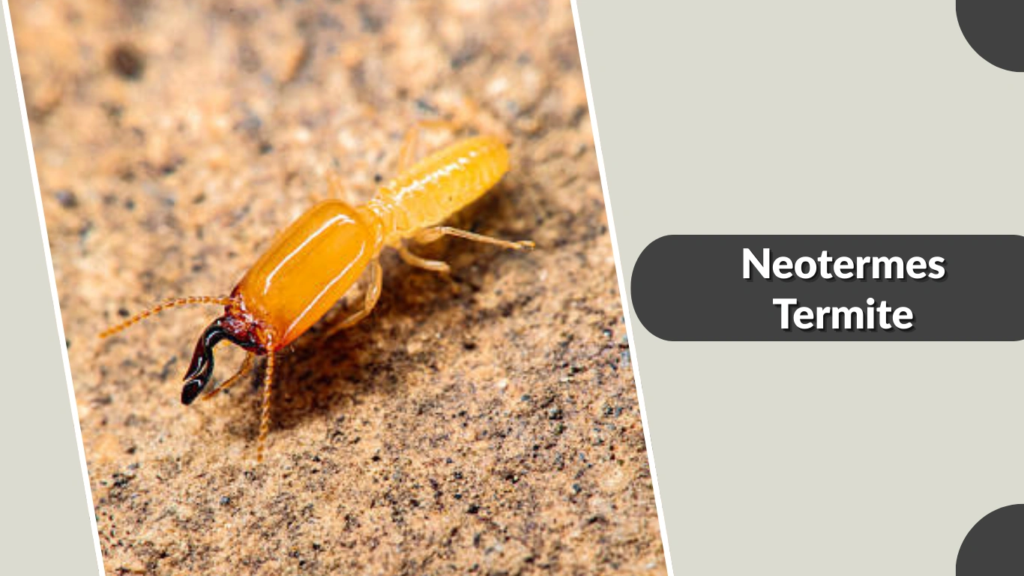
Neotermes termites are large drywood termites commonly found in tropical and subtropical regions. They often infest dead trees and wooden structures.
Identification
- Large body size with pale brown coloration
- Straight antennae and thick waist
- Soldiers have oversized heads and strong jaws
- Smooth-bodied appearance
Size and Appearance
Neotermes termites are among the largest drywood termites, reaching 10–15 mm in length. Their size makes soldiers particularly noticeable.
Habitat and Range
These termites are found in tropical forests, coastal areas, and warm regions worldwide. They live inside dry or slightly damp wood.
Behavior and Diet
Neotermes termites feed on cellulose from wood and plant material. Colonies grow slowly and usually cause damage over long periods.
16. Cryptotermes Termite
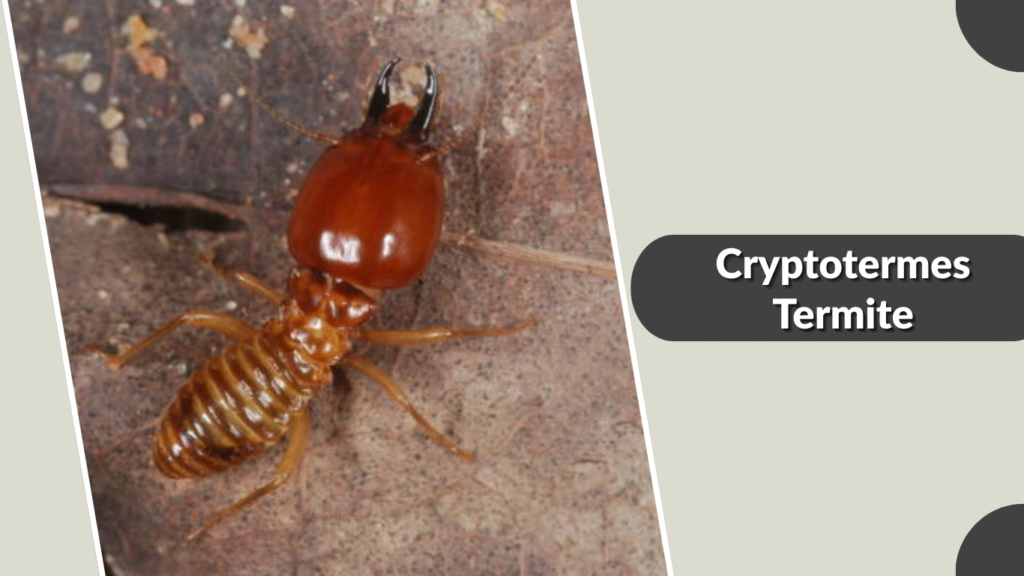
Cryptotermes termites are small drywood termites commonly associated with furniture and wooden household items. They are known for producing distinctive pellet-like droppings.
Identification
- Small, pale to light brown body
- Straight antennae with compact shape
- Soldiers have dark, hardened heads
- Dry, sand-like fecal pellets present
Size and Appearance
Adults typically measure 4–7 mm in length. Soldiers are easy to recognize due to their darker, armored heads compared to workers.
Habitat and Range
This genus is found worldwide, especially in warm coastal regions. Cryptotermes termites infest dry wood such as furniture, frames, and structural timbers.
Behavior and Diet
They feed on dry cellulose materials and live entirely inside wood. Colonies are relatively small but can cause serious damage over time.
17. Heterotermes Termite
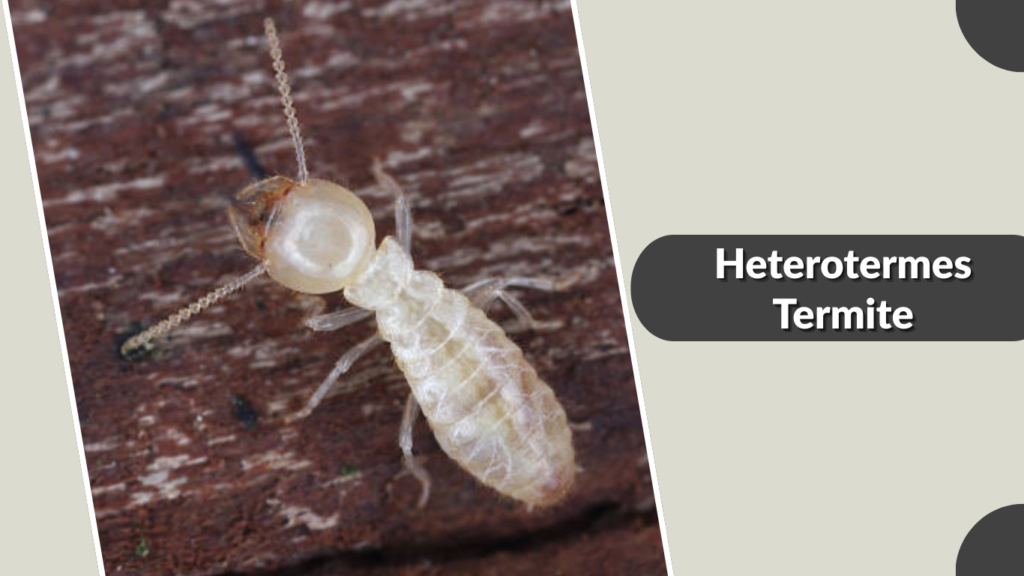
Heterotermes termites are subterranean termites closely related to Reticulitermes and are significant structural pests in many regions.
Identification
- Pale cream to light brown body
- Straight antennae and soft body
- Soldiers have elongated heads with curved mandibles
- Swarmers are brown with long wings
Size and Appearance
Workers usually measure 4–6 mm long. Soldiers are slightly larger and more aggressive in defense.
Habitat and Range
These termites are found in tropical and subtropical regions worldwide. They nest underground and use mud tubes to access wood.
Behavior and Diet
Heterotermes termites feed on wood, paper, and other cellulose materials. They are active year-round in warm climates and can cause extensive damage.
18. Odontotermes Termite
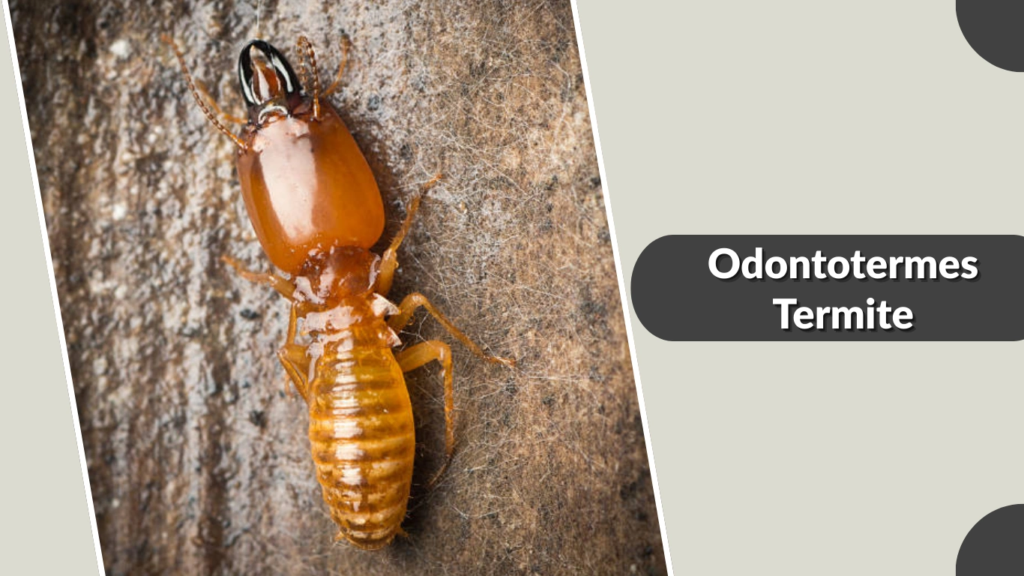
Odontotermes termites are fungus-growing termites known for cultivating fungal gardens inside their nests. They are common in tropical regions and play an important ecological role.
Identification
- Pale to dark brown body
- Straight antennae and soft-bodied workers
- Soldiers have large heads with strong mandibles
- Often associated with soil-covered galleries
Size and Appearance
Workers are small, usually 4–6 mm long, while soldiers are noticeably larger. Their physical features are typical of soil-dwelling termites.
Habitat and Range
This genus is widely distributed across Africa and Asia. Colonies live underground and construct complex nest systems with fungus chambers.
Behavior and Diet
Odontotermes termites feed on plant material that is broken down by cultivated fungi. This symbiotic relationship allows them to digest tough cellulose efficiently.
19. Macrotermes Termite
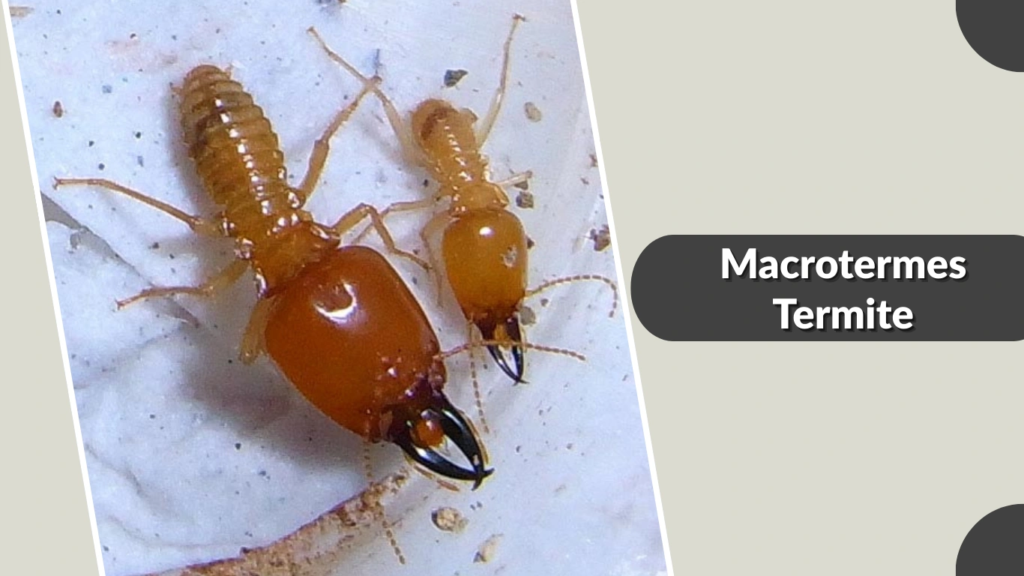
Macrotermes termites are among the largest termite species and are famous for building massive, long-lasting mounds. They are also fungus-growing termites.
Identification
- Very large body size compared to other termites
- Pale brown to dark brown coloration
- Soldiers have extremely large heads and mandibles
- Thick, robust body structure
Size and Appearance
Workers measure 6–8 mm, while soldiers can reach up to 15 mm in length. Their size makes them easily distinguishable from most termite species.
Habitat and Range
Macrotermes termites are found in Africa and parts of Asia. They build tall, complex mounds in grasslands, savannas, and forest edges.
Behavior and Diet
They cultivate fungi inside their nests to help digest plant material. Macrotermes colonies are highly organized and maintain precise temperature control within their mounds.
20. Amitermes Termite
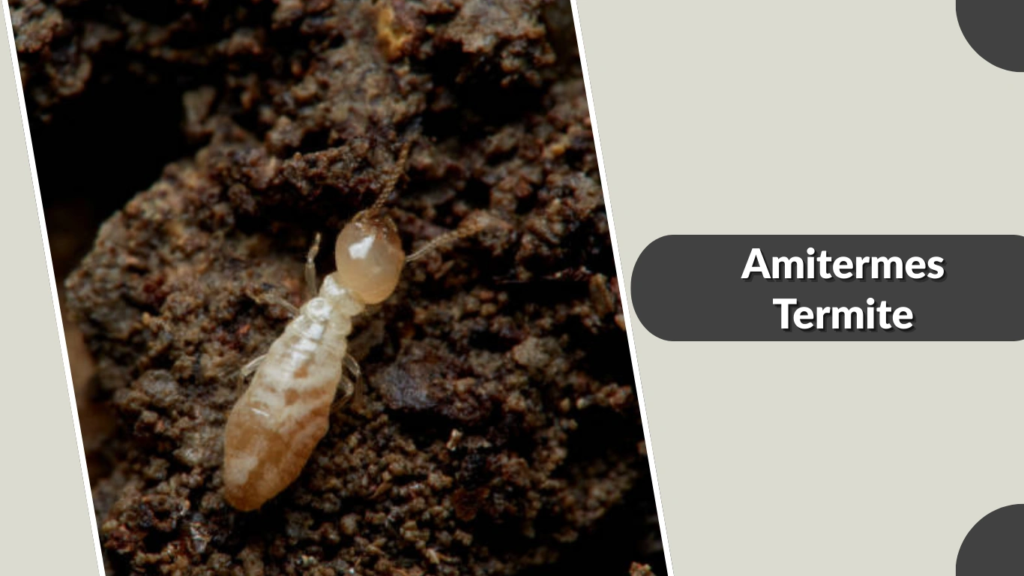
Amitermes termites are mound-building termites commonly found in dry and semi-arid regions. They are well adapted to harsh environmental conditions.
Identification
- Pale brown to yellowish body
- Straight antennae and soft body
- Soldiers have narrow heads with strong mandibles
- Often associated with small mounds
Size and Appearance
Workers are small, measuring about 4–6 mm in length. Soldiers are slightly larger and more noticeable due to their head shape.
Habitat and Range
This genus is widespread in Australia, Africa, and parts of Asia. Amitermes termites build mounds or underground nests in dry grasslands and woodlands.
Behavior and Diet
They feed on grass, wood, and plant debris. Amitermes termites are active mostly at night and rely on their mounds to regulate temperature and moisture.
21. Microcerotermes Termite
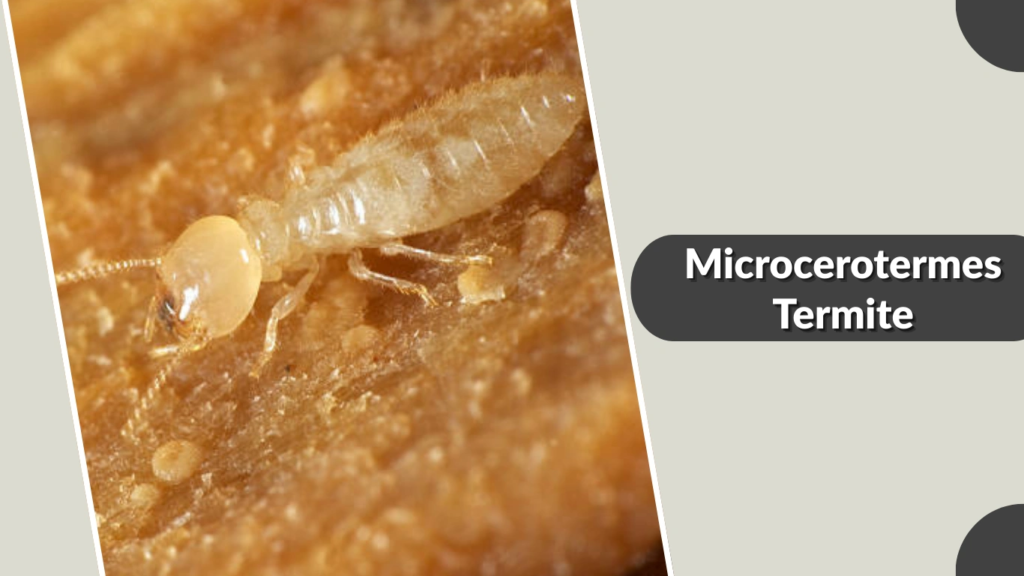
Microcerotermes termites are small termites known for building compact nests on trees or structures. They are common in tropical and subtropical regions.
Identification
- Small body with light brown coloration
- Straight antennae and soft body
- Soldiers have small heads with short mandibles
- Nests often attached to trees or walls
Size and Appearance
Workers typically measure 3–5 mm long. Their small size makes them less noticeable, but colonies can still cause damage.
Habitat and Range
This genus is found in Asia, Africa, and Australia. Colonies build nests above ground on trees, poles, and buildings.
Behavior and Diet
Microcerotermes termites feed on wood and cellulose materials. They remain active year-round in warm climates and often infest dead or weakened wood.
