
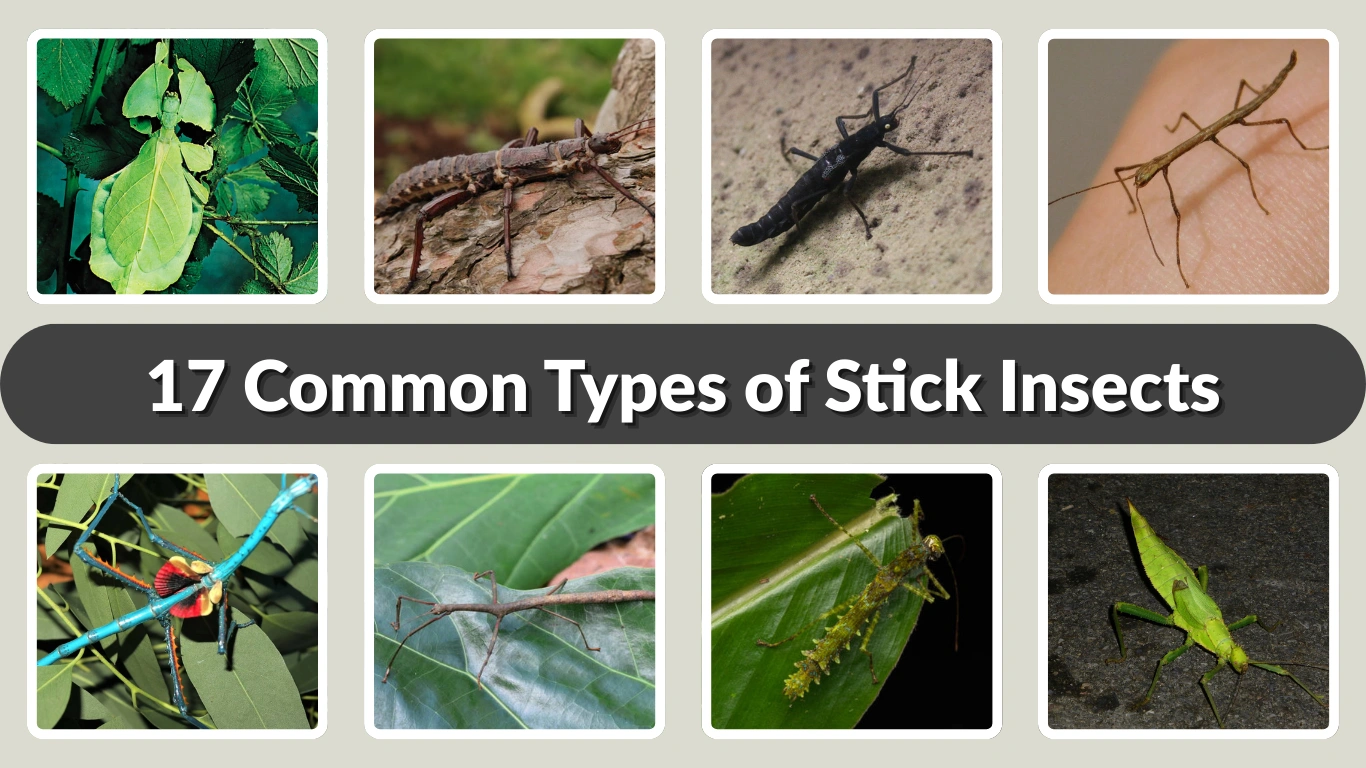
Stick insects are among the most fascinating insects on Earth, known for their incredible camouflage and diverse body shapes. From thin twig-like species to heavy, spiny, and leaf-mimicking forms, these insects have evolved unique adaptations to survive in forests, gardens, and tropical habitats. Found across Asia, Australia, Africa, and island regions, stick insects vary greatly in size, color, and behavior. This guide explores 17 common types of stick insects, highlighting their key features, habitats, and natural characteristics in a clear and structured way.
1. Indian Stick Insect (Carausius morosus)

The Indian stick insect is one of the most common and widely studied stick insects in the world. Native to South Asia, it is best known for its excellent camouflage, simple care needs, and ability to reproduce without males, making it popular in research and education.
Identification
- Long, slender, twig-like body with smooth texture
- Usually brown or green, matching surrounding vegetation
- Females larger than males, reaching about 9–10 cm
- Long antennae and six thin legs adapted for clinging to plants
Size and Appearance
Adult Indian stick insects typically grow between 8 and 10 centimeters in length. Their body is cylindrical and uniform, with minimal spines or markings. Color may slightly change depending on humidity, diet, and environment, helping them blend in effectively.
Habitat and Range
This species is native to India and nearby regions but is now found worldwide in captivity. In the wild, it inhabits shrubs, forest edges, and gardens where host plants like bramble and ivy are available.
Behavior and Diet
Indian stick insects are slow-moving and mostly nocturnal. During the day, they remain motionless to avoid predators. They feed primarily on leaves such as bramble, rose, oak, and ivy, and are known for their calm, non-aggressive behavior.
2. Giant Prickly Stick Insect (Extatosoma tiaratum)
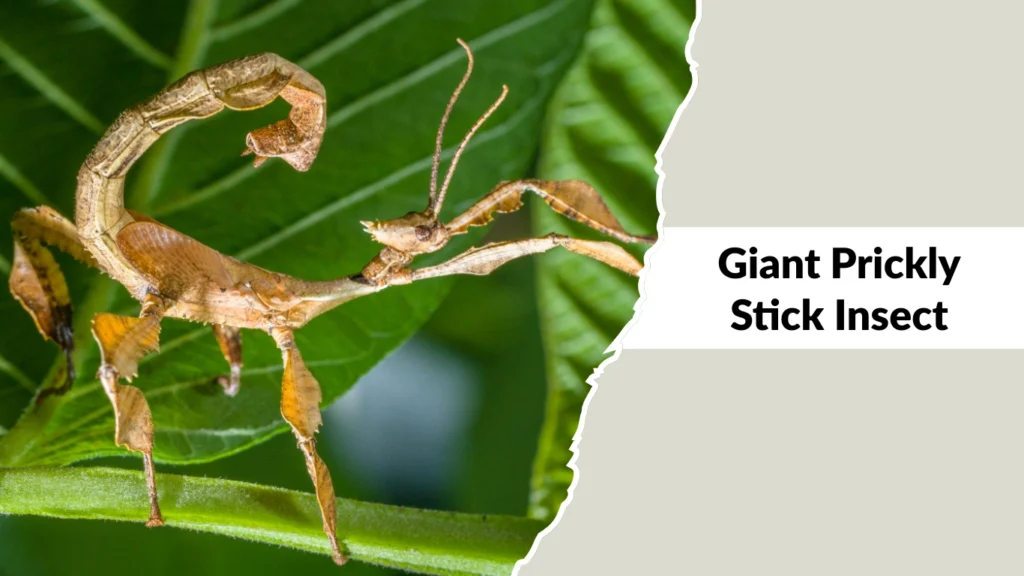
The giant prickly stick insect is a large, visually striking species known for its spiny body and leaf-like appearance. Native to Australia, it is famous for its defensive display and excellent camouflage among foliage.
Identification
- Large, thick body covered with thorn-like spines
- Color ranges from brown to green, often leaf-mimicking
- Females much larger and heavier than males
- Curved abdomen with a rough, textured surface
Size and Appearance
Females can reach up to 15 centimeters in length, while males are slimmer and smaller. The body shape resembles dried leaves or bark, helping it blend into trees. Newly hatched nymphs often mimic ants in color and movement.
Habitat and Range
This species is native to eastern Australia and lives in eucalyptus forests and woodland areas. It prefers trees and shrubs where it can remain hidden among leaves during daylight hours.
Behavior and Diet
Giant prickly stick insects are nocturnal and rely on stillness for defense. When threatened, they may raise their abdomen and spread their legs to appear larger. They feed mainly on eucalyptus, bramble, and rose leaves.
3. Jungle Nymph (Heteropteryx dilatata)
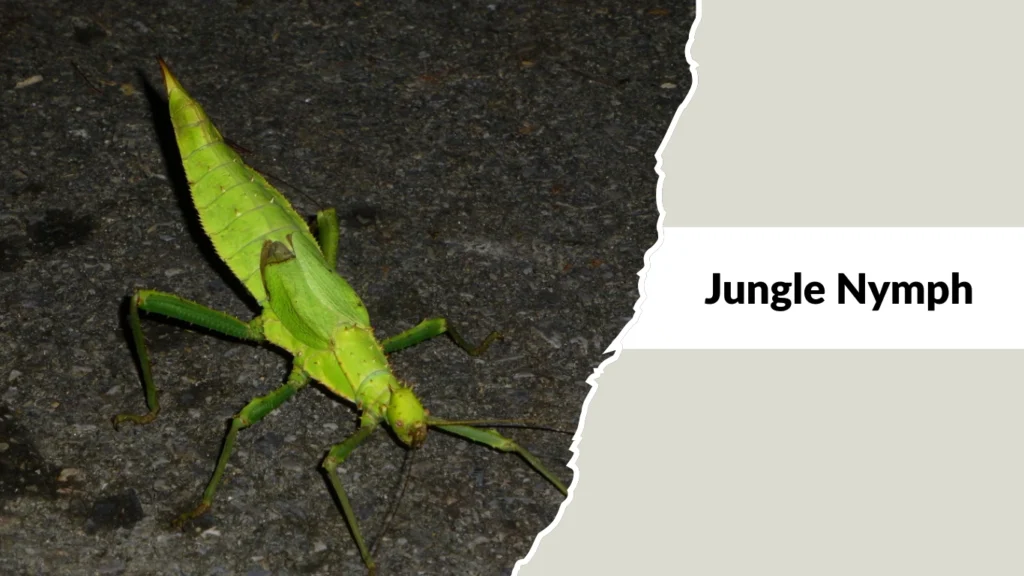
The jungle nymph is one of the heaviest stick insects in the world and is admired for its bold shape and strong legs. It is native to Southeast Asia and is known for its ground-dwelling tendencies.
Identification
- Thick, robust body with short legs
- Bright green or brown coloration
- Females have wide abdomen and spiny legs
- Males are slimmer with longer wings
Size and Appearance
Females grow up to 15 centimeters long and have a bulky, leaf-like body. Males are lighter and capable of short flights. The species has a glossy surface that gives it a fresh leaf appearance.
Habitat and Range
Jungle nymphs are found in Malaysia and surrounding regions. Unlike many stick insects, they often stay closer to the forest floor, hiding among low plants and leaf litter.
Behavior and Diet
This species is mostly nocturnal and can be defensive when disturbed, using its spiny legs to deter predators. It feeds on leaves such as bramble, oak, and other broad-leaf plants.
4. Vietnamese Walking Stick (Ramulus artemis)

The Vietnamese walking stick is a slender and delicate species admired for its classic twig-like appearance. It is commonly kept in captivity due to its simple care requirements and calm nature.
Identification
- Very thin, straight body resembling a dry twig
- Light brown to dark brown coloration
- Smooth body surface with minimal markings
- Long legs and antennae proportional to body length
Size and Appearance
Adults usually grow between 7 and 9 centimeters long. Their narrow body and uniform color make them difficult to spot among branches. Females are slightly larger than males and more commonly seen.
Habitat and Range
This species is native to Vietnam and nearby regions of Southeast Asia. It lives in bushes, shrubs, and low forest vegetation where it can easily blend into thin branches.
Behavior and Diet
Vietnamese walking sticks are slow-moving and mostly active at night. They feed on common leaves such as bramble, rose, and ivy, and rely heavily on camouflage rather than defense.
5. Australian Spiny Stick Insect (Eurycantha calcarata)

The Australian spiny stick insect is a robust and ground-dwelling species recognized for its strong legs and defensive spines. It is native to Australia and parts of Papua New Guinea.
Identification
- Thick, heavy body with visible spines
- Dark brown to black coloration
- Shorter legs compared to twig-like species
- Males have enlarged hind legs with sharp spurs
Size and Appearance
Adults typically reach 10 to 12 centimeters in length. The body is solid and muscular, especially in males, giving the insect a powerful appearance. Females are larger but less aggressive.
Habitat and Range
This species inhabits forest floors and low vegetation in Australia. It often hides under bark or leaf litter during the day and climbs plants at night to feed.
Behavior and Diet
Australian spiny stick insects are nocturnal and can defend themselves by kicking with spiny legs. They feed on leaves such as bramble, eucalyptus, and other broad-leaf plants.
6. Macleay’s Spectre (Extatosoma tiaratum – male form)
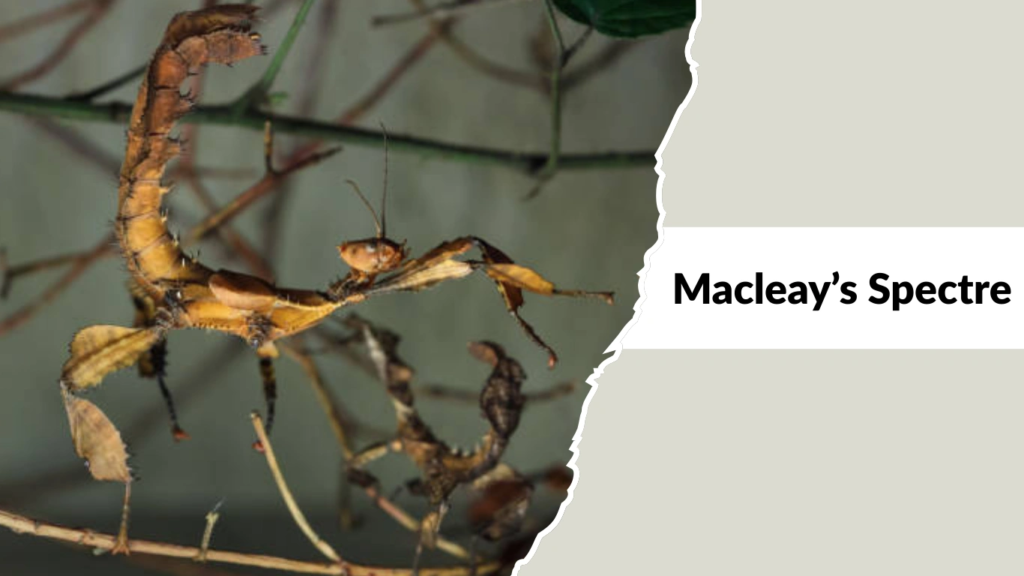
Macleay’s spectre is a remarkable stick insect known for its ghostly, leaf-like shape and dramatic camouflage. It is native to Australia and is especially famous for the distinct appearance of males and females.
Identification
- Irregular, leaf-shaped body with jagged edges
- Brown or gray coloration resembling dried leaves
- Long legs with uneven, angular shapes
- Males slimmer with longer wings than females
Size and Appearance
Males usually grow up to 10 centimeters, while females are larger and bulkier. The body appears twisted and uneven, enhancing its resemblance to dead foliage. Nymphs often mimic ants during early stages.
Habitat and Range
This species is found in eastern Australia, mainly in eucalyptus forests. It spends most of its time high in trees, remaining motionless during daylight hours.
Behavior and Diet
Macleay’s spectre is nocturnal and relies on stillness for protection. When threatened, it may sway like a leaf in the wind. Its diet mainly consists of eucalyptus, bramble, and rose leaves.
7. Annam Walking Stick (Medauroidea extradentata)

The Annam walking stick is a widely kept species known for its slim body and ease of care. It originates from Vietnam and surrounding regions and is often used in educational settings.
Identification
- Thin, straight body with smooth surface
- Light brown or gray coloration
- Females longer and thicker than males
- Long antennae and delicate legs
Size and Appearance
Adults typically reach 8 to 11 centimeters in length. Their simple twig-like form makes them difficult to detect among branches. Color can slightly vary depending on environment and diet.
Habitat and Range
This species is native to Vietnam and nearby Southeast Asian areas. In the wild, it lives among shrubs and low trees in warm, humid climates.
Behavior and Diet
Annam walking sticks are calm, slow-moving, and active mainly at night. They feed on leaves such as bramble, rose, ivy, and oak, and reproduce easily in captivity.
8. Bornean Stick Insect (Orthomeria sp.)
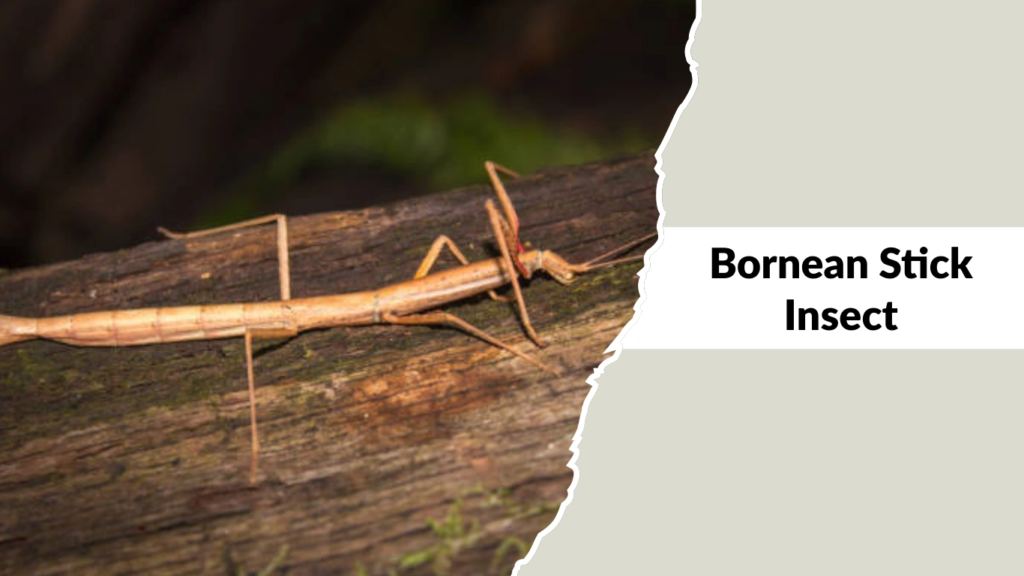
The Bornean stick insect is a tropical species known for its sturdy build and excellent camouflage. Native to the island of Borneo, it blends easily into dense rainforest vegetation.
Identification
- Medium-to-large body with rough texture
- Brown or green coloration matching bark and leaves
- Thick legs with slight spines
- Females noticeably larger than males
Size and Appearance
Adults usually grow between 9 and 12 centimeters long. Their body is slightly flattened and heavier than typical twig-like species, helping them resemble bark or thick stems in rainforest environments.
Habitat and Range
This species is found in the rainforests of Borneo. It lives on shrubs and small trees where humidity is high and foliage is dense throughout the year.
Behavior and Diet
Bornean stick insects are nocturnal and remain motionless during the day. They feed on a variety of broad leaves, including bramble and local tropical plants.
9. Philippine Giant Stick Insect (Sungaya inexpectata)
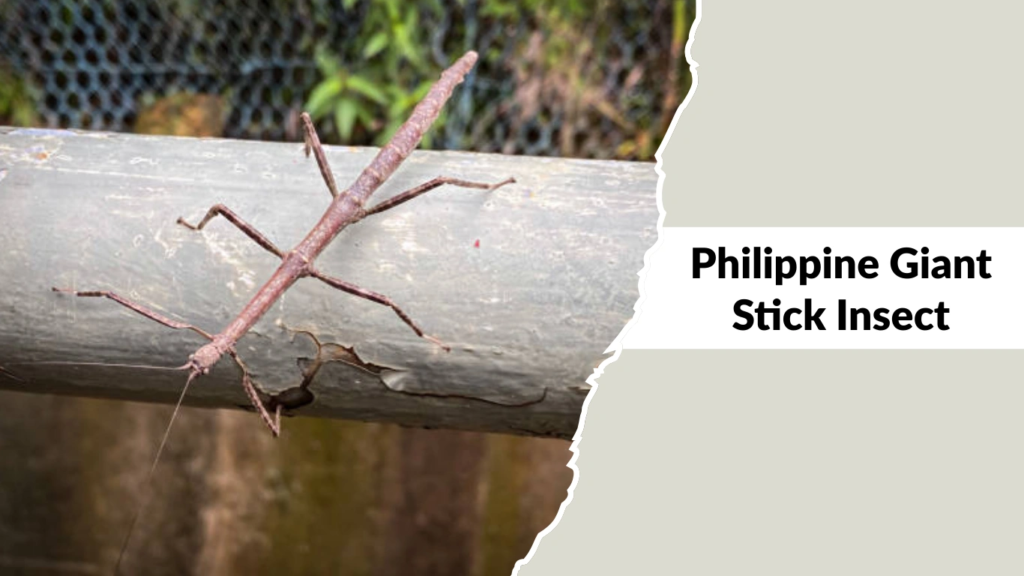
The Philippine giant stick insect is a bold and heavy species admired for its size and strong legs. It is native to the Philippines and is known for its ground-dwelling behavior.
Identification
- Large, thick body with visible spines
- Dark brown to black coloration
- Strong legs adapted for climbing and defense
- Females broader and heavier than males
Size and Appearance
Adults typically reach 10 to 13 centimeters in length. The body is solid and textured, giving it a powerful appearance. Males are slimmer, while females appear more robust.
Habitat and Range
This species is native to the Philippines and inhabits forest floors and low vegetation. It often shelters under leaves or bark during the day and climbs plants at night.
Behavior and Diet
Philippine giant stick insects are mostly nocturnal and may use their legs defensively if disturbed. They feed on leaves such as bramble, oak, and other broad-leaf plants.
10. Pink Winged Stick Insect (Sipyloidea sipylus)
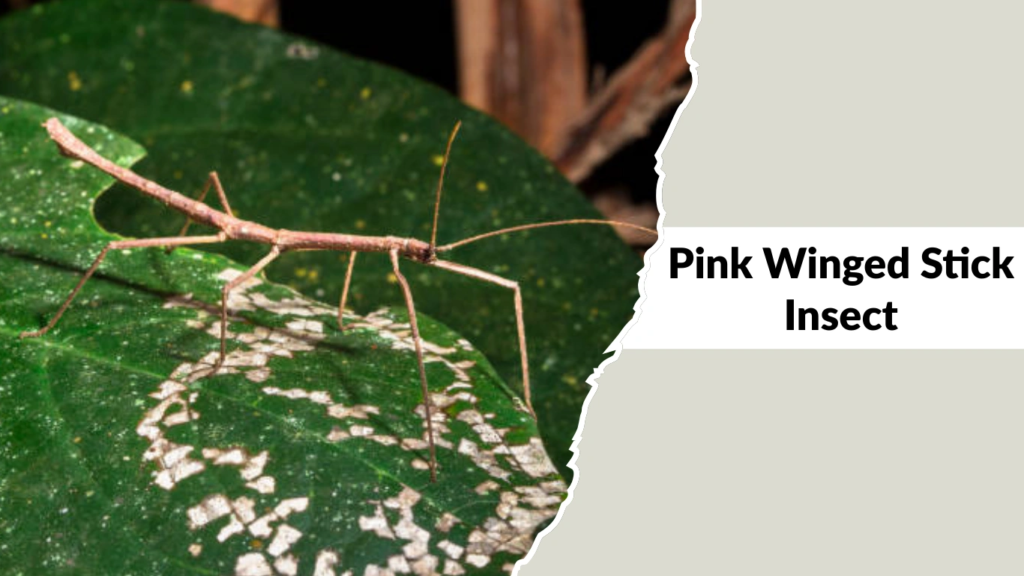
The pink winged stick insect is a graceful species best known for the bright pink wings hidden beneath its camouflage body. It is native to Southeast Asia and is popular due to its unique appearance.
Identification
- Slender body with smooth surface
- Light brown or green coloration
- Hidden pink wings visible when spread
- Females larger and winged; males smaller
Size and Appearance
Adults usually grow between 7 and 9 centimeters in length. When at rest, the wings remain folded and invisible, allowing the insect to blend in. When disturbed, the pink wings are displayed as a warning.
Habitat and Range
This species is found in Southeast Asia, including India and surrounding regions. It lives among shrubs and low trees in warm, humid environments.
Behavior and Diet
Pink winged stick insects are active mainly at night. They feed on leaves such as bramble, rose, and oak, and use sudden wing displays to startle predators.
11. Madagascar Stick Insect (Achrioptera fallax)
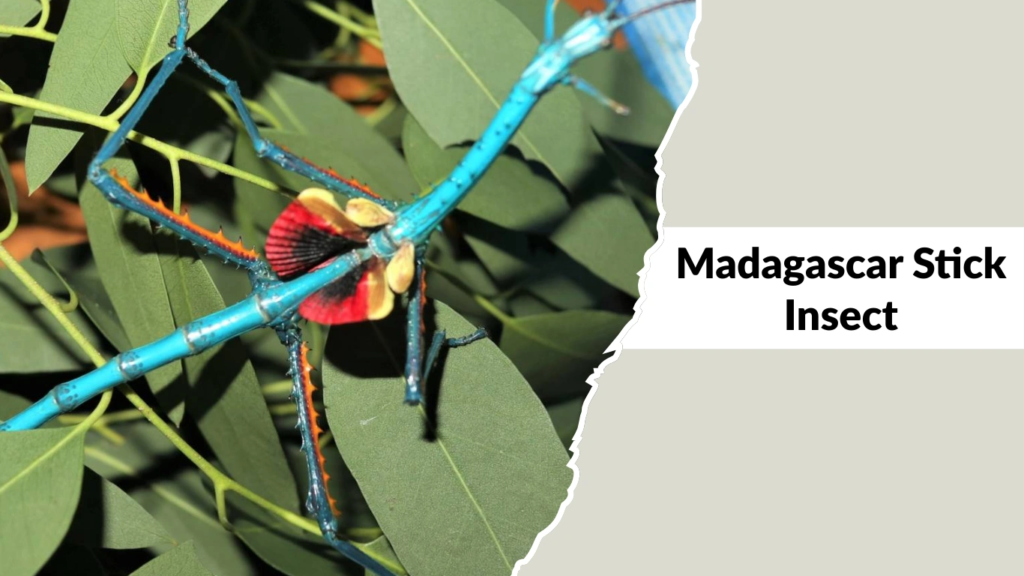
The Madagascar stick insect is a striking and colorful species known for its vivid body tones and strong build. It is native to Madagascar and stands out among stick insects.
Identification
- Bright green or blue-green body
- Thick, sturdy build with spiny legs
- Females larger and heavier than males
- Long antennae and strong limbs
Size and Appearance
Adults can reach up to 15 centimeters in length. The smooth yet solid body and vibrant coloration make this species visually distinctive compared to typical brown stick insects.
Habitat and Range
This species is endemic to Madagascar, where it inhabits tropical forests with dense vegetation and high humidity.
Behavior and Diet
Madagascar stick insects are nocturnal and can be defensive when handled. They feed on a variety of leaves, including bramble, eucalyptus, and other broad-leaf plants.
12. Timor Stick Insect (Eurycantha horrida)

The Timor stick insect is a large, ground-dwelling species known for its heavy body and defensive spines. It is native to Timor and nearby islands and is often confused with other spiny stick insects.
Identification
- Thick, robust body with sharp spines
- Dark brown to black coloration
- Strong hind legs used for defense
- Females larger and heavier than males
Size and Appearance
Adults usually grow between 10 and 14 centimeters in length. The body is solid and muscular, giving it a powerful look compared to slender twig-like species.
Habitat and Range
This species inhabits tropical forests of Timor and surrounding islands. It commonly hides under logs and leaf litter during the day and climbs vegetation at night.
Behavior and Diet
Timor stick insects are nocturnal and can defend themselves by kicking with spiny legs. They feed on leaves such as bramble, eucalyptus, and other broad-leaf plants.
13. Crowned Stick Insect (Onchestus rentzi)
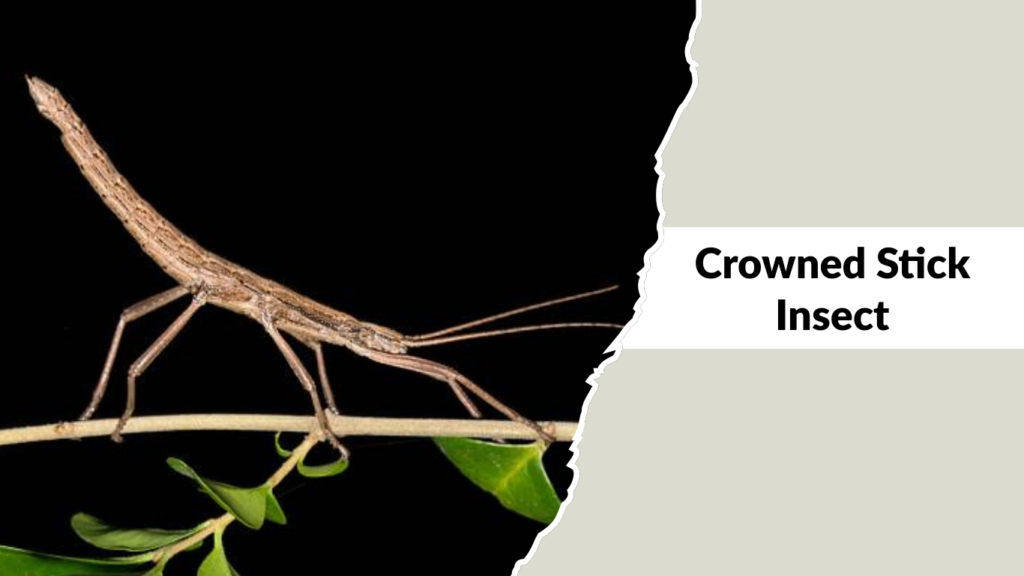
The crowned stick insect is a unique species recognized by the crown-like structures on its head. Native to Australia, it is less common but visually distinctive.
Identification
- Raised crown-like projections on the head
- Rough, bark-like body texture
- Brown or gray coloration
- Females larger with heavier bodies
Size and Appearance
Adults typically reach 9 to 11 centimeters in length. The uneven body surface and head structures help this insect blend into tree bark and branches.
Habitat and Range
This species is found in parts of Australia, especially in woodland and forest habitats. It prefers trees and shrubs where bark camouflage is effective.
Behavior and Diet
Crowned stick insects are slow-moving and rely on camouflage for protection. They feed mainly on leaves from native trees and shrubs and are active mostly at night.
14. Black Beauty Stick Insect (Peruphasma schultei)
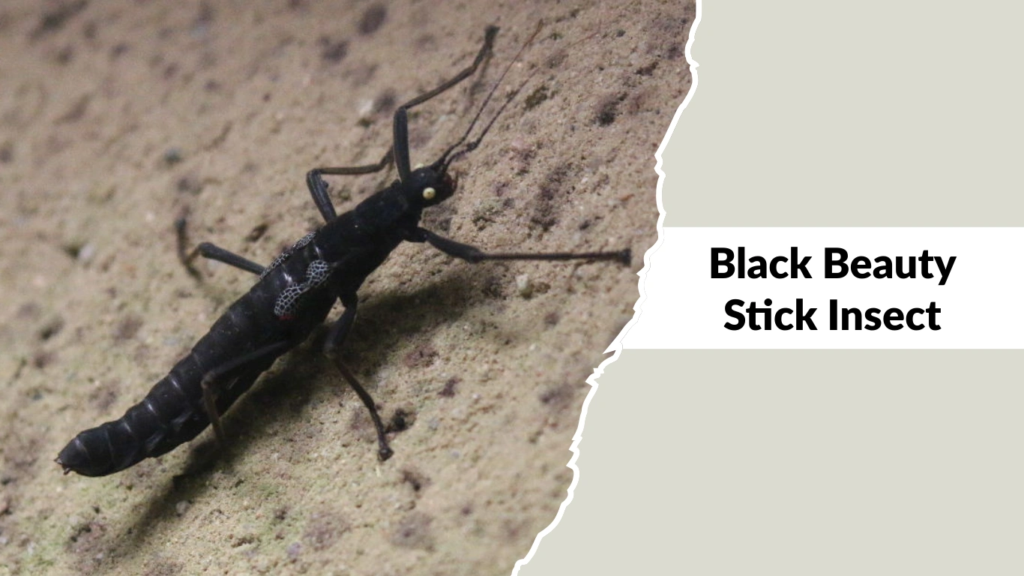
The black beauty stick insect is a rare and striking species famous for its deep black body and contrasting red wings. It is native to Peru and is highly valued by collectors.
Identification
- Jet-black body with smooth surface
- Bright red wings hidden beneath the body
- Medium-sized, sturdy build
- Females larger and heavier than males
Size and Appearance
Adults usually grow between 8 and 10 centimeters long. When threatened, the insect flashes its red wings, creating a strong visual warning that contrasts sharply with its dark body.
Habitat and Range
This species is native to northern Peru, where it lives in dry forests and shrubland areas with seasonal vegetation.
Behavior and Diet
Black beauty stick insects are nocturnal and rely on both camouflage and warning displays. They feed mainly on leaves such as privet, lilac, and other broad-leaf plants.
15. Thorny Stick Insect (Aretaon asperrimus)
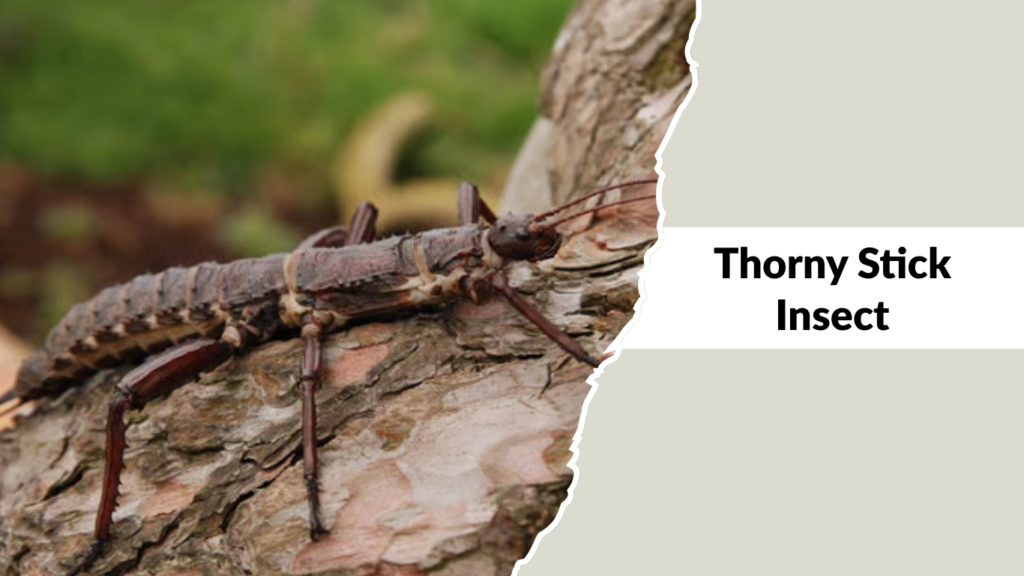
The thorny stick insect is a heavily armored species known for its spiny body and rugged appearance. Native to Southeast Asia, it is well adapted to dense forest habitats.
Identification
- Body covered with sharp, thorn-like spines
- Dark brown or green coloration
- Thick legs with defensive spurs
- Females broader and more heavily armored
Size and Appearance
Adults typically reach 8 to 10 centimeters in length. The rough texture and spines help the insect resemble thorns or bark, providing excellent camouflage.
Habitat and Range
This species is found in tropical forests of Malaysia and nearby regions. It prefers humid environments with dense undergrowth.
Behavior and Diet
Thorny stick insects are mostly nocturnal and can be defensive if disturbed. They feed on leaves such as bramble, oak, and other forest plants.
16. Smooth Stick Insect (Ramulus nematodes)
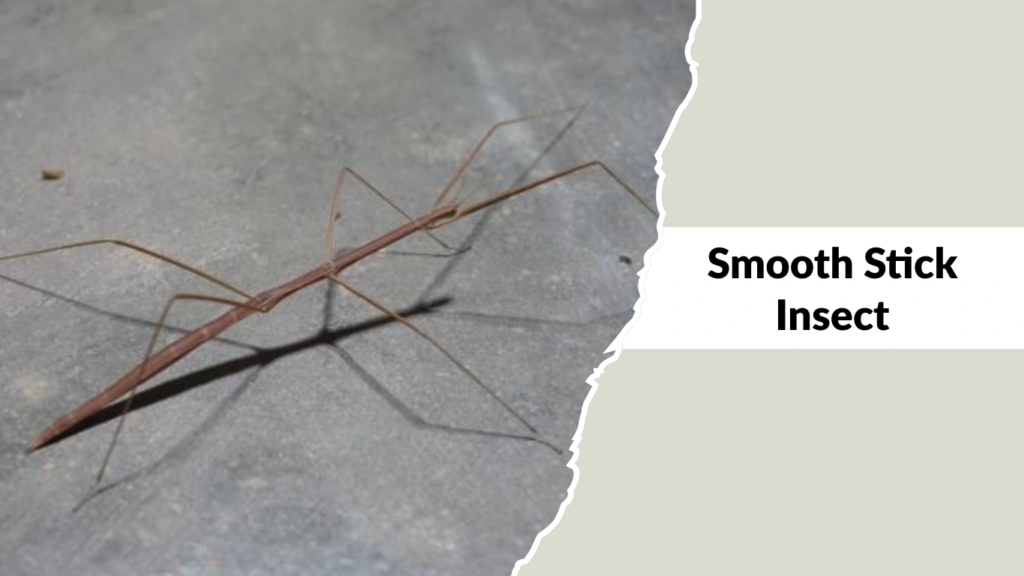
The smooth stick insect is a slender species recognized for its simple, clean body form and excellent twig mimicry. It is found across parts of Asia and is known for its calm behavior.
Identification
- Very thin, smooth, stick-like body
- Light brown or green coloration
- Minimal body markings or texture
- Long legs and antennae
Size and Appearance
Adults usually grow between 7 and 10 centimeters in length. Their uniform shape and smooth surface make them extremely difficult to detect among branches and twigs.
Habitat and Range
This species inhabits shrubs and small trees in tropical and subtropical regions of Asia. It prefers areas with plenty of thin branches for effective camouflage.
Behavior and Diet
Smooth stick insects are slow-moving and mostly active at night. They feed on leaves such as bramble, rose, and ivy, relying on stillness to avoid predators.
17. Leaf Mimic Stick Insect (Phyllium sp.)

The leaf mimic stick insect is famous for its extraordinary resemblance to real leaves. Native to Southeast Asia, it is one of the most visually impressive members of the stick insect group.
Identification
- Broad, flat body shaped like a leaf
- Green coloration with leaf-like veins
- Flattened legs resembling leaf edges
- Females larger and wider than males
Size and Appearance
Adults can grow up to 9 centimeters long. The body shape includes irregular edges and vein patterns, making the insect almost indistinguishable from real foliage.
Habitat and Range
This species is found in tropical forests of Southeast Asia. It lives among leafy branches where its leaf-like appearance provides perfect camouflage.
Behavior and Diet
Leaf mimic stick insects are nocturnal and remain motionless during the day. They feed mainly on leaves such as guava, rose, and bramble.
