
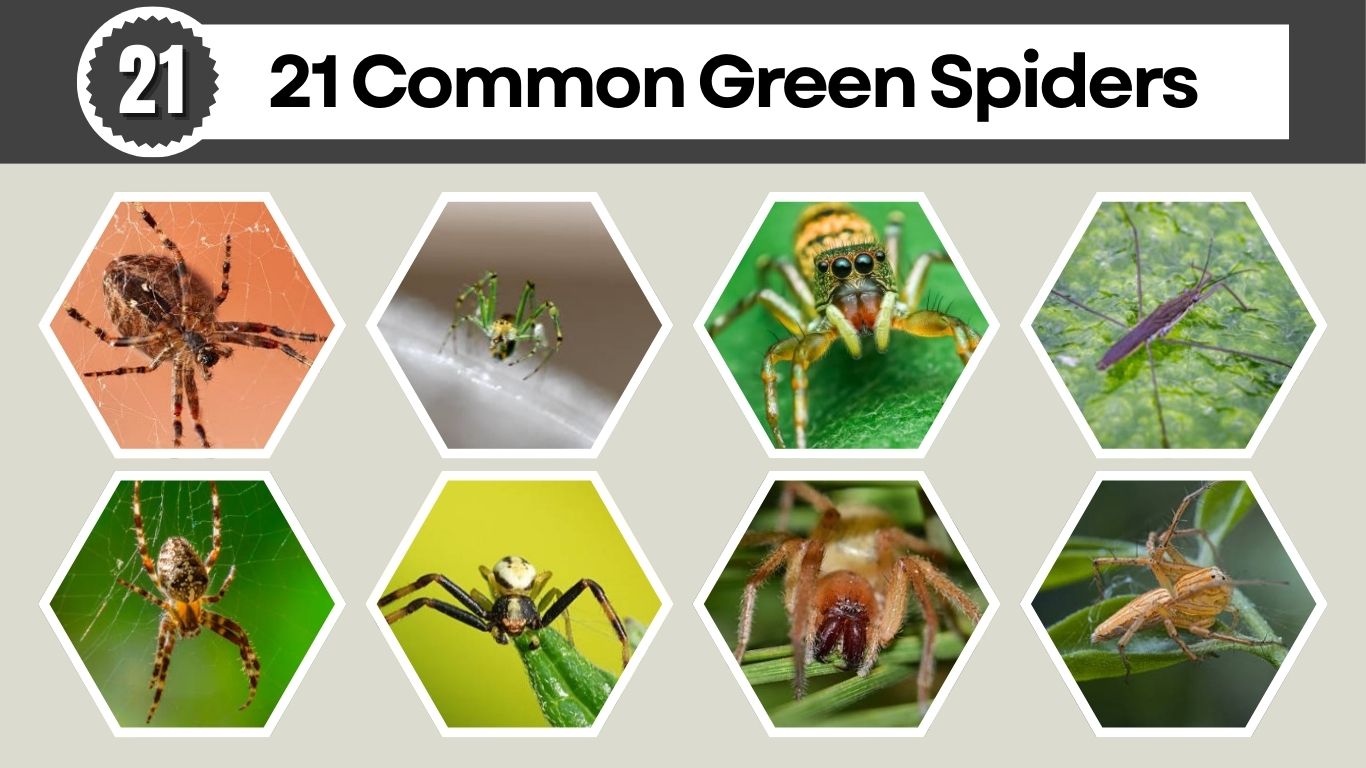
Green spiders are among the most visually striking arachnids, using their leaf-like coloration to blend perfectly into plants, grass, and foliage. Found in gardens, forests, fields, and wetlands around the world, these spiders include active hunters, clever ambush predators, and delicate web builders. Their green color provides excellent camouflage from both prey and predators, making them highly effective survivors. Below are 21 common green spider types, each with unique behaviors and habitats.
1. Green Lynx Spider
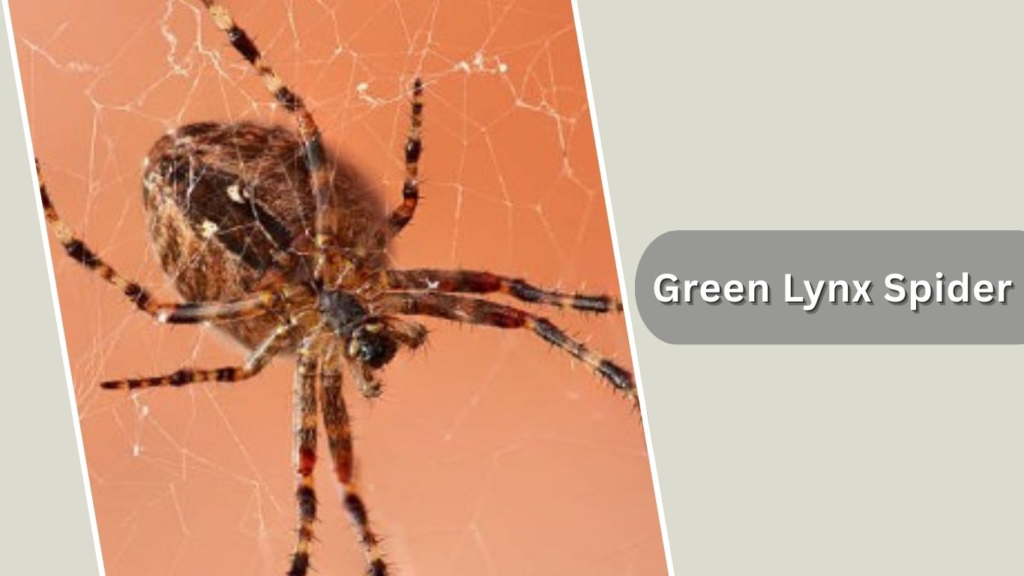
The green lynx spider is a bright, agile spider best known for its vivid green body and long, spiny legs. Unlike web-building spiders, it actively hunts prey and is often seen moving quickly across plants. Its bold appearance and daytime activity make it one of the most easily recognized green spiders.
Identification
- Bright green body with translucent appearance
- Long legs covered in noticeable black spines
- Red or orange markings near the eyes
- Slender, agile build
Habitat
Green lynx spiders are commonly found on shrubs, grasses, flowering plants, and crops. They prefer warm environments such as gardens, fields, and meadows where insects are abundant.
Behavior
This species is diurnal and highly active. It does not build webs to catch prey, instead relying on speed and sharp eyesight to ambush insects. When threatened, it may raise its front legs in a defensive posture.
Diet
Its diet includes flies, bees, moths, grasshoppers, and other insects. Green lynx spiders are effective natural pest controllers, especially in agricultural areas.
Lifecycle
Females lay egg sacs on vegetation and aggressively guard them until hatching. Spiderlings disperse shortly after emerging, growing through several molts before reaching adulthood.
2. Magnolia Green Jumping Spider
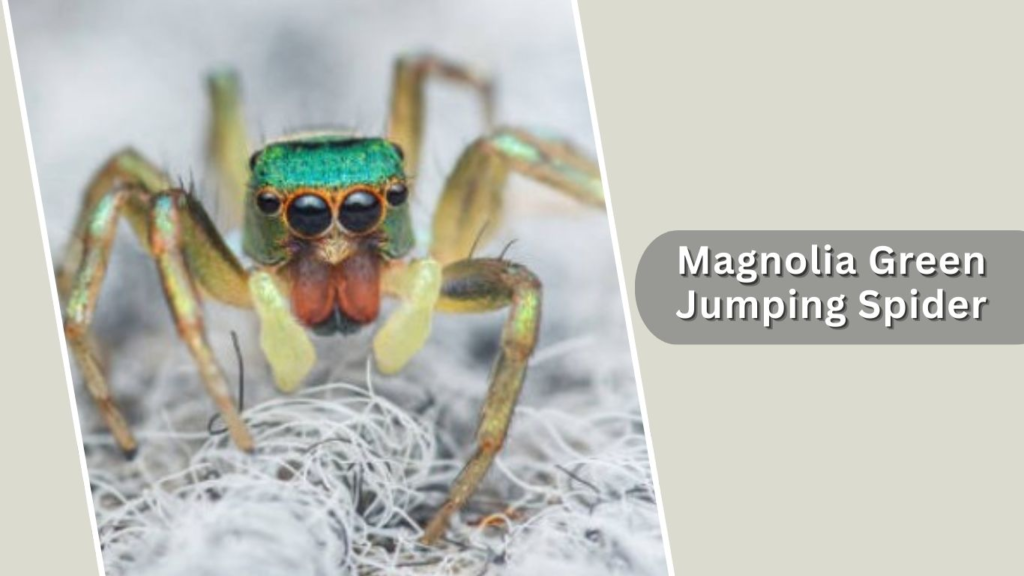
The magnolia green jumping spider is a small but eye-catching spider known for its metallic green coloration and excellent vision. As a jumping spider, it relies on agility and precise leaps rather than webs to capture prey. Its curious behavior and alert movements make it fascinating to observe.
Identification
- Metallic or emerald green body
- Compact, fuzzy appearance
- Large forward-facing eyes typical of jumping spiders
- Short, sturdy legs adapted for jumping
Habitat
This species is commonly found on trees, shrubs, garden plants, and building walls. It is especially associated with magnolia trees and other leafy vegetation where it can hunt effectively in daylight.
Behavior
Magnolia green jumping spiders are diurnal and very active. They stalk prey carefully before leaping with precision. Known for their curiosity, they often turn to face movement, appearing to “watch” observers.
Diet
Their diet includes small insects such as flies, gnats, moths, and other spiders. They rely on keen eyesight and quick reflexes rather than silk traps.
Lifecycle
Females lay eggs in silk retreats hidden in bark crevices or under leaves. Spiderlings hatch and remain briefly in the retreat before dispersing. They mature through multiple molts over several months.
3. Six-spotted Green Lynx Spider
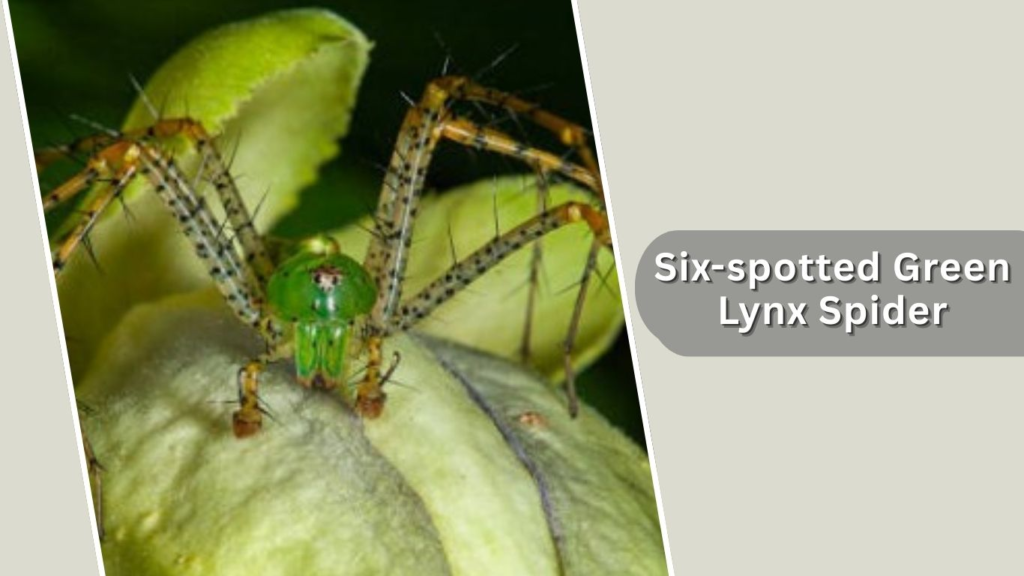
The six-spotted green lynx spider is a vivid green, fast-moving spider closely related to the common green lynx spider. It is named for the small dark spots on its abdomen and is known for its excellent hunting skills and alert, defensive posture.
Identification
- Bright green body with six small dark spots on the abdomen
- Long legs covered with prominent black spines
- Red or orange markings near the eyes
- Slender, agile build
Habitat
This species is typically found on shrubs, grasses, wildflowers, and low vegetation. It thrives in gardens, fields, and open areas where insect prey is plentiful.
Behavior
Six-spotted green lynx spiders are active during the day and rely on speed and vision rather than webs. They hunt by stalking or ambushing prey and may raise their front legs when threatened.
Diet
Their diet includes flies, moths, grasshoppers, bees, and other insects. They play a useful role in controlling pest populations in natural and agricultural settings.
Lifecycle
Females attach egg sacs to vegetation and guard them aggressively. Spiderlings hatch and disperse shortly afterward, maturing through several growth stages before reaching adulthood.
4. Orchard Orb Weaver
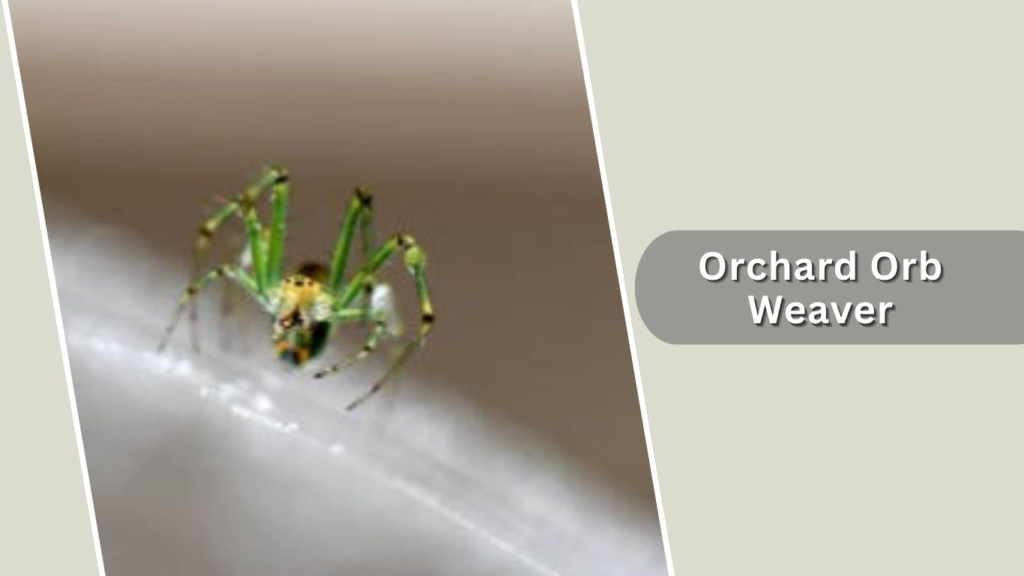
The orchard orb weaver is a small, delicate green spider known for its translucent body and finely woven web. Its subtle green coloration helps it blend into leaves and shrubs, making it less noticeable despite being fairly common in gardens and orchards.
Identification
- Pale green to yellow-green body
- Slender, elongated abdomen
- Semi-translucent legs
- Females slightly larger than males
Habitat
This spider is commonly found in orchards, gardens, shrubs, forest edges, and low vegetation. It prefers areas where it can build its web between thin branches or plant stems.
Behavior
Orchard orb weavers are mostly nocturnal. During the day, they rest near the edge of their web or hide in nearby foliage. At night, they sit at the center of the web to catch flying insects.
Diet
Their diet consists mainly of small flying insects such as gnats, flies, mosquitoes, and moths that become trapped in their delicate orb-shaped webs.
Lifecycle
Females lay egg sacs on nearby leaves or plant stems in late summer. Adults usually die before winter, while the eggs overwinter and hatch in spring.
5. Green Crab Spider
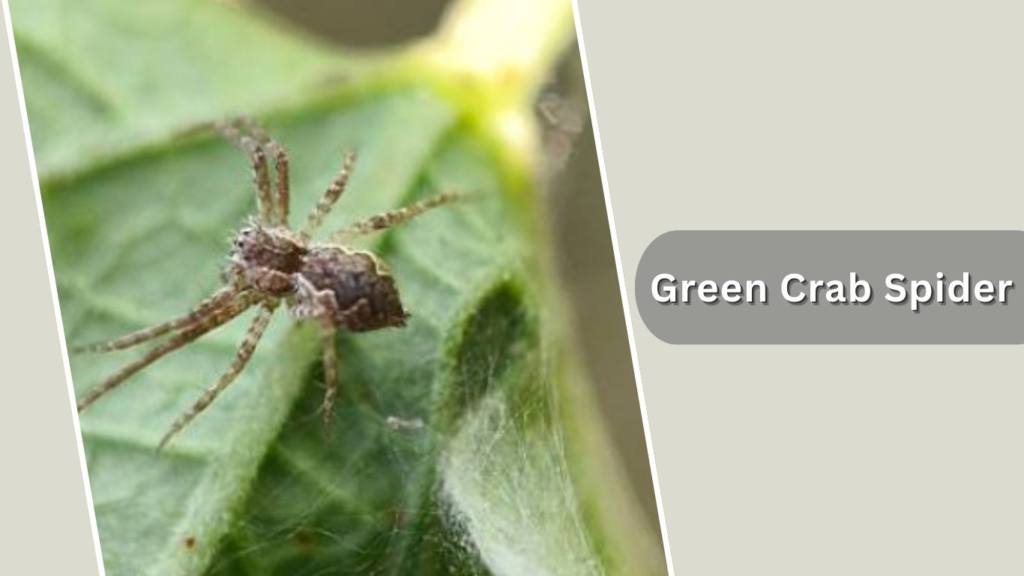
The green crab spider is a small but well-camouflaged spider known for its sideways, crab-like movement and ability to blend into leaves and flowers. Its green coloration helps it ambush prey without being noticed.
Identification
- Green or yellow-green body
- Wide, flattened body shape
- Front legs longer and held sideways
- Females larger than males
Habitat
This species is commonly found on leaves, shrubs, flowering plants, and low vegetation. It prefers gardens, meadows, and forest edges where insects frequently visit plants.
Behavior
Green crab spiders do not build webs to catch prey. Instead, they remain motionless on vegetation and wait for insects to come within reach. They rely heavily on camouflage and quick strikes.
Diet
Their diet includes flies, bees, butterflies, and other insects that land on leaves or flowers. They are effective ambush predators.
Lifecycle
Females lay eggs in silk sacs hidden under leaves or bark and guard them until hatching. Spiderlings disperse after emerging and grow through several molts before maturity.
6. Green Huntsman Spider
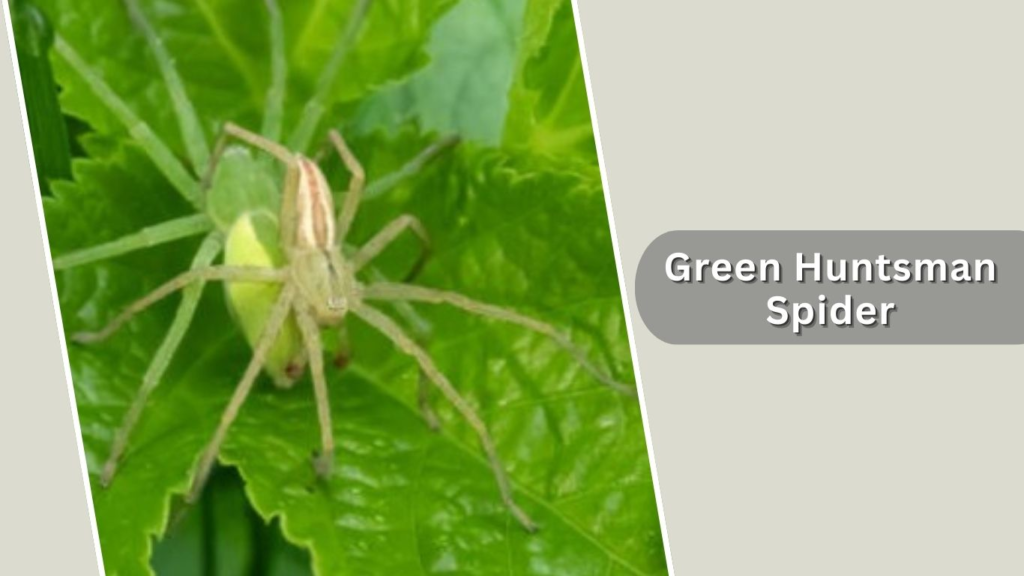
The green huntsman spider is a large, fast-moving spider known for its flattened body and impressive speed. Its greenish coloration allows it to blend well with foliage, making it an effective ambush predator despite its size. Although its appearance can be intimidating, it is generally harmless to humans.
Identification
- Large, flattened body with green or olive tones
- Long legs spread outward in a crab-like stance
- Smooth body with minimal hair
- Females typically larger than males
Habitat
Green huntsman spiders are commonly found on tree trunks, leaves, walls, and under bark. They prefer forests, woodlands, gardens, and sometimes buildings, especially in warm climates.
Behavior
This species does not build webs for hunting. It is nocturnal and relies on speed and stealth to capture prey. During the day, it hides under bark, rocks, or inside crevices. When disturbed, it may run quickly rather than defend itself.
Diet
Their diet includes large insects such as cockroaches, moths, beetles, and other spiders. They are considered beneficial due to their role in controlling pest populations.
Lifecycle
Females produce egg sacs that they guard closely until hatching. Spiderlings disperse soon after emergence and grow through multiple molts before reaching adulthood.
7. Green Jumping Spider
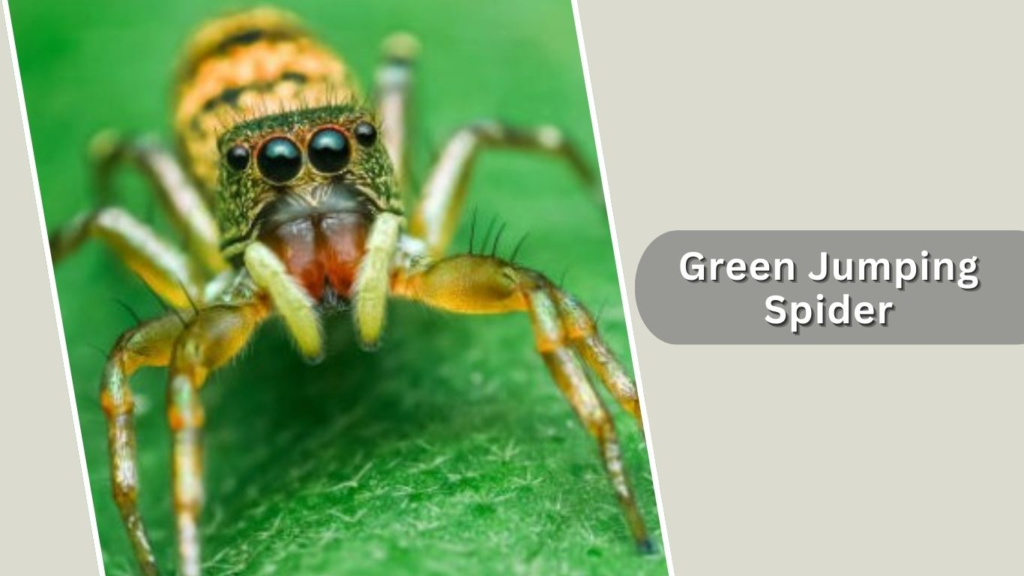
The green jumping spider is a small, energetic spider known for its bright green coloration and excellent vision. Like other jumping spiders, it relies on precise leaps and keen eyesight rather than webs to hunt prey, making it highly active and engaging to watch.
Identification
- Bright green or emerald-green body
- Compact, slightly fuzzy appearance
- Large forward-facing eyes
- Short, powerful legs adapted for jumping
Habitat
This spider is commonly found on leaves, shrubs, garden plants, and tree trunks. It prefers sunny areas where it can actively hunt during the day.
Behavior
Green jumping spiders are diurnal and very alert. They stalk prey carefully before leaping with accuracy. They are curious by nature and often turn to face movement, appearing attentive rather than aggressive.
Diet
Their diet consists of small insects such as flies, gnats, aphids, and occasionally other spiders. They are effective hunters despite their small size.
Lifecycle
Females lay eggs in silk retreats hidden under leaves or bark. Spiderlings hatch and remain briefly in the shelter before dispersing and maturing through several molts.
8. Emerald Jumping Spider
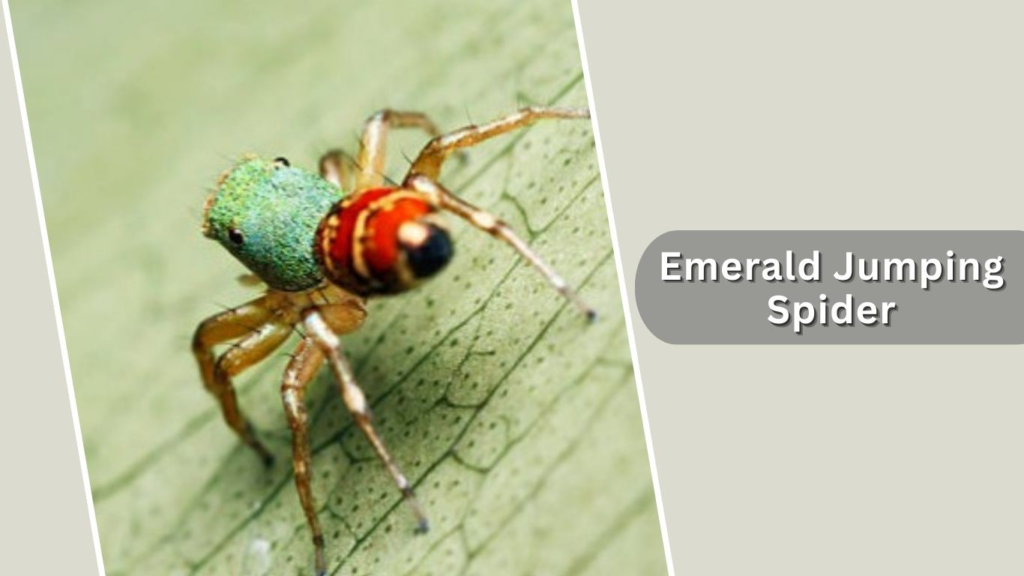
The emerald jumping spider is a vividly colored spider admired for its shimmering green appearance and quick, agile movements. As a member of the jumping spider family, it relies on excellent vision and precise jumps rather than webs to capture prey.
Identification
- Bright emerald or metallic green body
- Compact, slightly fuzzy body texture
- Large forward-facing eyes
- Short, muscular legs built for jumping
Habitat
This species is commonly found on foliage, shrubs, garden plants, and tree trunks. It prefers sunny, warm environments where it can actively hunt during daylight hours.
Behavior
Emerald jumping spiders are diurnal and highly alert. They stalk prey slowly before making sudden, accurate leaps. They are curious spiders and often respond to movement by turning to observe it.
Diet
Their diet consists mainly of small insects such as flies, aphids, gnats, and other tiny arthropods. They occasionally prey on smaller spiders as well.
Lifecycle
Females lay eggs inside silk retreats hidden under leaves or bark. Spiderlings hatch and stay briefly in the shelter before dispersing. They grow through multiple molts before reaching adulthood.
9. Green Pea Spider
The green pea spider is a small, soft-bodied spider best known for its bright green color and rounded abdomen that resembles a tiny pea. It is commonly found on vegetation and is often overlooked due to its excellent camouflage among leaves.
Identification
- Bright green, rounded abdomen
- Small, soft-looking body
- Slender legs with a delicate appearance
- Overall pea-like shape
Habitat
This spider is typically found on low vegetation, shrubs, garden plants, and grasses. It prefers moist environments such as gardens, meadows, and forest edges where greenery is dense.
Behavior
Green pea spiders are quiet and slow-moving. They do not rely on webs to hunt and instead remain still on leaves, using camouflage to avoid predators. When disturbed, they may drop from the plant rather than run.
Diet
Their diet consists mainly of very small insects such as aphids, tiny flies, and other soft-bodied arthropods found on plants.
Lifecycle
Females lay eggs on the underside of leaves, often covering them with silk for protection. Spiderlings hatch and disperse nearby, maturing through several molts over time.
10. Green Long-jawed Orb Weaver
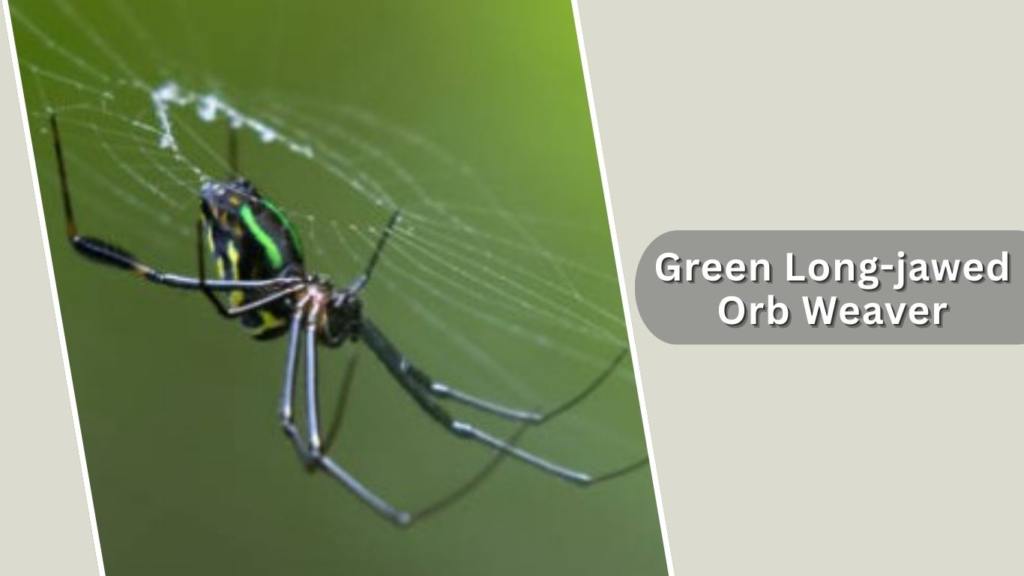
The green long-jawed orb weaver is a slender, elegant spider recognized for its elongated body and jaws. Its pale green coloration allows it to blend seamlessly with grasses and reeds, making it difficult to spot despite its relatively large web.
Identification
- Slender, elongated green body
- Long, narrow jaws (chelicerae)
- Very long, thin legs often held stretched along the body
- Females larger than males
Habitat
This species is commonly found near water sources such as ponds, streams, wetlands, and moist meadows. It builds orb-shaped webs among tall grasses, reeds, and shrubs where flying insects are abundant.
Behavior
Green long-jawed orb weavers are mostly nocturnal. During the day, they often rest stretched along plant stems, using their body shape as camouflage. At night, they actively use their webs to catch prey.
Diet
Their diet consists mainly of mosquitoes, gnats, flies, and other small flying insects that become trapped in their delicate webs.
Lifecycle
Females attach egg sacs to vegetation near their webs. Adults typically die as temperatures drop, while eggs overwinter and hatch in spring, continuing the next generation.
11. Green Garden Orb Weaver
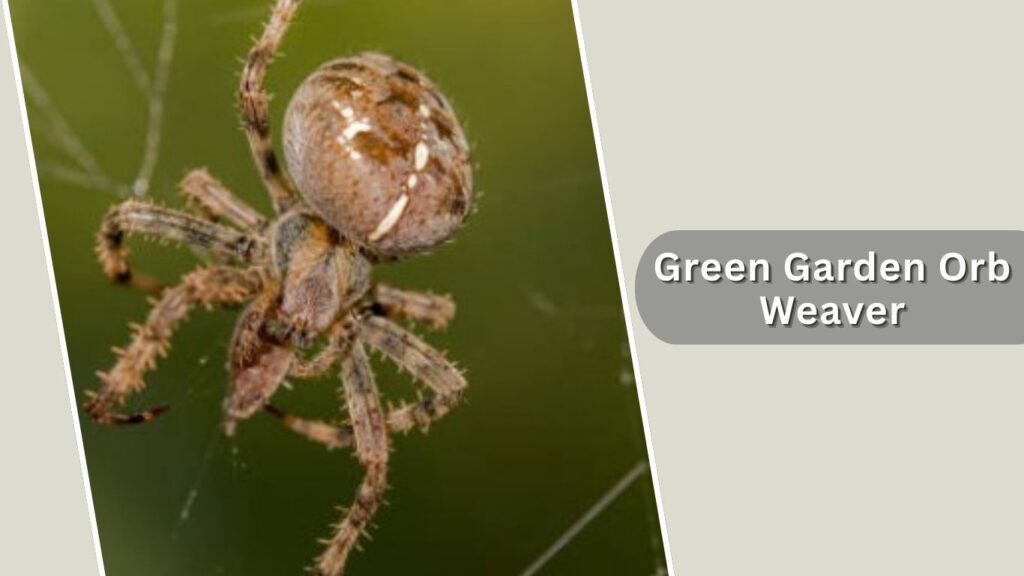
The green garden orb weaver is a visually striking spider with a bright green body that blends well with garden foliage. It is a web-building species commonly seen in backyards and landscaped areas, where it helps reduce flying insect populations.
Identification
- Bright green abdomen, sometimes with faint markings
- Medium to large body size
- Long legs, occasionally lightly banded
- Females noticeably larger than males
Habitat
This spider is commonly found in gardens, parks, forest edges, and shrubs. It prefers areas where it can anchor its orb-shaped web between plants, fences, or outdoor structures.
Behavior
Green garden orb weavers are mostly nocturnal. They rebuild or repair their webs in the evening and rest nearby during the day. When disturbed, they may drop from the web or retreat into surrounding vegetation.
Diet
Their diet consists of flies, moths, mosquitoes, beetles, and other flying insects that become trapped in their sticky webs.
Lifecycle
Females lay egg sacs in late summer or early fall, attaching them to leaves or sheltered surfaces. Adults usually die before winter, while eggs survive colder months and hatch in spring.
12. Green Meshweaver
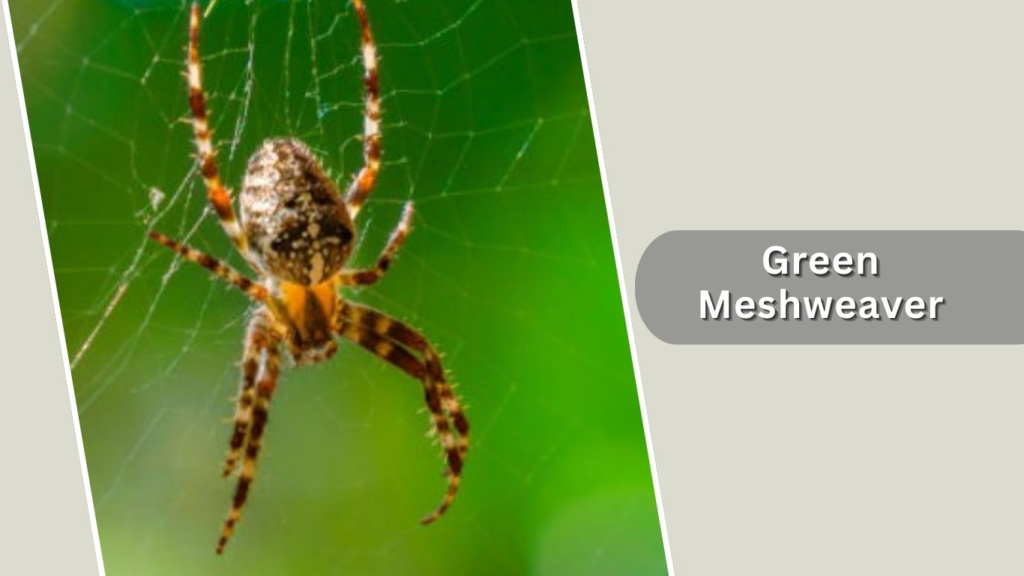
The green meshweaver is a small, delicate spider known for its pale green coloration and fine, lace-like web structure. It often goes unnoticed due to its size and excellent camouflage among leaves and low vegetation.
Identification
- Pale green to yellow-green body
- Small, slender build
- Fine legs with a translucent appearance
- Subtle markings on the abdomen
Habitat
This species is commonly found in shrubs, grasses, hedges, and garden plants. It prefers quiet, undisturbed areas where it can build its mesh-like web close to foliage.
Behavior
Green meshweavers are mostly nocturnal and spend much of their time resting in or near their webs. Unlike orb weavers, their webs are irregular and sheet-like, used to trap small insects.
Diet
Their diet consists of tiny insects such as gnats, aphids, and small flies that become caught in the fine mesh web.
Lifecycle
Females lay eggs in small silk sacs hidden within the web or nearby vegetation. Spiderlings hatch and remain close to the web before dispersing and maturing through several molts.
13. Green Tetragnatha
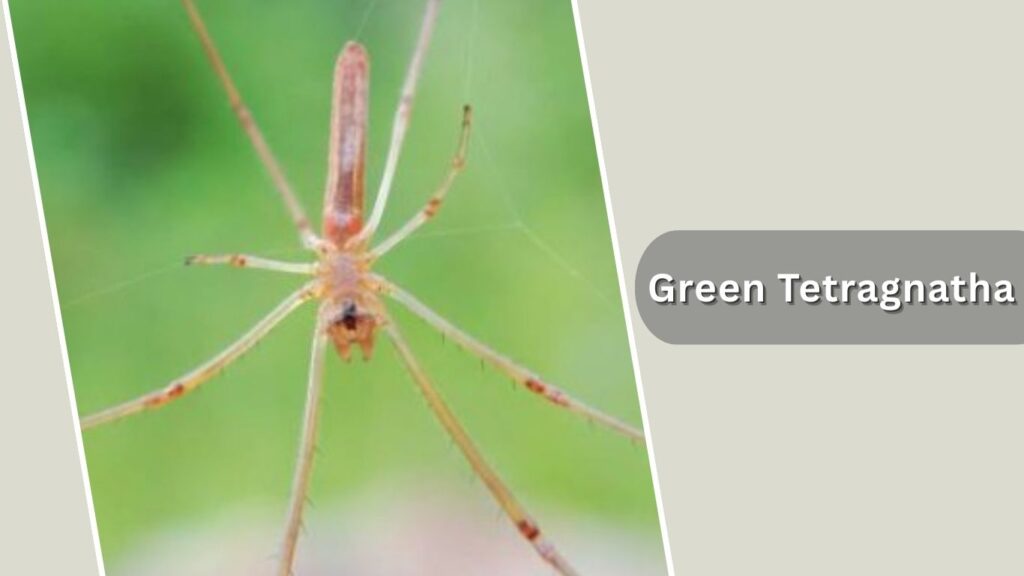
The green tetragnatha is a slender spider known for its elongated body and pale green coloration. It belongs to the long-jawed orb weaver group and is often overlooked due to its ability to blend perfectly with grasses and reeds.
Identification
- Slender, elongated green body
- Long, narrow jaws
- Very long, thin legs
- Females larger than males
Habitat
This species is commonly found near water sources such as ponds, rivers, wetlands, and moist grasslands. It builds orb-shaped webs among tall grasses, reeds, and low shrubs.
Behavior
Green tetragnathas are mostly nocturnal. During the day, they rest stretched along plant stems with legs aligned to their body, making them difficult to see. At night, they become active web builders and hunters.
Diet
Their diet consists mainly of small flying insects including mosquitoes, gnats, and flies that are captured in their orb webs.
Lifecycle
Females attach egg sacs to vegetation near their webs. Adults usually die as temperatures cool, while eggs overwinter and hatch in spring.
14. Green Flower Spider
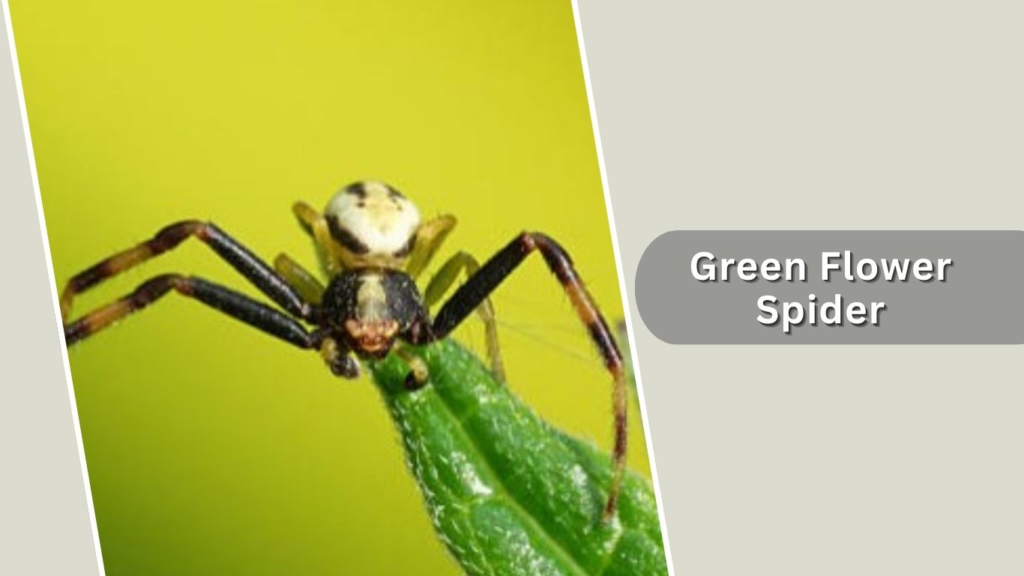
The green flower spider is a well-camouflaged ambush predator commonly found on leaves and blossoms. Its green coloration allows it to blend seamlessly into flowers and foliage, helping it capture unsuspecting insects that land nearby.
Identification
- Green or yellow-green body
- Flattened, wide body shape
- Front legs longer and held sideways
- Females larger than males
Habitat
This spider is typically found on flowering plants, shrubs, and garden vegetation. It prefers meadows, gardens, forest edges, and areas with abundant flowering plants.
Behavior
Green flower spiders do not build webs to catch prey. They rely on camouflage and remain motionless for long periods, striking quickly when prey comes within reach.
Diet
Their diet includes bees, flies, butterflies, and other pollinating insects that visit flowers.
Lifecycle
Females lay egg sacs under leaves or flower petals and guard them until hatching. Spiderlings disperse shortly after emerging and mature through multiple molts.
15. Green Orb Weaver
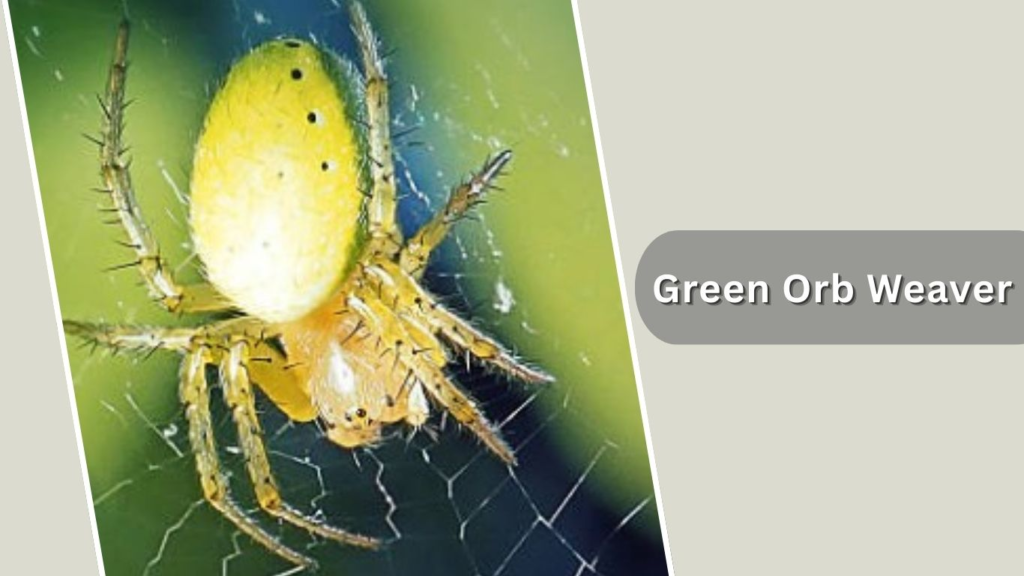
The green orb weaver is a visually appealing spider recognized for its bright green body and classic circular web. Its coloration helps it blend into leafy surroundings while it waits for flying insects to become trapped in its web.
Identification
- Bright green or yellow-green abdomen
- Medium-sized body
- Long legs, sometimes lightly banded
- Females larger than males
Habitat
This species is commonly found in gardens, woodlands, forest edges, and shrubs. It prefers areas with dense vegetation where it can anchor its orb-shaped web between branches or leaves.
Behavior
Green orb weavers are mostly nocturnal. They usually rebuild their webs in the evening and rest nearby during the day. When disturbed, they may drop from the web or retreat into surrounding foliage.
Diet
Their diet consists of flies, moths, mosquitoes, beetles, and other flying insects caught in their sticky webs.
Lifecycle
Females lay egg sacs in late summer or early fall, attaching them to leaves or sheltered surfaces. Adults die before winter, while eggs overwinter and hatch in spring.
16. Green Sac Spider
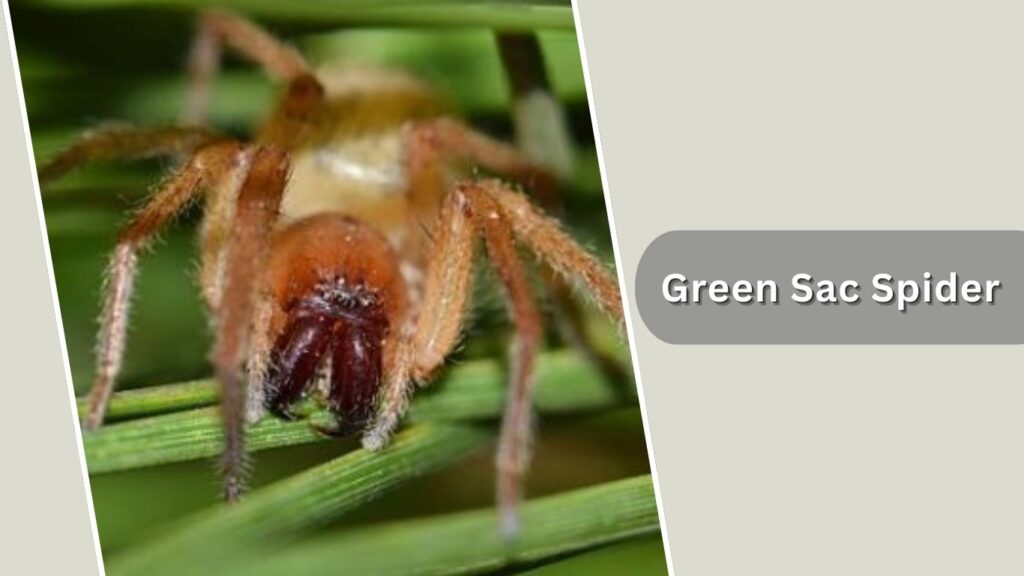
The green sac spider is a small, pale green spider known for its wandering hunting style and silk resting sacs. It is often encountered on vegetation and occasionally indoors, especially during warmer months.
Identification
- Pale green to yellow-green body
- Slightly darker mouthparts
- Slender legs with smooth appearance
- Small to medium body size
Habitat
This spider is commonly found on shrubs, grasses, garden plants, and under leaves. It may also enter homes, where it hides in corners, ceilings, or behind furniture.
Behavior
Green sac spiders are nocturnal and active hunters. They do not use webs to catch prey but instead roam at night. During the day, they rest inside small silk sacs attached to surfaces.
Diet
Their diet includes flies, mosquitoes, moths, ants, and other small insects, making them beneficial for pest control.
Lifecycle
Females lay eggs inside silk sacs and may guard them until hatching. Spiderlings disperse soon after emerging and mature through several molts.
17. Green Leaf Spider
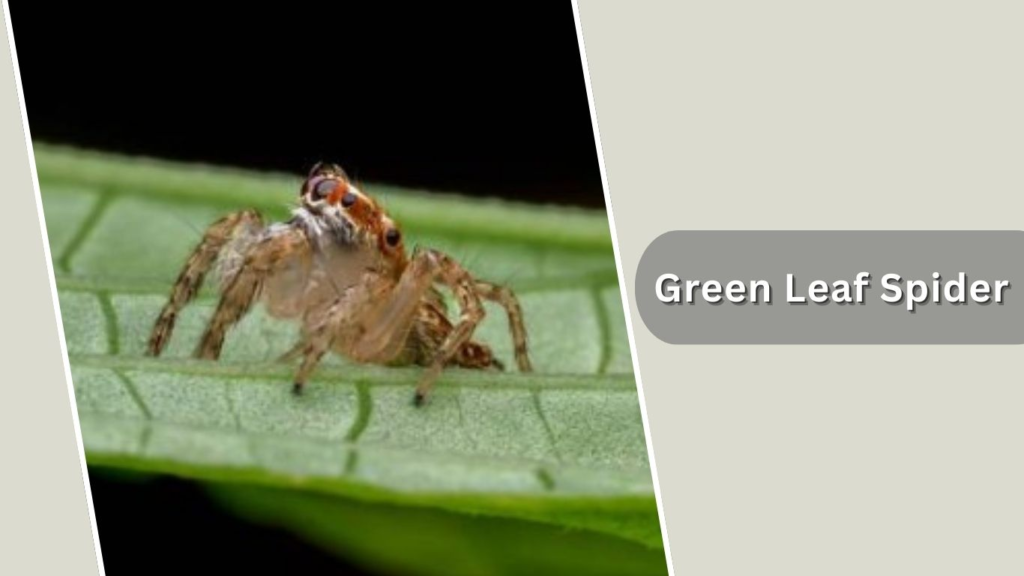
The green leaf spider is a well-camouflaged species that closely resembles the leaves it lives on. Its flattened green body and subtle markings help it blend into foliage, making it difficult for both predators and prey to detect.
Identification
- Flat, leaf-like green body
- Subtle vein-like markings on the abdomen
- Slender legs matching body color
- Females slightly larger than males
Habitat
This spider is commonly found on broad leaves, shrubs, garden plants, and forest vegetation. It prefers dense foliage where its camouflage is most effective.
Behavior
Green leaf spiders are quiet and slow-moving. They rely on camouflage rather than webs to capture prey, remaining motionless for long periods before striking quickly when prey comes close.
Diet
Their diet consists of small insects such as flies, aphids, and other soft-bodied arthropods found on leaves.
Lifecycle
Females lay egg sacs on the underside of leaves and cover them with silk for protection. Spiderlings hatch and disperse nearby, growing through several molts before reaching maturity.
18. Green Lynx Weaver
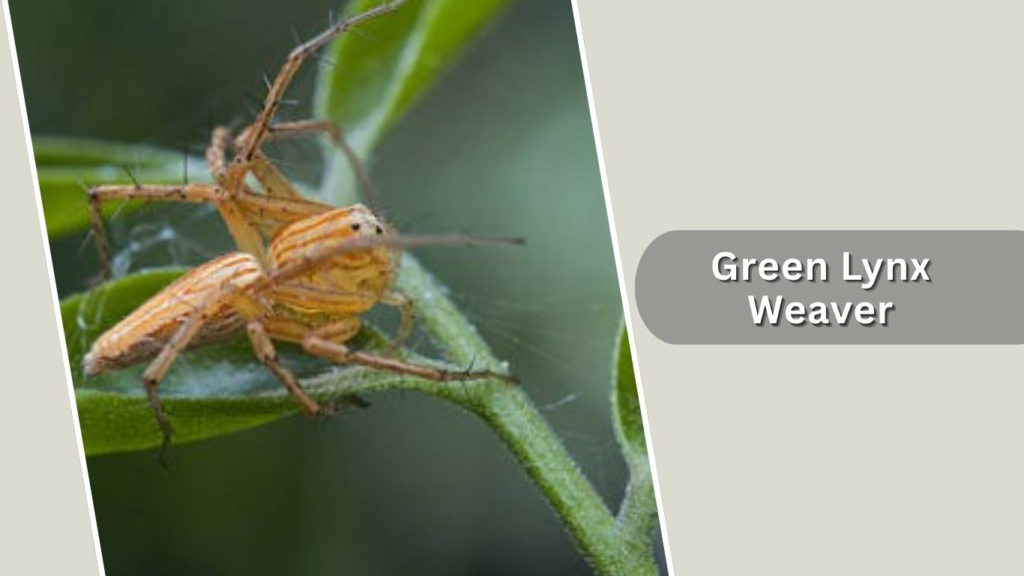
The green lynx weaver is a fast-moving, visually striking green spider often confused with true lynx spiders. Its long legs and active hunting style make it a noticeable presence on vegetation, especially in warm, open environments.
Identification
- Bright green body with a slender build
- Long legs with fine spines
- Slightly elongated abdomen
- Females larger than males
Habitat
This species is commonly found on shrubs, grasses, flowering plants, and low trees. It prefers gardens, meadows, fields, and other areas with abundant insect activity.
Behavior
Green lynx weavers are active hunters and rely on speed and vision rather than webs to capture prey. They are mostly diurnal and may be seen moving quickly across plants. When threatened, they often flee rather than defend themselves.
Diet
Their diet includes flies, moths, grasshoppers, bees, and other insects. They contribute to natural pest control in gardens and agricultural settings.
Lifecycle
Females attach egg sacs to vegetation and may guard them for a short period. Spiderlings disperse after hatching and mature through several molts before adulthood.
19. Green Wall Jumping Spider
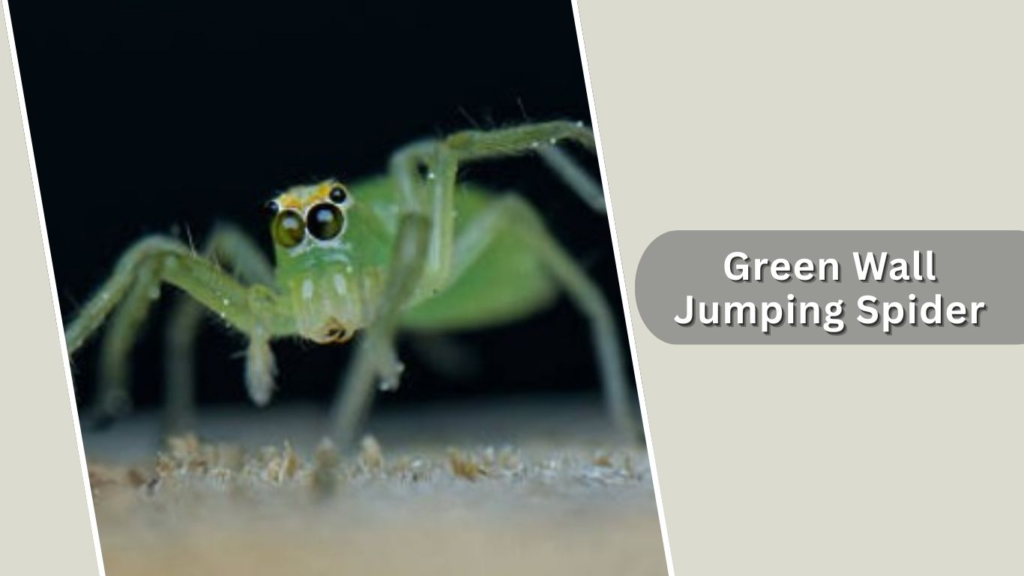
The green wall jumping spider is a small, agile spider often seen on walls, fences, and tree trunks. Its green coloration helps it blend into mossy or plant-covered surfaces, while its jumping ability makes it an efficient daytime hunter.
Identification
- Green to yellow-green body
- Compact, slightly fuzzy appearance
- Large forward-facing eyes
- Short, powerful legs adapted for jumping
Habitat
This spider is commonly found on exterior walls, fences, tree bark, and nearby vegetation. It prefers sunny areas where insects are active and surfaces provide good vantage points for hunting.
Behavior
Green wall jumping spiders are diurnal and highly alert. They rely on excellent vision to stalk prey and make precise jumps. They are curious and often turn to face movement rather than flee immediately.
Diet
Their diet includes small insects such as flies, gnats, mosquitoes, and tiny moths. They may also prey on other small spiders.
Lifecycle
Females lay eggs in silk retreats hidden in cracks, bark, or crevices. Spiderlings hatch and remain briefly in the retreat before dispersing and maturing through several molts.
20. Green Grass Spider
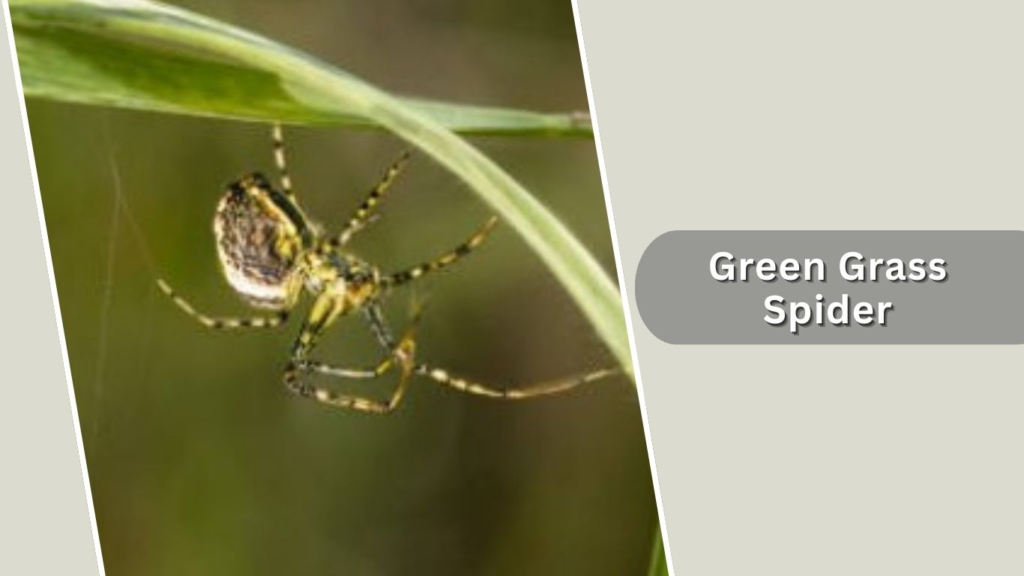
The green grass spider is a well-camouflaged species that blends easily into grassy environments. Its green coloration and low-profile behavior make it difficult to spot, even though it is fairly common in fields and lawns.
Identification
- Green or yellow-green body
- Slender, elongated build
- Long legs adapted for quick movement
- Subtle striping or markings on the body
Habitat
This spider is commonly found in grassy fields, lawns, meadows, and roadside vegetation. It prefers dense grass where it can remain hidden close to the ground.
Behavior
Green grass spiders are mostly active during the day and early evening. They rely on camouflage and quick bursts of speed to capture prey rather than building elaborate webs.
Diet
Their diet consists of small insects such as grasshoppers, flies, ants, and other ground-dwelling arthropods.
Lifecycle
Females lay egg sacs within grass or low vegetation. Spiderlings hatch and disperse nearby, growing through several molts before reaching adulthood.
21. Green Garden Spider
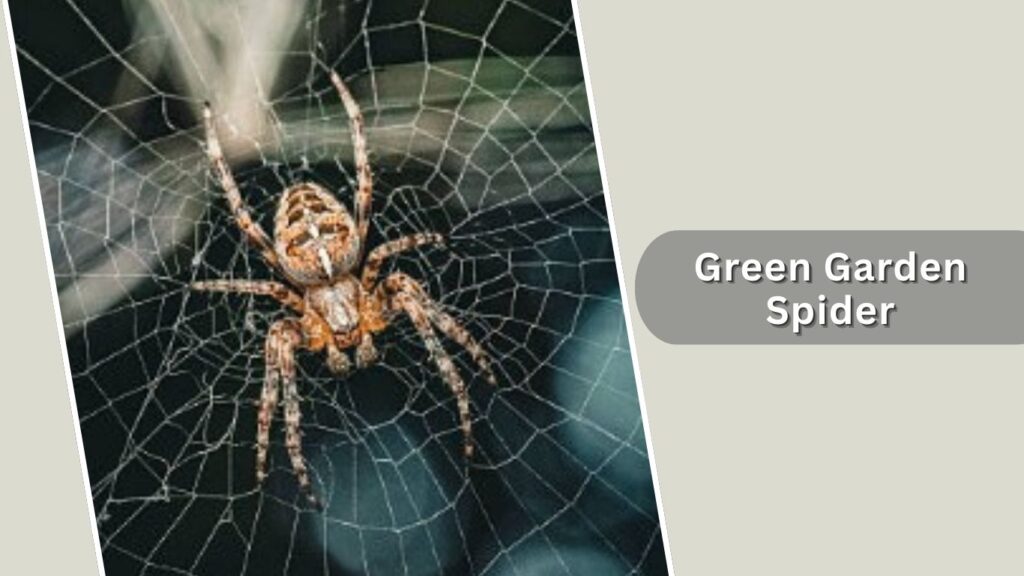
The green garden spider is a visually striking spider known for its bright green coloration and presence in well-vegetated outdoor spaces. It is commonly seen resting on leaves or near its web, blending easily into garden plants and shrubs.
Identification
- Bright green abdomen
- Medium to large body size
- Long legs, sometimes lightly banded
- Females noticeably larger than males
Habitat
This spider is commonly found in gardens, parks, forest edges, and landscaped areas. It prefers locations with dense vegetation where insects are plentiful and web anchors are available.
Behavior
Green garden spiders are mostly nocturnal. They typically construct or repair their webs in the evening and remain nearby during the day. When disturbed, they may drop from the web or retreat into surrounding foliage.
Diet
Their diet consists of flies, moths, mosquitoes, beetles, and other flying insects that become trapped in their sticky webs.
Lifecycle
Females lay egg sacs in late summer or early fall, attaching them to leaves or protected surfaces. Adults usually die before winter, while eggs survive colder months and hatch in spring.
FAQs
1. Are green spiders dangerous to humans?
Most green spiders are harmless to people. While some may bite if threatened, their venom is mild and rarely causes serious reactions.
2. Why are so many spiders green?
Green coloration provides excellent camouflage among leaves and plants, helping spiders avoid predators and ambush prey more effectively.
3. Do green spiders build webs?
Some green spiders build webs, such as orb weavers, while others are active hunters that rely on speed, jumping, or ambush tactics instead of webs.
4. Where are green spiders commonly found?
They are commonly found on plants, trees, grass, shrubs, gardens, forests, wetlands, and sometimes walls or buildings near vegetation.
5. Are green spiders beneficial?
Yes, green spiders help control insect populations by feeding on flies, mosquitoes, aphids, and other pests, making them beneficial to natural ecosystems and gardens.
