

Cicada killer wasps are some of the largest wasps in North America, and their sheer size makes them intimidating to many people. With their buzzing flight and habit of digging holes in sandy soils, they can cause alarm when they appear in gardens, lawns, or playgrounds. Their name alone—“cicada killer”—suggests aggression, but these solitary wasps are often misunderstood. In reality, cicada killer wasps are more focused on hunting cicadas and raising their young than bothering humans. Let’s explore their behavior, sting, life cycle, and importance in the ecosystem.
What Are Cicada Killer Wasps?
Cicada killer wasps belong to the family Crabronidae and the genus Sphecius. These solitary wasps are famous for their large size and unique hunting behavior. Unlike social wasps such as hornets and yellowjackets, cicada killers do not form colonies. Instead, each female digs her own burrow and provisions it with cicadas for her developing larvae.
Physically, they are striking insects. Adult cicada killers measure between 1.5 and 2 inches long, with black or reddish-brown bodies marked by yellow stripes. Their wings are transparent but often appear reddish or amber in sunlight. Their strong legs and large mandibles allow them to dig into sandy soils and capture prey larger than themselves.
Though their appearance is fearsome, cicada killer wasps are not aggressive toward humans. Their primary purpose is reproduction, which involves paralyzing cicadas and providing food for their larvae.
Cicada Killer Wasp Locations

Cicada killer wasps are widely distributed across North America, with their highest concentrations in the United States. They are particularly common in states with warm summers and sandy soils.
- Texas – Known for large populations of cicada killers, often nesting in open fields and sandy yards.
- Florida – The warm climate allows for a longer activity season, and their nests are frequently spotted in lawns and gardens.
- Ohio and the Midwest – Cicada killers emerge in July and August when cicadas are most abundant.
- Eastern U.S. – From New England to the Carolinas, they thrive in sandy playgrounds, golf courses, and backyards.
Their preferred habitats include sandy soils, lawns, playgrounds, and open fields where females can dig burrows without obstruction. Areas with plenty of cicadas also attract these wasps, since cicadas serve as the main food source for their larvae.
Cicada Killer Wasp Size

One of the most intimidating traits of cicada killer wasps is their impressive size.
- Females grow up to 2 inches long, making them one of the largest wasps in North America.
- Males are slightly smaller, around 1.5 inches, but are often more visible because of their territorial behavior.
- Their long wings and strong bodies give them a loud, buzzing flight that adds to their intimidating presence.
When compared to other wasps and insects:
- They are larger than yellowjackets and paper wasps, which are usually under 1 inch.
- They are similar in size to the tarantula hawk wasp, though the tarantula hawk is slightly bigger and has a far more painful sting.
- Their size often causes confusion with hornets, but their nesting and behavior are completely different.
Cicada Killer Wasp Nest and Holes
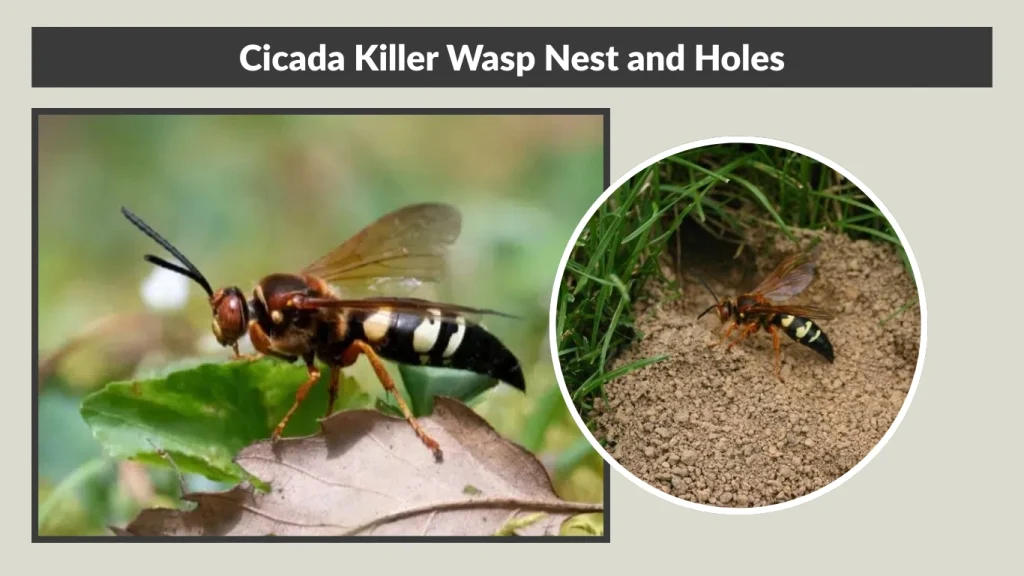
Female cicada killer wasps are expert diggers, creating burrows in sandy or loose soil. Their nests are among the most recognizable signs of their presence.
A typical burrow looks like a large U-shaped hole with a noticeable mound of soil outside. These holes may be about 1 inch wide and can extend 12 to 18 inches deep, with several side chambers.
The nesting process:
- The female selects a sandy or loose patch of ground.
- She digs a main tunnel with side chambers for her offspring.
- She hunts cicadas, stings and paralyzes them, and drags them back to the burrow.
- She places the paralyzed cicada in a chamber and lays an egg on it.
- The chamber is sealed, and the larva feeds on the cicada once it hatches.
To humans, the sudden appearance of multiple burrows in a lawn or playground may look like an infestation. In reality, each burrow belongs to an individual female, and the wasps do not live in colonies. However, because they often nest close together, it can seem like a swarm.
Cicada Killer Wasp Life Cycle
The life cycle of cicada killer wasps is closely tied to the annual emergence of cicadas.
- Summer Activity (July–August): Adults emerge from underground pupal chambers. Males patrol territories, while females begin digging burrows.
- Hunting and Nesting: Females hunt cicadas, paralyze them with their sting, and drag them into burrows. One egg is laid per cicada, or in some cases, several cicadas per chamber.
- Larval Stage: The egg hatches, and the larva consumes the cicada, feeding on the still-living but paralyzed insect.
- Overwintering: After feeding, the larva spins a cocoon and remains underground through winter.
- Next Generation: The following summer, adults emerge to repeat the cycle.
This seasonal pattern explains why cicada killers are most visible during the peak cicada months and seem to vanish for the rest of the year.
Cicada Killer Wasp Sting

The sting of a cicada killer wasp is designed primarily for hunting. Females use their sting to paralyze cicadas, which remain alive but immobile as food for their larvae.
For humans, the risk is minimal:
Males cannot sting at all. They may buzz aggressively around people who enter their territory, but their behavior is bluffing rather than harmful.
Females are capable of stinging, but they rarely do unless grabbed, stepped on, or severely provoked.
The sting itself is generally less painful than that of a honeybee or hornet. People describe it as sharp but short-lived, without the prolonged burning sensation of more aggressive wasps.
Most stings result in mild pain, redness, and swelling. Only those with allergies to wasp venom are at risk of more serious reactions, which require immediate medical attention.
Do Cicada Killer Wasps Sting Humans?
Despite their fearsome size and name, cicada killer wasps rarely sting humans. Males are completely incapable of stinging since they lack a stinger. Their behavior often frightens people because they patrol nesting areas aggressively, hovering and buzzing at intruders. In reality, this is bluffing—they are harmless.
Females have a stinger, but they reserve it for hunting cicadas. They will only sting a human if grabbed, stepped on, or deliberately provoked. Gardeners, lawn workers, or children playing near nests may encounter them, but stings are extremely rare. In short, cicada killer wasps are not a threat to people going about their daily activities.
Are Cicada Killer Wasps Dangerous?

The word “killer” often gives these wasps an undeserved reputation. To humans and pets, they are not considered dangerous. Unlike hornets or yellowjackets, they are solitary and do not defend their nests as a group. Even when dozens appear in one area, they are not acting as a colony.
The real danger lies in their hunting habits. For cicadas, cicada killer wasps are lethal predators. A single female may capture and paralyze several cicadas to provision one nest chamber. In ecosystems where cicada populations surge, these wasps provide a natural form of pest control.
For pets, the risk is low. Dogs or cats might dig into burrows and get stung by a female, but such cases are rare and usually cause only mild discomfort.
Male vs. Female Cicada Killer Wasps
The behavior and appearance of male and female cicada killers differ significantly:
- Male Cicada Killers
- Slightly smaller in size.
- Territorial, often buzzing around humans and animals.
- Cannot sting—harmless despite their aggressive display.
- Slightly smaller in size.
- Female Cicada Killers
- Larger and more robust.
- Responsible for digging burrows and hunting cicadas.
- Equipped with a sting but not aggressive toward humans.
- Larger and more robust.
This difference explains why people often panic when males swarm an area, assuming they are being attacked. In reality, the buzzing males are all bluff, while the stinging females are busy with their prey.
Cicada Killer Wasp Control and Removal

Although harmless to people, cicada killer wasps can become a nuisance when they nest in lawns, gardens, golf courses, or playgrounds. Their burrows leave unsightly mounds of soil, and their intimidating size often makes people uncomfortable.
Natural Prevention
- Keep lawns moist: They prefer dry, sandy soils. Regular watering makes conditions less attractive.
- Cover bare soil: Mulch, turf, or groundcover plants can prevent digging.
- Limit cicada populations: Since females rely on cicadas, reducing food availability discourages them.
Professional Pest Control
If the nesting area is in a high-traffic location, such as a schoolyard or park, pest control professionals may be called to treat the area. Insecticides can be applied directly into burrows, but this should be a last resort.
Spray and Insecticides
Some homeowners use insecticidal sprays or dusts around burrows. While effective, this can also harm beneficial pollinators. It’s best to reserve chemicals for situations where cicada killers pose a real nuisance or safety concern.
In most cases, patience is the best solution. Cicada killer wasps are seasonal, active mainly during midsummer. Once the nesting season ends, the adults die off, and the problem resolves naturally.
Cicada Killer Wasp vs. Tarantula Hawk
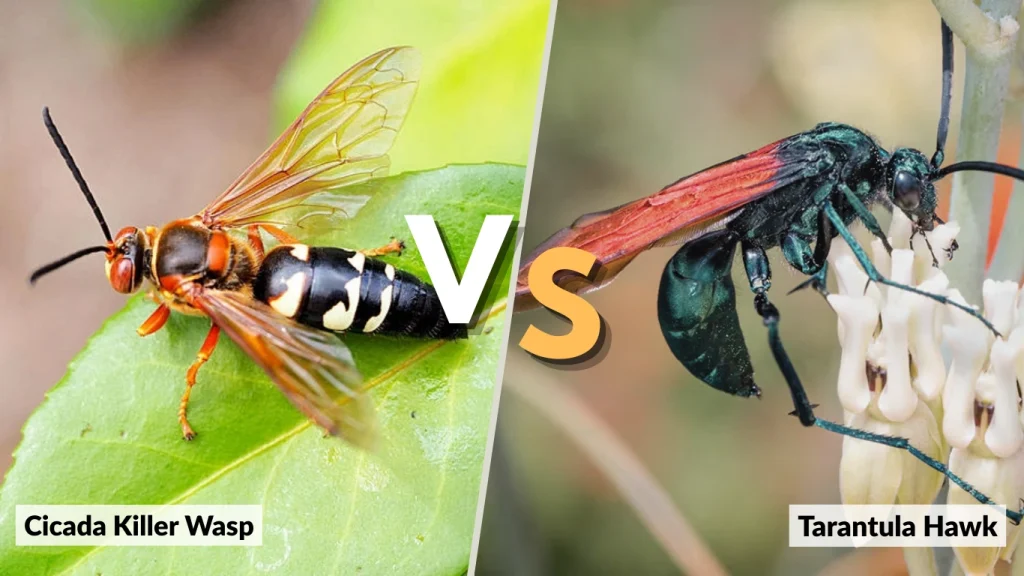
Cicada killer wasps are often compared to tarantula hawk wasps, another large and intimidating insect.
- Size: Both are among the largest wasps in North America. Cicada killers reach up to 2 inches, while tarantula hawks may exceed 2.5 inches.
- Sting: The tarantula hawk has one of the most painful stings in the insect world, ranking high on the Schmidt Sting Pain Index. Cicada killer stings are relatively mild and rare.
- Prey: Cicada killers target cicadas, while tarantula hawks specialize in hunting tarantulas and other large spiders.
- Behavior: Cicada killers dig burrows in soil, while tarantula hawks often hunt above ground and drag prey into existing crevices.
While both wasps are powerful hunters, the cicada killer is far less aggressive and poses minimal risk to humans.
Interesting Facts About Cicada Killer Wasps
- Strength: A female can carry a cicada heavier than herself into her burrow.
- Burrow depth: Nests may extend 12–18 inches underground with multiple side chambers.
- Solitary but social-like: They nest close to one another, giving the appearance of a colony, but each female works alone.
- Life span: Adults live only a few weeks in summer, but larvae overwinter underground and emerge the following year.
- Beneficial role: By reducing cicada numbers, they help prevent damage to trees and shrubs caused by cicada feeding.
FAQs
Do cicada killer wasps sting humans?
Females can sting but rarely do. Males cannot sting at all. Most human encounters end without stings unless the wasps are grabbed or stepped on.
How do I identify a cicada killer wasp nest?
Look for large U-shaped holes in sandy or loose soil with a pile of excavated dirt outside. Wasps flying in and out of the hole confirm their presence.
What states have the most cicada killer wasps?
They are common across the U.S., especially in Texas, Florida, Ohio, and the Midwest. Warm summers and sandy soils make these regions ideal habitats.
How painful is a cicada killer wasp sting?
The sting is less painful than that of a hornet or honeybee. It is sharp but short-lived, with mild swelling and redness.
How can I control cicada killer wasps in my yard?
Keep soil moist, cover bare patches, and reduce cicada populations. If necessary, apply insecticides directly to burrows or contact professional pest control.
