
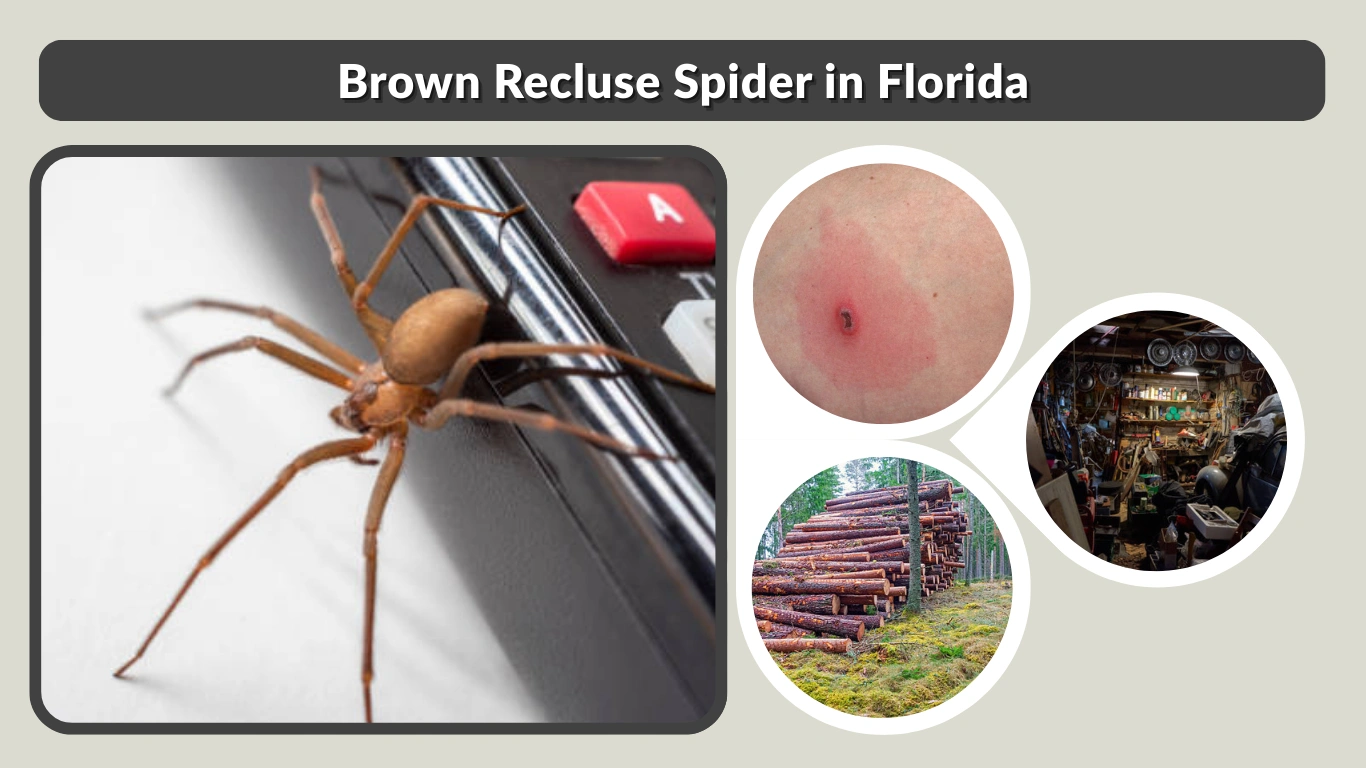
Brown recluse spiders are a frequent topic of concern in Florida, especially when residents discover brown spiders indoors or experience unexplained skin lesions. Online images and alarming stories often add to the confusion. While brown recluse spiders do exist in parts of Florida, they are not widespread, and many sightings are misidentifications. Understanding where brown recluse spiders are actually found in Florida, what they look like, and which spiders are commonly confused with them helps prevent unnecessary fear and incorrect assumptions.
Is the Brown Recluse Spider Found in Florida?
Yes, brown recluse spiders are found in Florida, but their presence is limited. Florida lies on the edge of the brown recluse’s native range, which means the spider does not occur evenly across the state.
Most confirmed populations are found in North Florida and parts of Central Florida. In contrast, South Florida reports are uncommon and usually involve other spider species. Brown recluse spiders in Florida tend to remain hidden and are far less common than many people believe.
Brown Recluse Spider Distribution in Florida
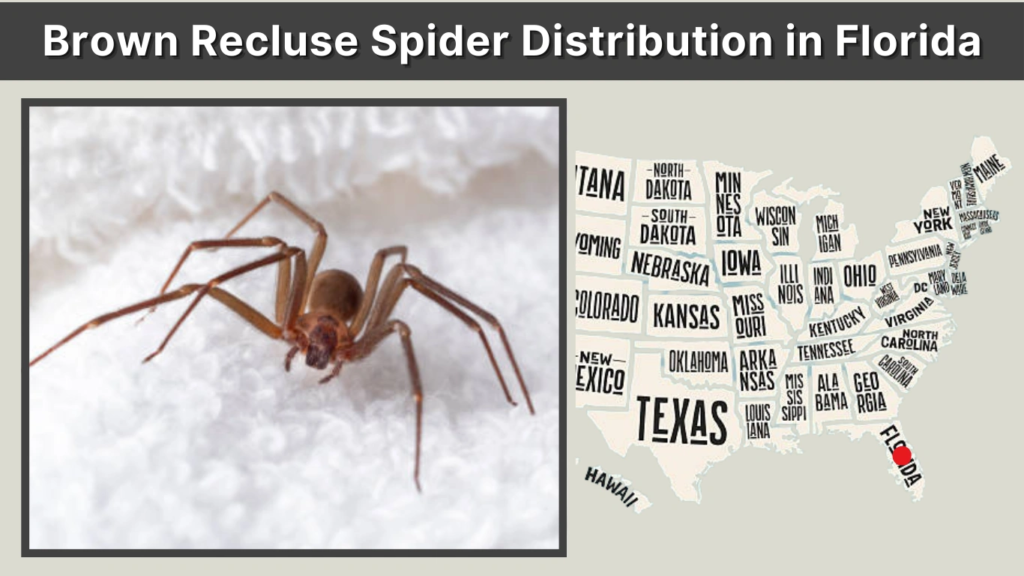
Brown Recluse Spider Range in Florida
The brown recluse spider’s primary range is in the central and southeastern United States. Florida represents the southern edge of that range. Because of this, populations are scattered rather than widespread.
Environmental factors such as humidity, temperature, and competition with other spider species limit how far south brown recluse spiders can successfully establish themselves.
Brown Recluse Spider in North Florida
North Florida has the highest likelihood of brown recluse presence in the state. Areas such as the Florida Panhandle and regions around Tallahassee report the most consistent findings.
Brown recluses in North Florida are typically found indoors or in sheltered locations, including garages, sheds, woodpiles, and storage areas. Older buildings and undisturbed spaces provide ideal hiding spots for these spiders.
Brown Recluse Spider in Central Florida
In Central Florida, brown recluse spiders exist in scattered, limited populations. Sightings are far less common than in North Florida, and infestations are rare.
Most encounters in Central Florida occur indoors rather than outdoors. Spiders are usually discovered in storage boxes, closets, or garages that have gone undisturbed for long periods. Even in these cases, confirmed identifications are relatively uncommon.
Brown Recluse Spider in South Florida
Brown recluse spiders are generally not established in South Florida. The climate, higher humidity, and ecological conditions make long-term survival difficult for them.
Most reports from South Florida, Southwest Florida, and the Florida Keys involve misidentified spiders such as wolf spiders, huntsman spiders, or other large brown species. Verified brown recluse specimens from these areas are extremely rare.
Brown Recluse Spider Habitat in Florida
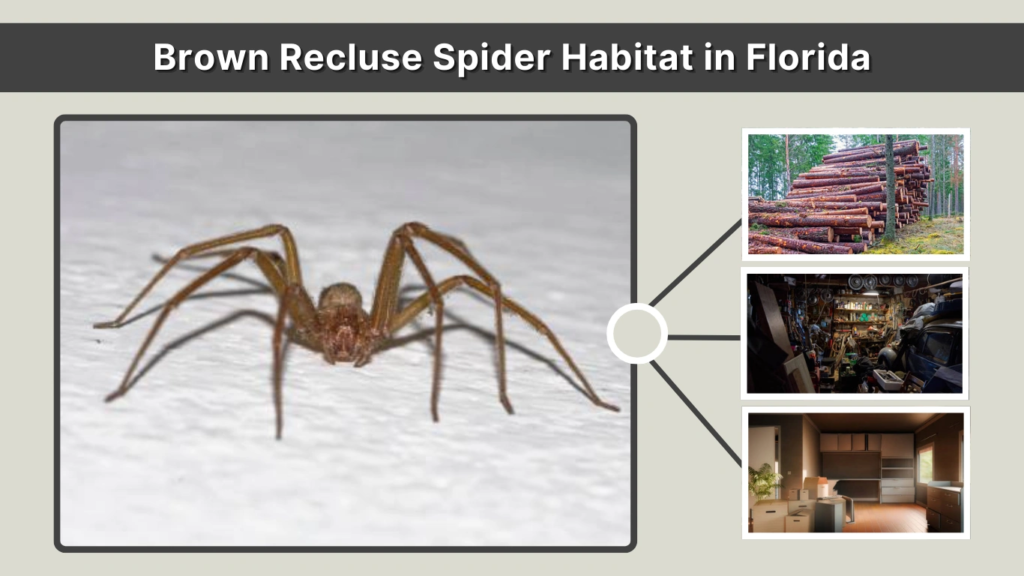
When brown recluse spiders are present in Florida, they prefer quiet, undisturbed environments. Common hiding places include:
- Woodpiles and stacked lumber
- Garages and storage sheds
- Closets and cardboard boxes
- Attics and crawl spaces
Brown recluse spiders are nocturnal and avoid human contact whenever possible. Bites usually occur only when the spider is accidentally trapped against skin.
What Does a Brown Recluse Spider Look Like in Florida?
A brown recluse spider in Florida looks the same as one found anywhere else. The spider has a light to dark brown body with a distinct violin-shaped marking on the head region. Its legs are long, thin, and uniformly colored without stripes or bands.
One of the most important identifying features is the eye arrangement. Brown recluse spiders have six eyes arranged in three pairs, while most spiders have eight. This detail is difficult to see without magnification, which contributes to frequent misidentification.
Brown Recluse Spider Size in Florida
Brown recluse spiders are often described as “large,” but in reality, they are relatively small. The body usually measures less than half an inch in length, with leg span making the spider appear larger.
Reports of very large brown recluses in Florida almost always involve other species, especially wolf spiders or huntsman spiders, which can grow much larger.
Brown Recluse Spider Baby (Juvenile) in Florida
Juvenile brown recluse spiders are smaller and lighter in color than adults. Their violin marking may be faint or not fully developed, making identification even more difficult.
Because of their size and appearance, baby brown recluses are frequently mistaken for common house spiders or other harmless species found throughout Florida homes.
Brown Recluse Spider Bite in Florida (Overview)
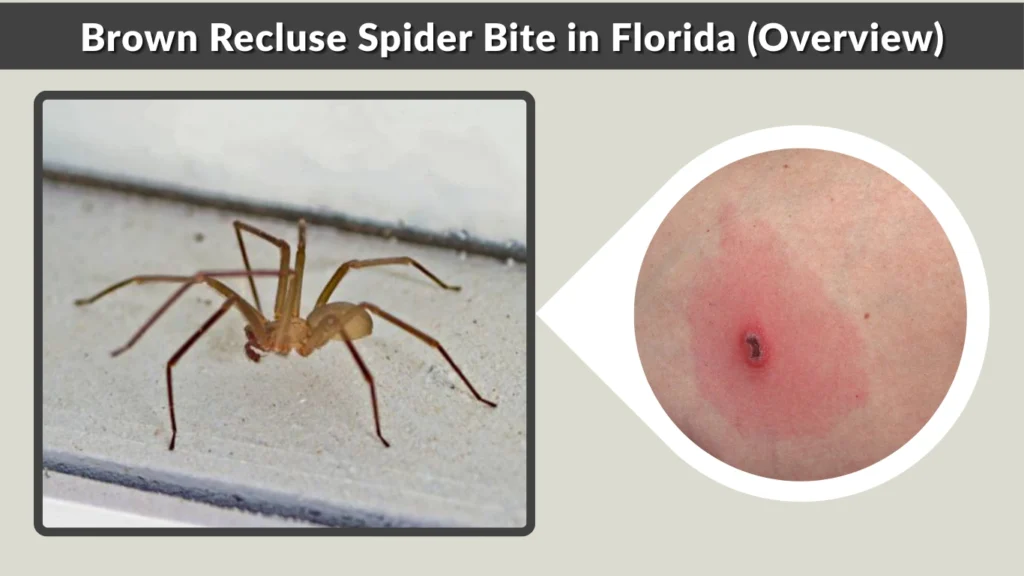
Brown recluse spider bites in Florida are uncommon and usually defensive. Many bites cause mild symptoms or go unnoticed. Severe reactions are rare and often associated with underlying health conditions.
Without capturing and identifying the spider, bite diagnosis remains uncertain, as many skin conditions resemble spider bites.
Brown Recluse Spider Bites in Florida
Brown recluse spider bites in Florida are far less common than often reported. Even in areas where the spider exists, bites are rare because brown recluses are shy and avoid human contact. Most bites occur when a spider is accidentally pressed against skin, such as inside clothing, shoes, or bedding.
Many suspected brown recluse bites in Florida turn out to be skin infections, allergic reactions, or insect bites. Without a captured spider, doctors are often cautious about diagnosing a recluse bite.
Brown Recluse Spider Bite in South Florida
Reports of brown recluse spider bites in South Florida are especially controversial. Because the spider is generally not established in this region, confirmed bite cases are extremely rare.
Medical professionals in South Florida frequently find that suspected bites are caused by bacterial infections such as MRSA, folliculitis, or other dermatological conditions. This contributes to the widespread myth that brown recluse bites are common throughout Florida.
Are Brown Recluse Spiders Poisonous or Venomous in Florida?
Brown recluse spiders are venomous, not poisonous. Their venom can cause localized tissue damage in some cases, but severe reactions are uncommon. Fatalities attributed to brown recluse spiders are exceedingly rare and often involve other medical complications.
In Florida, the actual risk posed by brown recluse venom is low due to the spider’s limited distribution and reclusive behavior.
Brown Recluse Spider Infestation in Florida
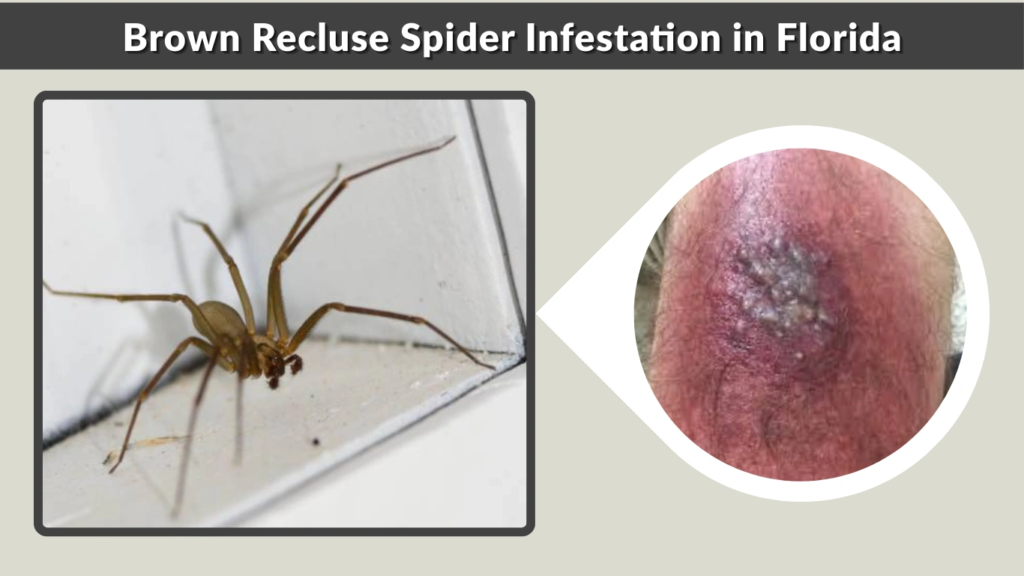
True brown recluse infestations in Florida are rare. When they do occur, they are usually confined to long-undisturbed structures such as storage sheds, barns, or older homes with minimal human activity.
Most Florida homes do not provide the stable, undisturbed environment brown recluses prefer. Seeing one brown spider indoors does not indicate an infestation.
Brown Recluse Spider Look-Alikes in Florida
Several Florida spiders are commonly mistaken for brown recluses:
- Wolf spiders
- Huntsman spiders
- Yellow sac spiders
- Southern house spiders
- Chilean recluse (often confused, not established)
These spiders may share brown coloration but differ significantly in eye arrangement, body shape, size, and behavior.
Wolf Spider vs Brown Recluse in Florida
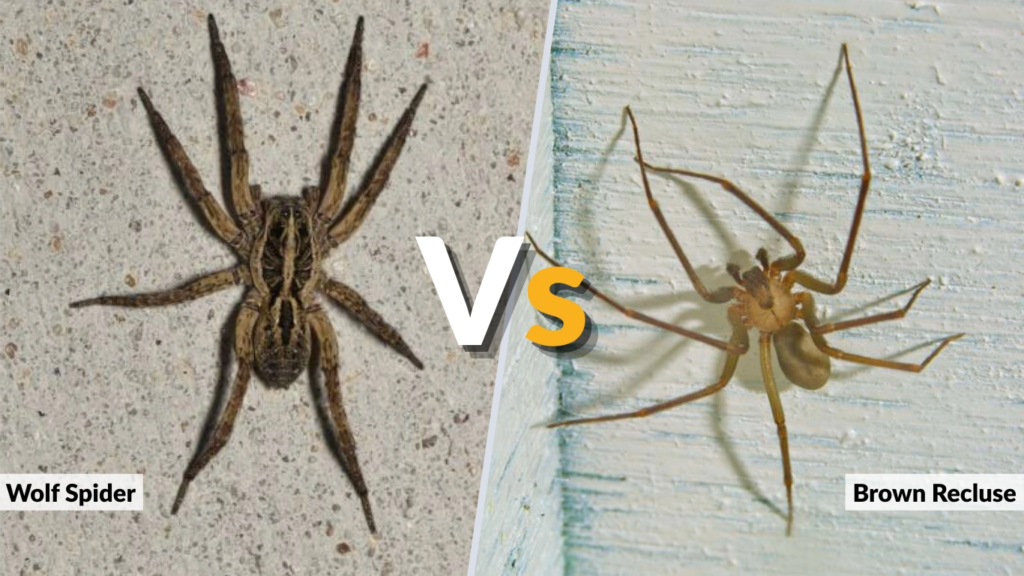
Florida Wolf Spider vs Brown Recluse Spider
Wolf spiders are one of the most common sources of confusion in Florida. They are larger, hairier, and more active than brown recluses. Wolf spiders have eight eyes arranged in three rows, and their eyes reflect light at night.
Brown recluse spiders have smooth bodies, thinner legs, six eyes, and do not show eye shine. Wolf spiders actively hunt prey, while brown recluses prefer to hide.
Chilean Recluse Spider in Florida
The Chilean recluse spider is not native to Florida and does not have established populations in the state. Many online images and articles incorrectly label spiders as Chilean recluses, adding to confusion.
Most alleged sightings in Florida are misidentified native species rather than true Chilean recluses.
Brown Recluse Spider Florida House Spiders
Brown spiders found inside Florida homes are most often harmless house spiders. These species help control insects and rarely pose any danger to humans.
Correct identification is important to avoid unnecessary extermination or fear-driven decisions.
Brown Recluse Spider Florida Pictures and Images
Online searches for brown recluse spider pictures in Florida often return mislabeled images. Stock photos and social media posts frequently show wolf spiders, huntsman spiders, or unrelated species.
Photos alone are unreliable for identification. Geographic location, eye count, and body structure are far more accurate indicators.
Common Myths About Brown Recluse Spiders in Florida
A common myth is that brown recluse spiders are everywhere in Florida. Another is that they frequently kill people. In reality, confirmed cases are rare, and most encounters involve misidentified spiders.
Not all brown spiders are brown recluses, and most Florida spiders are harmless.
What to Do If You Think You Found a Brown Recluse in Florida
If you believe you have encountered a brown recluse spider:
- Capture it safely if possible
- Avoid handling it directly
- Seek identification from a university extension service or expert
- Do not self-diagnose bites
Accurate identification prevents panic and ensures appropriate response.
FAQs
Are brown recluse spiders common in Florida?
No. They are limited mainly to North and parts of Central Florida and are not widespread.
Are brown recluse spider bites common in Florida?
No. Most suspected bites are misdiagnosed skin conditions or insect bites.
What spider looks most like a brown recluse in Florida?
Wolf spiders and huntsman spiders are the most commonly confused species.
Can brown recluse spiders infest Florida homes?
Infestations are rare and usually limited to long-undisturbed structures.
Should Florida residents worry about brown recluse spiders?
For most people, there is little reason to worry. Awareness and proper identification are sufficient.
