

Brown recluse spider bites are often misunderstood and misdiagnosed, especially in their early stages. Many people mistake them for mosquito bites, ant stings, or even skin infections. However, a true brown recluse bite follows a specific progression that can worsen over time if not recognized early. Understanding the different stages of a brown recluse spider bite helps identify symptoms quickly, reduce complications, and seek medical care when necessary. While most bites remain mild, some can cause serious skin damage if ignored.
What Is a Brown Recluse Spider Bite?
A brown recluse spider bite occurs when the spider injects venom containing enzymes that damage skin tissue and blood vessels. Unlike many insect bites, the initial bite is often painless or barely noticeable. Symptoms usually develop slowly over several hours or days.
The venom can disrupt normal blood flow at the bite site, leading to tissue damage in moderate to severe cases. Not every bite results in serious injury, but understanding the stages is important because early symptoms can appear harmless while internal damage progresses underneath the skin.
How to Identify a Brown Recluse Spider Bite
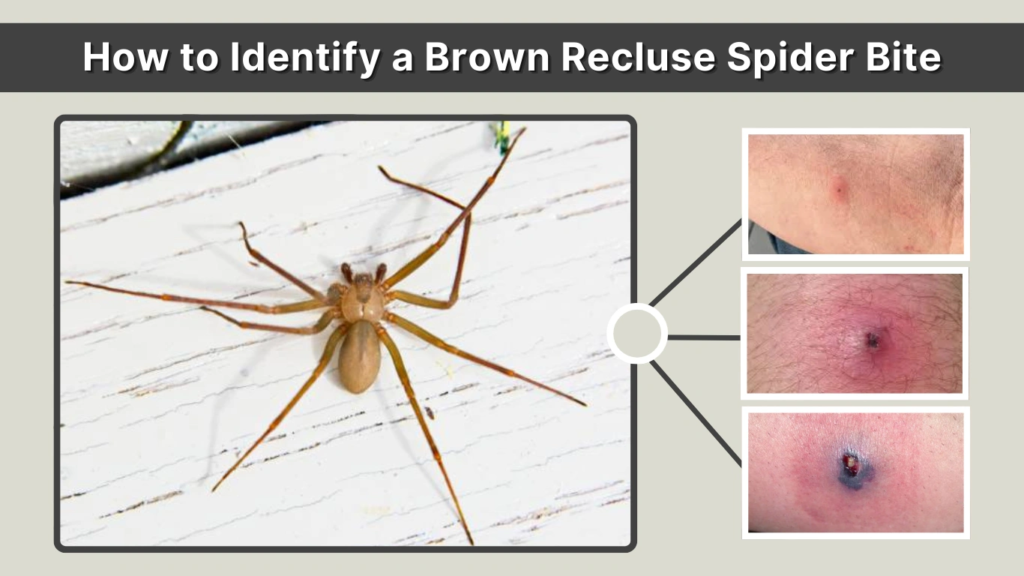
Identifying a brown recluse spider bite early can be difficult, but several signs may help distinguish it from other bites:
- Small red, pink, or pale bite mark
- Mild burning, itching, or stinging sensation
- Central blister or lighter-colored center
- Surrounding redness or bruising
- Symptoms that worsen rather than improve
In many cases, the bite does not look serious at first, which is why people often delay treatment.
Stages of a Brown Recluse Spider Bite
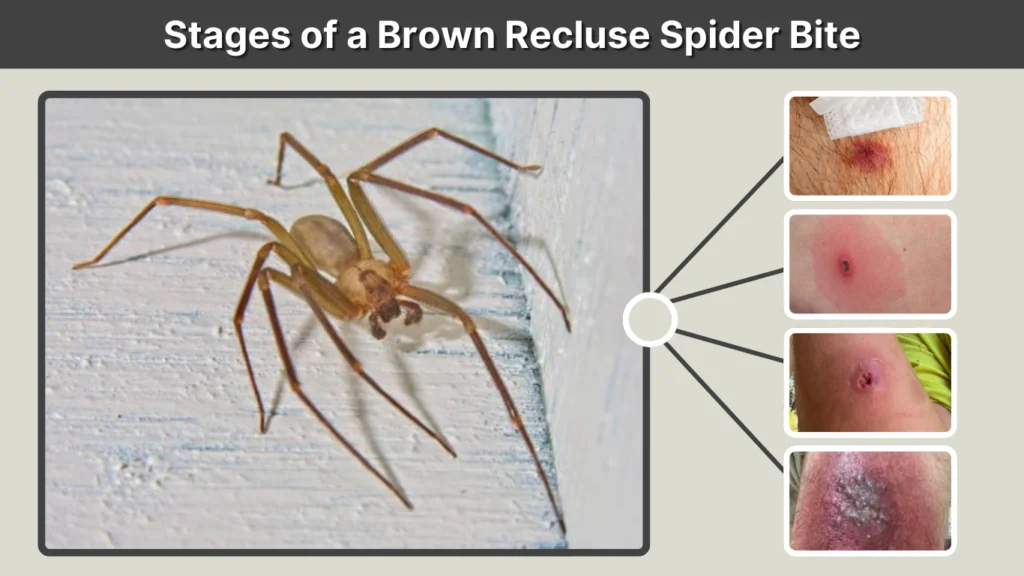
Stage 1: Early / Beginning Stage (0–24 Hours)
The early stage of a brown recluse spider bite is usually mild and easy to overlook. Many people do not feel the bite when it happens, especially if it occurs during sleep. Within a few hours, slight redness and swelling may appear at the bite site.
Common early-stage symptoms include mild itching, a burning sensation, or tenderness when touched. The skin may appear pale in the center with a red ring around it. At this point, the bite is often confused with a mosquito bite, flea bite, or minor skin irritation. In most cases, pain is minimal during this stage, which leads people to ignore the bite entirely.
Stage 2: Day 1–2 Progression
By day one or two, the bite typically becomes more noticeable. Pain and inflammation often increase, and the affected area may begin to change color. A bluish, purplish, or deep red discoloration can form around the bite site.
A small blister may develop at the center, which is a key sign of a brown recluse spider bite. Some people experience systemic symptoms such as mild fever, chills, nausea, or fatigue, although this is less common. The surrounding skin may feel warm, tight, or sensitive, and swelling may extend beyond the initial bite area.
This stage is critical because the bite may start causing tissue damage beneath the surface, even if the skin still looks relatively intact.
Stage 3: Necrotic Stage (3–7 Days)
In more severe cases, the bite progresses to the necrotic stage within three to seven days. During this phase, the venom causes skin and tissue breakdown. The blister may rupture, forming an open sore or ulcer. A dark scab, often black or deep brown, can develop as the damaged tissue dies.
Pain usually becomes more intense during this stage, and healing slows significantly. The wound may appear sunken or crater-like, and surrounding redness can persist. There is also an increased risk of secondary infection if the area is not properly cleaned and monitored.
Not all brown recluse spider bites reach this stage, but when they do, medical attention is strongly recommended to prevent long-term complications.
Stage 4: Healing and Final Stage
Once the necrotic phase stabilizes, the brown recluse spider bite enters the healing stage. This phase can last several weeks to a few months, depending on the severity of tissue damage and the individual’s immune response. The body gradually removes dead tissue and begins forming new skin.
During healing, the open wound slowly shrinks and scabs over. Redness and swelling decrease, and pain becomes more manageable. In deeper wounds, scarring is common and may remain visible long after the bite has healed. Proper wound care during this stage is essential to prevent infection and promote healthy skin regeneration.
Brown Recluse Spider Bite Stages: Day-by-Day Timeline
| Day | Typical Symptoms |
| Day 1 | Mild redness, slight pain or itching |
| Day 2 | Blister formation, bruising, increased pain |
| Day 3–5 | Tissue damage and necrosis may begin |
| Day 7+ | Open ulcer or dark scab forms |
| Weeks | Gradual healing and possible scarring |
This timeline varies by person, but worsening symptoms after the first 48 hours often indicate a more serious reaction.
Early Stages vs Severe Stages: What’s the Difference?
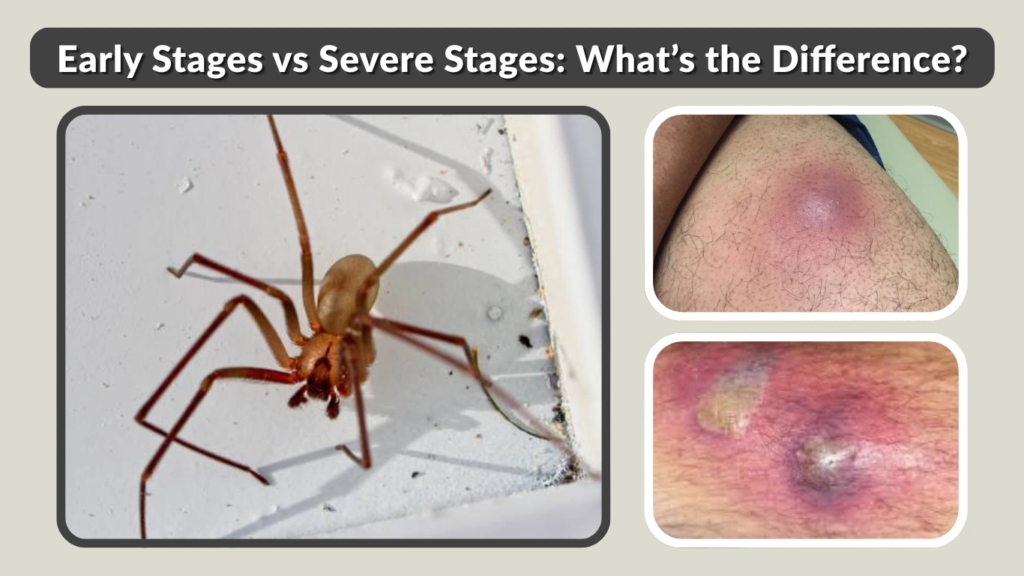
Not all brown recluse spider bites become severe. Many remain in the early stages and heal without complications. Mild bites typically cause redness, itching, and minor discomfort that improves within a few days.
Severe bites, however, progress due to venom concentration, bite location, or immune response. Bites on fatty tissue or areas with limited blood flow tend to heal more slowly. Delayed treatment and scratching the wound can also increase the risk of necrosis and infection.
Brown Recluse Spider Bite vs Staph Infection
Brown recluse spider bites are frequently misdiagnosed as staph infections because both can cause redness, swelling, and skin damage.
| Feature | Brown Recluse Bite | Staph Infection |
| Pain onset | Delayed | Rapid |
| Center | Pale or blister | Pus-filled |
| Spread | Usually localized | Often spreading |
| Necrosis | Common in severe cases | Rare |
Correct diagnosis is important because treatment approaches differ significantly.
Brown Recluse Spider Bite Stages on Dogs
Dogs can also suffer serious reactions from brown recluse spider bites. Because pets cannot communicate pain clearly, symptoms may go unnoticed until the bite worsens.
Common signs in dogs include:
- Swelling or redness at the bite site
- Hair loss around the affected area
- Open sores or ulcers
- Lethargy or loss of appetite
Veterinary care is strongly recommended, as untreated bites in dogs can progress quickly.
Symptoms of a Brown Recluse Spider Bite by Stage
Symptoms vary depending on the stage of the bite:
- Early stage: Mild pain, redness, itching
- Middle stage: Blister, bruising, swelling
- Severe stage: Ulcer, tissue damage, intense pain
- Systemic symptoms: Fever, nausea, chills (rare)
Monitoring symptoms daily helps determine when medical attention is necessary.
Treatment Options Based on Bite Stage
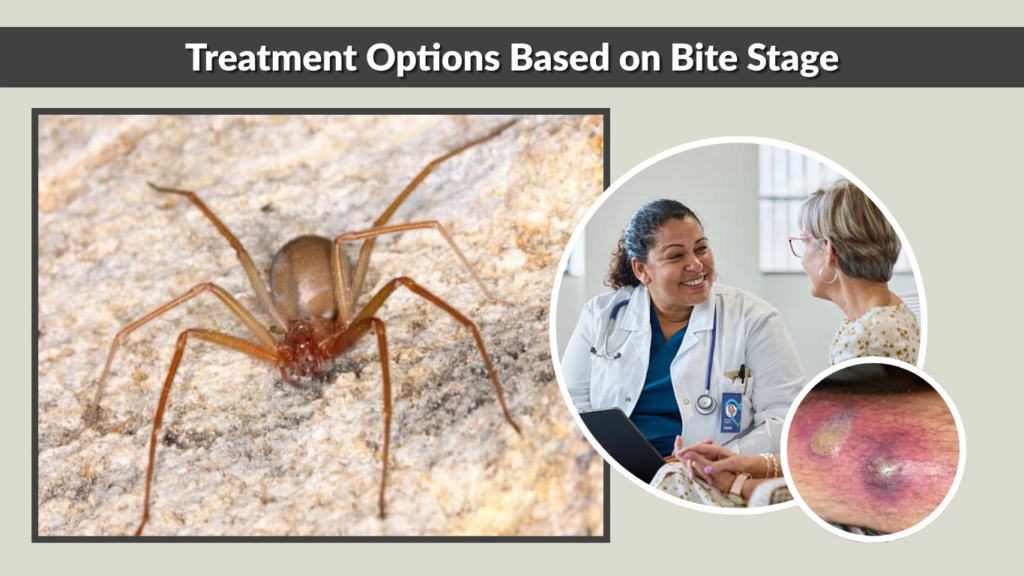
Early Stage Care
Early treatment focuses on reducing inflammation and slowing venom spread. Ice packs, elevation of the affected area, and over-the-counter pain relief are often sufficient.
Moderate to Severe Care
More advanced bites may require medical evaluation. Doctors may recommend wound cleaning, antibiotics if infection occurs, and pain management. Severe necrotic wounds sometimes require specialized wound care or surgical treatment.
When to See a Doctor
Medical care should be sought if:
- Pain worsens after 48 hours
- A blister or dark scab forms
- Fever or chills develop
- The wound does not heal
Early intervention reduces the risk of long-term skin damage.
FAQs
How fast does a brown recluse spider bite progress?
Symptoms usually begin within a few hours, but serious tissue damage may take several days to appear.
What does a brown recluse spider bite look like on day 2?
By day two, the bite often shows increased redness, bruising, and a central blister.
Can early brown recluse spider bites heal on their own?
Yes, many mild bites heal without medical treatment when properly cared for.
Are brown recluse spider bites always dangerous?
No, most bites are mild, but some can become severe if left untreated.
How long does a brown recluse spider bite take to heal?
Healing can take a few weeks for mild cases and several months for severe bites.
Conclusion
Brown recluse spider bites progress through clear stages, from mild early symptoms to potential tissue damage in severe cases. Recognizing these stages helps prevent complications and ensures timely treatment. While many bites heal without issue, worsening pain, blistering, or necrosis should never be ignored. Understanding the bite’s timeline allows for better decision-making and safer recovery.
