
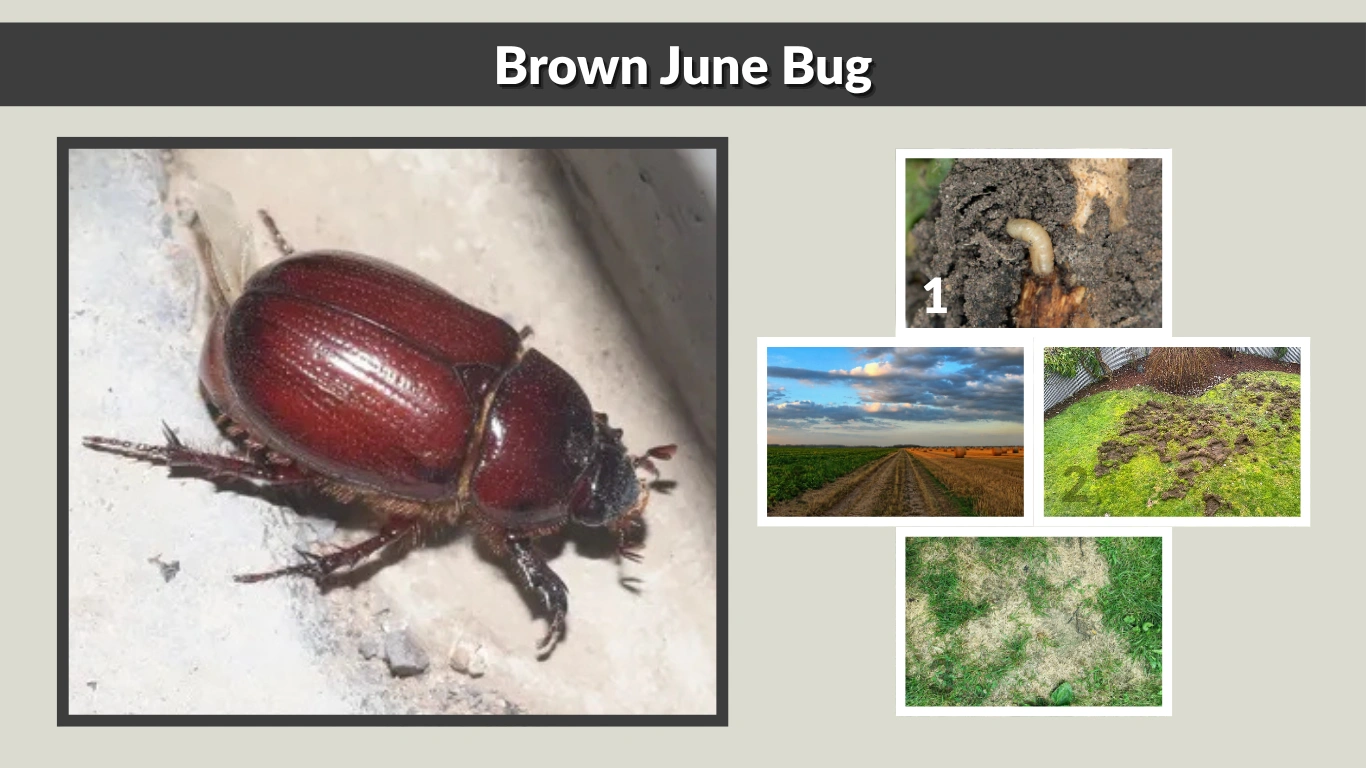
The brown June bug is a familiar summer visitor in many parts of North America. Known for its clumsy flight and brown shell, this beetle is active mostly at night and often drawn to lights around homes. While generally harmless to humans, brown June bugs can cause noticeable damage to lawns, crops, and young trees through their larvae, also known as white grubs.
Identification and Characteristics
Physical Appearance
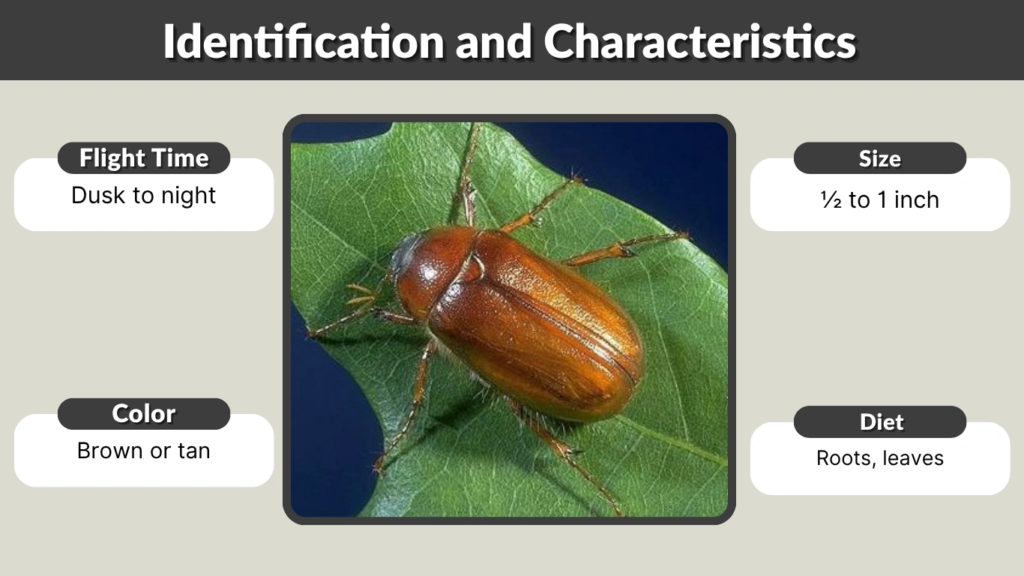
Brown June bugs typically have a hard, smooth exoskeleton that ranges from light tan to deep chocolate brown. Adults measure between 12 and 25 millimeters long, with males slightly smaller than females. Their oval-shaped bodies feature short, spiny legs and antennae tipped with fan-like clubs that help them detect scents in the air. When disturbed, they often play dead, curling up their legs and remaining still.
Brown vs Green June Bug
Although both are members of the Scarabaeidae family, the brown and green June bugs differ in color, behavior, and feeding habits. Green June bugs (Cotinis nitida) display a shiny metallic hue and are active during the day, while brown June bugs (Phyllophaga species) appear dull and fly at night.
| Feature | Brown June Bug | Green June Bug |
| Color | Brown or tan | Shiny metallic green |
| Size | ½ to 1 inch | ¾ to 1 inch |
| Flight Time | Dusk to night | Daytime |
| Common Regions | West & South U.S. | Southeast & Midwest |
| Diet | Roots, leaves | Fruits, sap |
Scientific Classification
The brown June bug belongs to the genus Phyllophaga, which includes over 400 species across North America. Its scientific name varies by region, but most brown June bugs share similar traits and habits. They belong to the family Scarabaeidae, the same group as rhinoceros and Japanese beetles. In states like California, Texas, and Colorado, different Phyllophaga species thrive depending on soil and climate.
Habitat and Distribution
Where Brown June Bugs Live
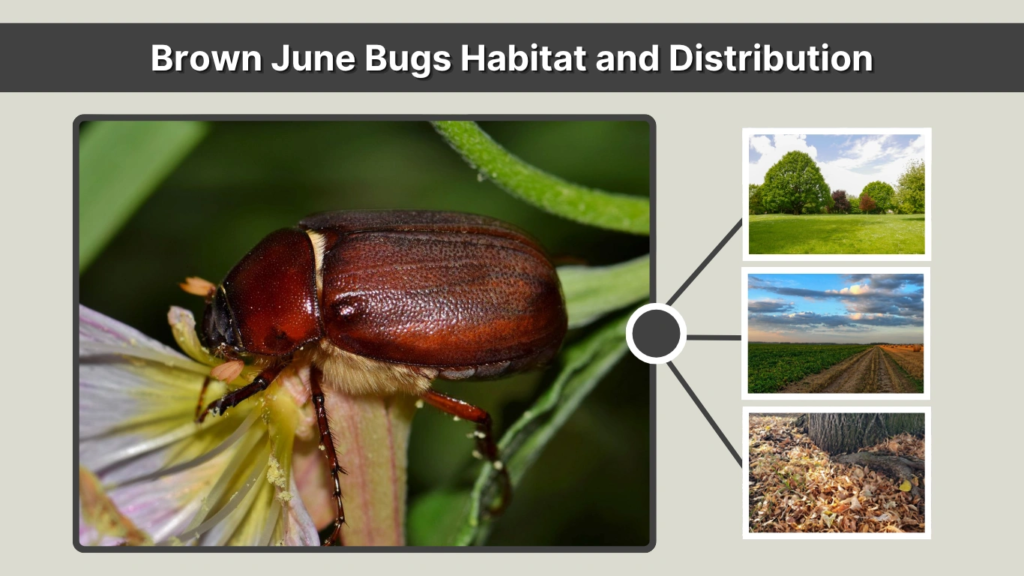
Brown June bugs are widespread across the United States, especially in warm, dry regions. They are common in states such as California, Texas, Florida, and western New York. These beetles prefer grassy fields, agricultural areas, and suburban lawns, where the soil is loose enough for larvae to burrow and feed on plant roots.
Indoor Presence
It’s not unusual to find brown June bugs bumping into windows or porch lights at night. They are attracted to artificial lighting, mistaking it for the moon or starlight used for navigation. Occasionally, they enter homes through open doors or screens, especially during peak mating season in June. Though alarming, they are harmless indoors and cannot reproduce inside houses.
Behavior and Life Cycle
Flight and Activity
Brown June bugs are nocturnal flyers, most active from late spring through early summer. You’ll often see them buzzing clumsily around lights after dusk. Their flight is accompanied by a distinctive droning sound. Males typically emerge first to find mates, followed by females who will lay eggs in soil soon after mating.
Life Cycle Stages
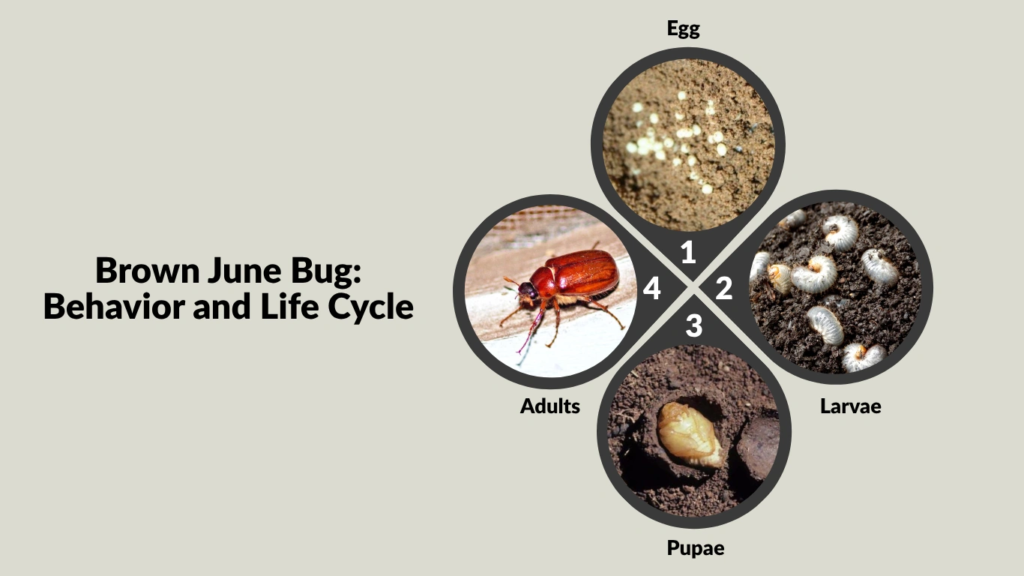
Like many beetles, the brown June bug undergoes complete metamorphosis, transitioning through four distinct stages: egg, larva, pupa, and adult.
- Eggs are laid a few inches beneath the soil, typically in grassy or cultivated areas.
- Larvae (grubs) hatch within three weeks and spend most of the year underground feeding on grass roots.
- Pupae form in small earthen chambers where they develop for several weeks before emerging as adults.
- Adults live for about one month, mainly to reproduce before dying.
The entire life cycle lasts approximately one year, with larvae causing the most damage to lawns and gardens.
Feeding Habits
Adult brown June bugs feed on foliage, but the real threat comes from their larvae. Grubs consume the roots of grasses, crops, and ornamental plants, leading to visible brown patches on lawns. They can also weaken young trees by nibbling on rootlets. In agricultural settings, they damage corn, soybeans, and other shallow-rooted crops, making them a seasonal pest for farmers.
Regional Varieties and Sightings
California and Texas Populations
In California and Texas, brown June bugs appear from late May through July, thriving in warm evening air. Their populations peak during humid summer nights when outdoor lighting attracts large swarms. Farmers in these states often report infestations following mild winters, which allow larvae to survive underground.
Northeastern and Florida Observations
In states like New York and Florida, brown June bugs have shorter active seasons. The humid, coastal conditions encourage rapid development, but their populations decline in extreme heat or heavy rain. In Florida, they share territory with the green June bug, leading to confusion between the two species.
Impact on Environment and Trees
Soil and Plant Damage
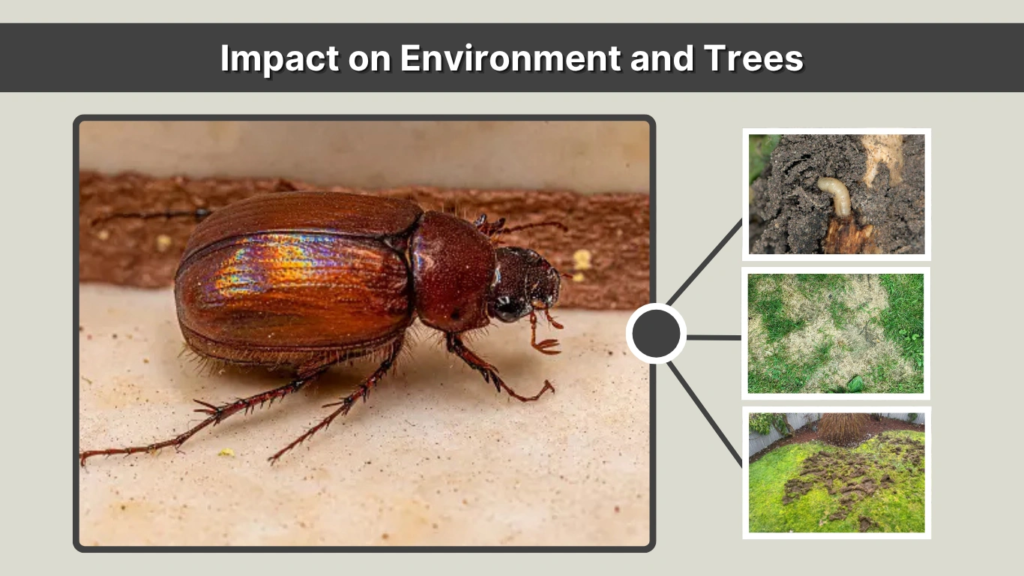
The most serious harm caused by brown June bugs occurs underground. Their larvae feed aggressively on grass and crop roots, often leaving visible yellow or brown patches on lawns. Damaged turf can easily be pulled up like loose carpet due to the destroyed root system. In gardens, grubs can weaken vegetables and ornamental plants, making them more vulnerable to drought and disease.
Tree and Shrub Damage
Young trees and shrubs are also at risk, particularly during dry months when larvae seek moisture-rich roots. Feeding on these rootlets stunts tree growth and may cause early leaf drop. In rural areas, infestations can harm nursery seedlings and fruit trees. The damage also attracts predators such as skunks, raccoons, and birds, which dig up soil to find grubs—further tearing up lawns.
Bites, Myths, and Human Interaction
Do Brown June Bugs Bite?
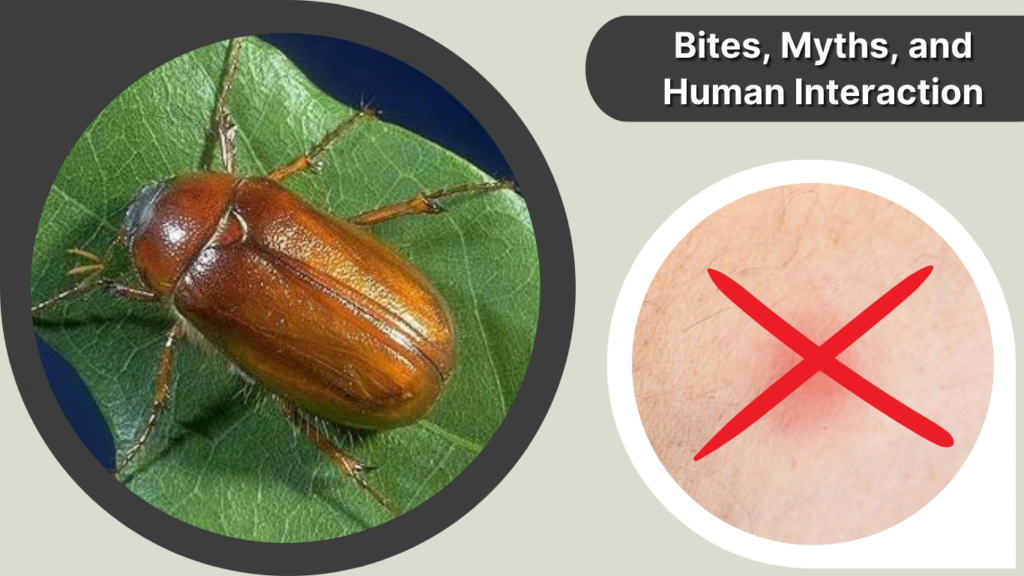
Despite their size and intimidating buzz, brown June bugs are completely harmless to humans. They do not bite, sting, or carry diseases. Their mouthparts are designed for chewing vegetation, not for piercing skin. When they fly into people or hair at night, it’s purely accidental—they are simply poor navigators attracted by bright lights.
Common Misconceptions
Brown June bugs are often mistaken for cockroaches due to their similar color and shape. However, cockroaches have flatter bodies and move swiftly, while June bugs are slow and clumsy. They are also confused with Japanese beetles, but unlike Japanese beetles, brown June bugs rarely skeletonize leaves or flowers. Understanding these differences helps in identifying them correctly and preventing unnecessary alarm.
Prevention and Control
How to Get Rid of Brown June Bugs
Managing brown June bugs begins with targeting their larvae—the root of the problem. Healthy, dense lawns are naturally resistant, so regular watering, mowing, and aeration can discourage egg-laying. Reducing outdoor lighting during summer nights can also minimize adult activity near homes.
Natural predators like birds, nematodes, and beneficial beetles can help keep grub populations in check. Applying beneficial nematodes (Heterorhabditis bacteriophora) to soil is one of the safest biological controls, as they infect and kill grubs without harming plants or pets.
Chemical and Biological Methods
If infestations are severe, chemical grub control may be necessary. Insecticides containing imidacloprid or chlorantraniliprole work best when applied in late summer or early fall—before larvae dig deeper into the soil for winter. Always follow label instructions carefully and water the area afterward to ensure penetration.
For those preferring eco-friendly solutions, milky spore powder (Bacillus popilliae) can offer long-term control by infecting and killing white grubs. This biological treatment spreads naturally in the soil over time, providing years of protection.
Preventing Indoor Entry
Keeping June bugs out of homes requires simple yet consistent measures. Turn off unnecessary outdoor lights, close doors quickly after entering, and install fine-mesh screens on windows and vents. Sealing cracks around windows and foundations also prevents accidental entry. Since June bugs can’t survive or reproduce indoors, removing them with a broom or vacuum is sufficient if they get inside.
Comparison: Brown June Bug vs Japanese Beetle

Although both species belong to the scarab beetle family, the brown June bug and Japanese beetle (Popillia japonica) differ greatly in appearance, behavior, and the extent of damage they cause.
| Feature | Brown June Bug | Japanese Beetle |
| Color | Brown or tan | Metallic green with copper wings |
| Feeding | Roots & foliage | Leaves & flowers |
| Flight Activity | Nocturnal | Daytime |
| Peak Season | June–July | July–August |
| Damage Severity | Moderate | High (major pest) |
Japanese beetles feed in large groups, leaving behind lace-like leaves. Brown June bugs, on the other hand, cause more underground damage through their larvae. Recognizing the difference helps gardeners apply the right treatment and avoid overusing pesticides.
Spiritual and Symbolic Meaning
Beyond their biological role, brown June bugs hold symbolic value in many cultures. Spiritually, they represent grounding, renewal, and persistence, reflecting their connection to the earth and soil. Their nocturnal behavior symbolizes introspection and the importance of inner growth.
In some Native American and folk traditions, seeing a brown June bug is a reminder to stay humble and resilient during life’s changes. The brown color signifies stability and strength, while their seasonal appearance aligns with themes of transformation and rebirth. Compared to the green June bug—often linked with prosperity and vitality—the brown species symbolizes balance and endurance.
FAQs
What attracts brown June bugs to lights?
Brown June bugs are nocturnal and instinctively navigate using moonlight. Artificial lights confuse them, causing them to swarm around lamps, windows, and porch bulbs during warm summer nights. Replacing bright white bulbs with yellow “bug lights” can reduce their attraction significantly.
Do brown June bugs cause plant damage?
Yes. While adults nibble on leaves, their larvae do the most harm by feeding on roots. This underground activity weakens grass and garden plants, creating brown patches and stunted growth. Proper lawn care and soil treatment can greatly reduce infestations.
How long do brown June bugs live?
The entire life cycle lasts about a year, though adult beetles live only four to six weeks. Most of their life is spent underground as grubs, where they feed, molt, and grow until emerging as adults in late spring or early summer.
How can I prevent brown June bugs from entering my house?
Reduce outdoor lighting, close windows at night, and seal small openings near doors or vents. Keeping lawns healthy can also discourage breeding near the home. Since they’re harmless indoors, removing them gently or vacuuming is enough to get rid of them.
What’s the difference between brown and green June bugs?
Brown June bugs are nocturnal, matte-colored, and feed mainly on roots, while green June bugs are metallic, diurnal, and prefer fruits or sap. Both belong to the same beetle family but occupy slightly different ecological niches across North America.
