

The blue mud wasp, also known as the blue mud dauber (Chalybion californicum), is a striking insect often mistaken for more aggressive wasp species. With its metallic blue body and solitary lifestyle, it plays an important role in ecosystems, particularly as a natural predator of spiders. Despite its intimidating appearance, the blue mud wasp is generally harmless to humans. Understanding its biology, behavior, and ecological benefits helps dispel myths and highlights its value as a helpful backyard ally.
Scientific Classification & Physical Description
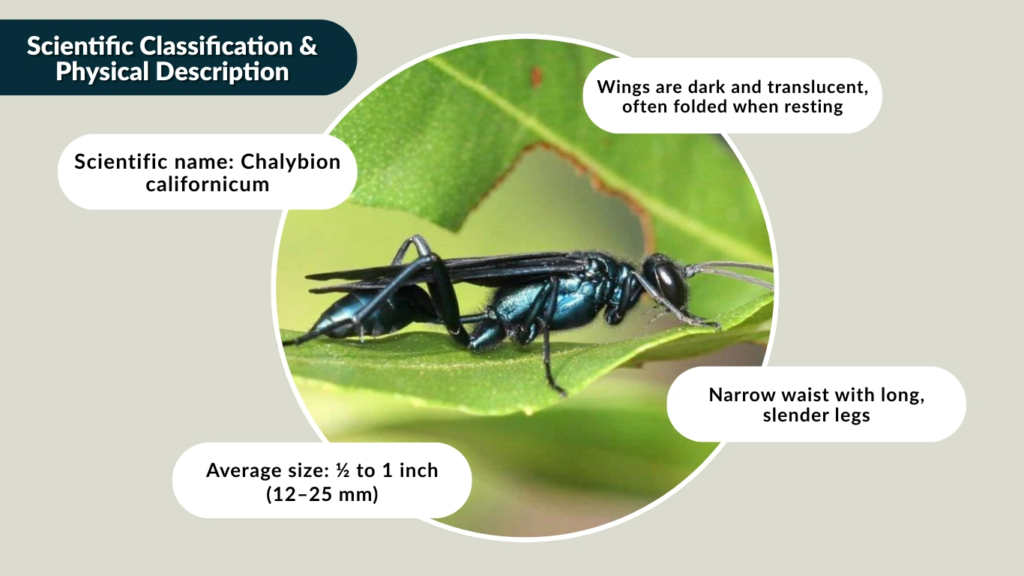
The blue mud wasp, Chalybion californicum, belongs to the order Hymenoptera, which also includes bees, ants, and other wasps. Its shiny metallic appearance and slender body set it apart from many other insects. Below is a closer look at its classification and unique features.
Scientific Name & Taxonomy
- Scientific name: Chalybion californicum
- Family: Sphecidae (commonly known as thread-waisted wasps)
- Order: Hymenoptera
- Related to mud daubers, but distinguished by color and nesting habits
Physical Appearance
- Metallic blue sheen covering the body
- Narrow waist with long, slender legs
- Wings are dark and translucent, often folded when resting
Size & Comparison
- Average size: ½ to 1 inch (12–25 mm)
- Females typically larger than males
- Compared to yellow mud daubers, they appear sleeker and shinier
- Distinct from hornets and yellowjackets, which are bulkier and patterned
Geographic Distribution & Habitat

The blue mud wasp is widely distributed across North America and adapts to a variety of environments. From rural farmlands to suburban backyards, these wasps thrive wherever there are spiders and suitable nesting sites. Their presence often signals a healthy, balanced ecosystem.
Range Across Regions
- Found throughout the United States, from east to west
- Common in Canada, particularly Ontario
- Extends south into Mexico
- Occasionally sighted in Hawaii and other warmer regions
Preferred Habitats
Blue mud wasps prefer areas where spiders are abundant and mud is available for nest building. They are often found near human dwellings but are not aggressive.
Typical Nesting Locations (List Style)
- Under eaves of houses and sheds
- Inside barns or garages
- In hollow plant stems or tree cavities
- Near water sources, where mud is plentiful
- Abandoned nests of other mud daubers
Diet & Feeding Habits
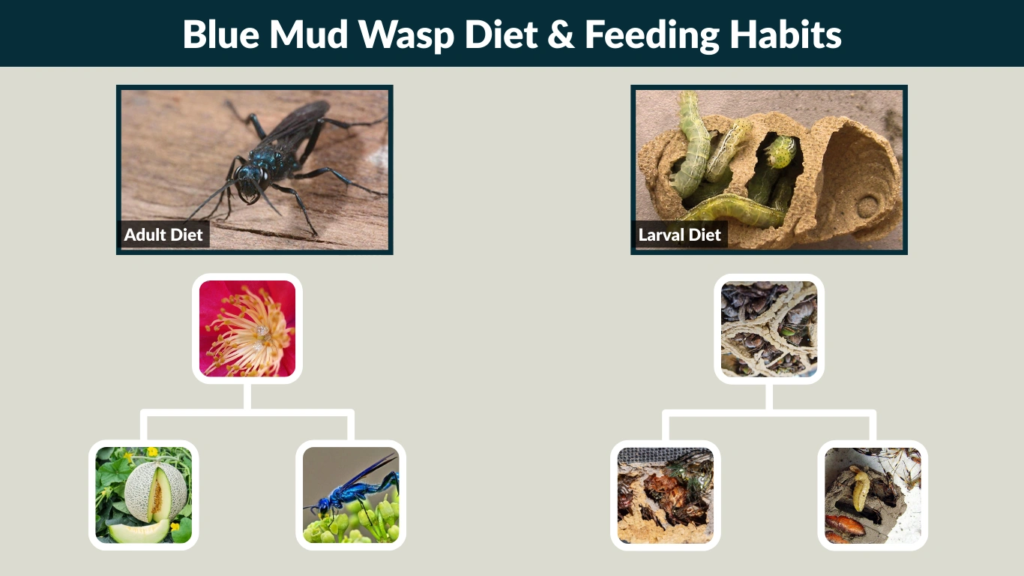
The diet of the blue mud wasp highlights its important role in natural pest control. While adults consume plant-based foods, their larvae rely on carefully prepared spider prey. This dual feeding strategy ensures both pollination benefits and effective spider population management.
Adult Diet
Adult blue mud wasps primarily feed on nectar and honeydew. Their visits to flowers make them secondary pollinators, although not as efficient as bees. Still, their activity contributes to plant reproduction and ecosystem health.
Larval Diet
Larvae depend entirely on spiders captured by the female wasp. The prey is paralyzed rather than killed, ensuring freshness. This unique behavior provides the growing larvae with a steady and uncontaminated food source until they pupate.
Spider Preferences
- Black widow spiders (primary prey, helps reduce dangerous populations)
- Orb-weaver spiders
- House spiders
- Jumping spiders
- Other small web-building species
Predatory Role
By targeting spiders, especially venomous ones like black widows, blue mud wasps provide an indirect form of protection for humans. Their presence in gardens and around homes reduces the likelihood of harmful spider encounters.
Comparison with Other Mud Daubers
Unlike the yellow or black mud dauber, which hunts a broader range of insects, the blue mud wasp specializes in spiders. This specialization makes it one of the most effective natural spider predators in North America.
Behavior, Temperament & Interaction with Humans
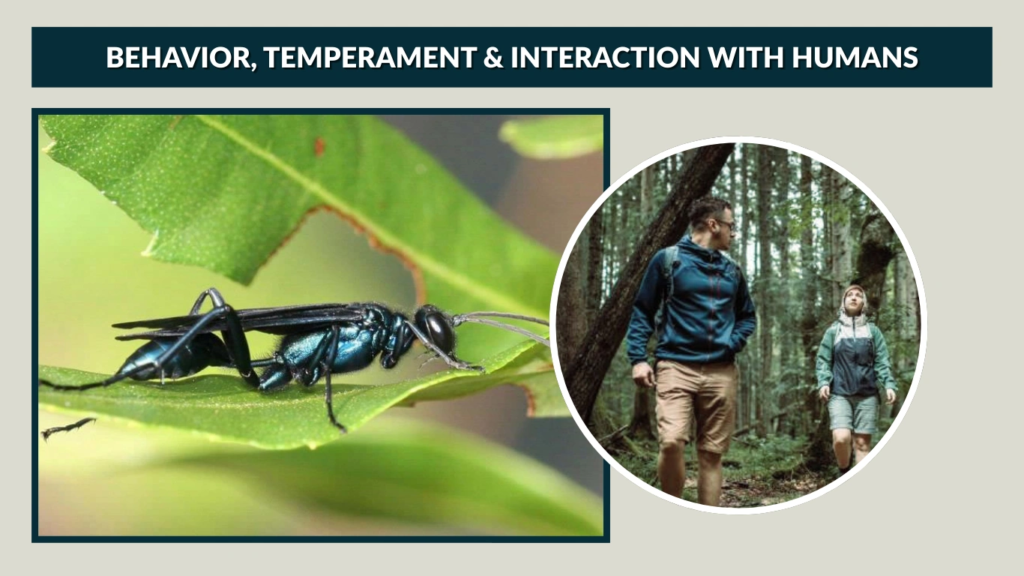
Although their metallic blue color and long, narrow bodies can look intimidating, blue mud wasps are not aggressive. They live solitary lives, focusing on survival tasks rather than defending large colonies. This makes encounters with humans far less risky compared to social wasps like hornets or yellowjackets.
Temperament
Blue mud wasps are calm and avoid unnecessary conflict. Unlike social wasps, which defend their hives aggressively, these solitary wasps have no colony to protect. They rarely attack unless directly threatened, handled, or trapped against the skin.
Flight & Activity Patterns
Their flight is slow, hovering, and deliberate, giving them a less threatening appearance compared to the rapid darting of hornets. Activity is most common during warm months, especially in summer when spider populations are highest.
Stinging Behavior
While they are capable of stinging, it is an uncommon event. Stings are typically reserved for self-defense and are less painful than those of hornets or yellowjackets. Most people never experience a sting, even if the wasp is nesting nearby.
Interaction with Humans
Blue mud wasps often enter homes accidentally, attracted by light or searching for shelter. They are not drawn to human food or garbage, so they rarely cause nuisance in the way yellowjackets do. In most cases, they can be safely guided back outside without harm.
Comparison with Aggressive Wasps
Unlike hornets, which can swarm and sting multiple times, the blue mud wasp is solitary and stings only once if provoked. Their lack of aggression makes them more of a backyard ally than a threat.
Role in Ecosystem
The blue mud wasp plays a vital role in maintaining ecological balance. Its dual lifestyle—predator as a larva and pollinator as an adult—helps regulate insect populations and support plant life. By targeting specific prey and aiding pollination, these wasps act as natural pest managers and subtle contributors to biodiversity.
Spider Population Control
Blue mud wasps are highly efficient hunters of spiders, particularly black widows. By paralyzing and storing them as food for their young, they help suppress populations of potentially harmful species. This reduces the risk of spider infestations around homes and gardens without the need for pesticides.
Pollination Support
Although not their primary role, adult wasps feed on nectar and transfer pollen as they move between flowers. While less effective than bees, their foraging still contributes to plant reproduction and local biodiversity.
Indicator of Ecosystem Health
The presence of blue mud wasps often reflects a healthy environment rich in insect life. Their dependence on spiders for reproduction means that their survival is tied to a balanced prey population, making them indicators of ecological stability.
Human Benefits
For humans, their presence provides two key benefits: natural spider control and supplemental pollination. This makes them allies in gardens, farms, and urban spaces where people often struggle with spider overpopulation or chemical pest control.
FAQs
1. Are blue mud wasps dangerous to humans?
No, blue mud wasps are not dangerous. They are solitary, non-aggressive, and rarely sting unless directly threatened. Most people never get stung by them, even when nests are nearby. Instead of being harmful, they are considered beneficial because they naturally reduce spider populations.
2. Do blue mud wasps sting like hornets or yellowjackets?
While they can sting, it is uncommon and far less painful compared to hornets or yellowjackets. Stings usually occur only when the wasp feels trapped or provoked. Unlike social wasps, blue mud wasps do not defend nests aggressively, so accidental encounters are generally safe.
3. What do blue mud wasps eat?
Adult blue mud wasps feed on nectar and honeydew, helping with pollination. Their larvae, however, depend entirely on paralyzed spiders provided by the female. This unique hunting behavior makes them natural controllers of spider populations, especially dangerous ones like black widows.
4. Where do blue mud wasps build their nests?
They usually build or reuse mud nests in sheltered areas such as under eaves, inside barns, or within hollow plant stems. Interestingly, they often take over abandoned nests of other mud dauber species, which saves energy and ensures ready-made shelter for their young.
5. Why are blue mud wasps considered helpful?
They play two important ecological roles: controlling spider populations and contributing to pollination. By preying on spiders, they reduce risks of venomous species around homes. At the same time, they assist plants by transferring pollen while feeding on nectar. This balance makes them allies to both humans and nature.
