
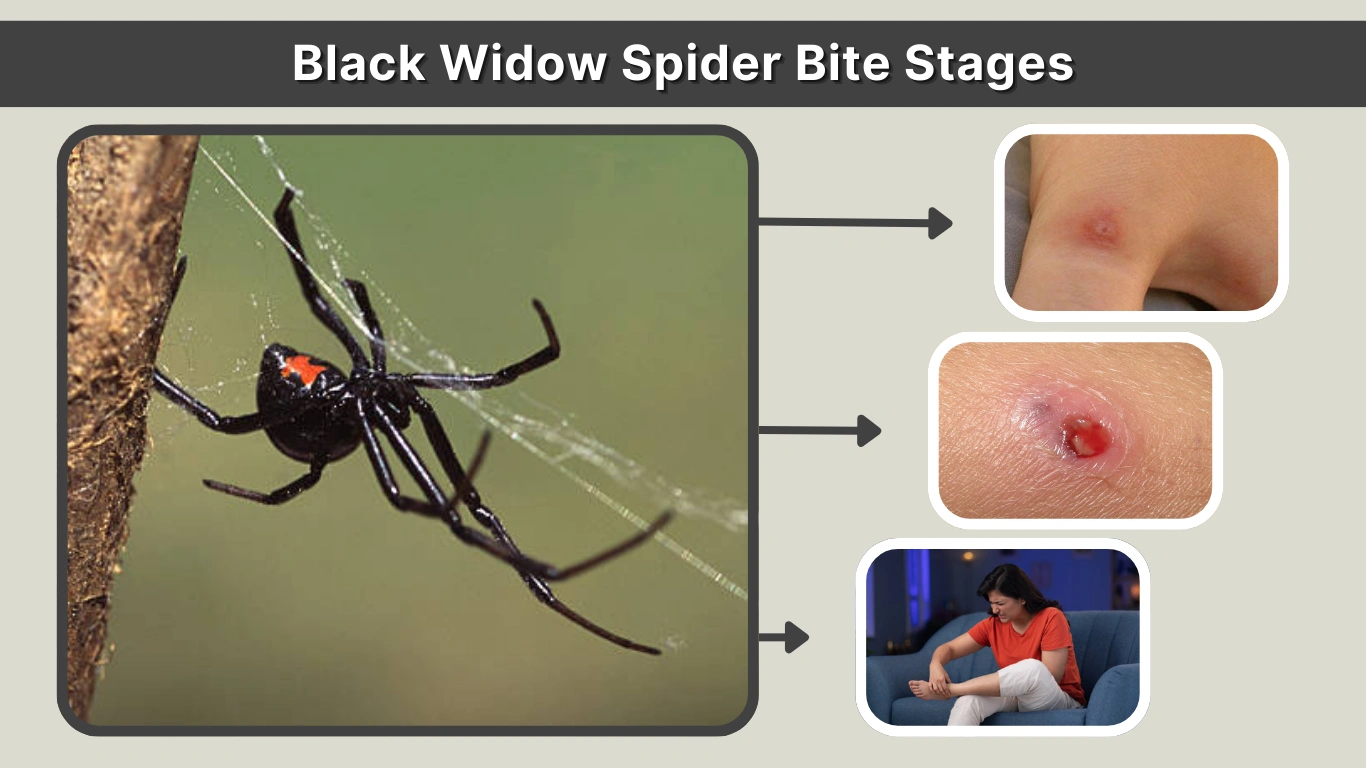
A bite from a Black widow spider does not usually cause immediate, dramatic symptoms. Instead, black widow spider bites tend to progress through distinct stages, with symptoms developing and intensifying over time. This delayed progression is one reason black widow bites are often misunderstood or underestimated in the early hours. Knowing the stages of a black widow spider bite—what they look like, how symptoms change day by day, and when to seek medical care—can help prevent complications and reduce unnecessary anxiety.
Why Black Widow Spider Bites Occur in Stages
Unlike spider bites that cause visible tissue damage, black widow venom primarily affects the nervous system. The venom interferes with nerve signaling, leading to muscle contractions, pain, and systemic symptoms that worsen as the toxin spreads.
Because the venom acts internally, early skin changes are usually mild. Pain and muscle symptoms often appear hours after the bite, not immediately. This delayed reaction explains why black widow spider bites are commonly described in stages rather than as a single event.
Stage 1 – Early / Beginning Stage (Day 0–Day 1)
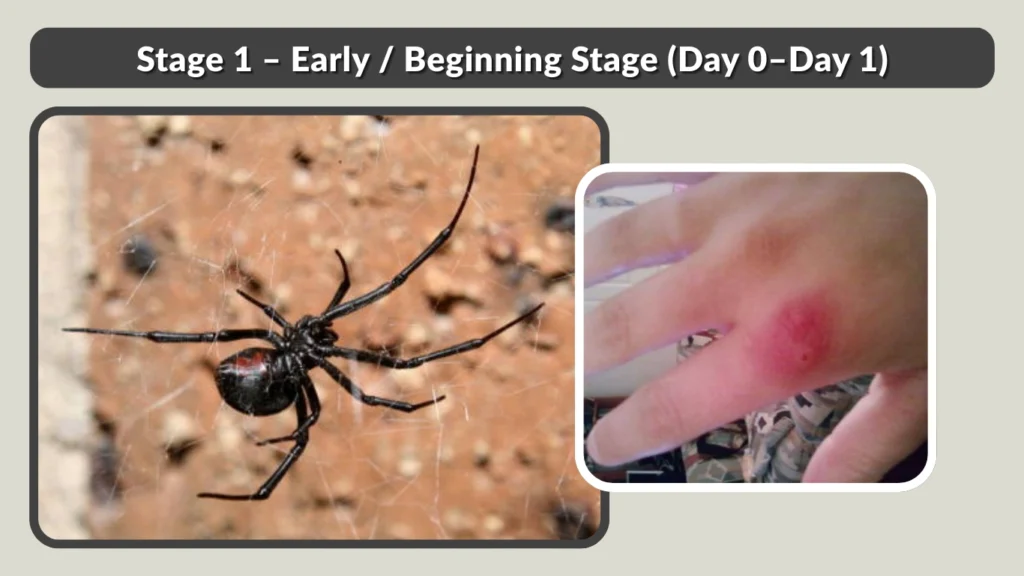
The early stage is the most frequently missed phase of a black widow spider bite.
Early Stage Bite Appearance
In the first several hours, the bite site may show:
- A small red mark
- One or two faint puncture points
- Minimal or no swelling
- No blistering or open wounds
In many cases, the bite site looks similar to a minor insect bite, which can lead people to dismiss it.
Early Stage Symptoms
Early symptoms are often mild and localized:
- A pinprick, stinging, or burning sensation
- Mild pain at the bite site
- Muscle tightness near the area
- Tingling or numbness
Symptoms may not begin immediately and can take 1 to 3 hours to develop. Some people feel little discomfort at first, especially if the bite occurred while sleeping or working outdoors.
Stage 2 – Progressive Stage (Day 1–Day 2)
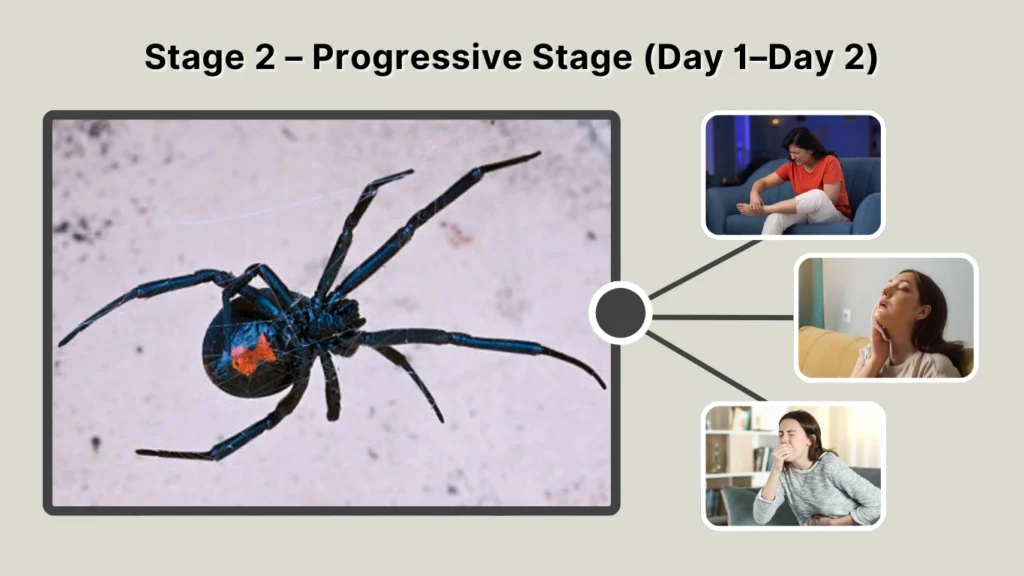
As the venom spreads, symptoms typically become more noticeable and widespread.
Increasing Symptoms
During this stage, pain and muscle involvement increase:
- Muscle cramps spreading away from the bite
- Abdominal, back, chest, or leg pain
- Sweating and chills
- Nausea or vomiting
- Restlessness or anxiety
Abdominal pain is especially common and may be mistaken for digestive issues or other medical conditions.
Bite Appearance During Stage 2
Despite increasing pain, the bite site usually remains relatively unchanged:
- Mild redness may persist
- Swelling is usually minimal
- No tissue breakdown or necrosis
This mismatch between severe pain and mild skin changes is a hallmark of black widow spider bites.
Stage 3 – Peak / Severe Stage (Day 2–Day 3)
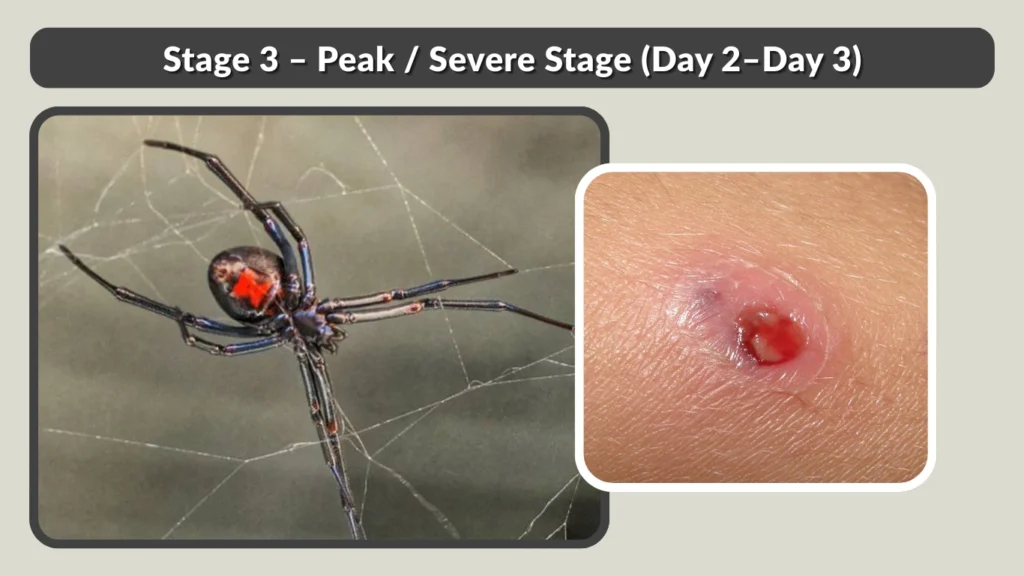
The peak stage is when symptoms are most intense and often prompts medical evaluation.
Severe Symptoms
At this stage, symptoms may include:
- Intense muscle spasms and cramping
- Severe abdominal rigidity
- Back and chest pain
- Elevated heart rate or blood pressure
- Difficulty sleeping due to pain
Pain during this stage can be severe and persistent, sometimes requiring prescription medications for relief.
When This Stage Becomes a Medical Emergency
Immediate medical care is recommended if:
- Pain becomes uncontrollable
- Muscle spasms spread throughout the body
- Breathing difficulty occurs
- The bite involves a child, elderly person, or pregnant individual
Stage 4 – Recovery Stage (Day 3 and Beyond)
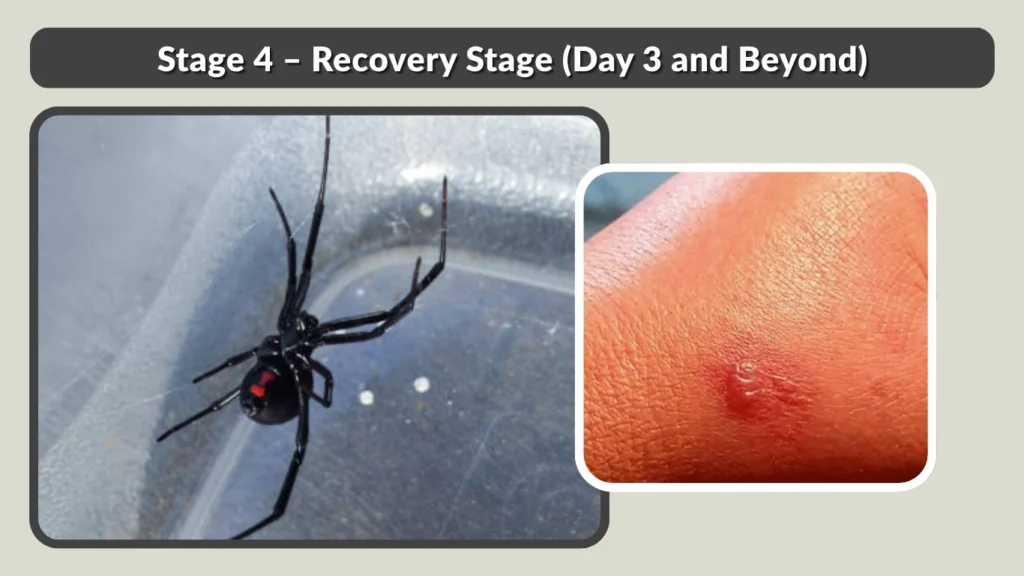
After the peak stage, most black widow spider bite symptoms begin to gradually improve. The recovery stage varies depending on how much venom was injected, how quickly treatment was started, and the individual’s overall health.
Symptom Resolution
During recovery, symptoms typically ease in a predictable pattern:
- Muscle spasms become less frequent and less intense
- Severe pain gradually decreases
- Abdominal tightness begins to relax
- Sleep and appetite slowly return to normal
While pain improves, many people experience lingering soreness, stiffness, or fatigue for several days. These residual symptoms are common and usually temporary.
How Long Recovery Takes
Recovery timelines differ by severity:
- Mild bites: Symptoms may resolve within 24–48 hours
- Moderate bites: Muscle pain and fatigue may last several days
- Severe bites: Full recovery can take one to two weeks
Medical treatment often shortens recovery time and improves comfort.
Black Widow Spider Bite Stages Timeline (Day-by-Day Summary)

This simplified timeline helps illustrate how symptoms typically progress:
- Day 0–1: Bite may look mild; pain and muscle tightness begin
- Day 1–2: Muscle cramps worsen; systemic symptoms develop
- Day 2–3: Peak pain and spasms; medical care often sought
- Day 3+: Gradual improvement and recovery
Not all bites follow this timeline exactly, but most fall within this general pattern.
Do All Black Widow Spider Bites Progress Through Every Stage?
No two bites are exactly alike. Some black widow spider bites remain mild and never progress beyond the early stage.
Factors that influence progression include:
- Whether venom was injected (some bites are “dry”)
- The amount of venom delivered
- The bite location
- Age and overall health of the person
- Speed of treatment
Early medical care can prevent symptoms from reaching the most severe stages.
Black Widow Spider Bite Stages vs Other Spider Bites
Black widow bites are often confused with other spider bites, but there are key differences.
Key Differences in Symptoms and Appearance
- Black widow bites cause severe muscle pain with minimal skin damage
- There is usually no open wound or necrosis
- Pain often spreads far beyond the bite site
This contrasts with some other spider bites that cause visible skin injury but less systemic pain.
Commonly Misidentified Bites
- Wolf spider bites
- Brown recluse bites
- Insect stings or allergic reactions
Because appearance alone can be misleading, symptom progression is often more important than the look of the bite.
When to Seek Medical Care Based on Bite Stage
Medical care is recommended if:
- Pain becomes severe or persistent
- Muscle cramps spread or worsen
- Abdominal or chest pain develops
- Symptoms occur in children, older adults, or pregnant individuals
Emergency care is needed for breathing difficulty, uncontrolled pain, or rapidly worsening symptoms at any stage.
Why Pictures of Black Widow Spider Bite Stages Can Be Misleading
Many people search for pictures of black widow spider bites to identify what they are experiencing. However, photos rarely capture the severity of a black widow bite.
- Skin changes are often mild throughout all stages
- Internal symptoms are the primary concern
- Photos do not show muscle spasms or neurological effects
For this reason, symptom progression over time is a more reliable indicator than bite appearance alone.
Conclusion
Black widow spider bites typically follow a progressive, stage-based pattern, beginning with mild or delayed symptoms and potentially advancing to severe muscle pain before gradually improving. Early stages are often overlooked due to minimal skin changes, while later stages can cause significant discomfort. Understanding the stages, monitoring symptoms, and seeking medical care when needed helps ensure a safer and faster recovery.
