

A black widow spider bite is often feared because of the spider’s powerful venom and widespread myths surrounding its danger. While black widow spiders are venomous, bites are relatively uncommon and rarely fatal when treated properly. Most bites occur accidentally when the spider is pressed against the skin. Understanding what happens during a bite, how it feels, and how symptoms progress can help people respond calmly and seek appropriate care.
Black Widow Spider Bite Overview
Black widow spider bites occur as a defensive reaction, not because the spider is aggressive. These spiders usually bite only when they feel trapped, such as inside gloves, shoes, clothing, or when disturbed in dark areas like garages and woodpiles.
In many cases, the spider may inject little or no venom. Even when venom is injected, symptoms vary widely depending on the amount of venom, the person’s age, and overall health.
What Happens When a Black Widow Spider Bites You

When a black widow spider bites, its venom enters the body through two small puncture wounds. The venom is neurotoxic, meaning it affects the nervous system rather than causing damage to the skin or tissue.
Within minutes to an hour, the venom interferes with nerve signals, leading to muscle tightening and pain. Unlike some spider bites, symptoms are often felt far from the bite site, especially in large muscle groups such as the abdomen, back, or legs.
What Does a Black Widow Spider Bite Feel Like
Many people describe the initial bite as a sharp pinprick or mild sting. In some cases, the bite may go unnoticed at first. As the venom spreads, pain often intensifies and becomes a deep, aching sensation.
Muscle cramps are one of the most distinctive symptoms. These cramps can feel severe and may be mistaken for stomach pain, back spasms, or chest discomfort. The intensity of pain varies from mild to severe depending on the individual.
What Does a Black Widow Spider Bite Look Like
A black widow spider bite usually does not look dramatic. The bite site may show mild redness, slight swelling, or two tiny puncture marks. In many cases, there is no visible wound at all.
Because the bite often appears minor, people may not associate their symptoms with a spider bite. Unlike brown recluse bites, black widow bites do not typically cause skin ulcers, blistering, or tissue death.
Black Widow Spider Bite Symptoms

- Sharp or burning pain at the bite site
- Muscle cramps or spasms
- Abdominal pain or chest tightness
- Sweating and chills
- Nausea or vomiting
- Headache and fatigue
- Elevated blood pressure in severe cases
Symptoms may begin within 30 minutes to a few hours and can last several days.
Black Widow Spider Bite Symptoms Timeline
Day 1 Black Widow Spider Bite
During the first day, pain usually starts near the bite site and gradually spreads to nearby muscles. Mild redness or swelling may be present. Muscle discomfort often increases over several hours.
Day 2 Black Widow Spider Bite
Symptoms typically peak on the second day. Muscle cramps may become intense, especially in the abdomen, back, or legs. Nausea, sweating, weakness, and restlessness are common during this stage.
Day 3 and Early Recovery
By the third day, symptoms often begin to ease. Muscle pain gradually decreases, although fatigue and soreness may linger for several more days.
Black Widow Spider Bite Stages
The progression of a black widow spider bite generally occurs in three stages. The early stage involves localized pain and discomfort. The systemic stage includes widespread muscle cramps and neurological symptoms. The recovery stage follows as the venom effects wear off and the body heals.
Not all bites progress through every stage, especially if little venom is injected.
Black Widow Spider Bite Pictures
Photos of black widow spider bites often show very little visible damage. Early-stage bite pictures may display mild redness or swelling, while later stages may appear almost normal. This lack of obvious skin changes is why visual identification alone is unreliable.
Brown Widow Spider Bite vs Black Widow Spider Bite
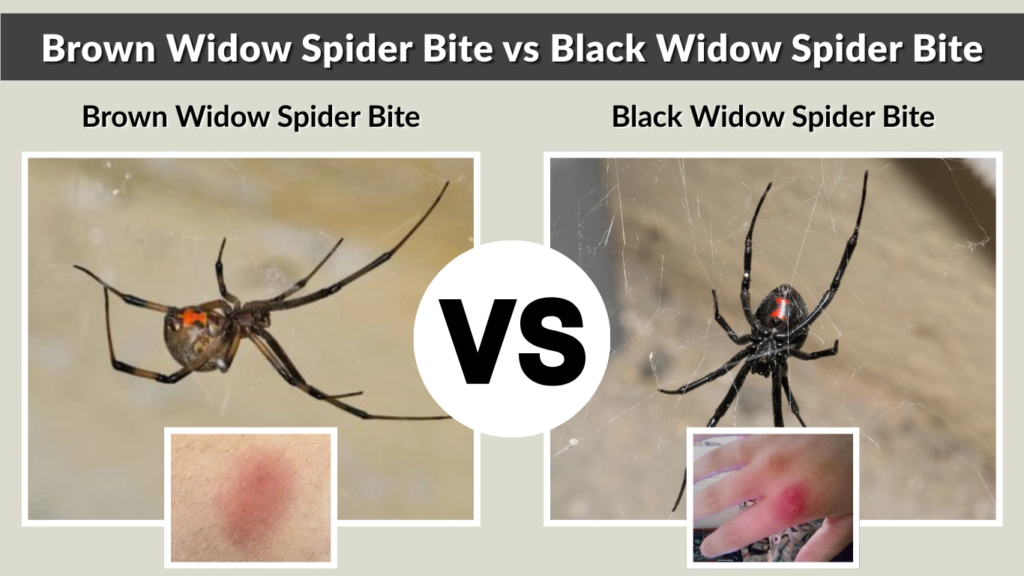
Brown widow spider bites are usually less severe than black widow bites. While both species are related, brown widow venom is generally weaker and causes milder symptoms. Most brown widow bites result in localized pain rather than widespread muscle cramps.
False Black Widow Spider Bite
False widow spiders are frequently mistaken for black widows due to their dark coloring. However, false widow spider bites usually cause localized pain and mild swelling rather than severe muscle cramps. Medical complications from false widow bites are uncommon.
Brown Recluse Spider Bite vs Black Widow Spider Bite
Although both spiders are medically significant, their bites affect the body in very different ways. Black widow venom is neurotoxic and causes muscle cramps and nerve-related symptoms, while brown recluse venom is necrotic and damages skin tissue.
Brown recluse spider bites often begin with mild pain but can progress into skin ulcers and tissue death. In contrast, black widow spider bites rarely cause skin damage but can lead to intense muscle pain throughout the body. Recovery time and treatment methods also differ between the two bites.
How Dangerous Is a Black Widow Spider Bite
Black widow spider venom is powerful, but the actual danger of a bite is often overstated. Most healthy adults experience temporary symptoms that resolve within a few days. Serious complications are uncommon when medical care is available.
Children, elderly individuals, and people with underlying medical conditions may be more sensitive to the venom. In these cases, symptoms may be more severe, which is why monitoring and medical evaluation are recommended.
Can You Die From a Black Widow Spider Bite
Deaths from black widow spider bites are extremely rare. Modern medical treatment has significantly reduced the risk of fatal outcomes. Even before antivenom was widely available, fatalities were uncommon.
Most reported deaths historically involved young children or elderly individuals with limited access to medical care. Today, with prompt treatment, the likelihood of death is very low.
Is a Black Widow Spider Bite Deadly
A black widow spider bite is venomous but not typically deadly. The term “deadly” is often used incorrectly. While the venom can cause severe pain and distress, most people recover fully without long-term effects.
Understanding the difference between venomous and deadly helps reduce unnecessary fear and panic.
Black Widow Spider Bite Treatment

Immediate First Aid
The first step in treating a black widow spider bite is to clean the bite area with soap and water. Applying a cold compress can help reduce pain and swelling. Rest is important to prevent symptoms from worsening.
Medical Treatment
Doctors may prescribe pain relievers or muscle relaxants for moderate to severe symptoms. In rare cases involving severe reactions, antivenom may be administered under medical supervision.
Black Widow Spider Bite Care at Home
For mild bites, home care may be sufficient. Staying hydrated, resting, and avoiding strenuous activity can help manage symptoms. Heating pads are sometimes used for muscle pain, but cold packs are generally recommended initially.
Home remedies such as cutting the bite, applying suction, or using herbal treatments should be avoided.
How to Treat a Black Widow Spider Bite
Treatment depends on symptom severity. Mild cases may only require rest and over-the-counter pain relief. Moderate cases often benefit from medical evaluation. Emergency care is necessary if symptoms include chest pain, breathing difficulty, or uncontrolled muscle spasms.
Black Widow Spider Bite Infection

Infections from black widow spider bites are uncommon because the bite does not typically break down skin tissue. However, scratching the bite area can introduce bacteria. Signs of infection include increased redness, warmth, pus, or fever.
Does a Black Widow Spider Bite Hurt
Pain levels vary from person to person. Some people experience mild discomfort, while others feel intense muscle cramps. Pain often spreads beyond the bite site, which makes the bite feel more severe than it appears.
How Long Do Black Widow Spider Bite Symptoms Last
Most symptoms last between three and five days. Fatigue or mild soreness may persist for up to a week. Severe cases may take longer to fully resolve, but long-term complications are rare.
Black Widow Spider Bite on Dogs
Dogs are more sensitive to black widow venom than humans. Symptoms may include muscle tremors, weakness, drooling, and pain. A suspected bite in dogs requires immediate veterinary care, as untreated bites can be life-threatening for pets.
Black Widow Spider Bite on Cats
Cats may show symptoms such as lethargy, muscle stiffness, vomiting, or pain after a bite. Because cats are small and more vulnerable, immediate veterinary treatment is critical.
Can You Survive a Black Widow Spider Bite
The survival rate for black widow spider bites is extremely high. With proper medical care, most people and pets recover fully. Early treatment greatly reduces discomfort and speeds recovery.
When to Seek Emergency Medical Help
- Severe or worsening muscle pain
- Chest pain or difficulty breathing
- High blood pressure
- Uncontrolled vomiting
- Bites involving young children, elderly individuals, or pets
FAQs
What are the symptoms of a black widow spider bite
Symptoms include muscle cramps, pain, sweating, nausea, and fatigue. Symptoms often begin within a few hours of the bite.
How bad is a black widow spider bite
Severity varies. Many bites cause moderate pain, while some lead to intense muscle cramps that require medical care.
How poisonous is a black widow spider bite
The venom is potent but injected in small amounts. Serious complications are rare with proper treatment.
Can a male black widow spider bite
Yes, but male black widow spiders have weaker venom and rarely cause significant symptoms.
Will a black widow spider bite kill a dog
Without treatment, bites can be dangerous for dogs. Prompt veterinary care greatly improves survival.
