
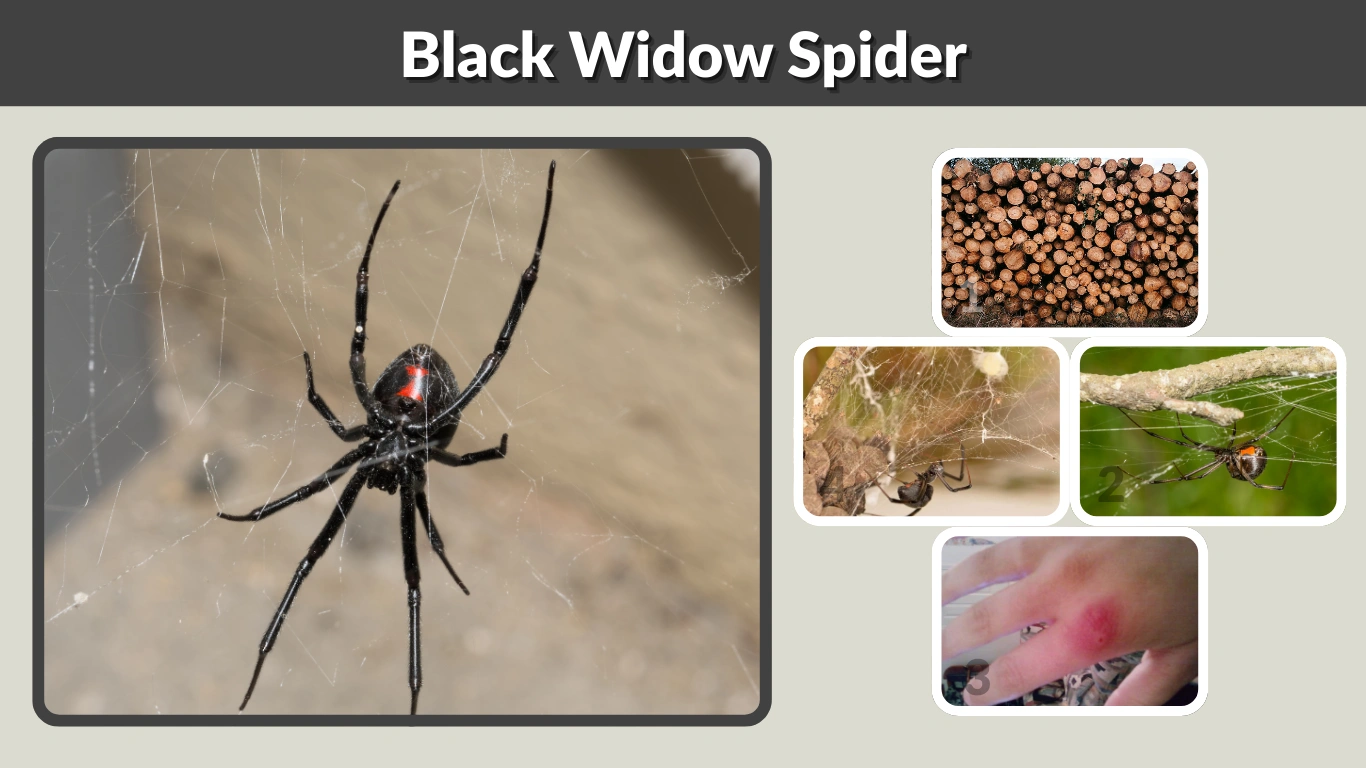
The black widow spider is one of the most well-known spiders in the world, largely because of its venomous bite and distinctive appearance. Found in many parts of the United States and other regions, this spider often lives close to humans but avoids contact whenever possible. Although its reputation is frightening, black widow spider bites are rare and rarely fatal. Understanding how to identify this spider, where it lives, and how it behaves helps reduce unnecessary fear and improves safety.
Identification of a Black Widow Spider
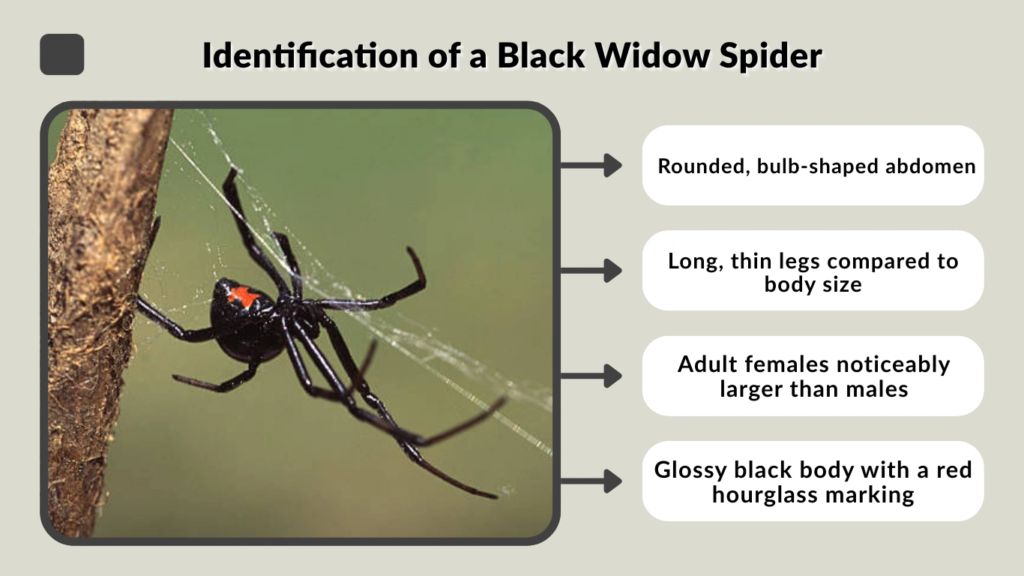
- Glossy black body with a red hourglass marking on the underside
- Rounded, bulb-shaped abdomen
- Long, thin legs compared to body size
- Adult females noticeably larger than males
- Some species display white or pale spots instead of bright red
- Juveniles appear brown, gray, or patterned
- Commonly mistaken for brown widow or false widow spiders
What Does a Black Widow Spider Look Like
A black widow spider has a shiny, jet-black appearance that makes it easy to recognize once you know what to look for. The most famous feature is the red hourglass marking on the underside of the abdomen, although this marking can vary in shape or color depending on the species.
Female black widow spiders are the ones most people recognize. They have a large, rounded abdomen and long, slender legs. Males and juveniles look quite different and are often lighter in color, which leads to confusion with non-venomous spiders.
In some cases, black widow spiders may have white spots, broken red markings, or even brownish tones, especially in younger spiders. Because of these variations, many harmless spiders are misidentified as black widows.
Size of a Black Widow Spider
Adult female black widow spiders usually measure about 1.5 inches in leg span, while the body itself is typically around half an inch long. Males are much smaller, often less than half the size of females.
When compared to common house spiders, black widows appear larger because of their rounded abdomen and longer legs. Juveniles are much smaller and can be easily overlooked or confused with other spider species.
Male vs Female Black Widow Spider

Male and female black widow spiders differ significantly in both appearance and behavior. Females are larger, darker, and possess much stronger venom. Males are smaller, lighter in color, and rarely bite humans.
Female black widows are responsible for almost all medically significant bites. Males typically focus on finding mates and pose little to no threat to people.
Species and Types of Black Widow Spiders
Several black widow species exist around the world. In North America, the most common types include the western black widow, southern black widow, and northern black widow. Each species shares similar behavior and venom potency, but their markings and geographic ranges vary slightly.
The Mediterranean black widow is found in parts of Europe and surrounding regions. Despite minor visual differences, all black widow species should be treated with caution.
Habitat of a Black Widow Spider
Common Living Areas
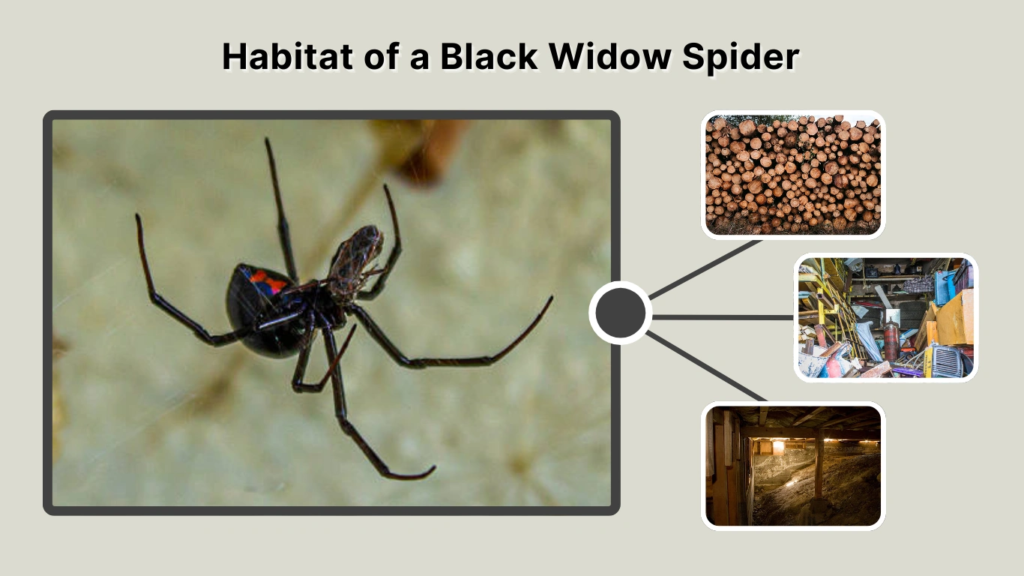
Black widow spiders prefer dark, quiet, and undisturbed spaces. They are often found in:
- Woodpiles and stacked lumber
- Sheds and garages
- Basements and crawl spaces
- Outdoor furniture and storage boxes
- Under rocks or debris
Where Do Black Widow Spiders Live
These spiders can live both indoors and outdoors, but they thrive best in areas where human activity is low. Indoors, they usually hide in corners, behind stored items, or in rarely cleaned spaces.
Black Widow Spider Range and Location
Black widow spiders are widely distributed across North America. They are especially common in warmer climates but can also survive in cooler regions. In the United States, they are frequently reported in states such as California, Florida, Ohio, Michigan, and throughout the southern and western regions.
Their ability to adapt to different environments allows them to live close to human structures without being noticed.
Black Widow Spider Web and Behavior
Web Characteristics
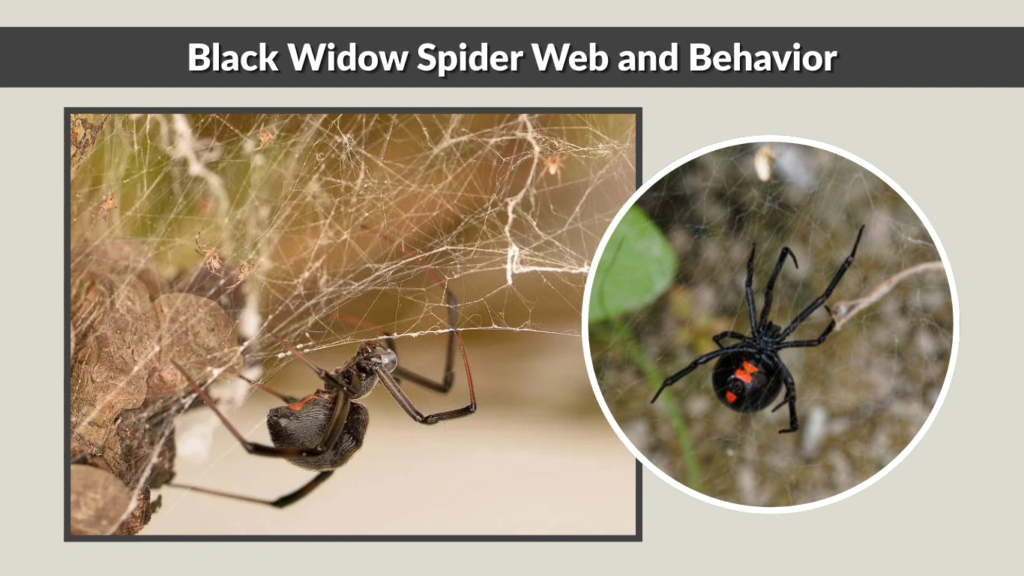
Black widow spider webs are irregular, messy, and extremely strong. Unlike symmetrical orb webs, these webs look tangled and chaotic. The silk is powerful enough to trap insects much larger than the spider itself.
Behavior Patterns
Black widows are nocturnal and spend most of their time hanging upside down in their webs. They rarely leave the web unless disturbed. When threatened, they prefer to retreat rather than attack, which is why bites usually occur only when the spider is accidentally pressed against the skin.
What Does a Black Widow Spider Eat
Black widow spiders primarily feed on insects and other small arthropods. Their diet includes flies, beetles, ants, grasshoppers, and occasionally other spiders. Prey becomes trapped in the spider’s strong, tangled web, where the black widow quickly injects venom to immobilize it.
Once the prey is subdued, the spider uses digestive enzymes to liquefy the insect’s internal tissues. The black widow then consumes the liquefied contents, leaving behind an empty exoskeleton. These spiders do not need to eat frequently and can survive for long periods without food.
Black Widow Spider Venom
Black widow venom is neurotoxic, meaning it affects the nervous system rather than destroying tissue. The venom contains a compound called alpha-latrotoxin, which disrupts nerve signaling and causes muscle contractions.
Although the venom is considered powerful, black widows inject only a small amount when biting humans. In many cases, the spider delivers a “dry bite” with little or no venom. The venom is used mainly to subdue prey, not as an aggressive defense.
Black Widow Spider Bite Overview

What Happens When You Are Bitten
A black widow spider bite may initially feel like a pinprick or mild sting. Some people do not notice the bite at first. Within an hour, pain often spreads from the bite site to nearby muscles.
The venom affects the nervous system, leading to muscle tightening and cramping. Symptoms usually peak within 24 hours and gradually improve over the next few days.
Black Widow Spider Bite Symptoms
- Sharp or burning pain at the bite site
- Muscle cramps or spasms, especially in the abdomen and back
- Sweating and chills
- Nausea or vomiting
- Headache and fatigue
- Elevated blood pressure in severe cases
Symptoms vary depending on the amount of venom injected and the person’s sensitivity.
What Does a Black Widow Spider Bite Look Like
In many cases, a black widow spider bite leaves very little visible evidence. The bite area may show mild redness, swelling, or two tiny puncture marks. Unlike bites from some other spiders, black widow bites do not typically cause open wounds or skin necrosis.
Because visible signs are minimal, symptoms are often mistaken for muscle strain or illness rather than a spider bite.
Black Widow Spider Bite Stages

Day 1 After the Bite
Pain begins near the bite site and may spread to nearby muscles. Mild swelling and redness may appear.
Day 2–3 After the Bite
Muscle cramps, stiffness, and fatigue are most noticeable during this stage. Some people experience nausea or sweating.
Recovery Phase
Most symptoms gradually improve within three to five days. Full recovery may take up to a week, depending on severity.
Black Widow Spider Bite Treatment
Immediate First Aid
- Clean the bite area with soap and water
- Apply a cold compress to reduce pain and swelling
- Keep the affected area elevated if possible
Medical Treatment
Pain relievers, muscle relaxants, or antivenom may be used in severe cases. Medical attention is recommended for children, elderly individuals, or anyone experiencing intense symptoms.
Can a Black Widow Spider Kill You
Deaths from black widow spider bites are extremely rare. Modern medical treatment has made fatalities uncommon, even among vulnerable individuals. Most healthy adults recover fully with proper care.
Children, elderly people, and individuals with preexisting health conditions may experience stronger reactions, which is why medical evaluation is advised when symptoms are severe.
Black Widow Spider Bite on Dogs
Dogs can be bitten if they disturb a black widow spider. Symptoms may include muscle tremors, weakness, drooling, and pain. A suspected bite requires immediate veterinary care, as pets can react more severely than humans.
Spiders That Look Like a Black Widow
- Brown widow spider
- False widow spider
- Redback spider
- Juvenile black widow spider
- Harmless house spiders with similar coloring
Correct identification helps prevent unnecessary panic.
Should You Kill a Black Widow Spider
Black widow spiders play an important role in controlling insect populations. If one is found outdoors, it is usually best to leave it alone. Indoors, safe removal or professional pest control is a better option than killing it directly, especially to avoid accidental bites.
Black Widow Spider Pest Control and Prevention
Reducing clutter, sealing cracks, and keeping storage areas clean can discourage black widow spiders. Wearing gloves when handling wood or debris reduces bite risk. Professional pest control may be helpful if spiders are frequently found indoors.
Interesting Black Widow Spider Facts
- Females rarely eat males despite popular belief
- Their venom is stronger than a rattlesnake’s by weight
- They have poor eyesight and rely on vibration
- They can survive months without food
FAQs
Are black widow spiders aggressive
Black widow spiders are not aggressive and bite only when threatened or accidentally pressed against skin.
How long do black widow spider bites last
Symptoms usually last three to five days, with full recovery within a week for most people.
Can you identify a black widow by its web
Their webs are irregular and tangled, but web shape alone is not enough for identification.
Do all black widow spiders have a red hourglass
Most do, but markings can vary, especially in juveniles and some species.
Are black widow spiders common indoors
They are more common outdoors but may enter homes seeking quiet, undisturbed spaces.
