
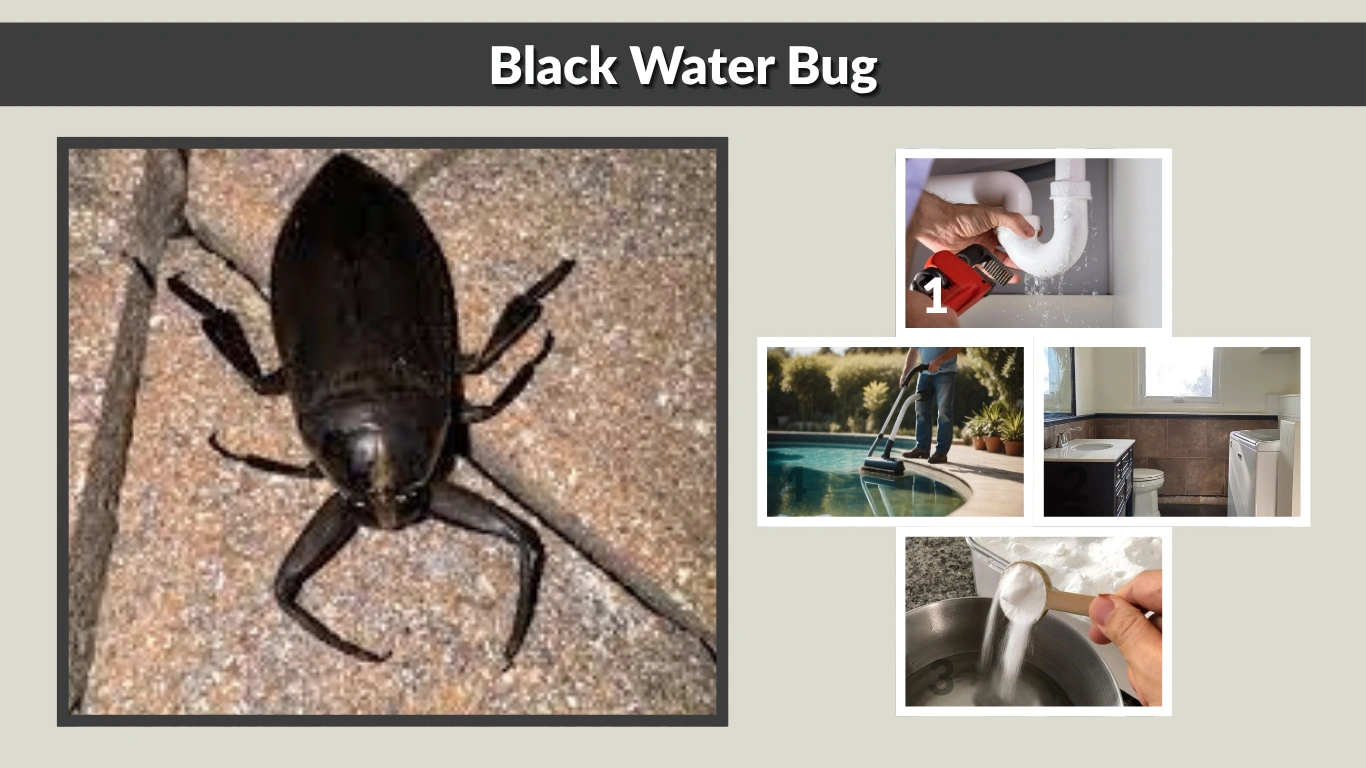
Black water bugs are dark, shiny insects that often appear near water sources such as bathrooms, basements, and swimming pools. Their sudden appearance can alarm homeowners, as they closely resemble cockroaches. However, not all black water bugs are pests — some are aquatic species that help balance natural ecosystems. Knowing how to identify, locate, and remove them helps keep your living spaces clean and pest-free.
Identification

What Black Water Bugs Look Like
Black water bugs come in various shapes and sizes depending on the species and environment. Most share these features:
- Color: Glossy black, brown-black, or dark gray.
- Size: Ranges from tiny specks (⅛ inch) to large adults over 2 inches long.
- Body Shape: Flat, oval, and broad with visible legs and antennae.
- Wings: Many species have wings and can fly short distances toward lights.
- Legs: Hind legs are often shaped like paddles, allowing them to swim efficiently.
Because of their appearance, people often confuse them with cockroaches. However, water bugs typically have a smoother texture and prefer wet habitats, while roaches favor dry indoor areas.
Common Species Mistaken for Black Water Bugs
- Water Boatman: Small, dark aquatic insects that swim smoothly using oar-like legs; harmless to humans.
- Backswimmer: Light-colored underside, swims upside down, and can deliver a painful bite.
- Giant Water Bug: Large, flat insect that flies toward lights at night and may bite when handled.
- Oriental Cockroach: Often called a “black water bug” due to its dark color and love for damp spaces like basements and bathrooms.
Habitat and Behavior
Where Black Water Bugs Live
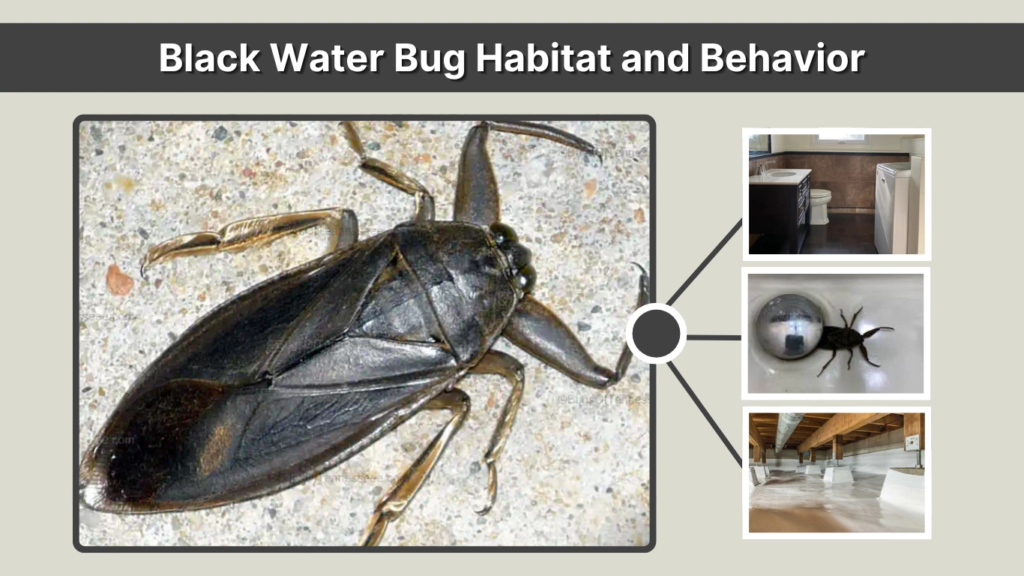
True water bugs thrive in moist environments, often in or near bodies of water such as ponds, pools, or drains. Indoors, they prefer:
- Bathrooms and laundry rooms
- Kitchen sinks and under appliances
- Basements and crawl spaces
- Near leaking pipes or drains
They are nocturnal, meaning they are most active at night, and often wander into homes searching for moisture, warmth, or food debris.
What Attracts Them
Several conditions make your home or pool appealing to black water bugs:
- Moisture: Standing water from leaks, condensation, or pools.
- Food Sources: Algae, decaying leaves, and organic debris.
- Shelter: Dark, damp corners where they can hide during the day.
- Lighting: Many black water bugs, especially flying species, are attracted to bright lights at night.
Black Water Bug vs. Cockroach

Because of their similar color and size, black water bugs are often mistaken for cockroaches. However, they differ significantly in behavior and habitat:
| Feature | Black Water Bug | Cockroach |
| Habitat | Near water sources and damp areas | Indoors, dark dry corners |
| Body Shape | Broad, oval, shiny | Narrower, reddish-brown |
| Activity | Swims and flies toward lights | Crawls and hides from light |
| Diet | Feeds on algae and insects | Feeds on food scraps |
| Danger | May bite when handled | Doesn’t bite but spreads bacteria |
In short, black water bugs are solitary and outdoor-oriented, while cockroaches thrive indoors in colonies.
Are Black Water Bugs Dangerous?
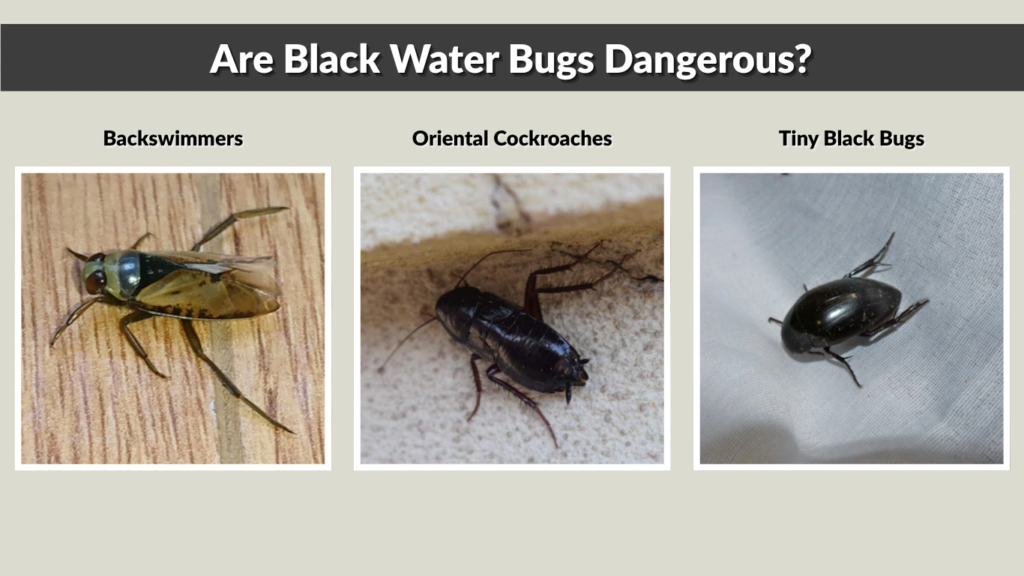
In most cases, black water bugs are not dangerous to humans. Still, certain types can cause discomfort if mishandled.
- Backswimmers and Giant Water Bugs: These species can bite if provoked. The pain is sharp but temporary, similar to a bee sting.
- Oriental Cockroaches: Though not true water bugs, these can carry bacteria and contaminate food if they enter kitchens.
- Tiny Black Bugs in Water Bowls or Pools: Usually harmless insects or larvae attracted to moisture, but they indicate that the water is unclean.
Their presence usually points to poor sanitation or excess moisture, rather than direct danger. Addressing those underlying issues prevents larger infestations.
Black Water Bugs in the House
Common Indoor Locations
If you’ve seen shiny black insects crawling near drains or baseboards, they’re likely drawn by humidity. Common hiding spots include:
- Under sinks or behind toilets
- Around water heaters and washing machines
- Inside floor drains or wall crevices
- Damp basements and crawl spaces
Why They Enter Homes
When the weather outside becomes dry or cold, black water bugs move indoors seeking water and warmth. They enter through small openings like cracks in foundations, drain pipes, or ventilation gaps. Once inside, they settle near plumbing or behind appliances where condensation forms.
Keeping indoor areas dry and sealing gaps around pipes helps deter them from nesting inside.
Black Water Bugs in Pools
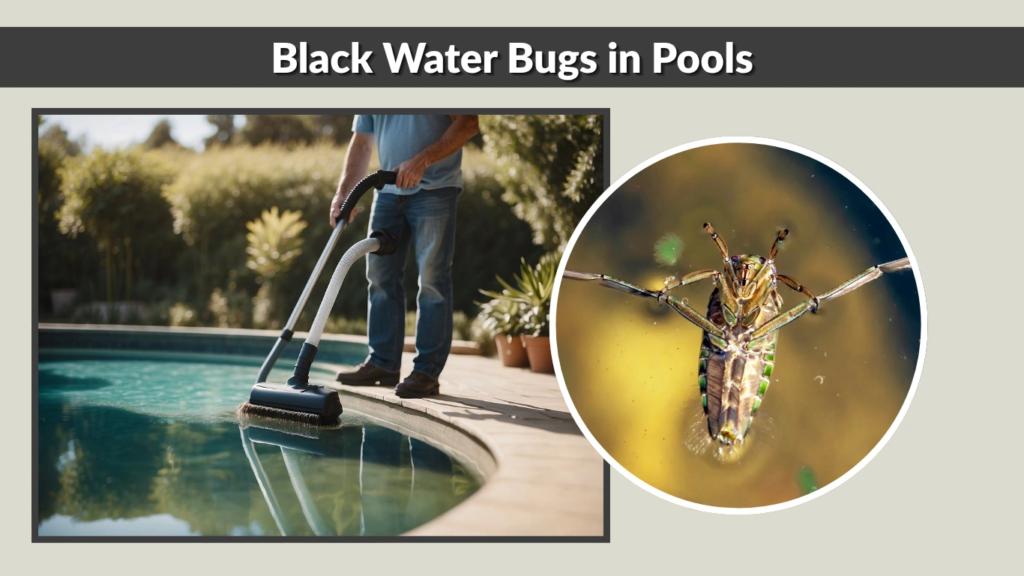
Pools are one of the most common places where black water bugs are found, especially during warm months. The two main culprits are:
- Water Boatmen: Feed on algae and are completely harmless.
- Backswimmers: Feed on smaller insects and can bite if touched.
Why They Appear
- Algae buildup on pool walls provides food.
- Poor chlorine or pH balance creates ideal living conditions.
- Night lighting attracts flying insects.
- Stagnant water and leaves provide breeding areas.
Their presence isn’t dangerous but signals that your pool needs cleaning or chemical adjustment.
How to Get Rid of Black Water Bugs
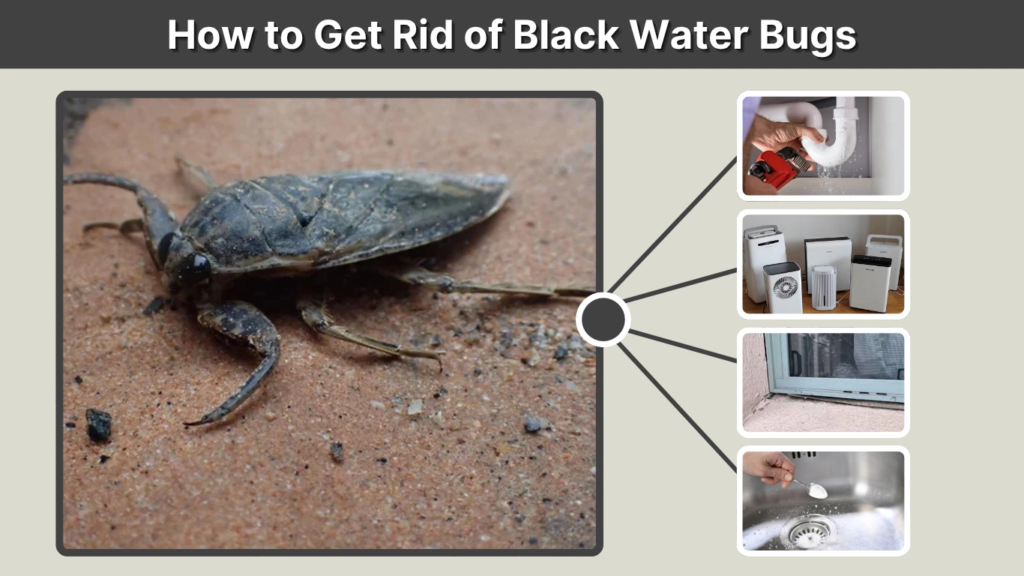
Indoor Control Methods
If black water bugs have made their way into your house, the goal is to eliminate moisture and entry points. Here’s how:
- Fix Leaks: Check under sinks, around toilets, and behind appliances for water leaks or condensation. Repairing these stops bugs from returning.
- Dry Damp Areas: Use dehumidifiers in basements or bathrooms. Bugs thrive in humidity levels above 60%.
- Seal Cracks and Gaps: Use caulk or weather stripping around plumbing and vents to prevent entry.
- Clean Drains: Pour a mixture of vinegar and baking soda into drains weekly to remove buildup that attracts bugs.
- Remove Food Sources: Clean up crumbs, pet food, and decaying materials that might lure roach-like species.
- Apply Natural Barriers: Sprinkle diatomaceous earth or boric acid near walls and drains. These natural powders dehydrate and kill insects without harsh chemicals.
Outdoor and Pool Treatment
Outdoor infestations require a different approach. Pools, patios, and garden ponds can attract aquatic insects like water boatmen or backswimmers.
For Pools:
- Skim Regularly: Use a pool net to remove visible bugs daily.
- Brush and Vacuum: Clean walls, steps, and floors to remove algae, their main food source.
- Shock the Pool: Add chlorine shock (typically 1 lb per 10,000 gallons) to destroy algae and organic matter.
- Check Chemical Levels: Maintain chlorine between 1–3 ppm and pH between 7.2–7.6.
- Use Algaecide Weekly: Prevents regrowth of algae and stops water bugs from returning.
- Reduce Night Lighting: Turn off or replace white lights with amber LEDs, which attract fewer insects.
For Outdoor Areas:
- Remove standing water from pots, gutters, or birdbaths.
- Trim vegetation near pools or foundations.
- Keep trash tightly sealed and away from walls.
These actions disrupt the food and moisture sources that attract water bugs to outdoor spaces.
Preventing Future Infestations
Prevention is the most reliable way to keep black water bugs away long-term. Regular maintenance reduces their habitat and stops new populations from forming.
- Maintain Cleanliness: Regularly mop floors, wipe kitchen counters, and keep bathrooms dry.
- Store Food Properly: Keep dry goods and pet food in sealed containers.
- Empty Trash Frequently: Avoid buildup that can draw roach-like bugs.
- Inspect Plumbing: Fix leaks promptly and keep drains closed when not in use.
- Monitor Outdoor Lighting: Reduce nighttime light sources that attract flying insects.
- Check Foundation and Doors: Use weather stripping and door sweeps to seal entry points.
Consistency is key—skipping even one cleaning cycle can invite water bugs back into your home or pool.
Color Variations and Types
Not all black water bugs are identical. They vary by color, size, and habitat.
- Black and Red Water Bugs: Usually backswimmers with reddish patterns on their bodies.
- Black and Orange Bugs: Often aquatic beetles or scavenger water beetles found in ponds.
- Tiny Black Bugs in Water Bowls: Usually harmless gnats or insect larvae attracted to stagnant water.
- Black and Brown Bugs: May be Oriental cockroaches, not true water bugs, living in damp basements.
- Black Water Bugs with Pincers: Likely giant water bugs; their “pincers” are actually raptorial forelegs used for grasping prey.
Correct identification helps determine whether professional pest control or simple maintenance is needed.
When to Call a Professional
If black water bugs keep reappearing despite cleaning and sealing, a pest control expert may be required. Persistent indoor infestations often indicate a plumbing leak, hidden colony, or nearby breeding site. Professionals can locate nests, apply targeted insecticides, and prevent future outbreaks safely.
FAQs
Are black water bugs dangerous?
Most are harmless, though some—like backswimmers and giant water bugs—can bite if touched. Their bite is painful but not venomous. Cockroach-like black bugs can carry bacteria, so prompt removal is advised.
Do black water bugs bite humans?
Yes, but rarely. Only predatory species such as backswimmers or giant water bugs bite defensively. The sting feels sharp but fades within hours. House-dwelling black water bugs don’t bite.
Why do I keep seeing black water bugs in my house?
They’re drawn to moisture, leaks, and food debris. Bathrooms, kitchens, and basements create ideal conditions. Fixing leaks and drying surfaces usually eliminates the problem.
How do I get rid of black water bugs naturally?
Use vinegar and baking soda in drains, sprinkle diatomaceous earth around entry points, and maintain dryness. Regular cleaning removes their food and breeding sites without chemicals.
Are black water bugs the same as cockroaches?
No. True water bugs live in or near water and can swim, while cockroaches prefer dry indoor spaces and spread bacteria. Despite their similar color, they are different species with distinct habits.
