
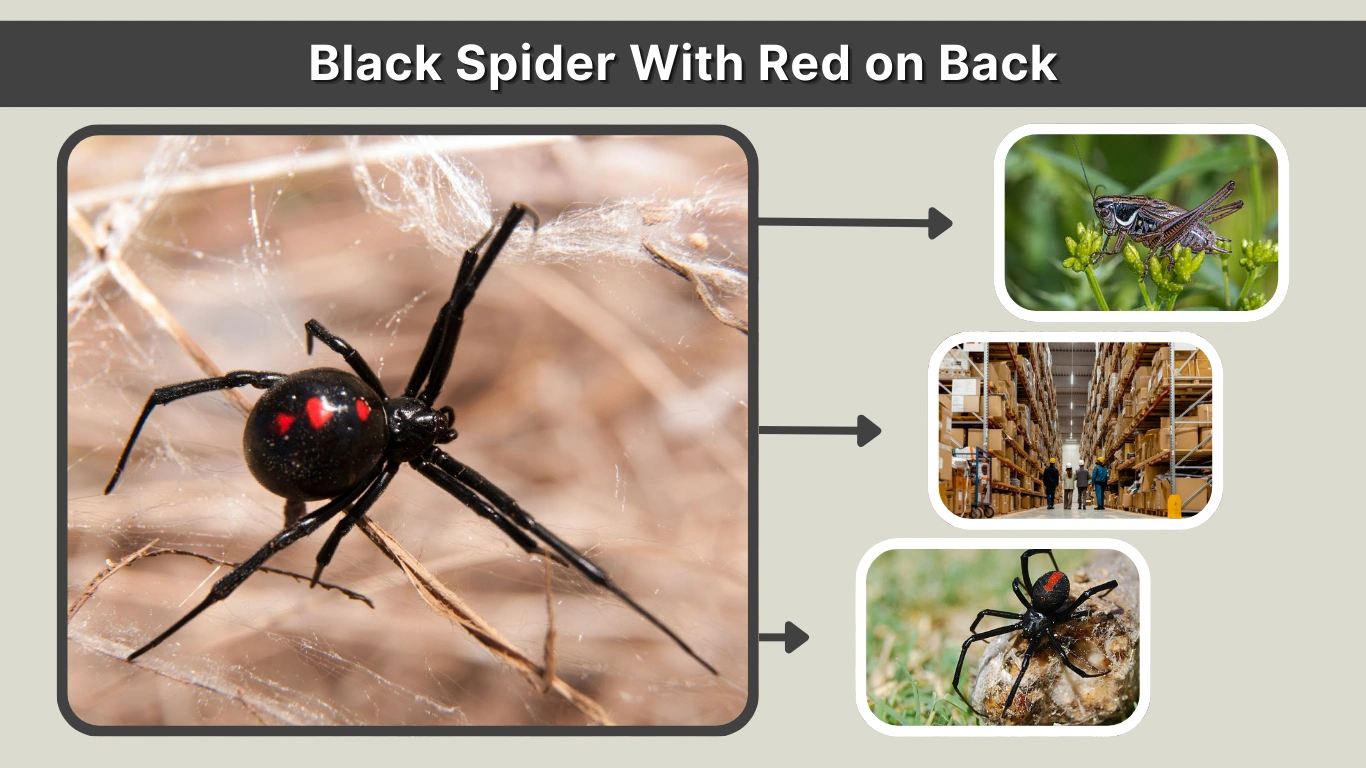
A black spider with red on its back is one of the most searched and feared spider appearances because it is often associated with venomous species. These spiders are commonly found in garages, gardens, sheds, and quiet indoor areas, where their dark bodies and red markings stand out clearly. While some species with red markings can be medically significant, many others are harmless lookalikes. Correct identification is essential to understanding real risk, avoiding panic, and responding appropriately when one is found.
Why Some Black Spiders Have Red Markings
Red markings on black spiders usually serve as warning coloration, also known as aposematism. This visual contrast signals potential danger to predators such as birds and reptiles. Bright red against a dark background is easy to recognize, even in low light, making it an effective defensive strategy.
Not all red markings mean the spider is dangerous. Some harmless species mimic the appearance of more venomous spiders as a form of protection. The shape, placement, and brightness of the red marking are often more important than its presence alone.
Red markings can appear as dots, stripes, or hourglass shapes. Misidentification is common because people often assume any black spider with red coloration is highly venomous, which is not always true.
Common Black Spiders With Red on the Back
Black Widow Spider Identification
The most well-known black spider with red markings is the black widow. Adult females are glossy black with a bright red hourglass shape, usually on the underside of the abdomen but sometimes visible from the side or back. Their bodies are rounded, and their webs are messy and irregular.
Red-Spotted and Red-Striped Lookalikes
Several non-dangerous spiders also have red or orange spots on their backs. These spiders may have flatter bodies, duller coloration, or different leg proportions. Unlike black widows, many of these species are active hunters and do not rely on tangled webs.
Juvenile vs Adult Color Differences
Young spiders often look very different from adults. Juvenile black widows, for example, may show red, white, or orange striping on the back before turning solid black as they mature. This color change frequently leads to confusion and misidentification.
Black Spider With Red on Back Size and Body Structure
Size varies significantly depending on species. Some black spiders with red markings have bodies smaller than a fingernail, while others appear much larger due to long legs. Body shape is a key identification feature.
Venomous species often have a bulbous, rounded abdomen and relatively thin legs. Harmless species may appear flatter, more elongated, or more muscular. Females are usually larger than males and are more likely to display bold coloration.
Leg posture can also be a clue. Some spiders hold their legs tucked inward when resting, while others spread them outward. These differences help narrow identification beyond color alone.
Black Spider With Red on Back Coloration and Patterns
The red marking may appear in different forms depending on the species:
- A bright red hourglass shape
- A single red or orange dot
- A broken stripe or streak
- Multiple small red spots
The body may be glossy black, matte black, or dark brown. Shine is often associated with widow-type spiders, while dull finishes are more common in harmless species. Pattern placement is critical—red markings on the underside often indicate different species than markings on the top of the abdomen.
Color can also fade with age, dust, or environmental exposure, making identification harder in older individuals.
How to Identify a Black Spider With Red on Back
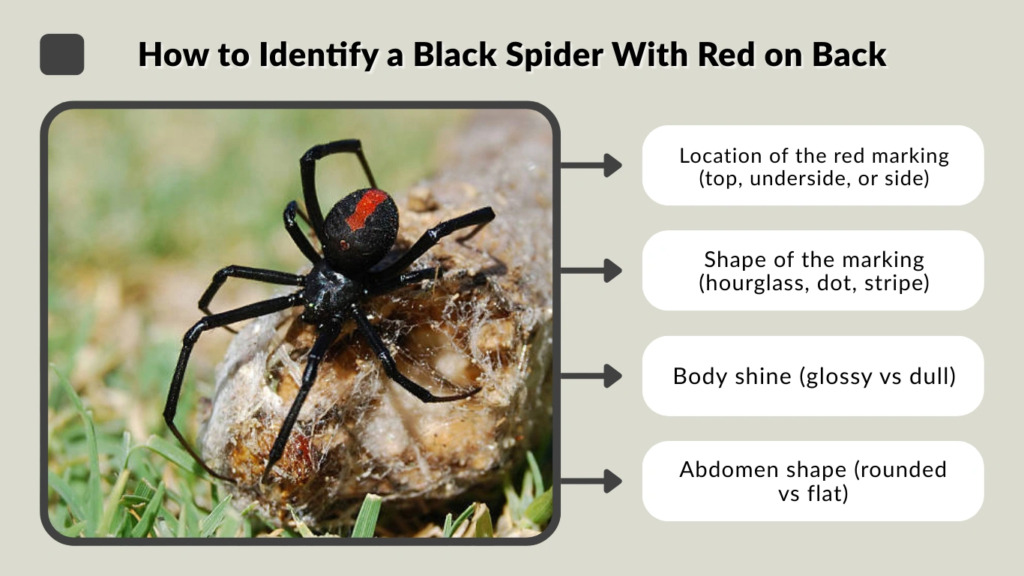
Key traits to look for include:
- Location of the red marking (top, underside, or side)
- Shape of the marking (hourglass, dot, stripe)
- Body shine (glossy vs dull)
- Abdomen shape (rounded vs flat)
- Web type or roaming behavior
Observation from a safe distance is always recommended.
Habitat of Black Spiders With Red Markings
Typical Living Environments
These spiders prefer dark, undisturbed locations such as woodpiles, storage boxes, garden sheds, garages, crawl spaces, and outdoor furniture. Some species thrive outdoors, while others adapt well to human structures.
Geographic Distribution
Black spiders with red markings are found worldwide, with different species occupying specific regions. Climate, humidity, and prey availability strongly influence where they are most commonly seen.
Web Type and Silk Use
Some black spiders with red markings build irregular, tangled webs close to the ground or in corners. Others do not build capture webs at all and instead roam actively at night. Web structure is often one of the best clues for identification and helps separate dangerous species from harmless ones.
Behavior of Black Spiders With Red on the Back
Activity Patterns
Most black spiders with red markings are nocturnal, meaning they are most active at night. During the day, they hide in dark, sheltered places to avoid predators and disturbances. Some species remain in or near their webs, while others actively roam in search of prey after sunset.
Defensive Behavior
These spiders are generally shy and avoid human contact. Bites usually occur only when the spider is accidentally pressed against skin, such as when reaching into storage areas or putting on gloves or shoes. They do not chase or attack humans and rely on hiding rather than aggression.
What Black Spiders With Red Markings Eat
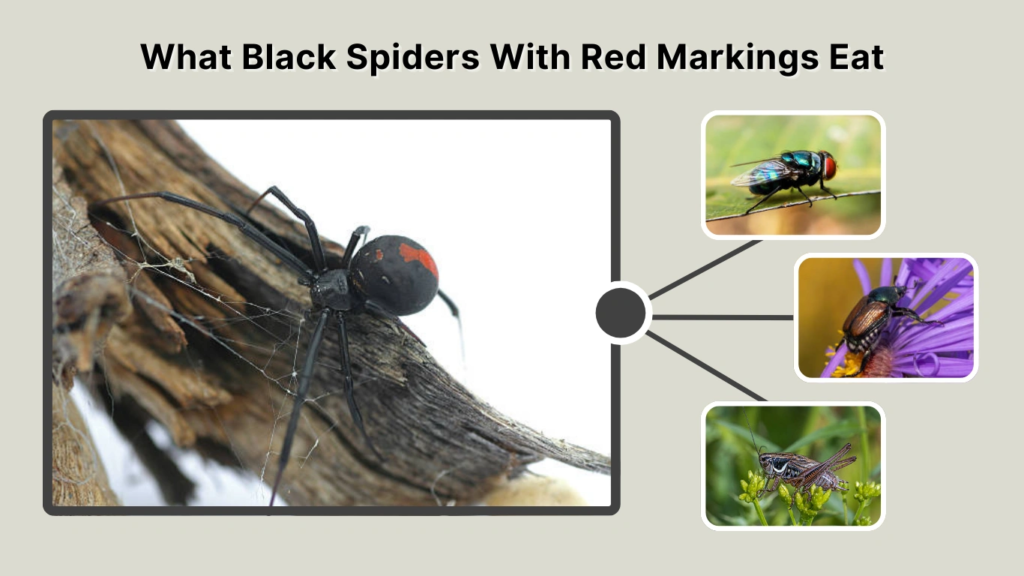
Black spiders with red markings primarily feed on insects and other small arthropods, including:
- Flies
- Beetles
- Ants
- Crickets
- Other spiders
By preying on these insects, they play a role in controlling pest populations, especially in garages, sheds, and gardens.
Black Spider With Red on Back and Humans
Human encounters usually happen when spiders occupy quiet, undisturbed areas around homes. While the appearance of a black spider with red markings can be alarming, most species are not dangerous.
Only a small number of species are considered medically significant. Even among those, bites are rare and often occur when the spider is unintentionally disturbed. Most spiders prefer to retreat rather than bite, and many bites result in mild or no symptoms.
Understanding the difference between dangerous species and harmless lookalikes helps reduce unnecessary fear and improper responses.
Natural Predators
Despite their warning coloration, black spiders with red markings have natural predators, including:
- Birds
- Larger spiders
- Parasitic insects
- Small reptiles
The red markings help deter predators, but they do not guarantee protection. Many spiders rely on concealment and inactivity to survive.
What to Do If You Find a Black Spider With Red on the Back
If you encounter one of these spiders, avoid touching it with bare hands. Observe it from a distance to assess its markings and behavior. If removal is necessary, use a container and stiff paper to relocate it safely outdoors.
Reduce future encounters by wearing gloves when handling stored items, shaking out shoes and clothing, and minimizing clutter in garages or sheds. Pest control professionals should be contacted only if there is repeated activity in living spaces.
FAQs
Is a black spider with red on the back dangerous?
Not always. While some species with red markings are medically significant, many are harmless lookalikes. Danger depends on the species, the shape and location of the red marking, and the spider’s behavior.
How can you tell if it is a black widow?
Black widows typically have a glossy black body with a red hourglass marking, usually on the underside of the abdomen. They also build irregular, tangled webs in dark, undisturbed areas.
Are all black spiders with red markings venomous?
All spiders have venom, but most are not harmful to humans. Only a few species with red markings have venom that may cause noticeable symptoms, and bites are rare.
Where do black spiders with red backs usually live?
They are commonly found in garages, sheds, woodpiles, crawl spaces, outdoor furniture, and other quiet areas. Some species prefer outdoor habitats, while others adapt well to buildings.
What should you do if bitten by a black spider with red on its back?
Clean the bite area with soap and water and monitor symptoms. Seek medical care if pain becomes severe, spreads, or is accompanied by muscle cramps, nausea, or other systemic symptoms.
