
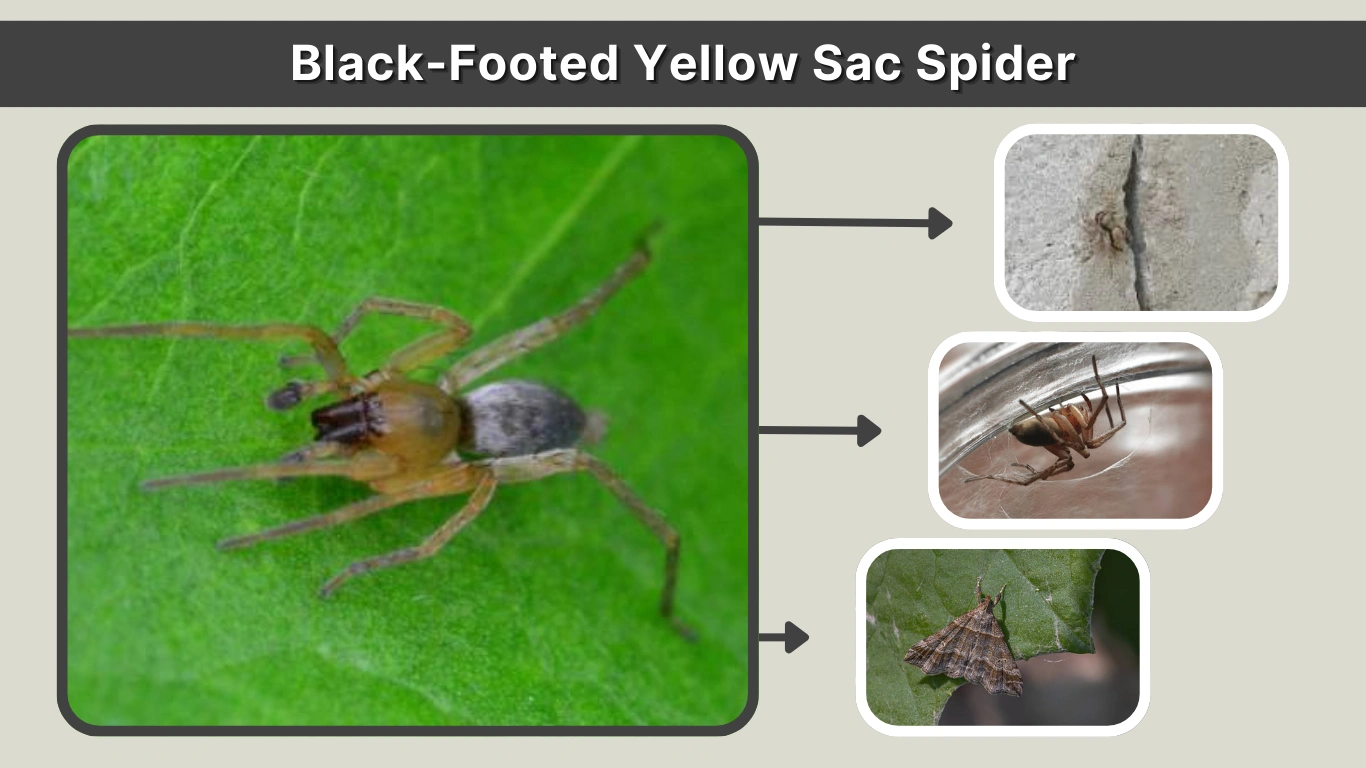
The black-footed yellow sac spider is a small, fast-moving spider commonly found in homes and surrounding vegetation. It is best known for its pale yellow body, darkened feet, and nocturnal activity. Because this species frequently wanders indoors, it is often noticed by homeowners and sometimes confused with more dangerous spiders. In reality, the black-footed yellow sac spider is generally non-aggressive and plays a helpful role by feeding on household insects. Understanding its appearance and habits can reduce unnecessary concern.
Black-Footed Yellow Sac Spider Classification and Background
Scientific Classification
The black-footed yellow sac spider belongs to the sac spider group, which includes spiders that hunt actively rather than relying on capture webs. These spiders use silk primarily for shelter instead of prey capture. Their classification reflects adaptations for roaming behavior, speed, and nighttime hunting, making them well suited for both indoor and outdoor environments.
Origin of the Common Name
The name “black-footed yellow sac spider” comes from two key traits. “Yellow sac” refers to the spider’s pale yellow body and the small silk sacs it builds for resting. “Black-footed” describes the noticeably darker tips of its legs, which help distinguish it from other similar sac spider species.
Black-Footed Yellow Sac Spider Size and Body Structure
Black-footed yellow sac spiders are small to medium-sized spiders. Adults typically measure between 6 and 10 millimeters in body length, with females slightly larger than males. Despite their small bodies, their long legs can make them appear larger when moving across walls or ceilings.
The body is slender with an oval abdomen and narrow cephalothorax. This streamlined shape supports quick movement and active hunting. The legs are thin, flexible, and well adapted for climbing smooth surfaces indoors.
Sexual dimorphism is subtle. Females usually have a fuller abdomen, while males appear slimmer and more agile, especially during mating periods.
Black-Footed Yellow Sac Spider Coloration and Appearance
The black-footed yellow sac spider is typically pale yellow or cream in color. The body often appears smooth and slightly shiny, especially under indoor lighting. One of its most recognizable features is the dark or black coloration at the tips of its feet, which contrasts with the lighter legs.
The mouthparts are also darker, sometimes appearing brown or orange. Color intensity may vary depending on age, diet, and environment. Younger spiders often appear lighter, while mature adults show clearer contrast between the body and darker extremities.
Unlike patterned spiders, this species lacks bold markings, giving it a clean, uniform appearance.
How to Identify a Black-Footed Yellow Sac Spider
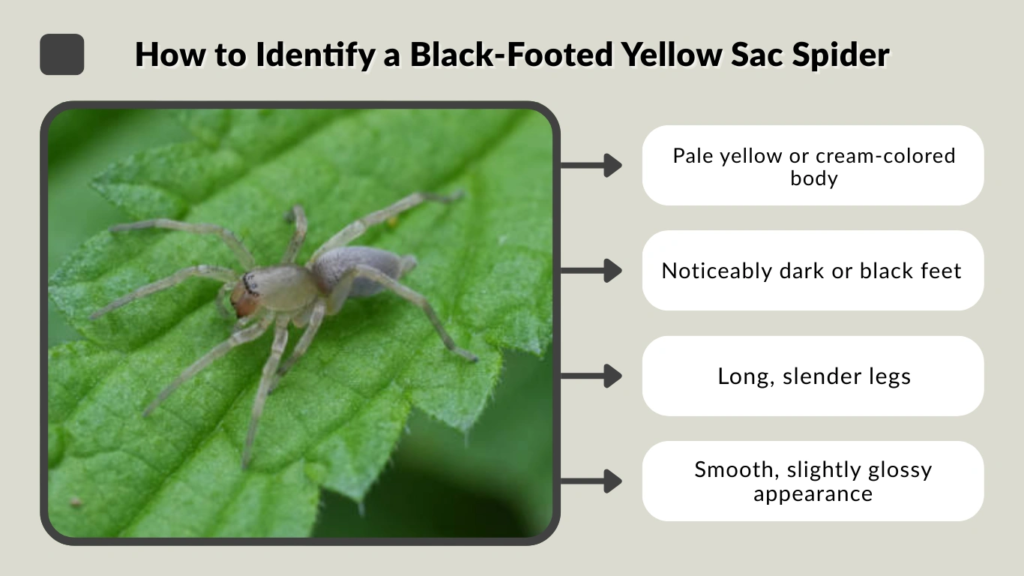
You can identify a black-footed yellow sac spider by the following characteristics:
- Pale yellow or cream-colored body
- Noticeably dark or black feet
- Long, slender legs
- Smooth, slightly glossy appearance
- Small silk sacs used for resting instead of webs
Black-Footed Yellow Sac Spider Habitat and Range
Typical Living Environments
Black-footed yellow sac spiders are commonly found indoors in homes, apartments, and office buildings. They often inhabit corners of ceilings, wall cracks, behind furniture, and near windows. Outdoors, they may live on vegetation, under leaves, or around building exteriors.
Their presence indoors is usually linked to the availability of insect prey and shelter rather than intentional nesting.
Geographic Distribution
This species is widely distributed across North America. It is especially common in temperate regions where seasonal changes drive spiders indoors for shelter. Its adaptability allows it to thrive in both urban and natural environments.
Black-Footed Yellow Sac Spider Silk and Shelter Use
Unlike web-building spiders, the black-footed yellow sac spider does not construct capture webs. Instead, it produces small silk sacs that serve as resting shelters during the day. These sacs are often found in corners, along ceilings, or inside crevices.
At night, the spider leaves the sac to hunt actively. The silk shelter provides protection from predators and environmental stress while allowing the spider to relocate easily. This behavior is a key trait that distinguishes sac spiders from orb weavers.
Black-Footed Yellow Sac Spider Behavior
Hunting and Activity Patterns
Black-footed yellow sac spiders are primarily nocturnal and become most active after dark. Instead of waiting in webs, they roam walls, ceilings, and floors in search of prey. Their speed and agility allow them to capture insects efficiently, even in indoor environments. This roaming behavior is why they are often noticed moving quickly across surfaces at night.
Resting and Shelter Behavior
During daylight hours, the spider retreats into a small silk sac. These sacs are temporary shelters that may be rebuilt or relocated as needed. The spider relies on concealment rather than aggression for protection, which helps it avoid predators and disturbances.
What the Black-Footed Yellow Sac Spider Eats
Black-footed yellow sac spiders feed on a variety of small insects commonly found indoors and outdoors, including:
- Flies
- Mosquitoes
- Small moths
- Ants and other household insects
By feeding on these insects, the spider provides natural pest control inside homes.
Black-Footed Yellow Sac Spider Reproduction and Life Cycle
Mating typically occurs during warmer months when adult spiders are most active. After mating, the female produces an egg sac inside or near her silk shelter. The egg sac is guarded until the spiderlings hatch.
Spiderlings emerge after several weeks and disperse to find their own shelter and food sources. They mature through multiple molts and usually reach adulthood within one year. Most adults do not survive through winter, completing a seasonal life cycle.
Natural Enemies of the Black-Footed Yellow Sac Spider
Despite their adaptability, black-footed yellow sac spiders face several natural threats:
- Birds when outdoors
- Larger spiders
- Parasitic insects
- Environmental factors such as temperature extremes
Indoor environments offer some protection, which contributes to their frequent presence in buildings.
Black-Footed Yellow Sac Spider and Humans
Black-footed yellow sac spiders are not aggressive and bite only when trapped against the skin. Bites are uncommon but can cause mild to moderate localized pain, redness, or itching. Serious reactions are rare and typically resolve without medical treatment.
Although their presence indoors may be unsettling, these spiders are beneficial due to their role in controlling insect populations. Most encounters can be managed by gently relocating the spider outside rather than using pesticides.
FAQs
Is the black-footed yellow sac spider dangerous to humans?
The black-footed yellow sac spider is not considered dangerous. It is shy and avoids contact with people. Bites are rare and usually cause only mild, localized symptoms that heal without complications.
How can you identify a black-footed yellow sac spider?
This spider can be identified by its pale yellow body, dark or black feet, long slender legs, and smooth appearance. It does not build capture webs and is often seen roaming at night.
Where are black-footed yellow sac spiders most commonly found?
They are commonly found indoors in homes and buildings, especially near ceilings, corners, and windows. Outdoors, they live on vegetation and around structures.
Why do black-footed yellow sac spiders enter homes?
Black-footed yellow sac spiders enter homes in search of insects, shelter, and stable temperatures. Indoor lighting that attracts insects can increase their presence.
Do black-footed yellow sac spiders build webs?
No, they do not build capture webs. Instead, they create small silk sacs for resting during the day and actively hunt prey at night.
