

Black ant bites are common but often misunderstood. While many people assume black ants are harmless, several species can bite when threatened, causing pain, irritation, and skin reactions. Black ant bites are usually less severe than fire ant stings, but they can still be uncomfortable—especially after multiple bites or in sensitive individuals. Knowing how to identify black ant bites and recognize early symptoms helps ensure proper treatment and faster healing.
What Are Black Ants?
The term black ant refers to multiple ant species with dark brown or black bodies. Common examples include carpenter ants, pavement ants, and odorous house ants. Most black ants bite using their mandibles rather than stinging with venom, although some species may spray formic acid into the wound, increasing irritation.
Unlike fire ants, black ants are generally less aggressive, but they will bite if crushed, trapped against the skin, or if their nests are disturbed. Bites often occur indoors when ants infest kitchens or outdoors during gardening, walking barefoot, or handling wood and soil.
Black Ant Bite Identification

Black ant bites usually happen suddenly and may go unnoticed at first. The ant grips the skin with its jaws, causing a sharp pinching sensation. Because black ants often travel in trails, multiple bites can occur within seconds.
Bite locations commonly include hands, arms, feet, ankles, and legs. Indoor bites often occur on fingers or arms when ants crawl onto beds, furniture, or clothing. Identifying the bite early helps distinguish it from other insect bites and prevents unnecessary worry.
What Do Black Ant Bites Look Like?
Black ant bites typically appear as small red bumps with mild swelling. Unlike fire ant stings, they rarely form white pustules or blisters. The skin around the bite may look irritated and feel sore or itchy.
Common visual signs include:
- Small red or pink bumps
- Mild swelling around the bite
- Slight redness without blistering
- Occasional tiny puncture marks
- Localized irritation rather than spreading rash
In most cases, black ant bites remain small and fade within a day or two. Scratching, however, can cause the skin to break and lead to infection.
Ant Bites Pictures Identification
Looking at ant bites pictures for identification can help differentiate black ant bites from mosquito, flea, or spider bites. Mosquito bites are usually softer and itchier, while flea bites often appear in straight lines. Spider bites are typically single lesions and may show two puncture marks.
Black ant bites are usually smaller, clustered, and less inflamed than fire ant stings. Visual comparison is especially helpful when bites appear indoors, where multiple insects could be responsible.
Symptoms of Black Ant Bites on Humans
Symptoms of black ant bites on humans vary depending on the species and individual sensitivity. Most reactions are mild and limited to the bite area.
Mild symptoms include redness, slight swelling, itching, and tenderness. Moderate symptoms may involve burning sensations, increased swelling, or discomfort lasting several days. Multiple bites can amplify symptoms and cause noticeable soreness.
In rare cases, excessive scratching may introduce bacteria into the skin, leading to infection marked by warmth, pus, or expanding redness.
Allergic Reaction to Black Ant Bites

Allergic reactions to black ant bites are uncommon but possible. Mild allergic responses may include intense itching, hives near the bite area, or swelling that extends beyond the original bite.
Severe allergic reactions, such as anaphylaxis, are very rare with black ants but can occur in highly sensitive individuals. Warning signs include difficulty breathing, facial or throat swelling, dizziness, nausea, or rapid heartbeat. These symptoms require immediate emergency medical attention.
People with known insect allergies should monitor symptoms closely after any ant bite.
Black Ant Bite Treatment
Basic treatment is usually sufficient for black ant bites. The first step is to wash the affected area with soap and water to remove bacteria and any formic acid residue.
Applying a cold compress helps reduce swelling and discomfort. Over-the-counter antihistamines relieve itching, while hydrocortisone cream reduces redness and inflammation. Calamine lotion can also soothe irritated skin.
How to Treat Black Ant Bites Effectively
Knowing how to treat black ant bites properly can reduce discomfort and prevent complications. After initial cleaning, continue care by keeping the area clean and dry. Applying topical anti-itch or anti-inflammatory creams once or twice daily helps control redness and swelling. Oral antihistamines may be useful if itching becomes intense or widespread.
If the skin breaks due to scratching, a mild antibiotic ointment can help prevent infection. Most bites improve within 24–72 hours with simple care and do not require prescription medication.
Black Ant Bites on Dogs and Other Pets
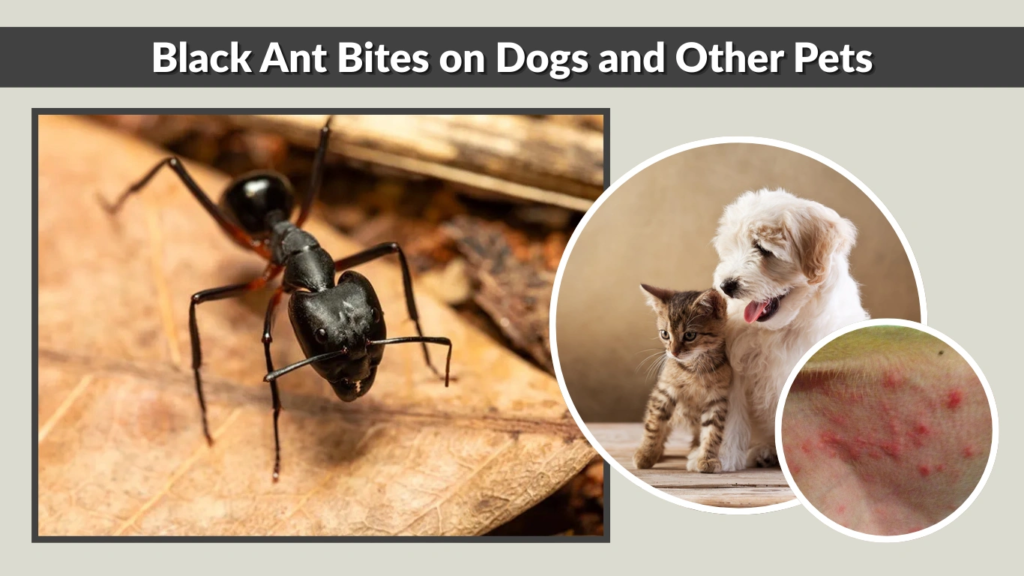
Black ant bites on dogs often occur on the paws, muzzle, ears, or belly when pets walk through ant trails or disturb nests. Dogs may lick, chew, or scratch the affected area excessively.
Common symptoms in pets include redness, swelling, whining, limping, or visible small bumps. In rare cases, dogs may experience facial swelling, vomiting, or lethargy, which can indicate an allergic reaction.
Gently wash the area with cool water and mild soap. Prevent licking and monitor symptoms closely. Antihistamines should only be given under veterinary guidance. Seek veterinary care immediately if breathing difficulty or severe swelling develops.
Prevention Tips for Black Ant Bites
Preventing black ant bites involves reducing contact with ants and eliminating infestations. Outdoors, wear shoes and protective clothing when walking in grassy or soil-rich areas. Avoid disturbing ant nests during yard work.
Inside the home, seal cracks, remove food sources, and keep surfaces clean to discourage ants. Treating ant entry points and using appropriate pest control methods can significantly reduce bite risk.
Keeping pets away from known ant activity areas also lowers the chance of bites.
When to See a Doctor
Medical attention is rarely needed for black ant bites, but it is recommended if symptoms worsen or do not improve within a few days. Signs that require evaluation include spreading redness, increasing pain, pus, fever, or warmth around the bite.
Immediate emergency care is necessary if symptoms of an allergic reaction appear, such as difficulty breathing, throat swelling, dizziness, or fainting.
FAQs
Are black ant bites dangerous?
Most black ant bites are mild and not dangerous. Complications are rare unless infection or an allergic reaction occurs.
Do black ants bite or sting?
Most black ants bite using their mandibles. Some species may also spray formic acid, causing a burning sensation.
How long do black ant bites last?
Symptoms usually last 1–3 days. Scratching or infection can extend healing time.
Can black ant bites get infected?
Yes, bites can become infected if the skin breaks from scratching. Proper cleaning helps prevent this.
Are black ant bites worse than red ant bites?
Black ant bites are generally milder than red or fire ant stings, which often cause pustules and stronger reactions.
