
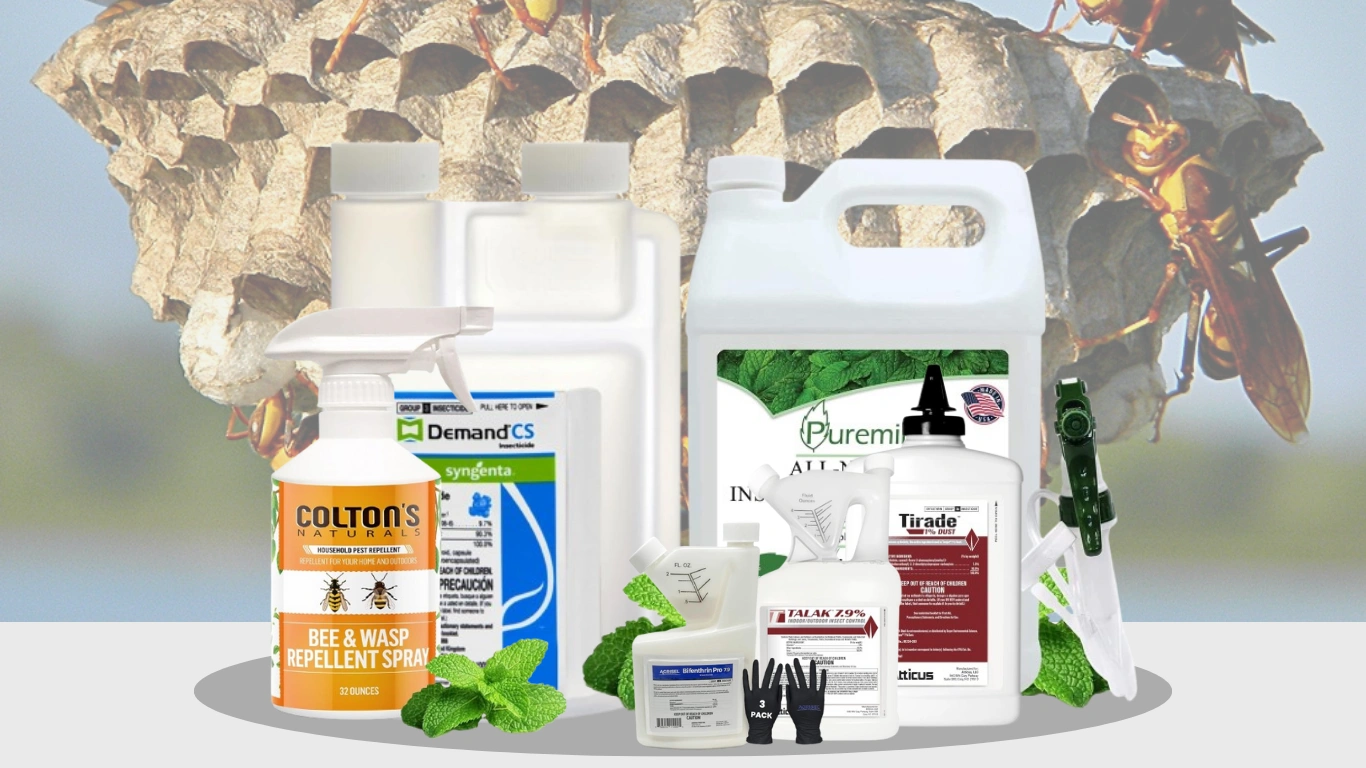
Choosing the right wasp nest killer depends on where the colony is hiding. Dusts excel for underground yellowjackets and wall voids, expanding foams fill galleries you can’t reach, and long-range aerosols drop exposed paper nests from a safe distance. In this roundup, each pick is matched to the job—what it’s best for, how to apply, and what to do after knockdown to prevent rebuilds. Work at dusk or dawn, stand upwind, wear PPE, and follow labels for safe, thorough control.
1. Atticus Tirade 1% Dust Insecticide (1.25 lb) — Ready to Use
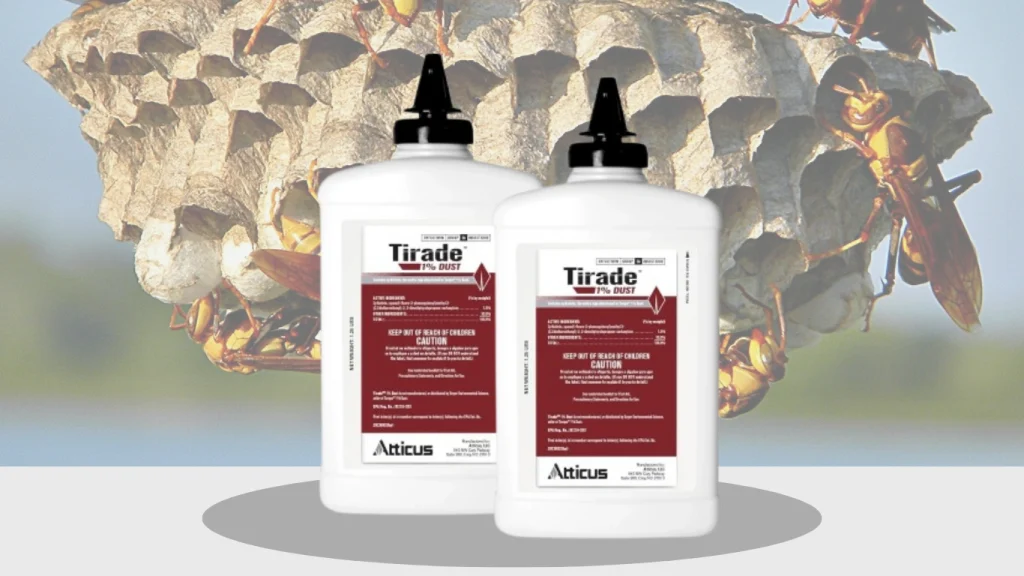
A true wasp nest killer for underground yellowjacket colonies and wall/soffit voids. The puffer-style canister lets you float fine dust deep into tunnels and hidden chambers where aerosols can’t reach, so workers track it through the nest for thorough results.
Key features
- Ready-to-use dust with squeeze/puffer applicator
- Penetrates tunnels, cracks, and voids that sprays miss
- Long residual when kept dry for continued control
- Ideal for ground nests and concealed paper-wasp voids
- Precise placement with minimal mess and drift
Why it’s best for wasp nest killer
Dust works where a stream spray can’t: inside the nest. As foragers enter and exit, they contact the dust and transfer it deeper, extending the kill beyond the entrance. If your target is a subterranean yellowjacket nest or a colony tucked behind siding, Tirade’s fine particles are the most reliable path to the queen and brood—making it a top pick in any best wasp nest killer lineup.
How to use
Treat at dusk or early dawn when activity is lowest. From upwind, gently puff small amounts into the main entrance and any secondary holes; a little goes a long way. Keep the site dry—moisture reduces effectiveness. Check after 24–48 hours; if you still see traffic, reapply. Once there’s no activity for 48–72 hours, seal or fill openings to prevent re-use.
Pros
- Reaches hidden galleries sprays and foams can’t
- Long-lasting control when undisturbed and dry
- Precise application with low overspray risk
- Excellent for ground yellowjackets and void nests
Cons
- Not suited to exposed, hanging paper nests
- Loses power if it gets wet
- May take 24–48 hours to show full results
- Care needed to avoid dusting non-target areas
Safety
Wear gloves, eye protection, and a dust mask. Avoid breathing dust; keep people and pets away until particles settle. Don’t apply on windy days or onto blooming plants visited by pollinators. Store tightly closed in a cool, dry place.
2. Exterminator’s Choice — Bee & Wasp Deterrent Natural Defense (32 oz)
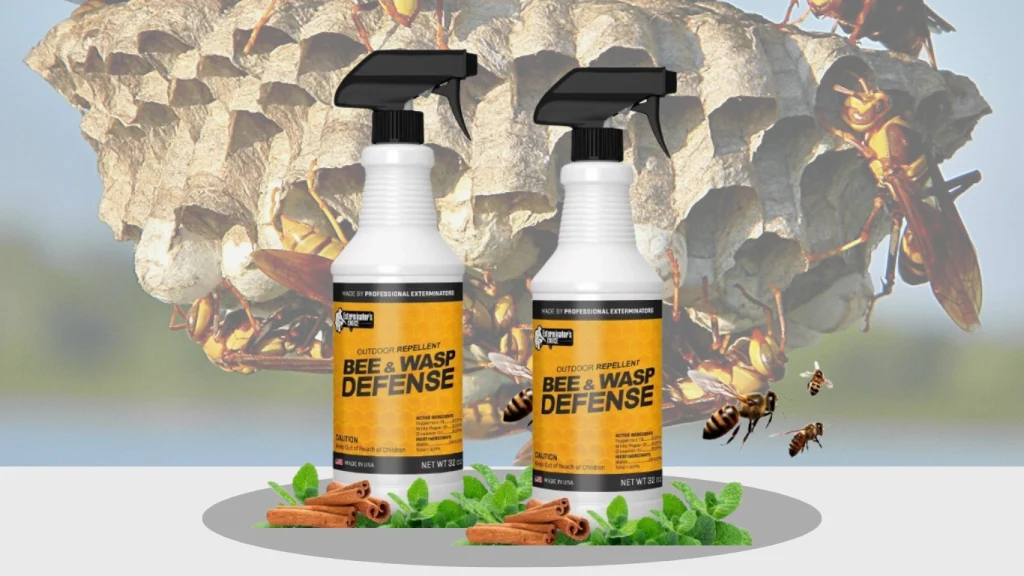
A botanical surface deterrent you use after you’ve eliminated the live colony. It makes eaves, soffits, porch ceilings, and playsets less attractive so paper wasps don’t restart. Think maintenance in a complete wasp nest killer plan, not a knockdown.
Key features
- Ready-to-use 32-oz trigger bottle for fast coverage
- Essential-oil blend (peppermint/cinnamon/white pepper)
- Indoor/outdoor use on typical “no-nest” zones
- Works alongside dusts, foams, and aerosols
- Easy to reapply through the season
Why it’s best for wasp nest killer
After you kill the nest with a true wasp nest killer (dust/foam/aerosol), the battle isn’t over—rebuilds are common. This deterrent creates a scent barrier on prime start points so returning foragers are less likely to lay fresh comb, extending the results of your knockdown.
How to use
Clean and dry surfaces, then spot-spray seams and corners under eaves, around door/window trim, deck undersides, and past trouble spots. Start frequent (daily for a few days), then maintain 2–3× weekly; reapply after rain or washing. Patch-test porous/painted areas.
Pros
- Natural, family-area friendly
- Quick, wide-area application
- Reduces rebuilds where nests usually start
Cons
- Repellent, not a nest killer
- Needs consistent reapplication
- Noticeable botanical scent
Safety
Avoid eyes/skin; ventilate if used indoors. Keep kids/pets away until dry and avoid drift onto blooming plants.
3. Atticus Talak 7.9% — Indoor/Outdoor Insect Control (1 GAL Concentrate)
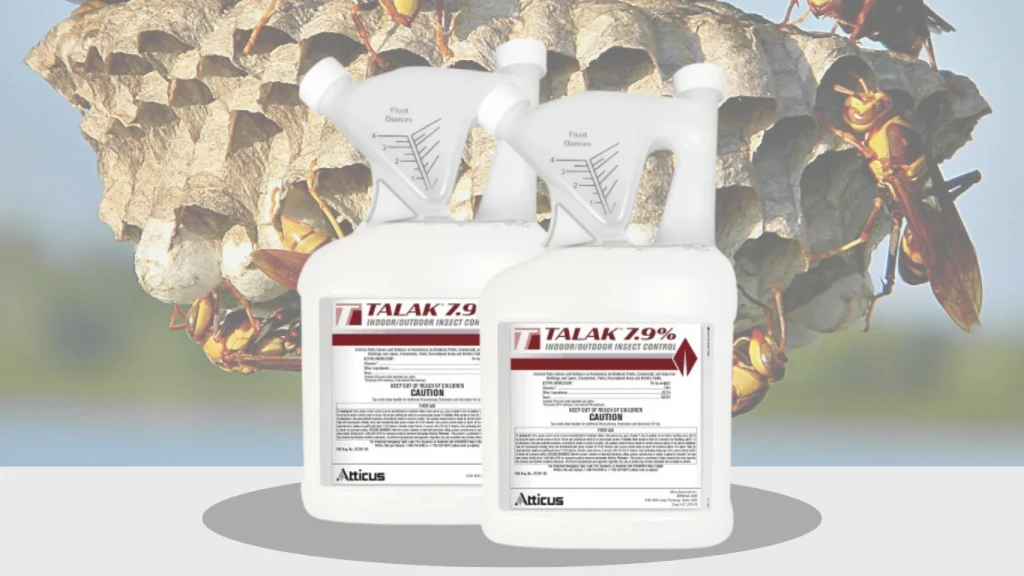
A professional residual perimeter concentrate for post-knockdown control. Apply to eaves, soffits, fascia, and siding to stop re-nesting after you’ve eliminated the active colony with a true wasp nest killer.
Key features
- High-strength 7.9% bifenthrin concentrate (mix with water)
- Pump/backpack sprayer application for even coverage
- Creates a lasting residual barrier on treated surfaces
- Great for large homes/outbuildings; season-long value
- Broad usefulness beyond wasps
Why it’s best for wasp nest killer
The most effective programs are two-step: kill the nest, then lock down the structure. Talak’s residual on key start points makes them far less attractive, cutting repeat ladder trips and keeping pressure low for weeks.
How to use
Mix per label. On a dry, calm day, apply slow, overlapping passes along eaves, soffits, fascia, window/door frames, corners, and past nest sites. Let dry fully before re-entry. Re-treat during peak season or after heavy weather.
Pros
- Long-lasting residual that discourages re-nesting
- Cost-effective whole-property coverage
- Ideal follow-up after dust/foam/aerosol knockdown
Cons
- Not a direct nest knockdown
- Requires mixing gear and careful application
- Avoid drift/runoff to protect non-targets and water
Safety
Wear gloves/eye protection; avoid inhaling mist. Keep people/pets off treated surfaces until dry. Do not spray blooming plants; prevent runoff and follow the label exactly.
4. Colton’s Naturals — Bee & Wasp Repellent Spray (32 oz)
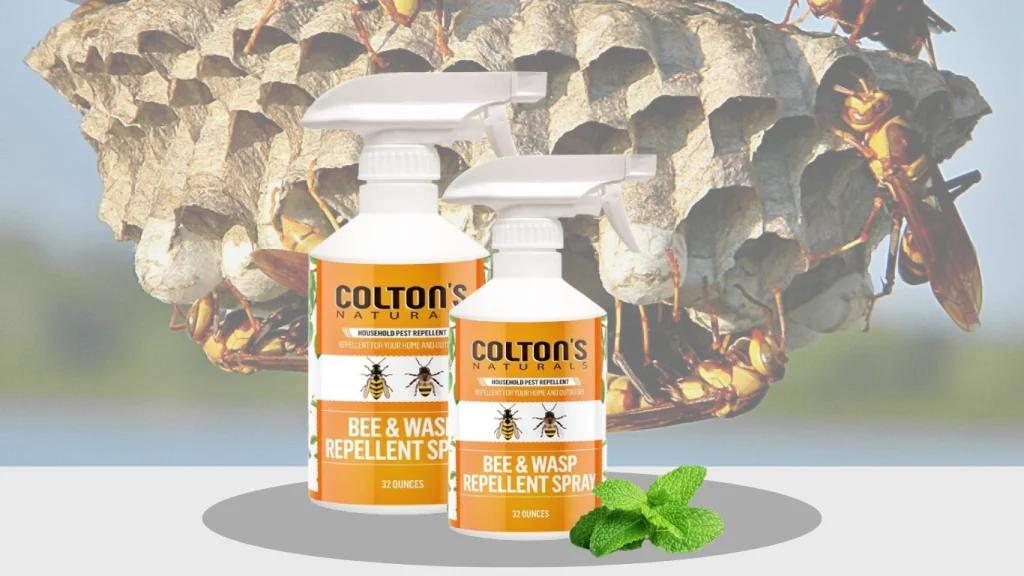
A natural follow-up product for family spaces after you’ve used a true wasp nest killer (dust/foam/aerosol). The peppermint–cinnamon blend makes soffits, porch ceilings, playsets, and trim less attractive so paper wasps don’t restart.
Key features
- 32-oz ready-to-use trigger bottle
- Botanical formula (peppermint & cinnamon oils), non-pyrethroid
- For eaves, fascia, door/window frames, deck undersides
- Indoor/outdoor use; reapply after rain
- Pairs with dusts/foams/aerosols for full control
Why it’s best for wasp nest killer
Killing the nest is step one; preventing rebuilds is step two. This spray creates a scent barrier on prime start points, reducing new paper-nest attempts and extending the results of your wasp nest killer treatment.
How to use
On clean, dry surfaces, spot-spray seams and corners until lightly damp. In hot spots, start daily for a few days, then maintain 2–3× weekly; always reapply after rainfall or washing. Patch-test on porous/painted areas.
Pros
- Natural, family-area friendly
- Fast, wide-area coverage
- Helps prevent quick rebuilds
Cons
- Repellent—not a nest knockdown
- Needs regular reapplication
- Noticeable mint/spice scent
Safety
Avoid eyes/skin; ventilate indoors. Keep kids/pets away until dry and avoid drift onto blooming plants.
5. Demand CS Insecticide — iCAP Technology (Concentrate)
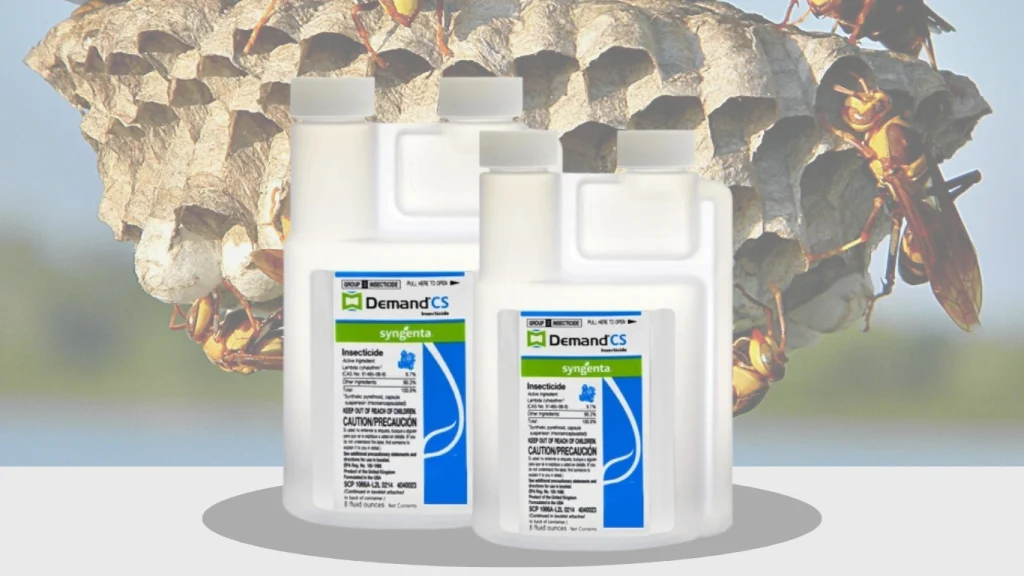
A micro-encapsulated residual perimeter concentrate used after a wasp nest killer to stop re-nesting on eaves, soffits, fascia, and siding. The capsules cling to surfaces and keep working between weather events.
Key features
- Mix-with-water concentrate for pump/backpack sprayers
- iCAP micro-encapsulation for durable residual
- Interior/exterior perimeter use on structural start points
- Broad spectrum beyond wasps; efficient for large areas
- Ideal “lock-down” step after nest removal
Why it’s best for wasp nest killer
A complete program is kill → lock down. After you eliminate the active nest, Demand CS lays a long-lasting barrier where nests begin, cutting repeat ladder trips and reducing loitering by returning foragers.
How to use
Mix per label. On a dry, calm day, apply slow, overlapping passes along eaves, soffits, fascia, window/door frames, corners, and prior nest sites. Let dry fully before re-entry. Re-treat during peak season or after harsh weather.
Pros
- Excellent, long-lasting residual
- Prevents re-nesting on key surfaces
- Cost-effective for whole-property coverage
Cons
- Not a direct nest knockdown
- Requires mixing gear and careful application
Safety
Wear gloves/eye protection; avoid inhaling mist. Keep people/pets off treated surfaces until dry. Prevent runoff to water and follow the label exactly.
6. Bifenthrin Pro 7.9 — Insect Control (Concentrate)
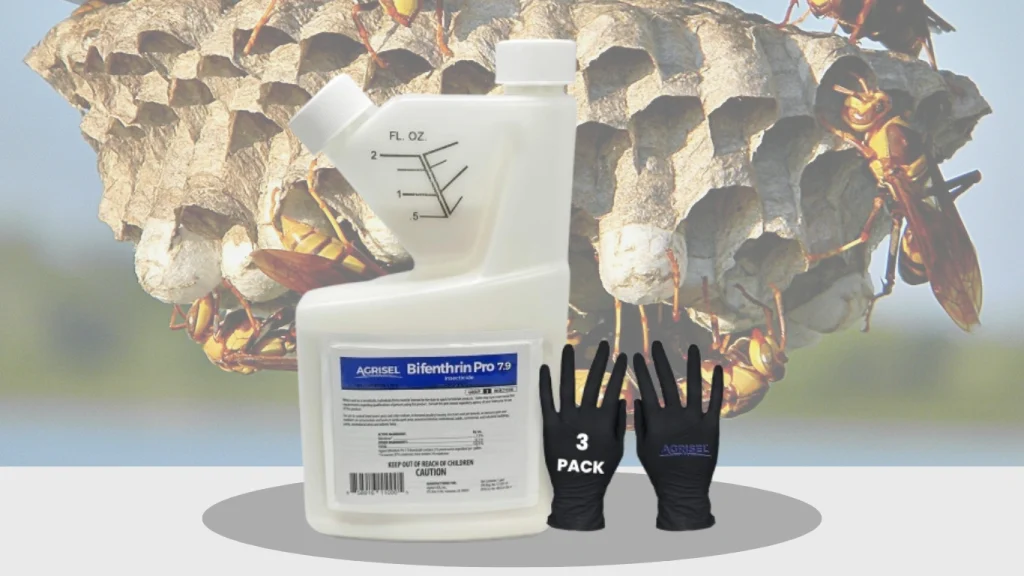
A professional residual perimeter concentrate that shines after you’ve used a true wasp nest killer (dust/foam/aerosol). Mix and spray on eaves, soffits, fascia, and siding to create a long-lasting barrier that discourages wasps from rebuilding in the same spots.
Key features
- 7.9% bifenthrin concentrate; mix with water
- Pump/backpack sprayer application for even, wide coverage
- Provides residual protection on treated surfaces
- Works across many perimeter pests, not just wasps
- Cost-effective for large homes and outbuildings
Why it’s best for wasp nest killer
A complete plan is knockdown + lock-down. Once the nest is eliminated, Bifenthrin Pro 7.9 keeps classic start points unattractive, cutting down repeat ladder trips and preventing quick rebuilds—exactly what you want from a follow-up to your wasp nest killer.
How to use
Mix per label in a clean sprayer. On a dry, calm day, apply slow, overlapping passes along eaves, soffits, fascia, window/door frames, corners, and prior nest sites. Let dry fully before re-entry. Re-treat during peak season or after heavy weather to maintain the barrier.
Pros
- Long-lasting residual to prevent re-nesting
- Economical whole-property coverage
- Pairs perfectly with dust/foam/aerosol knockdowns
Cons
- Not a direct nest solution
- Requires mixing gear and careful application
Safety
Wear gloves/eye protection; avoid inhaling mist. Keep people/pets off treated surfaces until dry. Prevent runoff to water and follow the label exactly.
7. Puremint Insect & Pest Control — Powerful 5% Peppermint Oil Spray
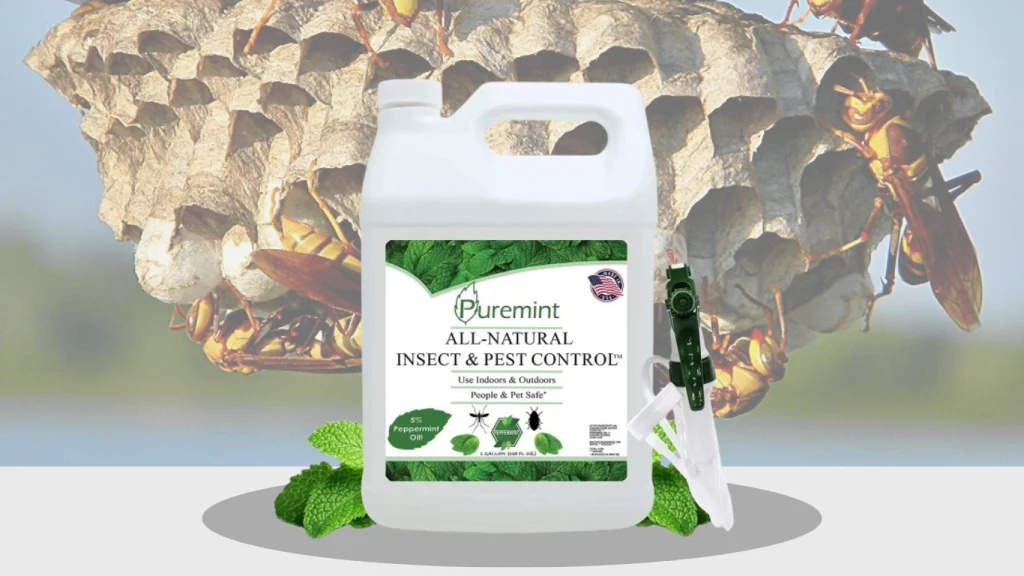
A high-strength peppermint formula for post-knockdown prevention around patios, doorways, porch ceilings, mailboxes, and other start points. Use it to keep pressure down in family spaces after you’ve handled the live nest with a true wasp nest killer.
Key features
- Potent 5% peppermint oil (non-pyrethroid)
- Ready-to-use trigger bottle; no mixing
- Indoor/outdoor surface treatment for “no-nest” zones
- Strong mint aroma; simple to reapply after weather
- Complements dusts/foams/aerosols in a full program
Why it’s best for wasp nest killer
This isn’t the killer step—it’s the maintenance layer that creates a scent barrier on prime start points. That helps maintain control and reduce new paper-nest attempts where people gather, extending the results of your wasp nest killer treatment.
How to use
Clean and dry target areas. Lightly mist seams, corners, and previous trouble spots under eaves and around doors/windows until just damp. In hot spots, begin daily for a few days, then maintain 2–3× weekly; always reapply after rainfall. Patch-test painted/porous surfaces.
Pros
- Strong botanical deterrence for family areas
- Ready-to-use and easy to maintain
- Excellent follow-up to true nest killers
Cons
- Repellent only—won’t kill an active nest
- Needs frequent reapplication, especially after rain
Safety
Avoid eyes/skin and inhaling mist; ventilate if used indoors. Keep kids/pets away until dry. Do not drift onto blooming plants visited by pollinators.
FAQs
What’s the safest way to approach a wasp nest?
Treat at dusk or early dawn when most workers are inside and flight is sluggish. Stand upwind, wear eye protection, long sleeves, and gloves, and keep a clear retreat path. Start by targeting the entrance, then saturate the nest (or inject dust/foam into voids). Keep people and pets away until the wasp nest killer has dried or settled.
Dust, foam, or aerosol—how do I choose?
Use dust for ground nests and wall/soffit voids because it drifts deep into galleries and keeps working when dry. Choose foam for holes and cavities you can access—its expansion coats interior surfaces. Pick a long-range aerosol for exposed paper nests you can clearly see. Many jobs need two steps: knockdown first, then residual prevention.
How long should I wait before removing the nest?
After treatment, observe from a distance for 24 hours. If any activity remains, re-treat and wait another 24 hours. For underground/void nests treated with dust or foam, give up to 48–72 hours. Only remove the nest once there’s zero movement. Wear PPE, and place the nest in a sealed bag for disposal.
Can I treat a nest during the day?
It’s possible, but risky. Daytime workers are foraging, visibility is better, and agitation is higher—raising sting risk and reducing product contact. If daytime treatment is unavoidable, use a long-range aerosol from maximum standoff, work upwind, and be ready to retreat quickly. Whenever you can, schedule wasp nest killer applications at dusk or dawn.
How do I prevent wasps from rebuilding after knockdown?
Combine knockdown with prevention. After the nest is dead and removed, spray residual concentrates on eaves, soffits, fascia, and trim to deter re-nesting. In family areas, add a botanical deterrent on “no-nest” zones. Seal entry gaps, repair screens, and keep trash tight. Reinspect hot spots weekly during peak season and re-treat as needed.
