

Choosing the right wasp and hornet spray depends on the job: long-range knockdown for exposed paper nests, expanding foam for voids and ground galleries, dust for deep tunnels, and residual or natural sprays to prevent re-nesting on eaves and trim. This guide ranks the top options with clear use-cases, jet reach, cling, cleanup, and safety notes—so you know exactly what to use, where, and why. Treat at dusk/dawn, work upwind, wear PPE, and pair prevention with proper nest removal for lasting results.
1. Colton’s Naturals – Bee & Wasp Repellent Spray (32 oz)

A natural, scent-based wasp & hornet repellent made to keep nests from starting on soffits, porch ceilings, playsets, and door frames. If you’re targeting prevention rather than knockdown, this is a smart, family-space-friendly pick in the “best wasp and hornet spray” lineup—use it to stop new activity after you’ve removed any existing nest.
Key features
- 32-oz ready-to-use trigger bottle for wide, quick coverage
- Botanical formula (peppermint & cinnamon oils), no synthetic pyrethroids
- Works on “no-nest” zones: eaves, fascia, trims, mailboxes, pergolas
- Indoor/outdoor use; ideal for patios and entryways
- Reapply after rain or heavy washing for continued protection
Why it’s best for Wasp & Hornet
As a wasp & hornet spray for prevention, it creates a strong scent barrier that makes common start points unattractive, reducing new paper-nest attempts where people live and gather. Use a knockdown aerosol or foam for any active nest, then rotate this repellent to maintain wasp & hornet control and cut down re-nesting pressure through the season.
How to use
Clean and dry the target area. Spot-spray seams and corners under eaves, around doors/windows, deck undersides, fence posts, and previous trouble spots until lightly damp. In high-pressure areas, apply daily for a few days, then maintain 2–3× weekly; reapply after rainfall since scent barriers fade when wet. Test an inconspicuous area on porous/painted surfaces.
Pros
- Natural, non-pyrethroid option for kid-adjacent outdoor spaces
- Easy, fast coverage with a trigger sprayer
- Effective preventive layer to reduce new nest starts
- Pairs well with a knockdown product for complete wasp & hornet control
Cons
- Repellent, not a killer—won’t solve an established nest
- Requires consistent reapplication, especially after rain
- Noticeable mint/spice scent may not suit all users
Safety
Avoid eyes/skin, and ventilate if used indoors. Keep children and pets away until surfaces are dry. Patch-test on painted/porous materials and store out of heat/sun.
2. Mighty Mint Insect & Pest Control Plus – Natural Mint Oil Insect Killer Spray
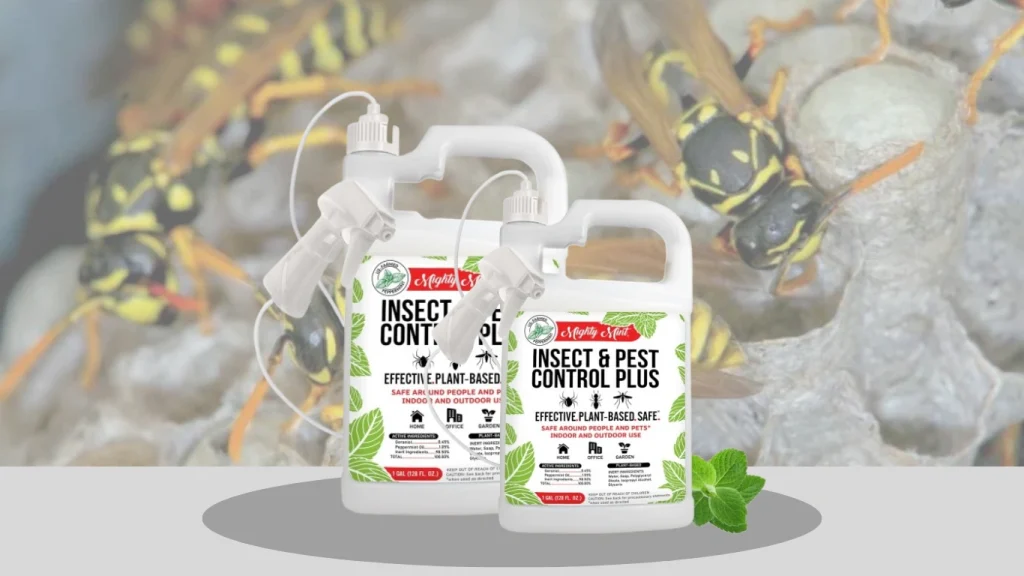
A plant-powered wasp & hornet contact spray for doorways, patios, and other people spaces. It’s best for spot-treating the wasps you can see and for light prevention on surfaces—use it as a gentler alternative where you don’t want harsh solvents. Not a long-range nest aerosol.
Key features
- Ready-to-use trigger bottle; no mixing
- Botanical formula centered on mint oil (non-pyrethroid)
- Indoor/outdoor use around entry points and trim
- Pleasant mint aroma; reapply after rain or cleaning
- Good companion to a dedicated nest knockdown product
Why it’s best for Wasp & Hornet
As part of your wasp & hornet control plan, this shines for quick contact treatment of stragglers and for keeping common start points less attractive. Use a long-reach nest spray or foam to eliminate any active paper nest, then rotate Mighty Mint Plus on eaves, frames, and railings to help reduce re-nesting pressure where people gather.
How to use
Spray from upwind directly on visible wasps, then lightly mist seams and corners under eaves, around doors/windows, and other landing spots. Start with frequent passes in high-pressure areas, then maintain 2–3× weekly. Always reapply after rainfall and test an inconspicuous spot on porous/painted surfaces.
Pros
- Plant-based option for family areas
- Easy, ready-to-use format
- Useful for spot knockdowns and light prevention
Cons
- Not a long-range nest spray
- Shorter residual; requires repeat applications
- Mint scent may be strong for some users
Safety
Avoid eyes/skin and drift onto blooming plants. Ventilate if used near enclosed areas and keep children/pets away until surfaces are dry.
3. Wondercide – Outdoor Pest Control Spray
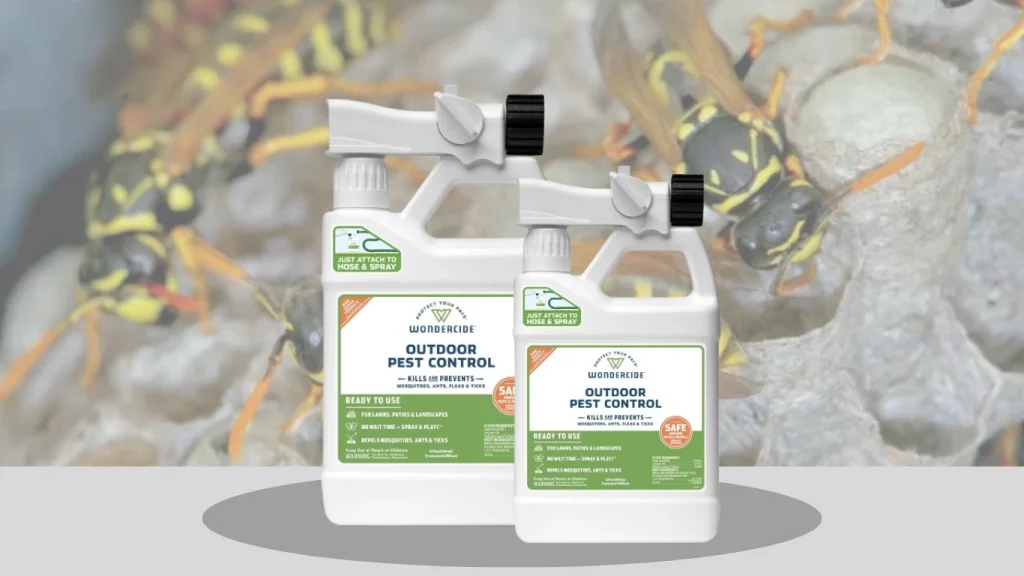
A yard-wide, natural wasp & hornet perimeter spray for lawns, patio perimeters, and foundation lines. Designed to lower overall insect pressure outdoors so wasps are less likely to loiter and start nests near living spaces. Not intended as a direct, long-range nest knockdown.
Key features
- Outdoor-focused formula with essential oils (non-pyrethroid)
- Treats lawns, shrubs, deck perimeters, and foundation edges
- Helps reduce insect pressure around people spaces
- Ready to apply; simple routine re-treat schedule
- Pairs well with targeted nest aerosols/foams
Why it’s best for Wasp & Hornet
For wasp & hornet control in active yards, broad perimeter spraying cuts down traffic around patios and soffits, making structures less attractive for new paper-nest starts. After removing any live nest with a dedicated knockdown product, keep Wondercide in the rotation to maintain a friendlier, lower-pressure zone around the house.
How to use
Apply on a dry, calm day. Evenly treat lawn edges, foundation lines, fence lines, shrubs, and under-deck areas. Focus on known flight paths to eaves/soffits. Reapply on a routine schedule and after heavy rain or irrigation. Avoid direct spray on delicate plants and test small areas first.
Pros
- Broad outdoor coverage to reduce overall activity
- Natural ingredients; good fit for family yards
- Complements targeted nest treatments
Cons
- Not a direct nest solution
- Needs regular reapplication, especially after rain
- Less residual persistence than synthetic perimeter sprays
Safety
Keep off flowering plants visited by pollinators. Avoid eyes/skin; keep people and pets off treated areas until dry. Store out of heat/sun and follow label directions.
4. All-Natural Foaming Spray — Carpenter Insect Bee Killer
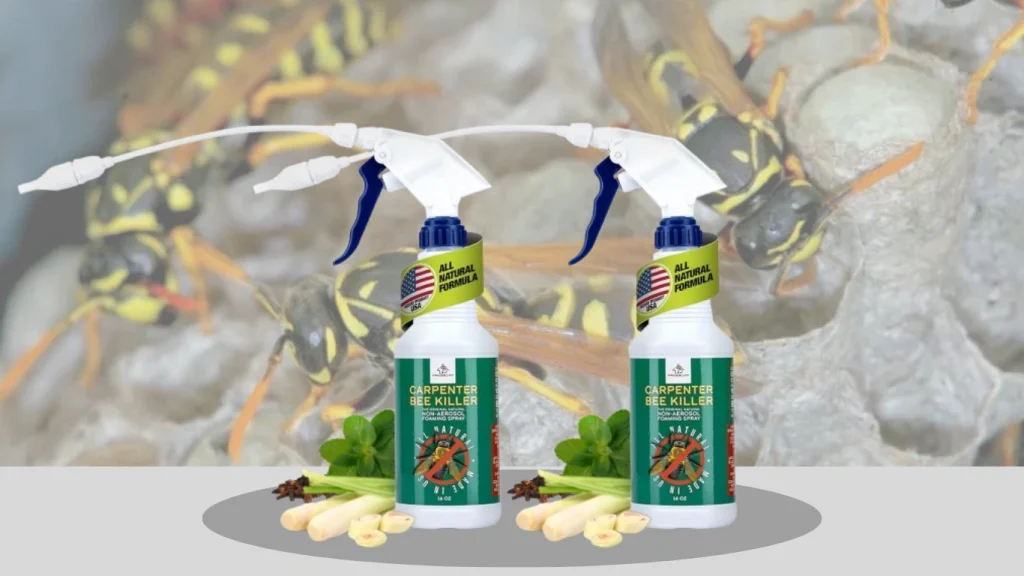
A natural, expanding foam for voids, tunnels, and ground entrances where a standard wasp & hornet stream can’t reach. Excellent for carpenter-bee galleries and for underground yellowjacket spots. Not intended for exposed, hanging paper nests.
Key features
- Expanding foam fills holes, cracks, and tunnels
- Botanical/“natural” positioning for family areas
- Straw/nozzle for precise placement into galleries
- Clings inside voids for longer contact time
- Ready-to-use can; no mixing or extra tools
Why it’s best for Wasp & Hornet
For wasp & hornet control in hidden spaces, foam beats a long-range stream. It expands to coat interior surfaces so returning workers brush against the treatment on every pass—perfect for deck posts, fence rails, soffit gaps, and ground entrances that lead to concealed chambers.
How to use
Treat at dusk or early dawn. Insert the straw into the entrance hole and apply until foam begins to push back out. For carpenter bees, treat each hole you find; for ground nests, foam the main entrance and any nearby openings. Check activity the next day and re-treat as needed. Plug carpenter-bee holes 24–48 hours after there’s no activity.
Pros
- Reaches hidden chambers sprays can’t
- Expands & clings for thorough coverage
- Targeted application with minimal drift
- Good fit for family spaces and spot jobs
Cons
- Not for exposed paper nests
- Can be messy if over-filled
- May need repeat treatments for large colonies
- Less convenient for high, overhead targets
Safety
Wear eye/skin protection and gloves. Keep people/pets away until dry. Avoid use on windy days and keep off flowering plants visited by pollinators.
5. Ortho Home Defense Insect Killer for Indoor & Perimeter

A versatile residual perimeter spray for eaves, soffits, fascia, window/door frames, and baseboards. Use it after nest removal to cut down wasp & hornet loitering and discourage re-nesting on treated surfaces. Not a direct nest knockdown.
Key features
- Residual protection on treated surfaces (interior & exterior)
- Comfort-wand/trigger options for easy, even coverage
- Great for eaves/soffits/trim and other start points
- Works across many household pests—not just wasps
- Ready-to-use formats; no mixing required
Why it’s best for Wasp & Hornet
As part of a wasp & hornet spray plan, this shines in the prevention phase. After you eliminate any live nest, a perimeter treatment makes common start points less attractive so returning foragers are less likely to rebuild under the same ledge or trim.
How to use
On a dry, calm day, apply slow, overlapping passes along eaves, soffits, fascia, window/door frames, and corners. Let dry completely before people/pets return. Re-treat through peak season and after heavy weather. Avoid drift onto lawns of blooming flowers to protect pollinators.
Pros
- Provides ongoing protection on surfaces
- Easy application over large areas
- Excellent follow-up after nest removal
- Broad household usefulness
Cons
- Not a direct nest solution
- No foam for voids; limited for ground nests
- Must manage overspray and avoid non-target areas
- Periodic re-treatments needed in peak season
Safety
Wear gloves/eye protection; avoid inhaling mist. Keep off food/contact surfaces and flowering plants. Allow to dry fully before re-entry and follow label directions.
6. Bifenthrin Plus-C Insecticide (16 oz)

A pro-style concentrate for creating a residual perimeter that helps keep wasps and hornets from re-nesting on eaves, soffits, and trim. It’s not a long-range nest aerosol; think prevention and ongoing pressure reduction as part of your wasp & hornet control plan.
Key features
- 16-oz mix-with-water concentrate for pump/backpack sprayers
- Pyrethroid chemistry designed for residual protection on treated surfaces
- Indoor/outdoor perimeter applications around doors, windows, fascia, and siding
- Broad utility across household pests in addition to wasps & hornets
- Cost-efficient for whole-property coverage over the season
Why it’s best for Wasp & Hornet
As a wasp & hornet spray strategy, this is your prevention phase workhorse. After you remove any live nest with a knockdown product, a bifenthrin barrier on eaves and trim makes those start points far less attractive—cutting down on new paper-nest attempts and day-to-day loitering.
How to use
Mix with water per the product label in a clean pump sprayer. On a dry, calm day, apply slow, overlapping passes along eaves, soffits, fascia, window/door frames, corners, and previous trouble spots. Allow to dry fully. Re-treat through peak season and after heavy weather to maintain the barrier.
Pros
- Strong residual for prevention on structures
- Covers large areas economically
- Pairs perfectly with a knockdown spray/foam for a complete plan
Cons
- Not a direct nest solution
- Requires mixing gear and careful application
- Avoid drift/runoff—can impact non-target insects and aquatic life
Safety
Wear gloves/eye protection; avoid inhaling mist. Keep people and pets off treated surfaces until dry. Do not spray blooming plants; prevent runoff to water. Follow the label exactly.
7. All-Natural Peppermint Oil Insect & Pest Control Spray
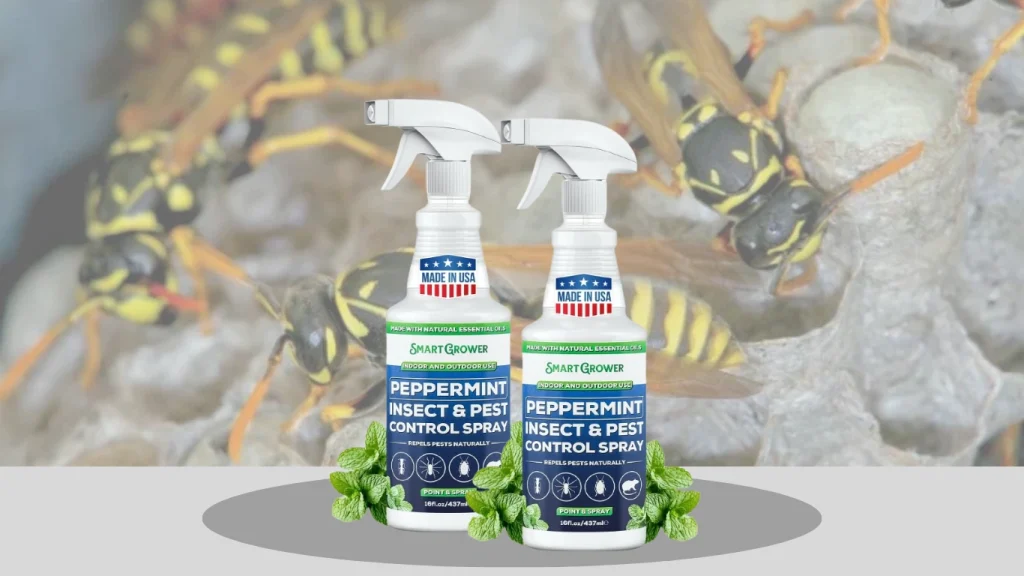
A plant-powered peppermint oil spray for family spaces where you want a gentler approach. It’s best as a wasp & hornet repellent/spot-treatment for common landing zones—great after you’ve eliminated any active nest and want to keep pressure down around patios and entryways.
Key features
- Ready-to-use trigger bottle; no mixing required
- Botanical formula centered on peppermint oil (non-pyrethroid)
- Indoor/outdoor use on soffits, trims, and other “no-nest” surfaces
- Fresh mint scent; easy to apply and reapply
- Works alongside conventional knockdown products
Why it’s best for Wasp & Hornet
For wasp & hornet control near people spaces, a peppermint-based spray provides deterrence and light contact action without harsh solvents. Use it to make classic start points less appealing after nest removal—helping prevent quick rebuilds where you relax and entertain.
How to use
Clean and dry the target area. Lightly mist seams, corners, and previous start spots under eaves and around doors/windows. Begin with more frequent passes in high-pressure areas, then maintain 2–3× weekly; reapply after rain. Test a small, hidden area on porous/painted surfaces.
Pros
- Natural, family-friendly positioning
- Simple, ready-to-use application
- Good preventive companion to nest knockdown products
Cons
- Repellent/spot tool—not a long-range nest spray
- Shorter residual; needs regular reapplication
- Mint scent may be strong for some users
Safety
Avoid eyes/skin and inhaling mist; ventilate if used indoors. Keep kids/pets away until surfaces are dry. Do not drift onto flowering plants visited by pollinators.
8. Demand CS Insecticide — iCAP Technology (Concentrate)
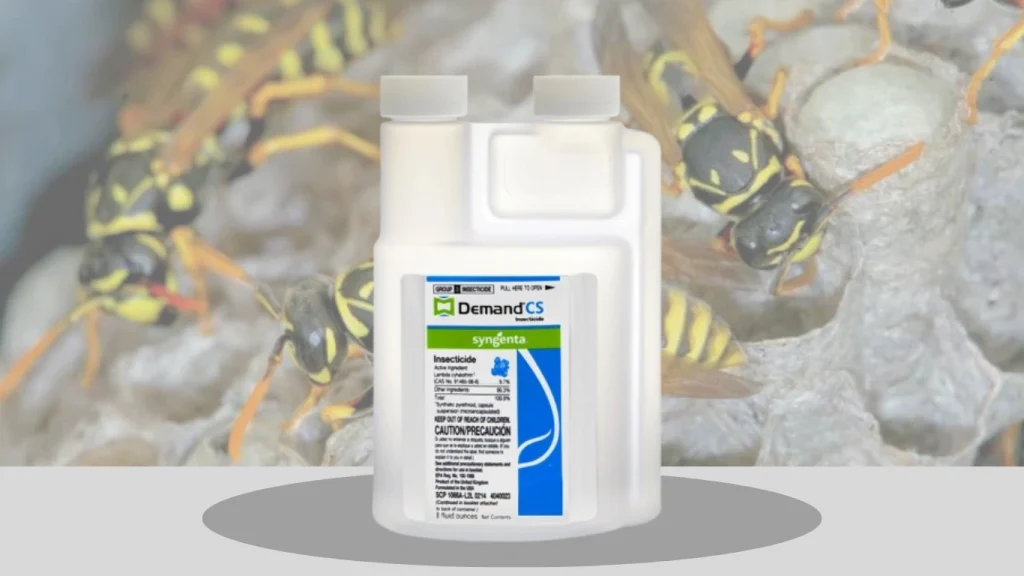
A professional residual perimeter concentrate that uses micro-encapsulation (iCAP) to cling to surfaces and keep working after it dries. Ideal for the prevention phase of wasp & hornet control: treat eaves, soffits, fascia, and siding so returning foragers avoid rebuilding. Not a long-range nest aerosol.
Key features
- Concentrated formula for pump/backpack sprayers
- Micro-encapsulated (iCAP) technology for durable residual on surfaces
- Interior/exterior perimeter use on eaves, trim, door/window frames
- Broad-spectrum label helpful beyond wasps & hornets
- Cost-effective coverage for large homes and outbuildings
Why it’s best for Wasp & Hornet
As part of your best wasp and hornet spray toolkit, Demand CS excels at stopping re-nesting. After you eliminate any active nest with a knockdown spray or foam, a Demand CS perimeter on key surfaces reduces loitering and new paper-nest starts—especially under ledges and lip edges where combs usually appear.
How to use
Mix with water per label directions. On a dry, calm day, apply slow, even passes along eaves, soffits, fascia, window/door frames, corners, and prior trouble spots. Let dry fully before re-entry. Re-treat through peak season or after heavy rain to maintain the barrier.
Pros
- Long-lasting residual that resists weathering
- Excellent prevention against re-nesting
- Covers large areas economically
- Complements knockdown aerosols/foams for a full plan
Cons
- Not a direct nest knockdown
- Requires mixing gear and careful application
- Avoid drift/runoff to protect non-target insects and water
Safety
Wear gloves/eye protection; avoid inhaling mist. Keep people/pets off treated surfaces until dry. Do not spray blooming plants; prevent runoff. Follow the label exactly.
9. Raid MAX Perimeter Protection Refill — Up to 18 Months (Trigger System)
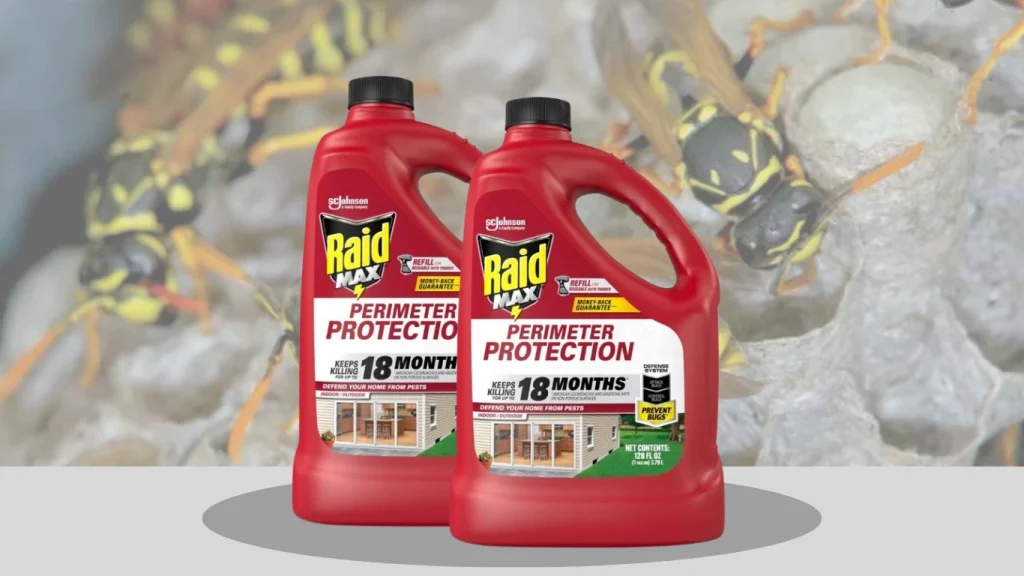
A convenient residual perimeter refill designed to keep insects from crossing treated thresholds for months. Use it around entry points and structural edges to reduce wasp & hornet traffic near living spaces. Not a long-range nest spray—but a handy maintenance tool in a best-practice wasp & hornet control plan.
Key features
- Ready-to-use refill for the Raid MAX trigger system
- Long-lasting perimeter protection on treated surfaces
- Easy application along doorways, garage frames, patio sliders, and soffit edges
- Broad household coverage beyond wasps & hornets
- Great follow-up after nest removal
Why it’s best for Wasp & Hornet
If you’ve already handled the active nest, this is a set-and-forget perimeter that helps keep wasps and hornets from loitering on trims and thresholds where nests often restart. It’s simple, affordable insurance in a best wasp and hornet spray lineup for homeowners who want fewer re-treat trips up a ladder.
How to use
Snap into the compatible trigger, then apply slow, overlapping passes along eaves, door and window frames, garage surrounds, and porch trims. Let dry completely before people/pets return. Re-treat per label guidance through peak season or after heavy weather.
Pros
- Long-lasting deterrence on key surfaces
- Very easy to use; no mixing
- Budget-friendly maintenance between major treatments
- Smart follow-up after nest knockdown
Cons
- Not a direct nest solution
- No foam for voids or ground nests
- Must manage overspray on siding/landscaping
- Periodic re-treats still needed in high-pressure seasons
Safety
Wear basic PPE; avoid inhaling mist. Keep off food/contact surfaces and flowering plants. Allow to dry fully before re-entry and follow label directions.
10. Wondercide — Outdoor Pest Control Spray (Concentrate)
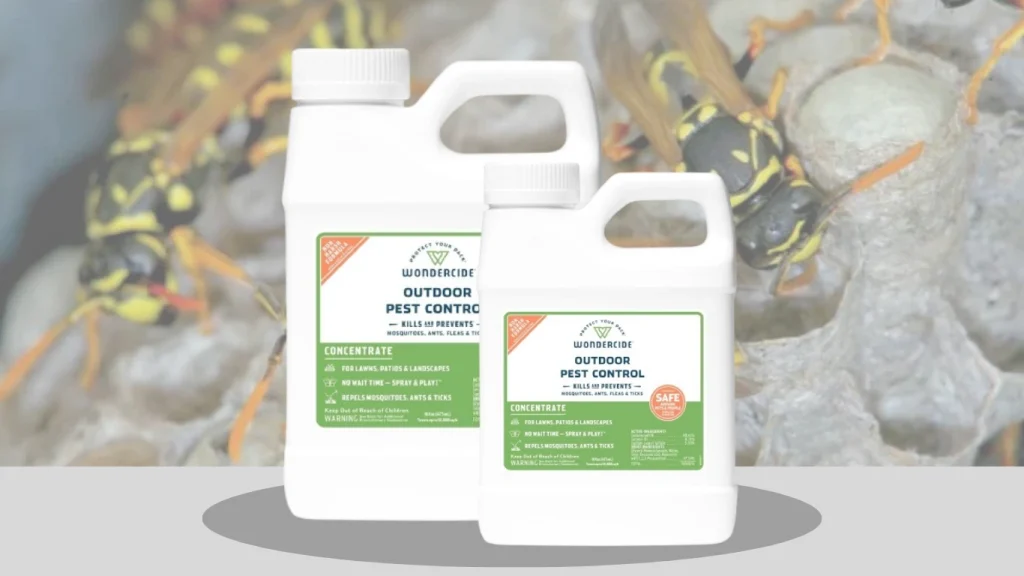
A yard-wide, plant-powered concentrate you attach to a hose or mix in a sprayer to reduce overall insect pressure around patios, decks, and foundation lines. It’s for prevention and comfort in people spaces—not a long-range nest knockdown.
Key features
- Concentrated, essential-oil formula for lawn and perimeter use
- Treats lawn edges, shrubs, fence lines, under-deck areas
- Hose-end or pump-sprayer friendly; easy routine treatments
- Pairs with nest aerosols/foams for a complete plan
- Fresh botanical scent suitable for family yards
Why it’s best for Wasp & Hornet
As part of your best wasp and hornet spray lineup, this shines at perimeter reduction. By lowering insect activity in the yard and along structure edges, wasps and hornets are less likely to loiter or start new paper nests near eaves and soffits. Use it after you’ve removed any active nest to maintain a calmer, lower-pressure zone around the home.
How to use
Apply on a dry, calm day. Evenly treat lawn perimeters, beds, shrubs, fence lines, and the pathways that lead to eaves/soffits. Reapply on a routine schedule and after heavy rain or irrigation. Avoid direct spray on delicate ornamentals; test small areas first.
Pros
- Broad yard coverage that reduces overall activity
- Non-pyrethroid option for family spaces
- Simple, scalable routine (hose-end or pump sprayer)
- Complements direct nest treatments
Cons
- Not a direct nest solution
- Needs regular reapplication, especially after rain
- Less residual persistence than synthetic concentrates
Safety
Keep off flowering plants visited by pollinators. Let areas dry fully before kids/pets re-enter. Avoid eyes/skin and store out of heat/sun.
11. Atticus Talak 7.9% — Indoor/Outdoor Insect Control (Bifenthrin Concentrate)
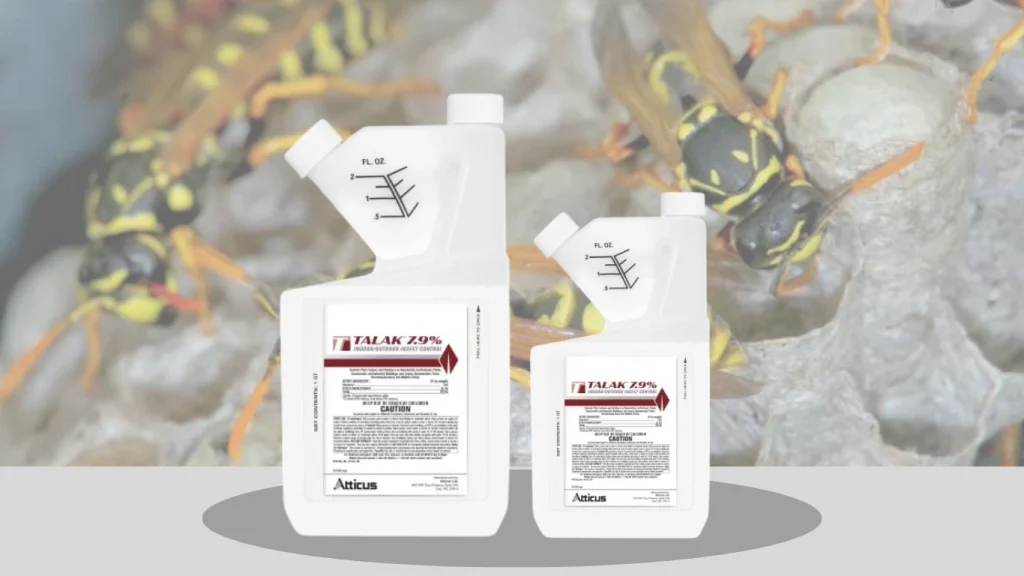
A professional-grade 7.9% bifenthrin concentrate for building a long-lasting residual perimeter on eaves, soffits, fascia, and siding. It’s for prevention and re-nesting control—pair with a knockdown spray or foam for any active nest.
Key features
- Mix-with-water concentrate for pump/backpack sprayers
- Creates a durable residual barrier on treated surfaces
- Interior/exterior perimeter applications (follow label)
- Covers large areas cost-effectively through the season
- Broad utility beyond wasps & hornets
Why it’s best for Wasp & Hornet
In a best wasp and hornet spray strategy, Talak 7.9% is the post-knockdown closer. After you eliminate any live nest, a bifenthrin perimeter on key surfaces makes classic start points far less attractive, cutting down re-nesting and day-to-day loitering under ledges and trims.
How to use
Mix per label in a clean sprayer. On a dry, calm day, apply slow, overlapping passes along eaves, soffits, fascia, window/door frames, corners, and prior trouble spots. Let dry completely before re-entry. Re-treat during peak season or after harsh weather to maintain the barrier.
Pros
- Strong residual that discourages re-nesting
- Economical whole-property coverage
- Ideal follow-up after nest removal
- Works across multiple perimeter pests
Cons
- Not a direct nest knockdown
- Requires mixing gear and careful application
- Must avoid drift/runoff to protect non-targets and water
Safety
Wear gloves/eye protection; avoid inhaling mist. Keep people/pets off treated surfaces until dry. Prevent runoff to water and avoid spraying blooming plants. Follow the label exactly.
12. Mighty Mint Peppermint Oil Insect Repellent Spray

A plant-powered wasp & hornet repellent/spot-treatment for patios, doorways, playsets, and porch ceilings. It leverages peppermint oil to make common start points less attractive—great for prevention around family areas. Not a long-range nest knockdown.
Key features
- Ready-to-use trigger bottle; no mixing
- Peppermint oil formula (non-pyrethroid) for natural deterrence
- Indoor/outdoor use on eaves, trims, and other “no-nest” surfaces
- Fresh mint aroma; easy to apply and reapply after rain
- Pairs well with a dedicated nest aerosol or foam
Why it’s best for Wasp & Hornet
In a best wasp and hornet spray plan, this is the prevention and maintenance piece for people spaces. After removing any active nest with a knockdown product, use Mighty Mint to maintain wasp & hornet control by discouraging new paper-nest starts on soffits, fascia, and entry frames where activity usually returns.
How to use
Clean and dry the target area. Lightly mist seams, corners, and previous start spots under eaves, around doors/windows, railings, and mailboxes until just damp. In high-pressure areas, begin with daily applications, then maintain 2–3× weekly; always reapply after rainfall. Patch-test on painted/porous surfaces.
Pros
- Natural, family-space-friendly option
- Simple, ready-to-use application
- Effective preventive layer after nest removal
Cons
- Repellent/spot tool—won’t knock down a live nest
- Shorter residual; needs regular reapplication
- Mint scent may be strong for some users
Safety
Avoid eyes/skin and inhaling mist; ventilate if used indoors. Keep children and pets away until surfaces are dry. Do not drift onto flowering plants visited by pollinators.
FAQs
When is the best time to spray a wasp or hornet nest?
Dusk or early dawn is ideal. Most workers are inside, temperatures are cooler, and flight is slower—so the wasp and hornet spray penetrates deeper with fewer fliers. Stand upwind, wear eye/skin protection, soak the entrance first, then the entire nest. Observe from a distance and only remove the nest after 24–48 hours of zero activity.
Should I use a stream aerosol, expanding foam, dust, or a residual spray?
Use a stream aerosol for exposed paper nests you can see and reach. Choose expanding foam for voids, wall gaps, and ground entrances. Apply dust for deep tunnels and galleries that liquids can’t reach. Finish with a residual perimeter spray on eaves, soffits, and trim to discourage re-nesting after knockdown. Many homeowners combine two or more.
Do natural wasp and hornet sprays actually work?
Yes—plant-based formulas can repel or kill on contact, especially for light activity and prevention around family spaces. They typically have less residual than synthetics and need more frequent reapplication, particularly after rain. For large or aggressive colonies, start with a conventional long-range knockdown or foam, then maintain with natural deterrents on common start points.
How far should a wasp and hornet spray reach, and how should I aim?
Good aerosols project 15–27 feet. Greater reach means safer standoff distance and less ladder time. Aim at the entrance first to stop movement, then soak the entire comb until dripping. Work on calm days, keep a retreat path, and avoid spraying into the wind. Recheck after an hour; repeat only if activity persists.
Is it safe to spray near electrical fixtures or around kids and pets?
Even if a can lists a dielectric rating, avoid spraying energized equipment; cut power where possible. Keep children and pets away until treated surfaces are completely dry. Ventilate enclosed areas, avoid contact with eyes/skin, and never drift onto blooming plants visited by pollinators. Always follow the wasp and hornet spray label precisely.
