

Banded wasps are a striking group of insects recognized for their patterned bodies, usually displaying bright yellow, orange, or red stripes across a dark background. These markings not only make them noticeable but also serve as a warning to predators that they are armed with a sting. Although many people fear wasps, banded wasps play an important role in ecosystems by pollinating flowers and controlling pest populations. This article explores their size, colors, sting, life cycle, lifespan, and much more in detail.
Identification of Banded Wasp
Size
Banded wasps vary in size depending on the species. Most measure between 10 to 20 millimeters in length, though larger tropical species can exceed 25 mm. Females are often slightly larger than males due to their reproductive role. Their slender yet muscular build distinguishes them from bees, which are usually fuzzier.
Color and Markings
The most notable feature of banded wasps is their striped pattern. Common variations include:
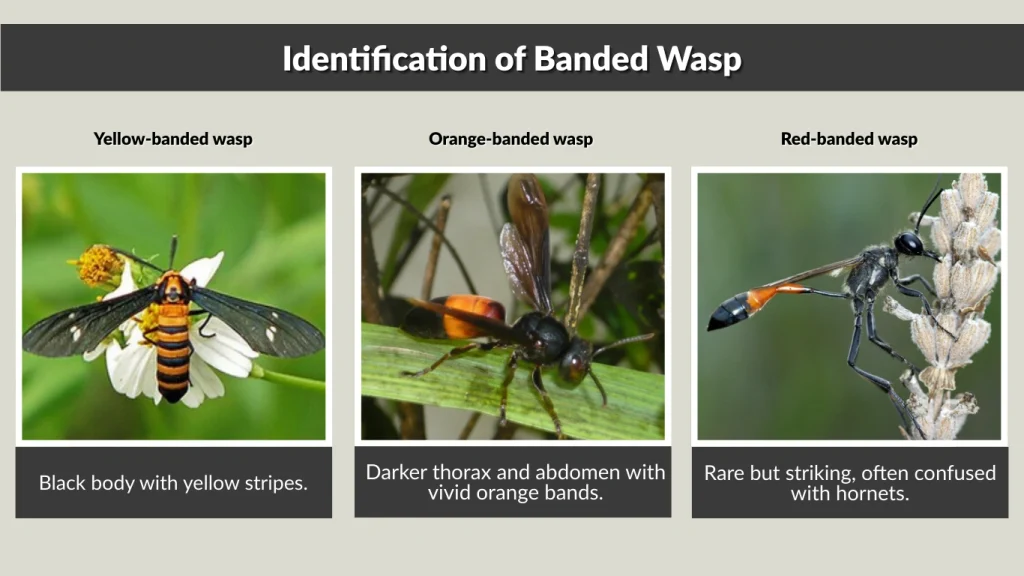
- Yellow-banded wasp – black body with yellow stripes.
- Orange-banded wasp – darker thorax and abdomen with vivid orange bands.
- Red-banded wasp – rare but striking, often confused with hornets.
These markings act as aposematic signals, warning predators of their ability to sting.
Scientific Classification
Banded wasps belong to the Hymenoptera order, within the Vespidae family. Different species fall under genera such as Polistes (paper wasps) or Vespula (yellowjackets). Because of their bands, they are often mistaken for the banded wasp moth (Syntomeida epilais) or even spiders with similar coloration.
Habitat and Distribution
Global Range
Banded wasps can be found worldwide, especially in North America, Europe, Asia, and tropical regions. Their adaptability allows them to survive in both urban and wild environments.
Preferred Habitats
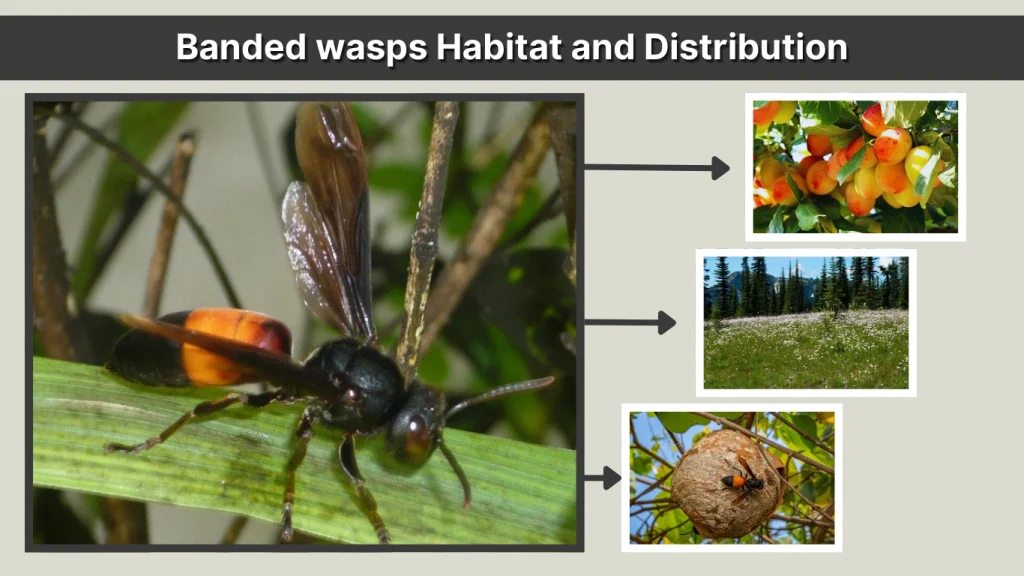
They prefer areas with abundant flowers and insect prey, including:
- Gardens – attracted to nectar and ripe fruits.
- Forests and meadows – natural hunting grounds.
- Urban settings – nest under eaves, sheds, and even inside attics.
Nests are typically constructed from chewed wood fibers mixed with saliva, creating a papery structure. Depending on the species, they may nest underground, in trees, or on man-made structures.
Behavior and Nature
Daily Activity
Banded wasps are diurnal, meaning they are most active during daylight hours. They spend mornings foraging for nectar and afternoons hunting insects to feed their larvae.
Social vs Solitary Behavior
Some species, like banded paper wasps, live in colonies where females cooperate in nest building and caring for young. Others are solitary, with each female constructing and defending her own nest.
Interaction with Humans
Most banded wasps avoid conflict unless threatened. However, if their nests are disturbed, they may become aggressive. In human environments, they provide the benefit of pest control but are often unwelcome due to their painful stings.
Diet and Feeding Habits
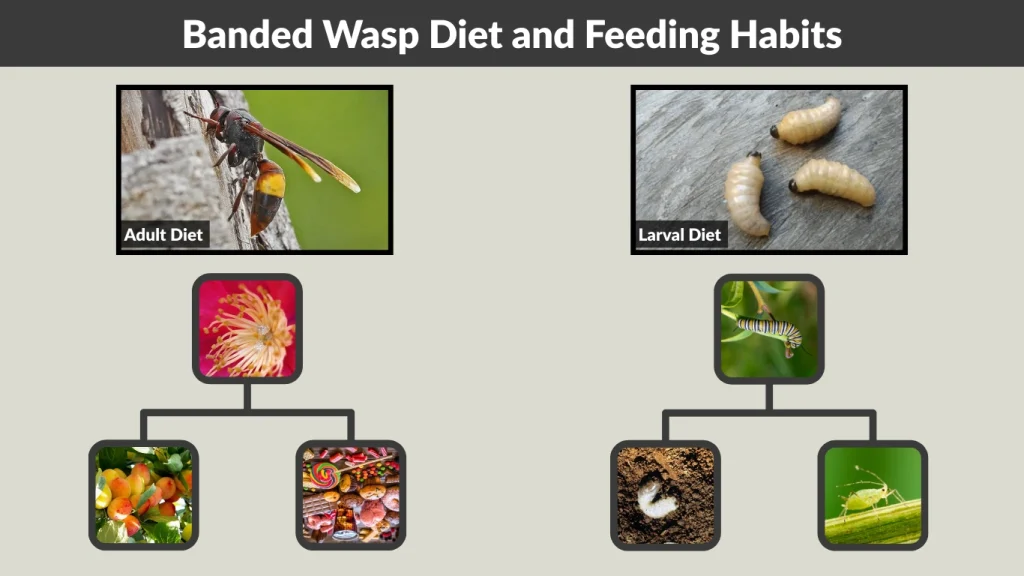
Adult banded wasps consume a diet rich in sugary substances such as nectar, ripe fruit, and tree sap. They also scavenge on sugary human foods like soda or fruit juice. Their larvae, however, require protein. Adults hunt caterpillars, spiders, and flies, paralyzing them with a sting before feeding them to their developing young. This dual diet makes wasps both pollinators and natural pest controllers.
Sting and Defense Mechanism
Do Banded Wasps Sting?
Yes, banded wasps are capable of stinging. Unlike bees, which lose their stinger after one sting, most wasps can sting multiple times.
Symptoms of a Sting
A banded wasp sting typically causes:
- Immediate sharp pain.
- Redness and swelling at the sting site.
- Itching or burning sensation.
In some cases, allergic individuals may experience hives, dizziness, or difficulty breathing, requiring medical attention.
Are Banded Wasps Dangerous?
For most people, their stings are painful but not deadly. However, in rare cases of severe allergy, a sting can trigger anaphylaxis, a potentially life-threatening reaction. Compared to hornets or yellowjackets, banded wasps are usually less aggressive.
First Aid for Banded Wasp Stings
- Wash the area with soap and water.
- Apply a cold compress to reduce swelling.
- Use an antihistamine cream or oral medication for itching.
- Seek medical help if severe symptoms appear.
Life Cycle of Banded Wasp
Egg Stage
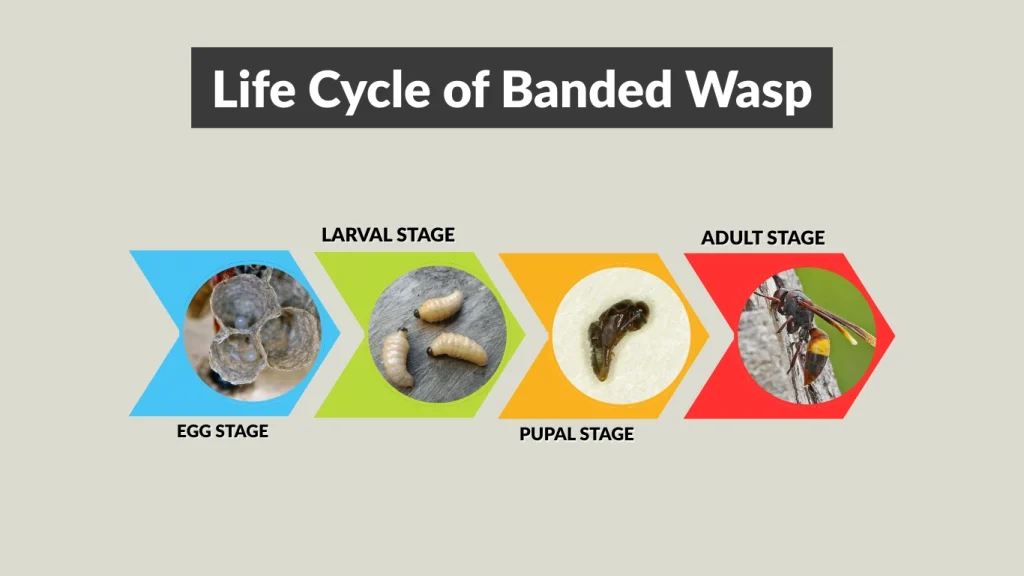
The cycle begins when the female lays eggs in individual cells of the nest. Depending on the species, she may guard the eggs herself or rely on a colony structure where other females share responsibilities.
Larval Stage
Larvae hatch and remain inside the cells, fed by adults with a steady supply of paralyzed insects. They are completely dependent and grow rapidly, molting several times.
Pupal Stage
After sufficient growth, larvae spin silk-like cocoons and enter the pupal stage. During this transformation, they develop wings, stingers, and adult body structures.
Adult Stage
The final stage produces fully developed wasps capable of reproduction, hunting, and colony building. Males typically live only long enough to mate, while females may survive until winter depending on environmental conditions.
Lifespan of Banded Wasp
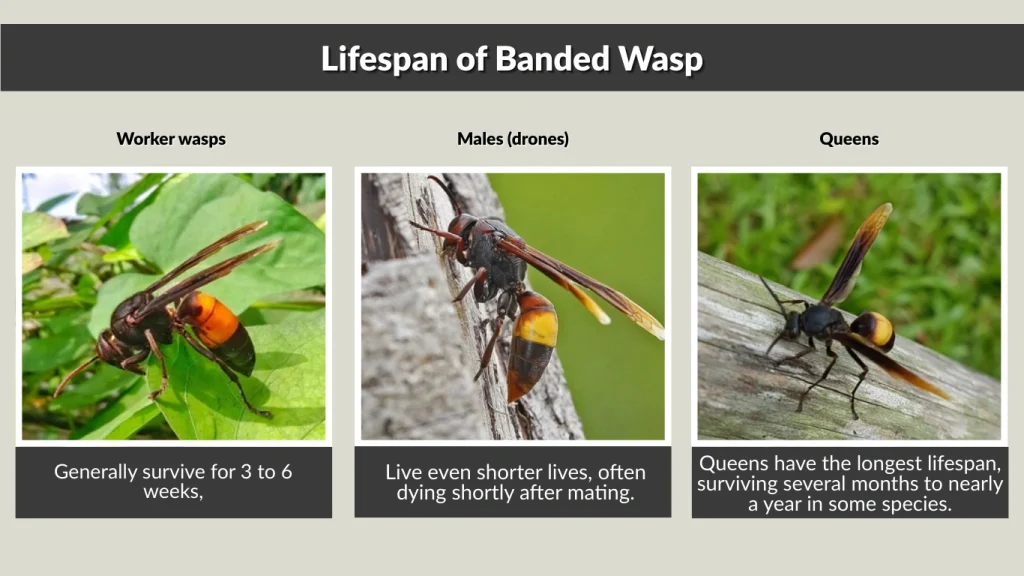
The lifespan of a banded wasp depends on its role in the colony and the season.
- Worker wasps generally survive for 3 to 6 weeks, as they spend most of their short lives foraging and defending the nest.
- Males (drones) live even shorter lives, often dying shortly after mating.
- Queens have the longest lifespan, surviving several months to nearly a year in some species.
Season also affects survival. In temperate regions, most banded wasps die off in the winter, leaving only fertilized queens to overwinter and restart colonies in spring.
Role in Ecosystem
Banded wasps play a vital ecological role:
- Pollination – While not as efficient as bees, they visit flowers regularly and help with cross-pollination of many plants.
- Pest Control – They hunt caterpillars, flies, and other insects that can damage crops, making them natural allies for gardeners and farmers.
- Food Source – Birds, spiders, and larger wasps prey on them, keeping the balance of the food chain.
Their presence demonstrates the importance of wasps beyond their painful sting—without them, pest populations would rise, and pollination rates would decline.
Similar Insects Often Confused with Banded Wasp

Banded Paper Wasp
A common confusion, paper wasps build papery umbrella-shaped nests. Their slim bodies and banded abdomens make them look similar to other banded wasp species.
Yellow Banded Wasp Moth
Despite its name, this insect is a moth (Syntomeida epilais) that mimics wasp coloration to avoid predators. It lacks a sting and is harmless.
Banded Wasp Spider (Argiope bruennichi)
This striking orb-weaving spider has yellow and black stripes across its abdomen, resembling a wasp. However, it is a spider, not an insect, and spins webs to catch prey instead of hunting like wasps.
Recognizing these differences is essential to avoid misidentification.
Preventing and Managing Banded Wasps Near Homes
Although banded wasps are beneficial, their nests near human activity can be a problem.
- Prevention: Seal cracks and crevices in homes, cover trash bins, and avoid leaving sweet foods or drinks exposed outdoors.
- Discouragement: Planting herbs like mint and lemongrass can act as natural deterrents.
- Nest Removal: Small nests can sometimes be removed carefully at night using protective gear, but larger infestations require professional pest control to avoid stings.
Coexisting with wasps is usually possible if their nests are away from frequent human activity.
Fascinating Facts About Banded Wasps
- Their bright bands serve as a warning system called aposematism, signaling danger to predators.
- Some tropical banded wasps are parasitic, laying eggs inside other insects where larvae feed internally.
- Unlike bees, most wasps do not produce honey, but they are equally vital for pollination.
- Certain cultures historically viewed wasps as symbols of protection and fertility, linking their stings with strength.
FAQs
What is the scientific name of the banded wasp?
There isn’t a single scientific name since “banded wasp” refers to several species within the Vespidae family, including paper wasps (Polistes spp.) and yellowjackets (Vespula spp.).
How big does a banded wasp get?
Most banded wasps measure between 10–20 mm, though larger species can reach 25 mm or more, with queens being the largest.
Can a banded wasp sting more than once?
Yes. Unlike bees, banded wasps can sting multiple times because their stinger does not detach.
What do banded wasp larvae eat?
Larvae are fed by adults with protein-rich prey, such as caterpillars, flies, and spiders, which are paralyzed and delivered to the nest.
How long does a banded wasp live?
Their lifespan varies: workers live a few weeks, males die after mating, while queens can survive months, especially if they overwinter.
