
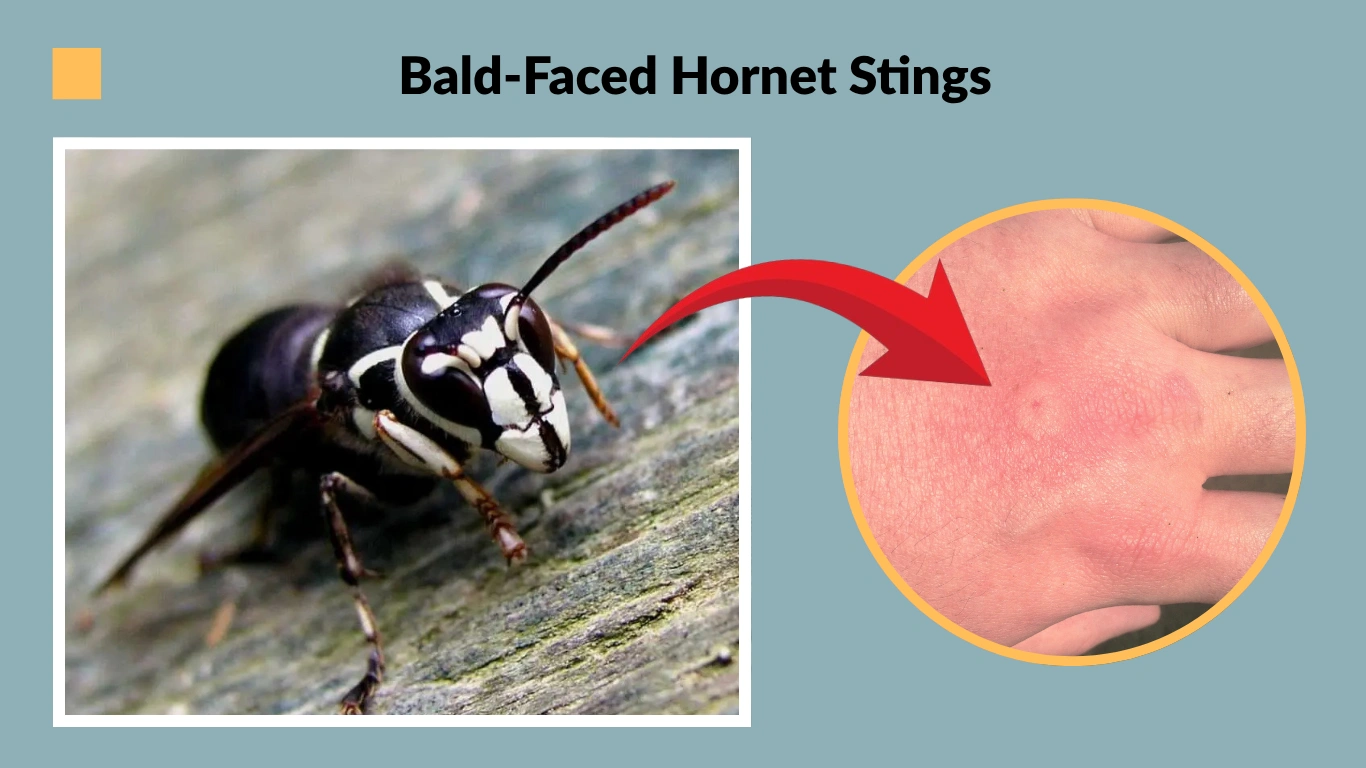
Bald-faced hornets are feared for good reason—they’re large, fast, and incredibly aggressive when defending their nest. While these wasps can be helpful in controlling insect populations, their stings are not only painful but can also trigger severe allergic reactions. Understanding how dangerous they are, how to identify sting symptoms, and how to treat them effectively is essential for anyone spending time outdoors during hornet season. In this guide, we’ll break down the truth about bald-faced hornet aggression, sting symptoms, treatment options, and how to avoid getting stung in the first place.
Are Bald-Faced Hornets Dangerous?
Yes, bald-faced hornets are considered dangerous, especially when their nest is disturbed. While they don’t typically seek out humans to sting during regular foraging, they become extremely aggressive if they perceive a threat to their colony. Their ability to sting multiple times, combined with their fast, coordinated attacks, makes them more hazardous than many other stinging insects.
A single bald-faced hornet sting is painful but usually manageable for most people. However, when multiple hornets attack—or if someone is allergic to wasp venom—the results can be far more serious, even life-threatening.
Why They’re Dangerous:
- They sting repeatedly: Unlike honeybees, they don’t lose their stinger.
- They release alarm pheromones: This signals other hornets to swarm and attack.
- They defend a wide area: They may attack anyone within 10–15 feet of their nest.
- Their venom is potent: It can cause strong reactions and serious allergic symptoms.
Because of their aggressive nature and painful stings, bald-faced hornets should always be treated with caution—especially when their nest is nearby.
How Aggressive Are Bald-Faced Hornets?

Bald-faced hornets are among the most aggressive wasps in North America, especially when it comes to defending their nest. While they aren’t aggressive when foraging for nectar or hunting insects, their defensive instincts kick in quickly and intensely if their nest is disturbed—even by vibration or loud noise.
They are extremely territorial and will respond to anything they perceive as a threat. Simply walking too close to a nest (within 10–15 feet) may be enough to trigger an attack.
Key Behaviors That Show Their Aggression:
- They patrol the airspace around their nest and may hover near intruders.
- If one hornet detects a threat, it may release alarm pheromones, prompting others to swarm.
- They will chase targets for several yards, often stinging multiple times in rapid succession.
- Even activities like mowing the lawn, trimming trees, or hammering near a nest can provoke them.
Unlike honeybees, bald-faced hornets don’t hesitate. Their aggression is fast, coordinated, and dangerous—particularly in late summer when colonies are largest and most defensive.
Bald-Faced Hornet Sting: What Happens When You’re Stung?
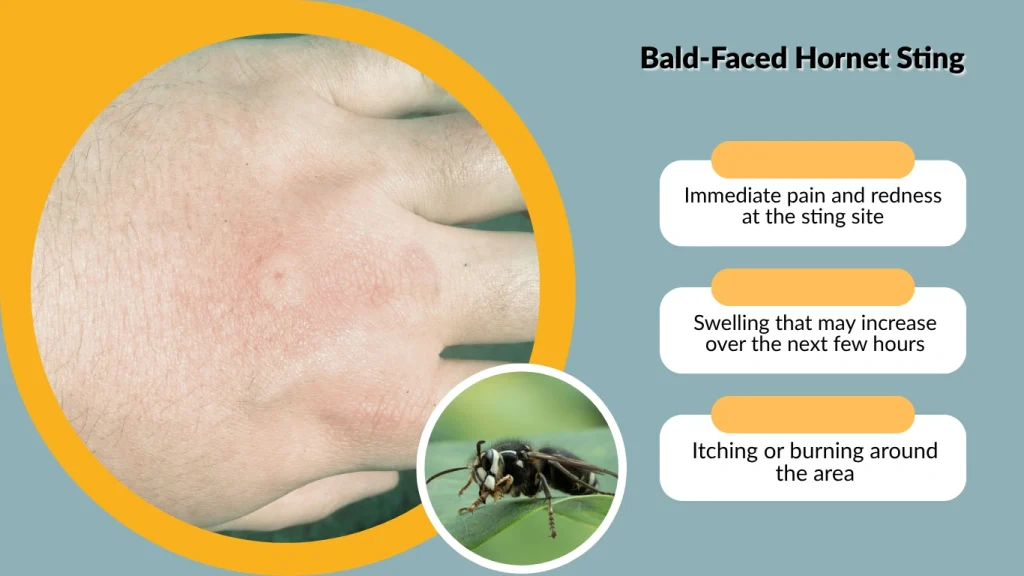
Getting stung by a bald-faced hornet is a painful and alarming experience. Their sting delivers a powerful venom that affects the skin and, in some cases, the entire body. While many people experience only localized symptoms, others may develop severe allergic reactions depending on their sensitivity and the number of stings.
What the Sting Feels Like
Most people describe the sting as a sudden, sharp, burning pain, similar to being jabbed with a hot needle. The intensity may last for a few minutes, followed by throbbing and localized swelling that can persist for hours.
Common Sting Symptoms (Mild to Moderate Reactions)
- Immediate pain and redness at the sting site
- Swelling that may increase over the next few hours
- Itching or burning around the area
- A raised welt or bump that feels warm to the touch
- Mild bruising or stiffness around the sting zone
Larger Local Reactions
Some people may experience a larger-than-normal swelling, especially if stung on soft tissue like the face, hands, or neck. This reaction can last several days and may extend several inches from the sting site.
Severe Allergic Reactions (Anaphylaxis)
A small percentage of people may suffer from a life-threatening allergic reaction that requires immediate emergency care. These symptoms can appear within minutes:
- Difficulty breathing or swallowing
- Swelling of the face, lips, throat, or tongue
- Hives or widespread rash
- Nausea, vomiting, or dizziness
- Rapid heartbeat or drop in blood pressure
- Loss of consciousness
Anyone experiencing these symptoms should be treated with epinephrine (EpiPen) if available and rushed to the nearest emergency facility. Multiple stings can increase the severity of any reaction, even in individuals with no known allergies.
Bald-Faced Hornet Sting Treatment

If you’re stung by a bald-faced hornet, prompt treatment can reduce pain, swelling, and the risk of complications. Most stings can be managed at home with basic first aid, but it’s important to monitor your body’s reaction closely in the hours that follow.
First Aid for Mild Reactions
If you experience localized pain, swelling, and redness (typical of a single sting), take the following steps:
- Wash the sting site with soap and water to prevent infection.
- Apply a cold compress or ice pack wrapped in a cloth to reduce swelling and numb the pain.
- Take an oral antihistamine like Benadryl (diphenhydramine) to manage itching and inflammation.
- Use hydrocortisone cream or calamine lotion for additional itch relief.
- Keep the area elevated if the sting is on a limb, to reduce swelling.
These symptoms usually improve within 24 to 72 hours.
Treatment for Larger or Moderate Reactions
If the swelling spreads several inches or causes discomfort beyond the sting site:
- Continue applying ice throughout the day in 15–20 minute intervals.
- Take NSAIDs (ibuprofen or acetaminophen) for pain and inflammation.
- Monitor the area for signs of secondary infection (pus, warmth, red streaks).
- Avoid scratching, which can increase irritation or lead to infection.
Emergency Care for Severe Reactions
If you or someone nearby shows signs of a severe allergic reaction, it’s critical to respond fast.
What To Do:
- Administer an epinephrine auto-injector (EpiPen) immediately if available.
- Call emergency services (911) without delay.
- Have the person lie down with their legs elevated unless they’re having trouble breathing.
- Loosen tight clothing and keep them calm.
- Monitor breathing and pulse, and begin CPR if necessary while waiting for help.
Even if symptoms seem to improve after using an EpiPen, the person must still go to the hospital, as reactions can return once the medication wears off.
Multiple Stings: When It Becomes More Serious
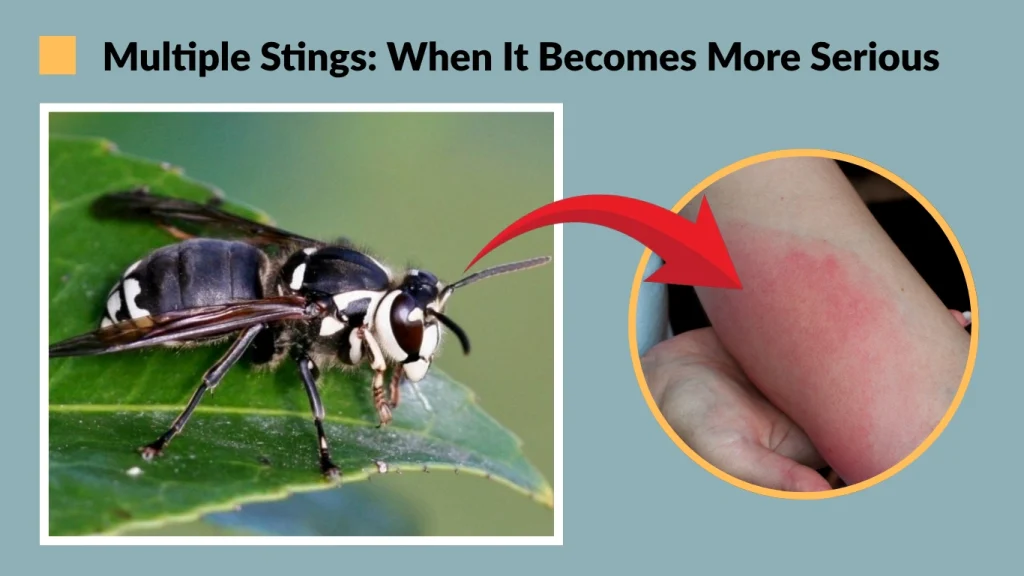
While one sting is painful, multiple stings from bald-faced hornets can pose a serious health risk—even for people without known allergies. Because these hornets can sting repeatedly and attack in swarms when their nest is disturbed, it’s possible to receive dozens of stings in just seconds.
Risks of Multiple Stings
- Cumulative venom can overwhelm the body, leading to more intense swelling, systemic symptoms, or even toxic reactions.
- Stings near sensitive areas (eyes, throat, mouth) can interfere with breathing and vision.
- In rare cases, venom from multiple stings can cause muscle breakdown, kidney stress, or shock.
What to Do
- Get to safety immediately. Run in a straight line away from the nest—don’t flail or swat, as this increases agitation.
- Once safe, count the stings and begin treatment immediately for each one.
- Drink plenty of water and monitor for fatigue, nausea, or faintness.
- If you’ve been stung more than 10 times or feel unwell, seek medical attention—especially if stung in the face, neck, or throat.
Can Bald-Faced Hornets Sting Through Clothing?
Yes, bald-faced hornets can sting through thin or tight clothing, especially if it presses against the skin. Their stingers are long and strong enough to penetrate fabric that isn’t thick or layered.
Clothing Vulnerabilities
- T-shirts, leggings, or socks offer little protection.
- Loose clothing is better than tight-fitting garments, as it adds space between fabric and skin.
- Lightweight materials like mesh or linen can be penetrated easily.
What Offers Better Protection?
- Heavy-duty denim or canvas
- Bee suits or wasp jackets with veils and gloves
- Multiple layers with all gaps sealed using tape (at cuffs, ankles, neck) if working near a nest
If you must be in an area where hornets are active—such as trimming trees or removing a nest—wearing protective gear is essential to prevent multiple painful stings.
How to Avoid Getting Stung by Bald-Faced Hornets
Prevention is the best defense when it comes to avoiding painful stings from bald-faced hornets. Since they are not aggressive unless provoked, most stings happen when people unknowingly get too close to a nest or disturb the area around it.
Tips to Prevent Stings
- Stay alert in late summer and fall, when nests are largest and hornets are most defensive.
- Inspect trees, shrubs, and building eaves before trimming, pruning, or doing yard work.
- Avoid loud noises and vibrations (e.g., mowing the lawn or using power tools) near suspected nest areas.
- Don’t wear bright floral prints or strong fragrances, which can attract hornets.
- Keep food and drinks covered outdoors, especially sugary items like soda, fruit, and sauces.
- Dispose of garbage properly and seal bins tightly to reduce attraction.
- Use caution near fallen fruit trees, compost bins, or outdoor grills where hornets may forage.
If a hornet begins circling you, stay calm and walk away slowly—sudden movements or swatting may provoke a sting.
FAQs
Do bald-faced hornets die after stinging?
No. Unlike honeybees, bald-faced hornets have smooth stingers, allowing them to sting multiple times without dying. This makes them more dangerous, especially when they attack in groups.
How long do sting symptoms last?
For most people, mild symptoms like pain, redness, and swelling will subside within 24 to 72 hours. Larger local reactions can last up to a week. Severe allergic reactions require immediate medical attention and may need several days of recovery.
Can children or pets be stung by bald-faced hornets?
Yes, and they are often more vulnerable. Children and pets are more likely to accidentally disturb nests and may experience stronger reactions. Pets may be stung on the face or paws, requiring veterinary care.
Do bald-faced hornets sting unprovoked?
Generally, no. Bald-faced hornets do not seek out humans to sting. However, if you approach their nest or make loud vibrations nearby, they’ll aggressively defend it—often without visible warning.
What’s the difference between a bald-faced hornet and a yellowjacket?
Bald-faced hornets are a type of aerial yellowjacket with a black body and white markings, and they build large, above-ground paper nests. Regular yellowjackets are usually yellow-and-black and nest underground or in wall voids.
