
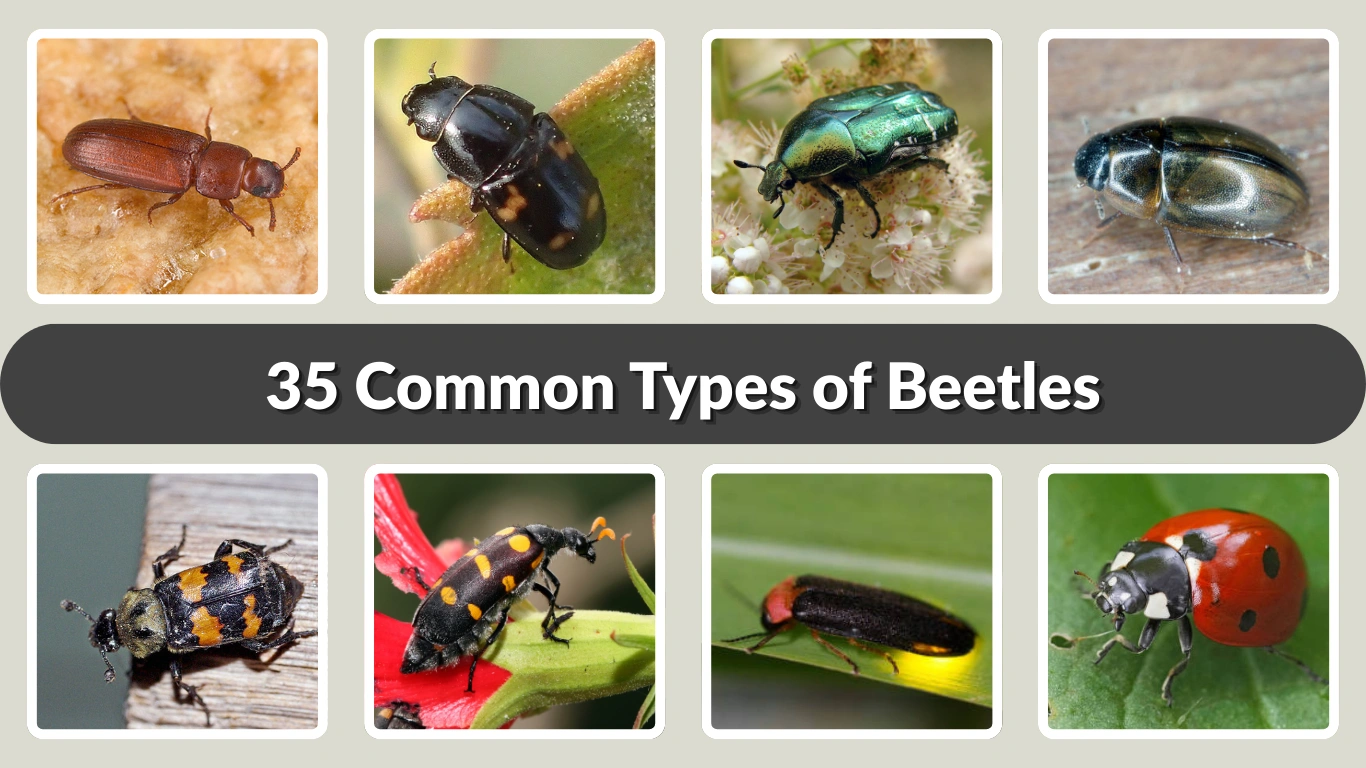
Beetles are one of the most diverse and widespread insects on Earth, found in nearly every habitat and playing vital roles in ecosystems. From colorful pollinators to wood-boring species and fierce predators, each beetle type has unique features and behaviors. This collection of 35 common beetles showcases their variety, helping readers identify and appreciate these fascinating insects in nature and everyday environments.
1. Ladybug

Ladybugs are small, brightly colored beetles known for their rounded shape and beneficial role in controlling garden pests. Found worldwide, they are especially loved for their charming appearance and helpful behavior in natural pest management.
Identification
- Small, dome-shaped body
- Usually red, orange, or yellow with black spots
- Short antennae
- Black head with light markings
Habitat
Ladybugs inhabit gardens, forests, grasslands, and agricultural fields. They prefer areas with abundant plant life where aphids and soft-bodied insects are available as food. They are commonly found on leaves, stems, and flower heads.
Behavior
Ladybugs are active predators, especially of aphids. They can fly short distances and often gather in large groups during winter to hibernate. Their bright colors warn predators of their mild toxicity, offering natural defense.
Life Cycle
The life cycle includes four stages: egg, larva, pupa, and adult. Eggs are laid in clusters near aphid colonies. Larvae are fierce predators. Development typically takes a few weeks, and adults can live up to a year depending on species and climate.
2. Stag Beetle
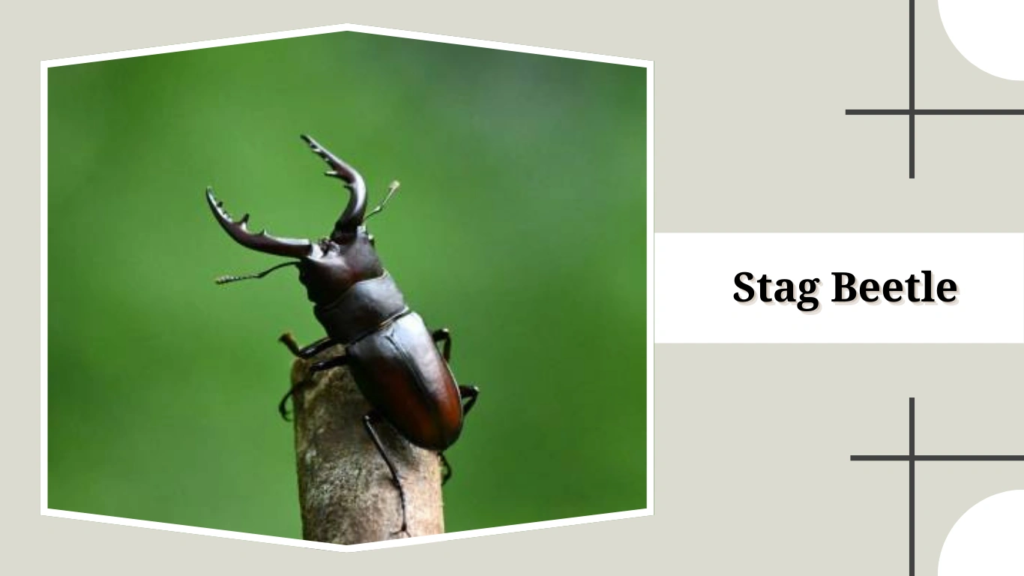
Stag beetles are large, impressive beetles known for their oversized mandibles, which resemble a stag’s antlers. They are mostly found in woodlands and gardens where decaying wood is abundant.
Identification
- Large body with shiny brown or black coloration
- Males have oversized antler-like mandibles
- Strong legs with noticeable claws
- Wing covers (elytra) smooth and hard
Habitat
Stag beetles live in forests, parks, and gardens rich in rotting wood, which their larvae feed on. They prefer humid, shaded environments and are often found near dead tree stumps and logs.
Behavior
Males use their mandibles to wrestle rivals during mating season. Adults are mostly active at dusk and can fly surprisingly well. Despite their fierce appearance, stag beetles are harmless to humans.
Life Cycle
Larvae develop for several years in decaying wood before pupating. Adults emerge in warm months, live for a short period, and focus on reproduction. The full cycle can span 3–7 years.
3. Rhinoceros Beetle
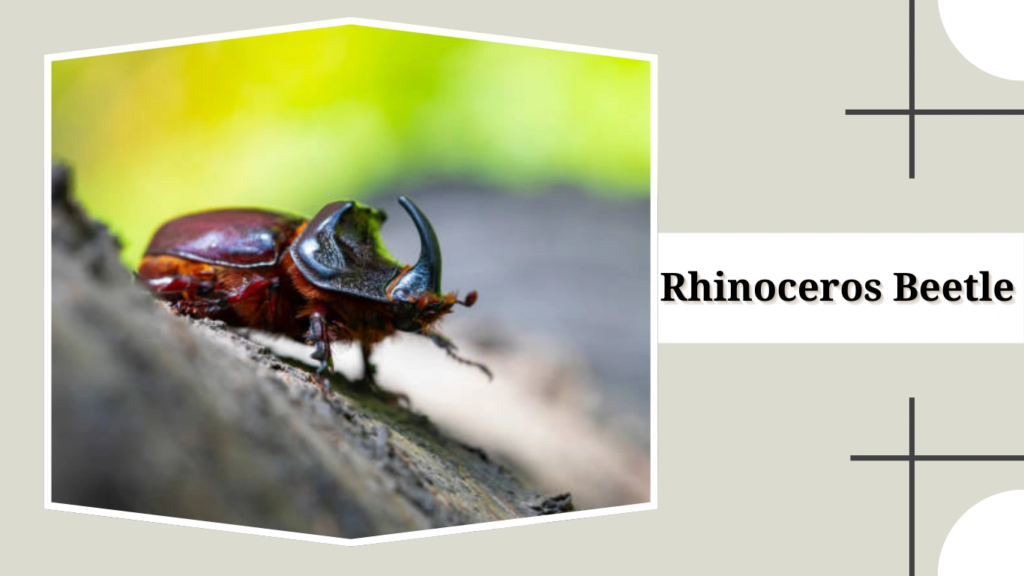
Rhinoceros beetles are powerful, thick-bodied beetles famous for the horn-like projections on their heads. They are among the strongest animals on Earth relative to size.
Identification
- Robust, shiny body (brown to black)
- One or more horn-like projections on head (mostly males)
- Smooth, curved wing covers
- Size varies widely, often quite large
Habitat
These beetles inhabit tropical forests, woodlands, and agricultural areas. They thrive in places with decaying plant matter, which their larvae rely on for food and development.
Behavior
Males use their horns to push and flip rivals in mating battles. They are strong fliers despite their bulky size. Adults feed on fruit, sap, and nectar, while larvae feed on decomposing wood or soil organic matter.
Life Cycle
Larvae grow for many months to years before pupating. Adults emerge seasonally, living only a few months. Their impressive size and horns develop during the pupal stage.
4. Hercules Beetle
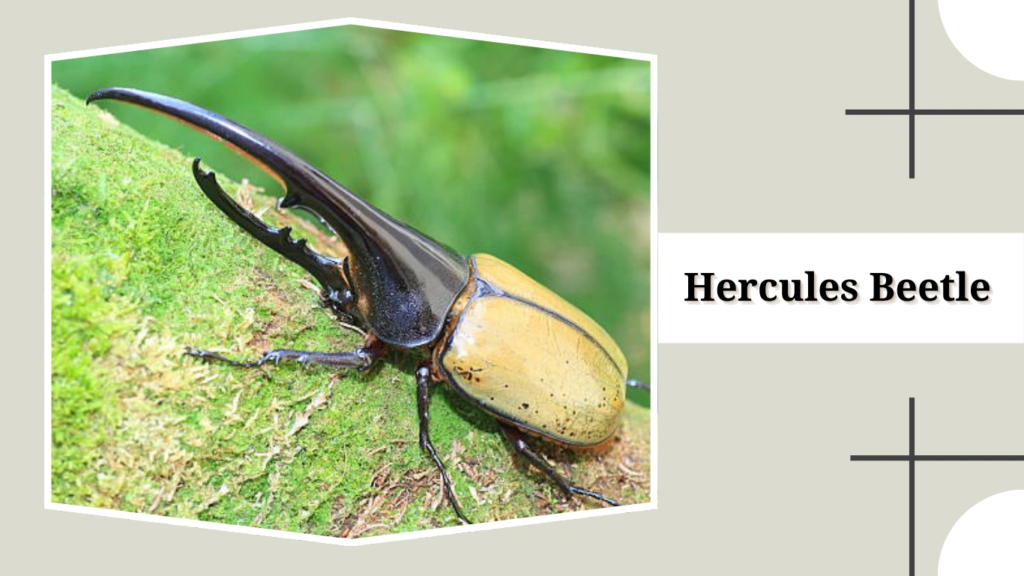
The Hercules beetle is one of the largest and strongest beetles in the world, famous for its long horn and remarkable lifting power. Native mainly to Central and South America, it is a striking symbol of insect strength and diversity.
Identification
- Extremely large size, often up to 7 inches
- Long horn on males extending from head and thorax
- Color ranges from olive, yellowish, to brown with black spots
- Thick, powerful legs with strong claws
Habitat
Hercules beetles live in tropical rainforests where humidity is high. They shelter under logs, leaf litter, and tree cavities. Their larvae develop deep in decaying wood, relying heavily on moist forest floors for survival.
Behavior
These beetles are largely nocturnal and slow-moving due to their heavy bodies. Males use their long horns to lift and throw challengers in territorial or mating battles. Despite their intimidating appearance, Hercules beetles are gentle and not harmful to humans.
Life Cycle
Larval development can last 1–2 years, feeding on rotting wood. Pupation occurs in a protective chamber made from soil and debris. Adults live only a few months, focusing on feeding and reproduction, while their impressive horn fully develops during the pupal stage.
5. Dung Beetle
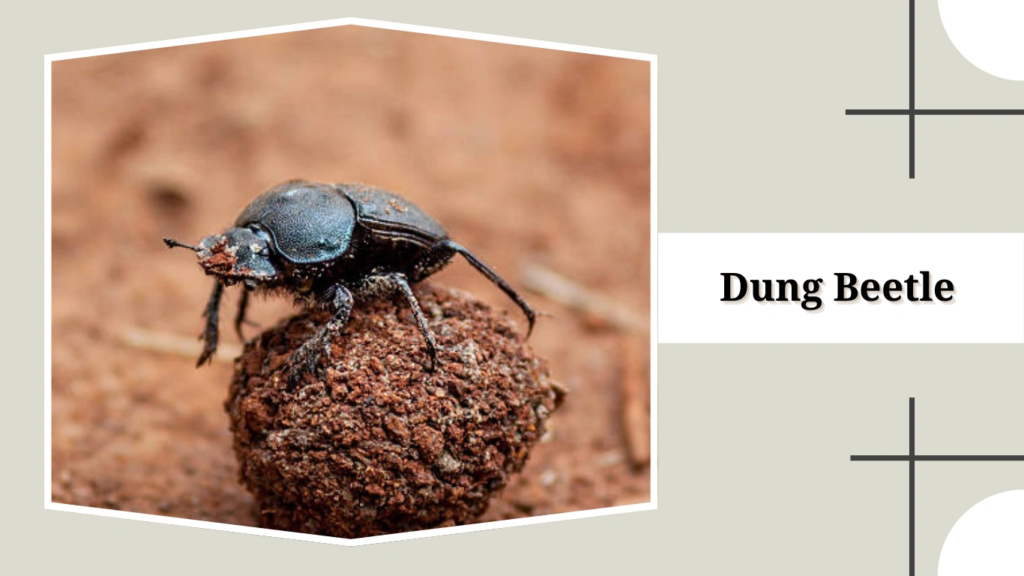
Dung beetles are well-known for their unique behavior of rolling, burying, and feeding on animal dung. Found on every continent except Antarctica, they play a crucial role in nutrient recycling and soil health.
Identification
- Small to medium-sized, round or oval body
- Dark coloration, usually black or metallic
- Strong, spade-like legs for digging
- Smooth or slightly textured wing covers
Habitat
Dung beetles inhabit grasslands, farms, savannas, forests, and deserts. They are often found wherever grazing animals live, as they depend on fresh dung to feed themselves and raise their young.
Behavior
These beetles exhibit fascinating behavior: rollers form balls of dung, tunnelers bury dung underground, and dwellers live inside dung piles. They help aerate soil, reduce pest flies, and improve plant growth—making them essential to many ecosystems.
Life Cycle
Females lay eggs inside specially prepared dung balls or tunnels. Larvae feed on the nutrient-rich dung throughout development. The full cycle is relatively fast, typically taking a few weeks to a few months, depending on species and climate.
6. Ground Beetle
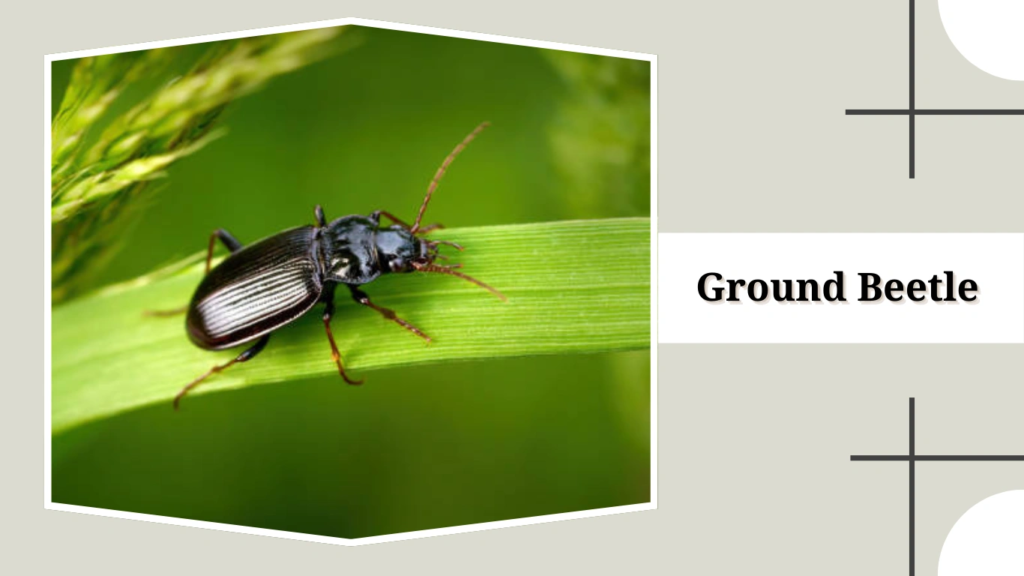
Ground beetles are fast-moving, predatory beetles commonly found on soil surfaces. They play an important ecological role by feeding on pests like caterpillars, slugs, and other insects.
Identification
- Flattened, elongated body
- Usually black or dark metallic
- Long legs for running
- Prominent mandibles
Habitat
Ground beetles live in forests, gardens, fields, and under stones or logs. They prefer moist soil surfaces and are often active at night, patrolling the ground in search of prey.
Behavior
They are swift hunters, capable of overpowering various soft-bodied insects. Many species are nocturnal and hide during the day. Some can release defensive chemicals when threatened, deterring predators.
Life Cycle
Eggs are laid in soil, where larvae also live and hunt. Development is rapid, taking several weeks to months. Adults emerge to continue the predatory cycle and may live up to a year depending on species.
7. Jewel Beetle
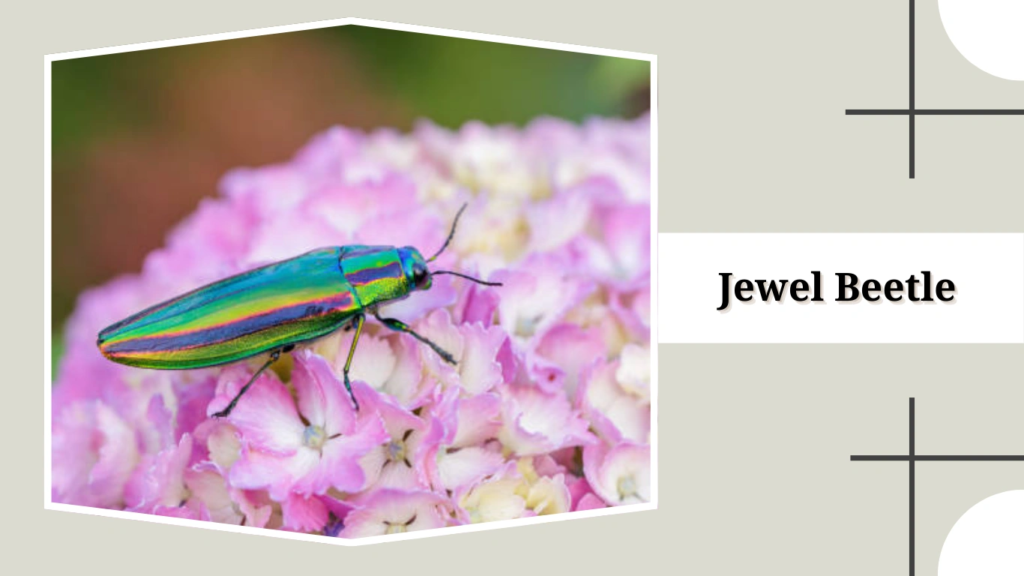
Jewel beetles are known for their brilliant, metallic colors that shimmer in sunlight. Their beauty makes them highly recognizable and often collected by entomology enthusiasts.
Identification
- Bright, iridescent metallic colors
- Elongated, bullet-shaped body
- Hard, glossy wing covers
- Short antennae
Habitat
These beetles thrive in forests, woodlands, and areas with abundant flowering plants. Many species depend on trees both for feeding and for larval development beneath bark.
Behavior
Adults are strong fliers and are active during warm, sunny hours. They feed on leaves, nectar, and sometimes bark. Their shimmering bodies help camouflage them among reflective plant surfaces.
Life Cycle
Females lay eggs in tree bark or wood. Larvae bore into trunks or branches, feeding internally for months or years. Pupation occurs inside the tree before adults emerge to mate and disperse.
8. Click Beetle
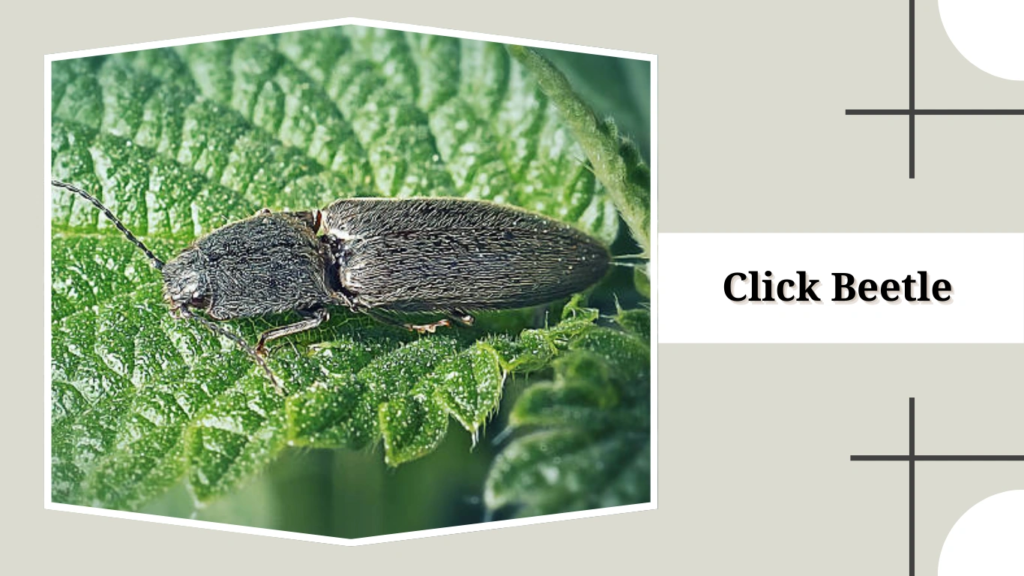
Click beetles are slender insects known for their unique ability to flip into the air with a clicking sound when they’re upside down or threatened. This “click” mechanism helps them escape predators and right themselves quickly.
Identification
- Long, narrow body shape
- Brown, black, or metallic coloration
- Distinct clicking spine between thorax segments
- Short, serrated antennae
Habitat
Click beetles live in grasslands, forests, gardens, and farmland. They hide under logs, stones, and soil during the day. Larvae, often called wireworms, develop underground in moist soil.
Behavior
Their snapping mechanism launches them several inches into the air, confusing predators. Adults are mostly nocturnal and attracted to lights. Larvae feed on plant roots, while adults feed on leaves and nectar.
Life Cycle
Eggs are laid in soil, where larvae may live for several years. Pupation also occurs underground. Adults emerge in warm seasons and live for a few months, often seen during summer nights.
9. Leaf Beetle
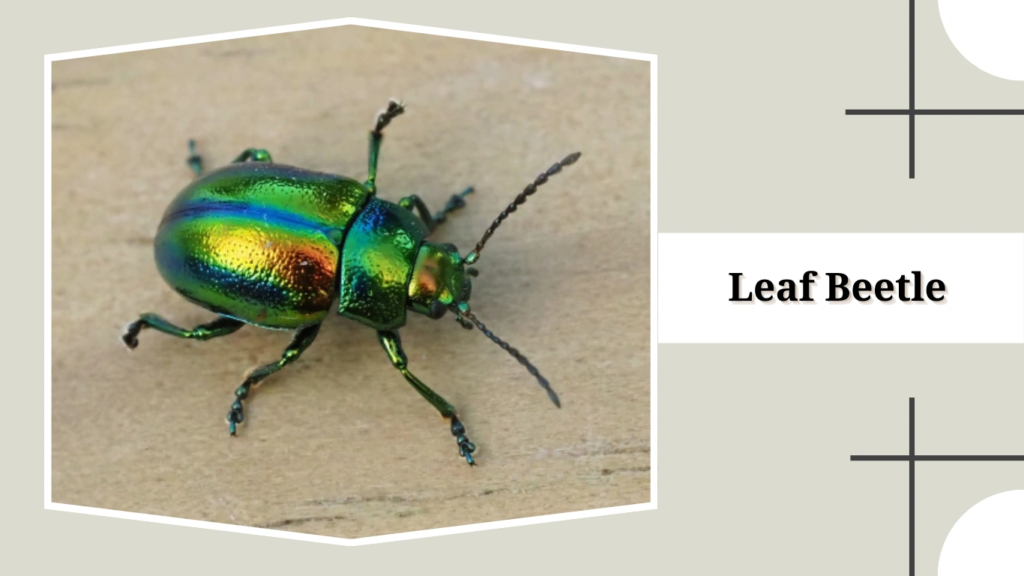
Leaf beetles are colorful plant-feeding beetles commonly found on flowers, shrubs, and crops. They include thousands of species worldwide, many known for their vibrant patterns.
Identification
- Rounded or oval body
- Bright colors: yellow, green, red, or striped
- Smooth, shiny wing covers
- Short legs and antennae
Habitat
These beetles inhabit forests, gardens, agricultural fields, and wetlands. They are usually found on the plants they feed on, often forming clusters on leaves and stems.
Behavior
Leaf beetles feed on plant tissue, sometimes causing significant damage to crops. Many species are diurnal and move slowly while feeding. Their bright coloring can help deter predators.
Life Cycle
Eggs are laid on leaves or stems. Larvae feed on the same host plants, often skeletonizing leaves. Pupation occurs in soil or on the plant surface. Adults emerge in warm months and can survive from several weeks to a full season.
10. Longhorn Beetle
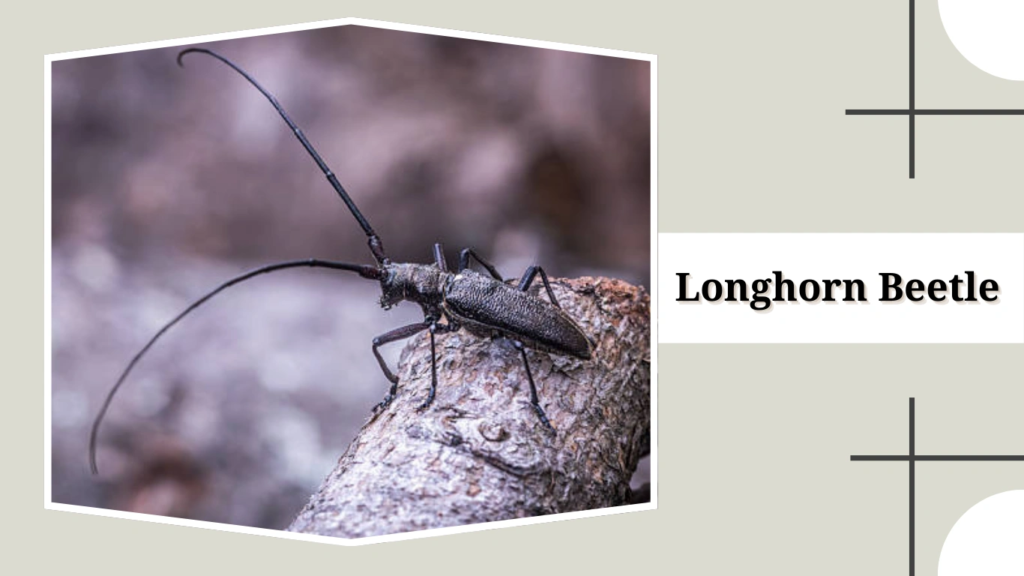
Longhorn beetles are easily recognized by their extremely long antennae, often longer than their bodies. They inhabit a wide range of environments and include many species known for their striking patterns.
Identification
- Very long antennae, often 2× body length
- Cylindrical body shape
- Varied colors: brown, black, yellow, or patterned
- Strong mandibles
Habitat
Longhorn beetles live in forests, woodlands, and areas rich in dead or decaying wood. Their larvae are wood-borers, developing inside logs, branches, and tree trunks for months or years.
Behavior
Adults are strong fliers attracted to lights. They feed on nectar, sap, plant stems, or bark. Many species display impressive patterns or mimic wasps for protection.
Life Cycle
Eggs are laid on dead wood or tree bark. Larvae tunnel deep into wood, where they feed and grow. Pupation occurs inside the tunnels. Adults emerge seasonally and often live only a few weeks.
11. Bark Beetle

Bark beetles are tiny wood-boring beetles that live under tree bark. Despite their small size, they can significantly affect forests by tunneling through living or dead trees.
Identification
- Small, cylindrical body
- Brown or black coloration
- Short clubbed antennae
- Boring holes visible on tree bark
Habitat
Bark beetles inhabit forests, plantations, and wooded areas. Many species specialize in specific tree types such as pine, spruce, or fir. They live primarily beneath the bark of host trees.
Behavior
These beetles tunnel through bark to feed and lay eggs, creating intricate gallery patterns. Some species attack healthy trees, while others target weakened or dead ones. They communicate using chemical signals.
Life Cycle
Eggs are laid in bark galleries. Larvae feed on inner bark layers, creating tunnels as they grow. Pupation occurs within the bark, and adults emerge through small round exit holes. Lifecycle duration varies with climate and species.
12. Weevil

Weevils are small beetles recognized by their elongated snouts. With thousands of species worldwide, they are among the most diverse and widespread plant-feeding beetles.
Identification
- Distinct long snout (rostrum)
- Small, oval body
- Brown, gray, or black coloration
- Elbowed antennae emerging from the snout
Habitat
Weevils inhabit forests, gardens, crops, and stored-grain facilities. They prefer areas with abundant plant matter, seeds, or grains. Many species specialize in particular host plants.
Behavior
Weevils use their snouts to bore into seeds, nuts, or plant stems. Some species are major agricultural pests. They generally move slowly and play dead when threatened, curling their legs inward.
Life Cycle
Females often lay eggs inside seeds or plant tissue. Larvae feed internally, hidden from predators. Pupation occurs within the seed or soil. Adults emerge to feed, reproduce, and disperse.
13. Firefly (Lightning Beetle)
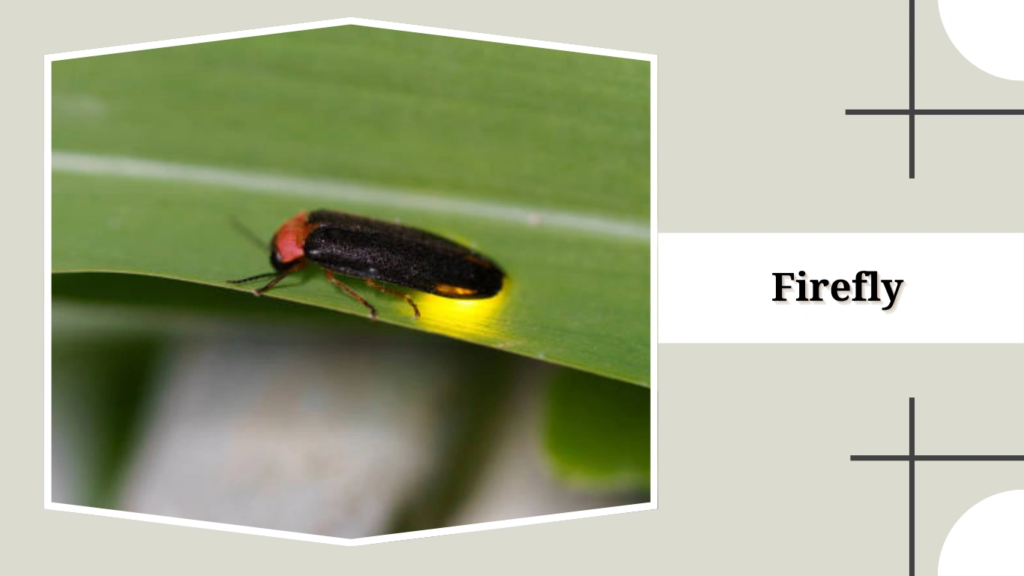
Fireflies are beetles famous for their ability to produce light through bioluminescence. They are commonly seen glowing on warm summer nights.
Identification
- Soft-bodied beetle
- Black or brown with orange/yellow markings
- Light-producing organ on abdomen
- Short, soft wing covers
Habitat
Fireflies live in meadows, forests, marshes, and gardens. They thrive in humid environments with abundant moisture. Larvae typically inhabit soil or leaf litter.
Behavior
Adults flash light to attract mates, with each species displaying a unique pattern. Larvae are predators, feeding on snails, slugs, and worms. Adults may feed on nectar or not feed at all.
Life Cycle
Eggs are laid in damp soil. Larvae develop for months or years before pupating. Adults emerge in summer, often living only a few weeks—just long enough to mate and lay eggs.
14. Tiger Beetle
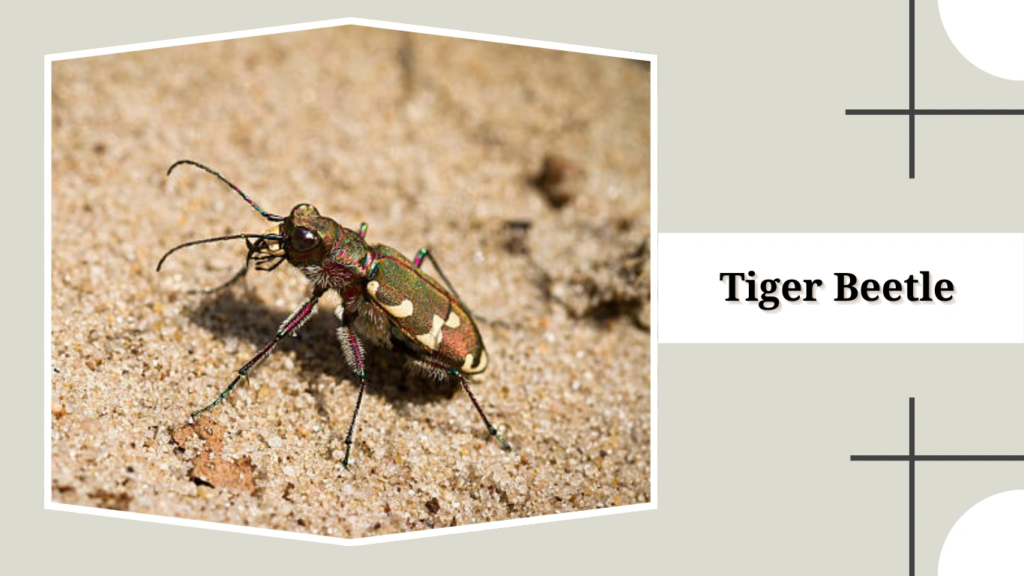
Tiger beetles are fast, agile predators known for their speed and sharp mandibles. They are often brightly colored and highly active in sunny habitats.
Identification
- Slender body with long legs
- Metallic green, blue, or patterned coloration
- Large, curved mandibles
- Prominent, bulging eyes
Habitat
Tiger beetles live in sandy areas, open fields, riverbanks, and forest edges. They prefer sunny, open ground where they can sprint after prey and dig burrows for larvae.
Behavior
They are among the fastest insects, capable of short bursts of impressive speed. Tiger beetles actively chase prey like ants and small insects. They are alert, quick to fly or run when approached.
Life Cycle
Females dig burrows in sandy soil to lay eggs. Larvae wait at the burrow entrance to ambush passing prey. After several molts, they pupate in the same burrow before emerging as adults.
15. Blister Beetle
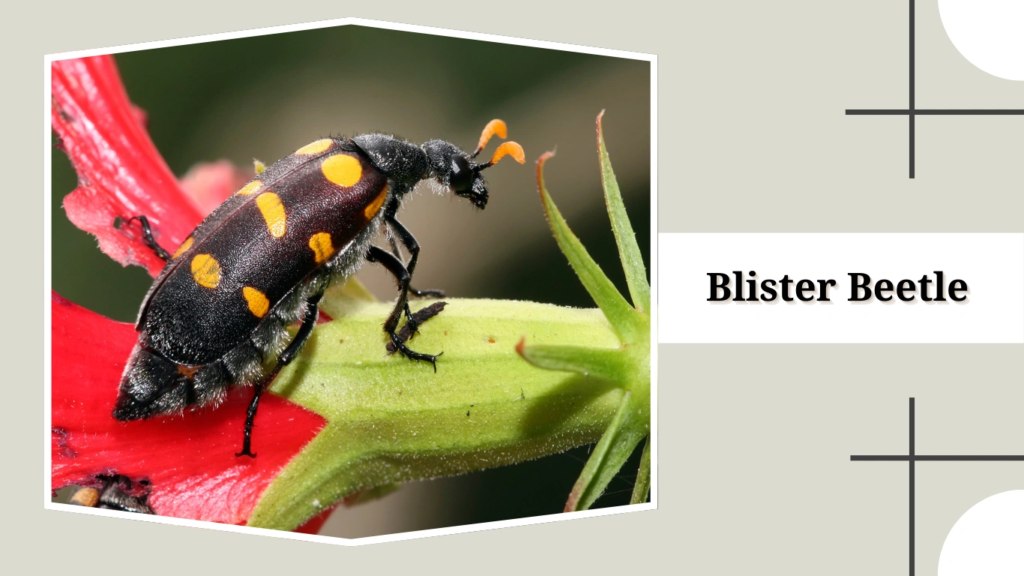
Blister beetles are soft-bodied beetles named for the chemical they release—cantharidin—which can cause skin irritation or blisters. They are typically slender and colorful.
Identification
- Soft, narrow body
- Bright colors: yellow, black, blue, or striped
- Flexible wing covers
- Long, segmented antennae
Habitat
Blister beetles inhabit fields, gardens, grasslands, and desert regions. They are often found on flowering plants, where adults feed on petals and leaves.
Behavior
When threatened, blister beetles exude cantharidin, a defensive chemical. Adults feed on plants, while larvae often parasitize bee nests or feed on grasshopper eggs. They are slow-moving but highly noticeable due to their colors.
Life Cycle
Larvae pass through several stages, including mobile and parasitic phases. Pupation occurs in soil or in bee nests. Adults live during warm seasons and reproduce quickly in suitable habitats.
16. Carrion Beetle
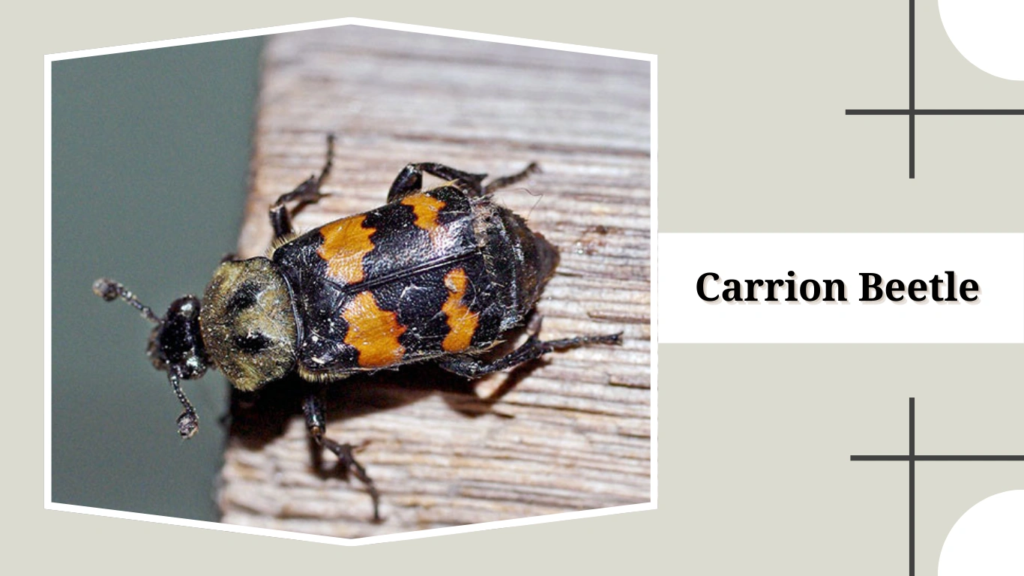
Carrion beetles are scavenger beetles that feed on decaying animals. They play an important ecological role in decomposition and nutrient recycling.
Identification
- Broad, flattened body
- Black or dark with orange or yellow markings
- Distinctive clubbed antennae
- Short wing covers exposing final abdominal segments
Habitat
Carrion beetles inhabit forests, grasslands, and areas where animal remains may be found. They are commonly seen on carcasses, under logs, or in moist soil.
Behavior
They feed on decaying flesh, working alongside flies and other decomposers. Some species bury small carcasses to raise their larvae. Adults often show parental care by feeding their young.
Life Cycle
Eggs are laid directly on or near carrion. Larvae feed on soft tissues before pupating in soil. Adults emerge after a few weeks, depending on temperature and species.
17. Darkling Beetle
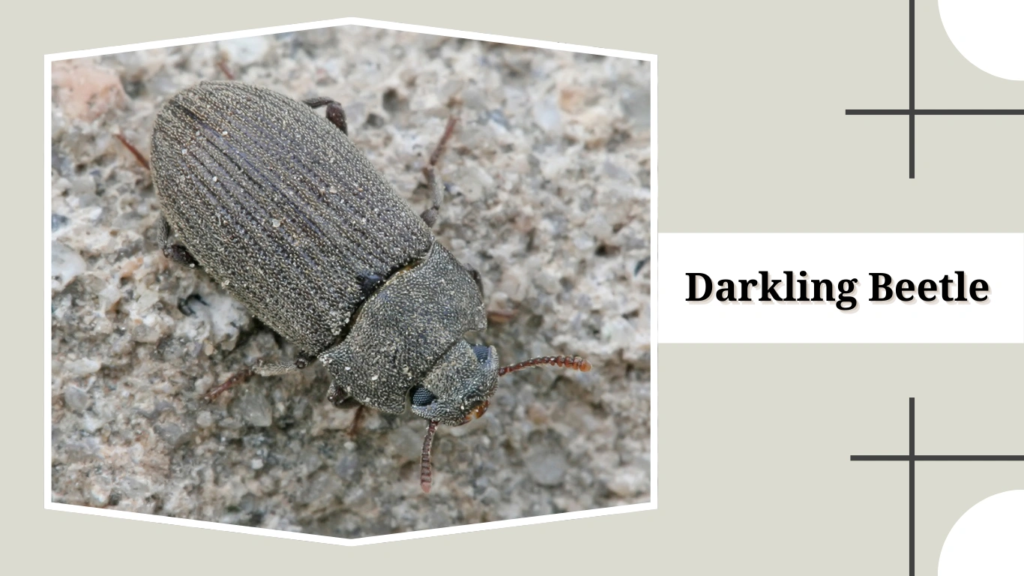
Darkling beetles include many species commonly found in deserts, forests, and even stored food products. The well-known mealworm beetle belongs to this group.
Identification
- Dark brown or black coloration
- Hard, elongated body
- Fused wing covers (cannot fly in many species)
- Segmented antennae
Habitat
These beetles inhabit deserts, woodlands, barns, and grain storage facilities. They thrive in dry environments and are often found under rocks or logs.
Behavior
Darkling beetles are mostly nocturnal, avoiding sunlight. Many species perform a defensive posture, raising their abdomen to release foul-smelling chemicals. Larvae (mealworms) feed on grains and decomposing plant matter.
Life Cycle
Eggs hatch into larvae that may live for several months. After pupation, adults emerge and can live for weeks or up to a year. They reproduce quickly in warm, dry conditions.
18. Soldier Beetle
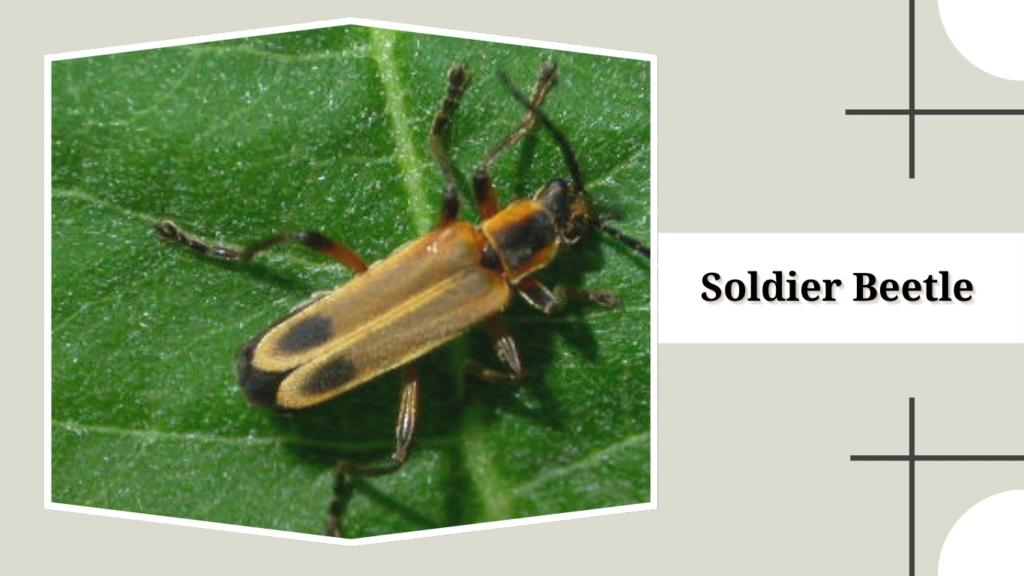
Soldier beetles are soft-bodied beetles often seen on flowers, where they hunt small insects and feed on nectar. Their elongated bodies and bright colors make them easy to spot.
Identification
- Soft, elongated body
- Usually orange, red, or yellow with black markings
- Flexible wing covers
- Long legs and antennae
Habitat
Soldier beetles inhabit meadows, gardens, woodlands, and hedgerows. They prefer areas rich in flowering plants, especially during warm months.
Behavior
They are active predators of aphids and other small insects, making them beneficial in gardens. Adults frequently gather on flowers to feed and mate. Despite bright colors, they are harmless to humans.
Life Cycle
Eggs are laid in soil. Larvae feed on small insects and organic matter before pupating underground. Adults emerge in summer and live for a few weeks, focusing on feeding and reproduction.
19. Rove Beetle
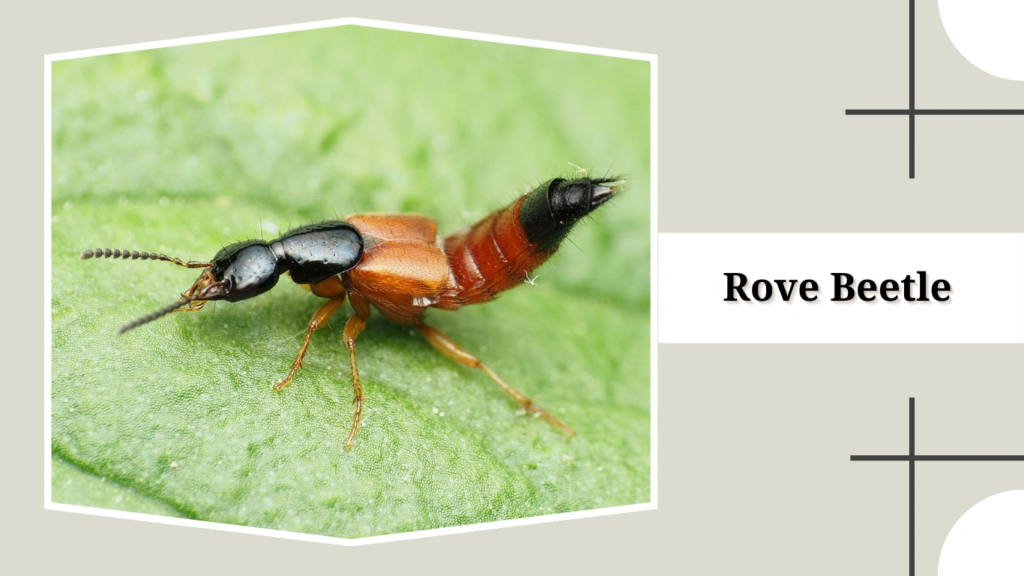
Rove beetles are distinguished by their short wing covers, which leave the abdomen exposed. They are highly diverse, with thousands of species worldwide.
Identification
- Slender body with short elytra
- Exposed, flexible abdomen
- Black or brown coloration
- Prominent mandibles
Habitat
Rove beetles live in forests, leaf litter, compost piles, wetlands, and decaying wood. They prefer moist environments rich in organic matter and small prey.
Behavior
They are fast-moving predators, feeding on mites, larvae, and other small insects. Many species raise their abdomen like a scorpion when threatened, though they cannot sting. They are active both day and night.
Life Cycle
Eggs are laid in soil or leaf litter. Larvae and adults are predatory. Development varies by species, but adults typically live only a few months.
20. Whirligig Beetle
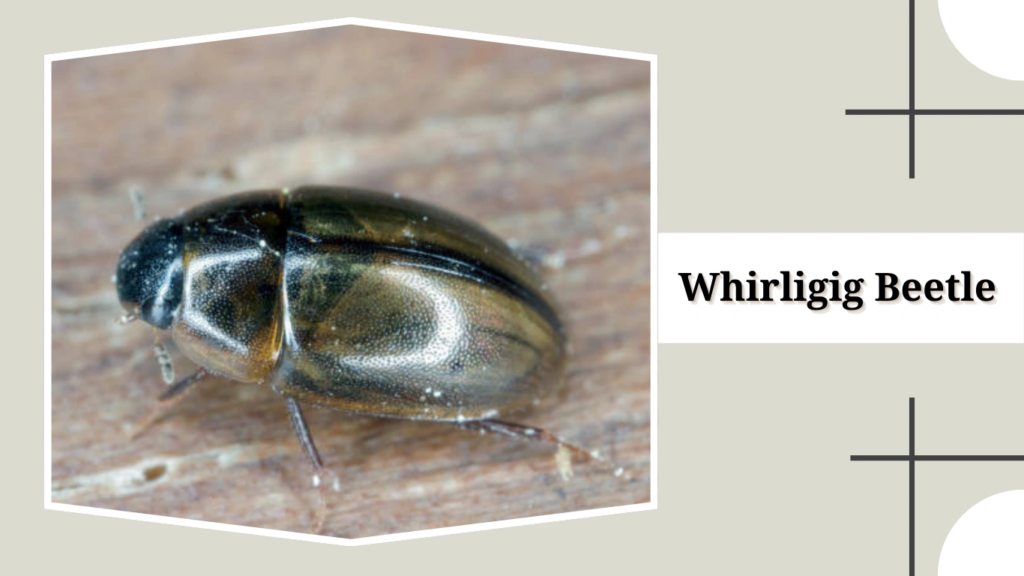
Whirligig beetles are aquatic beetles known for skimming rapidly across water surfaces in swirling, whirling patterns. They have unique split eyes that allow them to see above and below water simultaneously.
Identification
- Oval, streamlined body
- Dark, shiny coloration
- Split eyes: one pair for above water, one for below
- Short antennae adapted for sensing vibrations
Habitat
Whirligig beetles live on ponds, lakes, streams, and slow-moving water bodies. They gather in groups on the water surface and dive quickly when disturbed.
Behavior
They swim in fast, circular motions to confuse predators. Using their split eyes, they monitor threats from air and water. They feed on insects that fall onto the water surface, often hunting in coordinated groups.
Life Cycle
Eggs are laid on aquatic plants. Larvae are underwater predators with strong jaws. Pupation occurs at the water’s edge. Adults return to the surface and live in groups throughout their lifespan.
21. Burying Beetle
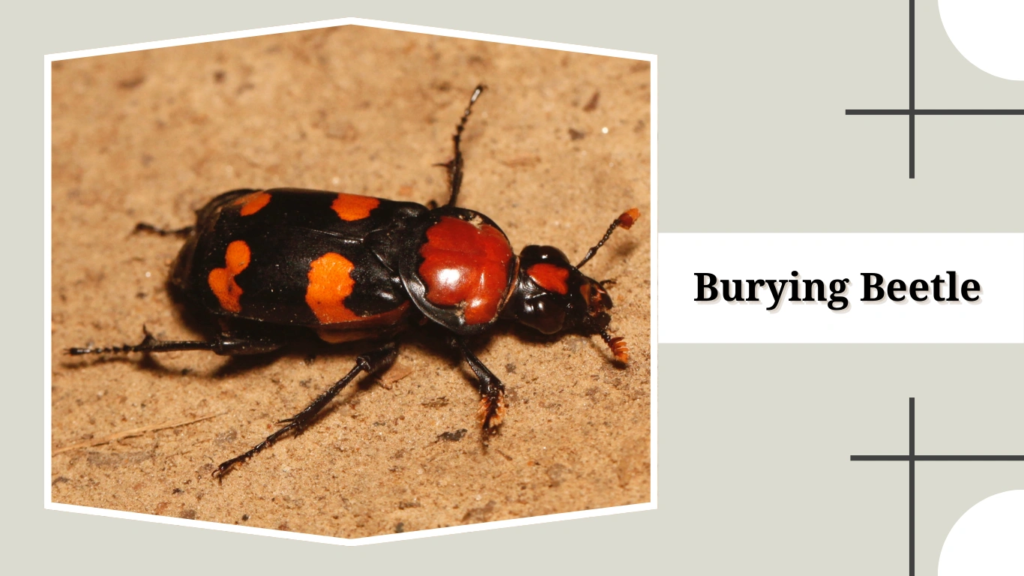
Burying beetles specialize in locating and burying small animal carcasses to raise their young. They are known for exceptional parental care, rare among insects.
Identification
- Black body with bright orange or red patches
- Clubbed antennae with orange tips
- Large, robust body
- Elytra often short, exposing abdominal segments
Habitat
They inhabit forests, grasslands, and shrublands. Adults search for small dead animals like mice or birds, which they bury underground to create a food source for their larvae.
Behavior
Both parents cooperate in preparing the carcass, cleaning it, and feeding the larvae—a unique behavior among beetles. They detect carrion from long distances using their strong sense of smell.
Life Cycle
Females lay eggs near the buried carcass. Larvae feed directly on the preserved remains, often attended by the parents. After feeding, they pupate in surrounding soil before emerging as adults.
22. Deathwatch Beetle
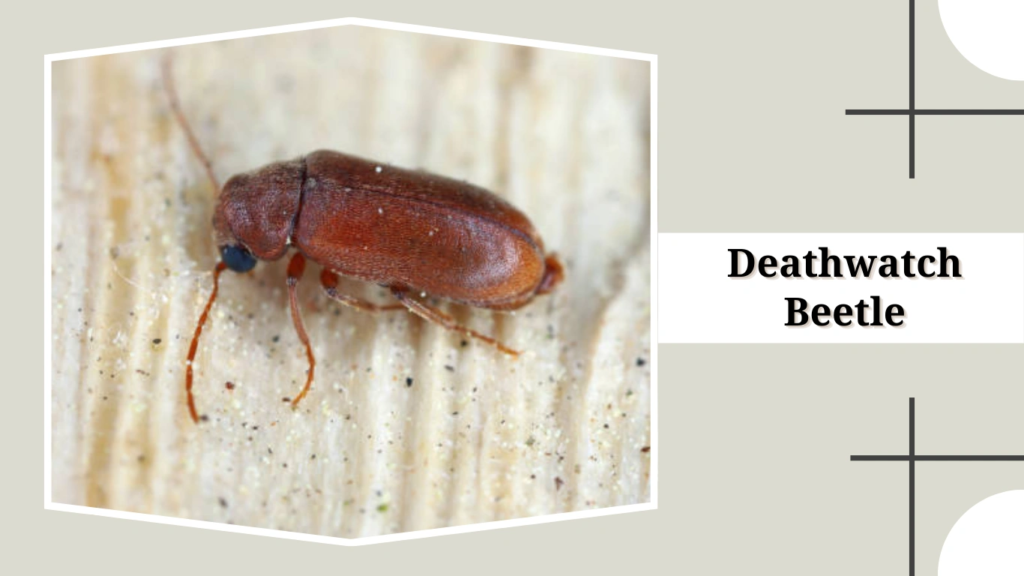
Deathwatch beetles are wood-boring insects known for the tapping or ticking sounds males make inside old timbers to attract mates. These beetles are frequently found in historic wooden structures.
Identification
- Small, cylindrical body
- Brown, mottled coloration
- Fine hairs covering the body
- Small round exit holes in infested wood
Habitat
They inhabit old wooden buildings, dead trees, and timber structures. Larvae feed inside hardwood, creating tunnels that can weaken beams and furniture over many years.
Behavior
Males create a distinct tapping sound by knocking their heads or jaws against wood, especially during quiet nights. Larvae remain hidden for long periods, feeding within wood. Adults are short-lived and mostly reproductive.
Life Cycle
Eggs are laid in cracks of wood. Larvae may feed for several years before pupating within their tunnels. Adults emerge through small holes, often leaving behind significant internal damage.
23. Carpet Beetle
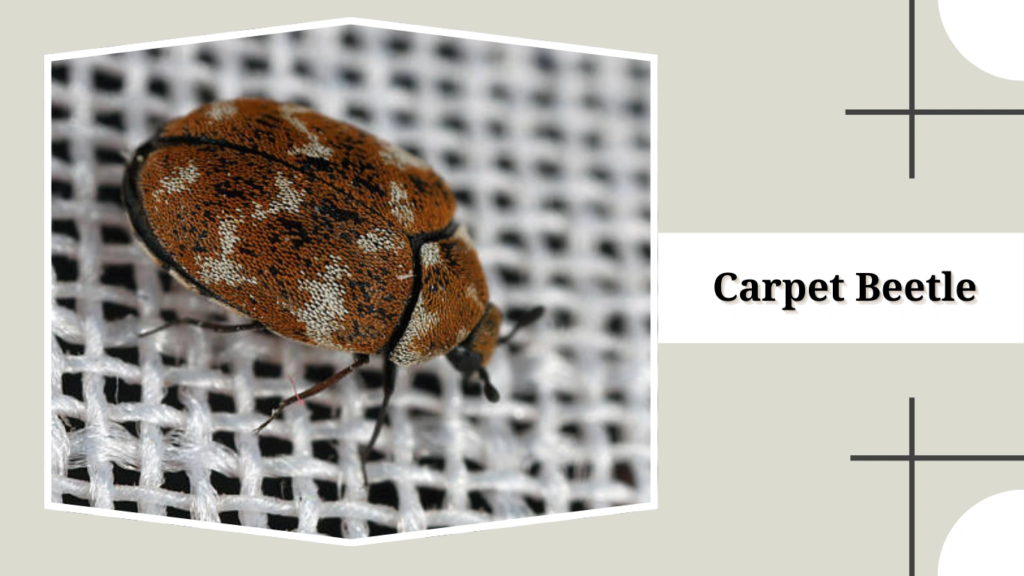
Carpet beetles are household pests known for their larvae, which damage wool, fur, clothing, and carpets. Adults, however, often feed on pollen outdoors.
Identification
- Small, oval, and often patterned with white, black, or brown scales
- Short antennae
- Fuzzy, worm-like larvae (“woolly bears”)
- Adults resemble tiny ladybugs
Habitat
Adults live outdoors on flowers, while larvae thrive indoors in closets, carpets, stored fabrics, and upholstered furniture. They prefer dark, undisturbed areas.
Behavior
Larvae feed on natural fibers like wool, silk, feathers, and fur, causing holes and damage. Adults are harmless indoors and are attracted to light. Carpet beetles often enter homes through windows or flowers brought inside.
Life Cycle
Females lay eggs on materials rich in natural fibers. Larvae molt several times over weeks to months before pupating. Adults emerge and often migrate outdoors to feed and reproduce.
24. Grain Beetle
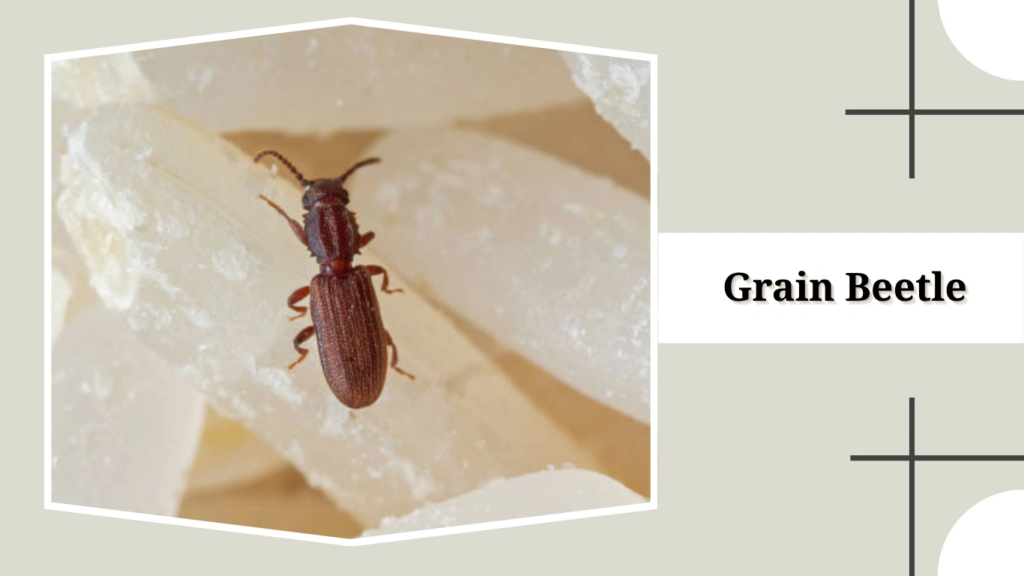
Grain beetles are small insects commonly found in stored food products such as rice, wheat, flour, and cereals. They are significant pests in grain storage facilities, warehouses, and household pantries.
Identification
- Very small, slender body (2–3 mm)
- Reddish-brown or dark brown coloration
- Long, narrow thorax with ridges
- Distinct clubbed or serrated antennae depending on species
Habitat
Grain beetles inhabit dry, stored food environments—granaries, mills, pantries, warehouses, and food processing facilities. They thrive in warm, humid conditions and can infest packaged goods by entering through tiny openings.
Behavior
They feed on broken grains, processed cereals, and powdered foods. Grain beetles reproduce rapidly, making infestations spread quickly. Adults are active and can crawl into sealed containers. They avoid bright light and prefer crevices.
Life Cycle
Females lay dozens to hundreds of eggs in or near grain. Larvae feed inside food materials and pupate within the substrate. Development can be completed in as little as 3–5 weeks in warm temperatures, leading to multiple generations per year.
25. Flower Beetle
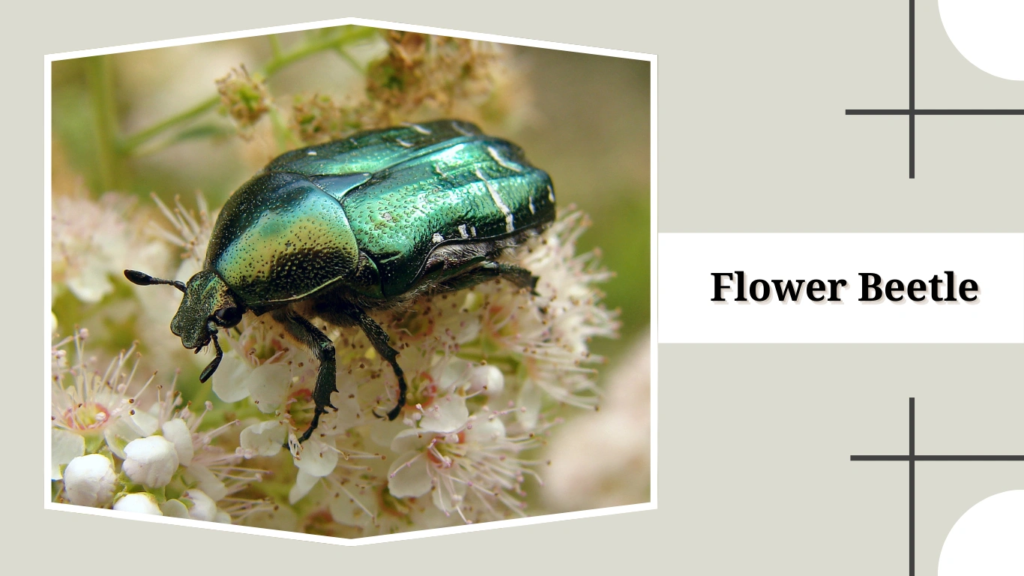
Flower beetles are colorful beetles commonly seen on blossoms, where they feed on pollen, nectar, and petals. Many species are strikingly patterned and play a role in pollination.
Identification
- Medium-sized, often brightly colored
- Metallic green, yellow, black, or spotted patterns
- Oval or slightly elongated body
- Soft to moderately hard wing covers
Habitat
They inhabit gardens, meadows, forests, and anywhere flowering plants are abundant. Adults are typically found on open blooms during daylight hours, while larvae develop in decaying wood or soil rich in organic matter.
Behavior
Flower beetles fly actively during the day and frequently move between flowers. They feed on pollen, nectar, and sometimes fruit. Their bright colors make them easy to spot. Some species mimic bees or wasps for protection from predators.
Life Cycle
Eggs are laid in soil, decayed wood, or compost. Larvae feed on decomposing plant matter until pupation. Adults emerge in warm seasons and live several weeks to months, pollinating flowers as they feed and travel.
26. Sap Beetle
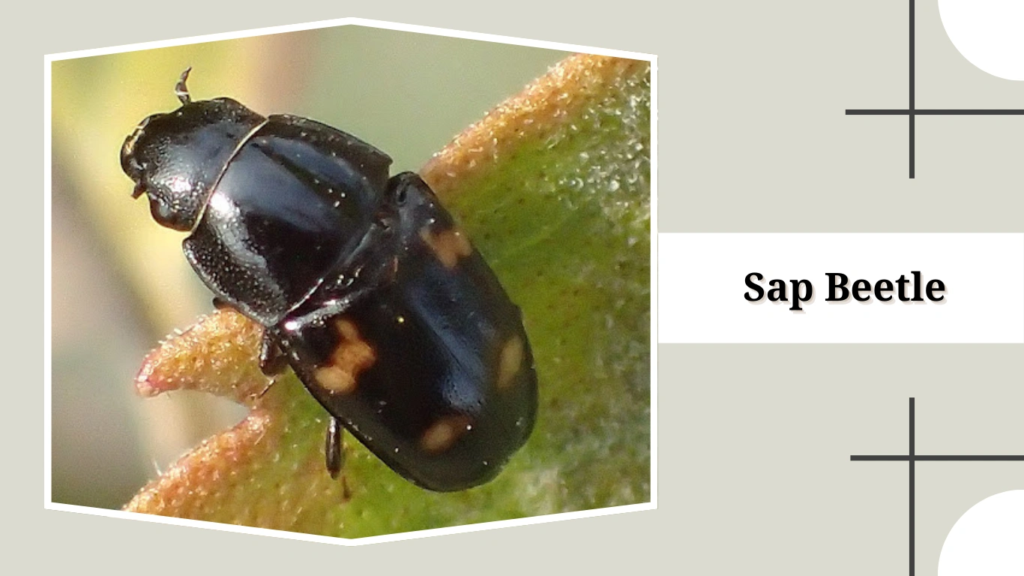
Sap beetles are small insects frequently found around fermenting fruit, tree sap, and decaying plant matter. They are attracted to sweet, sugary substances and often appear in large numbers.
Identification
- Small, oval or slightly flattened body
- Brown, black, or mottled coloration
- Short antennae often ending in a club
- Smooth, shiny wing covers
Habitat
Sap beetles inhabit orchards, gardens, woodlands, and places where fruits or plant juices are present. They gather on overripe fruit, sap flows, compost piles, and damaged crops.
Behavior
They feed on fermenting fruit, plant sap, and fungi. Sap beetles are highly attracted to sweet smells and can become pests in orchards and vineyards. They fly well and gather quickly where fruit is damaged or decaying.
Life Cycle
Eggs are laid near fermenting organic matter. Larvae feed on decomposing fruit or fungi before pupating in soil. Adults emerge within weeks and continue feeding on sugary materials throughout their short lifespan.
27. Water Beetle
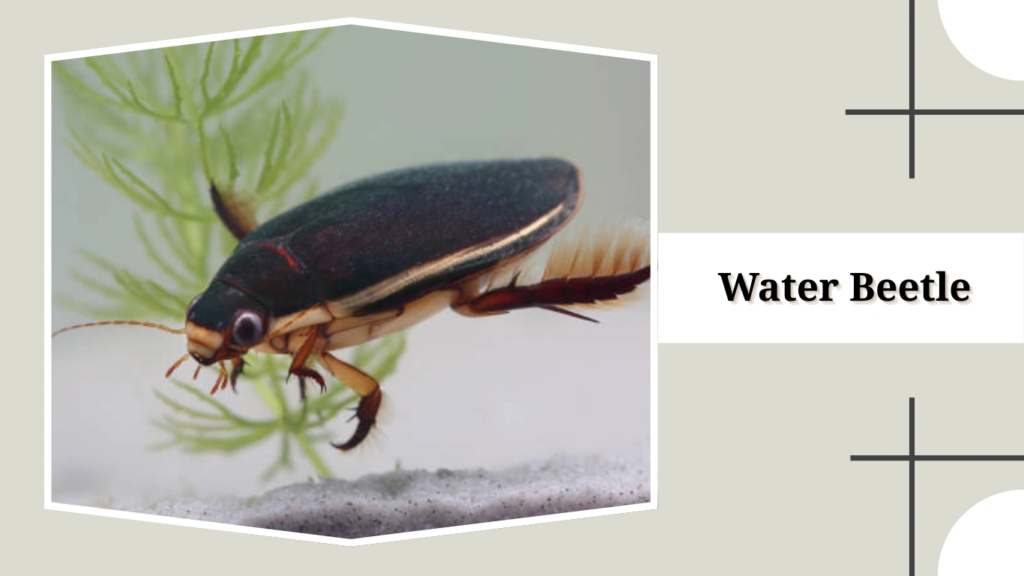
Water beetles are fully aquatic insects capable of swimming swiftly using their hind legs as paddles. They live in various freshwater habitats and include both predators and scavengers.
Identification
- Oval, streamlined body built for swimming
- Dark brown or black coloration
- Long hind legs fringed with swimming hairs
- Smooth, waterproof wing covers
Habitat
Water beetles inhabit ponds, marshes, lakes, and slow-moving streams. They spend most of their lives underwater, surfacing only to trap air beneath their wing covers for breathing.
Behavior
Most species are strong swimmers and active hunters, feeding on tadpoles, small fish, insects, or decaying matter. They store air under their elytra, allowing extended dives. When threatened, they dive rapidly to avoid predators.
Life Cycle
Females lay eggs in aquatic plants or submerged sediments. Larvae, often fierce predators, live underwater. Pupation occurs in moist soil near the water’s edge. Adults return to water to continue their life cycle.
28. Oil Beetle

Oil beetles are large, slow-moving beetles known for releasing oily droplets of cantharidin, a toxic chemical, when threatened. Their unusual appearance and defensive strategy make them stand out among ground-dwelling beetles.
Identification
- Large, bloated body with shortened wing covers
- Dark blue, black, or purple metallic sheen
- Soft, flexible exoskeleton
- Very small, reduced wings—cannot fly
Habitat
Oil beetles inhabit meadows, grasslands, forest edges, and sandy areas. They prefer habitats with abundant flowering plants, which attract the solitary bees their larvae depend on.
Behavior
When disturbed, oil beetles exude toxic oil that can irritate skin. Their larvae climb onto flowers and hitch rides on bees, eventually entering the bee nest to feed on pollen and developing bee larvae. Adults are slow walkers and often seen on spring paths.
Life Cycle
Eggs hatch into mobile larvae that seek bees by attaching to visiting adults. Inside the bee nest, they feed on stored pollen and bee larvae. After several transformations, they pupate in the soil. Adults emerge seasonally to reproduce.
29. False Bombardier Beetle
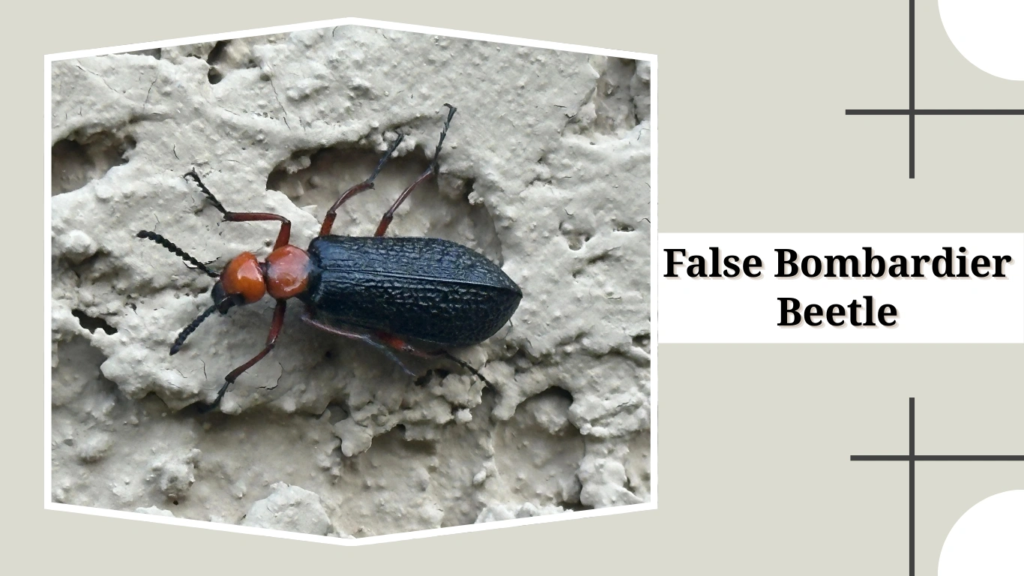
False bombardier beetles resemble true bombardier beetles but lack the explosive chemical spray. They are active predators with strong mandibles and quick movements.
Identification
- Slender body, usually two-toned (red/orange and black)
- Long antennae
- Exposed, flexible abdomen
- Smooth, elongated wing covers
Habitat
They inhabit leaf litter, forest floors, grasslands, and under logs or stones. These beetles prefer moist environments rich in small invertebrate prey.
Behavior
False bombardier beetles are fast runners and effective hunters, feeding on other insects and larvae. When threatened, they may emit a foul odor but do not produce the explosive discharge of true bombardiers. They are mostly nocturnal.
Life Cycle
Eggs are laid in soil or leaf litter. Larvae develop as active predators before pupating underground. Adults emerge during warm seasons and continue hunting throughout their short lifespan.
30. Egyptian Beetle (Scarab)
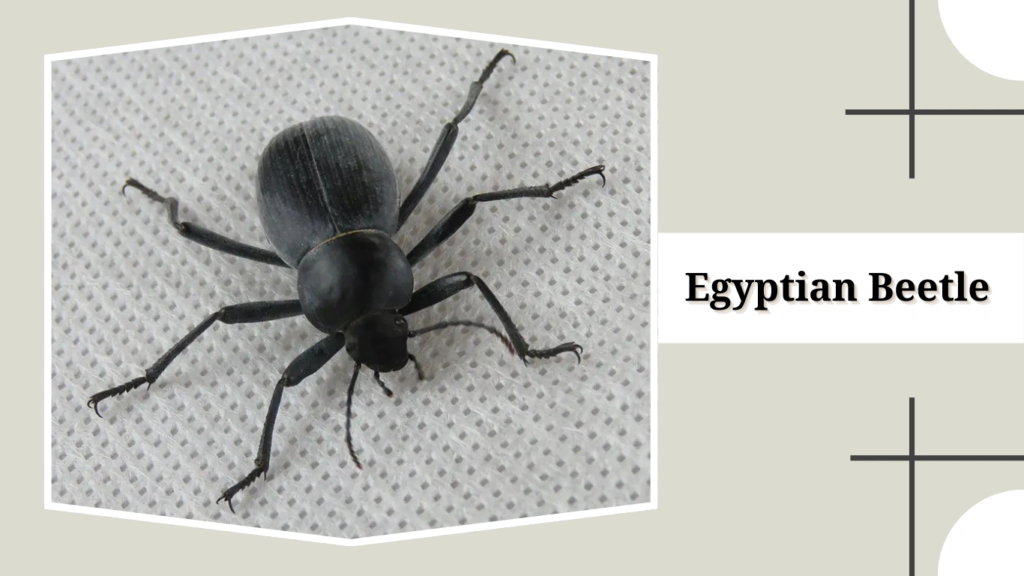
Egyptian scarab beetles are iconic insects symbolizing rebirth in ancient cultures. They are dung-rolling or soil-burrowing beetles, often seen shaping balls of dung or moving across sandy terrains.
Identification
- Rounded or oval body
- Shiny black, brown, or metallic green coloration
- Strong forelegs for digging and shaping dung balls
- Smooth, sturdy wing covers
Habitat
Scarab beetles inhabit deserts, grasslands, farms, and woodlands. They prefer areas where grazing animals live, providing the dung they rely on. Many species thrive in warm, sandy environments.
Behavior
They roll, bury, or feed on dung, playing a crucial role in nutrient cycling. Some species also feed on decaying matter or fungi. Scarabs are strong diggers and often active at dusk or night. Many are guided by moonlight or even the Milky Way for navigation.
Life Cycle
Females bury dung balls underground and lay eggs inside them. Larvae feed on this nutrient-rich material until pupation. Adults emerge after several weeks or months, depending on climate and species.
31. June Beetle (June Bug)
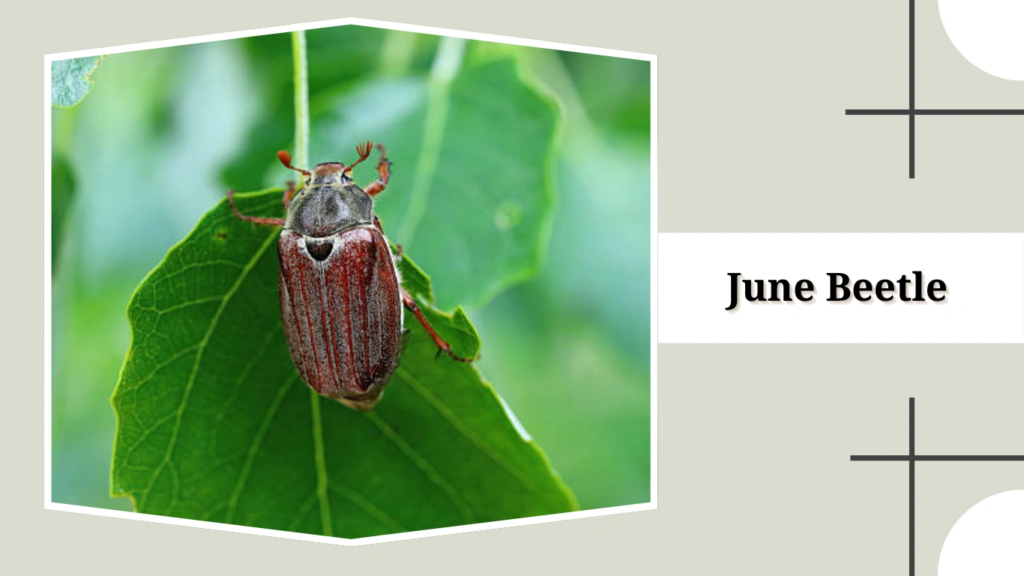
June beetles are large, clumsy fliers commonly seen around lights during early summer. Their larvae, known as white grubs, are notorious lawn pests.
Identification
- Oval, stout body
- Brown, reddish-brown, or black coloration
- Hard, smooth wing covers
- Soft, C-shaped white larvae
Habitat
They inhabit gardens, lawns, farmlands, and areas with grassy vegetation. Larvae thrive underground in moist soil, feeding on plant roots. Adults emerge in early summer, often appearing in large numbers.
Behavior
June beetles are attracted to lights and often fly erratically at night. Adults feed on leaves of shrubs and trees, while larvae feed on grass roots, sometimes causing turf damage. They are harmless to humans but can be noisy fliers.
Life Cycle
Females lay eggs in soil during summer. Larvae develop for months to years depending on species, overwintering underground. Pupation occurs in soil chambers. Adults emerge the following summer to feed and reproduce.
32. Metallic Wood-Boring Beetle
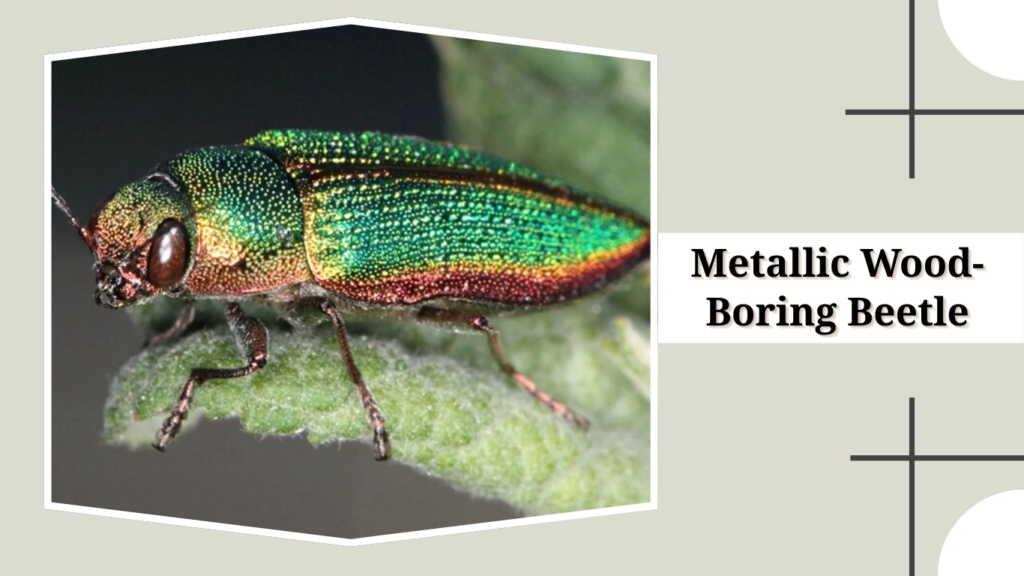
Metallic wood-boring beetles are famous for their shimmering, iridescent bodies. Many species belong to the Buprestidae family and are known for their larvae, called flatheaded borers, which tunnel through wood.
Identification
- Elongated, bullet-shaped body
- Bright metallic colors: green, blue, copper, or multicolored
- Hard, glossy wing covers
- Short antennae
Habitat
They inhabit forests, woodlands, orchards, and areas with stressed or dying trees. Adults are often seen on sunlit bark or leaves, while larvae develop inside tree trunks and branches.
Behavior
Adults are active during sunny, warm weather and feed on foliage or bark. Larvae bore through wood, sometimes causing significant damage to trees. Their metallic colors help camouflage them against reflective surfaces.
Life Cycle
Eggs are laid in bark crevices. Larvae tunnel beneath bark, feeding on sapwood for months or years. After pupation inside the tree, adults emerge through distinctive D-shaped holes.
33. Red Flour Beetle
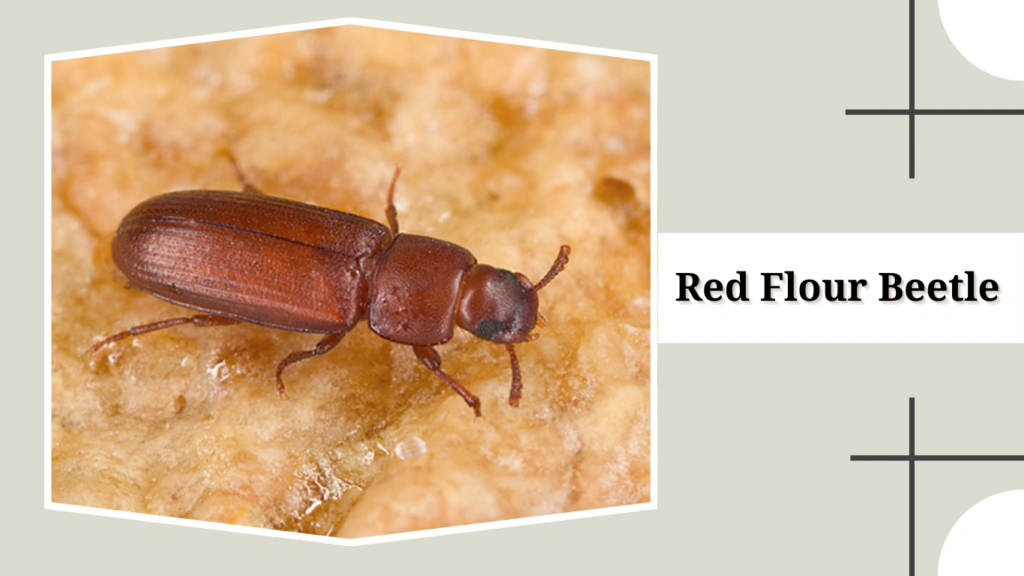
Red flour beetles are common pests of stored grain products, frequently found in flour, cereals, and processed foods. They thrive in warm environments and spread quickly in households and storage facilities.
Identification
- Small, reddish-brown body
- Narrow, elongated shape
- Distinct ridges on the wing covers
- Long, thin antennae with a gradual club
Habitat
They inhabit flour mills, pantries, warehouses, and any place where dry, processed foods are stored. They cannot feed on whole grains unless cracked or damaged.
Behavior
Red flour beetles are active crawlers and strong survivors, capable of living for long periods without food. They feed on broken grain, flour, and food dust, often contaminating products with their presence.
Life Cycle
Females lay hundreds of eggs inside food substrates. Larvae feed on powdered food materials before pupating. Under warm conditions, the full life cycle can be completed in about a month, allowing rapid population growth.
34. Ironclad Beetle
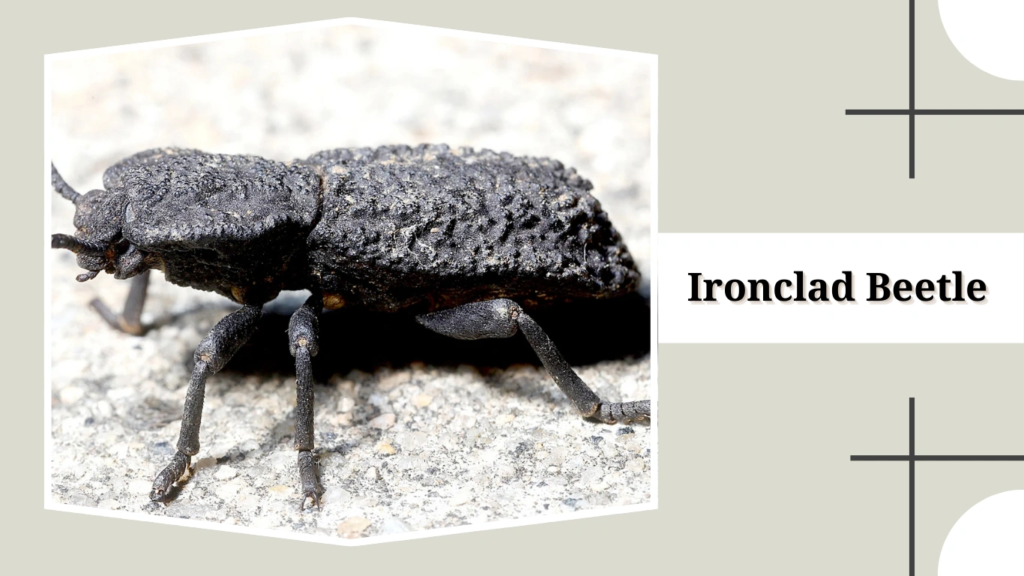
Ironclad beetles are extremely tough beetles known for their almost indestructible exoskeleton. Some species can survive forces that would crush most insects, making them remarkable examples of natural armor.
Identification
- Thick, rock-hard exoskeleton
- Gray, white, or mottled coloration resembling lichen
- Flattened, elongated body
- Wing covers fused—cannot fly
Habitat
Ironclad beetles inhabit forests, especially areas with decaying logs and tree bark. Their camouflage helps them blend in with lichens, making them difficult to spot on tree trunks.
Behavior
They are slow-moving and rely on their incredible toughness for defense rather than speed. When threatened, they often play dead. Their hardened exoskeleton can withstand extreme pressure, helping them survive in harsh environments.
Life Cycle
Eggs are laid in decayed wood. Larvae feed on fungi and decaying plant material. After pupation in wood crevices, adults emerge and may live for extended periods due to their slow metabolism.
35. Featherwing Beetle
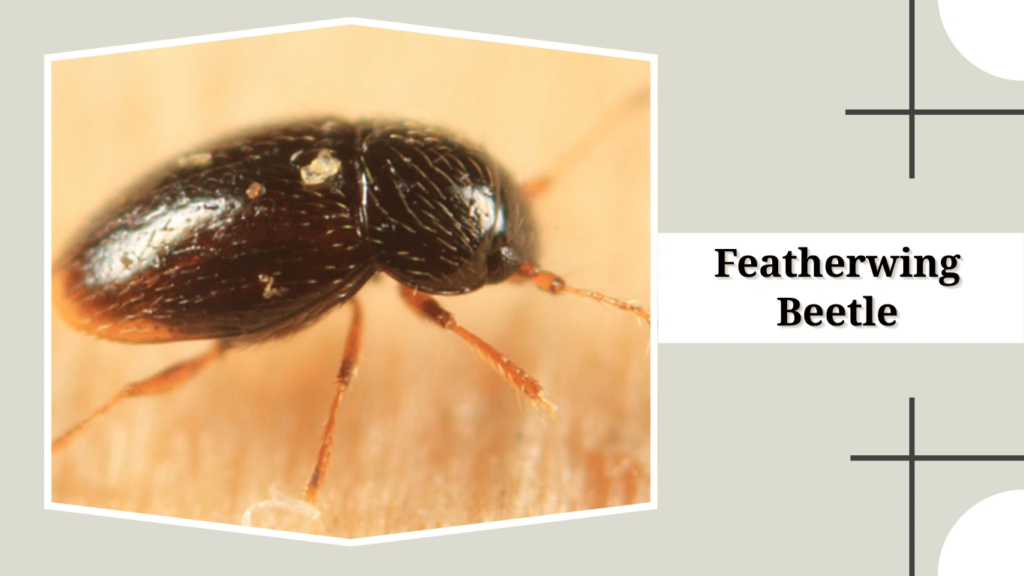
Featherwing beetles are among the smallest beetles in the world, named for their unique fringed wings that resemble feathers. Despite their microscopic size, they are diverse and widespread.
Identification
- Extremely tiny (often less than 1 mm)
- Delicate, feather-like wings
- Soft, pale or dark body
- Very fine antennae
Habitat
These beetles inhabit leaf litter, soil, decaying wood, and fungi-rich environments. Their minute size allows them to live in microhabitats unavailable to larger insects.
Behavior
Featherwing beetles feed on fungal spores, microorganisms, and organic debris. They move through tiny crevices and rely on air currents for limited flight. Their lightweight structure allows them to disperse easily.
Life Cycle
Females lay microscopic eggs in moist organic debris. Larvae feed on fungi and tiny particles before pupating in concealed spaces. Adults emerge quickly and often have short lifespans, continuing the rapid cycle typical of tiny beetles.
