
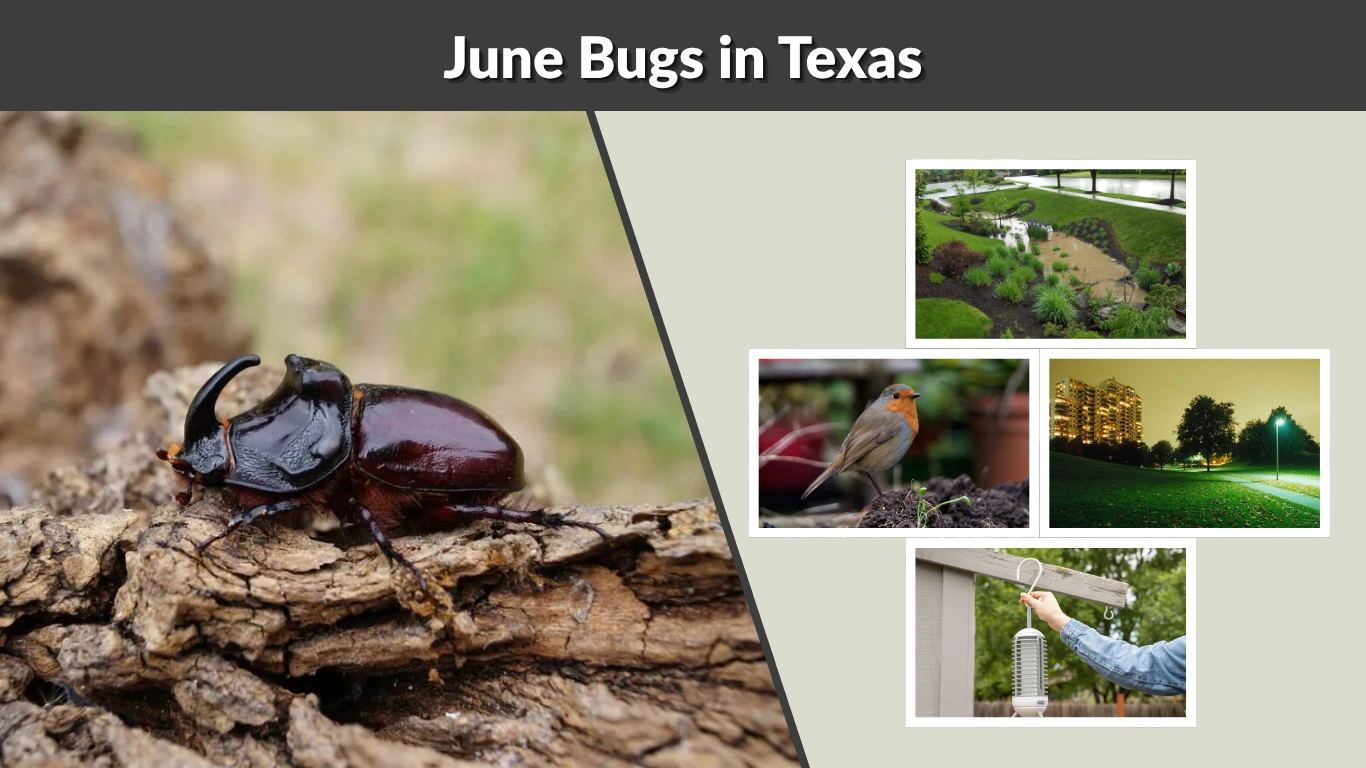
Every spring, Texans begin to notice brown beetles buzzing clumsily around porch lights and windows. These are June bugs — harmless but often overwhelming when they appear in large numbers. Their sudden arrival signals the start of warm weather across the Lone Star State. Although their adult lives are brief, they play an important role in Texas’s ecosystem. This article explores June bug species found in Texas, their seasonal patterns, and effective ways to control them.
Understanding June Bugs
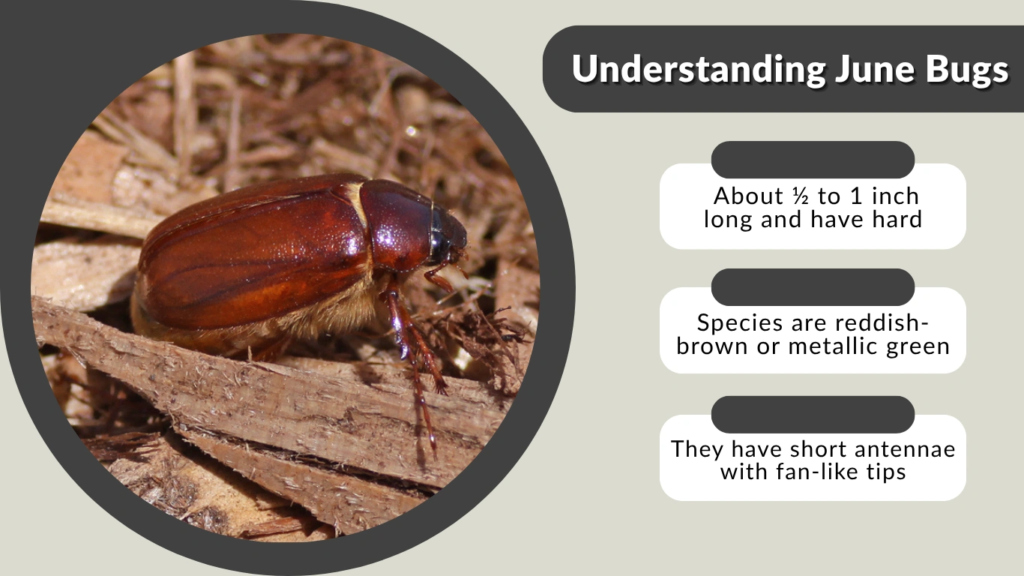
June bugs, sometimes called May beetles, are part of the scarab beetle family (Scarabaeidae). There are over 260 species in North America, and many thrive in Texas’s warm, humid climate. They’re best known for their awkward flying patterns and strong attraction to light at night.
Physical Description
Typical June bugs measure about ½ to 1 inch long and have hard, shiny shells. The most common species are reddish-brown or metallic green, depending on the region. They have short antennae with fan-like tips that help them detect pheromones and plant scents. Their strong, spiny legs allow them to cling tightly to clothing or screens, while their thick bodies make their flight heavy and noisy — often startling people during summer evenings.
Common Species of June Bugs in Texas
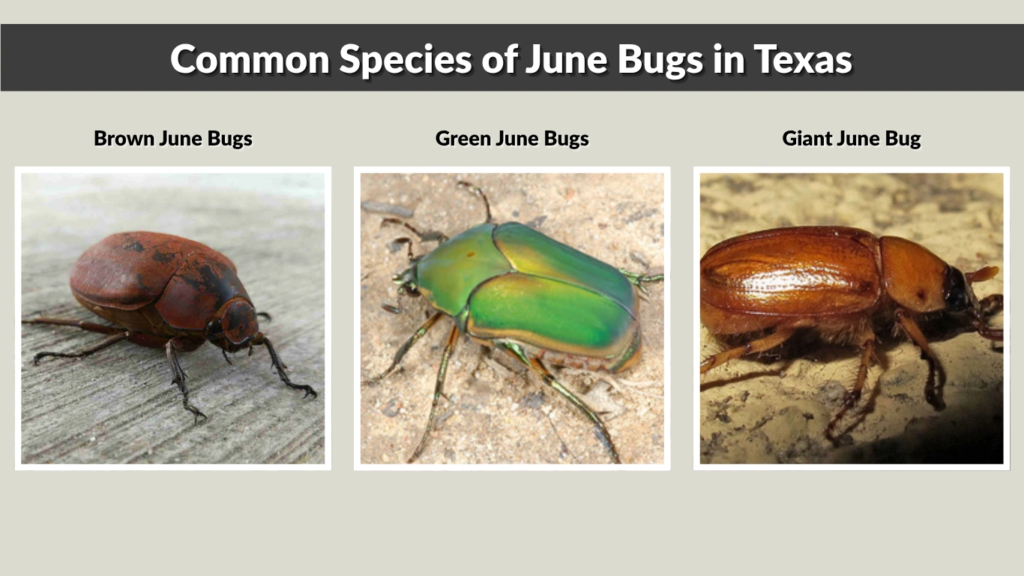
Texas is home to several types of June bugs, each with unique habits and habitats. While their appearance may vary, all share similar life cycles and behaviors.
Brown June Bug
The brown June bug (Phyllophaga spp.) is the most common species across North and Central Texas. These beetles are nocturnal and are often found swarming around lights during late spring. Their larvae, known as white grubs, live underground and feed on grass roots, sometimes damaging lawns and crops.
Green June Bug
The Green June Beetle (Cotinis nitida) stands out for its beautiful metallic green and bronze color. This species is more common in South and East Texas, especially near humid or coastal areas. Unlike the brown variety, green June bugs are active during the day and can often be seen flying low over lawns or feeding on fallen fruit and sap.
Giant June Bug
The Giant June Bug, sometimes reaching up to 1 1⁄2 inches long, is larger than other varieties and more common in Central and South Texas. Despite its intimidating size, it’s harmless. These beetles are powerful fliers and sometimes mistaken for other large beetles or locusts.
June Bug Season in Texas
When Do June Bugs Come Out?
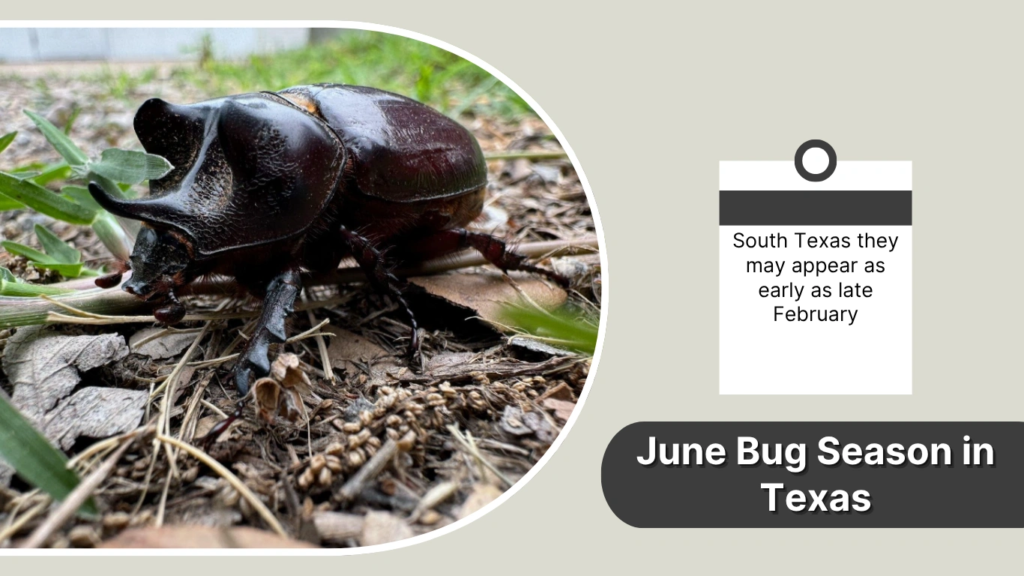
June bugs typically start emerging in March and April, although in South Texas they may appear as early as late February due to warmer temperatures. They come from the soil where they have lived as grubs for up to three years. The first sightings often occur after spring rains when the ground softens, allowing adults to surface.
How Long Do They Stay?
Adult June bugs live only four to six weeks once they emerge. Their short life is devoted entirely to mating and laying eggs. The season usually peaks in April and May, with numbers dropping sharply by July. The end of the season coincides with rising heat, which quickly shortens their lifespan.
Regional Differences Across Texas
- North Texas: Peak activity occurs in May and early June.
- Central Texas: Large swarms appear from late March through May.
- South Texas: Activity begins earlier, often by February or March.
- Coastal Texas: Green June beetles remain active into July or August due to higher humidity.
The exact timing of June bug season varies each year depending on rainfall, temperature, and soil moisture.
Life Cycle of Texas June Bugs
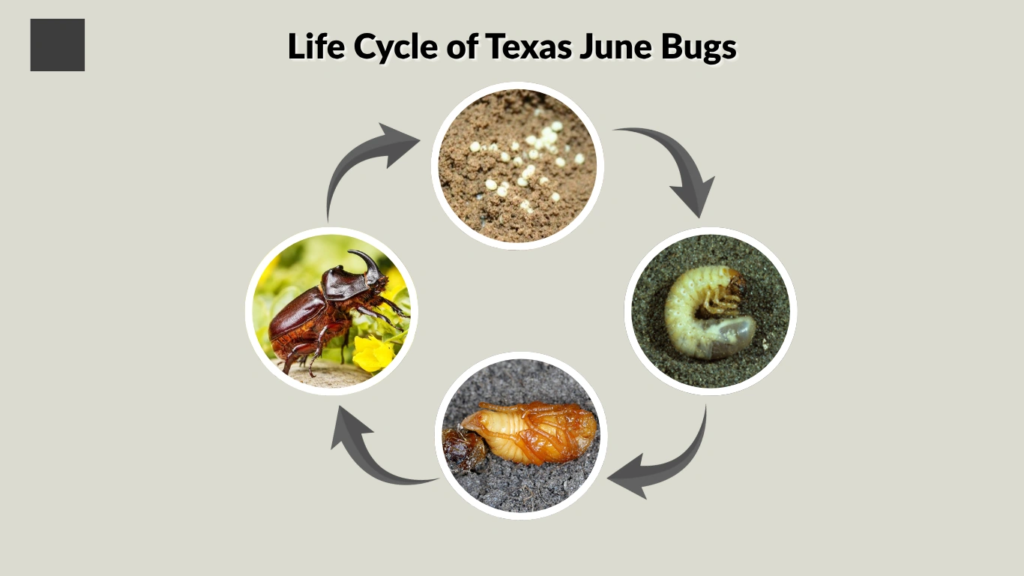
The June bug’s life cycle lasts between one and three years, though adults live only a few weeks. Most of their life is spent underground as larvae.
Egg Stage
After mating, female June bugs burrow into moist soil to lay 40–75 eggs. These eggs hatch within two to four weeks, depending on temperature and soil moisture. The tiny larvae that emerge begin feeding on organic matter and roots.
Larval Stage (White Grubs)
The larval phase is the longest stage, lasting up to three years. White grubs feed underground on roots, grass, and decaying plant matter. They grow through several molts, becoming thicker and more curled. This stage causes the most lawn damage, especially in irrigated yards or golf courses.
Pupa Stage
When ready to mature, grubs burrow deeper into the soil and form a pupal cell, where they transform into adult beetles. The pupal stage lasts about two to three weeks, ending when the adult June bug emerges from the ground.
Adult Stage
Adult June bugs surface during warm evenings. They feed on leaves, shrubs, and tree bark before reproducing. Once they’ve mated and laid eggs, they die naturally. The visible swarm season each year is just the final, brief part of their long life cycle underground.
Why Are There So Many June Bugs in Texas?
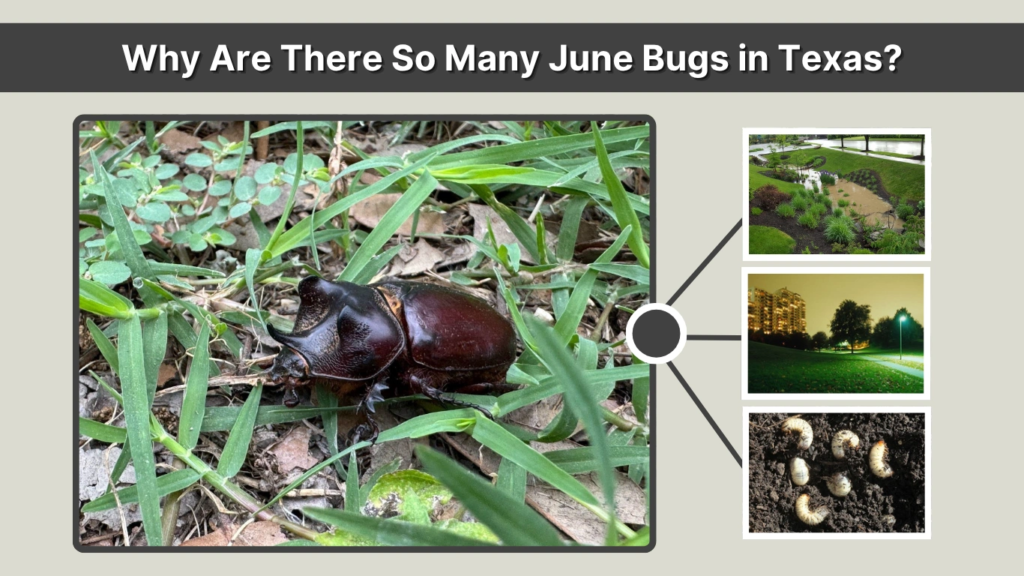
Texas’s combination of warm temperatures, humidity, and moist soil creates perfect conditions for June bugs to thrive. Their populations tend to surge after mild winters or wet springs, which improve larval survival rates.
Favorable Conditions
- Irrigated lawns and gardens provide ideal egg-laying sites.
- Artificial lights attract adults from miles away.
- Rich soil supports grub growth for several years.
June bugs are especially abundant in suburban neighborhoods where lawns and landscaping create consistent breeding grounds. While they can be annoying, they are an important part of the Texas ecosystem — serving as food for birds, bats, and frogs.
Do Texas June Bugs Bite or Sting?
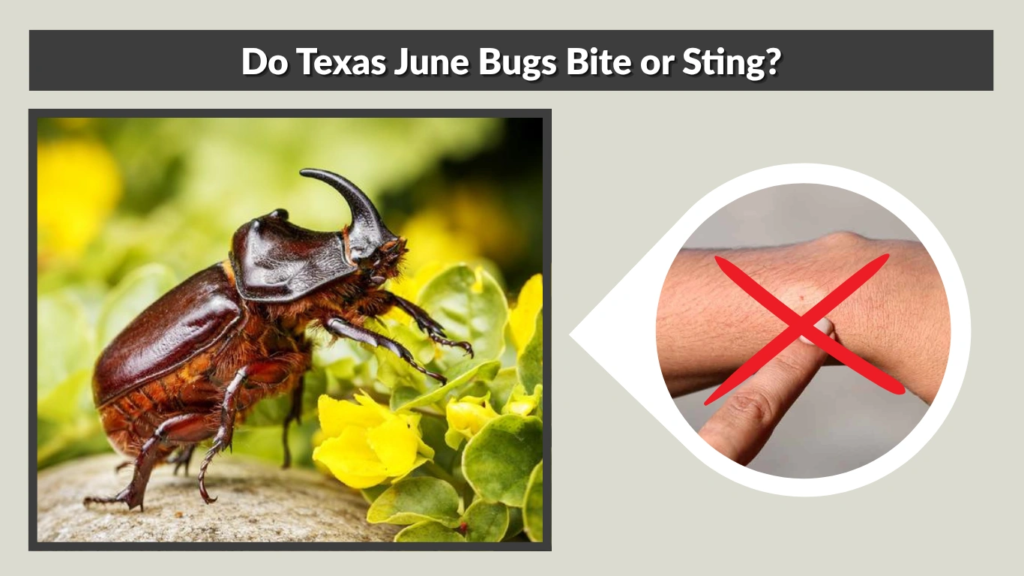
June bugs may look large and intimidating, but they’re completely harmless to humans and pets. They don’t have stingers, and their mandibles are meant for chewing leaves and roots — not skin. If one lands on you or bumps into your hair, it’s simply disoriented by light, not trying to bite. Their only real defense is their hard exoskeleton, which protects them from predators.
June Bugs Indoors and Around Homes
Why They Enter Houses
June bugs are strongly attracted to light, especially porch lamps, windows, and screens. In Texas, where warm nights and bright outdoor lighting are common, they often find their way into homes through open doors or vents. Once inside, they fly in circles around lights until they tire out.
How Long They Survive Indoors
Without soil or food, indoor June bugs only live 2 to 5 days. They can’t find the plants they need to eat and soon die from exhaustion or dehydration. Although harmless, their loud buzzing can be irritating — especially if several get trapped indoors during peak season.
Prevention Tips
- Replace bright outdoor lights with yellow “bug bulbs.”
- Keep windows and doors closed or screened at night.
- Turn off porch lights when not needed.
- Sweep up beetles gently instead of crushing them — they emit a strong odor when squashed.
How to Get Rid of June Bugs in Texas
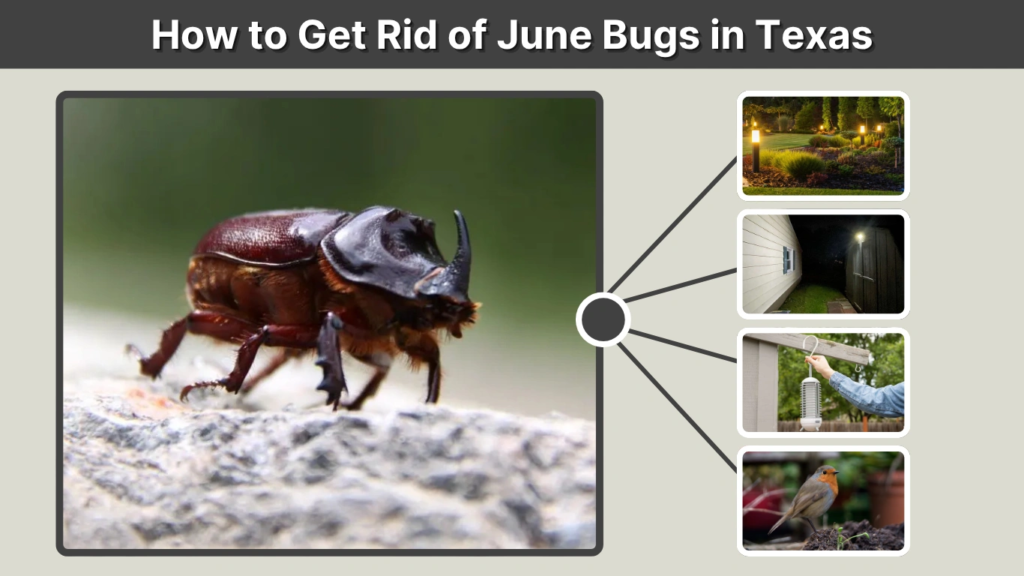
Texas homeowners often see large swarms of June bugs, especially near well-lit yards or lawns with healthy grass. While these beetles don’t bite or sting, their larvae (grubs) can damage turfgrass roots.
Controlling Adult June Bugs
- Turn off unnecessary outdoor lighting during warm spring nights.
- Reduce brightness by using motion-activated lighting.
- Set up light traps away from your home to divert them.
- Encourage natural predators such as bats, birds, and frogs, which feed on adult beetles.
Grub Control in Lawns
The real damage comes from grubs — the larval stage of June bugs — that live underground for up to three years.
To manage them:
- Treat soil with beneficial nematodes (microscopic worms that kill grubs).
- Apply milky spore bacteria, a natural long-term control method.
- Avoid overwatering; grubs thrive in moist soil.
- For severe infestations, use insecticides containing imidacloprid or chlorantraniliprole under guidance from the Texas A&M AgriLife Extension Service.
Long-Term Prevention
Keeping your lawn healthy is the best defense:
- Aerate the soil annually.
- Avoid thick thatch buildup.
- Don’t fertilize excessively, as lush roots attract egg-laying females.
- Mow grass regularly and remove decaying plant debris.
June Bugs and Texas Ecology
Despite being pests in gardens, June bugs play an important ecological role. Their larvae recycle organic matter in the soil, improving nutrient levels. Adult beetles are also an important food source for bats, owls, lizards, and other wildlife that rely on summer insects for survival.
However, when populations grow too large, grubs can damage turfgrass and crops by feeding on roots. Farmers in Texas sometimes face heavy infestations after rainy springs, leading to patchy lawns or wilted plants.
Interesting Texas Facts
- In Texas, June bugs are often called “May beetles” because they appear earlier than in northern states.
- The green June beetle is one of the largest beetle species in the U.S. and can make a loud buzzing sound when flying.
- They’re frequently mistaken for cicadas or locusts during humid summer nights.
- Texas’s long growing season allows multiple generations of grubs to develop simultaneously, increasing population density.
- Many photographers in Texas document these beetles due to their shiny shells and vibrant coloring, making them a favorite subject for macro insect photography.
FAQs
When do June bugs come out in Texas?
June bugs begin emerging in March or April, especially after early spring rains. In South Texas, they can appear as early as February, peaking by late May.
How long do June bugs last in Texas?
Adults live about 4 to 6 weeks above ground, though their underground grub phase can last up to three years before they reappear.
Do Texas June bugs bite or sting?
No. They’re harmless beetles that feed on plants and roots, not humans or pets.
How can I get rid of June bugs naturally?
Turn off outdoor lights, encourage natural predators like bats, and treat your lawn with beneficial nematodes to target grubs.
Why are there so many June bugs in Texas?
Texas’s warm, humid climate and moist soil create perfect breeding conditions for June bugs. Mild winters also increase grub survival, leading to large summer populations.
