

Tiny red bugs crawling on your plants can be a troubling sight, especially when they begin to affect leaf color and growth. These pests, commonly spider mites or clover mites, feed on plant sap and thrive in warm, dry conditions. Identifying them early and taking proper control measures is essential to protect your houseplants and garden from long-term damage.
Identification
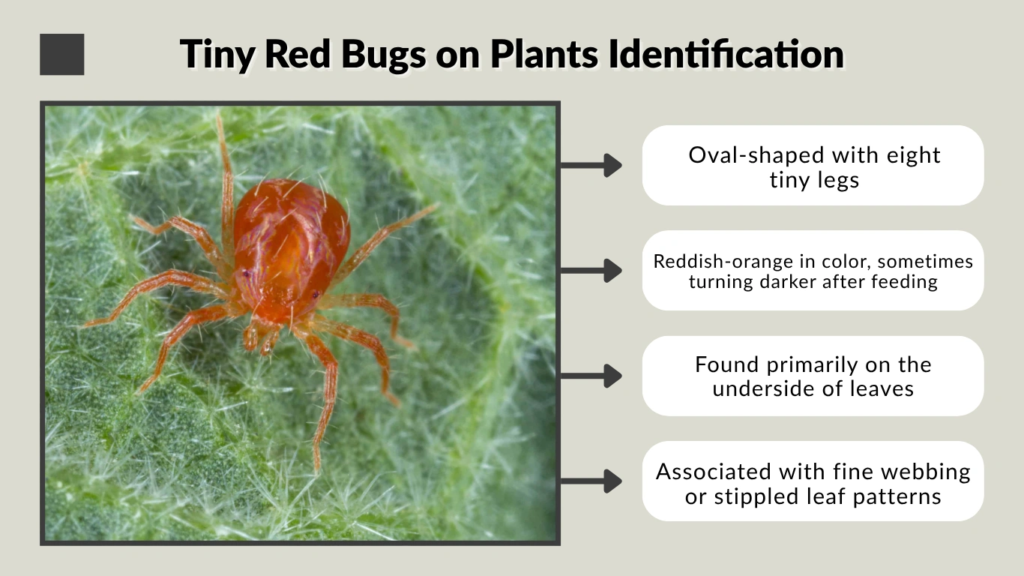
Common Types of Tiny Red Bugs on Plants
Spider Mites:
The most frequent culprits, spider mites, are minute arachnids that infest both indoor and outdoor plants. They are red or brown and known for weaving fine, silky webs on the undersides of leaves. Their feeding causes yellow speckling, bronzing, and eventually leaf drop.
Clover Mites:
These bright red, oval-shaped mites typically feed on grass and weeds near homes but can occasionally appear on potted plants. While they don’t cause significant damage, they multiply rapidly and may leave stains when crushed.
Red Velvet Mites:
Recognized by their fuzzy red bodies, these outdoor mites appear after rain. They rarely infest plants directly but may be found crawling on leaves or soil surfaces.
Russet and Broad Mites:
These are microscopic mites that often attack peppers, tomatoes, and cannabis. Infestations cause distorted leaves and damaged buds, often misdiagnosed as nutrient deficiencies.
Physical Characteristics
Tiny red plant mites are nearly invisible to the naked eye, measuring less than one millimeter long. Most species are:
- Oval-shaped with eight tiny legs
- Reddish-orange in color, sometimes turning darker after feeding
- Found primarily on the underside of leaves
- Associated with fine webbing or stippled leaf patterns
You can confirm their presence by shaking a leaf over white paper—tiny red specks moving across the surface indicate mites.
Where They Come From
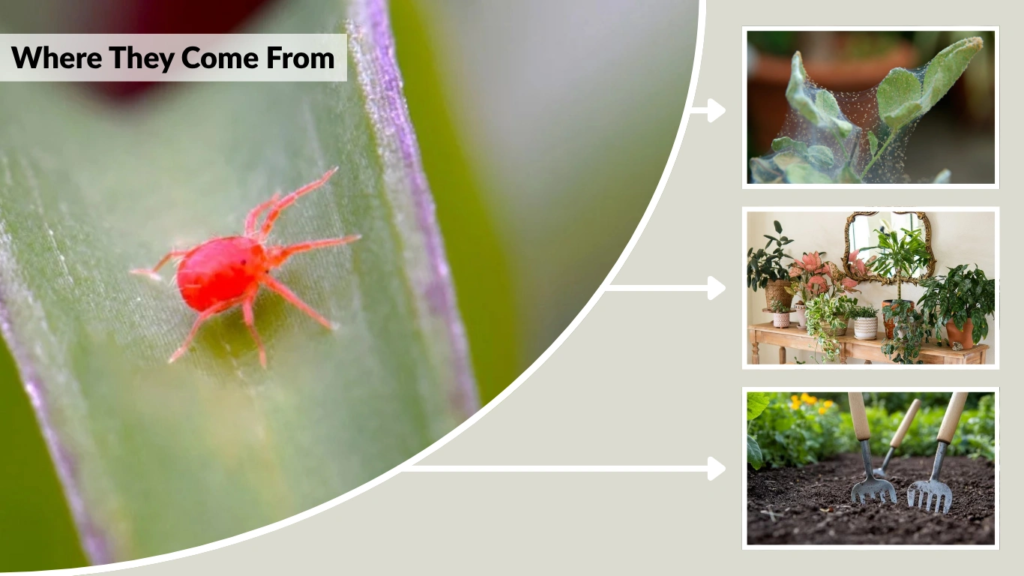
Outdoor Sources
Spider mites naturally live outdoors and thrive in hot, dry, dusty conditions. Gardens, lawns, and decorative plants provide them with abundant food. During droughts or seasonal changes, they move onto new hosts, including vegetable and ornamental plants.
They are common in gardens with tomatoes, cucumbers, peppers, and strawberries. Clover mites often come from dense turf or weedy areas near walls and flowerbeds. As they multiply, they spread to nearby leaves, stems, and pots.
Indoor Sources
Indoor infestations usually begin with:
- Newly purchased plants carrying mites from greenhouses
- Outdoor plants brought inside for winter
- Contaminated soil or garden tools
- Low humidity environments, which encourage rapid reproduction
Once established, mites easily travel between plants, often through touch or airflow. Greenhouse and grow-room conditions—warmth, light, and low moisture—create the perfect environment for them to thrive.
Behavior and Habits

Feeding and Movement
Spider mites and related species feed by piercing plant cells and extracting sap, which deprives leaves of essential nutrients. Over time, affected leaves show tiny yellow or white spots that spread across the surface. Heavy infestations result in fine silk webs, especially on the undersides of leaves.
Preferred Hosts
Tiny red mites attack a wide range of plants, including:
- Vegetables: Tomatoes, cucumbers, peppers, squash, and potatoes
- Herbs: Basil, mint, lavender, and rosemary
- Ornamentals: Hibiscus, spider plants, and ferns
- Houseplants: Pothos, succulents, and palms
Mites reproduce rapidly—females can lay dozens of eggs in just a few days—causing populations to explode if not treated promptly.
Damage to Plants

Mite feeding disrupts photosynthesis, leading to visible plant stress. Early signs include:
- Yellowing and stippling on leaf surfaces
- Curling or browning edges
- Silky webbing across leaves or stems
- Stunted growth and premature leaf drop
In severe cases, leaves dry out completely, giving plants a scorched appearance. On tomatoes, peppers, and basil, damage often starts on the lower leaves before spreading upward. For cannabis or other soft-leaved plants, heavy mite presence can drastically reduce yield and quality.
How to Get Rid of Tiny Red Bugs on Plants

When you notice tiny red bugs on your plants, acting fast is key. Mites multiply quickly, so early treatment helps stop widespread damage. Start with safe, natural remedies before considering chemicals.
Natural Control Methods
1. Rinse the Plants:
Spray your plants with a strong stream of water to wash away mites and their webs. Pay attention to the undersides of leaves where they hide. Repeat this process every few days for best results.
2. Neem Oil:
Mix a teaspoon of neem oil with a quart of water and a few drops of mild soap. Spray leaves thoroughly, especially undersides. Neem oil suffocates mites and disrupts their breeding cycle while being gentle on most plants.
3. Insecticidal Soap:
Commercial insecticidal soaps kill mites on contact. Apply in the early morning or evening to prevent leaf burn. Rinse after a few hours if the plant is sensitive.
4. Introduce Natural Predators:
Release ladybugs, lacewings, or predatory mites to control spider mite populations naturally. These beneficial insects feed on the pests without harming your plants.
5. Increase Humidity:
Mites prefer dry air. Misting your plants or using a humidifier makes the environment less favorable for them to survive and reproduce.
Chemical Control Methods
If natural remedies don’t solve the problem, you may need miticides or plant-safe pesticides. Look for products containing:
- Abamectin
- Bifenthrin
- Horticultural oils
Apply according to label directions, focusing on leaf undersides and stems. Rotate chemicals occasionally to prevent mites from developing resistance. Avoid using general insecticides since they can kill beneficial insects too.
For indoor plants, isolate them during treatment and ensure proper ventilation. For vegetable plants, use organic-certified options labeled safe for edibles.
Prevention Strategies
Preventing future infestations is easier than constant treatment. Simple habits help keep plants healthy and pest-free.
- Inspect new plants: Check leaves and soil before bringing them home.
- Clean leaves regularly: Wipe or rinse leaves weekly to remove dust and hidden eggs.
- Maintain humidity: Keep air moist with a small humidifier near indoor plants.
- Avoid over-fertilizing: Too much nitrogen promotes soft growth that attracts mites.
- Encourage predators: In gardens, plant flowers like dill, cosmos, and marigolds that attract beneficial insects.
Healthy plants are naturally more resistant to mites. Balanced watering, proper light, and good airflow go a long way in prevention.
FAQs
What are the tiny red bugs on my plants?
They are usually spider mites, small reddish pests that feed on plant sap. These mites create fine webbing and cause speckled yellow or brown leaves. You can confirm their presence by tapping a leaf over white paper and watching for moving red dots.
How do I get rid of tiny red bugs on tomato plants?
Spray tomato leaves with neem oil or insecticidal soap every three to five days until mites disappear. Ensure thorough coverage, including leaf undersides. Regular rinsing with water also helps dislodge them without damaging the plant.
Are tiny red bugs harmful to plants?
Yes. They drain nutrients by sucking plant sap, leading to discolored and weakened leaves. Over time, heavy infestations can cause wilting or even plant death, especially in vegetables and soft-leaved plants like basil or mint.
Why do I have tiny red bugs on my indoor plants?
Spider mites thrive in dry, warm indoor environments. Low humidity and dusty leaves create ideal conditions. They can also arrive on new plants or through open windows. Regular cleaning and humidity control prevent them from spreading.
Can I use natural remedies to control red mites?
Yes. Neem oil, insecticidal soap, and water sprays are effective and safe for most plants. You can also introduce natural predators like ladybugs or predatory mites. Combining these methods with proper plant care keeps your garden healthy long-term.
