
June bugs are a familiar sight in late spring and early summer, buzzing loudly around porch lights or crawling across lawns after sunset. Although they may seem bothersome, June bugs are an important part of the natural ecosystem. Their feeding habits affect lawns, fruit trees, and gardens, but they also help recycle organic material in the soil. Knowing what June bugs eat in different stages of life helps you understand how to manage them naturally and prevent damage without disturbing their role in nature.
Overview of June Bug Species and Diet
The term “June bug” refers to several beetle species belonging to the scarab family. The two most common are the green June bug (Cotinis nitida) and the brown June bug (Phyllophaga spp.). Both have similar body shapes but very different feeding behaviors. Green June bugs are often seen feeding on fruit and organic matter during the day, while brown June bugs are nocturnal and feed mostly on roots and leaves. Understanding which species you’re dealing with is key to identifying the type of damage they might cause in your yard or garden.
What Do Adult June Bugs Eat

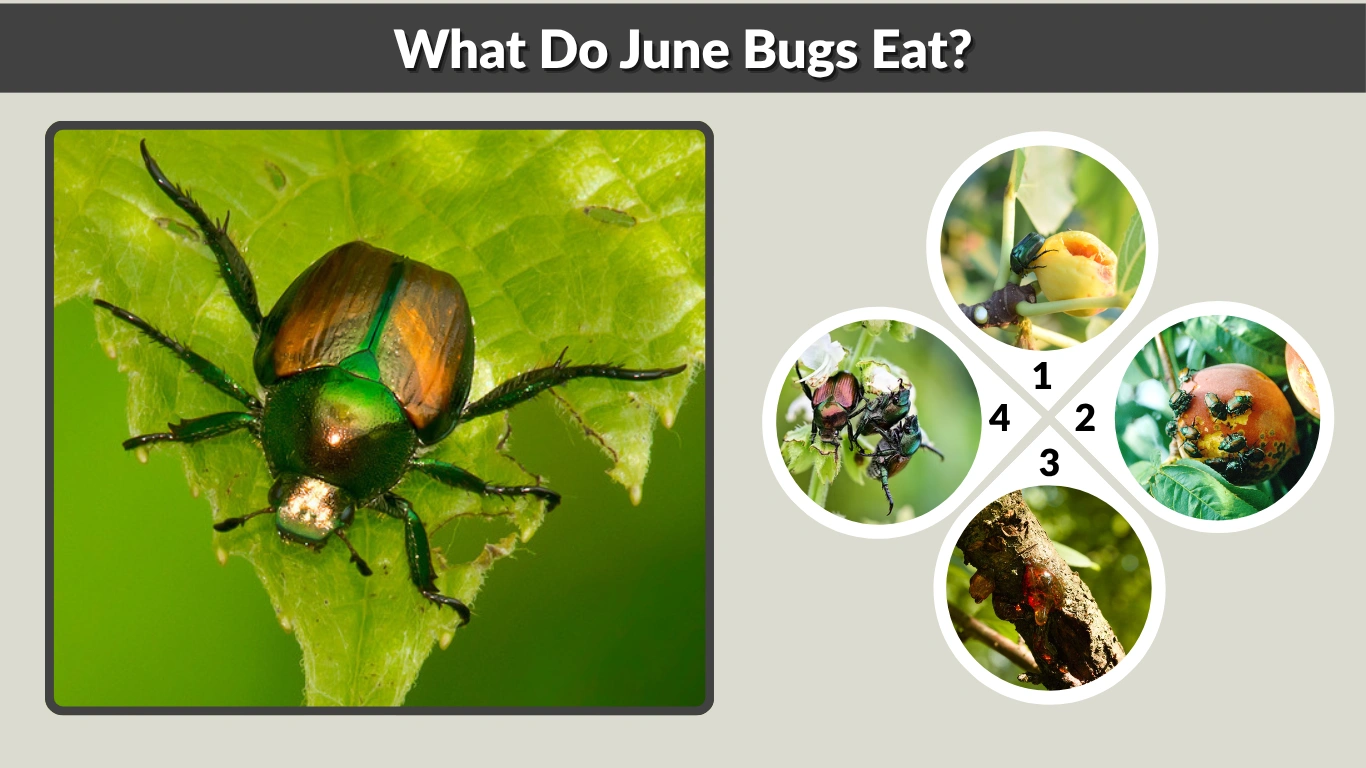
Adult June bugs have simple dietary habits and feed on plant materials, particularly those that are soft, sweet, and easy to chew. Their main food sources include:
- Ripe and overripe fruits such as grapes, peaches, plums, and figs
- Sweet tree sap from bark cracks or fruit wounds
- Tender leaves and flower petals from garden plants
- Fermenting vegetation or compost in decaying stages
Their diet consists primarily of sugar and moisture, which provide energy for flight and reproduction. Adults are most active from dusk until early morning, feeding before returning to the soil or nearby foliage to rest during the day.
What Do Green June Bugs Eat
Green June bugs are daytime feeders and can often be found hovering around fruit trees and compost piles. They are attracted to anything sweet or fermenting and prefer fruit that has started to soften. Common food sources include:
- Fallen fruits like peaches, apples, and pears
- Tree sap and overripe grapes on vines
- Decomposing organic matter such as decayed leaves or fruit waste
Green June bugs rarely damage healthy plants or hard fruit but can cause problems in orchards or gardens when large numbers gather. Their feeding behavior helps break down organic waste, making them important recyclers in the ecosystem.
What Do Brown June Bugs Eat

Brown June bugs, sometimes called May beetles, are mostly active at night. They prefer foliage and underground roots over fruit or soft materials. Adults feed on:
- Leaves of trees such as oak, maple, and willow
- Tender grass blades and shrub leaves
- Seedling stems and young garden plants
These beetles do more damage as larvae than as adults, but heavy feeding from adults can cause defoliation of ornamental plants and trees during peak season.
What Do June Bug Larvae Eat
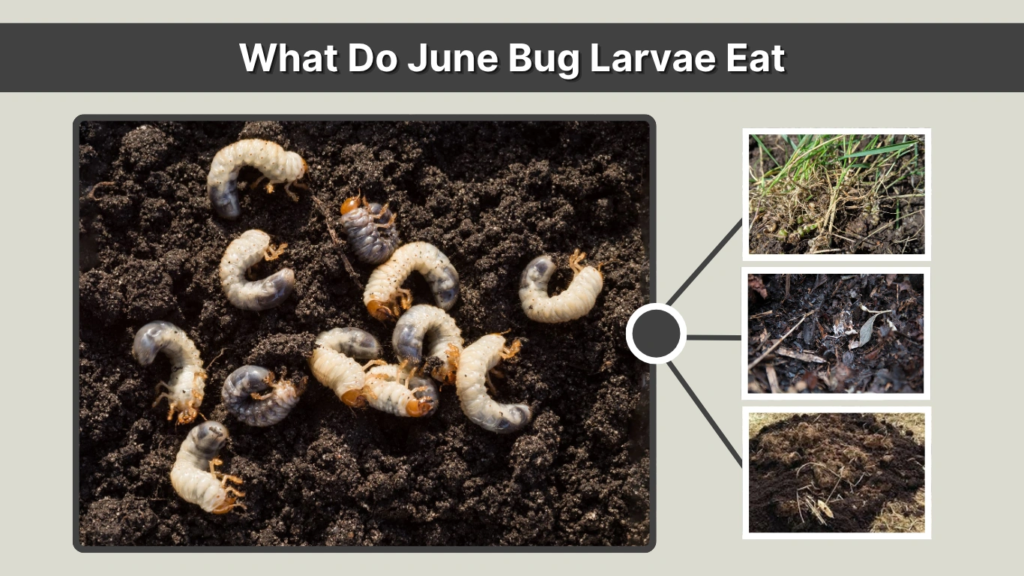
June bug larvae, also called white grubs, are the stage most responsible for turf and root damage. They live underground for up to a year, eating constantly as they grow. Their diet includes:
- Roots of lawn grasses and garden plants
- Decaying leaves and compost materials in the soil
- Organic debris such as mulch or decomposed stems
By consuming plant roots, larvae cut off the plant’s ability to absorb water, leading to dry, patchy lawns. Because grubs prefer moist, rich soil, overwatered lawns are especially vulnerable to infestation.
What Do June Bug Grubs Eat in Lawns
Grubs are most destructive in lawns, where they feed on the fibrous roots of grass just below the surface. Infested areas develop brown or yellow patches that lift easily when pulled. Birds, moles, and raccoons often dig into these patches to feed on the larvae. Keeping the soil aerated and moderately dry helps discourage grubs from settling and feeding. Natural treatments like beneficial nematodes and milky spore also reduce their population effectively.
What Do June Bugs Eat in Gardens
In gardens, both adult and larval June bugs feed on organic matter. Adults chew on fruit, leaves, and flower petals, while grubs attack plant roots beneath the soil. Crops like tomatoes, grapes, peaches, and berries are common targets. Regular cleanup of fallen fruit and pruning of damaged foliage reduces their food sources. Applying natural repellents such as neem oil or garlic spray on leaves helps protect plants from adult feeding.
Do June Bugs Eat Flowers or Leaves

Adult June bugs sometimes feed on flower petals and tender leaves, especially on plants with soft or fragrant blooms. Roses, geraniums, and grapevines are among their favorites. This feeding usually occurs at night or early morning, when the air is cooler, and the beetles are most active. Damage is often visible as small holes or ragged edges on leaves and petals. While light feeding causes little harm, heavy infestations can weaken plants and reduce flower production. Applying neem oil or garlic spray regularly helps deter beetles without harming pollinators or beneficial insects.
What Do June Bugs Eat in Warm Regions
In southern regions such as Texas, Florida, and Arizona, June bugs have a longer active season because of the warm climate. They feed heavily on ripe or decaying fruit, compost, and soft leaves. Lawns with moist soil provide ideal conditions for larvae, while adults are commonly found near fruit trees and outdoor lighting. In these areas, June bugs are part of the natural ecosystem but can multiply quickly when conditions stay warm and humid for extended periods. Regular lawn aeration and moderate watering help limit their food supply and breeding success.
What Do Baby June Bugs Eat
Baby June bugs, or newly hatched larvae, start feeding as soon as they emerge from eggs in the soil. They begin with soft, decomposing organic matter and later move on to live plant roots as they grow larger. Their early diet includes decayed leaves, mulch, and other fine organic materials in the top layer of soil. As they mature, they consume more solid roots and become capable of damaging grass and garden plants. Preventing overwatering and removing thick mulch layers can discourage the young larvae from thriving.
What Do June Bugs Eat and Drink

June bugs do not drink water in the way animals do. Instead, they absorb moisture from the plants, fruits, and decaying matter they eat. Their diet naturally provides hydration through the liquid content of fruit pulp and plant sap. Larvae, which live in soil, take in water through the damp organic matter they consume. This is why June bugs are most active after rain or in areas with high soil moisture. Maintaining drier soil conditions during breeding months helps reduce both adult feeding and larval survival.
What Do June Bugs Like to Eat Most
June bugs are opportunistic feeders with a strong preference for sweet and soft materials. They are most attracted to:
- Ripe or fermenting fruit under trees such as peaches, apples, and grapes
- Grass roots and seedlings with tender growth
- Decomposing leaves and moist compost piles
These food sources provide both nutrition and moisture. Removing fallen fruit, trimming tall grass, and managing compost piles are effective ways to cut off their favorite meals and discourage population growth.
When and Where June Bugs Feed
June bugs are primarily nocturnal, feeding after dusk and before dawn. Green June bugs, however, are active in daylight and can be seen around fruit trees during morning hours. Larvae feed continuously underground throughout the year, slowing only in colder months. Adult feeding peaks between late May and July, depending on temperature and regional climate. Because most feeding happens at night, early morning inspection of leaves and fruit helps detect activity before damage spreads.
Foods That Attract June Bugs
- Fallen and fermenting fruit beneath trees
- Overwatered lawns with thick roots
- Garden compost and mulch piles
- Fragrant flowers with soft petals
- Moist soil rich in organic waste
Cleaning up these areas and keeping soil drier during summer months can greatly reduce beetle activity and feeding sites.
FAQs
Do June Bugs Eat Grass or Plants
Yes, adult June bugs chew on plant leaves and fruit, while larvae feed on grass roots underground. Lawns are often affected first due to constant root feeding by grubs.
What Attracts June Bugs to My Yard
They are drawn to outdoor lights, ripe fruit, moist soil, and compost piles. Keeping these attractants under control helps reduce their numbers naturally.
Do June Bugs Eat Flowers or Roses
Yes, they sometimes feed on soft petals of flowers like roses and grape blossoms. Protecting blooms with fine netting or repellents helps prevent feeding damage.
Do June Bugs Drink Water
No, they get hydration from the fruits and plants they consume. Their diet already contains enough moisture to sustain them.
What Should I Do If My Pet Eats a June Bug
June bugs are not toxic to pets, but eating many can cause stomach irritation. Offer water, keep an eye on your pet, and consult a vet only if symptoms persist longer than a few hours.
