

The brown marmorated stink bug (BMSB), scientifically known as Halyomorpha halys, is an invasive pest native to East Asia. First detected in the United States in the late 1990s, it has since spread rapidly across North America, Europe, and parts of Australia and New Zealand. Recognized by its mottled brown color and unpleasant odor when disturbed, this insect has become a serious agricultural and household pest, causing millions in crop damage annually.
What Is the Brown Marmorated Stink Bug?
The brown marmorated stink bug belongs to the family Pentatomidae and the order Hemiptera, commonly known as true bugs. It gets its name from the marbled or “marmorated” pattern on its exoskeleton and the foul smell it releases when threatened. Originally from China, Japan, and Korea, it reached the United States accidentally through shipping containers, later spreading to more than 40 states. Its ability to adapt and reproduce quickly has made it one of the most persistent invasive pests worldwide.
Appearance and Identification

Adult brown marmorated stink bugs are shield-shaped, measuring about 14–17 mm in length. They have brown and gray marbling, with distinct white bands on their antennae and alternating dark and light patterns along the edge of their abdomen. Their underside is pale, and their wings form a characteristic “X” shape when folded.
Male vs. Female
- Females are slightly larger and rounder, laying clusters of 20–30 eggs on leaves.
- Males are smaller and more active during mating seasons.
Nymph Identification
Nymphs are wingless and range from black or orange to brown as they mature. They go through five instar stages, gradually developing the adult’s color and shape.
Look-Alike Bugs
Other insects often mistaken for the brown marmorated stink bug include:
- Western conifer seed bug
- Harlequin bug
- Rough stink bug
Each may share similar shapes, but none have the same white-banded antennae or marbled pattern distinctive to BMSBs.
Life Cycle of the Brown Marmorated Stink Bug
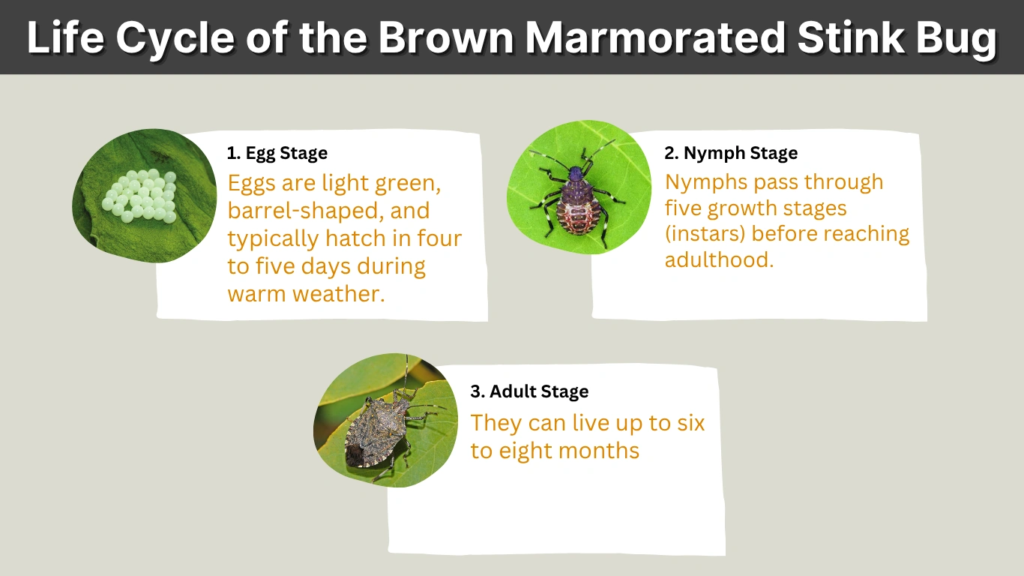
The brown marmorated stink bug undergoes incomplete metamorphosis, progressing through three main stages: egg, nymph, and adult. Females begin laying eggs in early summer, often on the undersides of leaves. Each can lay up to 400 eggs in a single season.
Egg Stage
Eggs are light green, barrel-shaped, and typically hatch in four to five days during warm weather.
Nymph Stage
Nymphs pass through five growth stages (instars) before reaching adulthood. They feed on fruit and plant juices, causing puncture marks and deformities in crops.
Adult Stage
Adults emerge in late summer and seek shelter in homes or barns during fall. They can live up to six to eight months, surviving winter by entering a state of dormancy called diapause. In warm regions, two generations may occur each year, increasing population density quickly.
Habitat and Distribution
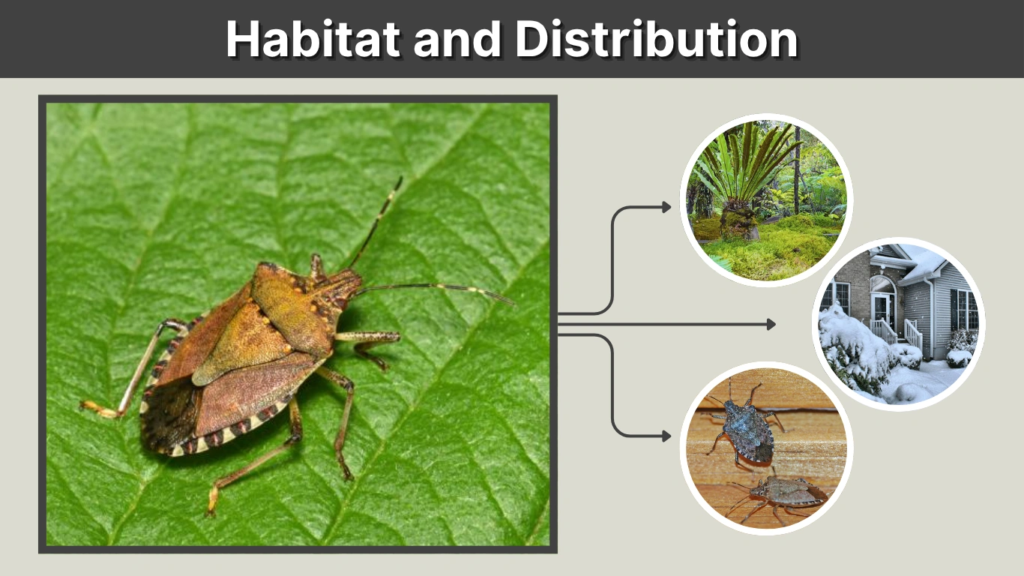
The brown marmorated stink bug thrives in temperate climates and prefers habitats with abundant vegetation. In the United States, it’s most common in Pennsylvania, New York, Oregon, California, and Georgia. It often invades homes, barns, and sheds during cooler months seeking warmth and protection.
Originally confined to Asia, it has now established populations in:
- North America (U.S. and Canada)
- Europe (Italy, Germany, France)
- Australia and New Zealand through accidental importation
Its rapid spread is attributed to international trade and its remarkable adaptability to new environments.
What Do Brown Marmorated Stink Bugs Eat?

Brown marmorated stink bugs are polyphagous feeders, meaning they consume a wide variety of plants. Their diet includes:
- Fruits: apples, peaches, pears, and cherries
- Vegetables: beans, peppers, corn, and tomatoes
- Ornamental plants and weeds
They use their piercing-sucking mouthparts to draw juices from fruits, stems, and seeds. This feeding behavior causes:
- Surface dimples and discoloration
- Premature fruit drop
- Deformed growth
As a result, farmers often experience severe yield loss, particularly in orchards and vegetable farms.
Damage Caused by Brown Marmorated Stink Bugs
The agricultural damage caused by the brown marmorated stink bug is extensive. Feeding leaves behind necrotic spots on fruits and vegetables, making them unmarketable. In addition, the bugs contaminate harvested produce with their odor, reducing quality and market value.
They’re also a nuisance in homes, especially during fall. Large infestations can occur inside walls, attics, and basements, where they release their foul smell and stain surfaces. Though harmless to humans, their odor can trigger mild allergic reactions in sensitive individuals.
Are Brown Marmorated Stink Bugs Dangerous?

Brown marmorated stink bugs do not bite, sting, or spread disease. They are considered harmless to humans and pets, though their presence can be unpleasant. When crushed or disturbed, they release a strong odor that acts as a defense mechanism. While not toxic, this odor can irritate sensitive individuals and may cause mild skin reactions. The real danger lies in their economic and ecological impact, particularly on fruit and vegetable crops.
Brown Marmorated Stink Bugs in Houses
During late fall, these bugs search for warm shelters, often entering homes, garages, and attics through cracks, vents, or open windows. Once inside, they gather in clusters, remaining inactive until spring. While they don’t reproduce indoors, their large numbers and odor make them a nuisance.
To prevent infestations:
- Seal entry points such as gaps around windows and doors.
- Use screens and weather stripping.
- Avoid crushing them inside to prevent odor release.
Vacuuming is the best method to remove them safely.
Predators and Natural Control

In their native Asia, brown marmorated stink bugs face several natural predators. These include:
- Parasitic wasps (Trissolcus japonicus) that attack their eggs.
- Spiders and assassin bugs that prey on nymphs and adults.
- Birds such as sparrows and swallows that feed on them outdoors.
However, in invaded regions, these predators are limited. Ongoing research explores the use of biological control agents like the samurai wasp, which shows promise in reducing BMSB populations without harming native species.
Control and Prevention Methods
Effective control of brown marmorated stink bugs requires a combination of preventive, mechanical, and chemical strategies.
- Exclusion: Seal all openings around windows, siding, and vents before fall.
- Physical Removal: Use vacuums or sticky traps indoors. Dispose of bugs carefully to avoid odor.
- Chemical Control: Apply pyrethroid-based insecticides outdoors during peak activity seasons. However, chemicals offer only temporary relief and may harm beneficial insects.
- Professional Pest Control: In severe infestations, pest management experts can apply targeted treatments around entry points and vegetation.
Effective Brown Marmorated Stink Bug Traps
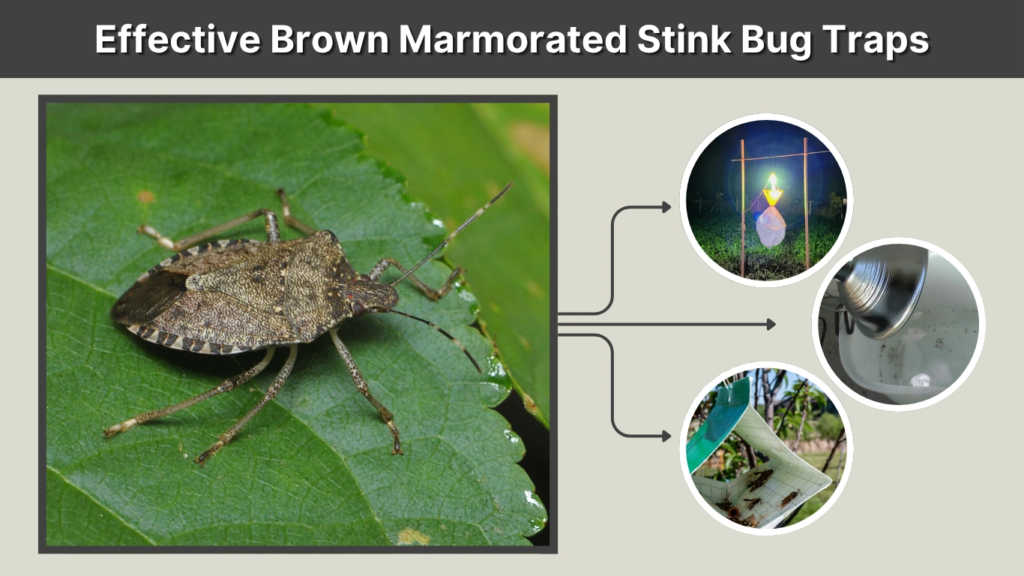
Traps are an environmentally friendly way to capture and monitor stink bug populations.
- Light Traps: Attract bugs at night, especially during migration periods.
- DIY Traps: A simple bowl of soapy water placed under a light source effectively drowns them.
- Commercial Pheromone Traps: These release scents that mimic mating signals to lure bugs into capture zones.
Using traps indoors should be done carefully to avoid attracting more bugs into living spaces. Outdoor placement near gardens and orchards is most effective.
Repellents and Deterrents
While chemical repellents are limited in effectiveness, some natural deterrents help reduce infestations:
- Essential oils: Mint, clove, and tea tree oil can repel stink bugs.
- Garlic and vinegar sprays: Work as mild deterrents when applied to entry points.
- Plants like lavender and chrysanthemums: Naturally discourage stink bugs from nearby areas.
Combining these with physical barriers such as mesh screens and caulking provides lasting protection.
Infestation and Extermination Strategies
If an infestation occurs, act quickly to prevent population growth.
- Isolate infested areas: Close off rooms or spaces where bugs are concentrated.
- Vacuum them: Dispose of vacuum bags immediately to avoid odor contamination.
- Clean surfaces: Use mild soap or vinegar to remove residue and scent trails.
- Seek professional help: For large outdoor infestations or recurring indoor problems.
Long-term prevention focuses on removing overwintering sites, maintaining sealed structures, and regular monitoring during fall and spring.
Interesting Facts About Brown Marmorated Stink Bugs
- They emit their signature smell from glands located on their thorax.
- The odor helps deter predators and communicate with other stink bugs.
- BMSBs are strong fliers and can travel several miles in search of food or shelter.
- Their introduction to North America is believed to have occurred via shipping crates from Asia in the mid-1990s.
- Despite their nuisance, they play a minor role in controlling weeds by feeding on some invasive plants.
FAQs
What damage can the brown marmorated stink bug do?
These bugs cause severe crop damage by piercing fruits and vegetables to feed on their juices. The result is discolored, dimpled, and deformed produce. Infestations can also lead to large-scale agricultural losses, particularly in orchards and vineyards.
Do brown marmorated stink bugs bite or harm humans?
No, they don’t bite, sting, or transmit diseases. Their primary defense is the foul odor they emit when threatened. Though harmless, their presence indoors can be unpleasant, and the smell may trigger mild allergic responses in sensitive people.
How to get rid of brown marmorated stink bugs effectively?
Seal entry points, use soapy water traps, and vacuum them out. Avoid crushing them to prevent odor release. For outdoor control, pyrethroid sprays can help, while pheromone traps are useful for monitoring populations in gardens and fields.
What are brown marmorated stink bug eggs and how to identify them?
Eggs are light green, round, and barrel-shaped, usually found in clusters on the undersides of leaves. Each female can lay several hundred eggs per season, which hatch in 4–5 days. Early identification helps control infestations before they spread.
Why are brown marmorated stink bugs considered invasive species?
They reproduce rapidly, have no strong natural predators outside Asia, and damage a wide range of crops. Their adaptability allows them to thrive in new environments, making them one of the most significant invasive agricultural pests worldwide.
