
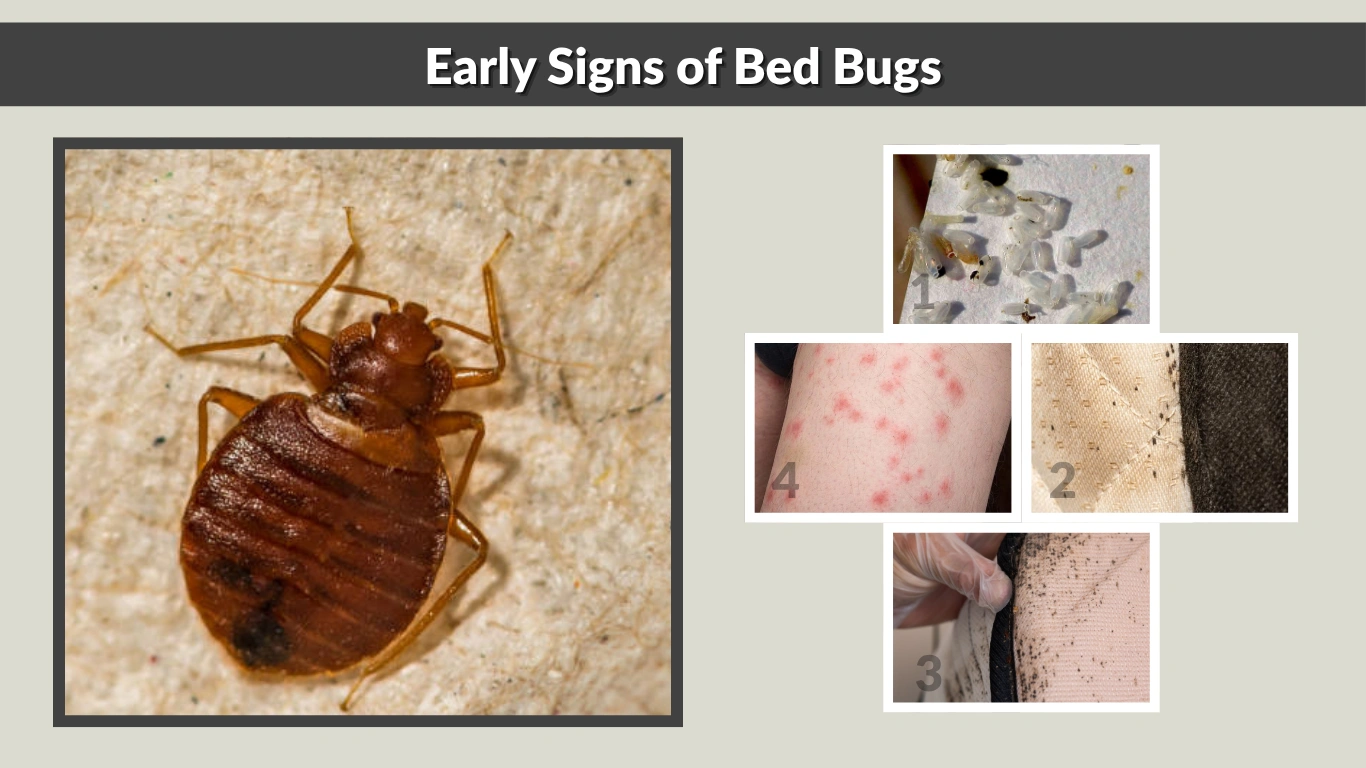
Bed bugs are small, sneaky pests that hide during the day and feed on your blood at night. They spread quickly and can live in mattresses, couches, and even walls. Identifying the early signs of bed bugs is crucial to stopping an infestation before it becomes a serious problem. The earlier you detect them, the easier and cheaper it is to remove them completely.
Understanding Early Signs of Bed Bugs

Early signs of bed bugs often appear subtle, but if you know what to look for, you can spot an infestation before it spreads. These insects hide close to where humans sleep or rest, making mattresses and couches their first choice.
Key Early Indicators
- Tiny blood stains or dark spots on sheets and bedding
- Small, itchy bite marks on your skin in straight lines or clusters
- Faint, musty odor near beds or furniture
- White or transparent eggs near seams or corners
Bed bugs typically multiply fast — females lay up to five eggs per day — which means early identification prevents a large outbreak later.
Early Signs of Bed Bugs on Skin
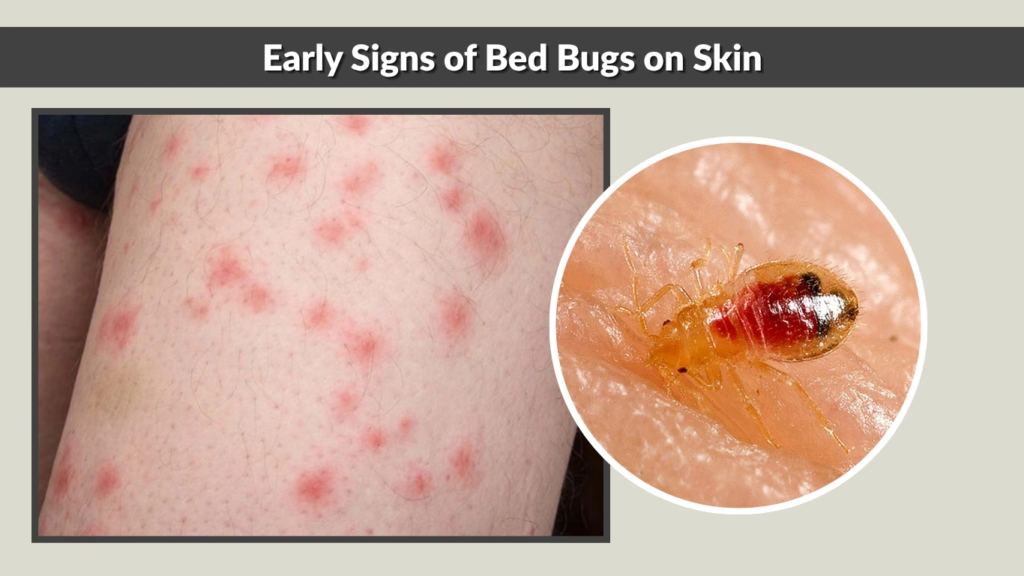
Your skin often shows the first warning signs of bed bugs. Since they feed at night, you may wake up with unexplained red, itchy bumps.
What to Look For
- Small red welts that appear overnight
- Bites in rows or clusters, often on arms, legs, or shoulders
- Mild swelling or burning sensation
- Persistent itching lasting several days
Commonly Affected Areas
- Arms and legs (most exposed during sleep)
- Neck and shoulders
- Waistline, ankles, and lower back
Unlike mosquito bites, bed bug bites appear in groups and tend to form straight lines. People with sensitive skin may experience more intense irritation or even small blisters.
Early Signs of Bed Bugs on Mattress
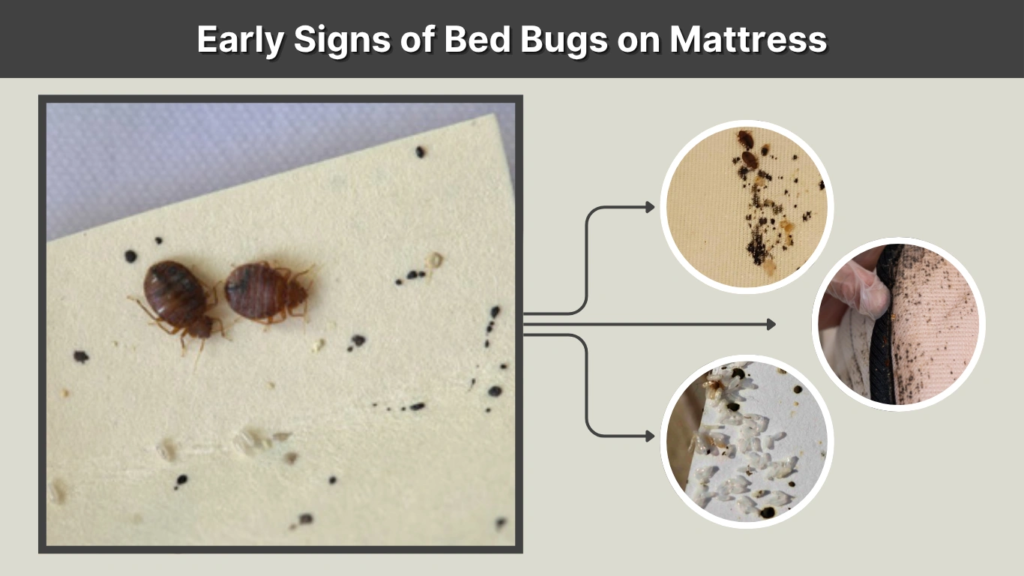
Your mattress is the most common hiding spot for bed bugs, especially in the early stages of infestation. They hide in cracks, folds, and seams close to where you sleep.
Visible Mattress Signs
- Tiny black dots – Bed bug droppings that look like pen ink stains.
- Rust-colored smears – Crushed bugs or dried blood marks.
- White specks – Eggs or eggshells about 1 mm in size.
- Translucent skins – Shed casings left behind by growing nymphs.
Where to Check
- Around the edges and corners of the mattress
- Underneath mattress tags and seams
- Between the mattress and box spring
- Along bed frame bolts or screw holes
If you find multiple black spots or shells, it’s a strong sign of an early bed bug infestation in progress.
Early Signs of Bed Bugs on Sheets
Your bed sheets may reveal activity even before you see a live bug.
- Blood stains: Tiny red or brown marks from crushed bugs.
- Black dots: Small fecal stains that smear when rubbed with a wet cloth.
- White eggs or flakes: Signs of reproduction near where you sleep.
- Tiny dead bugs: Indicate early extermination attempts or changing hiding spots.
How to Confirm
Pull back your sheets and inspect along pillow edges, corners, and the lower end of the bed. Bed bugs usually leave marks close to where your body rests during sleep.
Early Signs of Bed Bugs on Couch or Furniture
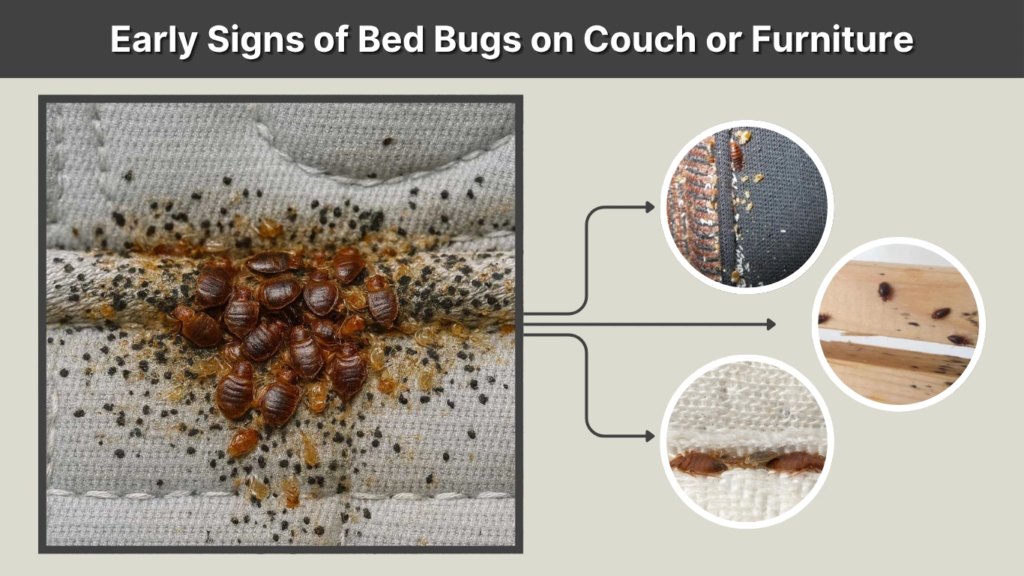
Bed bugs don’t just live in beds — they also infest couches and upholstered chairs, especially if you nap or sit there often.
Where to Inspect
- Under couch cushions and in zipper seams
- Along the wooden frame and stitching
- Inside folds, crevices, or behind decorative buttons
Early Indicators
- Small black fecal dots or brown stains on fabric
- Clear shells or shed skins in cushion seams
- Musty odor when lifting or removing cushions
Finding even one shell or black dot means you should inspect nearby furniture immediately. Early detection on couches prevents bugs from spreading to your bedroom.
Early Signs of Bed Bugs on Walls and Carpets
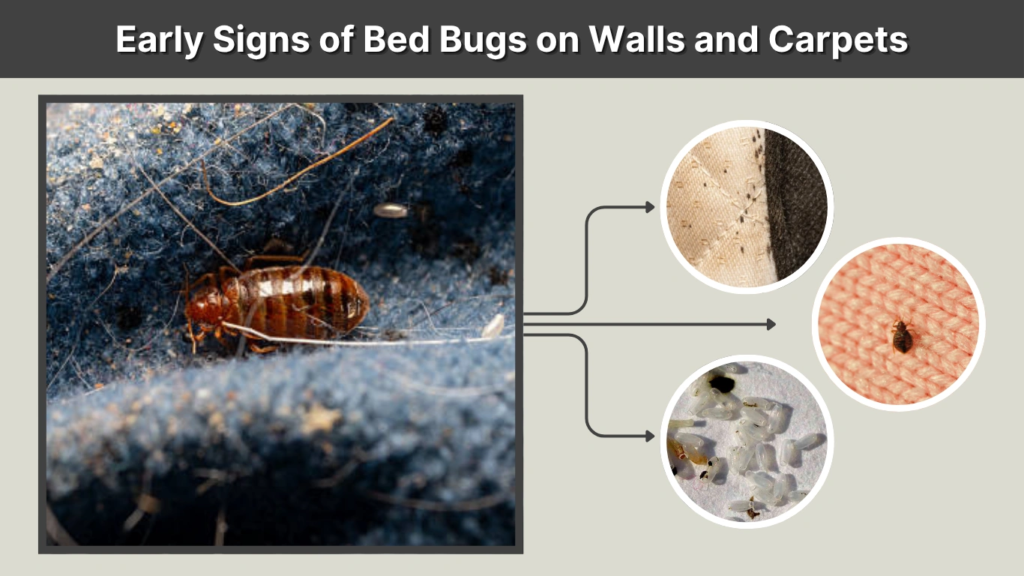
When infestations grow, bed bugs travel along walls and floors in search of new hiding spots.
Signs on Walls
- Small dark smears or spots near the bed’s headboard area
- Tiny insects crawling at night along cracks or paint edges
- Clusters of white eggs hidden behind picture frames or wall sockets
Signs on Carpets
- Pale yellow flakes or shell casings near baseboards
- Tiny dark dots where carpet meets the wall
- Dead bugs caught in vacuum filters
Inspect the corners of rooms and behind furniture. Bed bugs can easily hide in wall gaps, making early wall signs especially important.
Early Signs of Bed Bug Eggs
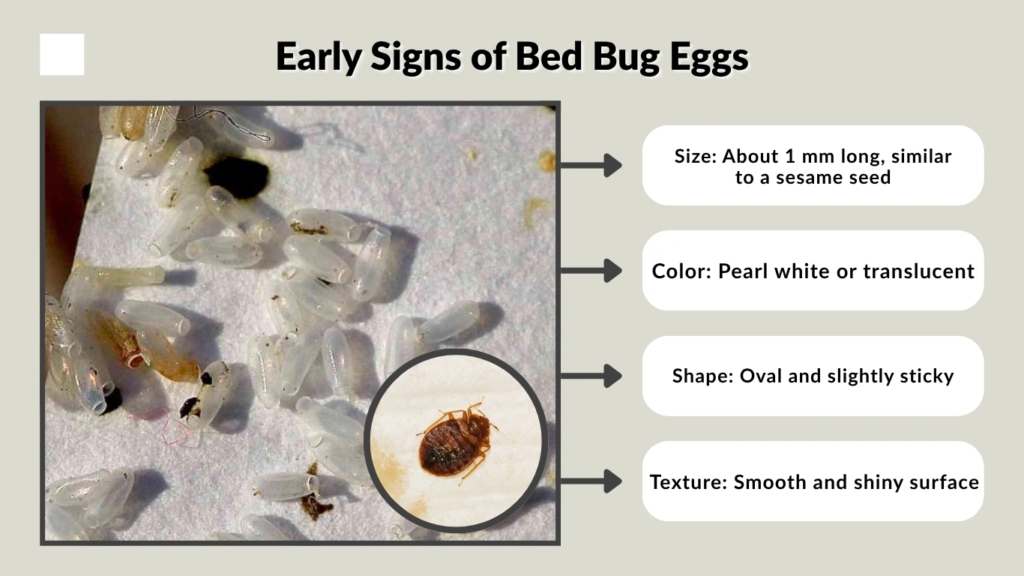
Bed bug eggs are one of the earliest visual proofs of infestation. They’re difficult to spot, but once seen, they confirm reproduction has started.
Identifying Bed Bug Eggs
- Size: About 1 mm long, similar to a sesame seed
- Color: Pearl white or translucent
- Shape: Oval and slightly sticky
- Texture: Smooth and shiny surface
Common Egg Locations
- Mattress seams and fabric folds
- Bed frame joints and box springs
- Behind headboards or inside furniture cracks
- Occasionally on clothing near sleeping areas
Each female lays hundreds of eggs during her life, so even a few visible eggs can quickly turn into a larger problem if ignored.
Early Signs of Bed Bug Bites
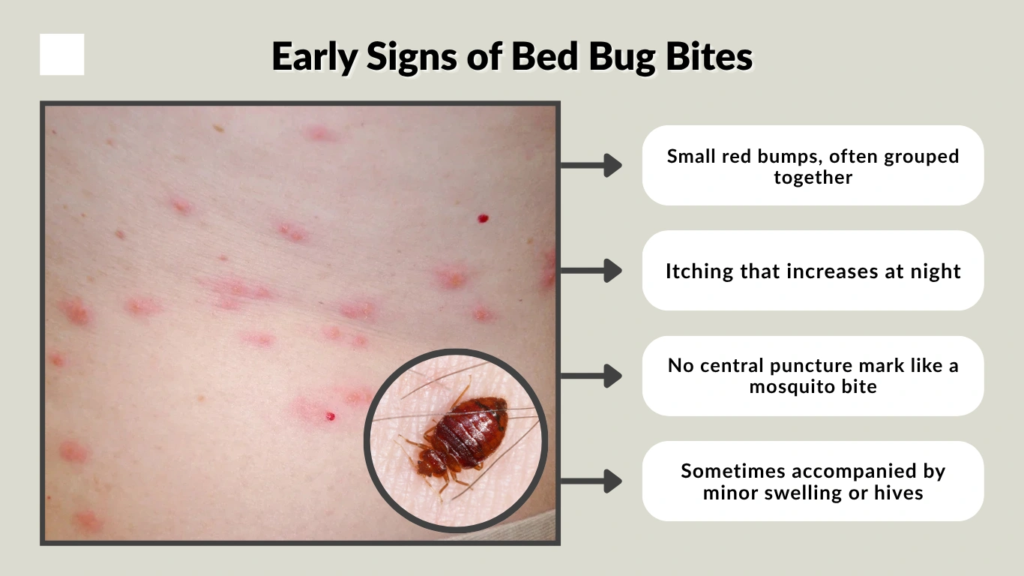
Bed bug bites are another common early warning. While they’re not dangerous, they can cause discomfort and allergic reactions in some people.
Bite Features
- Small red bumps, often grouped together
- Itching that increases at night
- No central puncture mark like a mosquito bite
- Sometimes accompanied by minor swelling or hives
If you notice repeated bites after sleeping, inspect your bedding right away. Bed bugs usually feed every three to five days, so recurring bites signal an active infestation.
Other Early Warning Signs of Bed Bugs
Bed bugs leave more behind than just bites or stains. Their hidden traces help confirm an infestation even before you see live insects.
1. Musty or Sweet Odor
A light, unpleasant smell — similar to moldy laundry or spoiled raspberries — is a common early indicator. This odor comes from bed bug scent glands and becomes stronger as the colony grows.
2. Dead Bugs or Shell Casings
Even early infestations produce shed skins or dead insects. These shells are paper-thin, light brown, and shaped like tiny bugs. Finding several in one place often means active bugs are nearby.
3. Black or Rust-Colored Spots on Walls and Sheets
Tiny black dots that smear like ink when rubbed are bed bug feces. Rust-colored stains, on the other hand, come from crushed bugs or blood after feeding. Both confirm feeding activity.
4. Egg Clusters in Tight Spaces
If you spot small white grains stuck along seams, screws, or creases, those are bed bug eggs. A few eggs often mean the infestation is new — but spreading fast.
How to Check for Early Signs of Bed Bugs
You can inspect for bed bugs yourself using a flashlight and patience. Early detection relies on careful searching rather than chemicals or traps.
Step-by-Step Inspection
- Strip all bedding — Remove sheets, pillowcases, and mattress covers.
- Check mattress seams — Use a credit card or thin tool to scrape along edges and seams.
- Inspect box spring and bed frame — Look inside cracks, bolt holes, and corners.
- Examine headboards and nightstands — Especially behind and underneath.
- Look at baseboards and outlets — Bed bugs often hide near electrical sockets or carpet edges.
- Check your couch — Remove cushions and inspect zippers, folds, and seams.
- Use sticky traps — Place near bed legs to catch moving bugs at night.
Pro Tip: Bed bugs are nocturnal, so inspecting your bed at night with a flashlight can increase your chances of spotting them early.
Early Signs of Bed Bugs in Different Locations
| Location | Early Signs | Where to Check |
| Mattress | Tiny black dots, white eggs, shed skins | Seams, tags, and corners |
| Sheets | Rust or blood spots | Along edges and under pillows |
| Couch/Furniture | Fecal stains, shells, musty odor | Cushion seams, zippers, frame |
| Walls/Baseboards | Black smears, small eggs | Behind furniture, near bed |
| Skin | Itchy bites in rows | Arms, legs, shoulders |
| Car | Black spots or live bugs | Seat creases and carpet edges |
This chart helps visualize how bed bugs spread beyond beds and how to inspect each area efficiently.
Early Signs vs. Other Household Pests
Because bed bug symptoms can look like other pest problems, it’s important to distinguish them clearly.
| Feature | Bed Bugs | Dust Mites | Fleas |
| Visibility | Visible to naked eye | Invisible | Tiny but jumpy |
| Bites | Linear or clustered | None | Random single bites |
| Droppings | Black ink-like dots | Not visible | Black pellets |
| Habitat | Beds, couches, walls | Dust, fabric | Pets, carpets |
If you see physical bugs or ink-like stains, it’s most likely a bed bug issue — not dust mites or fleas.
Early Signs of Bed Bug Smell
One of the less obvious but telling signs is the distinct smell bed bugs produce.
- It’s musty, sweet, and slightly metallic.
- Stronger near mattress seams, wall cracks, or clusters of bugs.
- The odor comes from pheromones used for communication and defense.
When the smell is noticeable, it means the infestation has already begun but can still be contained quickly with immediate action.
How to Treat Early Signs of Bed Bugs
If you’ve confirmed early evidence, fast and consistent treatment can stop them before a full infestation develops.
1. Heat Treatment
Wash and dry all bedding, curtains, and clothes on the hottest setting (120°F or more). Steam-clean your mattress, couch, and carpets. Heat kills bed bugs and eggs instantly.
2. Diatomaceous Earth
Sprinkle this natural, safe powder along baseboards, bed frames, and mattress edges. It dehydrates bed bugs when they crawl over it. Leave it for a few days, then vacuum thoroughly.
3. Vacuum and Clean Regularly
Vacuum every few days to remove bugs, eggs, and shells. Focus on seams, cracks, and edges. Dispose of the vacuum bag outside immediately after use.
4. Mattress Encasement
Use a bed bug–proof cover to trap remaining insects and prevent new ones from entering. Keep it sealed for at least six months.
5. Natural Sprays
Mix essential oils like tea tree, lavender, or peppermint with water and spray around sleeping areas. These repel bed bugs naturally and leave a clean scent.
Preventing Bed Bugs After Early Detection
Prevention is the best way to avoid a re-infestation once you’ve treated early signs.
- Inspect luggage and clothes after traveling.
- Avoid secondhand furniture unless fully inspected and cleaned.
- Keep sleeping areas clutter-free to limit hiding spots.
- Vacuum weekly around beds and couches.
- Use interceptors under bed legs to catch wandering bugs.
Consistency is key — even after early treatment, monitor for two to three weeks to ensure the bugs are fully gone.
When to Call a Professional
If early signs persist or spread to multiple rooms, professional pest control is the safest option. Experts use:
- Heat chambers to kill bugs in furniture
- Non-toxic chemical treatments for long-term protection
- Follow-up inspections to confirm total eradication
A small infestation can turn severe in weeks, so professional help ensures it doesn’t return.
FAQs
What are the very first signs of bed bugs?
The earliest signs include tiny black dots (droppings), small red bite marks, and faint musty odors near the bed or couch. You may also notice tiny white eggs on seams or mattress tags.
How can I check my bed for bed bugs?
Strip your bedding and inspect seams, corners, and under tags. Use a flashlight to look for stains, shells, or crawling bugs. Check nearby furniture and baseboards as well.
What do bed bug eggs look like on sheets?
They look like tiny white or pearl-colored grains, about 1 mm long. They may stick to fabric or hide along seams.
Can bed bugs hide in walls or couches?
Yes. Bed bugs can crawl behind wallpapers, cracks, and couch cushions. These spots provide warmth, darkness, and easy access to humans at night.
How can I stop an early bed bug infestation naturally?
Wash and heat-dry bedding, steam-clean the mattress, and sprinkle diatomaceous earth around hiding areas. Vacuum daily for a week and monitor for new signs.
