

Miner bees are solitary pollinators that play an essential role in early spring ecosystems. Often seen hovering low over lawns or gardens, they’re sometimes mistaken for aggressive ground bees. However, miner bees are gentle, short-lived, and rarely pose any threat to humans. Understanding their habits and life cycle helps you coexist peacefully while maintaining a healthy outdoor environment.
What Are Miner Bees?
Miner bees belong to the Andrena genus, a group of solitary bees that nest underground. Unlike honey bees or bumblebees, they don’t live in colonies or produce honey. Each female miner bee digs her own burrow, lays eggs, and collects pollen to feed her offspring. They’re among the first pollinators to appear in spring, helping plants and crops thrive after winter.
Miner bees are vital to nature’s balance because they pollinate fruit trees, wildflowers, and garden plants. Their gentle nature and short activity period make them beneficial visitors rather than pests.
How to Identify Miner Bees
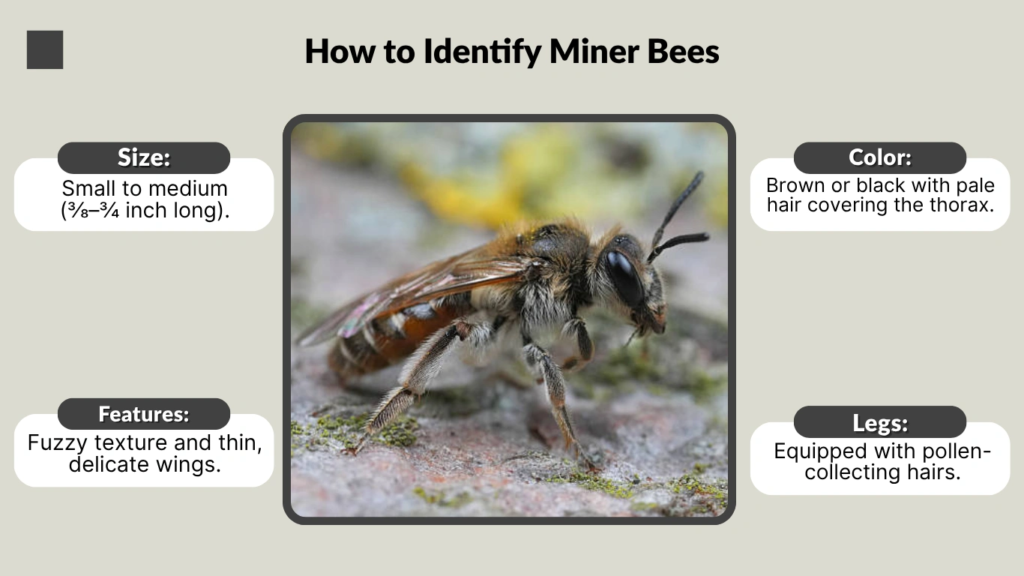
Recognizing miner bees can prevent unnecessary extermination. They share some visual similarities with honey bees, but subtle differences make them easy to identify once you know what to look for.
Appearance
- Size: Small to medium (⅜–¾ inch long)
- Color: Brown or black with pale hair covering the thorax
- Features: Fuzzy texture and thin, delicate wings
- Legs: Equipped with pollen-collecting hairs, known as scopae
Behavior
- Emerge in early spring (March–May)
- Prefer dry, sandy soil or bare patches of lawn
- Females dig tunnels, while males hover near the ground searching for mates
- Non-aggressive and generally ignore human presence
If you see a few bees flying near the ground with tiny mounds of soil around holes, you’re likely looking at miner bees—not wasps or yellowjackets.
Miner Bee Life Cycle

The miner bee’s life is a short but productive one. After mating in spring, the female digs a small tunnel, usually about 6–10 inches deep. Inside, she creates separate chambers for each egg and fills them with a mix of pollen and nectar.
The larvae feed on this stored food until they mature into adults, staying underground through fall and winter. They emerge the following spring to repeat the cycle. Adults typically live for only four to six weeks, meaning their visible activity is brief and seasonal.
This life cycle ensures the bees contribute to pollination just when early-blooming plants need it most.
Miner Bee Nests and Holes

Miner bees dig simple burrows that often appear as small mounds of loose soil with a single hole in the center. These holes are usually about the size of a pencil. They may seem like signs of lawn damage, but they’re harmless and temporary.
Each bee works independently, yet large groups can appear in the same area due to favorable soil conditions. This clustering can give the impression of a colony, but it’s actually many solitary nests close together.
Miner bees prefer:
- Sunny, well-drained soil
- Sparse vegetation or bare spots
- Minimal foot traffic
Once the females finish nesting, they leave the area, and the lawn returns to normal.
Miner Bees in Lawns
Homeowners often notice miner bees when they start nesting in grassy patches. It’s common in spring when soil is dry and compact areas are available. You might see dozens of small holes appearing almost overnight.
While their presence can look concerning, they don’t damage grass roots or soil. In fact, their burrowing helps aerate the ground, improving overall soil health. The activity typically lasts only a few weeks before the adults die off.
If you want to reduce miner bee nesting next season, keep the lawn moist and dense with vegetation. Bees prefer open, dry spots, so a healthy lawn naturally deters them.
Do Miner Bees Sting?

Miner bees are among the least aggressive of all bee species. Females are capable of stinging, but they only do so if handled roughly or threatened directly. Males, which are often the ones hovering around the lawn, cannot sting at all.
Most people can safely walk near miner bee activity without incident. They’re focused entirely on nesting and pollinating rather than defending territory. Even when disturbed, miner bees prefer to flee rather than attack.
If stung, the reaction is usually mild—similar to a mosquito bite. Their small stingers and low venom yield make them far less painful than honey bee or wasp stings.
Are Miner Bees Dangerous?

No, miner bees are not dangerous. Despite their swarming appearance, they pose no real threat to humans, pets, or lawns. Their short activity window and gentle behavior make them harmless seasonal visitors.
In fact, they’re ecologically important. Miner bees help pollinate fruit trees, vegetables, and flowering plants during early spring when few other insects are active. Eliminating them disrupts local pollination cycles and harms biodiversity.
How to Get Rid of Miner Bees Naturally
While miner bees are beneficial pollinators, their nesting behavior can be unsettling when they appear in large numbers. Fortunately, there are safe and natural methods to discourage them without harming the environment.
1. Keep the Lawn Moist
Miner bees prefer dry soil. Watering your lawn regularly during spring nesting season makes the ground less appealing for digging burrows. Even light irrigation can deter them from returning.
2. Reseed or Densify Grass
Thick, lush grass leaves fewer bare patches for bees to nest in. Reseeding open areas and maintaining healthy turf through proper mowing and fertilization can effectively prevent miner bee activity.
3. Apply Mulch or Ground Cover
If bees favor certain garden spots, cover them with mulch, gravel, or low-growing plants. These barriers prevent females from accessing soil for burrowing.
4. Avoid Chemicals
Pesticides and insecticides can harm beneficial pollinators, including honey bees and butterflies. Opt for environmentally friendly deterrents and avoid harsh chemicals that damage biodiversity.
5. Encourage Relocation
Most miner bees abandon their nests after several weeks. By maintaining the lawn and removing bare soil patches, you’ll naturally encourage them to move elsewhere without extermination.
Professional and Eco-Friendly Control Options
If miner bees persist or nest in large numbers near play areas or entryways, professional assistance may help. Always choose pest control services that specialize in eco-friendly bee management.
What Professionals Do
- Identify bee species accurately.
- Use non-toxic repellents instead of harmful sprays.
- Employ gentle relocation methods if necessary.
Many professionals collaborate with local beekeepers or environmental agencies to ensure safe bee handling and preservation.
Common Miner Bee Species
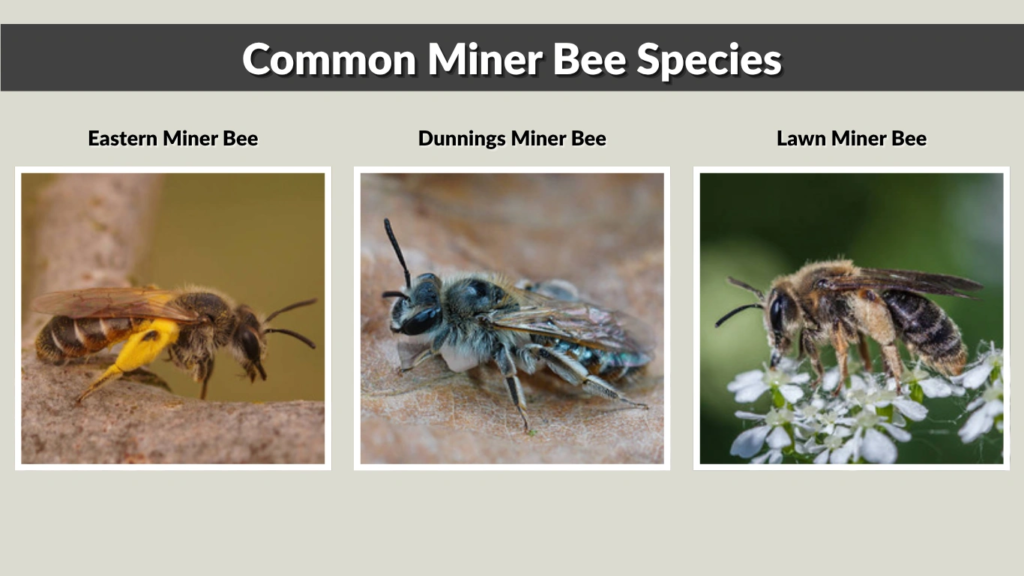
Several miner bee species exist worldwide, each adapted to specific climates and habitats. Understanding the most common types helps in identifying them correctly.
Eastern Miner Bee (Andrena carlini)
Found throughout North America, this species emerges early in spring and prefers sandy soil. It’s a major pollinator of fruit blossoms and native wildflowers.
Dunnings Miner Bee (Andrena dunningi)
This smaller species thrives in gardens and meadows, particularly in regions with loose, loamy soil.
Lawn Miner Bee (Andrena fulva) – UK
Commonly known as the tawny mining bee, this European species has a bright orange coat and nests in lawns and garden beds. It’s completely harmless and highly beneficial for local ecosystems.
These species may differ in color or size, but all share similar solitary nesting behaviors and essential pollination roles.
Miner Bees vs. Honey Bees

Many people confuse miner bees with honey bees, but they have distinct lifestyles and behaviors.
| Feature | Miner Bees | Honey Bees |
| Nesting | Underground burrows | Hives and colonies |
| Social Behavior | Solitary | Social (thousands per hive) |
| Honey Production | None | Produce and store honey |
| Aggression | Non-aggressive | Defensive when provoked |
| Pollination Season | Early spring | Throughout spring and summer |
Miner bees are crucial early-season pollinators, while honey bees continue pollinating throughout warmer months.
Understanding Miner Bee Stings
Though rare, miner bee stings can occur when a bee feels trapped or pressed. Female bees have stingers, but their mild venom causes only slight irritation.
Treatment for Minor Stings
- Wash the area with soap and water.
- Apply a cold compress to reduce swelling.
- Use anti-itch cream or aloe vera for relief.
Seek medical attention only if you experience severe swelling or an allergic reaction. For most people, miner bee stings are minor and heal within hours.
Miner Bees and the Environment

Miner bees are vital to maintaining a balanced ecosystem. Their pollination supports wild plants, fruit trees, and early crops. Without them, many flowers and food sources would decline in productivity.
Environmental Benefits
- Enhance biodiversity in urban and rural areas.
- Support food chains for other insects and birds.
- Improve soil structure through tunneling activity.
Their presence indicates a healthy, pesticide-free garden ecosystem.
How to Protect Miner Bees Safely
Rather than eliminating miner bees, consider ways to protect and coexist with them.
- Create Bee Habitats: Leave small areas of bare, dry soil for nesting.
- Avoid Overuse of Chemicals: Choose natural fertilizers and repellents.
- Plant Native Flowers: Early bloomers like crocus and dandelion attract miner bees.
- Educate Others: Share awareness about the importance of solitary bees in pollination.
By protecting miner bees, you support sustainable pollination and biodiversity.
FAQs
Do miner bees make honey?
No, miner bees don’t produce honey. They gather pollen and nectar solely to feed their larvae. Each female bee provisions her underground chambers individually, unlike honey bees that store food collectively in hives.
How long do miner bees stay active?
Miner bees are active for 4–6 weeks in spring. After completing their life cycle, adults die, and larvae remain underground until the next season. Their temporary presence causes minimal disruption to lawns or gardens.
What attracts miner bees to lawns?
They’re attracted to dry, sandy soil with sparse grass. Regular watering, reseeding, and ground cover can make the area less suitable for nesting, encouraging them to relocate naturally.
Can miner bees damage lawns?
No, their burrows don’t harm lawns or soil. On the contrary, their tunneling aerates the ground, promoting healthier grass growth and nutrient flow.
Are miner bees important to the ecosystem?
Absolutely. Miner bees are essential early pollinators for fruit trees and wildflowers. Their decline could affect plant reproduction, biodiversity, and even food availability for other wildlife.
