

Bumble bees are gentle, fuzzy insects that play an essential role in pollination. Yet, when people discover a nest in their yard, garden, or even inside their walls, concern quickly follows. Understanding where bumble bees nest, how they build their colonies, and how to handle them safely helps protect both you and these valuable pollinators.
Understanding Bumble Bee Nests
A bumble bee nest is a small, insulated home where the queen and her workers live and raise their young. Unlike honey bees that build neat wax combs in hives, bumble bees make irregular, round clusters of wax cells. These cells hold eggs, larvae, and stored nectar or pollen.
Each colony is seasonal, lasting only one spring and summer before dying off in autumn. At its peak, a single nest may house between 50 and 400 bees, far fewer than a honey bee hive, which can hold thousands.
Where Do Bumble Bees Build Their Nests?

Bumble bees choose safe, quiet, and shaded locations for nesting. They favor spots protected from rain and wind. Some common places include:
- Abandoned animal burrows or holes in the ground
- Piles of dry leaves or grass
- Under decks, sheds, or garden benches
- Inside compost heaps or stone walls
In early spring, a fertilized queen searches for a new nesting site. Once she finds one, she starts laying eggs and caring for her first brood until workers emerge to assist. The colony then grows quickly through summer as more workers join to gather food and protect the nest.
Do Bumble Bees Nest in the Ground?

Yes, most bumble bees are ground-nesting species. These bees often settle inside old rodent holes or soil crevices. The ground provides natural insulation, helping regulate the nest’s temperature and humidity.
If you notice small holes in your lawn with bees entering and leaving, you may have a bumble bee nest. Unlike wasps, bumble bees do not dig tunnels; they reuse existing burrows and line them with soft materials like moss and grass.
Ground nests are temporary and generally harmless. If they’re in a location that doesn’t interfere with your daily activities, it’s best to let them stay until the end of the season.
What Does a Bumble Bee Nest Look Like?
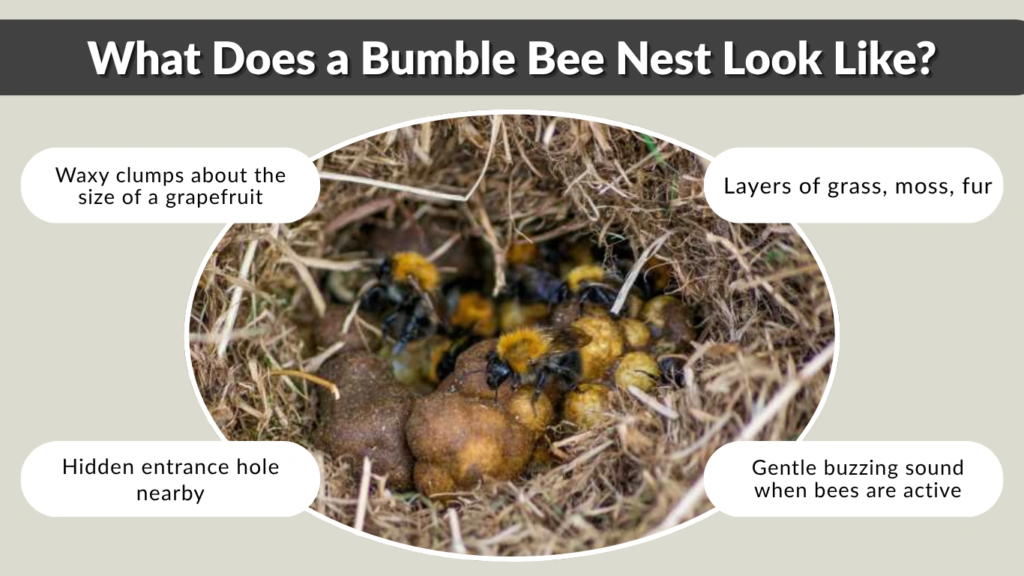
A bumble bee nest looks very different from the perfect honeycomb structure many people imagine. It is typically a messy, round ball of wax surrounded by bits of natural material.
Key Features of a Bumble Bee Nest:
- Waxy clumps about the size of a grapefruit or small melon
- Layers of grass, moss, fur, or other soft materials
- Hidden entrance hole nearby
- Gentle buzzing sound when bees are active
Inside, you’ll find the queen at the center, surrounded by workers tending to brood cells filled with eggs, larvae, and nectar. The warm, fuzzy environment allows the colony to thrive during the warmer months.
Types of Bumble Bee Nesting Locations

Bumble bees can adapt to different nesting environments depending on the species and available shelter.
Common Nesting Areas
- Underground Burrows – Most common and best protected from predators.
- Birdhouses or Nest Boxes – Sometimes repurposed by queens in early spring.
- Wall Cavities or Lofts – Offer warmth and dryness but may worry homeowners.
- Hollow Logs or Tree Roots – Provide natural cover and stability.
- Compost Heaps or Sheds – Warm and ideal for early-season nests.
Less Common Nesting Spots
- Beneath garden furniture
- In piles of mulch or leaf litter
- Inside insulation gaps or old decking
If a nest forms near your home, observe from a distance rather than attempting removal. Bumble bees rarely sting unless provoked.
Do Bumble Bees Make Nests Every Year?

Bumble bee nests are not permanent. Each year, new queens create fresh nests after emerging from hibernation. Old nests naturally decay and are not reused by the same colony.
Here’s how their life cycle works:
- Spring – A fertilized queen finds a new site and starts laying eggs.
- Summer – The colony expands, and worker bees maintain it.
- Late Summer to Autumn – New queens and males are produced.
- Fall – The old queen and workers die off, leaving only new queens to hibernate until next spring.
This annual cycle means there’s no need for panic—most bumble bee nests disappear naturally within a few months.
How Many Bumble Bees Are in a Nest?
Bumble bee colonies are relatively small compared to honey bee hives.
- Average nest size: 50–400 bees
- Large nests: Can reach up to 600 bees
- Queen bee: The only fertile female responsible for laying eggs
The queen begins alone, raising her first generation of workers. Once they mature, these workers take over foraging and caring for new offspring while the queen focuses on reproduction.
Bumble Bee Nesting Habits
Bumble bees follow a fascinating nesting pattern throughout the year. In early spring, a single queen begins her colony. She finds a warm, safe location and gathers pollen and nectar to feed her first brood. Once the first workers emerge, they take over foraging and nest duties, allowing the queen to focus solely on laying eggs.
As summer progresses, the colony reaches its peak activity. By late summer, the queen begins producing new queens and males for the next generation. When autumn arrives, the original queen and workers die, leaving only the fertilized young queens to hibernate through winter and start new nests the following year.
This seasonal cycle is essential to the natural balance of pollination and plant reproduction.
Bumble Bee Nests in Human Structures

While most bumble bees prefer natural spots, they occasionally choose man-made structures for nesting. These can include:
- Wall cavities and attics
- Spaces beneath decks, porches, or sheds
- Birdhouses or garden boxes
- Gaps in insulation or roof corners
Although their presence might cause alarm, bumble bees don’t damage buildings. They don’t chew wood or create tunnels like carpenter bees. Most colonies inside walls or lofts disappear by the end of summer.
If the nest isn’t in a high-traffic area, it’s best to leave it undisturbed until the bees vacate naturally. Blocking entrances or using sprays can agitate them and increase the risk of stings.
How to Identify a Bumble Bee Nest
Recognizing a nest helps avoid accidental disturbance. Look for these clear indicators:
Signs of an Active Nest
- Bees frequently flying in and out of a single small hole
- A low humming or buzzing sound coming from underground or within a wall
- Small clumps of wax or bits of grass near the entry point
- Increased activity on warm, sunny days
If these signs appear in your yard or home, maintain a safe distance. Bumble bees are generally peaceful and won’t attack unless provoked.
How to Get Rid of a Bumble Bee Nest Safely
Bumble bees are protected in many regions because of their importance to the ecosystem. Therefore, the best method is to avoid harming them and wait for the nest’s natural end in autumn.
Safe Removal Tips
- Wait until late fall when the colony dies out naturally.
- Contact a professional bee relocator for humane removal.
- If necessary, seal the nesting hole after the bees have left to prevent reuse.
What Not to Do
- Do not pour water, gasoline, or chemicals into the nest.
- Do not block the entrance while bees are active.
- Avoid loud vibrations or direct interference near the nest.
Following these precautions ensures safety while protecting vital pollinators.
DIY Bumble Bee Nest Box
For nature lovers, building a bumble bee nest box is a wonderful way to encourage safe nesting away from your living spaces.
How to Make One
- Use a small wooden or clay box with ventilation holes.
- Line the inside with dry moss, straw, or shredded paper.
- Create a small entrance hole about 1.5 cm wide.
- Place the box in a shaded, sheltered area 10–20 cm above ground.
- Keep it undisturbed during spring to attract a queen looking for a nest.
Providing a safe artificial habitat helps support declining bee populations while keeping them out of unwanted areas.
Bumble Bee Nest Relocation and Removal
When nests form too close to doorways, pets, or play areas, relocation may be necessary. Professional bee handlers use special containers to move the entire nest safely to a nearby natural site. This process usually takes place at night when bees are inactive.
Never attempt relocation on your own. Disturbing a nest can provoke defensive behavior and multiple stings. Humane removal ensures both your safety and the bees’ survival.
Common Species and Their Nesting Styles
| Species | Preferred Nesting Site | Colony Size |
| Common Eastern Bumble Bee | Underground burrows | 100–300 bees |
| Brown-Belted Bumble Bee | Ground & hollow wood | 50–150 bees |
| Yellow-Faced Bumble Bee | Grassy surface nests | 50–200 bees |
| White-Tailed Bumble Bee | Abandoned animal burrows | 300–600 bees |
| Black and Gold Bumble Bee | Wall cavities or logs | 100–250 bees |
Each species has distinct nesting habits, but all play a vital role in pollination and maintaining biodiversity.
FAQs
Do bumble bees reuse their nests each year?
No. Bumble bees never reuse old nests. Each spring, new queens build fresh colonies in new locations, while old nests naturally decompose.
Can bumble bees damage my property?
No. Bumble bees do not chew or drill into wood. They use existing holes or gaps for nesting and don’t cause structural harm.
What should I do if there’s a nest in my garden?
If possible, leave it alone. Bumble bee nests are temporary and disappear by late autumn. If it’s too close to your home, call a professional for safe relocation.
Do bumble bees protect their nests aggressively?
They can become defensive if the nest is disturbed, but they’re not naturally aggressive. Standing still and moving away calmly reduces the risk of stings.
How can I attract bumble bees to a safe nesting box?
Place the box in a quiet, shaded spot with plenty of nearby flowers. Using natural materials like moss and hay helps queens recognize it as a suitable nest.
