

Wasps and bees are often confused due to their similar size, buzzing flight, and stinging ability. Many people assume they belong to the same group or that wasps are just another type of bee. While it’s true that they share some traits and even distant evolutionary roots, wasps and bees are quite different in appearance, behavior, and ecological roles. To answer the question simply: a wasp is not a bee, but they are related. This article explores their taxonomy, differences, and importance in nature.
Taxonomy & Classification
Bees and wasps belong to the insect order Hymenoptera, which also includes ants. Within this order, their classification diverges:
- Wasps are generally classified under the suborder Apocrita and include families such as Vespidae (paper wasps, yellowjackets, hornets) and Sphecidae (mud daubers).
- Bees belong to the superfamily Apoidea, which contains over 20,000 species worldwide, including honeybees, bumblebees, carpenter bees, and solitary bees.
Interestingly, bees actually evolved from wasp-like ancestors millions of years ago. Over time, some wasps shifted from a predatory diet to a pollen- and nectar-based one, giving rise to the bees we know today.
Physical Differences

Body Shape
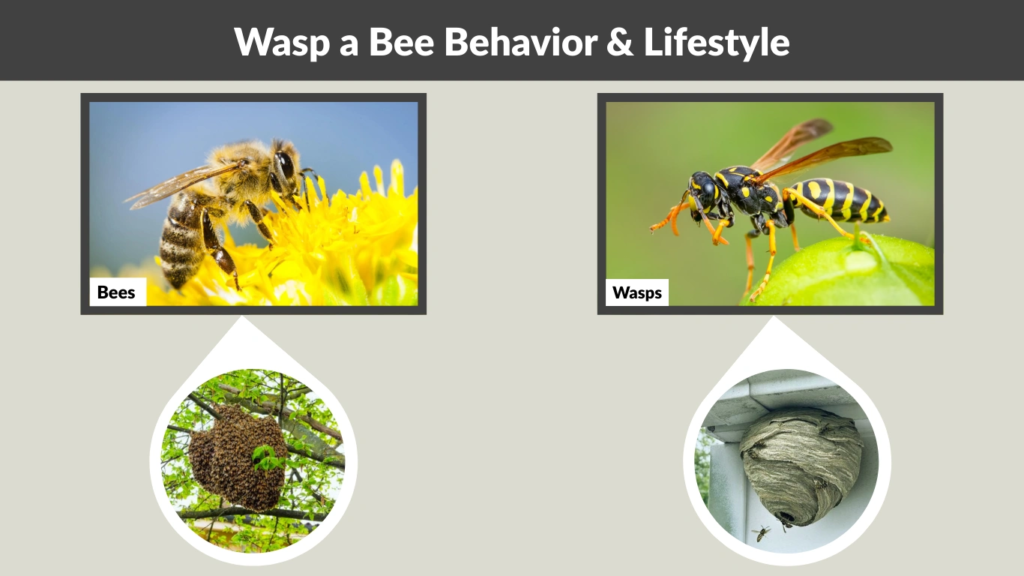
Bees are typically rounder and fuzzier, with hairy bodies designed to collect and transport pollen. These hairs are branched like tiny feathers, making them efficient pollinators. Wasps, by contrast, have slimmer, smooth bodies with a narrow “waist” between the thorax and abdomen. Their sleek appearance suits their predatory lifestyle.
Color & Markings
Bees tend to be brown, golden, or black with subdued striping. Bumblebees, for example, are fuzzy with black and yellow bands. Wasps, however, are usually brightly colored with bold yellow, black, or reddish markings. Their striking patterns act as warning signals to predators.
Size Range
Both bees and wasps vary in size depending on the species. Honeybees are about 12–15 mm long, while bumblebees can be larger and rounder. Wasps such as paper wasps are similar in size to honeybees, but hornets can grow much larger, sometimes over 30 mm long.
Behavior & Lifestyle
Social vs. Solitary
Bees include both social species (like honeybees and bumblebees) and solitary bees that live alone in burrows. Social bees form complex colonies with thousands of individuals working together to produce honey, care for brood, and defend the hive.
Wasps also come in both forms. Social wasps like yellowjackets and hornets build communal nests and defend them aggressively. Solitary wasps, such as mud daubers, live independently, building individual nests and hunting prey for their young.
Diet
Bees are vegetarians, feeding primarily on nectar and pollen. Nectar provides them with energy, while pollen supplies protein for developing larvae.
Wasps, on the other hand, are omnivores. They consume nectar for energy but also hunt insects, spiders, and caterpillars to feed their larvae. This predatory behavior makes them important for controlling pest populations.
Nesting Habits
Bees create nests from wax. Honeybees build hexagonal combs inside cavities or man-made hives, while bumblebees use abandoned burrows.
Wasps use different materials. Paper wasps chew wood fibers into a papery pulp to build umbrella-shaped nests, yellowjackets nest underground, and mud daubers create clay nests on walls and ceilings.
Sting & Defense

Bee Stings
Most bee stings are defensive. A honeybee’s sting is barbed, so when it stings a human or animal, the stinger lodges in the skin, tearing away from the bee’s body and causing its death. Bumblebees and many solitary bees, however, have smooth stingers and can sting multiple times, though they rarely do.
Wasp Stings
Wasps have smooth stingers, meaning they can sting repeatedly without harm to themselves. Social wasps are more likely to sting because they aggressively defend their nests. Their venom also contains more pain-inducing compounds, making wasp stings feel sharper than bee stings.
Aggression Levels
Bees usually sting only when provoked or if their hive is threatened. Wasps, particularly yellowjackets, are more aggressive and may chase perceived threats.
Ecological Roles
Bees as Pollinators
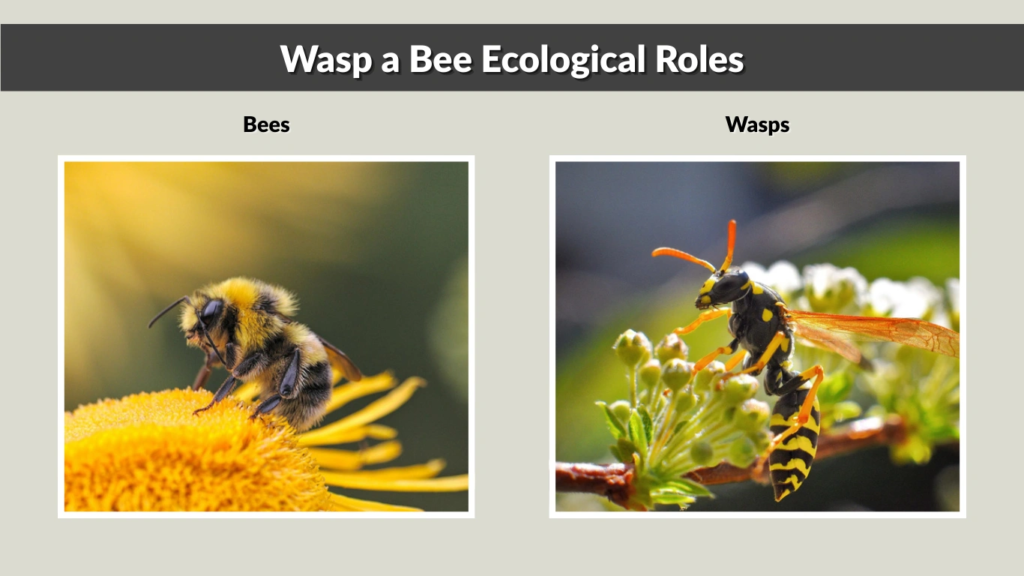
Bees are considered the world’s primary pollinators. Their hairy bodies and pollen baskets allow them to transfer pollen efficiently between flowers. This process is crucial for both wild plants and agricultural crops, making bees essential for global food production.
Wasps as Predators & Pollinators
While not as effective as bees, wasps still contribute to pollination when they visit flowers for nectar. More importantly, they act as natural pest controllers, hunting caterpillars, flies, and other insects that can damage crops.
Complementary Roles
Together, bees and wasps maintain ecological balance—bees by ensuring plants reproduce and wasps by keeping insect populations in check.
Common Misconceptions
- “All bees sting.” Not true—many species, especially solitary bees, are stingless or extremely unlikely to sting.
- “All wasps are aggressive.” Only social wasps show strong aggression when defending nests. Solitary wasps are generally harmless.
- “Bees and wasps serve the same role.” While both pollinate, bees specialize in pollination, whereas wasps play a dual role as pollinators and predators.
- “Wasps are useless.” Despite their bad reputation, wasps are critical for controlling pests and maintaining biodiversity.
Conclusion
So, is a wasp a bee? The answer is no. Although they share evolutionary ties and belong to the same insect order, they are distinct in classification, body structure, behavior, and ecological roles. Bees are fuzzy, vegetarian pollinators, while wasps are sleek, predatory insects that also help pollinate. Both, however, are vital to ecosystems and deserve respect for the unique roles they play.
FAQs
Are wasps ancestors of bees?
Yes. Bees are believed to have evolved from wasp-like ancestors millions of years ago, gradually adapting to a pollen-based diet.
Can wasps make honey like bees?
No. Wasps do not produce honey. Bees create honey as a food reserve, while wasps rely on hunting and nectar.
Why do wasp stings hurt more than bee stings?
Wasp venom contains more pain-inducing chemicals and they can sting multiple times, which often makes their stings feel sharper and more intense.
Do wasps pollinate plants like bees?
Yes, but not as efficiently. Wasps do pollinate when feeding on nectar, but bees are far better adapted for carrying pollen between flowers.
Which is more dangerous: a bee or a wasp?
For most people, a wasp is more dangerous because it can sting repeatedly and is more aggressive. However, for individuals allergic to stings, both can be life-threatening and require immediate medical attention.
