

Wasps build different types of nests depending on their species and environment. Some nests are easy to spot, like paper nests hanging under a roof, while others are hidden underground or inside wood. Knowing the type of nest can help you identify which wasp you’re dealing with and how to stay safe around them.
In this guide, I’ll share 7 common types of wasp nests with easy identification tips based on my own observations and research.
1. Open Paper Nest

Open paper nests are one of the most common and easily recognized types of wasp nests. These nests are often found hanging under roof edges, tree branches, or porch ceilings. Their open design allows you to see the honeycomb-like cells where the wasps raise their young.
This type of nest is usually built by paper wasps and can grow quickly during the summer. If you notice a small, umbrella-shaped structure with flying wasps around it, you’re likely looking at an open paper nest.
Made by
Open paper nests are made by paper wasps, a group of social wasps known for their long legs and slender bodies. These wasps are not as aggressive as yellowjackets or hornets, but they will sting if they feel threatened.
Paper wasps work together to build the nest using a mix of wood fibers and their saliva. They chew bits of wood from fences, logs, or even cardboard and turn it into a grayish paper-like material. This material is then molded into small cells, which make up the core of the nest.
Material
The main building material is a paper-like substance made from wood pulp. The wasps gather weathered wood, chew it up, and mix it with their saliva. This creates a soft paste that dries into a strong, papery texture.
The nest has no outer covering, so the cells are open and visible. This makes it easy to see the larvae inside each cell as the colony grows. Since it is exposed to the air, rain can damage it—so wasps usually pick dry, protected spots.
Shape and Size
The shape of an open paper nest is often umbrella-like. It hangs downward with cells facing the ground. In the early stages, it’s small—about the size of a walnut. But by summer, it can grow much larger if left undisturbed.
The size and shape may vary depending on the number of wasps in the colony. Usually, a single queen starts the nest, and workers expand it as the colony grows.
Location
You’ll often find open paper nests under eaves, porch roofs, and tree branches. Wasps choose dry, elevated spots to keep the nest safe from rain and predators. These places also give them a good view of the area, which helps protect the nest.
Sometimes, they also nest inside sheds or barns, especially if the building has high ceilings or wooden beams. Avoid disturbing these nests—wasps nearby will defend them if they feel threatened.
Open Paper Nest – Identification
- Visible umbrella shape with open cells facing downward
- Attached to a single thin stalk under roofs, eaves, or tree branches
- Light gray or brown color
- Small size early in season, can grow larger over time
- Wasps are often seen resting on the surface
2. Enclosed Paper Nest

Enclosed paper nests are larger and more protected than open paper nests. These nests have a thick outer shell that hides the inner cells, making them harder to spot at first. They often look like a gray or brown ball hanging from a tree or under a roof.
This type of nest is mostly made by hornets and some yellowjacket species. Their enclosed design helps shield the colony from rain, wind, and predators.
Made by
Enclosed paper nests are built by hornets and yellowjackets, both of which are more aggressive than paper wasps. Hornets prefer to stay high in trees or on buildings, while yellowjackets may use hollow walls or hidden corners.
These wasps live in large colonies with one queen and many workers. They use teamwork to build, expand, and defend their nests. Hornets, in particular, are known to attack in groups if they feel the nest is in danger.
Material
Just like open nests, enclosed paper nests are made from chewed wood mixed with saliva. The result is a papery material, but in this case, it’s used to build thick layers forming a protective shell.
The inside of the nest contains tiers of brood cells where eggs are laid. The outer layers make the nest strong and well-insulated, which helps the wasps survive changing weather conditions.
Shape and Size
These nests are typically round or football-shaped. They can range from the size of a tennis ball to as big as a basketball. The shape helps keep the inside stable and dry.
As the colony grows, the wasps continue adding layers and expanding the space. By late summer, some of these nests may hold thousands of wasps inside.
Location
You can find enclosed paper nests in trees, attics, sheds, wall cavities, and even in abandoned vehicles. Hornets prefer open areas with height, while yellowjackets often nest in enclosed or hidden spots.
Because these nests are enclosed, you may not notice them until they become quite large. Be cautious—disturbing them can lead to painful stings, especially during peak colony activity in late summer.
Enclosed Paper Nest – Identification
- Football or teardrop shape, fully enclosed
- Gray, layered texture (like rough paper)
- Usually found hanging from trees, attics, or walls
- One entry hole near the bottom or side
- No visible inner cells from the outside
3. Ground Nest

Ground nests are hidden underground, making them difficult to notice until disturbed. They look like small holes in the soil, often mistaken for rodent burrows. These nests are built by wasps that prefer to stay low and out of sight.
Yellowjackets and some solitary ground wasps are the most common builders of this type. Despite being underground, these nests can grow very large and contain hundreds to thousands of wasps.
Made by
Ground nests are usually made by yellowjackets and digger wasps. Yellowjackets are social wasps and live in large colonies, while digger wasps are often solitary and use the nest only to raise their young.
Yellowjackets are highly aggressive, especially when their underground home is threatened. If you accidentally step near their nest or disturb it while gardening, they may swarm and sting repeatedly.
Material
These nests are made from chewed plant material, just like paper nests, but they are hidden inside existing burrows or soil tunnels. Yellowjackets may use abandoned rodent holes, while digger wasps may dig their own tunnel system.
The inner nest is built with the same papery material, but it’s protected by soil instead of an outer paper shell. This natural insulation keeps the colony safe from temperature changes and weather.
Shape and Size
A ground nest usually has a hidden round entrance—often a small hole in the ground. The actual nest beneath can be quite large, shaped like a layered ball or series of connected chambers.
You may notice bits of wasp activity above ground, such as loose soil or flying wasps going in and out. Some ground nests can spread several feet wide underground by late summer.
Location
Ground nests are found in lawns, garden beds, under shrubs, and along walkways or fields. Yellowjackets prefer sunny, open spaces with loose, dry soil. Digger wasps often choose sandy or slightly sloped ground.
Because they are hard to see, ground nests can be dangerous for pets and people. Mowing the lawn, digging, or walking near the entrance may cause the wasps to attack.
Ground Nest – Identification
- Small, round hole in soil (looks like rodent burrow)
- No nest visible on the surface
- Frequent wasp traffic in and out of the hole
- Found in lawns, garden beds, or sandy soil
- May notice disturbed soil or dead grass near the entrance
4. Mud Nest

Mud nests are made from soil and water instead of paper. These nests look like small tubes, pots, or lumps of dried mud stuck to walls or ceilings. Unlike paper or ground nests, mud nests are usually built by solitary wasps—not social ones.
You’ll often spot them in garages, sheds, under window sills, or in corners of outdoor walls. They may seem harmless, but they hold developing wasp larvae inside.
Made by
Mud nests are built by mud dauber wasps and potter wasps. These wasps work alone, not in colonies. Each female builds her own nest and raises her young by herself.
Mud daubers are slender, with a long “thread-like” waist and dark or metallic bodies. They are not aggressive and rarely sting unless handled. Instead of defending a large colony, they focus on nest building and hunting small insects or spiders.
Material
Mud wasps use wet soil or clay, which they carry in small mouthfuls to the nesting site. They mold the mud into tubes, chambers, or pot shapes. Once the mud dries, it becomes hard and strong—perfect for protecting their young.
Inside each chamber, the wasp places a paralyzed spider or insect along with an egg. The larva hatches, eats the stored prey, and then grows inside the dried mud cell until it’s ready to emerge.
Shape and Size
Mud nests come in many shapes, depending on the species. Mud daubers make long, smooth tubes stacked side by side. Potter wasps shape their nests like tiny clay pots. Some nests look like blobs of rough mud on walls.
Most nests are small—only a few inches wide. But a single wasp may build several nests close together over time, creating a cluster of tubes or pots.
Location
You’ll find mud nests in dry, sheltered spots like walls, ceilings, porches, garages, attics, and under bridges. They are often built in corners where rain can’t reach them.
Unlike other nests, these are not hidden. You may notice the dried mud stuck to a surface with small holes, which means a young wasp has already hatched and flown out.
Mud Nest – Identification
- Mud tubes, pots, or lumps stuck to walls or ceilings
- Dry, hardened mud with a rough surface
- Often built in sheltered corners of garages, porches, or sheds
- Small round holes may be present if wasps have emerged
- Often clustered together if multiple nests are made
5. Wood Tunnel Nest

Wood tunnel nests are hidden inside trees or wooden structures. These nests are not built on the surface like paper or mud nests. Instead, the wasps bore directly into wood to create tunnels where they lay their eggs.
This type of nesting is most commonly associated with wood wasps or horntail wasps. While they don’t form large colonies, they can still damage wood by boring into it.
Made by
Wood tunnel nests are made by wood wasps and horntail wasps. These wasps are usually solitary and do not defend their nests aggressively. The female drills into wood to lay her eggs, and then she leaves.
Horntail wasps are large, dark-bodied insects with a hard, pointed “tail” at the back—used to inject eggs into the wood. They are often mistaken for dangerous wasps, but they don’t sting humans and are not harmful unless provoked.
Material
These nests are not built with outside materials like mud or paper. Instead, the wasps create hollow tunnels inside dead or decaying wood. The tunnels serve as protection for the developing larvae.
The female wasp uses her sharp ovipositor to drill into the wood, where she lays an egg. Then she deposits a fungus that helps break down the wood and provides food for the growing larva.
Shape and Size
Wood tunnel nests are not visible from the outside. Inside the wood, they form long, narrow tunnels that stretch several inches. Some tunnels are straight, while others twist based on the wood’s grain.
Over time, multiple larvae may leave exit holes as they emerge, which can look like small, round pinholes on wood surfaces. These holes are a key sign that a wood tunnel nest is present.
Location
Wood tunnel nests are found in tree trunks, firewood, dead logs, and sometimes in structural wood of buildings. They prefer rotting or weakened wood where it’s easier to bore.
Since the nest is hidden, most people don’t notice it until the adult wasps emerge. You may see a wasp flying indoors if firewood is brought inside with larvae still developing inside the logs.
Wood Tunnel Nest – Identification
- No external nest structure
- Small round exit holes on tree trunks, logs, or wooden walls
- Fine sawdust near entrance holes may be visible
- Often found in dead trees or untreated wood
- You may see large, horn-like wasps around the area
6. Cavity Nest

Cavity nests are built inside small, enclosed spaces rather than out in the open. These nests are hidden from view and can be difficult to spot until the wasps become active. The nest itself is made of paper-like material but built inside existing gaps or hollows.
Cavity nests are common in man-made structures like pipes, mailboxes, vents, or wall gaps. They allow wasps to stay protected from weather and predators while expanding their colonies safely.
Made by
Cavity nests are made by European paper wasps and some yellowjacket species. These wasps take advantage of existing cavities to build their nests out of sight.
European paper wasps are slender and often mistaken for yellowjackets. They are less aggressive but will defend their nest if disturbed. Yellowjackets that build cavity nests can be more defensive and form large, active colonies in tight spaces.
Material
The material used is the same chewed wood pulp and saliva that other paper wasps use. It forms a lightweight, papery substance that hardens as it dries.
Wasps build comb-like cells inside the cavity, and if space allows, the colony may add more layers as it grows. The outer surface of the nest may not be visible unless the cavity is opened or damaged.
Shape and Size
Since the nest is hidden inside a cavity, its shape depends on the space available. It may be round, oval, or stretched out along narrow openings.
The size can start small but may grow large over time. In some cases, nests built inside wall voids or ceiling gaps can grow big enough to hold thousands of wasps, especially by late summer.
Location
Cavity nests are usually found in mailboxes, hollow fence posts, wall voids, roof vents, outdoor grills, and other sheltered spaces. Wasps choose dry, tight spots that are hard for predators to reach.
Because they are hidden, these nests often go unnoticed until there’s a high amount of wasp activity or noise. Caution is needed when opening or repairing items where cavity nests might exist.
Cavity Nest – Identification
- Nest hidden inside hollow pipes, mailboxes, wall gaps, or vents
- Wasps flying in and out of tight spaces
- May hear buzzing or scratching from inside walls
- No visible nest unless structure is opened
- European paper wasps are often seen guarding the entrance
7. No External Nest (Parasitic Wasp Nesting)
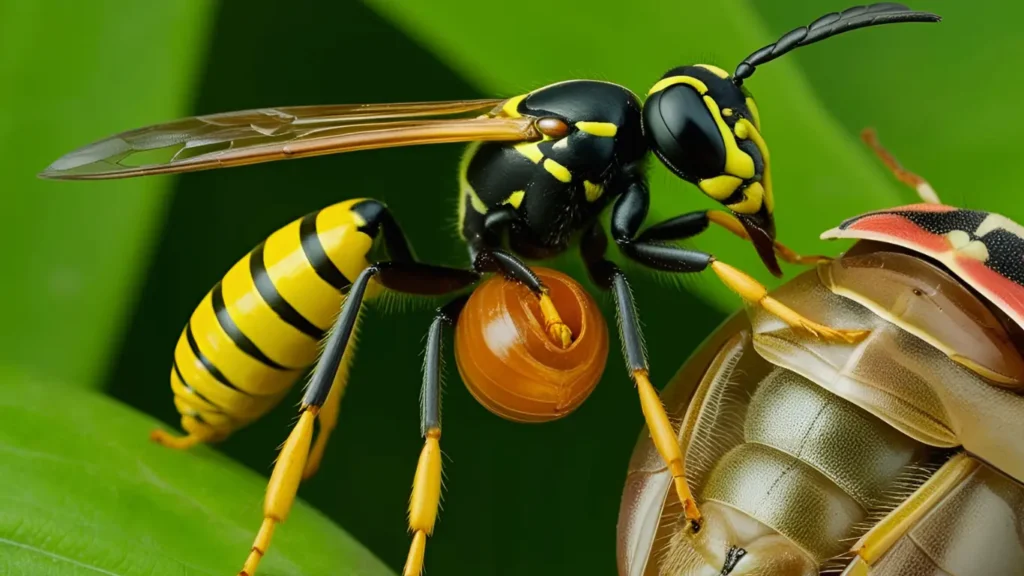
Parasitic wasps are different from most other wasps—they don’t build visible nests. Instead, they use other insects as hosts for their eggs. Their “nest” is actually inside the body of another insect, like a caterpillar, spider, or beetle.
This method may sound strange, but it’s a natural form of pest control. These wasps help balance insect populations and are considered beneficial in gardens and farms.
Made by
These hidden nests are made by parasitic wasps such as ichneumon wasps, braconid wasps, and trichogramma wasps. These wasps are small to medium-sized and often go unnoticed by people.
The female finds a host insect, lays her eggs inside or on it, and the larvae feed on the host as they grow. Parasitic wasps don’t live in colonies and do not defend a shared nest like social wasps do.
Material
There is no material used to build an external structure. Instead, the wasp uses her ovipositor (a needle-like organ) to inject eggs into a live host.
Some species paralyze the host first, while others allow the host to continue moving. The egg hatches inside the host, feeds on its tissues, and eventually emerges as an adult wasp. There’s no mud, paper, or wood—just nature working inside another living insect.
Shape and Size
There is no visible nest shape. The “nest” is simply the body of the host insect. Depending on the species, the wasp larva may be very tiny or grow to a noticeable size before exiting.
In some cases, you might see small cocoons near a paralyzed insect—these are the larvae completing their life cycle outside the host after feeding internally.
Location
Parasitic wasps are found wherever their host insects live—in gardens, forests, fields, or even inside homes. They seek out caterpillars, beetles, spiders, and other small insects to use as hosts.
Since they don’t build traditional nests, people rarely notice their presence. But if you garden or spend time in nature, you may spot their work—like a caterpillar with tiny white cocoons on its back.
No External Nest (Parasitic Wasp Nesting) – Identification
- No visible nest at all
- Signs may include paralyzed insects with small white cocoons attached
- Found on caterpillars, spiders, or beetle larvae
- Very small wasps seen flying low in gardens or near host insects
- Presence only confirmed by observing host insect behavior
Summary
Wasp nests vary by species and location. The 7 main types include open and enclosed paper nests, ground nests, mud nests, wood tunnels, cavity nests, and hidden parasitic nests. Each has a distinct shape, material, and nesting style. Recognizing these can help you identify wasps safely and manage them better around your home.
