
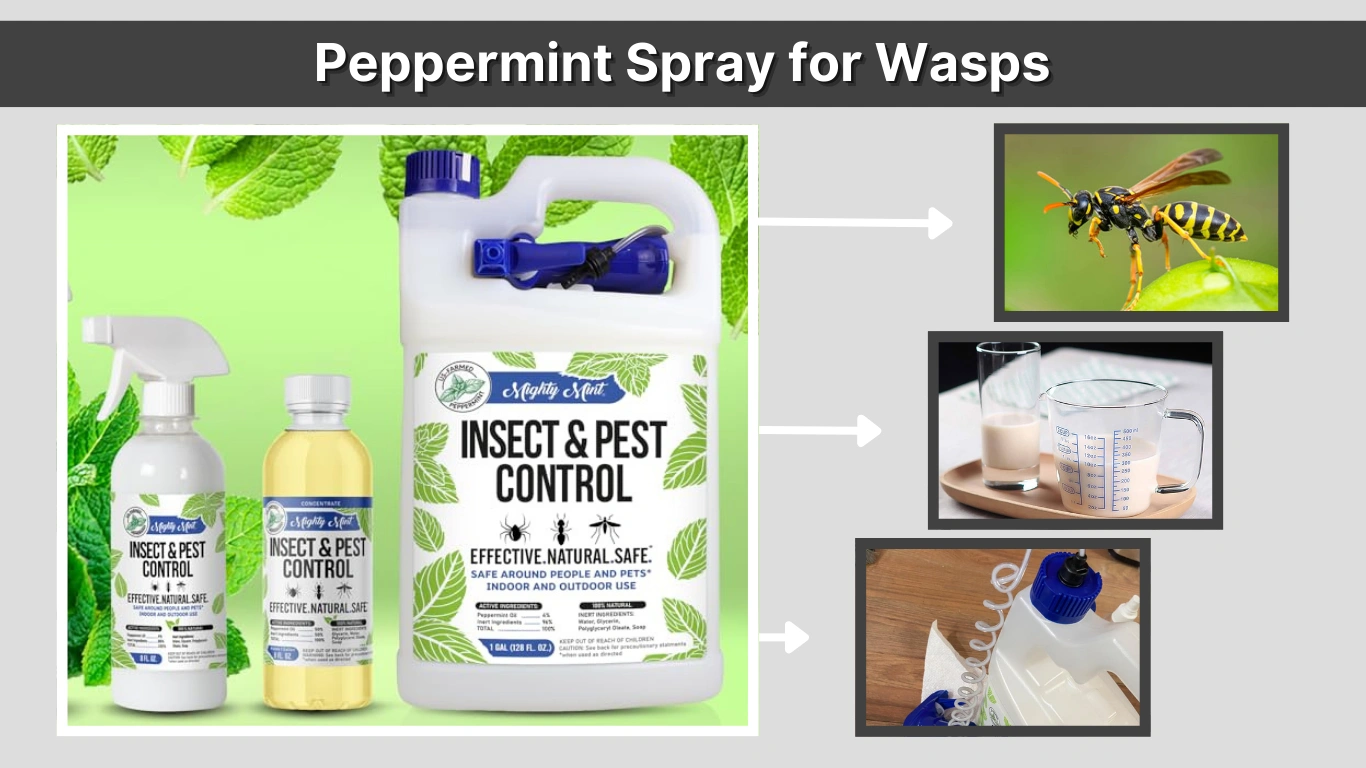
Few things disrupt a summer afternoon faster than wasps buzzing around your patio or picnic table. While these insects play an important role in nature, their stings can be painful and even dangerous. Many homeowners now look for natural alternatives to harsh chemicals, and peppermint oil has quickly gained popularity. Simple, fragrant, and easy to apply, peppermint spray promises to keep wasps away— but how well does it really work?
What is Peppermint Spray for Wasps?
Peppermint spray is a solution made by diluting peppermint essential oil in water, usually with a mild surfactant like dish soap to help the oil disperse. Some people make it at home with just a few drops of oil, while others buy commercial products that use peppermint as an active ingredient.
Unlike synthetic pesticides, peppermint oil is recognized by the U.S. Environmental Protection Agency (EPA) as a minimum risk pesticide under section 25(b). This means that products using peppermint as the active component can often be marketed without federal pesticide registration, as long as they meet certain labeling and formulation standards.
In practical terms, peppermint spray is not a poison that kills wasps on contact. Instead, it acts as a repellent, discouraging them from landing, nesting, or foraging in treated areas.
How Peppermint Oil Works Against Wasps
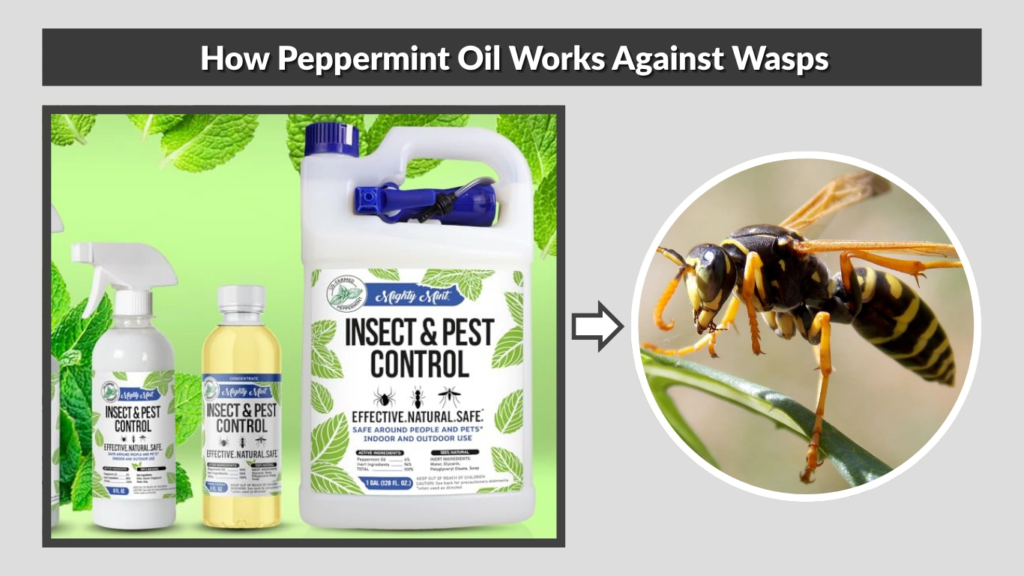
Wasps rely heavily on their sense of smell for navigation, food detection, and communication. Strong-smelling compounds in peppermint oil—particularly menthol—appear to overwhelm or interfere with these scent-based behaviors.
Research on essential oils has shown that wasps are sensitive to a range of plant volatiles, and peppermint consistently appears on the list of effective deterrents. However, single essential oils often work best when combined with others. For example, blends that include clove, geranium, or lemongrass have been shown to outperform peppermint alone in laboratory tests.
In short: peppermint can repel wasps, but it may be most effective as part of a multi-oil blend.
Research & Evidence Review
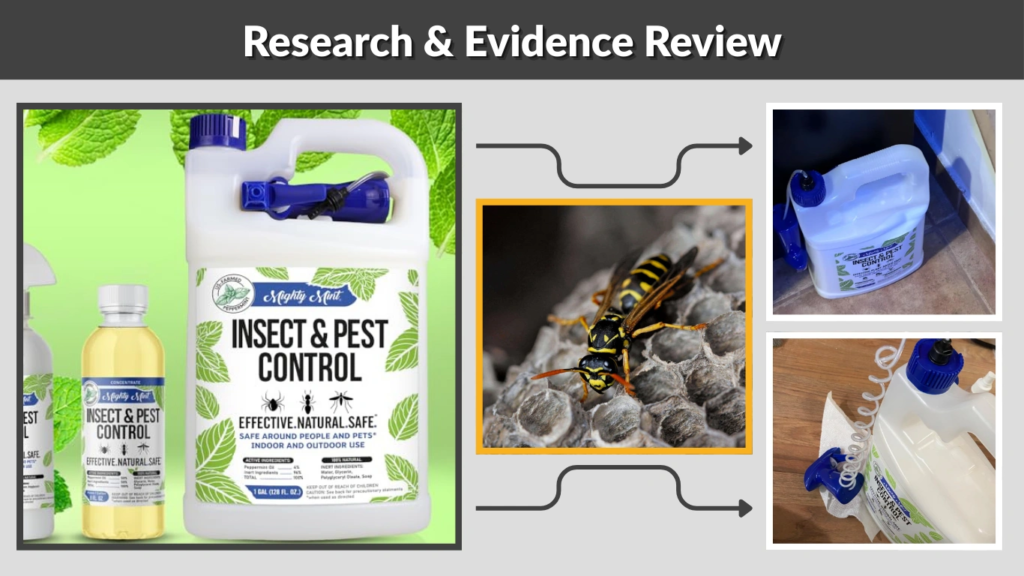
The strongest evidence for peppermint’s effectiveness comes from entomological studies testing essential oils against yellowjackets (Vespula) and paper wasps (Polistes). One widely cited study found that out of 21 essential oils tested, 17—including peppermint—showed significant repellent effects. Blends containing peppermint performed particularly well, reducing wasp landings and hovering near treated areas.
That said, essential oils are volatile, meaning they evaporate quickly outdoors. This volatility makes them short-lived in the field; most sprays need to be reapplied every few days or after rain. Importantly, peppermint spray is not a substitute for professional treatment if you have a large, active nest near your home. It’s best suited as a preventive measure or for deterring scouting wasps.
Pros & Cons of Peppermint Spray
Pros
- Natural and eco-friendly: Derived from plants, peppermint oil avoids the heavy chemical load of synthetic insecticides.
- Pleasant scent: Unlike harsh sprays, peppermint smells refreshing to humans.
- Easy DIY option: You can make it at home with just a few ingredients.
- Lower-risk pesticide: EPA classification as a minimum-risk active.
Cons
- Short-lived: Requires frequent reapplication because of rapid evaporation.
- Not a nest solution: Won’t eliminate large or established colonies.
Safety Considerations
Although peppermint spray is natural, it must be used responsibly:
- Dilution matters: Never apply essential oil undiluted to skin or directly into the air near people and pets.
- Protective gear: Wear gloves and eye protection when mixing or spraying.
- Ventilation: Use sprays outdoors or in well-ventilated areas.
- Children: Keep out of reach of children, and avoid applying to toys, playsets, or areas where kids frequently touch.
- Pets: Cats are especially sensitive to essential oils; avoid using peppermint spray in enclosed spaces where cats or small animals spend time. Dogs can sometimes tolerate exposure better, but caution is still advised.
- Storage: Store mixtures in labeled spray bottles away from sunlight and heat to preserve potency.
DIY Peppermint Spray Recipes

Basic Repellent Recipe
- 10–20 drops of peppermint essential oil
- 500 ml (about 2 cups) of water
- 1 teaspoon mild liquid dish soap
Instructions: Add all ingredients to a spray bottle, shake well, and label clearly. The dish soap acts as a surfactant, helping the oil mix with water and adhere to surfaces. Shake before each use, and make small batches that you can use within one to two weeks.
Enhanced Blend Recipe
- 5 drops peppermint oil
- 5 drops clove oil
- 5 drops geranium oil
- 5 drops lemongrass oil
- 500 ml water
- 1 teaspoon mild dish soap
This recipe is inspired by studies showing that blends of oils are often more effective than single oils. For better solubility, you may add 1–2 teaspoons of ethanol or vinegar as a co-solvent. Store as with the basic spray and apply in the same way.
Application Guide
- Identify problem areas: Focus on eaves, soffits, pergolas, outdoor eating areas, trash bins, and other places where wasps are likely to hover.
- Clean surfaces first: Remove food residues, sugary spills, and any debris that could attract wasps.
- Apply during low activity times: Early morning or evening, when wasps are less aggressive, is the safest time.
- Reapply frequently: Every two to three days at first, and always after rain or strong sun exposure.
- Combine with other measures: Use peppermint spray alongside good sanitation, sealed trash, decoy nests, and physical exclusion (such as caulking gaps).
Setting Expectations
Peppermint spray should be seen as a preventive tool, not a cure-all. Success looks like fewer scouting wasps, less hovering near outdoor spaces, and reduced landings on treated surfaces.
What it will not do is eliminate a well-established nest. If you notice a large colony or increased aggressive activity, professional pest control is the safer and more effective option.
Buying Guide for Commercial Peppermint Sprays
If you prefer not to make your own, there are commercial peppermint-based sprays available. To choose the right one:
- Read labels carefully: Look for peppermint oil listed as an active ingredient, ideally with other essential oils known for repellency.
- Check EPA 25(b) status: This indicates the product is recognized as minimum risk, though state regulations may still apply.
- Avoid vague claims: Steer clear of products that list “fragrance” without specifying ingredients.
- Choose convenience: Ready-to-use sprays are good for quick application, while concentrates may be more economical for larger areas.
Alternatives and Complements
Other essential oils with proven repellent effects include clove, geranium, lemongrass, rosemary, and thyme. These can be used alone or blended with peppermint for stronger performance.
Mechanical methods are also important: installing decoy nests to discourage colony formation, sealing entry points around your home, and keeping outdoor spaces free of food attractants all contribute to a wasp-free environment. Integrated pest management, which combines natural repellents, sanitation, and preventive structures, offers the most reliable long-term results.
FAQs
Does peppermint spray kill wasps?
No. It primarily repels them. A strong soapy spray may incapacitate a few wasps on contact, but it will not eliminate an entire nest.
Is peppermint spray safe around children and pets?
When properly diluted and used outdoors, it is generally safe. However, essential oils can be irritating, and peppermint in particular is unsafe for cats. Exercise caution and avoid use in confined spaces with children or animals.
How long does it last after spraying?
Outdoors, the effect usually lasts a few hours to a couple of days. Reapplication is necessary.
Can planting peppermint in the garden help?
Peppermint plants alone are less effective than sprays. While they may contribute slightly, a targeted spray offers more reliable deterrence.
Conclusion
Peppermint spray is a simple, natural way to discourage wasps from lingering in your outdoor spaces. Backed by entomological research, it has proven repellent qualities, especially when used as part of a blend with other essential oils.
