

Dolichovespula sylvestris, commonly known as the tree wasp, is a social wasp species belonging to the family Vespidae. It is widespread across Europe and parts of Asia, often seen buzzing around woodlands, gardens, and meadows during the warmer months. Unlike solitary wasps, tree wasps live in colonies and build elaborate paper nests, making them both fascinating and sometimes concerning to humans. Despite their sting, they play an important ecological role in pest control and pollination.
Taxonomy and Scientific Classification
- Kingdom: Animalia
- Phylum: Arthropoda
- Class: Insecta
- Order: Hymenoptera
- Family: Vespidae
- Genus: Dolichovespula
- Species: Dolichovespula sylvestris
This classification places the tree wasp among other social wasps that share colony structures, paper nests, and a defined caste system.
Identification
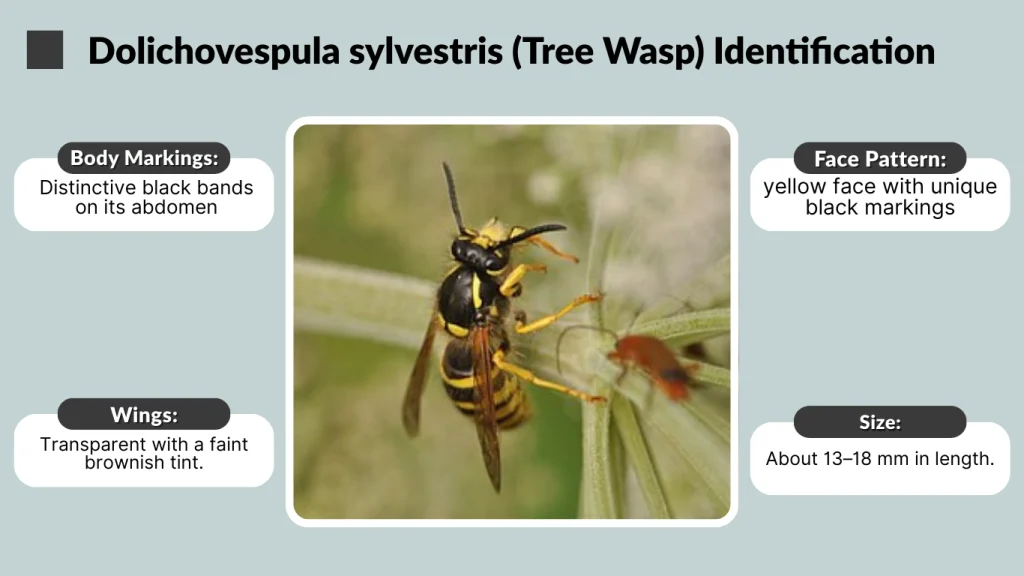
The tree wasp is a medium-sized wasp with striking yellow and black coloration. At first glance, it may resemble the common wasp (Vespula vulgaris), but closer inspection reveals key differences:
- Body Markings: The tree wasp has distinctive black bands on its abdomen with broader yellow areas.
- Face Pattern: It typically shows a yellow face with unique black markings that differ slightly among castes.
- Wings: Transparent with a faint brownish tint.
- Behavioral Traits: Less aggressive than some other social wasps unless provoked near their nest.
These features help naturalists and gardeners differentiate the species from similar wasps in the same regions.
Size
Tree wasps are relatively small compared to hornets but similar in size to many other Vespidae members.
- Queens: About 13–18 mm in length.
- Workers: Generally 11–15 mm.
- Males (drones): Slightly larger than workers but slimmer.
Their compact size allows them to maneuver efficiently in trees and shrubs where they often build their nests.
Habitat and Distribution
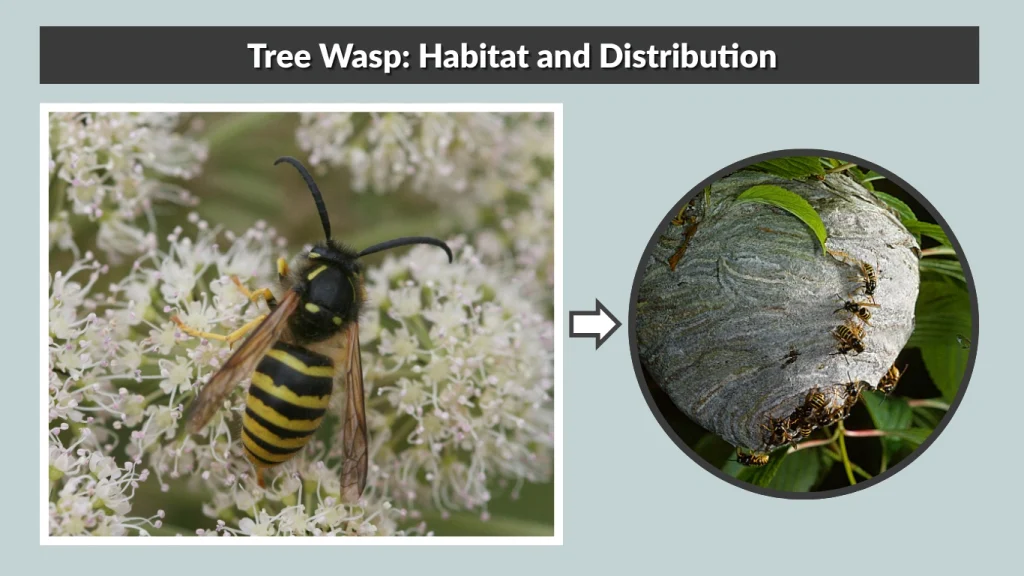
Dolichovespula sylvestris is commonly found across Europe, extending into northern Asia. Its range stretches from the United Kingdom and Scandinavia through central Europe and into Russia.
- Preferred Habitat: Woodland edges, gardens, hedgerows, and forest clearings.
- Nesting Sites: Typically in trees, shrubs, or occasionally in man-made structures like sheds.
- Seasonal Activity: Colonies are most active from May to September, with peak activity during summer when workers forage heavily for food.
Because of its adaptability, the tree wasp thrives in both rural landscapes and suburban areas where vegetation is abundant.
Nesting Behavior
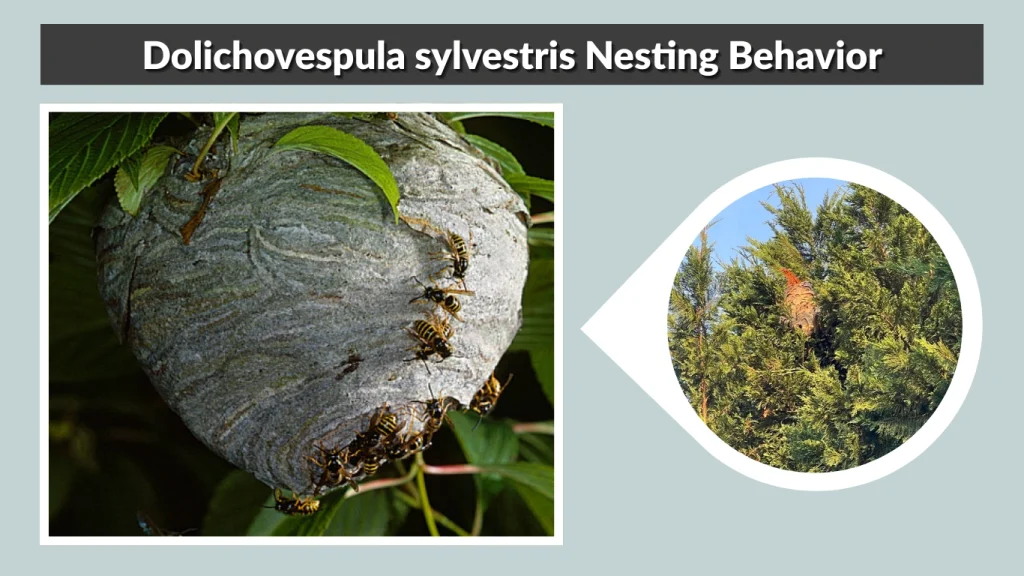
One of the most distinctive aspects of Dolichovespula sylvestris is its nest construction. The queen begins building the nest in spring after emerging from hibernation.
- Nest Material: Created from chewed wood fibers mixed with saliva, forming a paper-like substance.
- Location: Usually suspended in trees, bushes, or tall shrubs, giving rise to the name “tree wasp.”
- Appearance: Greyish, round, and papery with layered envelopes protecting the internal combs.
- Colony Size: Smaller than some wasp species, with 100–400 individuals in a typical nest.
- Lifecycle: By late summer, the nest produces new queens and males, after which the colony declines.
Unlike ground-nesting wasps, tree wasps prefer elevated sites, which reduces encounters with predators but increases visibility to humans.
Sting and Aggression
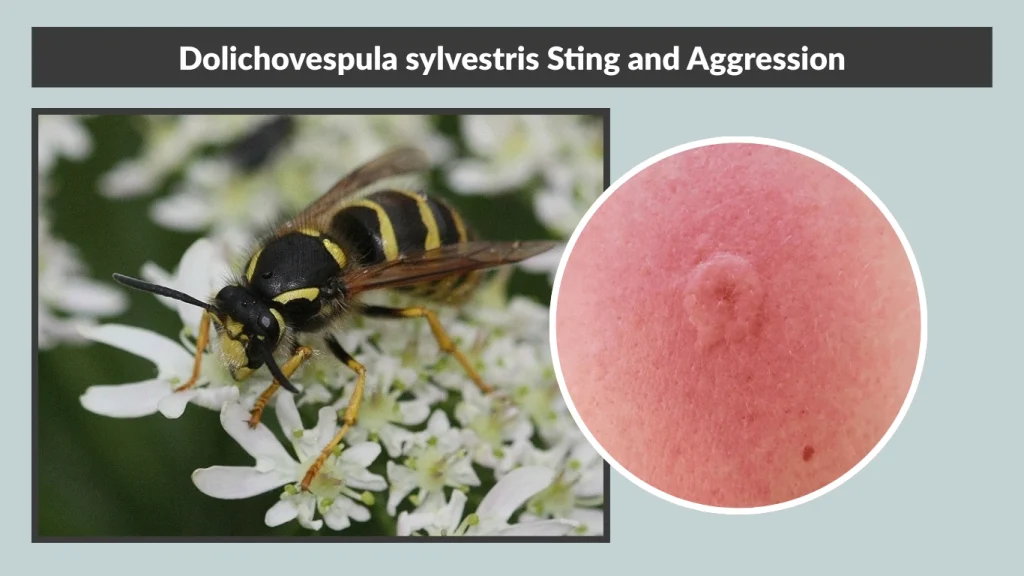
The sting of the tree wasp is sharp and painful, similar to that of other wasps. However, its temperament is usually less aggressive than species like the common wasp.
- When They Sting: They mainly sting in defense of their nest. Encroaching too closely can trigger a defensive response.
- Pain Level: Moderate to severe, depending on individual sensitivity.
- Allergic Reactions: Some people may experience swelling, redness, or, in severe cases, anaphylaxis.
- Multiple Stings: Unlike bees, wasps can sting repeatedly without dying.
For most people, the sting is unpleasant but not life-threatening. However, nests built near homes or gardens should be treated with caution.
Diet and Role in Ecosystem
Tree wasps are omnivorous foragers with a diet that benefits both themselves and the environment.
- Adult Diet: Primarily feeds on nectar and sugary substances, which provide quick energy for flight.
- Larval Diet: Workers hunt small insects, caterpillars, and flies to feed the larvae. The protein-rich diet supports larval growth until pupation.
- Ecosystem Contribution:
- Pollination: While feeding on nectar, tree wasps contribute to the pollination of flowering plants.
- Pest Control: By capturing insects for their larvae, they naturally reduce pest populations in gardens and fields.
- Pollination: While feeding on nectar, tree wasps contribute to the pollination of flowering plants.
Thus, despite their painful sting, tree wasps play a critical role in balancing ecosystems.
Reproduction and Life Cycle
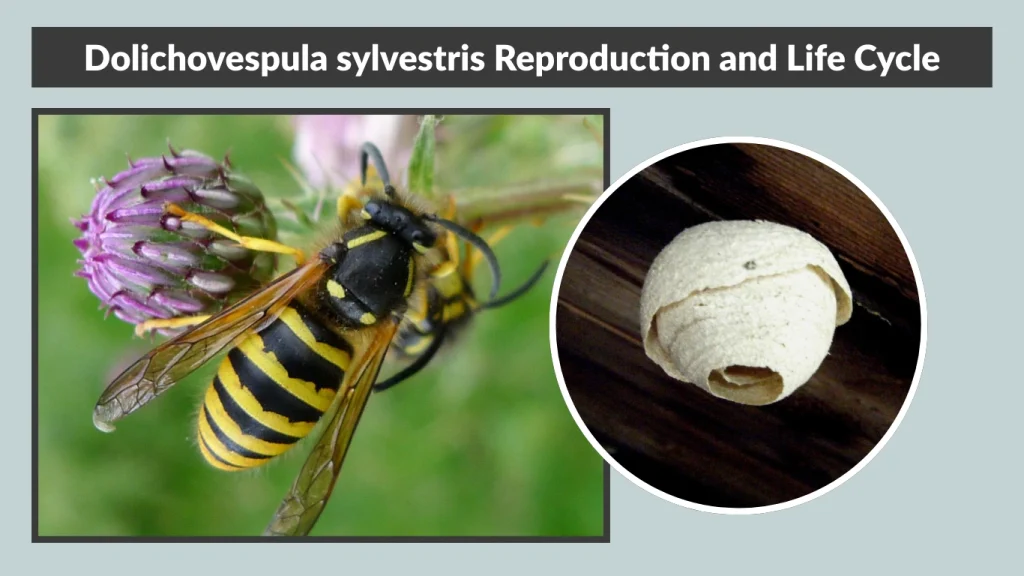
The life cycle of Dolichovespula sylvestris follows the general pattern of social wasps, starting with the queen’s survival through winter.
- Spring (Queen Emergence): After hibernation, the queen selects a nest site and begins building the first comb cells. She lays eggs that hatch into larvae.
- Early Summer (Worker Emergence): The first generation of workers takes over nest expansion and foraging.
- Midsummer: Colony size peaks with hundreds of workers. The queen focuses solely on laying eggs.
- Late Summer: New queens and males are produced. Males leave to mate, while new queens prepare for hibernation.
- Autumn Decline: The old queen and workers die, and the nest is abandoned.
Unlike honeybees, tree wasps do not reuse old nests—each year, colonies start anew.
Predators and Threats
Tree wasps face natural predation and environmental pressures:
- Birds: Species like bee-eaters and woodpeckers sometimes attack nests.
- Mammals: Badgers and bears may destroy nests for larvae.
- Insects: Robber flies and hornets may prey on individual wasps.
- Environmental Threats: Cold, wet summers reduce colony success. Human removal of nests also decreases populations locally.
Despite these threats, the species remains widespread and relatively stable in numbers.
Interaction with Humans
Humans often encounter tree wasps due to their nesting preferences.
- Near Homes: Nests in garden trees, hedges, or sheds can cause concern.
- Risks: While not overly aggressive, a disturbed nest may lead to multiple stings.
- Precautions:
- Avoid approaching nests closely.
- Wear protective clothing when gardening near shrubs that may host colonies.
- Contact pest control services if a nest is in a high-risk location.
- Avoid approaching nests closely.
Because colonies die off naturally each autumn, many experts recommend leaving nests undisturbed unless they pose immediate danger.
Importance in Biodiversity
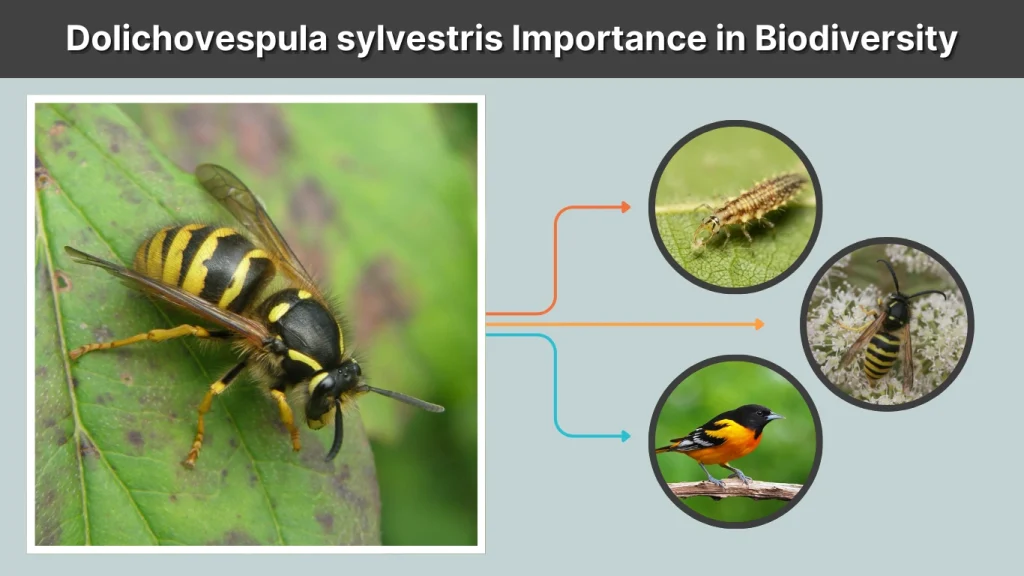
Tree wasps provide several ecological benefits:
- Natural Pest Control: Larvae feeding on flies, caterpillars, and other insects helps keep pest populations under check.
- Pollination: Adults visiting flowers contribute to pollination cycles in both wild and garden plants.
- Food Web Role: Wasps serve as prey for birds, mammals, and other predators, maintaining ecological balance.
By performing these roles, Dolichovespula sylvestris proves itself an essential—if sometimes feared—part of biodiversity.
Dolichovespula sylvestris vs Similar Wasps
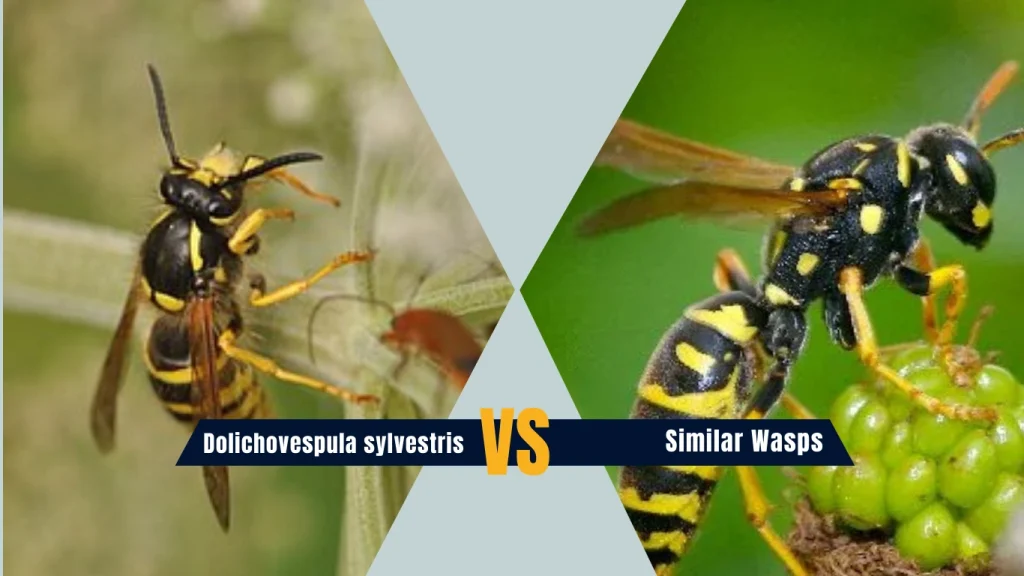
Several wasp species resemble the tree wasp, making identification challenging.
- Dolichovespula media (Median Wasp): Larger in size and often nests closer to buildings.
- Vespula vulgaris (Common Wasp): More aggressive and usually nests underground.
- Dolichovespula saxonica: Nests often found in roof spaces and lofts.
Key Difference: The tree wasp strongly prefers arboreal nesting, unlike ground-nesting relatives.
Research and Records (GBIF & Studies)
According to the Global Biodiversity Information Facility (GBIF), Dolichovespula sylvestris has thousands of recorded occurrences across Europe and parts of Asia. Studies highlight:
- Range: Strong presence in the UK, central Europe, and extending into Siberia.
- Seasonality: Most sightings between May and September.
- Population Stability: Considered a species of least concern, showing healthy populations despite human disturbances.
This data confirms its adaptability and widespread ecological presence.
FAQs
What is Dolichovespula sylvestris?
It is a social wasp species known as the tree wasp, belonging to the family Vespidae, recognized for nesting in trees and shrubs.
Where are tree wasps commonly found?
They are widely distributed across Europe and parts of Asia, especially in woodlands, gardens, and hedgerows.
Are Dolichovespula sylvestris dangerous to humans?
They are not usually aggressive but will defend their nests if disturbed. Their sting is painful and can cause allergic reactions in sensitive individuals.
How big can Dolichovespula sylvestris grow?
Queens measure about 13–18 mm, workers 11–15 mm, and males slightly larger but slimmer than workers.
What should I do if I find a tree wasp nest near my home?
If it’s not in a risky location, it’s best to leave the nest undisturbed as the colony will die out by autumn. For high-risk sites, contact professional pest control.
