

Orange-coloured wasps are striking insects that immediately catch attention with their vivid hues. Their bright bodies and orange markings act as natural warning signals, signaling to predators—and humans—that they are equipped with a painful sting. While often feared, these wasps are also beneficial to ecosystems, acting as pollinators and natural pest controllers. Several species around the world feature orange coloration, from paper wasps to potter wasps, and even larger species like the tarantula hawk with its dramatic orange wings.
Identification of Orange-Coloured Wasps

Size and Appearance
Orange-coloured wasps range in size depending on the species, typically measuring 10–25 millimeters, though larger tropical species can grow even longer. They have the classic narrow waist seen in wasps, giving them a distinct separation between the thorax and abdomen.
Coloration
The key feature is, of course, their coloration. These wasps may be:
- Entirely orange, with the head, thorax, and abdomen a bright reddish-orange.
- Orange with black markings, often striped across the abdomen.
- Orange with brown or yellow highlights, depending on the species.
This coloration is not random—it is an example of aposematism, a survival strategy where bright colors warn predators of danger.
Common Orange-Coloured Wasp Species
Some of the best-known species include:
- Orange Paper Wasp (Polistes carolina) – Common in North America, with a reddish-orange body.
- Potter Wasps (Eumeninae) – Small solitary wasps, often reddish-orange, known for their mud nests.
- Scoliid Wasps – Large and powerful, with some species displaying orange thoraxes.
- Tarantula Hawk Wasps (Pepsis spp.) – Huge wasps with metallic black bodies and brilliant orange wings, famous for their painful sting.
Habitat and Distribution
Global Range
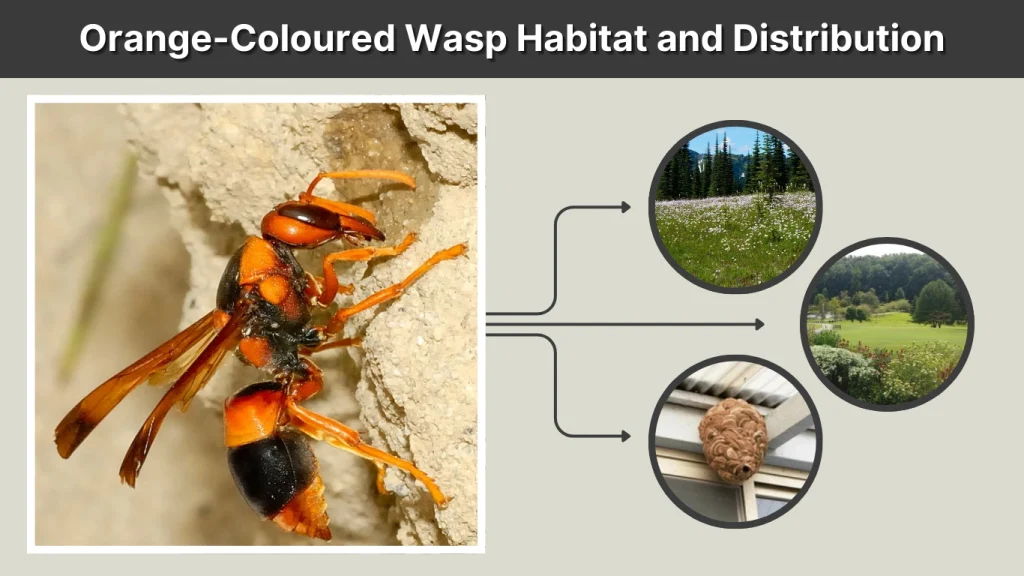
Orange-coloured wasps can be found in tropical, subtropical, and temperate regions across the globe. Their adaptability means they inhabit diverse environments ranging from rainforests to suburban backyards.
Preferred Habitats
These wasps favor areas where both food and nesting sites are available:
- Gardens and meadows – where flowers provide nectar.
- Forests and woodlands – natural shelters and hunting grounds.
- Urban areas – nesting under eaves, attics, barns, and sheds.
Paper wasps often build umbrella-shaped nests attached to man-made structures, while potter wasps construct clay-like pot nests on twigs and walls.
Behavior and Nature
Daily Activity
Orange-coloured wasps are diurnal and most active during the day. They forage in the morning and afternoon, hunting for prey and visiting flowers.
Social vs Solitary Orange Wasps
- Paper Wasps (Polistes) – Social species that form colonies with queens, workers, and drones.
- Potter and Scoliid Wasps – Mostly solitary, with females independently building nests and raising offspring.
This difference explains why some orange wasps are more aggressive in defending their colonies, while others rarely interact with humans.
Interaction with Humans
Wasps with bright orange coloration often establish nests near human dwellings. This can lead to conflict, as they sting when disturbed. However, they usually only attack in defense of their nests, not unprovoked. Solitary orange wasps are typically non-aggressive and rarely sting people.
Diet and Feeding Habits
Adult Diet
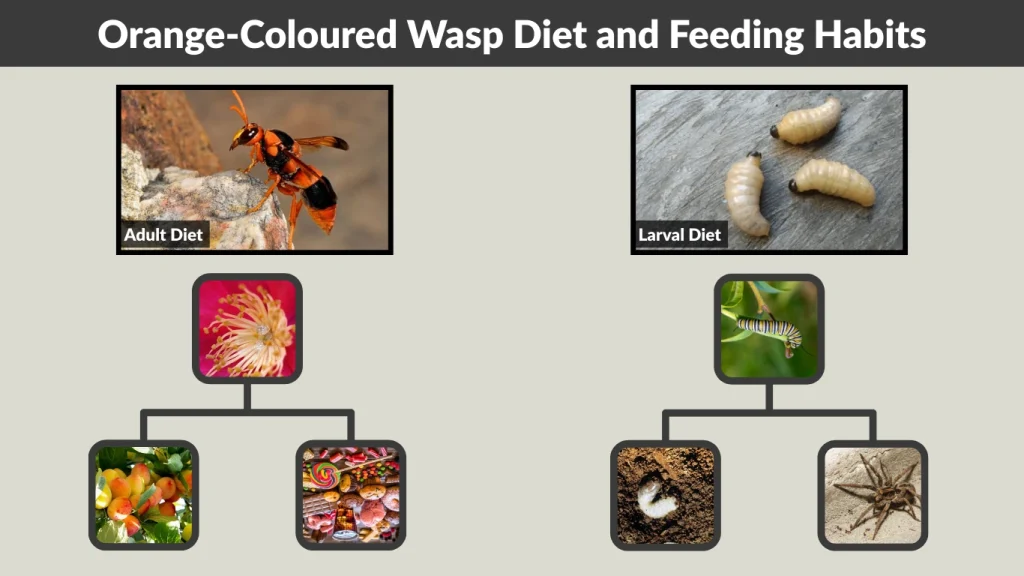
Adult orange wasps primarily consume nectar from flowers, ripe fruits, and other sugary substances. This makes them important pollinators, even though they are not as efficient as bees. They are also attracted to human foods like soda, juices, and sweet fruits.
Larval Diet
The larvae, however, require protein. Adults hunt or capture prey such as:
- Caterpillars
- Beetle larvae
- Flies
- Spiders
They paralyze or kill these prey items and deliver them to the nest as food for their young. This role makes orange wasps valuable natural pest controllers, reducing populations of crop-damaging insects.
Sting and Defense Mechanism

Do Orange-Coloured Wasps Sting?
Yes. Like other wasps, orange-coloured species possess a stinger, which is a modified ovipositor. Unlike honeybees, most wasps can sting multiple times without losing their stinger.
Symptoms of a Sting
- Immediate sharp pain or burning sensation.
- Redness, swelling, and itching around the sting site.
- In rare cases, severe allergic reactions such as anaphylaxis.
Are Orange Wasps Dangerous?
Most species are not deadly, but their stings can be very painful. Social species like paper wasps are more likely to sting defensively if their nest is disturbed, while solitary orange wasps rarely attack unless directly handled.
First Aid for Orange Wasp Stings
- Wash the sting area with soap and water.
- Apply a cold compress to reduce swelling.
- Take an antihistamine to ease itching and redness.
- Seek medical care if allergic reactions occur.
Life Cycle of Orange-Coloured Wasps
Egg Stage
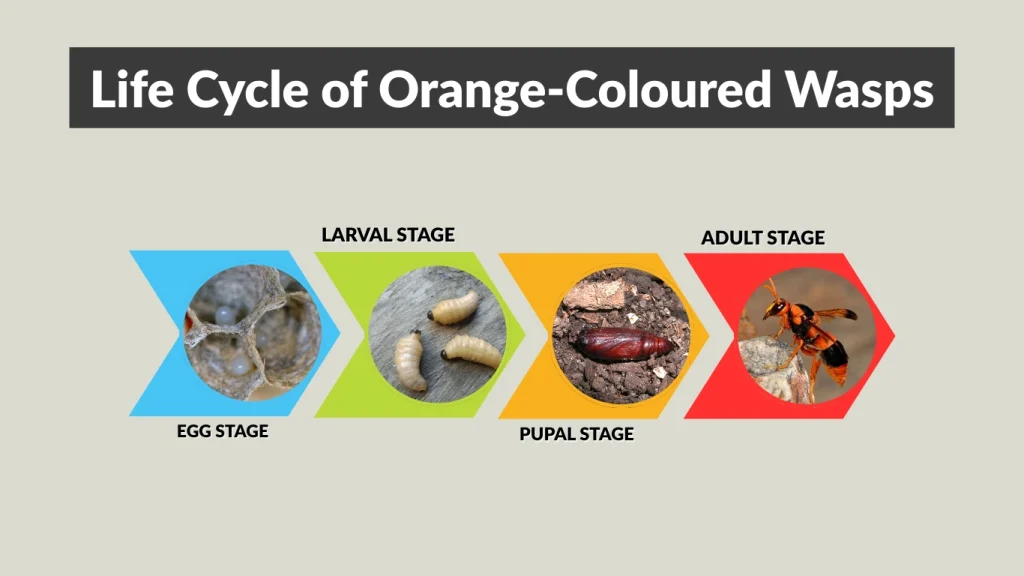
Females lay eggs in individual cells of the nest (social wasps) or inside mud chambers (potter wasps).
Larval Stage
Larvae hatch and are fed with paralyzed or freshly killed insects supplied by adults. Their growth depends on protein intake.
Pupal Stage
Larvae spin silk-like coverings or remain sealed in cells while they undergo metamorphosis into adult wasps.
Adult Stage
Adults emerge as fully developed wasps, ready to forage, reproduce, and in some cases, build new colonies. Lifespan varies: workers live weeks, queens may live months.
Predators and Threats
Orange-coloured wasps, despite their defenses, face threats from:
- Birds such as bee-eaters and sparrows.
- Lizards and frogs that can withstand stings.
- Spiders, which may trap wasps in webs.
- Other wasps and hornets, which sometimes raid nests.
- Humans, who destroy nests out of fear or to avoid stings.
Pesticide use also reduces their populations by eliminating both adults and larvae.
Role in Ecosystem
Orange wasps are not just stingers—they are key contributors to biodiversity.
- Pollinators – They visit flowers regularly, transferring pollen.
- Pest Controllers – Their hunting reduces caterpillar and beetle populations that damage crops.
- Prey Species – Serve as food for birds, spiders, and larger predatory insects.
By balancing insect populations and aiding pollination, they help maintain ecological health.
Types of Orange-Coloured Wasps

Polistes carolina (Orange Paper Wasp)
- Found in North America.
- Reddish-orange body, common near homes.
- Builds umbrella-shaped paper nests.
Potter Wasps (Eumeninae)
- Solitary builders of mud nests shaped like tiny pots.
- Often orange or reddish in color.
Scoliid Wasps
- Some species have orange thoraxes with black abdomens.
- Parasitize beetle larvae, especially scarab beetles.
Tarantula Hawk Wasp (Pepsis grossa and related species)
- Massive wasps with black bodies and bright orange wings.
- Known for their excruciating sting, ranked among the most painful in the insect world.
Fascinating Facts About Orange Wasps
- Their bright orange coloration is not just for beauty—it’s a warning system (aposematism).
- Tarantula hawk wasps, with orange wings, are used in scientific sting pain scales.
- Some potter wasps create decorative mud nests that look like miniature clay pots.
- Social orange paper wasps recognize nestmates by facial markings, a rare trait among insects.
FAQs
What is the orange-coloured wasp called?
The name “orange-coloured wasp” applies to several species, including the Orange Paper Wasp (Polistes carolina), potter wasps, scoliid wasps, and orange-winged tarantula hawks. Each species varies in size and behavior, but all share striking orange coloration that acts as a warning signal to predators.
Are orange wasps aggressive?
Aggression depends on the species. Social wasps, like paper wasps, may defend their nests aggressively if disturbed. Solitary wasps, such as potter or scoliid wasps, are usually non-aggressive and rarely sting humans unless handled directly. In general, orange wasps are not dangerous if left undisturbed.
Where are orange wasps commonly found?
Orange-coloured wasps are found worldwide, especially in North and South America, Asia, and Africa. They thrive in gardens, meadows, forests, and urban areas. Many build nests on trees, shrubs, or man-made structures such as sheds and rooftops, while others prefer soil burrows or mud pots for raising their young.
Do orange wasps help in pest control?
Yes. Orange wasps are important natural pest controllers. Adults hunt caterpillars, beetle larvae, and flies, paralyzing them to feed their young. This helps regulate pest populations that damage crops and gardens. In addition, adults often feed on nectar, contributing to pollination, which makes them ecologically beneficial insects despite their painful sting.
How can I safely remove an orange wasp nest?
For small nests, you may remove them at night when wasps are less active, using protective gear and long tools. Avoid harsh sprays near flowering plants. If the colony is large or aggressive, it is best to call professional pest control to ensure safety. Always maintain a cautious distance from active nests.
