

The black jacket wasp, often confused with the bald-faced hornet, is a striking insect recognized for its dark body and sharp contrast to yellowjackets. Known for their defensive nature and powerful sting, these wasps spark curiosity as well as caution. From their nest-building habits to the role of the queen, understanding black jacket wasps provides insights into their behavior, risks, and ecological importance.
What Is a Black Jacket Wasp?
The black jacket wasp belongs to the Vespidae family and is closely related to hornets and yellowjackets. They are sometimes referred to as bald-faced hornets due to similarities in size and nesting patterns. Unlike bright yellowjackets, their bodies are darker, which leads to the “black jacket” nickname.
They thrive in temperate regions, building nests in both natural and urban settings. Their importance in the ecosystem lies in controlling insect populations, as they feed on flies, caterpillars, and other garden pests.
Physical Appearance and Size

Black jacket wasps range in size from 12 to 20 millimeters, with queens being noticeably larger than worker wasps. Their bodies are smooth and shiny, primarily black with lighter markings that vary depending on the region. Wings are transparent with a smoky tint, and their bodies appear stockier than most paper wasps.
Unlike bees, black jacket wasps do not carry pollen baskets on their legs. Instead, their bodies are built for speed and agility in hunting. This gives them a reputation as both fierce predators and aggressive defenders.
Black Jacket Wasp Queen
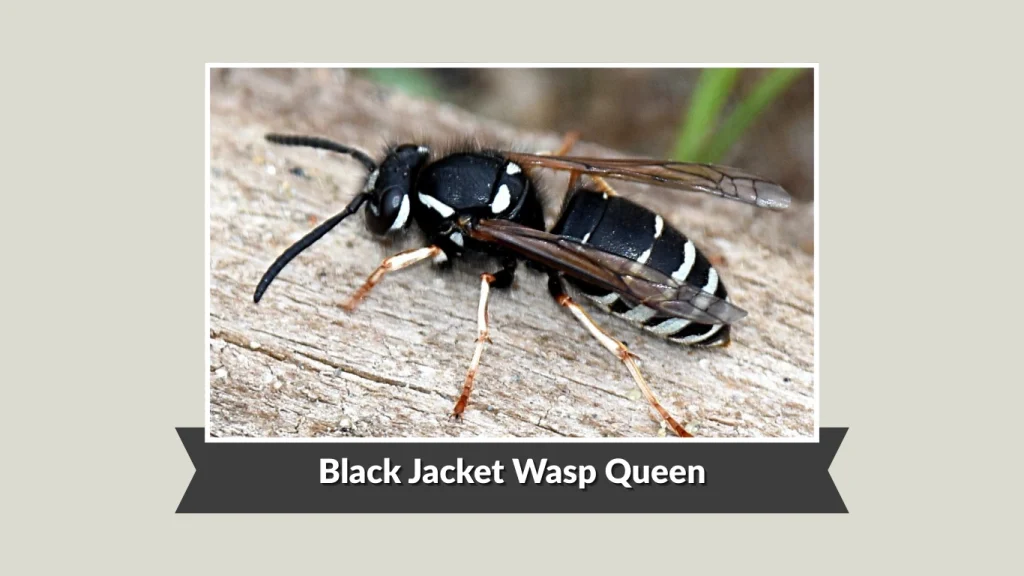
The queen is the foundation of the colony. After surviving the winter in sheltered places such as rotting wood or soil cavities, she emerges in spring to establish a new nest. Her larger size—up to 25 millimeters—makes her more noticeable.
The queen lays eggs that develop into workers, soldiers, and later reproductive males and future queens. While workers handle feeding and defense, the queen remains dedicated to reproduction. The survival of the colony depends entirely on her ability to produce new generations.
Nest Structure and Behavior
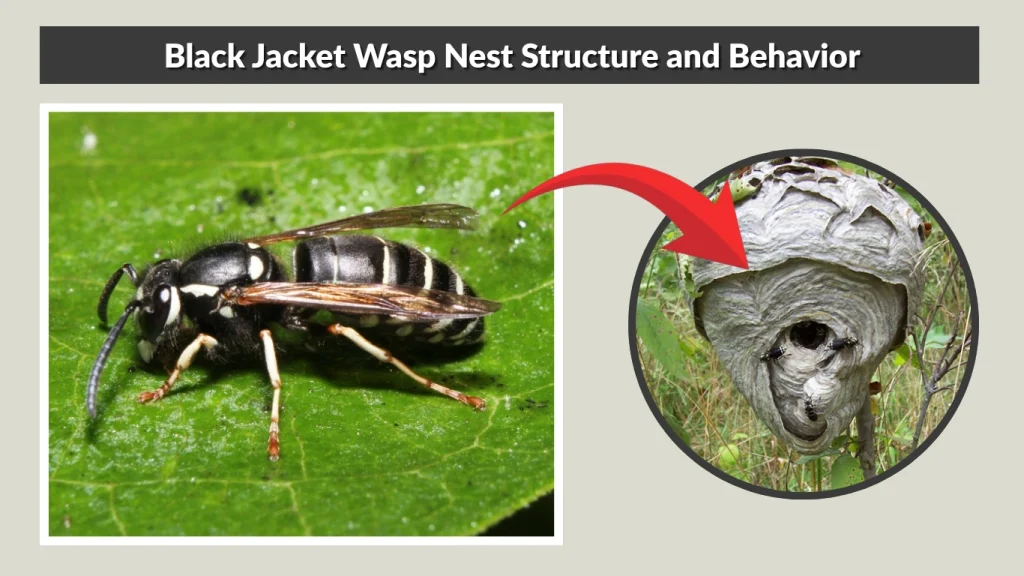
Nests are one of the most recognizable features of black jacket wasps. Constructed from chewed wood fibers mixed with saliva, the result is a papery shell that can expand to house thousands of individuals. Nests are usually spherical or teardrop-shaped with a single entrance hole at the bottom.
They are commonly found:
- High in trees or shrubs where the colony remains relatively undisturbed.
- On man-made structures such as under eaves, attics, and sheds.
During summer, nests reach their peak size. By late autumn, most of the colony dies, leaving only new queens to hibernate and restart the cycle in the following spring.
Black Jacket Wasp Sting
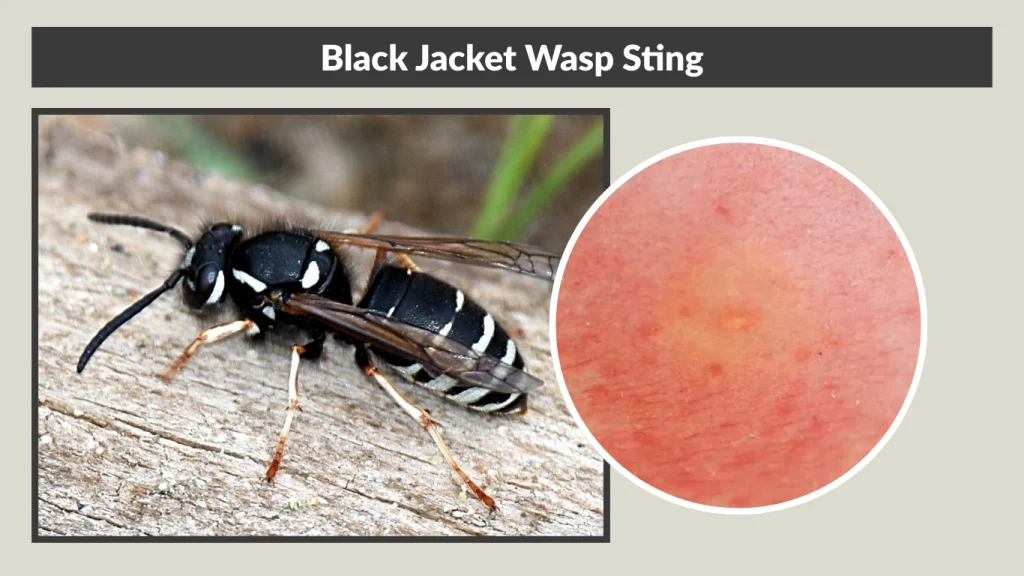
The sting of a black jacket wasp is one of its defining traits. Unlike bees that sting once, these wasps can sting repeatedly, injecting venom each time. Their stings are primarily defensive, triggered when a person or animal gets too close to the nest.
Pain from a sting is sharp and immediate, often compared to a hot needle puncture. Unlike milder insect stings, black jacket wasp venom contains compounds that cause more intense inflammation and lingering discomfort.
Stings serve two main purposes: defending the nest and subduing prey. When hunting smaller insects, a quick sting paralyzes or kills the victim, making it easier to transport food back to larvae.
Sting Symptoms and Human Reactions
Most people experience temporary but painful reactions to a black jacket wasp sting. The typical symptoms include swelling, redness, and itching around the site of the sting. These effects usually fade within a day or two.
However, for those allergic to wasp venom, stings pose a serious health risk. In some cases, individuals may suffer from difficulty breathing, dizziness, or rapid swelling of the face and throat—a condition known as anaphylaxis. This is a medical emergency requiring immediate attention.
For multiple stings, the venom load increases, sometimes leading to nausea, muscle weakness, and systemic reactions. While deaths are rare, the danger should not be underestimated, particularly in children, elderly individuals, and allergy sufferers.
Black Jacket Wasp Sting Treatment

Treating a black jacket wasp sting quickly helps reduce pain and swelling. The first step is to wash the sting site with soap and water to remove venom residue. Applying a cold compress can minimize swelling and numb pain. Over-the-counter antihistamines or hydrocortisone cream are effective for reducing itching and redness.
For those with a history of allergic reactions, carrying an epinephrine auto-injector is vital. Emergency medical care is essential if symptoms like throat swelling, chest tightness, or dizziness appear. Multiple stings may require medical monitoring due to the venom’s effect on the nervous and cardiovascular system.
Quick first-aid steps include:
- Clean the area thoroughly with mild soap and water.
- Apply ice packs in short intervals to reduce swelling.
- Use oral antihistamines for itching or mild allergic response.
- Seek medical attention immediately if severe allergic symptoms occur.
Are Black Jacket Wasps Dangerous?
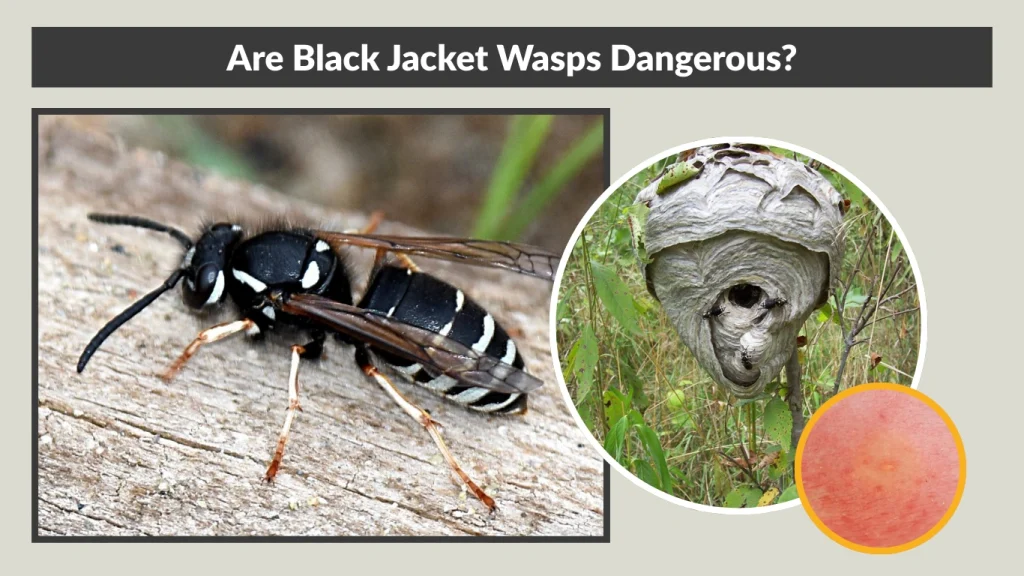
Black jacket wasps are considered more dangerous than many other stinging insects because they attack aggressively when their nest is disturbed. Unlike bees, they can sting repeatedly, delivering venom each time.
While not usually life-threatening to healthy adults, they are hazardous to people with allergies. Pets may also be at risk if they get too close to a nest. Beyond their sting, the presence of a large nest near homes creates a safety concern for families.
Black Jacket Wasp With Long Legs
One common feature people notice is the appearance of long dangling legs during flight. This is not unique to black jacket wasps but is often seen in paper wasps. However, black jackets can appear long-legged due to their flight posture. Observing the body shape and nest type helps in distinguishing them from similar species.
Geographic Distribution
Black Jacket Wasp in the UK
In the UK, reports of “black jacket wasps” are usually misidentifications of native hornets or dark-colored paper wasps. The bald-faced hornet, often equated with the black jacket, is not native to Britain but shares similarities with European hornets.
Black Jacket Wasp in Alberta
In Alberta, Canada, black jacket wasps are more commonly encountered. They thrive in wooded areas, gardens, and suburban neighborhoods. Their nests can be found in trees, under eaves, and even underground, depending on available shelter.
Black Jacket Wasp Life Cycle
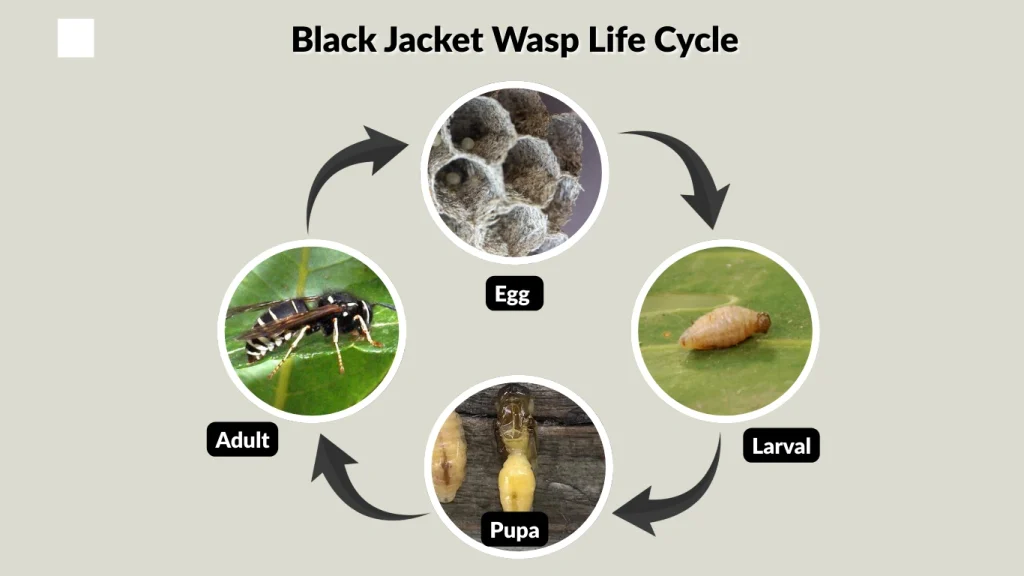
The life cycle begins in spring when the queen emerges from hibernation. She starts building a nest and laying eggs, which develop into larvae. Workers that emerge take over nest expansion and food gathering. By mid-summer, colonies can contain hundreds of wasps.
In late summer, the queen produces new queens and males. The males die after mating, and workers perish as winter sets in. Only the newly mated queens survive to restart the cycle the following year.
Diet and Feeding Habits
Black jacket wasps are both predators and scavengers. They actively hunt flies, caterpillars, and other insects to feed larvae, while adults consume nectar and fruit. This dual diet makes them valuable for natural pest control but also a nuisance at outdoor gatherings where sugary drinks and food attract them.
Black Jacket Wasp vs Bald-Faced Hornet
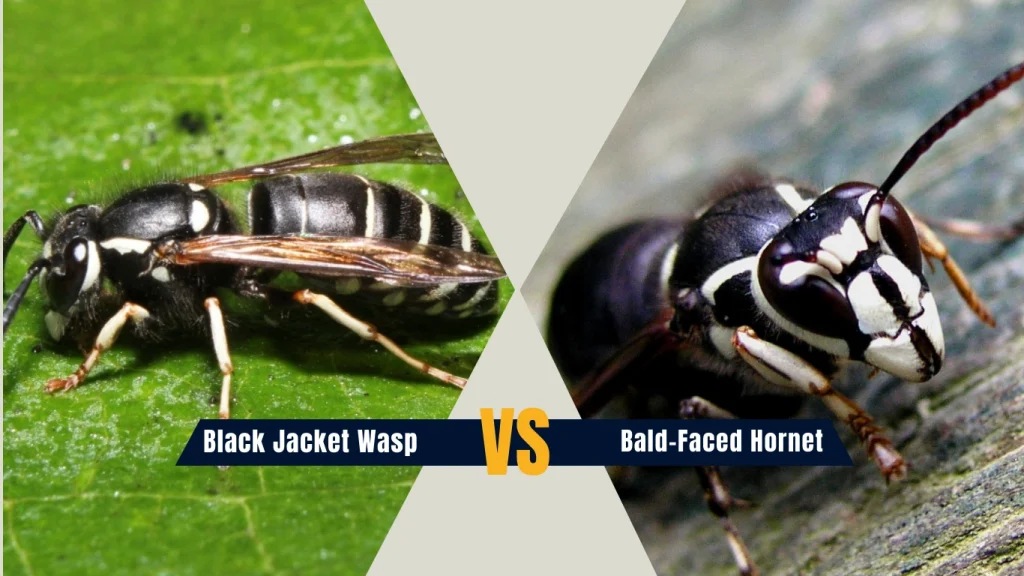
Black jacket wasps and bald-faced hornets are often mistaken for one another. Both build papery nests and share similar colony structures. The primary difference lies in appearance: bald-faced hornets have distinctive white facial markings, while black jackets are darker overall.
Behaviorally, both species are aggressive defenders of their nests, capable of inflicting painful multiple stings.
Preventing and Controlling Black Jacket Wasps
Prevention is the safest approach when dealing with black jacket wasps. Eliminating food sources like open trash and fallen fruit discourages colonies from settling near homes. Sealing cracks in attics or walls also helps prevent nesting.
If a nest is discovered in a high-traffic area, professional removal is recommended. Attempting to destroy a nest without proper protection can provoke an aggressive swarm.
Preventive measures include:
- Secure garbage bins to avoid attracting scavenging workers.
- Seal entry points around attics, sheds, or garages.
- Maintain yards by trimming shrubs and clearing fallen fruit.
- Call professionals for safe nest removal.
FAQs
What is a black jacket wasp?
A black jacket wasp is a dark-colored wasp often mistaken for the bald-faced hornet. It belongs to the Vespidae family and is recognized for building large papery nests. These wasps are social insects, living in colonies led by a queen, and are known for their aggressive defense when disturbed.
Can black jacket wasps kill you?
Black jacket wasps rarely cause death, but their venom can trigger life-threatening allergic reactions. People with severe allergies may suffer from anaphylaxis, which requires immediate medical attention. In most cases, stings are painful but not fatal. Still, multiple stings or delayed treatment for allergic individuals can increase the risk significantly.
Are black jacket wasps poisonous or venomous?
Black jacket wasps are venomous, not poisonous. This means they inject venom through their stings rather than being harmful if touched or ingested. Their venom contains toxins that cause pain, swelling, and inflammation. Venom is mainly used for defense and hunting prey, making them effective predators but dangerous when provoked.
How big can a black jacket wasp get?
Worker black jacket wasps usually measure between 12–20 millimeters, while queens are larger, sometimes reaching 25 millimeters. The size difference helps distinguish queens from workers. Their dark bodies, long wings, and stocky build make them easy to spot compared to slimmer paper wasps or smaller yellowjackets commonly seen in backyards.
Where do black jacket wasps build nests?
Black jacket wasps build their nests from chewed wood fibers mixed with saliva, creating a papery structure. These nests are often found high in trees, shrubs, and building eaves. Occasionally, they also nest underground. Their colonies can grow to house hundreds of wasps, making nest placement important for human safety.
How do you treat a black jacket wasp sting?
Start by washing the sting area with soap and water to reduce the risk of infection. Apply a cold compress to limit swelling and take antihistamines for itching. Over-the-counter creams like hydrocortisone help ease irritation. For severe allergic reactions such as difficulty breathing, immediate emergency medical attention is required.
