

Southern Yellowjackets (Vespula squamosa) are among the most aggressive and resilient wasps in North America. Known for their striking black-and-yellow coloration and large underground colonies, these insects often stir fear when encountered near homes, gardens, or picnic areas. While they play an important role in ecosystems by preying on other insects, their painful stings and defensive behavior make them a common nuisance to humans. Understanding their habits, life cycle, and potential dangers can help you identify and manage them safely.
What is a Southern Yellowjacket?
The Southern Yellowjacket is a species of social wasp native to the southeastern United States, though its range can extend into other warm regions. Belonging to the genus Vespula, it shares similarities with other yellowjacket species but stands out due to its tendency to form massive, perennial nests.
Unlike solitary wasps that live and hunt alone, Southern Yellowjackets live in colonies with thousands of workers, one or more queens, and developing brood. This social structure makes them powerful defenders of their nests and far more dangerous to disturb than solitary wasps.
Identification of Southern Yellowjacket

Physical Appearance
Southern Yellowjackets are medium-sized wasps, typically ranging from 0.5 to 0.8 inches (12–20 mm) in length. Their bodies feature the classic black-and-yellow striped pattern, but the specific markings help distinguish them:
- The queen is larger, sometimes over 0.8 inches long.
- Workers are smaller but still robust in build.
- The abdomen has distinctive yellow bands interrupted by black dots or irregular spots.
Behavioral Traits
- Highly aggressive near their nests.
- Quick, darting flight pattern when searching for food.
- Capable of stinging multiple times without losing their stinger.
Comparison with Other Yellowjackets
- Eastern Yellowjacket (Vespula maculifrons): smaller colonies, usually annual.
- German Yellowjacket (Vespula germanica): often builds aerial nests.
- Southern Yellowjacket: stands out for its perennial nests, which can survive for years in warm climates and reach enormous sizes.
Southern Yellowjacket Nest
Nest Structure
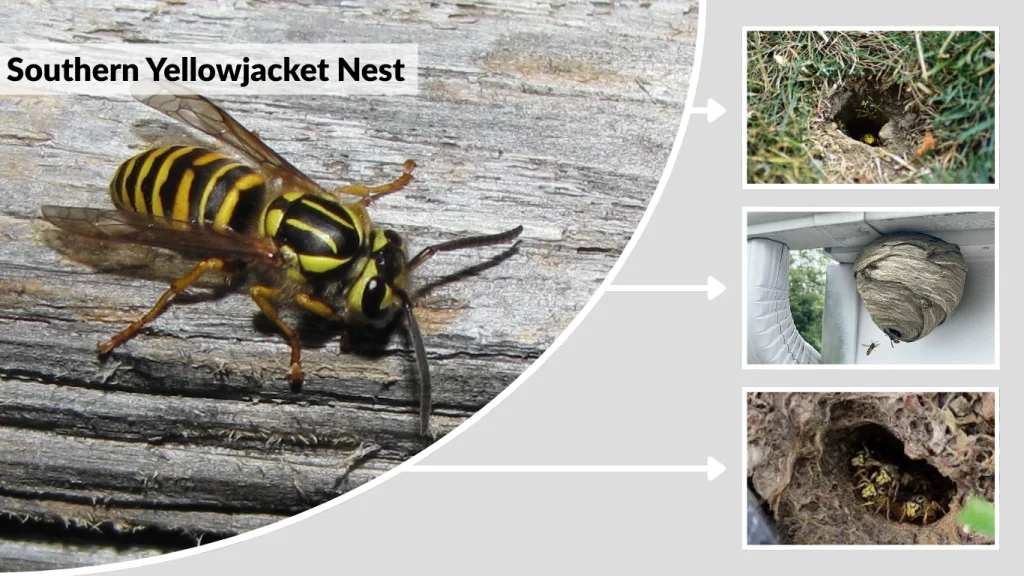
Southern Yellowjackets build large paper-like nests created from chewed wood fibers mixed with saliva. Inside, the nest is composed of horizontal combs where eggs are laid and larvae develop. Colonies often contain tens of thousands of individuals in mature stages.
Nest Location
These wasps prefer:
- Abandoned rodent burrows underground.
- Wall voids and attics in houses.
- Hollow logs, stumps, or thick shrubbery.
Unlike some wasps that suspend nests in trees, Southern Yellowjackets usually remain hidden, making their nests harder to detect until activity becomes intense.
Perennial Nests
One of the most unique traits of Southern Yellowjackets is their ability to sustain perennial (multi-year) nests in warm regions. Instead of dying off in winter, multiple queens may continue reproducing year after year, creating super colonies with populations exceeding 100,000 wasps. These massive nests are particularly dangerous due to the sheer number of defenders.
Life Cycle of the Southern Yellowjacket

Like other wasps, their life cycle includes four stages:
- Egg – Laid by the queen inside nest cells.
- Larva – Fed by worker wasps on a protein-rich diet of insects.
- Pupa – Sealed in the cell to undergo transformation.
- Adult – Emerges as a worker, male, or new queen.
In annual nests, most workers die by winter, and only mated queens survive to start new colonies. But in perennial nests, the cycle continues, and colonies grow larger each season.
Diet of Southern Yellowjacket
Larval Diet
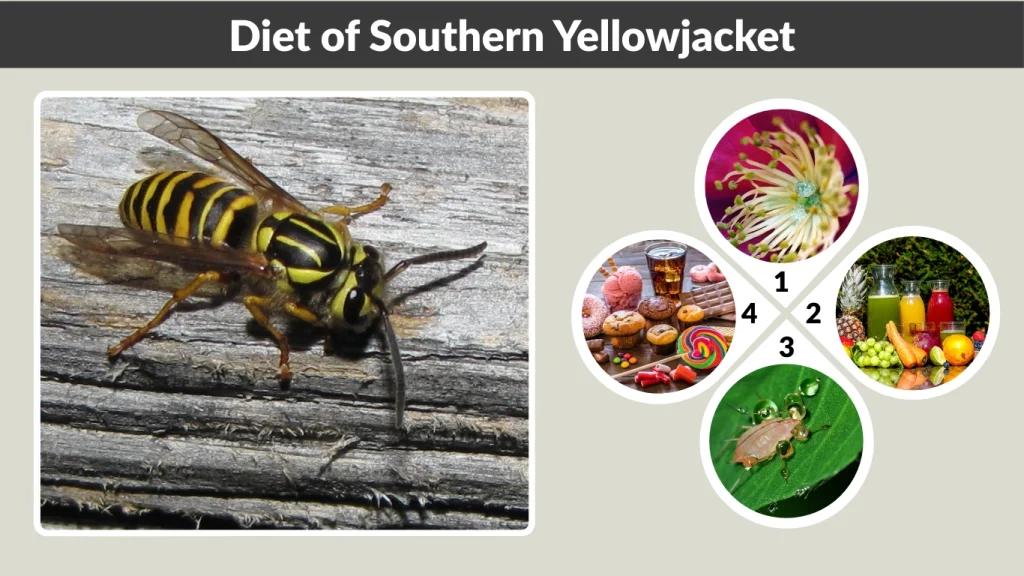
Worker wasps hunt insects such as caterpillars, flies, and beetles, chewing them into soft pulp to feed developing larvae. This makes them valuable natural pest controllers.
Adult Diet
Adults primarily consume sugary substances:
- Flower nectar
- Fruit juices
- Honeydew from aphids
- Sugary human foods and drinks
Their attraction to soda cans, trash bins, and picnic tables often causes conflicts with people.
Southern Yellowjacket Sting

Pain and Symptoms
Southern Yellowjackets deliver painful, repeated stings using their smooth stingers. Unlike honeybees, they do not die after stinging, which makes them especially dangerous when defending a nest.
Typical sting symptoms include:
- Immediate sharp pain or burning sensation.
- Redness and swelling around the sting site.
- Itching and tenderness lasting several hours to a few days.
Venom Effects
Their venom contains proteins that affect cell membranes and immune responses. While most people experience only local pain and swelling, some may develop stronger allergic reactions, including hives, dizziness, or difficulty breathing. Multiple stings can also cause systemic effects, particularly in children, elderly, or sensitive individuals.
Why They Sting
- Defense of their colony is the main trigger.
- Vibrations, lawnmowers, or accidental digging near nests often provoke mass attacks.
- Unlike bees, they can sting many times in quick succession.
Are Southern Yellowjackets Dangerous?
Yes, Southern Yellowjackets are considered one of the most dangerous yellowjacket species in the U.S. Their danger comes not from individual stings but from their aggressive colony defense and potential for mass attacks.
- Aggressive Defenders – They do not hesitate to sting when their nest is threatened.
- Multiple Stings – Unlike bees, a single wasp can sting repeatedly.
- Medical Risks – People allergic to wasp venom may suffer from severe allergic reactions (anaphylaxis), which can be life-threatening without immediate treatment.
- Toxic Effects – Even for non-allergic individuals, dozens of stings can overwhelm the body and cause nausea, dizziness, or breathing difficulties.
This combination of aggression and colony size makes them more dangerous than many other wasp species.
Southern Yellowjacket vs. Other Yellowjackets

To better understand their uniqueness, here’s a quick comparison:
| Feature | Southern Yellowjacket (Vespula squamosa) | Eastern Yellowjacket (Vespula maculifrons) | German Yellowjacket (Vespula germanica) |
| Nest Type | Underground, perennial nests possible | Underground, annual nests | Often aerial or wall voids, annual |
| Colony Size | Up to 100,000+ (super colonies) | Usually < 5,000 | 5,000–15,000 |
| Aggression | Very aggressive | Moderate | High |
| Sting | Repeated, painful | Painful but fewer workers | Multiple stings, painful |
This shows why Southern Yellowjackets stand out as both highly aggressive and uniquely capable of forming long-lasting, massive colonies.
Interaction with Humans

Southern Yellowjackets frequently come into conflict with people due to their diet and nesting habits.
- Attracted to Garbage & Food – They hover around picnic areas, soda cans, and trash bins, increasing the risk of stings.
- Yard and Garden Threat – Underground nests may be accidentally stepped on or disturbed during mowing, gardening, or digging.
- Urban Problems – Nests in attics, wall voids, or under decks can become serious household infestations.
Because they react aggressively to disturbance, removing them without proper protection can be very risky.
Benefits of Southern Yellowjackets
Despite their reputation as pests, they do provide some ecological benefits:
- Natural Pest Control – They prey on flies, caterpillars, and other crop-damaging insects.
- Nutrient Recycling – By scavenging on carrion and garbage, they help break down organic material.
- Pollination – While not as efficient as bees, their nectar feeding contributes to pollination.
So, while they can be dangerous near humans, they still play a role in balancing ecosystems.
How to Control or Remove Southern Yellowjacket Nests
Precautions Before Removal
- Always wear protective clothing that covers skin completely.
- Approach nests at night or early morning, when wasps are less active.
- Keep children and pets away from infested areas.
DIY Control
- Use insecticidal dust directly into nest entrances.
- Wasp traps may reduce numbers but won’t eliminate a nest.
Professional Removal
- Recommended for large or hidden nests, especially perennial colonies.
- Exterminators have protective equipment and specialized treatments.
Prevention
- Seal cracks in walls, siding, and attics.
- Keep garbage bins sealed and food scraps covered.
- Regularly check your yard for wasp activity, especially in late spring.
FAQs
What does a Southern Yellowjacket look like?
They are medium-sized black-and-yellow wasps with distinctive abdominal markings and strong, fast flight. Queens are larger than workers.
Where do Southern Yellowjackets build nests?
They typically nest underground in abandoned burrows, but also in walls, attics, and hollow logs.
How painful is a Southern Yellowjacket sting?
Their sting is sharp, burning, and can be repeated multiple times. Pain usually lasts for several hours with swelling.
Are Southern Yellowjackets aggressive?
Yes, they are highly aggressive around nests and will attack in large numbers if disturbed.
How do you get rid of a Southern Yellowjacket nest safely?
Small nests may be treated with insecticidal dust, but large colonies or those in buildings should be handled by professional pest control.
