
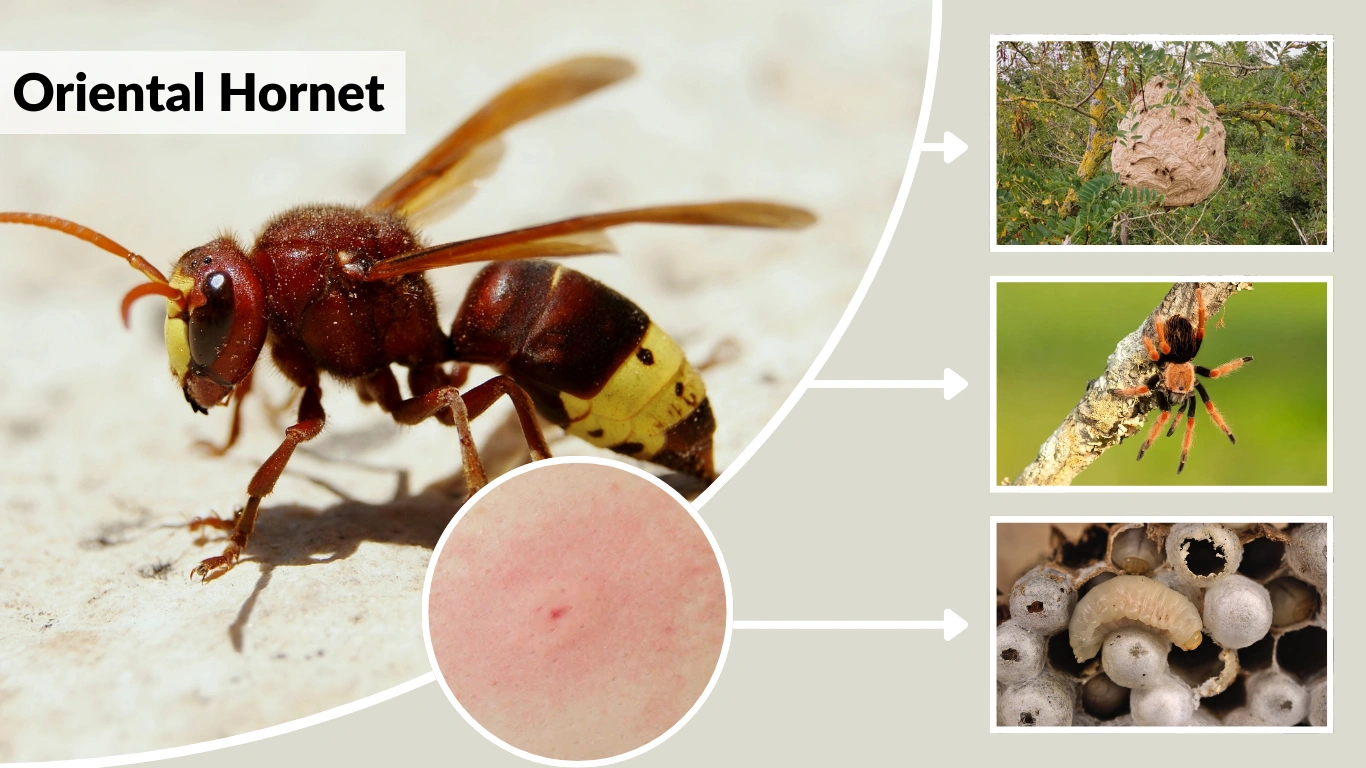
The Oriental Hornet (Vespa orientalis) is a fascinating social wasp species found mainly in warm climates of Asia, the Middle East, and parts of southern Europe. Unlike many other hornets, it has unique adaptations that make it a subject of scientific research and curiosity. Farmers often notice them hunting pests in fields, while urban residents may encounter their underground nests in gardens or near buildings. They are both feared for their painful sting and admired for their role in maintaining ecological balance.
Size of the Oriental Hornet
General Body Measurements
The Oriental Hornet is smaller than the infamous Asian Giant Hornet but larger than common wasps. Workers generally measure between 25–30 mm in length, while queens are slightly larger, averaging around 35 mm. Males (drones) are close in size to workers but can be distinguished by longer antennae. Their wingspan ranges from 30–45 mm, giving them agile flight movement during hunting or defense.
Comparison With Other Hornets
When compared with the European Hornet (Vespa crabro), Oriental Hornets are slightly smaller but appear more robust. Their size, combined with their striking color, makes them easy to identify in their native habitats. This physical advantage also supports their aggressive behavior when defending the nest, even though they are not as intimidating as the much larger Asian Giant Hornet (Vespa mandarinia).
Color and Physical Appearance

Distinctive Features
One of the most recognizable features of the Oriental Hornet is its reddish-brown body with bright yellow bands on the abdomen. Its head is relatively large with strong mandibles used for chewing fibers and capturing prey. The glossy exoskeleton gives the hornet a polished appearance, making it stand out against its surroundings.
Adaptive Significance of Color
The coloration of the Oriental Hornet is not just for display—it serves important survival functions. The yellow bands on the abdomen play a role in absorbing and converting sunlight into usable energy, giving this species a unique advantage over other hornets. This ability allows them to be more active during the hottest parts of the day when many insects reduce activity to avoid overheating.
Nesting Habits
Preferred Locations
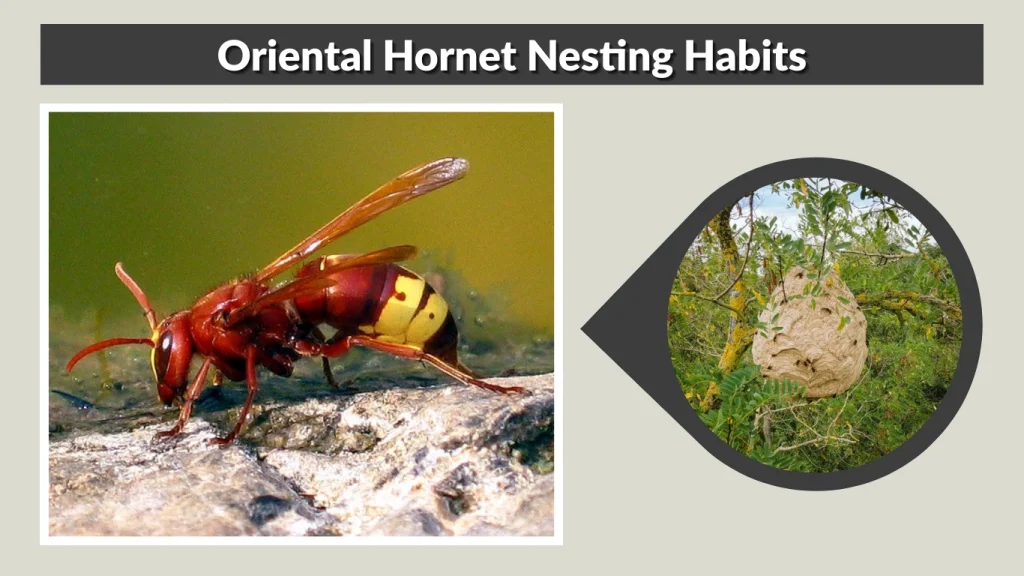
Unlike many hornets that build aerial nests, Oriental Hornets prefer underground burrows. They often dig their own tunnels in sandy soil or take over abandoned rodent holes. In urban areas, they may also settle in cracks, wall cavities, or shaded corners of buildings.
Nest Structure and Material
The nest is made of a paper-like material produced from chewed plant fibers mixed with saliva. Inside, the comb is arranged in multiple layers with hexagonal cells, where eggs and larvae develop. While not as massive as some hornet species’ nests, Oriental Hornet colonies are still large enough to house hundreds of individuals at their peak.
Seasonal Nesting Cycle
Their nesting activity follows a predictable annual cycle:
- Founding Phase – In spring, a mated queen emerges from hibernation and starts building a small nest.
- Growth Phase – During early summer, workers emerge and take over nest expansion.
- Peak Colony Phase – By mid-summer, the colony reaches its largest size with hundreds of workers.
- Decline Phase – In late autumn, the colony dies off except for new queens that hibernate until the next season.
Diet and Feeding Behavior
Adult Diet
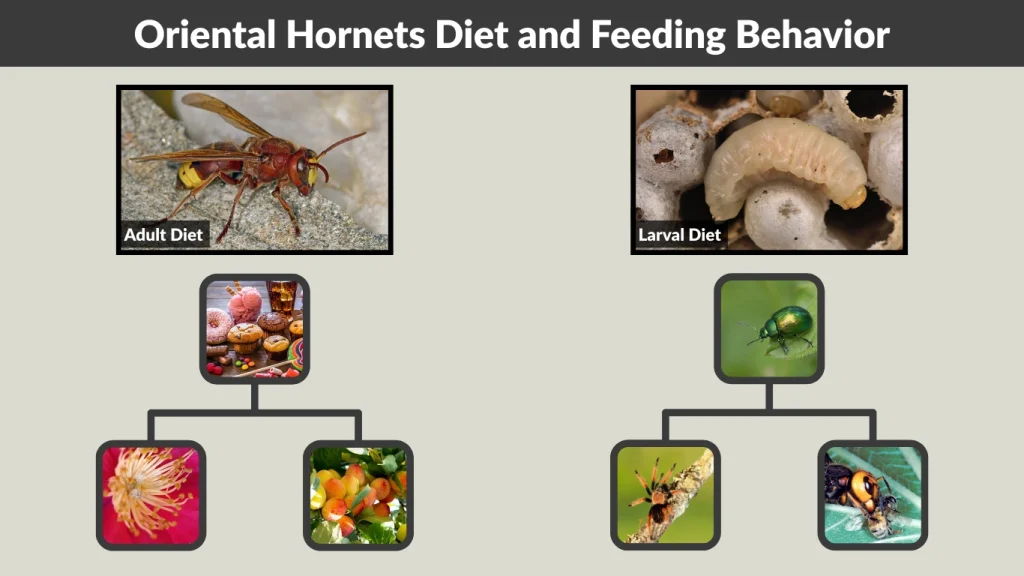
Adult Oriental Hornets are primarily attracted to sweet food sources such as nectar, fruit juices, and honeydew produced by aphids. In human environments, they are often seen near markets, outdoor dining areas, and beehives where sugary substances are available.
Larval Diet
The larvae, however, require a protein-rich diet to grow. Workers hunt insects, spiders, and even scavenge from carrion to feed the developing young. Prey is chewed into a paste before being delivered to the larvae inside the nest.
Role in Ecosystem
By preying on flies, grasshoppers, caterpillars, and other insects, Oriental Hornets provide natural pest control. They also help pollinate flowers while foraging for nectar. Though often seen as dangerous pests themselves, their presence benefits agriculture by reducing harmful insect populations.
(List here – Common prey items include: flies, grasshoppers, caterpillars, bees, and spiders.)
Behavior and Activity Patterns

Daily Activity
Oriental Hornets are most active during daylight hours, with peak activity occurring around midday. Unlike other wasps that avoid direct sunlight, Oriental Hornets thrive under bright conditions thanks to their ability to use solar radiation as a source of energy. This adaptation makes them unusual among hornets and a favorite subject of entomological research.
Social Structure
Like all social wasps, Oriental Hornets live in colonies with a clear hierarchy. The queen is responsible for laying eggs, while workers maintain the nest, gather food, and protect the colony. Drones exist primarily to mate with new queens toward the end of the season. Cooperation is key, and their defensive behavior ensures the survival of the colony, even against larger predators.
Siting and Distribution
Geographic Range
The Oriental Hornet is commonly found across the Middle East, North Africa, southern Europe, and parts of Asia. Countries like Israel, Turkey, Egypt, India, and Iran report frequent sightings. It has also expanded into Mediterranean regions where the climate is warm and dry.
Habitat Preferences
This species thrives in semi-arid regions with sandy soil but adapts well to agricultural land, gardens, and urban environments. Their underground nesting habits make them difficult to detect until a colony is well established, leading to surprise encounters when people inadvertently disturb their burrows.
Stings and Human Interaction
Sting Characteristics
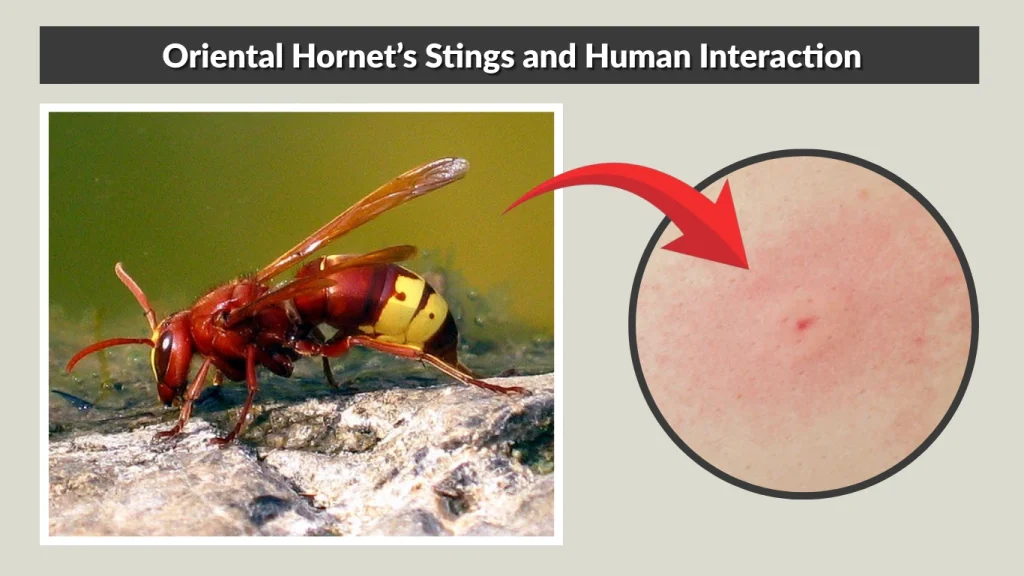
The Oriental Hornet’s sting is powerful and painful, similar to that of other hornets. Its stinger is smooth, which allows it to sting repeatedly without becoming detached. The venom contains a mix of toxins that trigger immediate pain, redness, and swelling. In most cases, the pain subsides after a few hours, but sensitivity varies among individuals.
Medical Reactions
Most people experience localized symptoms such as redness, itching, and minor swelling. For individuals allergic to insect venom, the reaction may escalate into anaphylaxis, which can be life-threatening without prompt medical treatment. Medical professionals recommend carrying an epinephrine auto-injector if one has a known allergy to wasp or hornet venom.
(List format – Common sting reactions: Pain and burning, Redness and swelling, Itching around the sting site, Allergic response such as dizziness or difficulty breathing.)
Safety and Prevention
Preventing encounters begins with avoiding nests. Since Oriental Hornets often nest underground, care should be taken when gardening or working in sandy soil. Protective clothing is advised for beekeepers or anyone working near active colonies. Unlike some hornet species, Oriental Hornets are not overly aggressive unless provoked, but disturbing their nest can lead to mass stings.
Scientific Interest in Oriental Hornet
Solar Energy Absorption
One of the most remarkable discoveries about the Oriental Hornet is its ability to harness solar energy. The yellow pigment in its exoskeleton contains xanthopterin, a compound that acts as a natural solar collector. This allows the insect to convert sunlight into energy, explaining its midday activity peak.
Study in Biomimicry
Scientists are intrigued by how this biological system functions and are studying the hornet’s body for potential applications in solar panel technology. This process, called biomimicry, looks at how nature solves energy challenges and adapts them into human technology. The Oriental Hornet stands out as one of the few insects with such advanced energy utilization.
Oriental Hornet vs Other Hornet Species

Physical Differences
Compared to the European Hornet (Vespa crabro), Oriental Hornets are smaller and more compact, with distinct reddish-brown coloring instead of the yellow-and-black pattern. Against the Asian Giant Hornet (Vespa mandarinia), they are considerably smaller, making them less intimidating in physical size but still formidable in behavior.
Behavioral Differences
Oriental Hornets are more likely to build nests underground, unlike many hornet species that prefer aerial nests. They also thrive in hotter, drier climates. While aggressive in defending their colonies, they are generally less confrontational toward humans compared to Asian Giant Hornets, which are notorious for attacking perceived threats at a greater distance.
Control and Management
When They Become Pests
In rural areas, Oriental Hornets can benefit farmers by preying on agricultural pests. However, in residential zones, they often become problematic when nests are built near homes, schools, or markets. They may also attack honeybee hives, causing stress for beekeepers.
Safe Removal of Nests
Professional removal is always recommended, as disturbing a nest can provoke hundreds of hornets at once. Pest control specialists often use protective suits, smoke, and targeted insecticides to neutralize colonies. For prevention, sealing wall cavities, filling ground holes, and reducing food waste outdoors are effective strategies.
Cultural and Regional Perceptions
Symbolism in Different Regions
In parts of the Middle East, Oriental Hornets are feared because of their painful stings and sudden appearances in urban settings. In rural agricultural communities, however, they may be viewed with less hostility due to their role in controlling crop pests.
Media Coverage and Public Awareness
News reports occasionally highlight Oriental Hornet encounters, especially when colonies are discovered in populated areas. Scientific articles and documentaries also raise public awareness about their unusual biology, particularly their solar energy adaptation, which sets them apart from other hornet species worldwide.
FAQs
What is the size of an Oriental Hornet?
The average worker measures about 25–30 mm in length, while queens grow up to 35 mm. Their wingspan is typically between 30–45 mm. They are smaller than Asian Giant Hornets but larger than common wasps, making them easily noticeable in their natural habitats.
Are Oriental Hornets dangerous to humans?
Yes, Oriental Hornets can be dangerous, mainly due to their painful sting. Most stings result in localized pain, swelling, and redness. However, for people allergic to venom, the sting can trigger severe reactions such as anaphylaxis, which requires immediate medical attention.
Where do Oriental Hornets usually build their nests?
Oriental Hornets prefer to build their nests underground, often in sandy soil, abandoned rodent burrows, or wall cavities. In urban environments, they sometimes nest near gardens or shaded buildings, making them difficult to spot until the colony becomes active.
What do Oriental Hornets eat?
Adults feed mainly on sugary substances like nectar, fruit juice, and honeydew. Larvae require protein, which workers supply by hunting insects such as flies, grasshoppers, and caterpillars. This dual diet helps Oriental Hornets contribute to both pest control and pollination.
How can you safely deal with an Oriental Hornet nest?
It is best to avoid handling nests yourself due to the risk of multiple stings. Professional pest control services use protective suits and safe removal techniques. Preventive steps include sealing cracks, filling burrows, and keeping outdoor food sources covered to reduce hornet attraction.
