

Wasps are some of the most fascinating insects, and among them, long-tailed wasps stand out for their unique appearance. Their “tails” are often specialized ovipositors that females use to lay eggs deep inside wood, soil, or even within other insects. While these tails may look intimidating, most of these wasps are harmless to humans and play a crucial role in controlling pest populations. In this article, we’ll explore 10 different types of long-tailed wasps, how they look, and the roles they play in nature.
1. Ichneumon Wasp (Ichneumonidae)
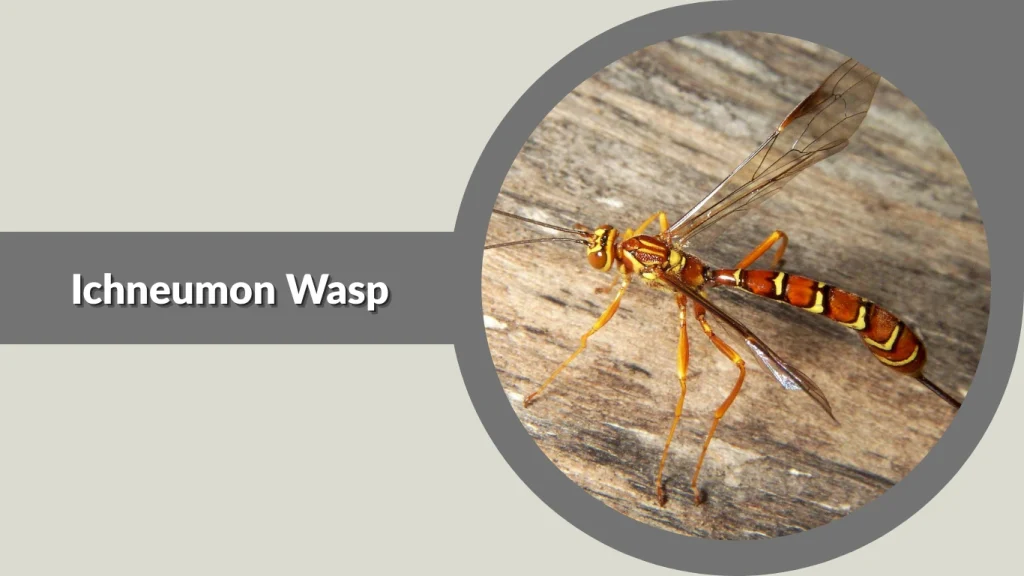
The Ichneumon wasp belongs to one of the largest families of insects, with over 25,000 described species worldwide. They are slender, graceful wasps recognized for their remarkably long tails, which in many females are specialized ovipositors used to lay eggs deep inside wood or within host insects. These wasps are non-aggressive toward humans but play an important role in controlling pest populations by parasitizing caterpillars, beetle larvae, and other insects.
Identification
- Long, thread-like tail (ovipositor) in females.
- Slender body, often black, brown, yellow, or reddish.
- Long antennae, sometimes longer than the body.
- Size varies widely, from a few millimeters to over 5 cm.
Habitat and Behavior
Ichneumon wasps are found in forests, gardens, and meadows worldwide. They are solitary and do not build nests. Instead, females use their ovipositor to deposit eggs into or on host insects. The larva then feeds on the host, eventually killing it, which makes them highly valuable as natural pest controllers.
2. Giant Ichneumon Wasp (Megarhyssa macrurus)
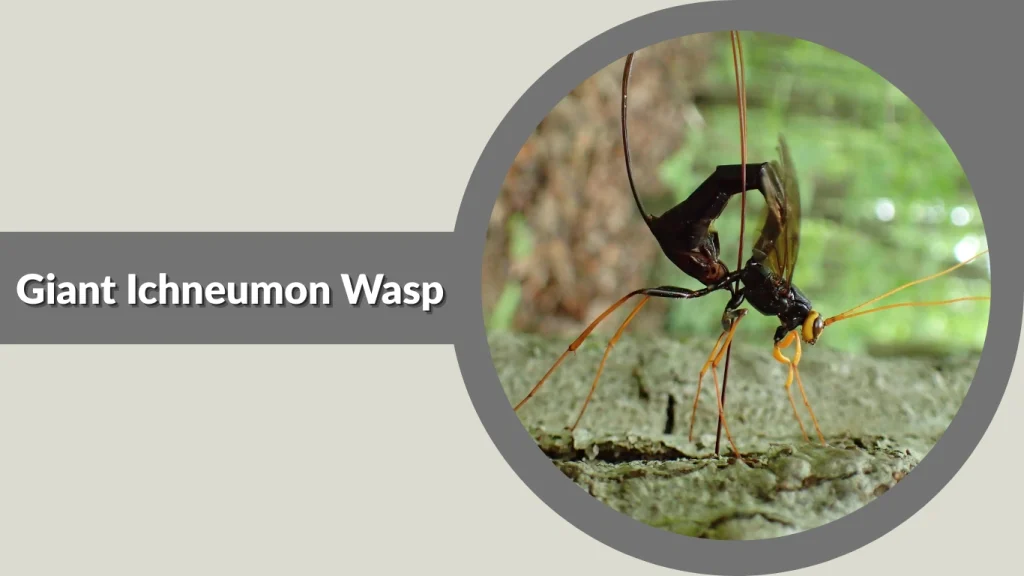
The Giant Ichneumon wasp is one of the most striking long-tailed wasps, easily recognized by its enormous size and extremely long ovipositor, which can be three times the length of its body. Despite its intimidating appearance, it is harmless to humans. Females drill their ovipositor into tree trunks to lay eggs on wood-boring horntail larvae hidden inside.
Identification
- Body length: up to 5 cm; ovipositor length: up to 10–13 cm.
- Slender brown or reddish body with yellow markings.
- Very long, thin tail (ovipositor) extending far behind.
- Long black-and-white banded antennae.
Habitat and Behavior
They are usually seen in wooded areas, especially near dead or decaying trees where horntail larvae are present. The female’s tail drills through wood to reach the host, making them an important natural regulator of wood-boring insect populations.
3. Sabre Wasp (Rhyssa persuasoria)
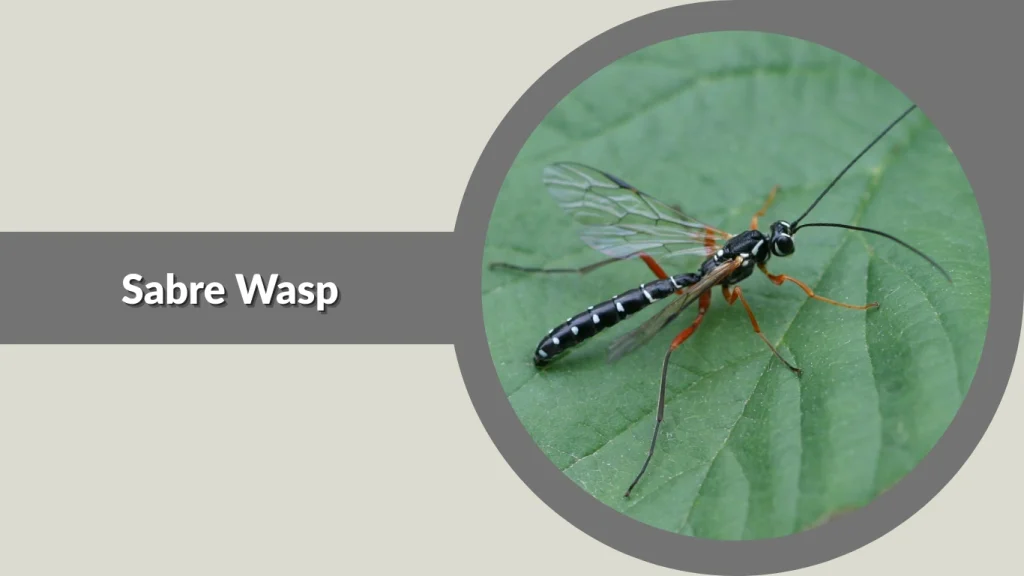
The Sabre wasp, another long-tailed ichneumon, is named for its sword-like ovipositor. It is commonly found in Europe and parts of Asia. Similar to the Giant Ichneumon, it parasitizes wood-boring insect larvae. Its elegant body and distinctive tail make it easily recognizable in nature.
Identification
- Body length: 1.5–4 cm; ovipositor length: up to 4 cm.
- Black body with white spots on the abdomen.
- Reddish legs and long, thin antennae.
- Long, straight, sabre-like tail (ovipositor).
Habitat and Behavior
The Sabre wasp prefers coniferous forests and lays its eggs inside larvae of wood-boring insects hidden deep in timber. It is harmless to humans and is considered beneficial for forest ecosystems by naturally reducing pest populations.
4. Tarantula Hawk Wasp (Pepsis grossa)
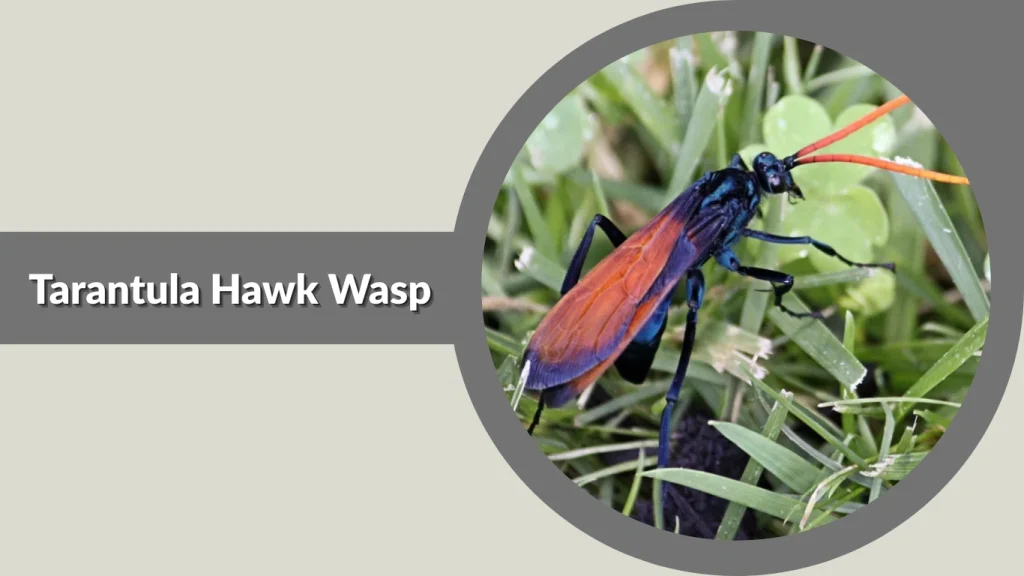
The Tarantula Hawk wasp is one of the largest wasps in the world, famous for its metallic blue-black body and fiery orange wings. It has a long, curved stinger that resembles a tail. This wasp is known for its painful sting, ranked among the most painful of any insect. It preys on tarantulas, paralyzing them and laying a single egg on the spider’s body.
Identification
- Body length: 4–5 cm, with some species larger.
- Shiny black-blue body with bright orange wings.
- Long, curved stinger in females, up to 7 mm.
- Long legs with hooked claws.
Habitat and Behavior
Tarantula hawks are found in deserts, grasslands, and tropical regions. They are solitary hunters, with females dragging paralyzed tarantulas to underground burrows as food for their larvae. Adults feed on nectar and are important pollinators, especially for milkweed plants.
5. Pelecinid Wasp (Pelecinus polyturator)
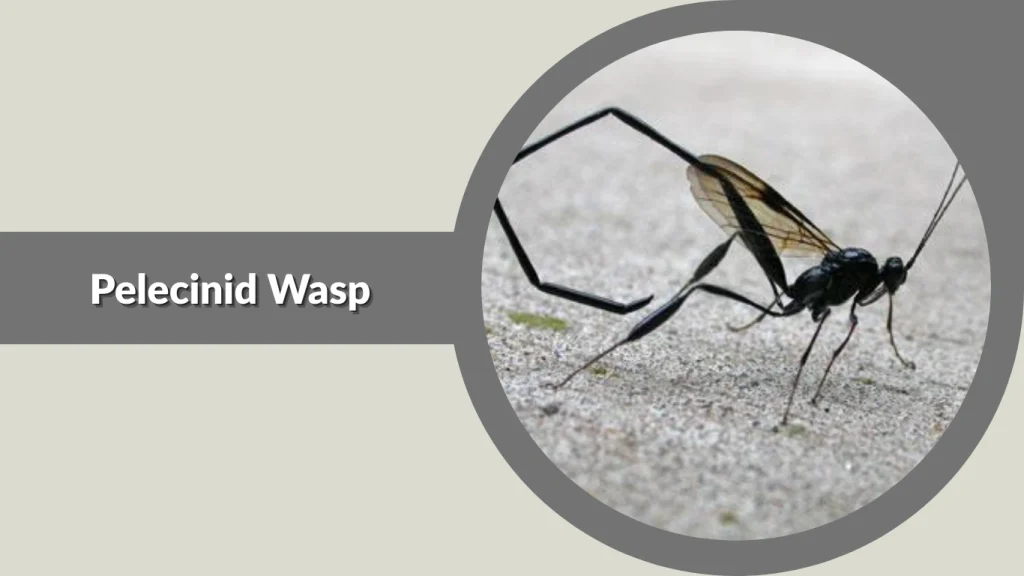
The Pelecinid wasp is slender and elegant, with an exceptionally long, shiny black abdomen that looks like a whip or tail. This tail-like abdomen is used by females to probe soil and lay eggs on beetle larvae living underground. Males are rare and much smaller, with shorter tails.
Identification
- Body length: 2–7 cm; tail (abdomen) is very long and slender.
- Entirely black, with metallic shine.
- Long legs and narrow waist.
- Tail bent downward in females when probing the soil.
Habitat and Behavior
They are often seen flying slowly in gardens, meadows, and fields. Females use their long abdomen to locate and parasitize June beetle grubs underground. Unlike aggressive wasps, they do not sting humans and are considered beneficial for natural pest control.
6. Gasteruptiid Wasp (Gasteruption spp.)
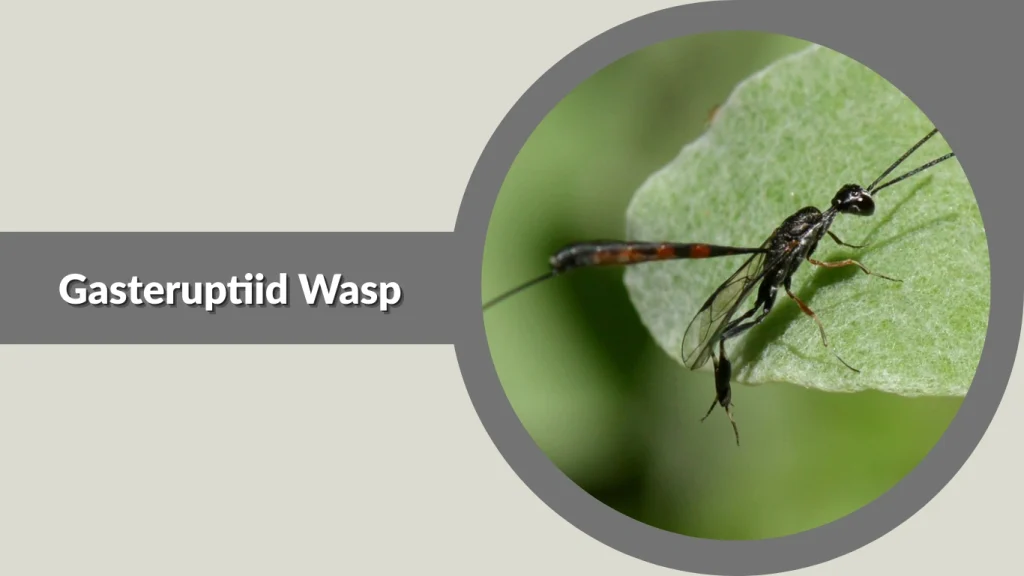
The Gasteruptiid wasp is a slender and graceful wasp known for carrying its abdomen raised high, giving it a tail-like appearance. Females also have a long ovipositor that extends like a thin tail beyond their body. These wasps are specialized parasites of solitary bees, laying their eggs inside bee nests where their larvae consume bee larvae and stored pollen.
Identification
- Body length: 1–3 cm.
- Long, thin abdomen held pointing upward like a tail.
- Black or dark brown body with reddish legs.
- Female ovipositor almost as long as the body.
Habitat and Behavior
They are commonly found in gardens, meadows, and woodland edges where solitary bees are active. Gasteruptiids hover delicately near flowers and bee nesting sites. Despite their parasitic behavior toward bees, they are harmless to humans and often feed on nectar as adults.
7. Ophion Wasp (Ophioninae)
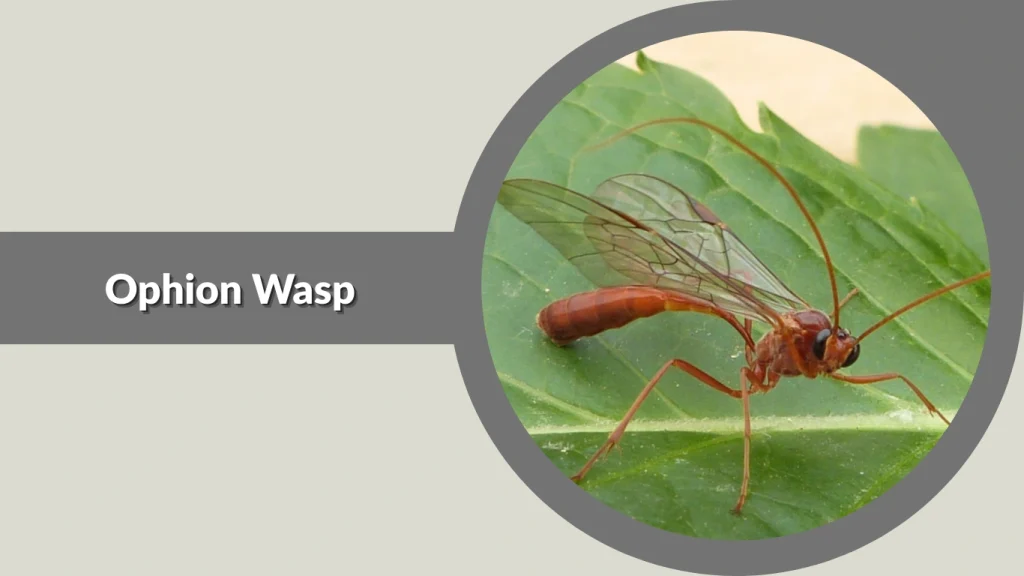
Ophion wasps are nocturnal ichneumons with long, slender tails (ovipositors) used to lay eggs inside caterpillars. They are often attracted to lights at night, which makes them one of the most commonly encountered ichneumon wasps. Their reddish-brown color and curved abdomen make them distinctive.
Identification
- Body length: 1–3 cm.
- Reddish-brown body with long antennae.
- Curved abdomen with visible ovipositor in females.
- Long legs and narrow waist.
Habitat and Behavior
They are widely distributed in gardens, fields, and forests. Females search for caterpillars of moths and butterflies, laying eggs inside them. The developing larvae consume the host from within. Although they may look intimidating, Ophion wasps are harmless to humans and important in controlling caterpillar pests.
8. Netelia Wasp (Netelia spp.)

Netelia wasps are slim, reddish-brown ichneumon wasps with long tails (ovipositors) used for laying eggs inside caterpillars. They are often seen in gardens and meadows, flying low among plants where their host insects live. Their slender form and orange to reddish color make them easy to distinguish from other ichneumons.
Identification
- Body length: 1–2.5 cm.
- Reddish-orange body with long antennae.
- Thin, elongated abdomen with visible ovipositor in females.
- Transparent wings with dark venation.
Habitat and Behavior
These wasps parasitize caterpillars of moths, including cutworms and armyworms, which are serious agricultural pests. They are considered beneficial for natural pest control and are frequently found near crops, gardens, and wild vegetation.
9. Xorides Wasp (Xorides spp.)

Xorides wasps are striking ichneumonids recognized by their very long ovipositors, often longer than their own bodies. They target wood-boring beetle larvae, drilling deep into wood to lay their eggs. Their tails are so long and threadlike that they are among the most dramatic examples of ovipositor length in wasps.
Identification
- Body length: 1.5–3 cm; ovipositor length can exceed 4–6 cm.
- Black body with white or yellow markings.
- Long, threadlike ovipositor extending far behind the body.
- Long legs and narrow thorax.
Habitat and Behavior
They live in forests and wooded habitats where beetle larvae infest timber. Females use their tails to reach larvae hidden deep in logs and branches. Xorides wasps are harmless to humans but play an important ecological role in regulating wood-boring beetle populations.
10. Pimpla Wasp (Pimpla spp.)

Pimpla wasps are medium-sized ichneumon wasps with a distinctive long ovipositor that looks like a tail. They are well known for parasitizing moth and butterfly pupae, especially those of pest species. Their black bodies with reddish legs give them a bold appearance, and they are often spotted resting on leaves or flying slowly in search of hosts.
Identification
- Body length: 1–2 cm.
- Black body with orange to reddish legs.
- Straight ovipositor extending beyond the abdomen in females.
- Long antennae and transparent wings.
Habitat and Behavior
They are common in gardens, forests, and farmlands where caterpillars and pupae are abundant. Females insert their ovipositor into cocoons or soil to lay eggs on hidden pupae. The developing larvae feed internally, eventually killing the host. Pimpla wasps are harmless to humans and considered highly beneficial for controlling agricultural pests.
FAQs
What is the purpose of the long tail in wasps?
The “long tail” in most wasps is actually an ovipositor, a specialized organ females use to lay eggs inside hosts such as caterpillars, beetle larvae, or wood-boring insects. It allows them to reach hidden prey that other insects cannot access.
Are long-tailed wasps dangerous to humans?
No, long-tailed wasps are generally harmless. Their tails are not stingers but egg-laying organs. Even species like Ichneumons and Pelecinid wasps do not sting people. The only exception is the Tarantula Hawk wasp, which has a true stinger and delivers an extremely painful sting, though it is not life-threatening.
Why are long-tailed wasps important in nature?
They play a key ecological role by controlling populations of caterpillars, beetles, and other insects that can damage plants and trees. Farmers and gardeners often benefit from their natural pest-control abilities, reducing the need for chemical pesticides.
Where can you commonly find long-tailed wasps?
They are usually found in gardens, forests, meadows, and woodlands. Many species prefer areas with host insects, such as trees infested by wood-boring beetles or fields with moth caterpillars. Some, like Ophion wasps, are attracted to outdoor lights at night.
