
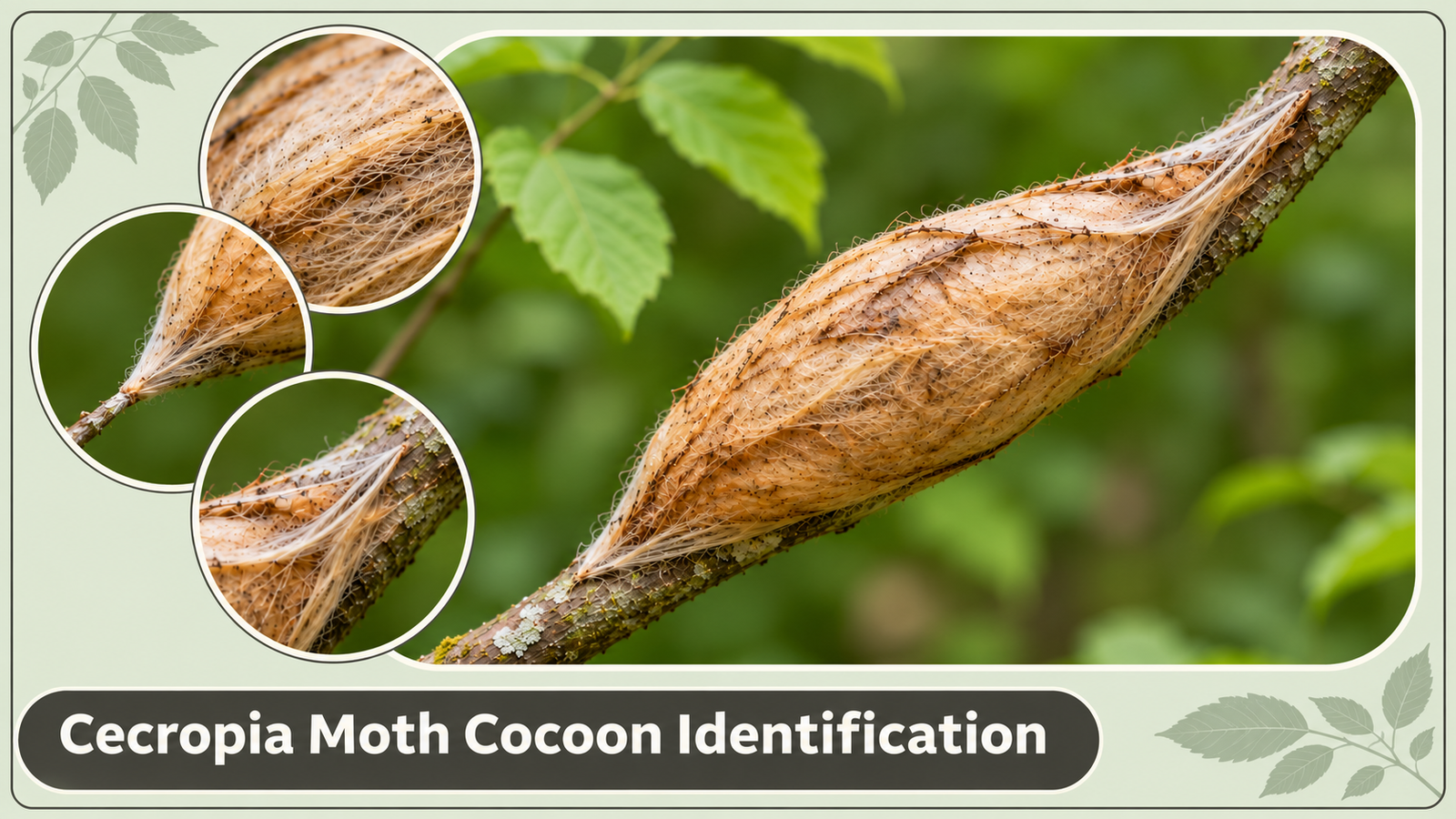
A cecropia moth cocoon is a large, brownish silk case attached lengthwise to a twig or branch. Its elongated shape and dried-leaf camouflage can make it look like ordinary plant debris, especially in fall and winter. To identify one, check several clues together: its color and texture, the way it is attached, its location, and the season. No single feature proves the species, but a combination of these details can help distinguish a cecropia cocoon from other moth cocoons and leaf shelters.
Quick Identification: The Main Clues
A cecropia moth cocoon is a silk case made by the caterpillar of Hyalophora cecropia. It is usually tan, brown, or gray-brown, elongated, and attached lengthwise to a woody support. Some are compact; others look larger and looser. Since other silk moths also make cocoons on branches, use several clues rather than color alone.
Identification checklist
- Material: A tough, fibrous silk covering, not a cluster of leaves or foam.
- Shape: Elongated or spindle-shaped, often tapering toward the ends.
- Color: Off-white, tan, brown, or gray-brown, often weathered or leaf-like.
- Attachment: Commonly fastened lengthwise against a twig or branch.
- Season: Often found from autumn through winter, before spring or early-summer moth emergence.
- Setting: On trees or shrubs, sometimes near plants used by the caterpillar.
A good match across several points makes cecropia more plausible, but it does not guarantee identification. Range, plant species, and a clear photograph can add useful context.
What Does a Cecropia Moth Cocoon Look Like?
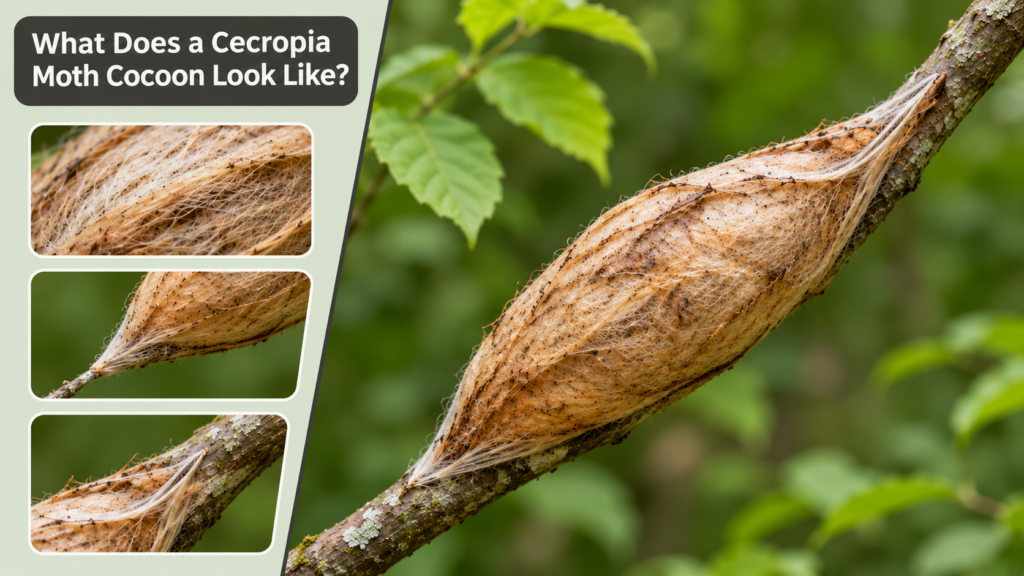
The cocoon is generally a few inches long, with a textured surface rather than the smooth look of some pupae. Its color ranges from pale tan to dark brown. It may resemble a curled dead leaf, rough pod, or piece of bark; age and weather can change its appearance.
Compact and baggy forms
Cecropia caterpillars can spin either a relatively compact cocoon or a looser, baggier one. A compact cocoon tends to look tighter and more firmly wrapped. A baggy cocoon has a roomier, less snug outer shape. Both are normal forms, so a loose appearance does not automatically mean the cocoon is damaged or empty. The variation also means there is no single perfect outline to memorize.
Silk layers and the exit area
The cocoon has multiple silk layers, including an inner and outer envelope with silk between them. A built-in exit area helps the adult moth leave, but may be hard to see. Do not pull apart the casing to find it.
Where Is a Cecropia Cocoon Attached?
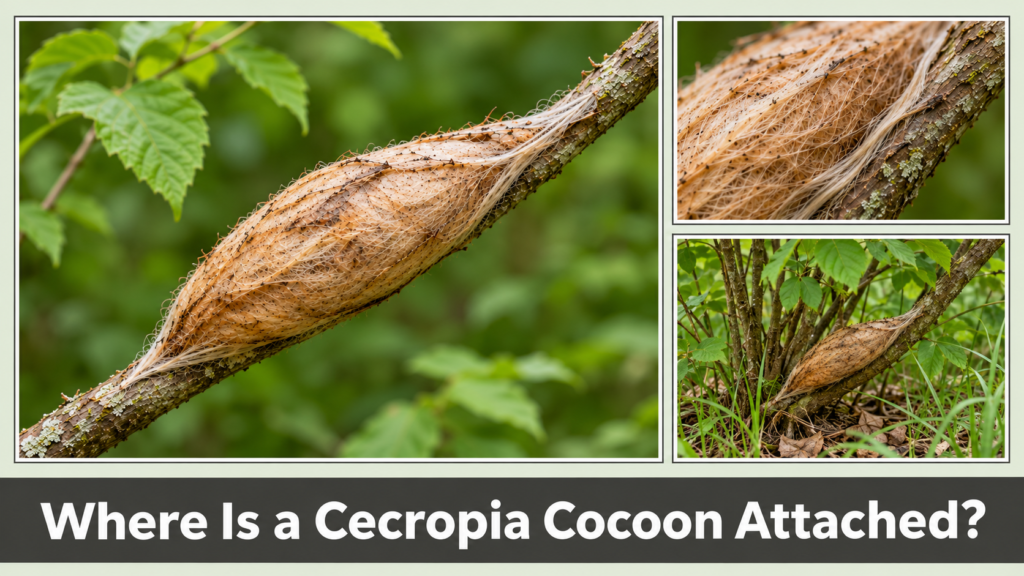
A common clue is its attachment: the cocoon lies lengthwise against a twig or branch, with silk securing it along the support. It may occur on a host plant or a nearby tree or shrub. Some cecropia cocoons are also found low in vegetation or in grass near the base of a plant, particularly the looser-looking form. Search likely supports carefully without stripping bark or cutting branches.
Branch attachment versus a hanging case
A cecropia cocoon is not usually suspended from a single narrow silk stalk. It is attached along its length, making it appear pressed to the twig. This differs from some leaf shelters, which hang from a branch by a strap or stem, and from many bag-like cases that dangle freely. Check the point of attachment, not just the overall brown shape.
How to Tell It Apart From Similar Structures
Many moths make silk cocoons, and some use leaves or bark as camouflage. Keep a cecropia identification tentative when the only clue is a brown object on a branch. Attachment, shape, and material help distinguish common look-alikes, though regional species can overlap.
Cecropia and promethea cocoons
Promethea moth caterpillars commonly wrap or fold a leaf around their cocoon, then secure the leaf to a twig with silk. The leaf may remain recognizable as a leaf, forming a hanging shelter. A cecropia cocoon is a silk case attached lengthwise to the branch; it does not rely on a folded leaf as its main covering. Old leaves can break down, so inspect for silk and the way the object is fastened.
Cecropia and polyphemus cocoons
Polyphemus moth cocoons can also be attached to vegetation, so the presence of a branch alone does not separate the two. A cecropia cocoon often appears elongated and is secured along the twig, while a polyphemus cocoon is commonly more oval and may be enclosed in a leaf. These clues can overlap, and a photograph of the whole cocoon, its attachment, and the surrounding plant is more useful than color by itself.
Silk cocoon versus leaf roll or spider egg sac
A rolled leaf usually shows leaf veins, edges, or a recognizable stem, even if silk holds it together. A spider egg sac is typically a smaller silk bundle or pouch, not a long case fixed along a branch. Webbing from spiders is often irregular and spread across nearby surfaces. If the object is made mostly of plant tissue, it is probably not a cecropia cocoon.
Is the Cocoon Occupied, Empty, or Damaged?
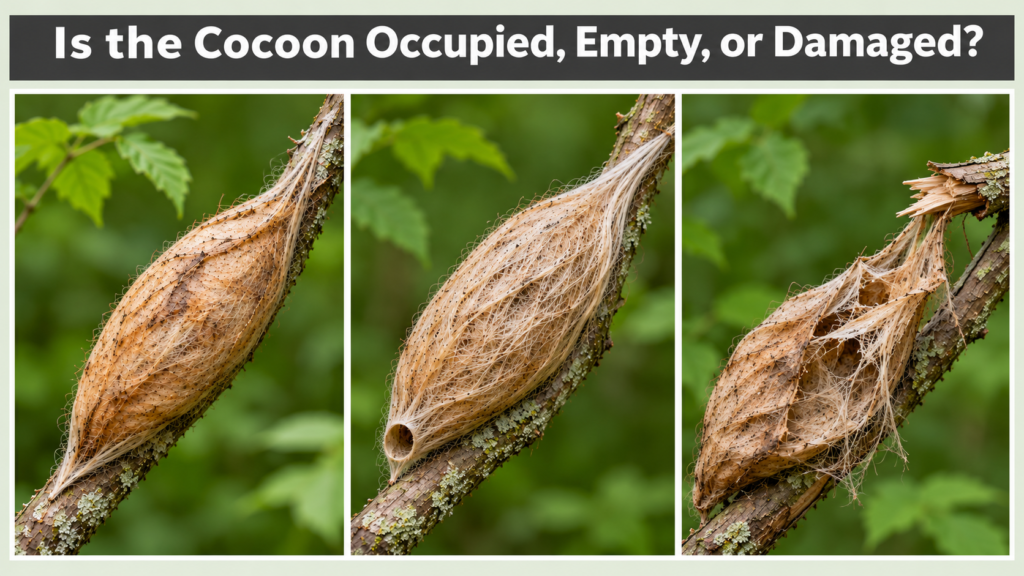
Appearance alone cannot reliably show whether a pupa is alive. A cocoon may remain still through winter because the insect is dormant. It can also be empty after the moth has emerged, or it may have failed to produce an adult. Do not shake, squeeze, or cut it open to check. Those actions can injure a living pupa and usually do not provide a dependable answer.
Clues that an adult has emerged
After the moth exits, the cocoon may have an opening near the exit end, and the silk case can remain attached to the branch. A neat opening is consistent with emergence, but weather and damage can also tear silk. A large ragged hole, crushed body, or cocoon detached from its support may indicate disturbance, though it is not possible to determine the insect’s condition from every mark.
When and Where Are Cecropia Cocoons Found?
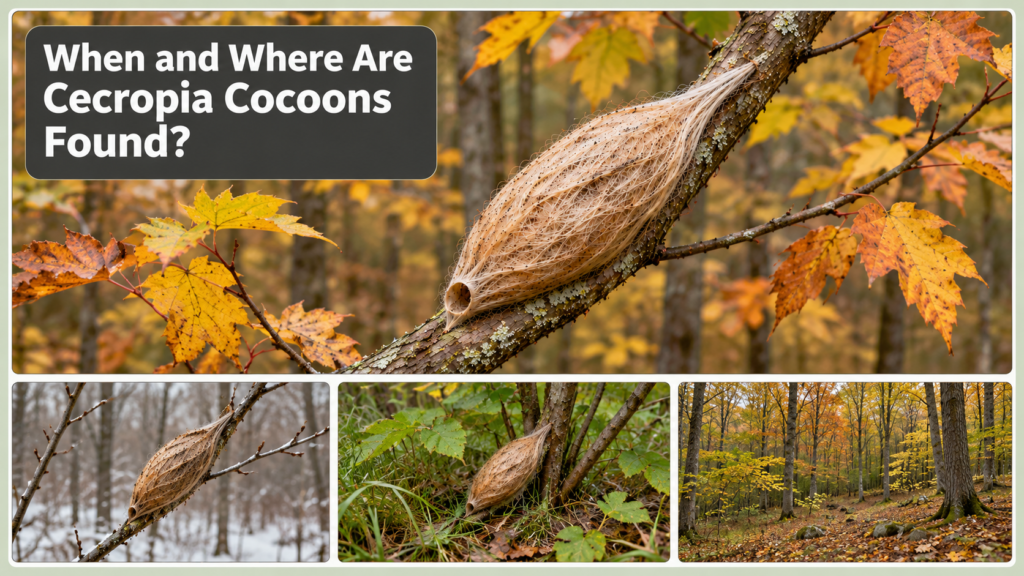
Cecropia moths occur in eastern and central North America. Their caterpillars feed on trees and shrubs such as maple, birch, and cherry, then spin cocoons toward the end of the growing season. The pupae spend winter inside; adults generally emerge in spring or early summer, often around May or June.
A branch cocoon found in winter is not necessarily abandoned. Location and timing help with identification, but an unusual plant or season does not rule the species out.
What Should You Do If You Find One?
If the cocoon is intact and in a safe place, leave it where it is. Avoid bringing it into a warm home, cutting the branch, peeling back the silk, or applying pesticides nearby. Natural outdoor conditions help maintain the seasonal cues the pupa experiences. If the cocoon is on a branch that must be removed, keep the section intact and ask a local nature center, extension service, or insect specialist for guidance.
To document it, take photos from several angles. Include a close view of the silk texture, a wider view showing how it attaches, and a picture of the plant or surrounding habitat. Add the approximate date and location. Do not touch or collect it just to get a better image. If you want expert identification, these details are more useful than a single close-up without context.
Frequently Asked Questions
How can I identify a cecropia moth cocoon?
Look for an elongated tan-to-brown silk case attached lengthwise to a twig or branch. It may be compact or baggy and can resemble a dried leaf. Compare several clues together, because other moths also make brown cocoons on plants and color alone is not enough for a confident identification.
What color is a cecropia moth cocoon?
Cecropia cocoons can be off-white, tan, brown, or gray-brown, often becoming weathered outdoors. Color varies with the cocoon’s age and silk structure. A brown shade may help narrow an identification, but it cannot confirm the species without checking shape, material, attachment, location, and season.
Is a cecropia moth cocoon attached to a branch?
Often, yes. It is commonly secured lengthwise against a twig or branch, rather than hanging from a single silk thread. Some looser cocoons may be found low in vegetation or grass near a host plant. The attachment pattern is a useful clue, though not unique to cecropia moths.
Can I tell if a cecropia cocoon is alive?
Usually not by looking at it. A living pupa may remain motionless inside through winter, and an intact shell does not prove it is alive. Do not shake, squeeze, or open the cocoon. Leave it undisturbed outdoors and allow the normal seasonal cycle to continue.
When does a cecropia moth come out of its cocoon?
Adult cecropia moths commonly emerge in spring or early summer, often in May or June in parts of their range. The exact timing depends on local weather and climate. After emergence, the empty silk case may remain attached to the branch with an opening near one end.
