
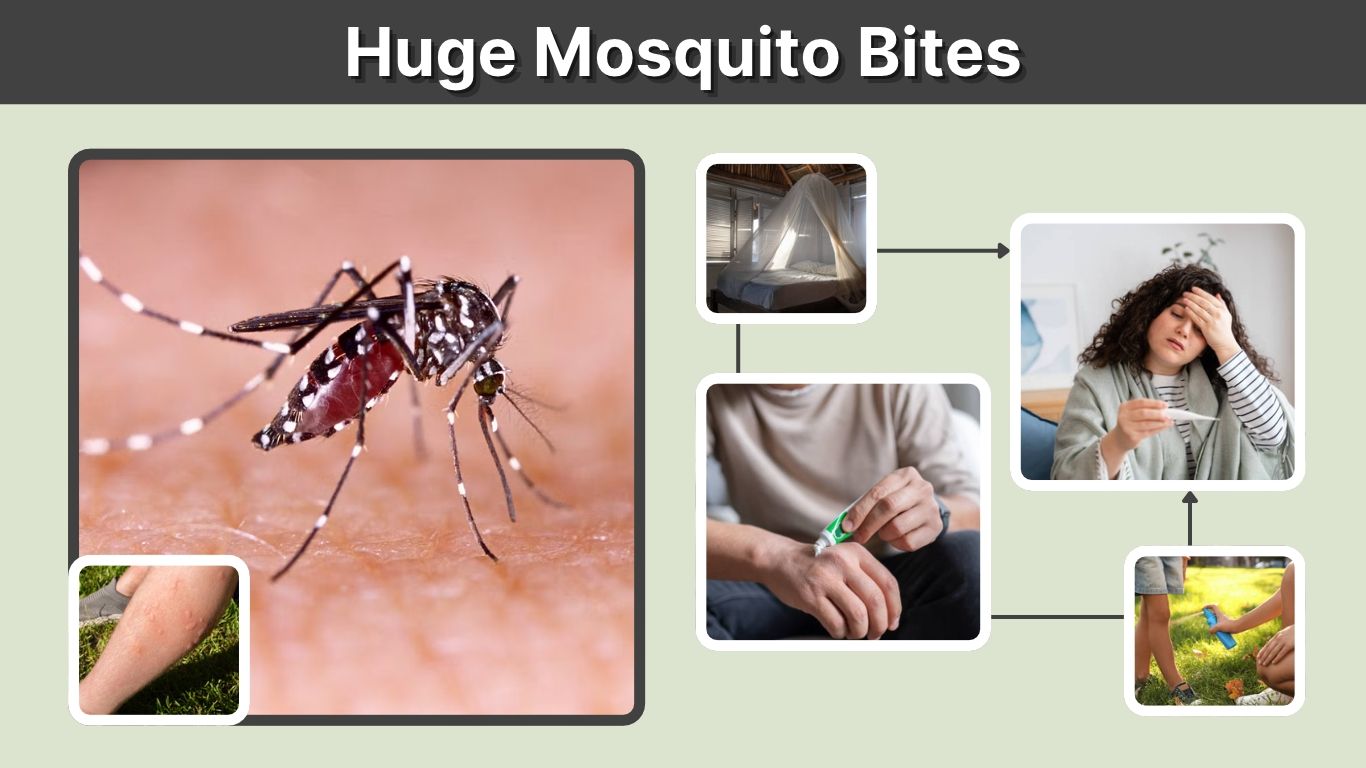
Huge mosquito bites can cause uncomfortable swelling, redness, itching, and sometimes painful lumps beneath the skin. While most mosquito bites produce small bumps, some people develop unusually large reactions that spread several inches beyond the original bite. These reactions may result from increased sensitivity to mosquito saliva or a condition known as Skeeter syndrome. Understanding why mosquito bites become huge can help you recognize normal swelling, identify possible allergic reactions, and choose effective treatment. This guide explains the causes, symptoms, home remedies, healing time, and warning signs.
Why Are My Mosquito Bites So Huge?
Huge mosquito bites usually develop because the immune system reacts strongly to proteins in mosquito saliva. When a mosquito feeds, it introduces saliva into the skin, triggering the release of histamine and other inflammatory substances.
Some individuals develop small bumps, while others experience large, swollen areas. The severity depends on individual sensitivity, previous mosquito exposure, and immune responses.
Strong Immune Reaction to Mosquito Saliva
People with sensitive immune responses may experience significant inflammation after being bitten.
This inflammation allows fluid to accumulate in surrounding tissues, creating swollen bumps or large welts. Children and individuals encountering unfamiliar mosquito species may experience stronger reactions.
Skeeter Syndrome and Huge Mosquito Bites
Skeeter syndrome is a large local inflammatory reaction to mosquito saliva. It can cause substantial swelling, warmth, redness, itching, and sometimes pain.
Symptoms commonly develop within hours of the bite and may resemble a skin infection. However, Skeeter syndrome results from an immune reaction rather than bacterial infection.
What Do Huge Mosquito Bites Look Like?
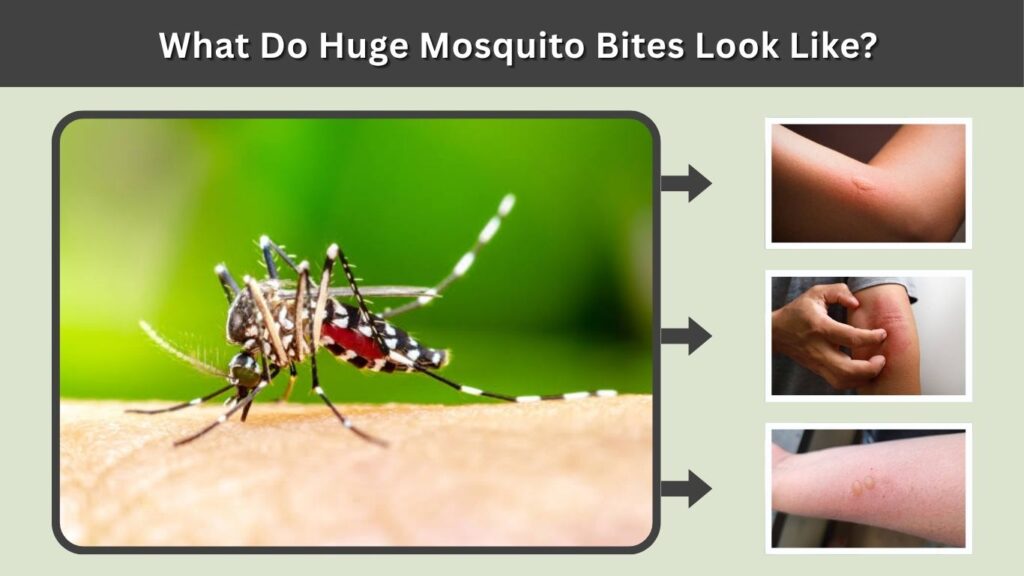
Huge mosquito bites can appear as raised, red, swollen patches or firm lumps extending beyond the original bite location. Some reactions resemble large hives, while others produce noticeable swelling across the surrounding skin.
The appearance varies depending on skin sensitivity and the intensity of inflammation.
Common Symptoms of Huge Mosquito Bites
Typical symptoms include:
- Large swollen bumps: Raised areas extending several inches across the skin.
- Intense itching: Persistent irritation around the affected area.
- Redness: Red or pink patches surrounding the bite.
- Hard lumps: Firm swelling beneath the skin.
- Warmth: Inflamed skin may feel warmer than surrounding areas.
- Tenderness: Mild pain when touching or moving the affected area.
- Blisters: Occasionally, small fluid-filled bubbles develop.
Some individuals also experience temporary discoloration after the swelling disappears.
Why Do Mosquito Bites Turn Into Huge Welts?
Huge welts develop when the immune system produces an exaggerated inflammatory response.
Fluid moves into surrounding tissues, creating raised, itchy patches. These welts can resemble hives and may become particularly noticeable after repeated scratching.
How to Treat Huge Mosquito Bites at Home
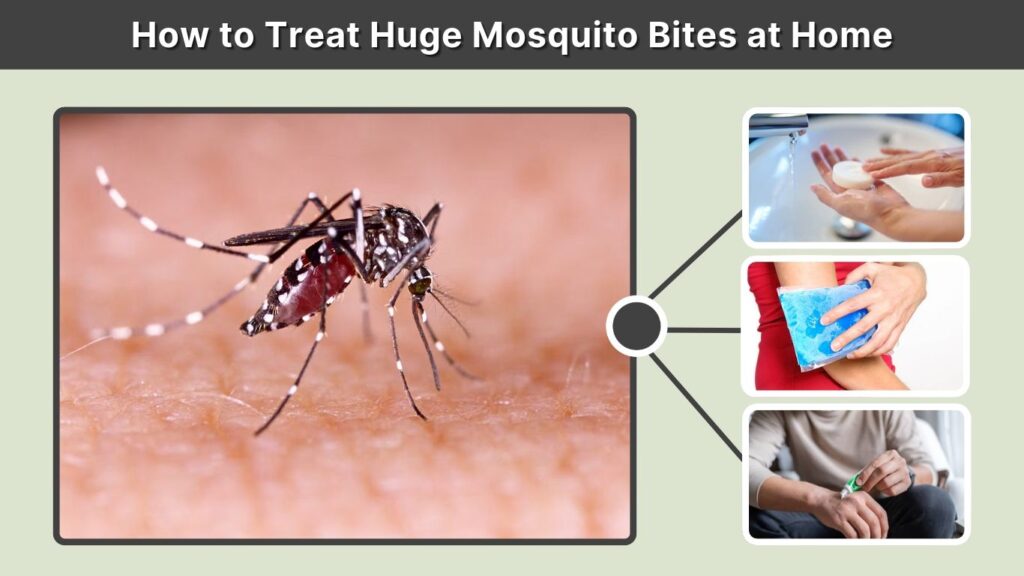
Most uncomplicated huge mosquito bites can be managed with gentle home care and appropriate anti-itch treatments. Reducing inflammation early may improve comfort and prevent additional irritation.
Treatment generally focuses on controlling swelling, relieving itching, and protecting the skin from infection.
Best Treatments for Huge Mosquito Bite Swelling
Follow these steps to manage swollen mosquito bites:
- Wash the affected area: Gently clean the bite with mild soap and water.
- Apply a cold compress: Hold a cloth-wrapped ice pack against the swelling for approximately 10 minutes.
- Elevate the affected limb: Raising a swollen arm or leg may reduce fluid accumulation.
- Use anti-itch cream: An appropriate hydrocortisone cream or calamine lotion may relieve irritation.
- Consider antihistamines: Suitable oral antihistamines may reduce itching and allergic symptoms.
- Avoid scratching: Scratching increases inflammation and can introduce bacteria.
- Monitor changes: Seek medical advice if swelling spreads significantly or symptoms worsen.
Home Remedies for Huge Mosquito Bites
Cold compresses are among the most practical home remedies for large mosquito bite reactions.
Plain aloe vera gel may temporarily soothe irritated skin, although evidence specifically supporting mosquito bite treatment remains limited.
Avoid toothpaste, undiluted essential oils, and harsh household chemicals because they may worsen irritation.
Huge Mosquito Bites on Legs, Arms, and Face
Large mosquito bite reactions can develop anywhere on exposed skin. However, swelling may be more noticeable in certain locations because of tissue structure, movement, and individual skin sensitivity.
Bites on the legs, arms, and face sometimes produce particularly uncomfortable reactions.
Huge Mosquito Bites on Legs
Mosquito bites on the legs may cause large, itchy bumps around the ankles, knees, or calves.
Swelling can become uncomfortable while walking or wearing tight clothing. Elevating the affected leg and applying a cold compress may reduce discomfort.
Huge Mosquito Bites on the Face and Forehead
Facial mosquito bites can produce noticeable swelling, especially around the forehead, cheeks, and eyelids.
The loose tissues surrounding the eyes may swell considerably after a bite. Significant eyelid swelling, eye pain, fever, or vision changes require prompt medical evaluation.
Huge Mosquito Bites on Children
Children may develop stronger local reactions because their immune systems have not become accustomed to certain mosquito saliva proteins.
Large swelling can appear alarming but does not always indicate infection. Use gentle cooling treatments and consult a healthcare professional if the reaction becomes severe.
Huge Mosquito Bite or Skin Infection?
A large mosquito bite reaction can resemble cellulitis, a bacterial skin infection. Both conditions may cause redness, warmth, swelling, and tenderness.
However, allergic swelling often begins within hours of the bite, whereas infection may develop later and progressively worsen. Appearance alone cannot reliably distinguish them.
Warning Signs of an Infected Mosquito Bite
Seek medical evaluation if you notice:
- Spreading redness: The affected area continues expanding, especially with increasing pain.
- Increasing warmth: Skin becomes progressively hotter and more tender.
- Pus formation: Yellow or green drainage develops.
- Red streaks: Lines extend outward from the affected area.
- Fever: Elevated body temperature accompanies worsening skin symptoms.
- Severe pain: Discomfort becomes significant rather than gradually improving.
Difficulty breathing, fainting, or swelling of the tongue or throat requires immediate emergency care.
Fever, headache, or body aches after mosquito exposure may also indicate a mosquito-borne illness and should be medically assessed.
How Long Do Huge Mosquito Bites Last?
Ordinary mosquito bites often improve within several days. However, huge mosquito bites associated with strong local reactions may remain swollen and itchy for longer.
Skeeter syndrome symptoms commonly improve within approximately three to ten days, although recovery varies between individuals.
How Long Does Huge Mosquito Bite Swelling Last?
Swelling may increase during the first several hours before gradually improving.
Large bumps can remain visible even after itching decreases. Repeated scratching may delay recovery and increase the possibility of infection.
If swelling continues worsening or fails to improve, seek medical advice rather than assuming the reaction is harmless.
How to Prevent Huge Mosquito Bite Reactions
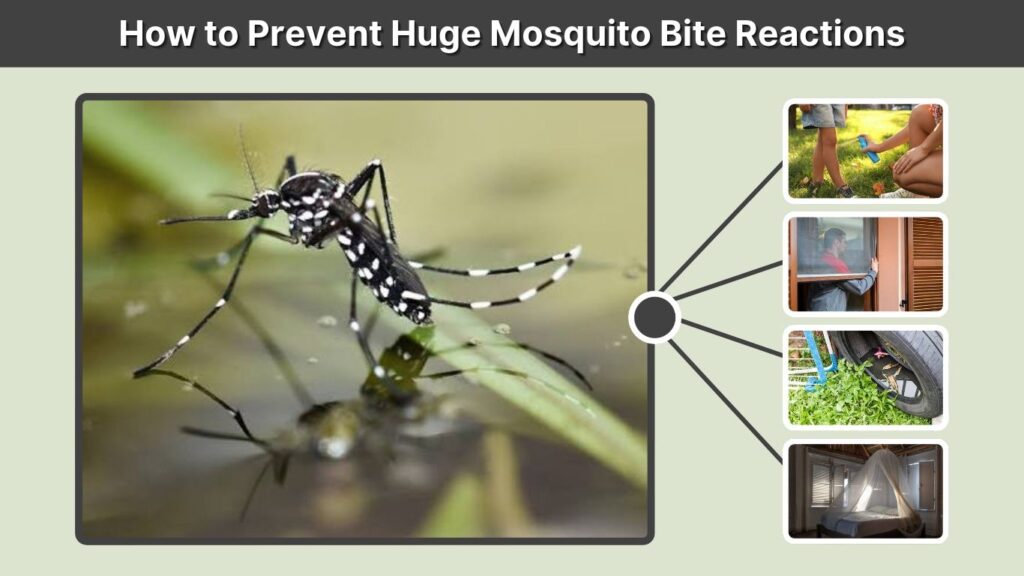
People who regularly develop huge welts from mosquito bites should prioritize prevention. Avoiding mosquito exposure reduces both uncomfortable allergic reactions and the risk of mosquito-borne diseases.
Using effective repellents and reducing mosquito breeding areas offers practical protection.
Best Ways to Prevent Huge Mosquito Bites
- Apply mosquito repellent: Use a registered repellent containing DEET, picaridin, or another recommended active ingredient.
- Wear protective clothing: Choose long sleeves, loose-fitting trousers, and socks.
- Install window screens: Keep mosquitoes outside living spaces.
- Remove standing water: Empty buckets, plant saucers, and outdoor containers.
- Use mosquito nets: Protect sleeping areas from mosquito exposure.
- Avoid scratching: Protect existing bites from additional inflammation.
- Seek allergy advice: Consult a healthcare professional if large reactions occur repeatedly.
FAQs
1. Why Do My Mosquito Bites Get So Huge?
Huge mosquito bites usually result from a strong immune reaction to proteins in mosquito saliva. Some people are particularly sensitive and develop large swollen welts. These reactions may occur with Skeeter syndrome, especially when accompanied by significant itching and warmth.
2. How Do You Get Rid of Huge Mosquito Bites Quickly?
Apply a cold compress, keep the area clean, and avoid scratching. Appropriate anti-itch creams or oral antihistamines may help control symptoms. Large reactions do not disappear immediately, but these treatments can reduce discomfort while the inflammation gradually resolves.
3. Are Huge Mosquito Bites Dangerous?
Most huge mosquito bites are uncomfortable but not dangerous. However, severe allergic reactions, secondary bacterial infections, and mosquito-borne illnesses can require medical attention. Seek care for worsening pain, spreading redness, fever, or unusual symptoms. Breathing difficulties require emergency treatment.
4. Why Is My Mosquito Bite Huge and Hard?
A huge, hard mosquito bite generally develops because inflammation causes swelling in surrounding tissues. Firm lumps may accompany stronger local reactions. If the area becomes increasingly painful, hot, or continues expanding, a healthcare professional should assess the possibility of infection.
5. How Long Does a Huge Mosquito Bite Take to Heal?
Huge mosquito bites often improve within several days, although strong local reactions may last approximately three to ten days. Healing depends on inflammation severity and skin sensitivity. Avoiding scratching and using gentle treatments can reduce discomfort during recovery.
