
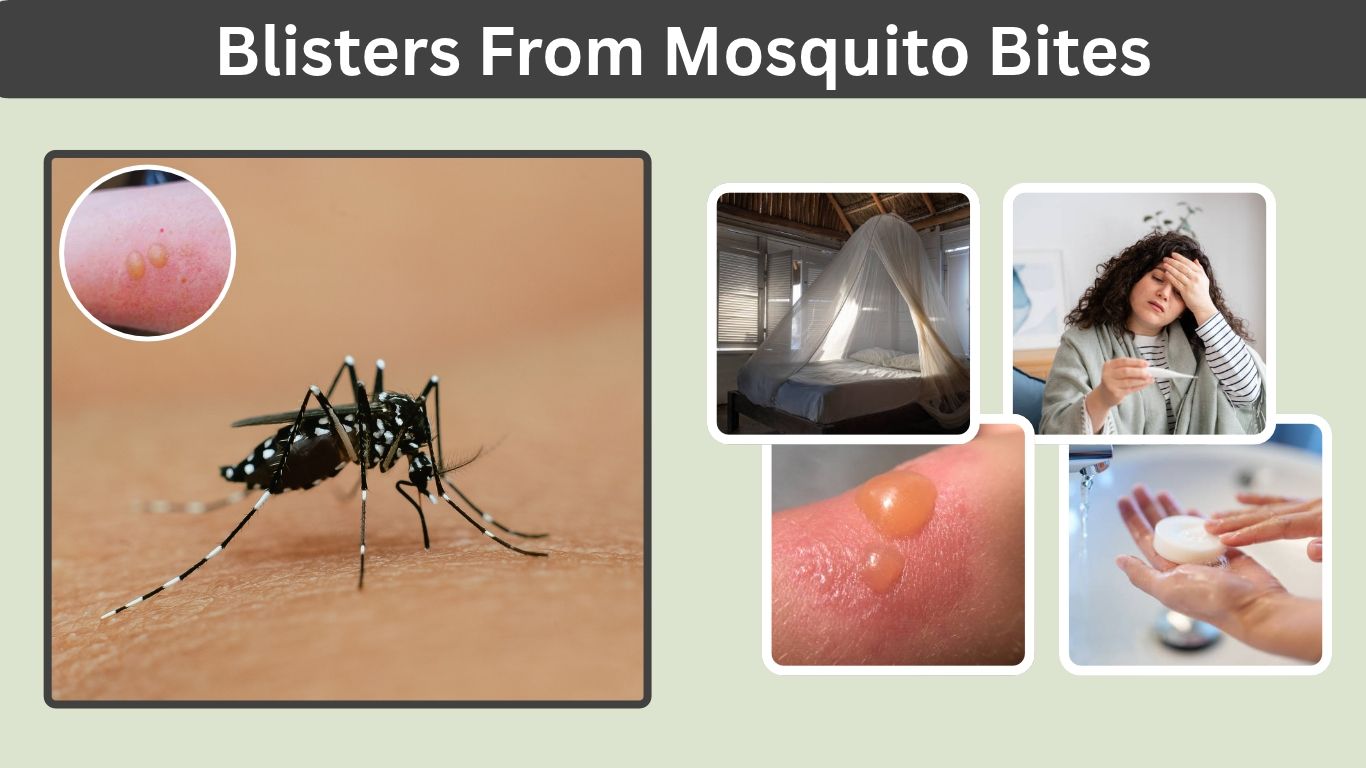
Blisters from mosquito bites can be uncomfortable, especially when small, itchy bumps turn into fluid-filled bubbles on the skin. Although most mosquito bites cause mild redness and swelling, some people develop water blisters because of a stronger immune reaction. These blisters may appear on the arms, legs, feet, or other exposed areas. Understanding why mosquito bite blisters develop and how to treat them safely can help prevent infection and support healing. This guide explains their causes, symptoms, treatment options, healing time, and warning signs.
Can You Get Blisters From Mosquito Bites?
Yes, mosquito bites can cause blisters, although they are less common than ordinary itchy bumps. These blisters develop when the immune system reacts strongly to proteins introduced through mosquito saliva. Some reactions produce tiny fluid-filled bubbles, while others cause larger swollen blisters.
Blistering reactions are more noticeable in people with sensitive skin, children, and individuals who experience strong responses to insect bites.
What Do Mosquito Bite Blisters Look Like?
Mosquito bite blisters usually appear as small, raised bubbles containing clear or pale yellow fluid. Surrounding skin may look red, swollen, or irritated.
Some blisters develop in the center of an itchy bump. Others appear as larger fluid-filled areas. The appearance varies depending on the severity of inflammation and individual skin sensitivity.
What Causes Blisters From Mosquito Bites?
Blisters form when inflammation causes fluid to collect between layers of the skin. Mosquito saliva contains proteins that trigger an immune response, releasing histamine and other inflammatory substances.
Most people develop ordinary itchy bumps, but some experience more pronounced swelling or blister formation.
Allergic Reactions to Mosquito Saliva
A strong local immune reaction can produce significant swelling, redness, and occasional blistering.
Some individuals develop large local reactions sometimes associated with Skeeter syndrome. However, blistering alone does not confirm this condition.
People who have experienced strong reactions to previous mosquito bites may be more likely to develop similar symptoms again.
Scratching and Skin Irritation
Repeated scratching can damage the skin and increase inflammation around a mosquito bite.
Although scratching does not explain every blistering reaction, it can worsen existing irritation and increase the likelihood of secondary bacterial infection.
Avoiding scratching helps protect the blister and allows the affected skin to recover.
Water Blisters From Mosquito Bites
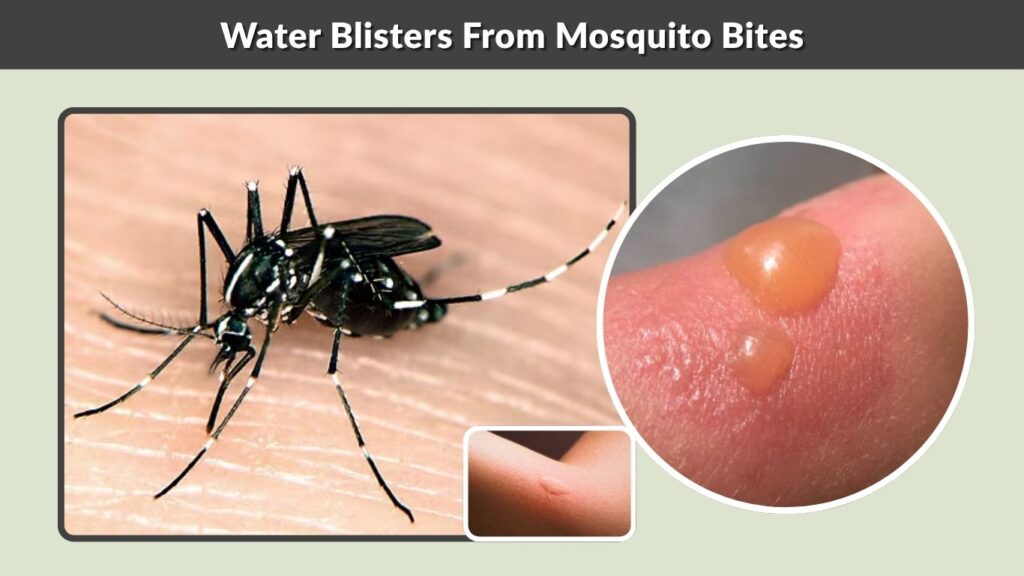
Water blisters from mosquito bites are small pockets of fluid that develop beneath the outer skin layer. The fluid is generally clear or slightly yellowish and forms as part of the body’s inflammatory response.
These blisters are not filled with mosquito saliva or eggs. The fluid originates from the body’s own tissues.
Why Do Mosquito Bites Turn Into Water Blisters?
When inflammation increases the permeability of tiny blood vessels, fluid can move into surrounding skin tissues.
In some cases, this fluid collects between skin layers and produces a visible blister.
A small water blister is not automatically a sign of infection. However, changes in pain, warmth, or drainage should be monitored.
Huge Blisters From Mosquito Bites
Occasionally, mosquito bites produce larger blisters, sometimes called bullous insect-bite reactions.
These reactions may involve considerable swelling and discomfort. Large, painful, or rapidly developing blisters should be examined by a healthcare professional because other skin conditions can produce similar symptoms.
How to Treat Blisters From Mosquito Bites
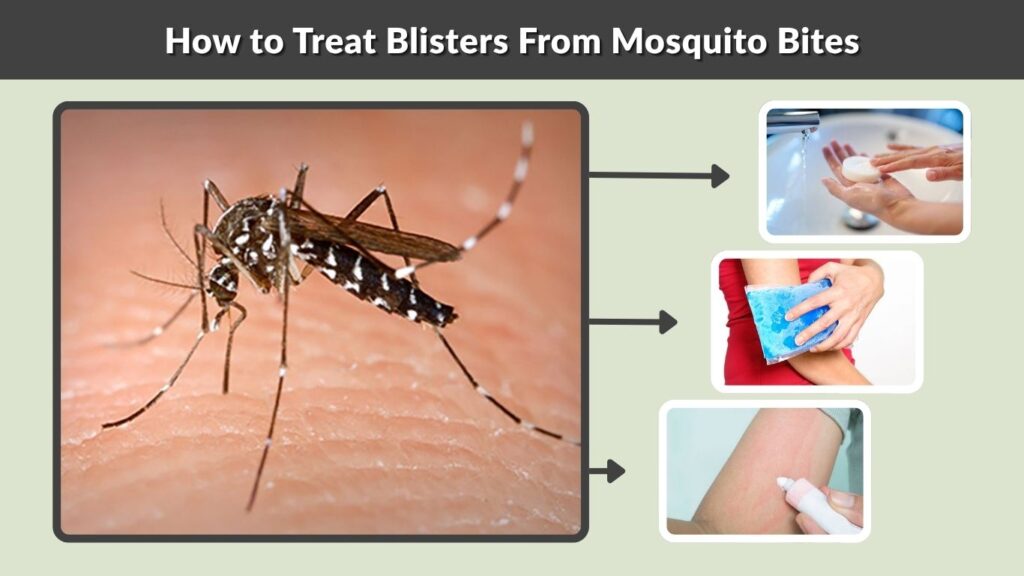
Treating blisters from mosquito bites involves protecting the affected skin, relieving itching, and preventing infection. Most small, uncomplicated blisters heal naturally with gentle care.
Avoid aggressive treatments or attempts to drain the blister yourself. Preserving the protective skin covering can reduce complications.
First Aid for Mosquito Bite Blisters
Follow these steps to care for a mosquito bite blister:
- Clean the area: Gently wash the surrounding skin with mild soap and water.
- Apply a cold compress: Use a clean, cool cloth for approximately 10 minutes to reduce discomfort.
- Avoid popping: Leave the blister intact whenever possible.
- Protect the skin: Cover the blister with a clean, nonstick dressing if clothing causes friction.
- Control itching: Ask a pharmacist about appropriate antihistamines or anti-itch products.
- Monitor healing: Watch for increasing pain, redness, warmth, or unusual drainage.
Home Remedies for Mosquito Bite Blisters
Cold compresses are among the safest home treatments for mild blistering reactions.
A gentle, fragrance-free cleanser can keep surrounding skin clean without excessive irritation.
Avoid applying toothpaste, alcohol, essential oils, or baking soda mixtures directly to blistered or broken skin. These ingredients can irritate exposed tissue and interfere with healing.
Should You Pop Blisters From Mosquito Bites?
You should generally avoid popping mosquito bite blisters. The intact skin covering acts as a natural barrier against bacteria and protects the sensitive tissue underneath.
Puncturing a blister unnecessarily can increase infection risk and delay recovery.
What If a Mosquito Bite Blister Pops?
If a blister breaks naturally, gently clean the area with water and mild soap.
Do not peel away the remaining skin. Allow any fluid to drain naturally and cover the area with a sterile, nonstick dressing.
Replace the dressing when it becomes wet or dirty. Seek medical attention if signs of infection appear.
How Long Do Blisters From Mosquito Bites Last?
Small mosquito bite blisters often improve within several days and may heal within approximately one week. Larger blisters can take longer, particularly when inflammation is significant.
Healing time depends on blister size, skin sensitivity, and whether scratching or infection occurs.
Stages of Mosquito Bite Blister Healing
Initially, an itchy bump may develop into a fluid-filled blister. Over the following days, inflammation gradually decreases.
The blister fluid may be reabsorbed, allowing the raised area to flatten naturally.
As the skin heals, temporary discoloration or mild peeling can occur. Persistent or worsening blistering requires medical evaluation.
How to Tell if a Mosquito Bite Blister Is Infected
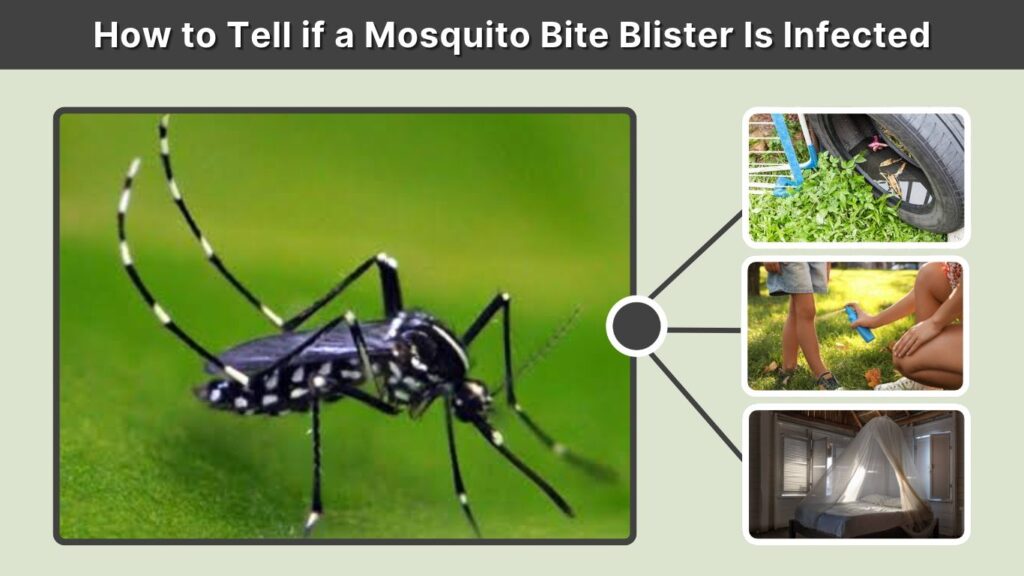
An uncomplicated mosquito bite blister may have mild redness and itching. An infected blister often develops worsening pain, inflammation, or abnormal drainage.
Because some allergic reactions resemble infections, monitoring symptom changes is important.
Warning Signs of an Infected Blister
Look for these symptoms:
- Increasing redness: Discoloration spreads beyond the original bite.
- Warmth: The surrounding skin becomes unusually hot.
- Worsening pain: Tenderness increases instead of improving.
- Pus: Thick yellow or green discharge develops.
- Red streaks: Discoloration spreads outward from the affected area.
- Fever: Elevated body temperature accompanies worsening skin symptoms.
Seek prompt medical attention if infection is suspected. Difficulty breathing, fainting, or swelling of the tongue or throat requires emergency care.
Blisters From Mosquito Bites in Children
Children sometimes develop stronger reactions to mosquito saliva, including swelling and small water blisters. Their skin can be particularly vulnerable to irritation caused by scratching.
Gentle treatment is important because children may accidentally break blisters while playing or sleeping.
How to Treat Mosquito Bite Blisters on Babies
Gently clean the affected skin and use a cool, damp washcloth to reduce discomfort.
Keep fingernails short and avoid applying harsh household remedies.
Consult a pediatric healthcare professional about blisters in infants, particularly if they are large, painful, spreading, or accompanied by fever. Do not use medicated creams without age-appropriate guidance.
How to Prevent Blisters From Mosquito Bites
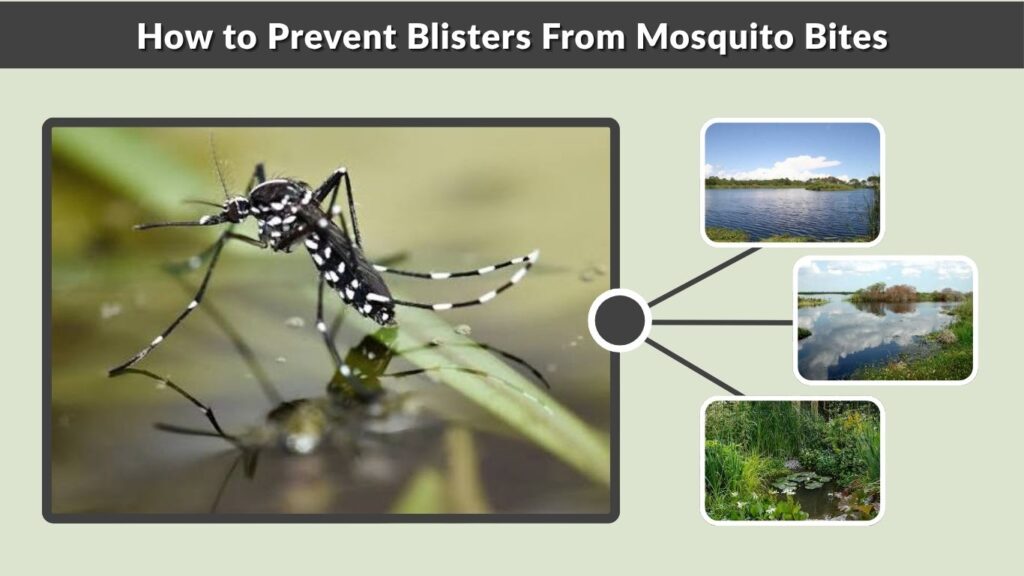
Preventing mosquito bites is the most effective way to avoid blistering reactions. People who frequently develop water blisters should take extra precautions outdoors and around mosquito breeding areas.
Protective clothing, appropriate repellents, and regular mosquito control can reduce exposure.
Best Ways to Prevent Mosquito Bites
- Use mosquito repellent: Choose an effective registered repellent and follow its instructions.
- Wear protective clothing: Cover exposed arms and legs with loose-fitting fabrics.
- Remove standing water: Empty buckets, flowerpot saucers, and other water-holding containers.
- Install window screens: Prevent mosquitoes from entering living spaces.
- Use mosquito nets: Protect sleeping areas, particularly for young children.
- Avoid scratching bites: Reduce skin damage and the risk of secondary infection.
FAQs
1. Why Do I Get Blisters From Mosquito Bites?
Some people experience stronger immune reactions to proteins in mosquito saliva. This inflammation can cause fluid to collect between layers of skin, forming blisters. Children and individuals with sensitive skin may experience these reactions more frequently than others.
2. Are Water Blisters From Mosquito Bites Dangerous?
Small water blisters are usually harmless and heal naturally. However, large or painful blisters, spreading redness, fever, or pus may indicate complications. Seek medical evaluation if symptoms worsen or you are uncertain whether a mosquito caused the blister.
3. How Do You Get Rid of Blisters From Mosquito Bites?
Keep the affected area clean, apply a cool compress, and avoid popping the blister. Protect it with a nonstick dressing if necessary. Most uncomplicated blisters heal naturally, but increasing pain, unusual drainage, or worsening swelling requires medical attention.
4. Should You Pop Water Blisters From Mosquito Bites?
No, popping water blisters is generally discouraged because the protective skin covering helps prevent infection. If a blister breaks accidentally, wash it gently, preserve the remaining skin, and cover it with a clean dressing until the affected area heals.
5. How Long Do Mosquito Bite Blisters Take to Heal?
Small mosquito bite blisters often heal within approximately one week, although larger reactions may take longer. Avoid scratching or puncturing the blister to protect healing skin. Seek medical advice if the blister worsens, becomes infected, or fails to improve.
