
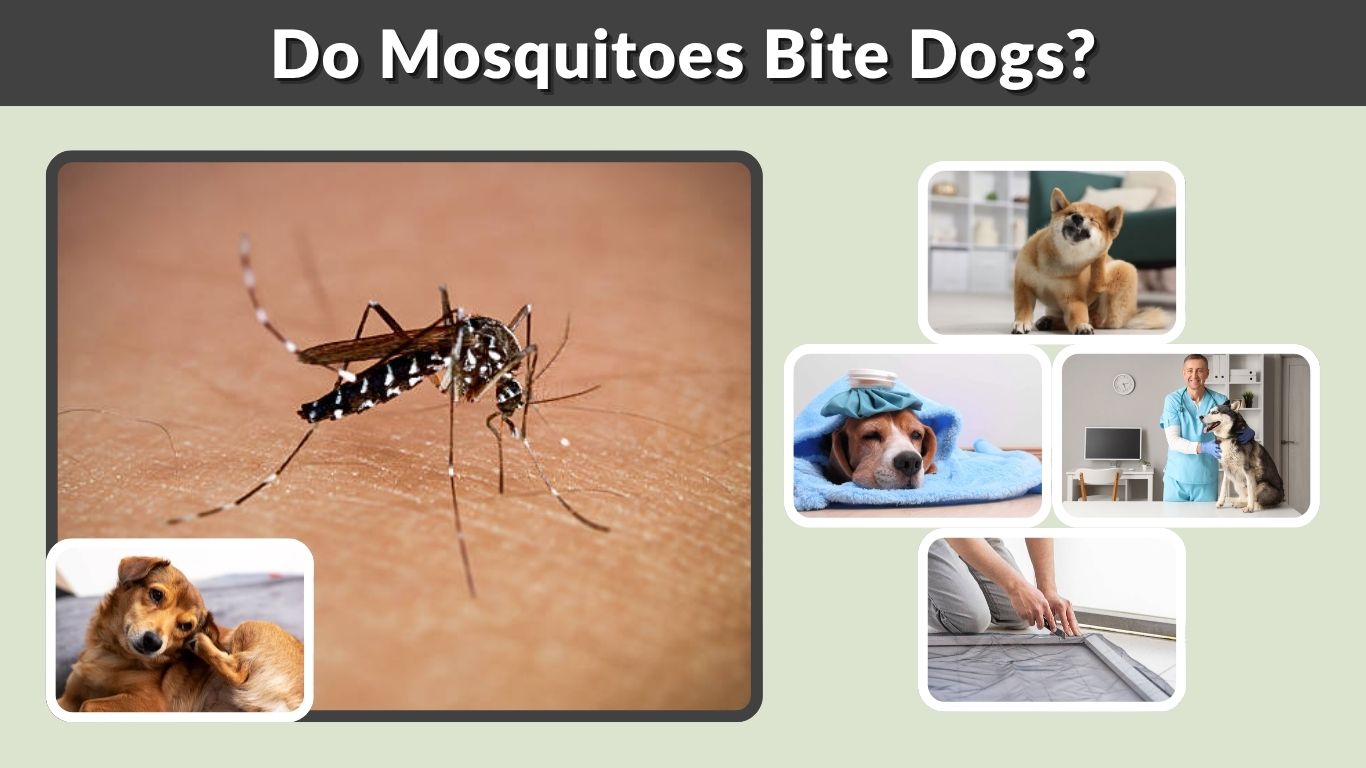
Yes, mosquitoes bite dogs, just as they bite humans. Although a dog’s thick fur provides some protection, mosquitoes can still reach exposed skin around the ears, nose, belly, and legs. Most mosquito bites cause mild itching, redness, or small bumps, but some can transmit dangerous diseases such as heartworm. Dogs may scratch, lick, or become uncomfortable after being bitten. Understanding what mosquito bites look like on dogs, how to treat them safely, and how to prevent future bites can help protect your pet’s health.
Do Dogs Get Mosquito Bites Like Humans?
Dogs get mosquito bites in much the same way humans do. Female mosquitoes feed on blood by piercing the skin with their specialized mouthparts. During feeding, they release saliva that can trigger irritation and an immune response.
Although fur creates a physical barrier, it does not completely prevent mosquitoes from reaching the skin. Short-haired dogs and dogs with thin coats may have more exposed areas, but long-haired breeds can also be bitten.
Do Dogs Feel Mosquito Bites?
Yes, dogs can feel mosquito bites. Some may react immediately by twitching their skin, shaking their heads, or moving away from the insect. Others may not notice until itching develops.
The severity of the reaction depends on the dog’s skin sensitivity, the number of bites, and its individual immune response.
Where Do Mosquitoes Bite Dogs Most Often?
Mosquitoes usually target areas where a dog’s fur is thin or where skin is easily accessible. However, they can also bite through gaps in thicker coats.
Common Mosquito Bite Locations
Mosquitoes frequently bite dogs around their ears, nose, belly, inner thighs, and paws. These areas often have less fur, making it easier for mosquitoes to reach the skin.
Dogs resting outdoors may experience bites around their legs and abdomen. Mosquitoes can also enter houses, meaning indoor dogs are not completely protected.
Do Mosquitoes Bite Long-Haired Dogs?
Yes, mosquitoes can bite long-haired dogs. Thick fur may reduce access to some skin surfaces, but mosquitoes can still reach the ears, belly, and other exposed areas.
Therefore, all dog breeds need protection against mosquitoes, regardless of coat length.
What Do Mosquito Bites Look Like on Dogs?
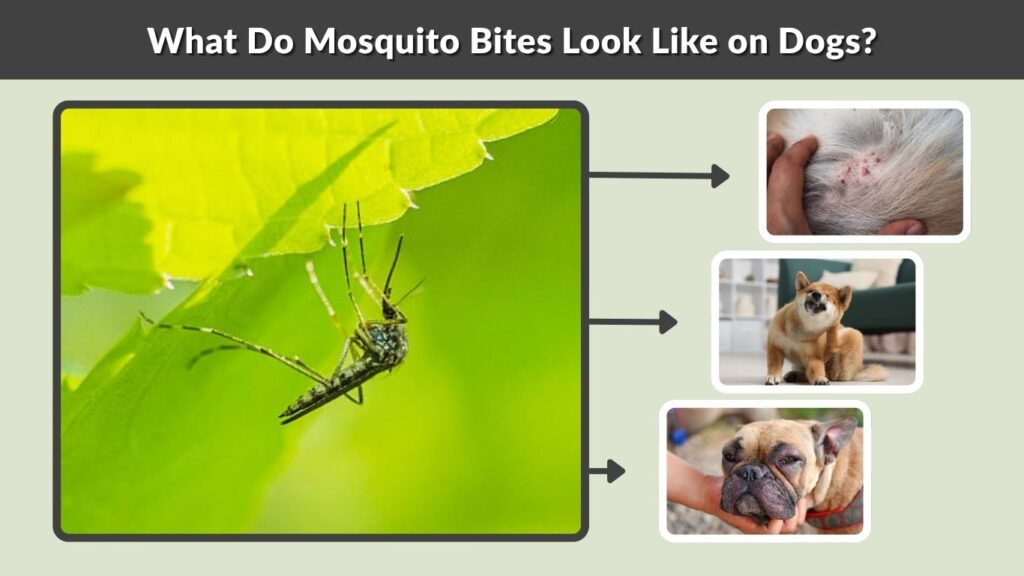
Mosquito bites on dogs generally appear as small, raised bumps or mildly swollen areas. They may resemble mosquito bites on human skin, although thick fur can make them difficult to notice.
Some dogs develop visible irritation, while others show almost no noticeable skin changes.
Common Signs of Mosquito Bites on Dogs
- Small raised bumps: Tiny swellings may appear around the bite.
- Red or pink skin: Mild inflammation can develop, although discoloration varies with skin pigmentation.
- Itching: Dogs may scratch, rub, or lick the affected area.
- Localized swelling: Sensitive dogs sometimes develop larger welts.
- Skin irritation: Repeated scratching can cause additional redness and discomfort.
Mosquito bites can resemble flea bites, allergies, and other skin conditions. If the bumps spread, persist, or become infected, a veterinarian should examine your dog.
Do Mosquito Bites Make Dogs Itch?
Yes, mosquito bites can make dogs itchy. When a mosquito bites, its saliva introduces substances that trigger an immune reaction. This can cause itching, redness, and mild swelling.
Some dogs experience only temporary discomfort, while others develop more intense irritation.
How Do Dogs React to Mosquito Bites?
Dogs often respond by scratching the affected area, licking their skin, shaking their heads, or rubbing against furniture.
Excessive licking can damage the skin and increase the risk of infection. If your dog continually scratches or develops widespread bumps, veterinary advice is recommended.
How Long Do Mosquito Bites Last on Dogs?
Uncomplicated mosquito bites often improve within a few days. However, healing time varies depending on skin sensitivity, scratching, and the severity of the reaction.
Persistent swelling, discharge, or worsening irritation may indicate another problem requiring veterinary attention.
Are Mosquito Bites Dangerous for Dogs?
Most mosquito bites cause temporary irritation rather than serious illness. However, mosquitoes can transmit parasites and certain infections.
The most important mosquito-related health concern for dogs is heartworm disease.
Can Mosquito Bites Cause Heartworms in Dogs?
Yes. Heartworm disease develops when an infected mosquito transmits larvae of the parasite Dirofilaria immitis into a dog.
Over several months, these parasites can mature into adult worms that damage the heart, lungs, and surrounding blood vessels.
Signs of advanced heartworm disease may include coughing, tiredness, reduced exercise tolerance, and breathing difficulties.
Do All Mosquito Bites Cause Heartworms?
No. Not every mosquito carries heartworm larvae, and not every mosquito bite causes infection.
However, a single bite from an infected mosquito can transmit the parasite to a susceptible dog. Regular veterinarian-prescribed heartworm prevention is therefore essential, even for dogs that spend most of their time indoors.
How to Treat Mosquito Bites on Dogs
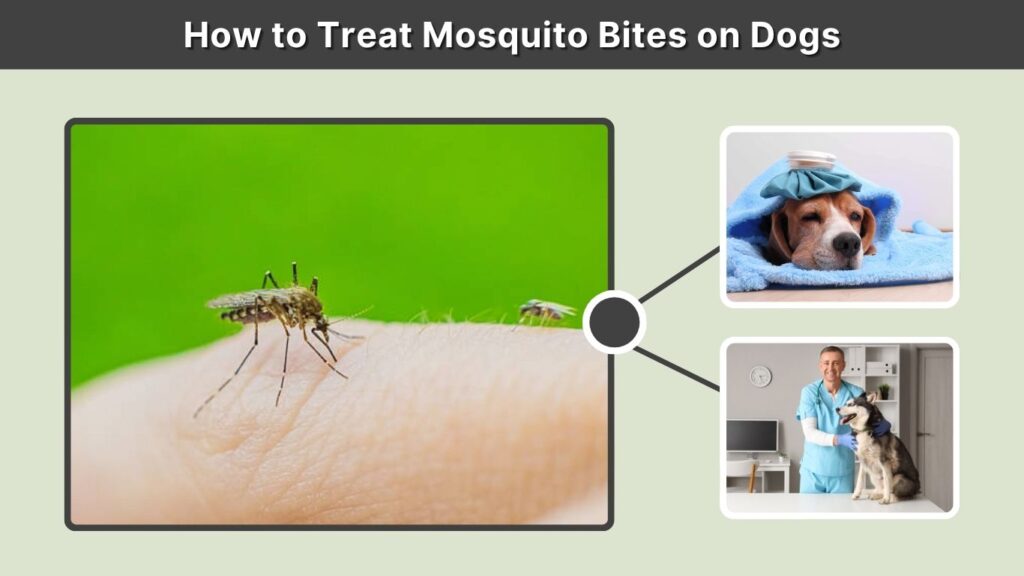
Most mild mosquito bites can be managed with simple care at home. Treatment should focus on relieving discomfort, protecting the skin, and monitoring for unusual reactions.
Safe Treatment for Dog Mosquito Bites
- Inspect the skin: Carefully check the affected area for swelling, redness, or broken skin.
- Apply a cool compress: Hold a clean, cool, damp cloth against the bite for several minutes to soothe irritation.
- Prevent excessive scratching: Distract your dog from licking or scratching. A protective collar may help if necessary.
- Keep the area clean: Gently clean irritated skin with water when appropriate and avoid harsh products.
- Consult your veterinarian: Ask about suitable treatment if itching or swelling continues.
Never give your dog human antihistamines, steroid creams, or other medications without veterinary guidance. Some products and ingredients can be harmful to pets.
How to Prevent Mosquito Bites on Dogs
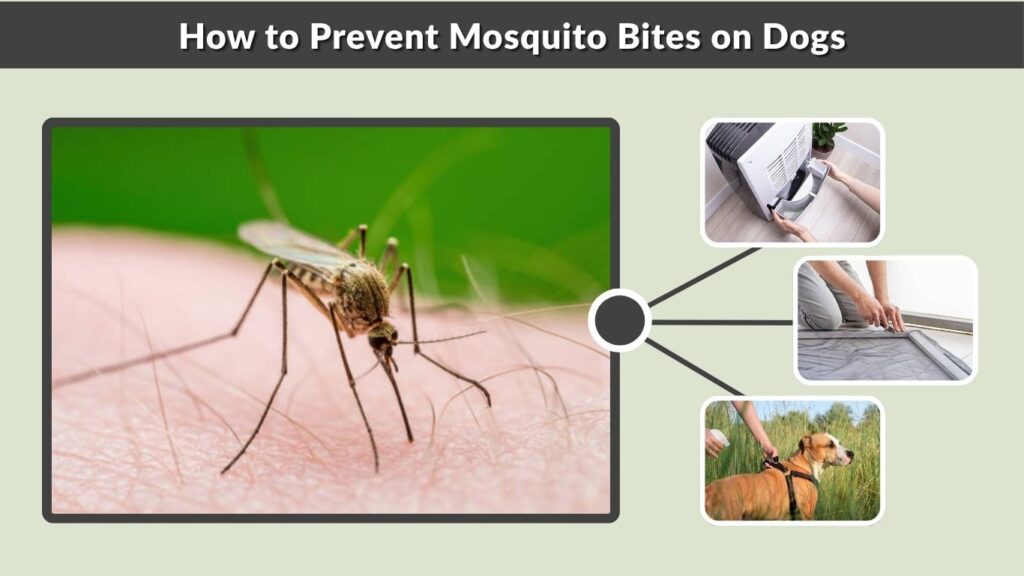
Preventing mosquito bites is important because even dogs with mild skin reactions may be exposed to heartworm disease.
A combination of environmental mosquito control and veterinary parasite prevention provides better protection than relying on a single method.
Effective Mosquito Prevention Tips
- Remove standing water: Empty buckets, flowerpot saucers, and other containers where mosquitoes breed.
- Limit mosquito exposure: Reduce outdoor activity during periods of heavy mosquito activity, often around dawn and dusk.
- Use window screens: Repair damaged screens to keep mosquitoes outside.
- Maintain the yard: Trim overgrown vegetation and keep outdoor resting spaces well maintained.
- Choose dog-approved repellents: Use only mosquito-control products specifically labeled for dogs and recommended by your veterinarian.
- Maintain heartworm prevention: Follow a veterinarian-prescribed preventive schedule throughout the year.
Avoid applying human mosquito repellents containing DEET directly to dogs unless a product is specifically approved for animal use. Essential oils and homemade repellents are not automatically safe for pets.
Remember that heartworm medication prevents heartworm infection but does not necessarily repel mosquitoes.
When Should You Take Your Dog to the Vet?
Most mosquito bites heal without medical treatment. However, unusual symptoms can indicate severe irritation, infection, or an allergic reaction.
Warning Signs That Need Veterinary Attention
Contact a veterinarian if your dog develops persistent swelling, worsening skin redness, discharge, or excessive scratching.
Seek emergency veterinary care if your dog experiences difficulty breathing, collapse, rapidly developing facial swelling, or other signs of a severe allergic reaction.
If your dog has missed heartworm prevention, consult your veterinarian about appropriate testing and restarting medication. Heartworm infection cannot be diagnosed simply by looking at a mosquito bite.
FAQs
1. Do Mosquitoes Bite Dogs With Fur?
Yes, mosquitoes can bite dogs even when they have thick fur. Although hair offers some protection, mosquitoes can reach exposed areas such as the ears, belly, nose, and legs. Both short-haired and long-haired dogs remain vulnerable to mosquito bites.
2. Do Dogs Get Itchy From Mosquito Bites?
Yes, dogs can experience itching after mosquito bites because their immune systems react to mosquito saliva. Affected dogs may scratch, lick, or rub their skin. Most reactions are mild, but persistent itching or extensive swelling requires veterinary attention.
3. Do Mosquitoes Bite Dogs Inside the House?
Yes, mosquitoes can bite dogs indoors after entering through open doors, windows, or damaged screens. Indoor dogs are not completely protected from mosquito exposure or heartworm disease. Window screens and regular heartworm prevention help reduce these risks.
4. What Should I Do if My Dog Gets Bitten by a Mosquito?
Inspect the affected skin and apply a clean, cool compress to reduce discomfort. Prevent excessive scratching and monitor the bite for worsening symptoms. Contact your veterinarian if swelling persists, irritation becomes severe, or your dog develops an unusual reaction.
5. Do Mosquito Bites Hurt Dogs?
Mosquito bites may cause mild discomfort, itching, or temporary swelling in dogs. Some animals barely react, while sensitive dogs may become noticeably irritated. Severe pain, extensive swelling, or persistent discomfort is unusual and should be evaluated by a veterinarian.
